Fortune Business Insights™ connects over various markets & value chains to better understand the highly demanded insights, along with forecasts of niche industries & their sizes. The firm delivers authentic reports to its clients to support them in enhancing their business decisions.The power industry includes the sale, distribution, transmission, and generation of electricity power to the populace. Back in 1882, when electricity was produced for electric lighting, the commercial distribution of power started gaining traction. The market has changed gradually because of the reform of the power industry in Wales and England that took place in 1990. Globalization and foreign purchases have also affected the market positively. For instance, between 1995 and 1997, seven of the twelve Regional Electric Companies in Wales and England were taken by prominent U.S.-based energy companies. Similarly, the U.K.’s national grid purchased numerous electric utilities in New England worth USD 3.2 billion. The market is set to grow rapidly in the near future backed by ongoing developments in transportation, industrial processes, and space conditioning. Besides, the deployment of off-shore wind farms and usage of fuel cells in space flights would aid growth.
The global high voltage cables market size is projected to grow from $37.80 billion in 2025 to $65.88 billion by 2034, exhibiting a CAGR of 6.52%... Read More
The global transmission substation market size is projected to grow from $93.03 billion in 2026 to $165.99 billion by 2034, at a CAGR of 7.51%... Read More
The global wire and cable market size is projected to grow from $246.48 billion in 2026 to $410.70 billion by 2034, exhibiting a CAGR of 6.59%... Read More
The hydrogen fueling station market size is projected to grow from $1,192.67 million in 2026 to $6,592.68 million by 2034, exhibiting a CAGR of 23.83%... Read More
The US generator sales market size is projected to grow from $7.12 billion in 2026 to $11.92 billion by 2034, at a CAGR of 6.66% during the forecast period... Read More
The global resilient power infrastructure market size is projected to grow from $98.59 billion in 2026 to $197.43 billion by 2034, exhibiting a CAGR of 9.07%... Read More
The global flexible AC transmission systems market size is projected to grow from $1.69 billion in 2026 to $2.97 billion by 2034, exhibiting a CAGR of 7.30%... Read More
The global electric motor market size is projected to grow from $176.49 billion in 2026 to $319.70 billion by 2034, at a CAGR of 7.71% during the forecast period... Read More
The global decentralized power generation market size is projected to grow from $327.03 billion in 2026 to $729.29 billion by 2034, exhibiting CAGR of 10.54%... Read More
The global industrial electrification market size is projected to grow from $281.34 billion in 2026 to $500.66 billion by 2034, exhibiting a CAGR of 7.47%... Read More
The global biochar market size was valued at $859.04 million in 2025 & is projected to grow from $969.29 million in 2026 to $2,731.94 million by 2034... Read More
The global gas analyzers market size is projected to grow from $4.74 billion in 2026 to $7.39 billion by 2034, at a CAGR of 5.73% during the forecast period... Read More
The global greenhouse gas monitoring market size is projected to grow from $4.88 billion in 2026 to $10.68 billion by 2034, with a CAGR of 10.29%... Read More
The global switch mode power supply transformer market size is projected to grow from $3.40 billion in 2026 to $5.31 billion by 2034, at a CAGR of 5.71%... Read More
The global cable fault locator market size is projected to grow from $681.42 million in 2026 to $993.73 million by 2034, exhibiting a CAGR of 4.83%... Read More
The global superconducting wire market size is projected to grow from $2.08 billion in 2026 to $4.41 billion by 2034, at a CAGR of 9.89% during forecast period... Read More
The global solid state transformer market size is projected to grow from $181.63 million in 2026 to $368.75 million by 2034, exhibiting a CAGR of 9.26%... Read More
The global gas turbine market size is projected to grow from $24.70 billion in 2026 to $43.50 billion by 2034, at a CAGR of 7.33% during the forecast period... Read More
The primary objective of these reports is to provide data-driven insights about the healthcare burden,
healthcare resources, healthcare infrastructure, healthcare services and installed base of key medical
equipment. These reports can play a crucial role in the assessment of market potential based on
healthcare needs and penetration of medical devices and drive the strategies to increase the demand for
healthcare products.
How can our Healthcare Insights reports help you?
Evaluate market potential
Prioritize geographies for expansion
Assess replacement or upgrade opportunities and align product portfolios with needs of the
healthcare facilities
Evaluate attractiveness of regional healthcare markets, infrastructure readiness, and capital
investment opportunities
Assess the total addressable markets (TAM) and evaluate the market readiness for new technologies or
products
Healthcare Spending
Global healthcare spending reached USD 11.1 trillion in 2024 due to the evolving healthcare needs
driven by the aging population and growth in burden of chronic diseases.
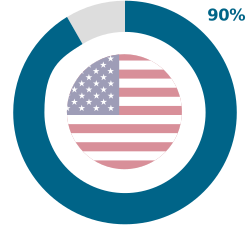
In the U.S., around 90% of the annual healthcare spending is on people suffering from
chronic and mental conditions.
The global population aged 60 years and over is projected to reach 2.1 billion by 2050,
accounting for 26% of the world's population.
In 2024, healthcare expenditure accounted for roughly 10.0% of the global GDP. Although the per
capita healthcare spending was around USD 1,354 globally, there is a huge disparity among
developed and developing nations.
Per Capita Healthcare Spending
U.S.
USD 12,740
Japan
USD 3,890
China
USD 675
Indonesia
USD 395
India
USD 102
Healthcare Resources
Number of doctors per 1,000 people
High-income countries
3.7
Middle-income countries
2.3
Low-income countries
0.4
Healthcare Infrastructure
In terms of the healthcare infrastructure such as hospitals and hospitals beds, the disparity between
developed, developing and under-developed countries is significant, similar to the data on healthcare
spending and healthcare resources.
Number of ICU beds per 100,000 people
High-income countries
12.8
Middle-income countries
5.6
Low-income countries
Less than 2.5
Scope of our Healthcare Insights Reports
1. Introduction
1.1 Research Scope
1.2 Research Methodology
2. Executive Summary
3. Healthcare Expenditure (2021-2034)
3.1 Total Healthcare Expenditure
3.2 Per Capita Healthcare Expenditure
3.3 Healthcare Expenditure as Proportion of GDP
3.4 Distribution of Healthcare Expenditure by Funding
Sources
4. Healthcare Infrastructure (2025)
4.1 Number of Hospitals
4.2 Number of Public versus Private Hospitals
4.3 Number of Hospital Beds
4.4 Number of Public versus Private Hospital Beds
4.5 Number of ICU Beds
4.6 Number of Operating Rooms
4.7 Number of Nursing Homes
4.8 Number of Nursing Home beds
4.9 Number of Imaging Centers
5. Healthcare Resources (2025)
5.1 Number of Physicians
5.2 Number of Nurses
5.3 Number of Cardiologists
5.4 Number of Neurologists
5.5 Number of Orthopedic Surgeons
5.6 Number of Radiologists
5.7 Number of Dentists
5.8 Number of Pharmacists
6. Installed Base of Medical Equipment (2025)
6.1 CT Scanners
6.2 MRI Machines
6.3 PET/CT Scanners
6.4 Ultrasound Machines
6.5 X-ray Machines
6.6 Mammography Machines
6.7 C-arms
6.8 Patient Monitors
6.9 Cath Labs
6.10 Ventilators
6.11 ECG Machines
6.12 Dialysis Machines
This scope can be covered for the following set of countries:
US
Canada
UK
Germany
France
Italy
Spain
Turkey
Netherlands
Switzerland
Poland
Belgium
Sweden
Austria
China
Japan
India
South Korea
Australia
Singapore
Malaysia
Indonesia
Thailand
New Zealand
Philippines
Brazil
Mexico
Argentina
South Africa
UAE
Saudi Arabia
More...
We can check the feasibility of providing this data for specific countries not included in the list
above.
Data Sources
Interviews with relevant stakeholders in hospitals/healthcare facilities
Interviews with experts/KOLs with considerable experience in the healthcare market and
knowledge specific to the research scope
Reports/data published by relevant associations
Reports/data published by organizations such as WHO, OECD, Eurostat
Research articles published by agencies such as NCBI, ResearchGate, etc.
Internal data repository – Relevant reports, databases and customized projects
External databases (free and paid)
Reports/data published by healthcare facilities/healthcare groups, government health
departments, etc.
GET IN TOUCH WITH US
Why Epidemiology Report?
The primary objective of epidemiology reports is to provide data-driven insights into the incidence,
prevalence, and distribution of diseases across different populations, geographies and time periods.
These reports can play a crucial role in the assessment of market potential based on patient
populations and drive the strategies for the development for healthcare products such as
pharmaceuticals, medical devices, or diagnostics. Epidemiology reports include segmentation by age,
gender, region, and disease stage, enabling companies to make informed decisions about market entry,
product positioning, and clinical trial planning.
HOW CAN OUR EPIDEMIOLOGY REPORTS HELP YOU?
Assist in the estimation of the potential/addressable market based on patient
population
Provide an understanding of the trend in patient population
Provide an overview of the cost of care & therapeutics market
Provide an understanding of the disease landscape
Provide an understanding of the treated patient population
SCOPE OF OUR EPIDEMIOLOGY REPORTS
Overview of the Disease/Condition
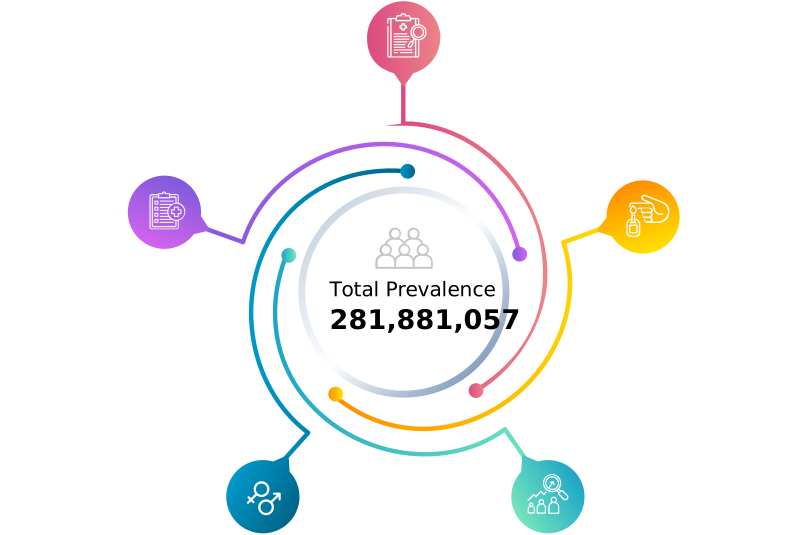
Total Prevalence of the Disease/Condition, 2019–2032
Distribution of the Prevalent Cases by Disease Type,
Age, Gender, 2024
Number of Diagnosed Patients of the Disease/Condition,
2019–2032
Number of Treated Patients of the Disease/Condition,
2019–2032
Cost of Care for the Disease/Condition, 2024
Total Therapeutics Market for the Disease/Condition,
2019–2032
We can check the feasibility of adding specific countries to the geographic scope
based on your requirements.
USA
UK
Germany
France
Italy
Spain
Japan
China
India
Australia
Globally, chronic diseases account for almost three-quarters of all deaths. At present, more than one
in three adults have at least one chronic condition. Unhealthy lifestyle and ageing population are
some of the main factors contributing to the growing burden of non-communicable diseases such as
diabetes and cardiovascular conditions.
The United Nations Population Fund (UNFPA) has projected that the number of people aged 60 years
and above reach around 2.1 billion by 2050 (accounting for around 22% of the global population)
More than 500 million people globally suffer from cardiovascular diseases
Cost of Chronic Diseases
Management of chronic diseases and treatment of conditions due to these chronic diseases
accounts for a significantly large proportion of the total healthcare spending of all
countries, developed as well as
In the U.S., around 90% of the annual healthcare spending is on people suffering
from chronic and mental conditions.
The World Economic Forum estimates that the global cost of treating chronic diseases
will be around USD 30 trillion by 2030.
BURDEN OF CHRONIC DISEASES IN SELECTIVE COUNTRIES
(IN MILLION PATIENTS)
DISEASE INDICATION
U.S
U.K
Germany
France
Italy
Spain
Saudi Arabia
United Arab Emirates
Diabetes
32.5
4.0
6.2
4.0
4.5
5.2
4.4
1.0
Hypertension
148.2
23.2
30.7
22.2
25.3
15.7
15.2
5.3
Kidney Stone
0.67
0.30
0.38
0.29
0.26
0.27
0.13
0.03
Obesity
109.3
23.6
21.3
13.6
10.4
10.3
10.1
3.9
Cancer Epidemiology
Cancer is a group of diseases characterized by the uncontrolled growth and spread of abnormal
cells in the body. If it is not treated, cancer can invade surrounding tissues and spread to
other parts of the body.
Around 20 million new cancer cases are diagnosed every year with men accounting for roughly 51%
of them. China, India, USA and Japan account for around 4% of new cancer cases globally.
Cancer Incidence – Top 10 Countries (in million new cases)
China4.8
USA2.4
India1.4
Japan1.0
Russia0.64
Brazil0.63
Germany0.61
France0.48
UK0.45
Italy0.44
Top 10 Common Cancers (in million new cases)
Type
Cancer Incidence
Trachea, Bronchus & Lung
2.5
Breast
2.3
Colorectum
1.9
Prostate
1.5
Stomach
0.97
Liver
0.87
Thyroid
0.82
Cervix Uteri
0.66
Bladder
0.61
Non-Hodgkin Lymphoma
0.55
Lung Cancer, Breast Cancer, Colorectal Cancer and Prostate Cancer account for around
44% of the new cancer cases (excluding non-melanoma skin cancer).
Diabetes Epidemiology
Diabetes is a chronic medical condition in which the body either doesn't produce enough
insulin or can't effectively use the insulin it produces, leading to elevated levels of
glucose in the blood. Over time, high blood sugar can cause serious damage to the heart,
kidneys, eyes, and nerves.
Around 540 million people suffer from diabetes globally with more than 40% of the cases
undiagnosed.
The two main types of diabetes are Type 1 and Type2. Type 1 is an autoimmune condition
where the body destroys insulin-producing cells, requiring lifelong insulin therapy
whereas Type 2 is a metabolic disorder where the body either doesn't produce enough
insulin or cells become resistant to its effects. Type 2 accounts for around 96% of the
prevalent diabetes cases.
Diabetes Prevalence – Selective Countries (in million cases)
USA32.5
UK4.0
Germany6.2
France4.0
Italy4.5
Spain5.2
Saudi Arabia4.4
UAE1.0
DIABETES EPIDEMIOLOGY REPORT – KEY FINDINGS
Diagnosed Population
56.8%
Undiagnosed Population
43.2%
Population with Diabetes Types
Type 1
12,504,087 (4.4%)
Type 2
269,376,970(95.6%)
Prevalence by Age Group
0–19 yrs
579,276
20–44 yrs
46,553,353
45–64 yrs
91,116,784
>64 yrs
143,631,644
Prevalence by Gender
Men
146,030,908 (51.8%)
Women
135,850,149 (48.2%)
Treatment Rate
48.9%
Diagnosis Rate
56.8%
Kidney Diseases Epidemiology
Conditions that impair the function of the kidneys, which are responsible for filtering waste and
excess fluids from the blood, are known as kidney diseases. These diseases can range from acute
kidney injury to chronic kidney disease (CKD), which may progress to kidney failure if not
managed properly. Common causes include diabetes, high blood pressure, infections, and genetic
disorders.
Globally, around 700 million people are estimated to be suffering from chronic kidney
disease (CKD). Around 14% of adults in the U.S. are estimated to have CKD. Kidney
diseases account for almost 2-4% of the total healthcare budgets in many developed
nations. In the U.S., the annual cost of kidney diseases is estimated to be more than
USD 85 billion.
Around 2 million people worldwide suffer from end-stage renal disease (ESRD), for which
they receive dialysis or kidney transplants.
Patients Receiving Treatment for ESRD - Selective Countries
USA
750,000
Japan
350,000
Brazil
200,000
Germany
80,000
UK
70,000
Rare Diseases Epidemiology
A condition affecting less than 65 per 100,000 people is defined as a rare disease by the WHO.
The global prevalence of more than 7,000 rare diseases together is around 300 million. More than
65% of the patients suffering from rare diseases are children and majority of these diseases do
not have any treatment.
Prevalence of Selective Rare Diseases in the U.S.
Cystic Fibrosis
Lou Gehrig's Disease (ALS)
Huntington's Disease
Duchenne Muscular Dystrophy (DMD)
40,000
18,000
30,000
15,000
Cardiovascular Disease Epidemiology
Cardiovascular diseases (CVDs) are a group of disorders affecting the heart and blood
vessels, including conditions like coronary artery disease, heart failure, stroke, and
hypertension. They are the leading cause of death globally, often resulting from a
combination of lifestyle factors and underlying health conditions.
It is estimated that around 60% of the U.S. adults will have some form of cardiovascular
disease (CVD) in the next 30 years and the cost (direct and indirect) of CVD will be
around USD 1.8 trillion. Globally, around 700 million people are living with CVDs and
CVDs account for around one in three deaths every year.
Hypertension Prevalence – Selective Countries (in million cases)cardio
USA148
UK23
Germany31
France22
Italy22
Spain16
Saudi Arabia15
UAE5
We can prepare Epidemiology Reports for the following list of diseases

 Download Sample
 Buy Now