Acinetobacter Pneumonia Therapeutics Market Size, Share & Industry Analysis, By Drug Class (Xacduro, Polymyxins, Cephalosporins, Carbapenems), By Route Of Administration (Oral, Parenteral), and Regional Forecast, 2026-2034
 Download Free Sample
Acinetobacter Pneumonia Therapeutics Market Overview
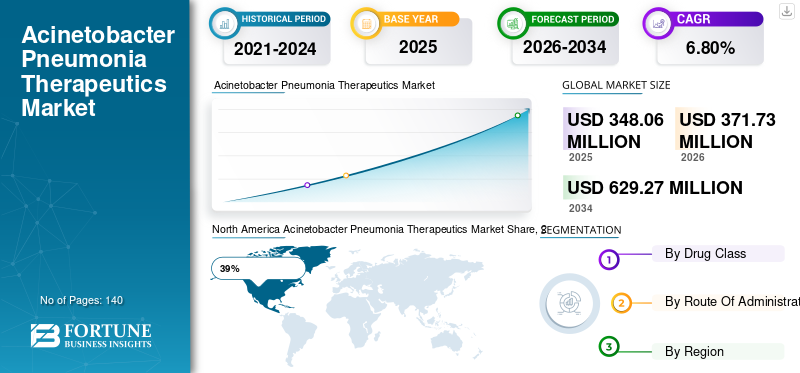
The global Acinetobacter pneumonia therapeutics market size was valued at USD 348.06 million in 2025. The market is projected to grow from USD 371.73 million in 2026 to USD 629.27 million by 2034, exhibiting a CAGR of 6.80% during the forecast period.

The acinetobacter pneumonia therapeutics market is gaining strong attention across the global healthcare sector due to the increasing prevalence of hospital-acquired infections and multidrug-resistant bacterial strains. Acinetobacter pneumonia is commonly associated with intensive care units, ventilator-associated pneumonia, and immunocompromised patient populations, creating strong demand for advanced antibacterial therapies and targeted treatment approaches. Pharmaceutical companies are focusing on novel antibiotics, combination therapies, and enhanced antimicrobial stewardship programs to strengthen treatment outcomes. The market is also benefiting from rising investments in infectious disease research, expansion of hospital infrastructure, and growing awareness regarding antimicrobial resistance. Increased collaboration between biotechnology companies and healthcare providers is accelerating innovation within the acinetobacter pneumonia therapeutics market.
The United States acinetobacter pneumonia therapeutics market remains a major contributor to global demand due to the high incidence of healthcare-associated infections and strong adoption of advanced anti-infective therapeutics. The country has a well-developed healthcare infrastructure supported by leading pharmaceutical manufacturers, advanced hospital networks, and substantial infectious disease research programs. The rising burden of antibiotic-resistant Acinetobacter baumannii infections in critical care settings has encouraged healthcare institutions to increase the use of innovative antibacterial therapies. The growing presence of government-backed antimicrobial resistance initiatives and increasing clinical trials for novel antibiotics are supporting market expansion in the United States. Hospitals and specialty clinics are emphasizing rapid diagnosis and targeted therapy selection to reduce mortality rates linked with severe pneumonia infections.
Download Free sample to learn more about this report.
Acinetobacter Pneumonia Therapeutics Market Key Takeaways
 Global Market Size & Forecast
- 2025 Market Size: USD 348.06 Million
- 2026 Market Size: USD 371.73 Million
- 2034 Forecast Market Size: USD 629.27 Million
- CAGR: 6.80% from 2026-2034
 Market Share
- The market in North America dominated with a revenue share of 39% in 2025.
- Carbapenems accounted for a market share of approximately 27% by drug class.
- Parenteral administration dominated by route with a market share of approximately 62%.
 Key Regional Highlights
North America
North America led the market with a 39% share, supported by advanced healthcare infrastructure and strong demand for treatments targeting drug-resistant infections.
Europe
Europe accounted for 28% of the market, driven by established healthcare systems and increasing focus on antimicrobial resistance management.
Asia-Pacific
Asia-Pacific held a 24% share, supported by rising healthcare investments and the growing burden of hospital-acquired infections.
U.S
The U.S. remains a key market, supported by advanced critical care infrastructure and growing demand for therapies targeting multidrug-resistant infections.
Japan
Japan accounted for approximately 27% of the Asia-Pacific market, supported by advanced healthcare facilities and increasing adoption of innovative antimicrobial therapies.
Read More

Acinetobacter Pneumonia Therapeutics Market Latest Trends
The acinetobacter pneumonia therapeutics market is witnessing rapid transformation driven by advancements in antimicrobial drug development and increasing clinical emphasis on combating resistant bacterial infections. One of the most important trends shaping the market is the growing adoption of combination antibiotic therapies designed to improve treatment efficacy against multidrug-resistant Acinetobacter strains. Pharmaceutical companies are introducing innovative therapies that combine beta-lactamase inhibitors with broad-spectrum antibiotics to enhance bacterial eradication and reduce resistance development.
Download Free sample to learn more about this report.
Another major trend in the Acinetobacter pneumonia therapeutics market is the increasing use of precision diagnostics and molecular testing technologies in hospital environments. Healthcare providers are integrating rapid pathogen detection systems to identify Acinetobacter infections earlier and optimize therapeutic selection. This trend is improving patient outcomes and supporting faster clinical decision-making. The market is also experiencing growing investments in novel antibacterial pipelines, particularly for critical care applications and ventilator-associated pneumonia treatment. Biopharmaceutical firms are expanding collaborations with academic institutions and healthcare organizations to accelerate clinical development activities.
Acinetobacter Pneumonia Therapeutics Market Dynamics
DRIVER
Rising Prevalence of Multidrug-Resistant Hospital-Acquired Infections
The increasing prevalence of multidrug-resistant acinetobacter infections remains the primary driver supporting the growth of the acinetobacter pneumonia therapeutics market. Hospital-acquired pneumonia and ventilator-associated pneumonia cases continue to increase across intensive care units worldwide, creating substantial demand for effective antibacterial therapies. Acinetobacter baumannii has emerged as one of the most dangerous pathogens due to its ability to survive in hospital environments and develop resistance to multiple antibiotic classes.
Healthcare providers are increasingly prioritizing advanced therapeutic solutions capable of treating resistant bacterial strains effectively. This has encouraged pharmaceutical manufacturers to accelerate investments in antibiotic innovation, particularly in the areas of beta-lactamase inhibitor combinations, polymyxins, and next-generation cephalosporins. Regulatory agencies are also supporting the development of antimicrobial drugs through expedited approval pathways and incentive programs. The increasing number of surgical procedures, prolonged hospitalization cases, and aging populations further contribute to market demand. Healthcare institutions are implementing infection control strategies while simultaneously increasing procurement of advanced antibacterial therapies.
RESTRAINT
Limited Effectiveness of Conventional Antibiotics against Resistant Strains
One of the major restraints affecting the Acinetobacter pneumonia therapeutics market is the declining effectiveness of traditional antibiotics against resistant Acinetobacter strains. Many conventional antibacterial therapies no longer provide reliable treatment outcomes due to the emergence of carbapenem-resistant and extensively drug-resistant bacterial variants. This situation creates clinical uncertainty and limits therapeutic options available for severe pneumonia cases.
The high cost associated with developing novel antibiotics also restricts market expansion. Pharmaceutical companies face extensive research timelines, complex clinical trial requirements, and uncertain commercial returns for infectious disease therapies. As a result, several manufacturers remain cautious regarding large-scale investments in antibiotic pipelines. Additionally, strict antimicrobial stewardship programs in hospitals can limit the excessive use of broad-spectrum antibiotics, reducing prescription volumes in some healthcare settings. Side effects associated with polymyxins and combination antibiotic therapies may also discourage treatment adoption among certain patient groups.
OPPORTUNITY
Expansion of Novel Antibacterial Drug Development Programs
The growing focus on innovative antibacterial research presents major opportunities for participants in the Acinetobacter pneumonia therapeutics market. Pharmaceutical and biotechnology companies are increasingly investing in next-generation antimicrobial agents targeting resistant Acinetobacter infections. The development of combination therapies and pathogen-specific antibacterial agents is expected to create new growth opportunities across global healthcare systems.
Emerging economies are also creating substantial market opportunities due to improving hospital infrastructure, rising healthcare spending, and increasing awareness regarding infectious disease management. The demand for advanced pneumonia therapeutics is increasing significantly in countries with expanding intensive care capabilities and higher hospitalization rates. Another important opportunity involves the integration of artificial intelligence and genomic technologies into antimicrobial research. Drug developers are using advanced computational methods to identify novel bacterial targets and optimize therapeutic efficacy. Partnerships between healthcare providers, academic research institutions, and pharmaceutical companies are accelerating product innovation.
CHALLENGE
Rising Antibiotic Resistance and Complex Regulatory Requirements
The Acinetobacter pneumonia therapeutics market faces significant challenges due to the continuous evolution of bacterial resistance mechanisms. Acinetobacter baumannii rapidly adapts to antibiotic exposure, making it increasingly difficult for healthcare providers to manage severe infections effectively. The growing resistance against carbapenems, cephalosporins, and polymyxins creates treatment limitations and increases mortality risks among critically ill patients.
Regulatory approval processes for antibacterial therapies also remain highly complex and time-consuming. Drug manufacturers must demonstrate strong clinical efficacy, safety, and resistance management capabilities before obtaining commercial approvals. This increases development costs and delays product launches. Another major challenge involves maintaining a sustainable commercial model for antibiotic therapies. Many antibacterial drugs are reserved for critical cases to prevent resistance overuse, limiting overall prescription volumes. In addition, healthcare providers face pressure to balance cost-effective treatment strategies with advanced therapeutic adoption. These factors collectively create operational and financial challenges for companies operating within the acinetobacter pneumonia therapeutics market.
Acinetobacter Pneumonia Therapeutics Market Segmentation
By Drug Class
Xacduro has emerged as an important therapeutic option in the acinetobacter pneumonia therapeutics market due to its targeted activity against carbapenem-resistant Acinetobacter baumannii infections. The therapy has gained strong clinical attention because of its enhanced ability to address multidrug-resistant bacterial strains commonly associated with hospital-acquired pneumonia and ventilator-associated pneumonia. Healthcare providers are increasingly adopting Xacduro in critical care settings where conventional antibiotics fail to deliver effective treatment outcomes. The growing incidence of resistant infections in intensive care units has strengthened the demand for advanced antibacterial therapies such as Xacduro. Hospitals are emphasizing targeted antimicrobial treatment strategies to reduce patient mortality and hospitalization duration. Pharmaceutical manufacturers are also increasing production capacity and expanding distribution networks to improve therapy accessibility.
Polymyxins remain one of the most widely utilized antibiotic classes in the Acinetobacter pneumonia therapeutics market because of their effectiveness against multidrug-resistant Gram-negative bacteria. These antibiotics are frequently prescribed for severe Acinetobacter pneumonia infections, particularly in intensive care environments where treatment-resistant pathogens are highly prevalent. Colistin-based therapies continue to play a major role in managing complicated hospital-acquired infections. The demand for polymyxins is increasing due to the limited availability of alternative therapies for resistant Acinetobacter strains. Healthcare providers often use polymyxins as salvage therapies for critically ill patients requiring immediate bacterial control. However, concerns regarding nephrotoxicity and neurotoxicity continue to influence prescribing patterns and encourage the search for safer therapeutic alternatives.
Cephalosporins continue to represent a significant segment within the Acinetobacter pneumonia therapeutics market due to their broad-spectrum antibacterial activity and extensive use in hospital settings. Advanced cephalosporin combinations with beta-lactamase inhibitors are increasingly being adopted to combat resistant Acinetobacter infections. Healthcare institutions prefer these therapies because they provide improved bacterial coverage and support targeted treatment strategies. The rising focus on antimicrobial innovation has encouraged pharmaceutical companies to develop newer cephalosporin formulations capable of overcoming bacterial resistance mechanisms. These therapies are being integrated into hospital treatment protocols for severe pneumonia management. Cephalosporins are also widely utilized in combination treatment regimens to enhance clinical outcomes and reduce bacterial persistence.
Carbapenems have historically served as frontline therapies for severe Acinetobacter pneumonia infections due to their broad-spectrum efficacy and strong antibacterial activity. These antibiotics are frequently used in intensive care units and tertiary healthcare facilities for managing life-threatening bacterial infections. Healthcare professionals continue to rely on carbapenems for early-stage treatment of complicated pneumonia cases before resistance confirmation. Pharmaceutical companies are focusing on combination therapies and resistance management strategies to preserve the clinical utility of carbapenems. Despite rising resistance concerns, carbapenems maintain approximately 27% market share within the Acinetobacter pneumonia therapeutics market because of their widespread historical use and continued importance in severe infection management.
By Route Of Administration
The oral application segment is gaining steady momentum in the acinetobacter pneumonia therapeutics market due to increasing preference for convenient outpatient treatment options and post-hospitalization therapy continuation. Oral antibiotics are commonly prescribed for mild-to-moderate bacterial pneumonia cases and for step-down therapy after initial intravenous treatment. Healthcare providers increasingly favor oral formulations because they improve patient compliance, reduce hospitalization costs, and simplify long-term infection management. In addition, oral therapies are frequently utilized for infection recurrence prevention and prolonged antimicrobial treatment protocols. The oral segment currently accounts for approximately 38% of the Acinetobacter pneumonia therapeutics market share due to rising demand for patient-friendly treatment solutions and increasing outpatient therapeutic adoption.
The parenteral segment dominates the acinetobacter pneumonia therapeutics market because severe Acinetobacter pneumonia infections often require immediate intravenous antibiotic administration in hospital settings. Critically ill patients in intensive care units depend on parenteral therapies for rapid therapeutic action and effective bacterial control. Intravenous administration enables healthcare professionals to achieve higher drug concentrations and improved treatment outcomes in life-threatening pneumonia cases. Pharmaceutical manufacturers are also developing advanced injectable formulations with improved pharmacokinetic properties to strengthen therapeutic efficacy. The parenteral application segment holds nearly 62% market share within the acinetobacter pneumonia therapeutics industry because of its central role in intensive care treatment protocols and severe infection management.
To know how our report can help streamline your business, Speak to Analyst
Acinetobacter Pneumonia Therapeutics Market Regional Outlook
North America
North America Acinetobacter Pneumonia Therapeutics Market Share, 2026 (%)
To get more information on the regional analysis of this market, Download Free sample
North America remains the leading region in the acinetobacter pneumonia therapeutics market due to advanced healthcare systems, strong pharmaceutical innovation capabilities, and increasing awareness regarding antimicrobial resistance. The region benefits from extensive investments in infectious disease management and a high concentration of biotechnology companies focused on antibiotic development. Hospitals across the United States and Canada are rapidly adopting innovative therapies for multidrug-resistant Acinetobacter pneumonia, especially in intensive care units and emergency healthcare settings. The increasing use of molecular diagnostic technologies and precision treatment approaches is also strengthening therapeutic demand throughout the region.
Healthcare providers are emphasizing rapid diagnosis and targeted antibacterial therapy to reduce mortality rates associated with ventilator-associated pneumonia and healthcare-acquired infections. Pharmaceutical companies are expanding clinical research activities related to advanced cephalosporins, polymyxins, and combination antibiotic therapies. North America currently accounts for approximately 39% of the global acinetobacter pneumonia therapeutics market share because of strong healthcare spending, advanced research infrastructure, and widespread adoption of innovative treatment solutions.
Europe
Europe represents a major region in the acinetobacter pneumonia therapeutics market because of strong healthcare infrastructure, growing infectious disease awareness, and increasing efforts to combat antimicrobial resistance. Countries across Europe are implementing advanced infection prevention protocols and optimized antibiotic prescribing practices to improve treatment outcomes for severe bacterial pneumonia cases. Healthcare providers are also integrating rapid diagnostic technologies and targeted therapeutic strategies to manage multidrug-resistant Acinetobacter infections more efficiently.
Pharmaceutical manufacturers and research organizations throughout Europe are increasing investments in antibacterial drug development and clinical trial programs. The region is witnessing higher demand for innovative therapies capable of addressing carbapenem-resistant bacterial infections in critical care settings. Government healthcare agencies are supporting hospital modernization and antimicrobial surveillance initiatives to strengthen infectious disease management capabilities. Europe contributes nearly 28% of the global acinetobacter pneumonia therapeutics market share due to increasing healthcare investments, strong pharmaceutical innovation, and rising adoption of advanced anti-infective therapies.
Germany Acinetobacter Pneumonia Therapeutics Market
Germany plays a vital role in the European acinetobacter pneumonia therapeutics market because of its advanced healthcare infrastructure, strong pharmaceutical manufacturing sector, and extensive clinical research capabilities. Hospitals and healthcare institutions in Germany are highly focused on infection control strategies and antimicrobial resistance management programs. The country has a significant number of intensive care facilities equipped with advanced diagnostic systems, which increases demand for innovative antibacterial therapies used in severe pneumonia treatment.
German pharmaceutical companies are actively involved in the development of next-generation antibiotics and combination therapies targeting resistant Acinetobacter strains. Research collaborations between universities, biotechnology firms, and healthcare providers are accelerating innovation within the infectious disease sector. Hospitals are also integrating molecular diagnostics and precision medicine approaches to improve treatment effectiveness and reduce hospitalization complications. Germany currently represents approximately 31% of the European acinetobacter pneumonia therapeutics market due to strong healthcare investments, advanced hospital infrastructure, and increasing adoption of targeted therapeutic solutions.
United Kingdom Acinetobacter Pneumonia Therapeutics Market
The United Kingdom acinetobacter pneumonia therapeutics market is expanding steadily due to increasing concern regarding hospital-acquired infections and the growing burden of antimicrobial resistance. Healthcare organizations throughout the country are emphasizing optimized antibiotic utilization and advanced infection prevention measures to improve patient outcomes in critical care settings. The rising number of intensive care admissions and ventilator-associated pneumonia cases is also contributing to higher demand for advanced antibacterial therapies.
The National Health Service is supporting rapid diagnostic integration and innovative infectious disease management strategies across hospitals and specialty care centers. Pharmaceutical manufacturers are increasing collaborations with academic research institutions to accelerate antibiotic innovation and resistance monitoring programs. Demand for broad-spectrum antibacterial therapies and combination treatment regimens continues to rise within the healthcare sector. The United Kingdom contributes nearly 24% of the European acinetobacter pneumonia therapeutics market share due to strong public healthcare support, increasing research investments, and expanding adoption of modern anti-infective treatment technologies.
Asia-Pacific
Asia-Pacific is emerging as one of the fastest-growing regions in the acinetobacter pneumonia therapeutics market due to increasing healthcare expenditure, expanding hospital infrastructure, and growing awareness regarding infectious disease management. Countries across the region are experiencing higher hospitalization rates and increased demand for intensive care services, which is accelerating the adoption of advanced antibacterial therapies. Governments are also implementing healthcare modernization initiatives and antimicrobial resistance monitoring programs to strengthen infection control capabilities.
Pharmaceutical companies are expanding production facilities and distribution networks throughout Asia-Pacific to meet rising demand for pneumonia therapeutics. Urbanization, population growth, and increasing prevalence of hospital-acquired infections are contributing significantly to market expansion across developing economies. Healthcare providers are increasingly utilizing rapid diagnostic systems and targeted treatment approaches to manage multidrug-resistant bacterial infections effectively. Asia-Pacific currently accounts for approximately 24% of the global acinetobacter pneumonia therapeutics market share due to expanding healthcare investments, growing patient populations, and rising adoption of innovative therapeutic solutions.
Japan Acinetobacter Pneumonia Therapeutics Market
Japan represents a technologically advanced market within the Asia-Pacific acinetobacter pneumonia therapeutics industry because of its highly developed healthcare infrastructure and strong focus on infectious disease management. Hospitals and medical institutions across Japan are emphasizing antimicrobial stewardship programs and rapid bacterial infection diagnosis to improve treatment efficiency. The country’s aging population and increasing hospitalization rates are creating strong demand for advanced antibacterial therapies and critical care treatment solutions.
Japanese pharmaceutical companies are investing heavily in antimicrobial research and precision medicine technologies aimed at improving outcomes for multidrug-resistant pneumonia infections. Hospitals are adopting molecular diagnostic systems and targeted therapeutic approaches to reduce complications associated with severe Acinetobacter pneumonia. Research collaborations between biotechnology firms and academic institutions are accelerating innovation within the market. Japan currently contributes approximately 27% of the Asia-Pacific acinetobacter pneumonia therapeutics market due to advanced healthcare technologies, increasing clinical research activities, and strong adoption of innovative infection management strategies.
China Acinetobacter Pneumonia Therapeutics Market
China is becoming one of the most rapidly developing countries in the acinetobacter pneumonia therapeutics market due to significant healthcare infrastructure expansion and increasing focus on infectious disease prevention. The country is experiencing a growing burden of hospital-acquired infections because of rising patient admissions and expanding intensive care utilization. Healthcare authorities are implementing stronger antimicrobial stewardship initiatives and hospital infection control programs to improve patient safety and treatment outcomes.
Domestic pharmaceutical manufacturers are increasing investments in antibiotic production and innovative antibacterial drug development to address growing healthcare demand. Government healthcare reforms and expansion of urban medical facilities are also contributing to increased therapeutic adoption throughout the country. Hospitals in major metropolitan areas are integrating advanced diagnostic technologies and targeted treatment protocols for severe bacterial pneumonia management. China currently represents nearly 7% of the Asia-Pacific acinetobacter pneumonia therapeutics market share because of its large patient population, improving healthcare capabilities, and increasing investments in infectious disease treatment technologies.
Rest of World
The Rest of World region, including Latin America, the Middle East, and Africa, is steadily expanding within the acinetobacter pneumonia therapeutics market because of improving healthcare infrastructure and increasing awareness regarding multidrug-resistant bacterial infections. Countries across these regions are focusing on strengthening hospital infection control measures and expanding access to advanced antibacterial therapies. Rising healthcare investments and modernization of critical care facilities are creating favorable opportunities for market development.
Governments and healthcare organizations are supporting initiatives aimed at improving infectious disease surveillance and antimicrobial stewardship programs. Hospitals are increasing the use of targeted therapies and rapid diagnostic technologies to manage severe pneumonia cases more effectively. International collaborations with pharmaceutical companies and global healthcare institutions are further accelerating therapeutic adoption across emerging economies. The Rest of World region accounts for approximately 9% of the global acinetobacter pneumonia therapeutics market share due to improving healthcare accessibility, rising hospital admissions, and growing focus on advanced infection management strategies.
List of Top Acinetobacter Pneumonia Therapeutics Companies
- Pfizer Inc.
- Merck & Co., Inc.
- GlaxoSmithKline Plc (GSK)
- AstraZeneca Plc
- Novartis AG
- Johnson & Johnson
- Sanofi S.A.
- Bayer AG
- Basilea Pharmaceutica
Top Two Companies by Market Share
- Pfizer Inc. – 19%
- Merck & Co., Inc. – 16%
Investment Analysis and Opportunities
The acinetobacter pneumonia therapeutics market is attracting increasing investments from pharmaceutical companies, biotechnology firms, venture capital organizations, and healthcare institutions due to the rising threat of antimicrobial resistance. Investors are focusing heavily on novel antibiotic development programs targeting multidrug-resistant Acinetobacter baumannii infections. Strategic funding activities are supporting research initiatives related to beta-lactamase inhibitors, advanced cephalosporins, and combination antibacterial therapies.
The expansion of clinical trial programs and regulatory incentives for infectious disease therapeutics is creating favorable investment conditions across the market. Governments and public health organizations are also providing financial support for antimicrobial innovation projects aimed at reducing hospital-acquired infection rates. Emerging markets in Asia-Pacific and Latin America are presenting substantial opportunities for pharmaceutical expansion due to increasing healthcare infrastructure investments and rising demand for advanced critical care therapies.
New Product Development
New product development activities within the acinetobacter pneumonia therapeutics market are primarily focused on overcoming multidrug resistance challenges and improving treatment outcomes for critically ill patients. Pharmaceutical companies are introducing next-generation antibacterial agents with enhanced activity against resistant gram-negative pathogens. Combination therapies integrating beta-lactam antibiotics with beta-lactamase inhibitors are becoming a central focus of innovation efforts.
Biotechnology firms are also developing targeted antimicrobial therapies with improved pharmacokinetic properties and reduced toxicity profiles. Advances in nanoparticle drug delivery systems and precision medicine technologies are supporting the creation of more effective therapeutic solutions for severe Acinetobacter pneumonia cases. Hospitals and research institutions are collaborating closely to evaluate innovative treatment protocols and accelerate clinical adoption. Rapid diagnostic integration is another important area of product development within the market. Companies are designing molecular diagnostic tools capable of identifying resistant bacterial strains within shorter timeframes, allowing healthcare providers to implement targeted therapies more efficiently.
Five Recent Developments (2023-2025)
- Pfizer Inc. expanded clinical evaluation programs for advanced antibacterial therapies targeting multidrug-resistant Acinetobacter pneumonia infections in critical care environments.
- Merck & Co., Inc. increased investments in antimicrobial research partnerships focused on combination therapies for hospital-acquired bacterial pneumonia treatment.
- Basilea Pharmaceutica advanced the development of innovative anti-infective compounds designed for resistant gram-negative bacterial infections.
- AstraZeneca Plc strengthened collaborations with healthcare research institutions to support rapid diagnostic integration and targeted infectious disease management.
- GlaxoSmithKline Plc expanded antibacterial development initiatives focused on next-generation pneumonia therapeutics for intensive care applications.
Report Coverage
The acinetobacter pneumonia therapeutics market report provides comprehensive analysis of global industry trends, treatment innovations, competitive dynamics, and regional healthcare developments associated with antibacterial therapies for Acinetobacter pneumonia infections. The report evaluates market drivers, restraints, opportunities, and challenges influencing the growth trajectory of the industry across developed and emerging economies.
Request for Customization to gain extensive market insights.
The study includes detailed segmentation analysis based on therapeutic type and application, offering insights into demand patterns for Xacduro, polymyxins, cephalosporins, carbapenems, oral therapies, and parenteral treatments. It also examines regional performance trends across North America, Europe, Asia-Pacific, and Rest of World markets. Additionally, the report highlights competitive positioning strategies adopted by leading pharmaceutical companies operating within the acinetobacter pneumonia therapeutics industry. Investment trends, research activities, product development initiatives, and recent manufacturer developments are also covered extensively.
Frequently Asked Questions
Fortune Business Insights says that the global market value stood at USD 348.06 million in 2025 and is projected to reach USD 629.27 million by 2034.
The market is expected to exhibit a CAGR of 6.80% during the forecast period of 2026-2034.
Parenteral led the route of administration segment with approximately 62% market share, driven by the need for rapid intravenous treatment in severe infections and intensive care settings.
Key players include Pfizer Inc., Merck & Co., Inc., GlaxoSmithKline Plc (GSK), AstraZeneca Plc, Novartis AG, and Johnson & Johnson.
Major trends include increasing adoption of combination antibiotic therapies and growing use of precision diagnostics and molecular testing for rapid pathogen detection. North America led with approximately 39% market share.



- 2021-2034
- 2025
- 2021-2024
- 140
-

(Offer valid till 15th Oct 2026)
Get 30-60 hrs Free Customization
Expand Regional and Country Coverage, Segments Analysis, Company Profiles, Competitive Benchmarking, and End-user Insights.













.webp)






-
US +1 833 909 2966 ( Toll Free )
-
Get In Touch With Us