Actinic Keratosis Treatment Market Size, Share & Industry Analysis, By Therapy (Topical, Surgery, Photodynamic Therapy), By Drug Class (NSAIDs), By End use, and Regional Forecast, 2026-2034
 Download Free Sample
 Actinic Keratosis Treatment Market Overview
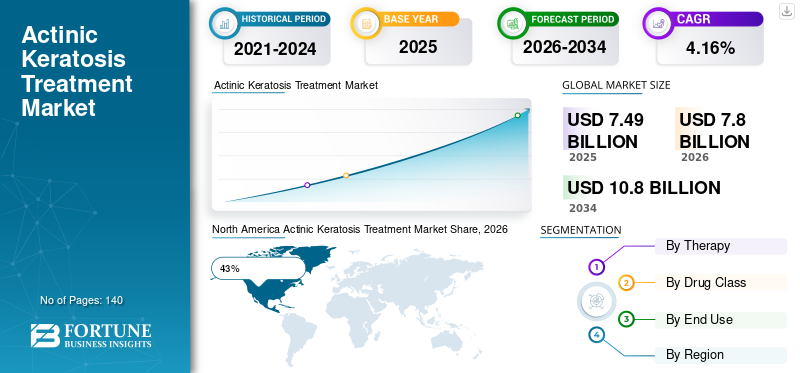
The global actinic keratosis treatment market size was valued at USD 7.48 billion in 2025. The market is projected to grow from USD 7.79 billion in 2026 to USD 10.80 billion by 2034, exhibiting a CAGR of 4.16 % during the forecast period.

The actinic keratosis treatment market is expanding steadily due to rising prevalence of chronic skin disorders caused by prolonged ultraviolet radiation exposure. Increasing awareness regarding precancerous skin lesions and early dermatological diagnosis is supporting market demand across hospitals, dermatology clinics, and specialty treatment centers. Advanced topical therapies, photodynamic therapy systems, and minimally invasive surgical procedures are improving patient outcomes and treatment accessibility. The market is also benefiting from growing geriatric populations, increasing outdoor occupational exposure, and rising dermatology consultations globally. Pharmaceutical companies are focusing on innovative formulations, targeted therapies, and combination treatment approaches to strengthen actinic keratosis treatment market Growth and improve clinical effectiveness.
The United States accounts for 43% share of the actinic keratosis treatment market due to high incidence of sun-induced skin conditions and strong dermatology healthcare infrastructure. More than 58 million individuals in the country experience various forms of actinic keratosis symptoms annually. Increasing awareness campaigns regarding skin cancer prevention and routine dermatological screening are supporting treatment adoption. Dermatology clinics and outpatient centers are increasingly utilizing advanced topical medications, cryotherapy systems, and photodynamic treatment technologies. The presence of major pharmaceutical manufacturers and strong insurance coverage for dermatological procedures further strengthens the actinic keratosis treatment market Outlook across the United States healthcare sector.
Download Free sample to learn more about this report.
Key Takeaways
Market Size & Growth
- Global market size 2025: USD 7.48 billion
- Global market size 2034: USD 10.80 billion
- CAGR (2025–2034): 4.16 %
Market Share – Regional
- North America: 43%
- Europe: 28%
- Asia-Pacific: 21%
- Rest of World: 8%
Country-Level Shares
- Germany: 32% of Europe’s market
- United Kingdom: 27% of Europe’s market
- Japan: 35% of Asia-Pacific market
- China: 6% of Asia-Pacific market
actinic keratosis treatment market Latest Trends
The actinic keratosis treatment market is witnessing significant transformation due to technological innovation, increasing patient awareness, and rising demand for minimally invasive dermatological procedures. Pharmaceutical companies are developing advanced topical therapies with improved skin penetration and reduced irritation effects to enhance treatment outcomes. Artificial intelligence integration in dermatology diagnostics is improving early detection rates and supporting faster clinical decision-making. More than 62% of dermatology centers now utilize digital imaging systems for lesion assessment and treatment monitoring.
Download Free sample to learn more about this report.
Photodynamic therapy adoption is increasing rapidly because of its targeted treatment efficiency and reduced tissue damage. Healthcare providers are also introducing combination treatment strategies involving cryotherapy, topical agents, and laser-based technologies to improve patient recovery. The actinic keratosis treatment market Analysis further highlights rising demand for outpatient dermatology services and home-based topical treatment solutions.
actinic keratosis treatment market Dynamics
DRIVER
Rising Prevalence of Skin Disorders Caused by Ultraviolet Radiation Exposure.
The increasing incidence of actinic keratosis and other sun-induced skin disorders is a major factor driving actinic keratosis treatment market Growth worldwide. Prolonged exposure to ultraviolet radiation, environmental pollution, and changing climatic conditions are contributing to growing numbers of precancerous skin lesions among aging populations. More than 65% of diagnosed actinic keratosis cases occur among individuals above 50 years of age, increasing demand for long-term dermatological care and treatment services. Healthcare organizations are promoting early skin screening programs and awareness campaigns focused on skin cancer prevention. Dermatologists are increasingly recommending early intervention therapies to reduce progression toward squamous cell carcinoma. Pharmaceutical companies are also expanding research efforts to develop improved topical therapies and non-invasive treatment technologies.
RESTRAINT
High Treatment Costs and Recurring Therapy Requirements.
The actinic keratosis treatment market faces restraints due to the high cost associated with repeated dermatological procedures and long-term treatment management. Advanced photodynamic therapy systems, laser-based procedures, and prescription topical medications can create significant financial burden for patients without comprehensive healthcare coverage. Many patients require multiple treatment sessions because of recurring lesion development and chronic sun damage conditions. Limited access to specialized dermatology services in rural and low-income regions further restricts market penetration. More than 38% of patients in developing healthcare systems delay treatment because of affordability concerns and limited dermatological awareness. Certain topical therapies may also cause skin irritation, redness, and discomfort, reducing treatment adherence among patients. Regulatory approval complexity for innovative dermatological products can delay commercialization timelines.
OPPORTUNITY
Expansion of Personalized and Minimally Invasive Dermatology Treatments.
Growing demand for personalized skincare solutions and minimally invasive dermatological procedures is creating strong actinic keratosis treatment market Opportunities. Patients increasingly prefer non-surgical therapies that reduce treatment discomfort, recovery time, and visible scarring. More than 57% of dermatology patients now prefer topical therapies and photodynamic procedures over traditional surgical methods for early-stage lesion treatment. Biopharmaceutical companies are investing heavily in targeted immune-modulating agents and advanced topical drug formulations to improve clinical outcomes. Teledermatology expansion is also improving patient access to specialist consultations and digital lesion monitoring services. Healthcare providers are integrating AI-driven diagnostic imaging systems for faster lesion identification and treatment planning. Emerging markets are expanding dermatology infrastructure and public healthcare initiatives focused on skin disease prevention.
CHALLENGES
Limited Awareness and Delayed Diagnosis in Emerging Regions.
The actinic keratosis treatment market faces significant challenges associated with delayed diagnosis and insufficient awareness regarding precancerous skin lesions. Many individuals in developing regions remain unaware of the risks associated with chronic ultraviolet exposure and untreated skin abnormalities. Delayed diagnosis increases the possibility of lesion progression into invasive skin cancer conditions, creating additional healthcare complications. More than 41% of patients in low-resource healthcare systems seek dermatological consultation only after visible symptom progression. Shortage of trained dermatologists and limited availability of advanced diagnostic equipment further restrict early treatment adoption. Healthcare systems in several emerging economies also face reimbursement limitations and inadequate dermatology infrastructure. Pharmaceutical companies encounter challenges related to regulatory approvals, product pricing pressure, and clinical trial complexity.
actinic keratosis treatment market Segmentation
By Therapy
Topical treatments account for 49% share of the actinic keratosis treatment market due to widespread use of creams, gels, and immune-response modifiers for early-stage lesion management. Dermatologists frequently prescribe fluorouracil, imiquimod, and diclofenac-based formulations because of their effectiveness in reducing visible lesions and preventing recurrence. More than 68% of outpatient dermatology patients prefer topical therapies because they are non-invasive and suitable for home-based treatment. Pharmaceutical companies are investing in advanced topical formulations with improved skin absorption and reduced irritation effects. Combination topical therapies are also gaining popularity for enhanced lesion clearance and faster recovery outcomes.
Surgical procedures hold 29% share of the actinic keratosis treatment market due to their effectiveness in removing advanced lesions and suspicious skin abnormalities. Cryotherapy remains one of the most commonly utilized surgical methods because of its rapid lesion destruction and relatively low procedural complexity. Dermatologists also perform curettage, laser excision, and electrosurgery procedures for severe or recurrent cases. Hospitals and specialty dermatology clinics are increasingly adopting minimally invasive surgical technologies to improve precision and patient recovery. More than 44% of high-risk actinic keratosis cases require procedural intervention for biopsy confirmation and cancer prevention management.
Photodynamic therapy represents 22% share of the actinic keratosis treatment market and is rapidly gaining acceptance due to targeted lesion destruction and minimal scarring outcomes. The therapy combines photosensitizing agents with controlled light exposure to eliminate abnormal skin cells while preserving surrounding tissue integrity. More than 53% of dermatologists consider photodynamic therapy highly effective for widespread facial and scalp lesions. Healthcare providers are increasingly adopting portable light-emitting systems and advanced photosensitizing compounds to improve treatment efficiency. Patients prefer photodynamic therapy because of shorter recovery periods and lower risk of permanent skin damage.
To know how our report can help streamline your business, Speak to Analyst
By Drug Class
NSAID-based applications account for 36% share of the actinic keratosis treatment market due to increasing utilization of diclofenac formulations for anti-inflammatory lesion management. Dermatologists frequently prescribe NSAID-based topical therapies because they help reduce abnormal skin cell proliferation while minimizing patient discomfort. More than 46% of patients undergoing long-term topical therapy utilize NSAID-containing dermatological products for lesion reduction and symptom management. Pharmaceutical manufacturers are developing improved diclofenac formulations with enhanced skin penetration and reduced irritation effects. NSAID therapies are often recommended for patients with mild to moderate lesion severity because of favorable safety profiles.
By End Use
End-use healthcare facilities account for 64% share of the actinic keratosis treatment market driven by increasing patient visits to dermatology clinics, hospitals, and specialty skin treatment centers. Hospitals continue to dominate due to availability of advanced diagnostic imaging systems, surgical infrastructure, and specialized dermatology professionals. More than 72% of severe actinic keratosis cases are treated within hospital-based dermatology departments and specialty skin cancer clinics. Outpatient dermatology centers are expanding rapidly because of rising demand for minimally invasive procedures and same-day treatment services. Teledermatology integration is improving patient access to consultations and follow-up monitoring across remote healthcare environments.
actinic keratosis treatment market Regional Outlook
North America
North America Actinic Keratosis Treatment Market Share, 2026 (%)
To get more information on the regional analysis of this market, Download Free sample
North America dominates the actinic keratosis treatment market with 43% market share because of strong dermatology infrastructure, high public awareness of skin cancer prevention, and broad access to specialized care. The region continues to record a high volume of actinic keratosis diagnoses due to prolonged ultraviolet exposure, outdoor lifestyles, and aging populations. The United States remains the leading contributor, with widespread use of topical medications, cryotherapy, and photodynamic therapy in hospitals and outpatient dermatology centers. Clinics are increasingly adopting advanced imaging tools for lesion assessment and treatment monitoring. Canada is also seeing rising demand for non-surgical dermatological procedures and preventive screening programs. Pharmaceutical companies are investing in immune-modulating therapies and improved topical formulations. AI-assisted diagnostics and teledermatology platforms are improving early detection across healthcare systems. Strong reimbursement support and rising healthcare expenditure continue to strengthen treatment adoption across the region.
Europe
Europe accounts for 28% share of the actinic keratosis treatment market due to the growing prevalence of ultraviolet-induced skin disorders and expanding dermatology awareness initiatives. The region is investing heavily in preventive healthcare programs and early lesion detection systems that support timely treatment. Germany, the United Kingdom, France, and Italy remain major contributors because of advanced healthcare infrastructure and specialized dermatology clinics. Healthcare providers are increasingly adopting minimally invasive procedures such as photodynamic therapy and laser-assisted lesion removal. Pharmaceutical manufacturers are developing improved topical formulations with stronger effectiveness and better patient tolerance. Teledermatology services are improving access in rural and underserved regions. Hospitals are integrating AI-supported imaging systems for more accurate lesion diagnosis and monitoring. Rising geriatric populations and greater sun exposure awareness are supporting treatment demand throughout Europe.
Germany actinic keratosis treatment market
Germany holds 32% share within the European actinic keratosis treatment market because of strong healthcare accessibility and advanced dermatological treatment infrastructure. Dermatology clinics across the country are increasingly using digital lesion imaging systems and AI-assisted diagnostics for early detection of skin abnormalities. Hospitals and outpatient centers are adopting minimally invasive treatment technologies such as photodynamic therapy and cryotherapy systems. Pharmaceutical companies are investing in innovative topical formulations and targeted dermatology therapies to improve patient outcomes. Strong reimbursement frameworks and public healthcare support encourage treatment adoption across the country. Growing awareness regarding skin cancer prevention is driving routine dermatology consultations among high-risk populations. Germany also benefits from strong clinical research activity focused on non-invasive dermatological solutions. Demand for outpatient skin treatment procedures continues to rise because of shorter recovery periods and lower procedural risks.
United Kingdom actinic keratosis treatment market
The United Kingdom accounts for 27% share within the European actinic keratosis treatment market due to increasing dermatology consultations and stronger public awareness regarding skin cancer prevention. Nationwide healthcare initiatives are supporting early diagnosis of ultraviolet-related skin lesions and chronic dermatological conditions. Many patients prefer non-invasive therapies such as topical creams and cryotherapy procedures because they are convenient and clinically effective. Hospitals and specialty clinics are integrating AI-based imaging technologies to improve lesion detection and treatment planning. Pharmaceutical manufacturers are expanding the development of immune-modulating therapies and advanced anti-inflammatory formulations for outpatient treatment settings. Rising geriatric populations and environmental exposure are contributing to higher treatment demand across the healthcare sector. Teledermatology platforms are improving patient access to specialist consultations in remote regions. Healthcare providers are also expanding minimally invasive procedures due to growing demand for reduced recovery periods.
Asia-Pacific
Asia-Pacific represents 21% share of the actinic keratosis treatment market due to expanding healthcare infrastructure and rising awareness of chronic skin disorders. Increasing urbanization, pollution exposure, and changing environmental conditions are contributing to a higher incidence of ultraviolet-related skin abnormalities across the region. Countries including Japan, China, South Korea, and Australia are investing heavily in advanced dermatology systems and digital diagnostic technologies. Dermatology centers are increasingly using minimally invasive procedures such as photodynamic therapy and laser-assisted treatments. Pharmaceutical companies are expanding production of topical medications and anti-inflammatory therapies to improve affordability and treatment accessibility. Telemedicine is improving consultation availability in underserved healthcare environments. Hospitals and outpatient clinics are adopting AI-supported lesion imaging systems for faster diagnosis. Rising healthcare expenditure and preventive skin screening programs are accelerating treatment adoption.
Japan actinic keratosis treatment market
Japan contributes 35% share within the Asia-Pacific actinic keratosis treatment market because of advanced dermatology infrastructure and high adoption of innovative treatment technologies. Healthcare providers across the country are implementing AI-assisted imaging systems for accurate lesion identification and treatment planning. Many dermatology patients in Japan prefer minimally invasive procedures such as photodynamic therapy and laser-based treatments because of their precision and faster recovery. Pharmaceutical companies are developing advanced topical formulations with improved absorption efficiency and reduced irritation effects. Aging population growth and rising awareness of ultraviolet-related skin damage are supporting treatment demand across hospitals and specialty clinics. Japan also benefits from strong healthcare investment and advanced dermatology research capabilities. Teledermatology platforms are improving follow-up care and remote patient monitoring across urban healthcare networks.
China actinic keratosis treatment market
China accounts for 6% share within the Asia-Pacific actinic keratosis treatment market due to rapid healthcare modernization and growing awareness regarding dermatological disorders. Rising environmental pollution and prolonged sun exposure are contributing to a higher prevalence of chronic skin conditions across the country. Dermatology clinics are increasingly using digital imaging systems and minimally invasive treatment technologies for lesion management. Domestic pharmaceutical manufacturers are expanding production of topical therapies and anti-inflammatory formulations to improve treatment accessibility. Government healthcare initiatives are supporting the expansion of dermatology infrastructure across urban and rural regions. Hospitals and outpatient centers are adopting AI-driven diagnostic systems to improve lesion detection and monitoring accuracy. Increasing patient preference for non-surgical procedures is driving demand for cryotherapy and photodynamic therapy services.
Rest of World
Rest of World holds 8% share of the actinic keratosis treatment market because of improving dermatology healthcare services and increasing awareness regarding skin cancer prevention. Countries across Latin America, the Middle East, and Africa are expanding investment in specialty dermatology clinics and outpatient treatment facilities. Healthcare organizations in emerging economies are conducting awareness programs focused on ultraviolet exposure risks and early lesion diagnosis. Providers are increasingly adopting affordable topical medications and minimally invasive procedures to improve treatment accessibility. Teledermatology services are helping address shortages of trained dermatologists across remote and underserved regions. Governments are supporting healthcare digitization and preventive skin care initiatives to improve public health outcomes. Pharmaceutical manufacturers are strengthening distribution networks for topical therapies, photodynamic products, and anti-inflammatory medications.
List of Top Actinic Keratosis Treatment Companies
- Almirall, S.A
- LEO Pharma A/S
- Sun Pharmaceutical Industries Ltd.
- Novartis AG
- Galderma
- Ortho Dermatologics (Bausch Health Companies Inc.)
- BIOFRONTERA Inc
- Hill Dermaceuticals, Inc
- 3M
- Alma Lasers
Top Two Companies with Highest Market Share
- Almirall, S.A – 17% market share
- LEO Pharma A/S – 14% market share
Investment Analysis and Opportunities
The actinic keratosis treatment market is attracting increasing investment due to rising global prevalence of ultraviolet-induced skin disorders and expanding awareness regarding early dermatological intervention. Pharmaceutical companies are prioritizing investment in advanced topical formulations, immune-modulating therapies, and minimally invasive dermatology technologies. More than 59% of dermatology-focused investors are supporting development of patient-friendly treatment solutions with improved therapeutic outcomes and reduced recovery periods.
Healthcare organizations are expanding outpatient dermatology centers and teledermatology infrastructure to improve treatment accessibility across underserved regions. Investment opportunities are also growing in AI-assisted diagnostic systems and digital imaging technologies used for lesion detection and treatment monitoring. Biopharmaceutical companies are increasing clinical research activity focused on combination therapies integrating topical agents with photodynamic procedures.
New Product Development
Innovation within the actinic keratosis treatment market is accelerating due to growing demand for minimally invasive procedures and advanced dermatological therapies. Pharmaceutical companies are developing next-generation topical creams and gels with improved absorption capabilities and reduced skin irritation effects. More than 54% of newly introduced dermatology products focus on enhancing patient adherence and improving lesion clearance efficiency.
Biopharmaceutical manufacturers are investing heavily in immune-response modifiers and targeted anti-inflammatory formulations designed for long-term lesion management. Portable photodynamic therapy systems and LED-based treatment technologies are gaining popularity across outpatient dermatology centers because of shorter recovery periods and improved treatment precision. Laser-assisted dermatology devices are also undergoing continuous improvement to minimize tissue damage and optimize cosmetic outcomes.
Five Recent Developments (2023-2025)
- Almirall, S.A expanded dermatology research programs in 2024 focusing on advanced topical treatment formulations for precancerous skin lesions.
- LEO Pharma A/S introduced enhanced immune-modulating dermatology therapies in 2023 for improved actinic keratosis lesion management.
- BIOFRONTERA Inc expanded photodynamic therapy product distribution across North America in 2025 to strengthen outpatient treatment accessibility.
- Sun Pharmaceutical Industries Ltd. launched upgraded dermatological topical formulations in 2024 with improved skin absorption technology.
- Alma Lasers introduced advanced laser-assisted skin lesion treatment systems in 2025 targeting minimally invasive dermatology procedures.
Report Coverage of actinic keratosis treatment market
The actinic keratosis treatment market Report provides detailed evaluation of industry dynamics, treatment technologies, and competitive developments across global dermatology healthcare systems. The report examines major market drivers, restraints, opportunities, and operational challenges influencing treatment adoption and product innovation. It includes extensive analysis of topical therapies, surgical procedures, and photodynamic treatment technologies utilized for management of precancerous skin lesions.
Request for Customization to gain extensive market insights.
The report covers segmentation analysis by treatment type, application, and end-use healthcare facilities, highlighting market share distribution and evolving patient preferences. Regional assessment focuses on North America, Europe, Asia-Pacific, and emerging healthcare markets, identifying dermatology infrastructure development and healthcare modernization trends.



- 2021-2034
- 2025
- 2021-2024
- 140
Get 30-60 hrs Free Customization
Expand Regional and Country Coverage, Segments Analysis, Company Profiles, Competitive Benchmarking, and End-user Insights.













.webp)






-
US +1 833 909 2966 ( Toll Free )
-
Get In Touch With Us