Biomaterials Market Size, Share and Industry Analysis, By Material (Metallic, Ceramic, Polymers, and Natural), By Application (Cardiovascular, Dental, Orthopedic, Plastic Surgery, Urology, Gastroenterology, and Others), and Regional Forecast, 2026-2034
 Download Free Sample
KEY MARKET INSIGHTS
 Listen to Audio Version
- The biomaterials market size is expected to surpass USD 1.3 trillion by 2034, growing at a CAGR of 18.56%, driven by rising demand for advanced medical materials and implantable devices.
- Adoption of biomaterials is likely to accelerate with increasing use in drug delivery, tissue healing, and plastic surgery, supported by growing healthcare needs and technological advancements.
- Although biomaterials continue to evolve, their applications are expanding across cardiovascular, orthopedic, dental, and urology procedures, enhancing their role in modern healthcare.
- North America currently leads the biomaterials market, supported by strong research and development activities, increasing product launches, and a high prevalence of chronic diseases.
The global biomaterials market size was valued at USD 280.98 billion in 2025 and is projected to grow from USD 333.12 billion in 2026 to USD 1300.50 billion by 2034, exhibiting a CAGR of 18.56% during the forecast period. North America dominated the biomaterials market, with a 40.75% market share in 2025.
Biomaterials play an integral role in healthcare today. They may be natural or synthetic and are used in medical applications to enhance, replace, or support damaged tissue or a biological function. Metals, ceramics, plastics, polymers, and even living cells and tissues can be used in creating a biomaterial.
They are used for a variety of applications, such as in medical implants (including heart valves, stents, grafts, artificial joints, ligaments, tendons, and dental implants) to promote the healing of human tissues (including sutures and clips), and in drug delivery systems. The biomaterials market growth is attributed to factors such as rising prevalence of cardiovascular diseases, growing demand for implantable devices, increasing funds provided by governmental and non-governmental organizations for the development of novel products, and growing preference for these in plastic surgery and wound healing applications.
The global biomaterials market occupies a strategically important position within the medical technology ecosystem, supported by rising surgical intervention rates, increasing chronic disease prevalence, and continuous innovation in implantable devices. Competitive dynamics within the industry are influenced by material performance, biological compatibility, regulatory requirements, and long-term clinical outcomes rather than manufacturing scale alone. Biomaterials market growth remains closely associated with demographic aging, orthopedic reconstruction demand, cardiovascular disease burden, and expanding applications across regenerative medicine.
Demand patterns have evolved beyond traditional orthopedic and dental procedures. Cardiovascular implants, tissue engineering platforms, wound management products, drug delivery systems, and minimally invasive medical devices are creating broader avenues for commercialization. Material selection increasingly reflects treatment-specific requirements, encouraging suppliers to develop differentiated solutions optimized for durability, osseointegration, biodegradability, and biological response. These factors continue to shape the biomaterials market size and influence procurement strategies across healthcare systems.
Innovation intensity has become a defining characteristic of the industry. Metallic biomaterials retain strong relevance within load-bearing applications, while polymers, ceramics, and naturally derived materials are gaining wider acceptance in regenerative therapies and advanced medical devices. Additive manufacturing technologies, bioactive coatings, and customized implant solutions are further expanding the addressable market and strengthening product differentiation. Such developments are contributing to evolving biomaterials market trends and encouraging collaboration among material suppliers, medical device manufacturers, and research institutions.
Healthcare infrastructure expansion and increasing access to advanced procedures are improving demand visibility across emerging economies. Regulatory scrutiny surrounding implant safety and long-term performance remains stringent, creating high barriers to entry and supporting established participants. Despite approval complexity and reimbursement pressures, the biomaterials market growth is expected to remain supported by diversified clinical applications, technological progress, and increasing preference for patient-specific therapeutic solutions.
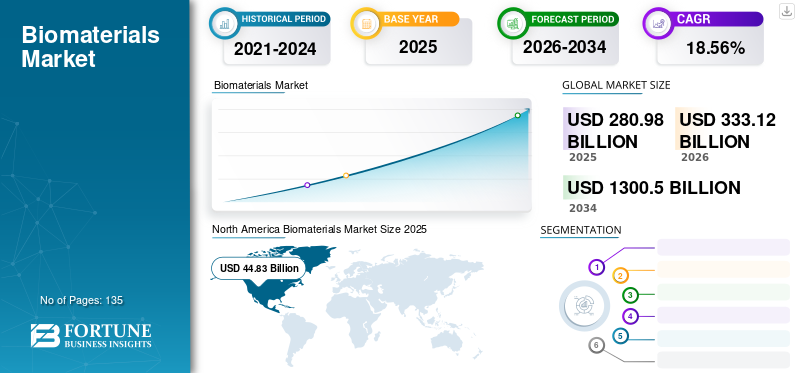
Download Free sample to learn more about this report.
Biomaterials Market Key Takeaways
 Market Size & Forecast
- 2025 Market Size: USD 280.98 billion
- 2026 Market Size: USD 333.12 billion
- 2034 Forecast Market Size: USD 1300.50 billion
- CAGR: 18.56% from 2026–2034
 Market Share
- North America dominated the biomaterials market with a 40.75% share in 2025.
- The metallic segment accounted for a 30.1% market share.
- The cardiovascular segment held the largest market share due to increasing adoption of biomaterials in cardiovascular devices.
 Key Regional Highlights
North America
North America market was valued at USD 44.83 billion in the year 2019. This dominance was attributable to high government funding in research and development, high prevalence of cardiovascular diseases and orthopedic replacements, and growing product launches.
Europe
Europe emerged as the second-largest regional market, driven by the launch of advanced biomaterial-based medical products and implants.
Asia Pacific
Asia Pacific is expected to witness the fastest growth due to the expanding geriatric population and rising incidence of cardiovascular and orthopedic disorders.
U.S.
Approximately 1.6 million arthroplasties were performed in the U.S. in 2017, out of which over 966,000 were knee replacements.
Japan
Rising demand for advanced biomaterials, a growing elderly population, and increasing adoption of minimally invasive medical procedures are expected to support market expansion.
Read More

Biomaterials Market Dynamics
Biomaterials Market Trends
[omMThe oawEiQZ]
Growing Demand for Biomaterials in Plastic Surgery and Wound Healing Applications
The biomedical burden of treating injured or diseased organs continues to increase in parallel with the expanding population. Varieties of implantable devices are preferred due to their proven clinical efficacy and are currently being used as a scaffold for the reconstruction of soft or hard defects. In addition to this, they offer various advantages in wound healing applications. They promote tissue formation, preserve volume and shape, and shorten the time of wound healing. Through strategic collaborations and acquisitions, key players are expanding their product portfolios for plastic surgery and wound-healing applications.
- North America witnessed a growth from USD 40.84 billion in 2018 to USD 44.83 billion in 2019.
For instance, in December 2019, Advanced Medical Solutions (AMS), a surgical and wound care company, acquired Biomatlante, a player in surgical biomaterial technologies.
Material customization and regenerative healthcare are redefining biomaterials market trends. Physicians and device manufacturers increasingly prioritize treatment-specific solutions designed to improve healing outcomes and reduce revision procedures. This shift has accelerated interest in bioactive surfaces, degradable materials, and personalized implant technologies.
Three-dimensional printing technologies are gaining strategic importance across orthopedic and dental applications. Customized implants and patient-specific devices improve anatomical precision while supporting better procedural outcomes. Additive manufacturing capabilities are therefore becoming an increasingly important source of competitive differentiation.
Research activity surrounding biodegradable and naturally derived materials continues to expand. Regenerative medicine platforms frequently utilize materials capable of supporting tissue growth and controlled degradation. These technologies are attracting investment because they offer the potential to improve biological integration and reduce long-term complications associated with permanent implants.
Market Drivers
Increasing Incidence of Cardiovascular Diseases Globally to Fuel Market Growth
Cardiovascular diseases are one of the leading causes of death globally. Although surgical and pharmacological interventions dramatically improve cardiovascular patients' quality of life, cheaper and less invasive procedures are always preferable. Biomaterials, both natural and synthetic, exhibit great potential in cardiac repair and regeneration. The application of injectable biomaterials results in decreased left ventricular dilatation, increased angiogenesis, and preservation of cardiac function. The growing prevalence of cardiovascular diseases is thus projected to fuel this market growth during the forecast period.
For instance, according to CDC estimates in 2019, cardiovascular disease is the leading cause of death in the U.S., contributing to an estimated 1 in 4 deaths every year.
Rising Demand for Implantable Devices to Provide Lucrative Growth to the Market
The increasing prevalence of cardiovascular diseases, orthopedic replacements, arthritis, and sports injuries would lead to the growing demand for implantable devices. Also, unhealthy lifestyles, lack of physical activities, and a rising geriatric population are triggering chronic health conditions. These factors are responsible for the increasing preference for implantable devices among the patient population. Biomaterial-based implants and devices enhance the quality of our lives by extending the functionality of essential body systems. For instance, according to CDC estimates, approximately 54.4 million adults in the U.S. were diagnosed with arthritis in 2015.
Demographic aging and the rising incidence of chronic diseases remain fundamental drivers of the biomaterials market. The increasing prevalence of osteoarthritis, cardiovascular disorders, dental diseases, and degenerative conditions is expanding procedural volumes across healthcare systems. Implant-based therapies have consequently become more important for restoring mobility, improving quality of life, and reducing long-term clinical complications.
Clinical innovation represents another important growth catalyst. Medical device manufacturers are increasingly incorporating advanced biomaterials into cardiovascular implants, orthopedic systems, wound management products, and regenerative therapies. Product performance requirements continue to encourage the development of materials with enhanced biocompatibility, durability, and tissue integration capabilities.
Healthcare infrastructure expansion is strengthening biomaterials market growth across emerging economies. Greater access to surgical care, rising healthcare expenditure, and broader availability of advanced treatment modalities are supporting adoption. Demand visibility remains particularly favorable in orthopedic reconstruction, cardiovascular interventions, and dental implant procedures.
Market Restraints
Stringent Clinical and Regulatory Processes to Hamper Market Growth
Biomaterial-based devices must undergo a stringent clinical and regulatory process to ensure their efficacy and quality. The major reason for this is the fact that most of the biomaterial devices are implantable. Hence, before their market approval, they must undergo various complicated, restrictive clinical and regulatory processes that depend on composition. This makes the market players apprehensive of investing in this market. These factors are expected to restrain the market growth during the forecast period.
Regulatory complexity represents one of the principal constraints affecting the biomaterials market. Implantable materials are subject to extensive validation requirements covering toxicity, mechanical performance, degradation characteristics, and biological compatibility. Lengthy approval pathways frequently increase development costs and delay commercialization, particularly for next-generation materials used in regenerative medicine applications.
Manufacturing challenges also influence industry economics. Advanced biomaterials often require highly specialized production processes, stringent quality control measures, and carefully managed raw material sourcing. Such requirements contribute to elevated costs and create barriers for smaller participants seeking entry into technically demanding segments.
Market Opportunities
Regenerative medicine represents one of the most attractive opportunities within the biomaterials market. Tissue engineering, stem cell therapies, and biologically active scaffolds require sophisticated materials capable of supporting cellular growth and controlled healing processes. Such applications are expected to broaden the therapeutic scope of biomaterial technologies and create higher-value revenue streams.
Orthopedic and dental procedures continue to offer favorable long-term prospects. Aging populations and increasing acceptance of implant-based treatments are supporting demand for advanced materials with improved durability and biological compatibility. Emerging healthcare markets are also expanding access to reconstructive procedures, creating additional opportunities for suppliers.
Personalized medicine is strengthening the importance of customized biomaterials. Patient-specific implants and tailored therapeutic devices are gaining traction as additive manufacturing technologies mature. These developments improve procedural precision and encourage greater collaboration between material suppliers and device manufacturers.
Biomaterials Market Segmentation Analysis
By Material Analysis
In terms of material, the market has been segmented into metallic, ceramic, polymer, and natural biomaterials.
To know how our report can help streamline your business, Speak to Analyst
Metallic Biomaterial Segment to Hold a Leading Market Share
Metallic
The metallic segment is anticipated to dominate the market. Metallic ones are engineered systems designed to provide internal support to biological tissues. They are preferred the most and are largely used for joint replacements, dental implants, stents, and orthopedic fixations. Their increasing adoption for these applications is due to their good mechanical properties, such as stiffness, which makes them suitable for load-bearing implants. The advantages provided by these and the high cost of metals would contribute to the growth of this segment. It would also hold the dominant share during the forecast period.
Mechanical strength and fatigue resistance remain the defining attributes supporting demand for metallic biomaterials. Titanium alloys, stainless steel, and cobalt-chromium materials continue serving critical roles in load-bearing implants and permanent medical devices where structural integrity represents a primary requirement. Their long history of clinical validation strengthens physician confidence and supports broad utilization.
Orthopedic and cardiovascular procedures account for a substantial share of metallic biomaterial consumption. Joint replacements, trauma fixation systems, dental implants, and vascular devices frequently depend on metals because of their durability and wear resistance. Material selection often prioritizes reliability and long-term functionality rather than manufacturing economics.
Ceramic
Biological inertness and exceptional wear resistance provide the foundation for ceramic biomaterial adoption. Alumina, zirconia, and calcium phosphate materials are increasingly utilized in orthopedic, dental, and reconstructive applications requiring superior chemical stability and compatibility with surrounding tissues. Their performance characteristics support long-term implant reliability and favorable clinical outcomes.
Dental restoration procedures represent a major source of demand. Crowns, implants, and prosthetic systems frequently employ ceramics because aesthetic qualities and tissue compatibility are highly valued by clinicians and patients. Orthopedic applications also benefit from ceramic components designed to minimize wear-related complications.
Bioactive ceramics have attracted growing attention within regenerative medicine. Materials capable of stimulating bone formation and promoting tissue repair are expanding therapeutic possibilities across reconstructive procedures. Such developments are strengthening the role of ceramics within advanced healthcare technologies.
Polymers
Versatility and processability distinguish polymer biomaterials from other material categories. Medical-grade polymers are increasingly utilized across cardiovascular devices, orthopedic implants, drug delivery systems, and wound management products because flexibility and tailored degradation profiles enable diverse clinical applications. Product customization capabilities further enhance their commercial attractiveness.
Minimally invasive procedures have accelerated polymer adoption. Catheters, vascular grafts, sutures, and implantable devices frequently rely on polymer technologies optimized for flexibility and patient comfort. Such characteristics align with healthcare trends favoring less invasive treatment approaches.
Biodegradable polymers represent an important area of innovation. Controlled degradation and tissue regeneration capabilities are creating opportunities in regenerative medicine and targeted therapeutic delivery systems. These applications support higher-value product development and strengthen the competitive position of polymer-based technologies.
Natural
Biological functionality and regenerative potential characterize the growing importance of natural biomaterials. Collagen, hyaluronic acid, gelatin, and other naturally derived substances are gaining wider acceptance because their interaction with living tissues supports healing and cellular regeneration. Such characteristics are particularly valuable in advanced therapeutic applications.
Tissue engineering and wound care represent important demand centers. Scaffold materials and regenerative products increasingly rely on naturally derived components to mimic physiological environments and encourage tissue repair. These capabilities are expanding the clinical relevance of biological materials.
Patient preferences and sustainability considerations also support adoption. Naturally sourced materials often align with emerging trends emphasizing biocompatibility and reduced long-term complications. Research programs focused on bioengineered alternatives are creating additional opportunities for innovation.
By Application Analysis
Cardiovascular Segment to Account for the Maximum Share
Based on application, the market is segmented into cardiovascular, dental, orthopedic, plastic surgery, urology, gastroenterology, and others.
Cardiovascular
The cardiovascular segment dominated the market in 2019. The growth is attributed to the rising prevalence of cardiovascular diseases and the growing adoption of biomaterials in advanced cardiovascular devices. They exhibit a great potential in cardiac repair and regeneration. According to the Centers for Disease Control and Prevention, approximately 30.3 million people in the U.S. were diagnosed with heart disease in 2017.
Disease prevalence and procedural complexity underpin the dominant position of cardiovascular applications within the biomaterials market. The rising incidence of coronary artery disease, heart valve disorders, and peripheral vascular conditions continues to increase demand for advanced implantable devices and minimally invasive therapeutic systems. Clinical outcomes and long-term durability remain central considerations influencing material selection.
Stents, vascular grafts, heart valves, and pacemaker components account for substantial biomaterial consumption. Metallic alloys and polymer-based materials are widely utilized because cardiovascular interventions require exceptional biocompatibility and mechanical reliability. Product performance directly affects patient safety and procedural success.
Technological innovation is accelerating development across this segment. Drug-eluting devices, bioresorbable materials, and next-generation vascular systems are broadening treatment possibilities and supporting higher-value product categories. Manufacturers are increasingly focusing on solutions that minimize complications and improve long-term outcomes.
Dental
Aesthetic expectations and increasing acceptance of restorative procedures are strengthening demand across dental applications. Tooth loss, periodontal diseases, and aging populations continue to support procedural volumes worldwide. Dental implants and prosthetic systems increasingly rely on advanced materials capable of delivering both functional performance and aesthetic appeal.
Titanium, zirconia ceramics, and specialized polymers represent key materials used in restorative dentistry. Their durability, corrosion resistance, and tissue compatibility support long-term clinical success and patient satisfaction. Material selection frequently balances mechanical strength with cosmetic considerations.
Digital dentistry is reshaping treatment approaches. Computer-aided design technologies and additive manufacturing are enabling customized implants and prosthetic solutions with improved precision. Such advances are enhancing procedural efficiency and supporting product differentiation.
Orthopedic
The orthopedic segment is among the other major application areas. The growing prevalence of orthopedic replacements, along with the introduction of new biomaterials, is expected to boost the growth of this segment during the forecast period.
Mobility restoration and aging demographics form the foundation of orthopedic biomaterial demand. The increasing incidence of osteoarthritis, fractures, and musculoskeletal disorders is driving procedural growth across joint reconstruction and trauma management. Orthopedic interventions represent one of the largest application areas within the biomaterials market because of the widespread need for implant-based therapies.
Hip replacements, knee implants, spinal devices, and fixation systems account for substantial material consumption. Metallic biomaterials dominate high-load applications, while ceramics and polymers contribute to wear reduction and improved biological integration. Performance requirements remain particularly demanding because implants are expected to function over extended periods.
Plastic Surgery
Cosmetic procedures and reconstructive interventions have broadened the scope of biomaterial utilization in plastic surgery. Rising awareness regarding aesthetic treatments, coupled with advances in reconstructive techniques, has expanded demand for implantable materials and tissue repair solutions. Functional restoration remains equally important in post-trauma and post-oncology procedures.
Silicone-based products, biological matrices, and polymer materials are widely employed across facial reconstruction, breast implants, and soft tissue augmentation. Product safety and long-term compatibility strongly influence physician preferences and regulatory scrutiny.
Regenerative approaches are introducing new opportunities. Tissue scaffolds and biologically derived materials are improving healing processes and enhancing surgical outcomes. These technologies are attracting interest because they offer greater integration with surrounding tissues.
Urology
Clinical demand associated with urinary disorders and renal diseases supports biomaterial utilization across urological procedures. Aging populations and increasing prevalence of chronic conditions are expanding the need for implantable devices and therapeutic interventions designed to improve patient outcomes. Reliability and biocompatibility remain essential requirements within this field.
Catheters, urinary slings, stents, and artificial sphincters represent major areas of application. Polymers and metallic materials are commonly selected because they provide flexibility, durability, and resistance to biological degradation. Device performance directly influences procedural success and quality of life.
Gastroenterology
Minimally invasive therapeutic approaches are increasing the importance of biomaterials within gastroenterology. Digestive disorders, obesity management procedures, and gastrointestinal cancers are generating demand for advanced devices requiring high levels of biological compatibility and procedural reliability. Treatment effectiveness increasingly depends on material performance.
Endoscopic devices, gastrointestinal stents, sutures, and drug delivery systems constitute important areas of consumption. Polymer technologies are particularly significant because flexibility and controlled degradation properties are advantageous in gastrointestinal applications. Material innovation supports improved patient outcomes and reduced recovery times.
REGIONAL ANALYSIS
North America Biomaterials Market Size 2025
To get more information on the regional analysis of this market, Download Free sample
Geographically, the market is segmented into North America, Europe, Asia Pacific, Latin America, and the Middle East & Africa.
North America Biomaterials Market Analysis
North America market was valued at USD 44.83 billion in the year 2019. This dominance was attributable to factors such as high government funding in research and development, high prevalence of cardiovascular diseases and orthopedic replacements in countries such as the U.S., and a growing number of new product launches by key market payers.
For instance, according to a research study, approximately 1.6 million arthroplasties were performed in the U.S. in 2017, out of which over 966,000 were knee replacements. Europe is expected to hold the second position in the implantable biomaterials market during the forecast period. Increased launches of innovative products by key players are mainly responsible for market expansion in the region.
Advanced healthcare infrastructure and strong medical device innovation underpin North America's leadership within the biomaterials market. Orthopedic reconstruction, cardiovascular interventions, and regenerative medicine applications generate substantial demand across the region. Research collaborations between industry participants and academic institutions accelerate product development. Favorable reimbursement frameworks and high procedural volumes support long-term biomaterials market growth and technology adoption.
United States Biomaterials Market
The United States represents the largest contributor to the biomaterials market size owing to its sophisticated healthcare ecosystem and strong medical technology sector. Demand is driven by cardiovascular procedures, orthopedic implants, and dental restoration applications. Clinical research capabilities and regulatory expertise support innovation. Rising procedural volumes and increasing interest in personalized therapies strengthen the country's biomaterials market position.
Asia-Pacific Biomaterials Market Analysis
Asia Pacific is expected to exhibit the highest growth rate owing to a rise in the geriatric population, along with the increasing patient pool of cardiovascular diseases and orthopedic replacements. Latin America and the Middle East & Africa are expected to reflect a moderate growth, attributable to the growing adoption of biomaterials for dental prosthetic designing, growing medical tourism, and increasing spending on minimally invasive procedures. Moreover, rapid developments in the region and growing awareness are the key factors that are anticipated to boost the market growth in these regions during the forecast period.
Expanding healthcare infrastructure and rising surgical volumes position the Asia-Pacific as a major growth center for the biomaterials market. Increasing healthcare expenditure and improving access to advanced procedures are supporting wider adoption. Orthopedic, dental, and cardiovascular applications account for substantial demand. Manufacturing investments and medical technology development are enhancing the region's long-term biomaterials market growth prospects.
Japan Biomaterials Market
Demographic aging and high healthcare standards make Japan a strategically significant biomaterials market. Orthopedic procedures and cardiovascular interventions account for considerable material consumption. Precision manufacturing capabilities and strong expertise in medical technologies support innovation. Research focused on regenerative medicine and minimally invasive therapies strengthens Japan's role in global biomaterials market trends and technological advancement.
China Biomaterials Market
Healthcare modernization and rapid expansion of medical device manufacturing are elevating China's role within the biomaterials market. The rising prevalence of chronic diseases and increasing access to surgical care support demand across multiple applications. Domestic innovation initiatives and capacity expansion are reshaping competitive dynamics. Large patient populations provide strong opportunities for sustained biomaterials market growth.
Europe Biomaterials Market Analysis
Regulatory sophistication and established healthcare systems characterize the European biomaterials market. Demand originates from orthopedic surgery, cardiovascular care, and dental procedures requiring advanced materials and long-term clinical performance. Sustainability considerations and innovation in regenerative medicine influence product development priorities. Strong scientific expertise and extensive manufacturing capabilities contribute to steady biomaterials market growth across Europe.
Germany Biomaterials Market
Engineering excellence and a strong medical device industry reinforce Germany's importance within the biomaterials market. Orthopedic implants, dental systems, and advanced surgical technologies represent major application areas. Research intensity and collaboration between manufacturers and healthcare institutions encourage innovation. High clinical standards and increasing adoption of next-generation implant technologies support Germany's contribution to the biomaterials market share.
United Kingdom Biomaterials Market
Academic research capabilities and an advanced life sciences sector support the United Kingdom biomaterials market. Demand is concentrated in regenerative medicine, orthopedic reconstruction, and cardiovascular devices. Collaborative ecosystems involving universities and biotechnology companies strengthen innovation activities. Growing interest in personalized healthcare and tissue engineering technologies creates favorable conditions for continued market expansion.
Latin America Biomaterials Market Analysis
Improving healthcare access and growing awareness of advanced medical treatments are supporting biomaterials demand across Latin America. Orthopedic implants, dental procedures, and cardiovascular therapies constitute important application areas. Economic development and expanding private healthcare infrastructure are improving treatment accessibility. Rising investments in medical technologies contribute to the gradual biomaterials market growth throughout the region.
Middle East & Africa Biomaterials Market Analysis
Healthcare infrastructure development and increasing investment in specialized medical services are strengthening the Middle East & Africa biomaterials market. Orthopedic and cardiovascular procedures represent important sources of demand. Improving access to advanced healthcare technologies supports wider adoption. Expanding medical capabilities and demographic trends provide favorable conditions for long-term biomaterials market growth.
Biomaterials Industry Competitive Landscape
Industry Leaders to Strongly Focus on New Product Developments to Maintain Competitive Position
Leading players in this market include Wright Medical Technology, Inc., Invibio Ltd., and Evonik Industries AG. Expansion of their product portfolios through various new product developments and inorganic growth through acquisition, mergers, and partnerships are the major strategies adopted by these players to maintain their dominance in the market. Along with this, a strong emphasis on the strategic expansion of their global presence through the network of distribution channels spread across the globe is likely to provide a strong foothold in this market.
Competitive dynamics within the biomaterials market are shaped by material science capabilities, regulatory expertise, intellectual property portfolios, and long-term clinical validation rather than production scale alone. Product reliability and biological performance represent critical differentiators because healthcare providers prioritize safety, durability, and established clinical outcomes. High regulatory barriers and lengthy qualification cycles create significant entry challenges, reinforcing the importance of technical specialization and scientific credibility.
Major participants, including Johnson & Johnson MedTech, Zimmer Biomet, Stryker Corporation, Medtronic, Baxter International, Evonik Industries, DSM-Firmenich, Covestro, Carpenter Technology Corporation, and Berkeley Advanced Biomaterials, maintain substantial biomaterials market share through diversified portfolios and extensive research capabilities. These organizations benefit from established physician relationships, broad distribution networks, and continuous investment in advanced materials supporting orthopedic, cardiovascular, dental, and regenerative medicine applications.
Strategic priorities across the industry increasingly emphasize higher-value technologies. Companies are directing resources toward bioactive materials, biodegradable polymers, antimicrobial coatings, and patient-specific implant solutions to strengthen differentiation and improve clinical outcomes. Additive manufacturing and surface engineering technologies are also emerging as important competitive factors because they enable customized devices and enhanced biological integration.
Collaboration has become a defining feature of the biomaterials ecosystem. Medical device manufacturers, biotechnology firms, research institutions, and healthcare providers are pursuing joint development initiatives aimed at accelerating commercialization and reducing development risk. Such partnerships support innovation across tissue engineering, wound healing, and minimally invasive therapeutic applications.
Top Biomaterials Companies Analyzed
- Invibio Ltd (Washington)
- Wright Medical Technology, Inc. (United States)
- Evonik Industries AG (Germany)
- Zimmer Biomet (United States)
- DePuy Synthes Companies (United States)
- DSM Biomedical, Inc. (Netherlands)
- Corbion NV (Netherlands)
- Other Players
KEY INDUSTRY DEVELOPMENTS
- October 2025: Heraeus Medical launched the heracure brand following the integration of INNOTERE GmbH and expanded its regenerative orthopedics portfolio with resorbable biomaterials for bone regeneration. The strategic purpose was to strengthen the company's presence in regenerative orthopedic therapies and broaden its biomaterials business beyond bone cement technologies. Technologies and capabilities involved included calcium phosphate-based bone substitute biomaterials and a patented three-dimensional printing process for shaped implants.
- April 2025: Covation Biomaterials introduced BioPTMEG at Chinaplas 2025 to expand its portfolio of renewable-performance biomaterials. The initiative aimed to reduce dependence on fossil-derived raw materials while providing equivalent performance characteristics for downstream applications. Technologies and capabilities involved included 100% bio-based polytetramethylene ether glycol derived from annually renewable feedstocks and low-emission material production processes.
- January 2026: The Bio-Design and Manufacturing Conference (BDMC2026) Organizing Committee and Zhejiang University announced the sixth International Conference on Biomaterials, Bio-Design and Manufacturing in Hong Kong. The strategic purpose was to accelerate interdisciplinary collaboration across biomaterials, tissue engineering, and biomanufacturing ecosystems. Technologies and capabilities involved included three-dimensional bioprinting, bioelectronics, organ-on-chip systems, and artificial intelligence-enabled biomanufacturing platforms.
- February 2026: The Federation of European Materials Societies (FEMS) formally promoted participation in the 35th Annual Conference of the European Society of Biomaterials. The initiative was intended to strengthen collaboration between materials scientists and regenerative medicine researchers across Europe. Technologies and capabilities involved included advanced biomaterials, tissue engineering platforms, and translational regenerative medicine technologies
REPORT COVERAGE
The biomaterials market report offers qualitative and quantitative insights on the biomaterials industry and the detailed analysis of market size & growth rate for all possible segments in the market. Along with this, the report provides an elaborate analysis of the market dynamics, restraints, competitive landscape, regional analysis, and opportunities. It further offers the regulatory scenario for key countries, key industry developments such as mergers & acquisitions, an overview of critical countries, and snapshots on the novel & upcoming innovations.
Request for Customization to gain extensive market insights.
Report Scope & Segmentation
|
ATTRIBUTE |
DETAILS |
|
Study Period |
2021-2034 |
|
Base Year |
2025 |
|
Forecast Period |
2026-2034 |
|
Historical Period |
2021-2034 |
|
Unit |
Value (USD billion) |
|
Segmentation |
By Material
|
|
By Application
|
|
|
By Geography
|
Frequently Asked Questions
According to Fortune Business Insights, the global biomaterials market was valued at USD 110.0 billion in 2019 and is projected to reach USD 420.6 billion by 2032, expanding at a CAGR of 10.9% during the forecast period.
The biomaterials market is expected to grow at a compound annual growth rate (CAGR) of 10.9% from 2020 to 2032. Earlier forecasts also noted a 12.2% CAGR through 2027, reflecting strong growth momentum.
Biomaterials market, the metallic biomaterials segment holds the lead by material type.
Biomaterials are widely used in cardiovascular (stents, grafts), orthopedic (joint replacements, bone fixations), dental implants, plastic surgery, urology, and gastroenterology. The cardiovascular and orthopedic segments drive demand due to high prevalence of chronic diseases and increasing implant procedures.
Prominent players shaping the biomaterials landscape include Invibio Ltd, Wright Medical Technology, Inc., Evonik Industries AG, Zimmer Biomet, DePuy Synthes, DSM Biomedical, and Corbion NV, many of which are expanding via product innovations, partnerships, and acquisitions.
North America led the market in 2019, accounting for around 40.75% of the total market share (about USD 44.8 billion), driven by strong government R&D funding, high demand for implants, and innovative product launches.
Despite its growth, the market faces challenges such as stringent regulatory approval processes, biocompatibility and sterilization issues, high manufacturing costs, and complexities in introducing novel biomaterials particularly for injectable cardiac therapies.



- 2021-2034
- 2025
- 2021-2024
- 135
Get 30-60 hrs Free Customization
Expand Regional and Country Coverage, Segments Analysis, Company Profiles, Competitive Benchmarking, and End-user Insights.













.webp)






Related Reports
-
US +1 833 909 2966 ( Toll Free )
-
Get In Touch With Us