 Download Free Sample



Get a Quote
Receive a tailored pricing based on your needs.
- Choose license type
- Multiple user options
- Custom scope & coverage
- Fast turnaround
"Designing Growth Strategies is in our DNA"
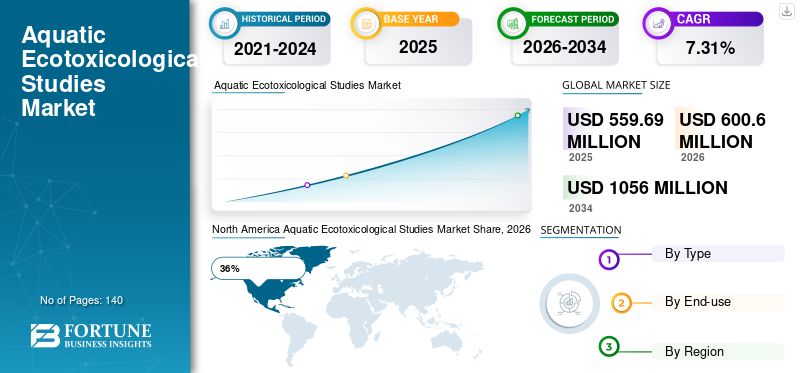
The global aquatic ecotoxicological studies market size was valued at USD 559.69 billion in 2025. The market is projected to grow from USD 600.6 billion in 2026 to USD 1056 billion by 2034, exhibiting a CAGR of 7.31% during the forecast period.

The aquatic ecotoxicological studies market is a critical segment of environmental testing services focused on evaluating the effects of chemicals, pesticides, pharmaceuticals, industrial discharges, and agricultural products on aquatic organisms and ecosystems. Increasing environmental regulations, growing concerns regarding water pollution, and rising demand for ecological risk assessments are supporting market expansion. Aquatic ecotoxicological studies are widely used during product registration and regulatory approval processes across multiple industries. The aquatic ecotoxicological studies market report highlights increasing adoption of laboratory-based and field-based testing methods to assess environmental safety. Demand for reliable aquatic toxicity data continues to grow among manufacturers, regulatory authorities, and environmental organizations worldwide.
The United States represents a major contributor to the aquatic ecotoxicological studies market due to extensive environmental monitoring programs and strict ecological compliance requirements. More than 35% of environmental risk assessments conducted within the country involve aquatic toxicity evaluations. Demand is particularly strong from agrochemical, pharmaceutical, industrial chemical, and biotechnology sectors. Regulatory frameworks require extensive testing of substances that may impact aquatic ecosystems, driving continuous demand for ecotoxicological services. The USA aquatic ecotoxicological studies market analysis indicates increasing utilization of advanced testing methodologies, automated laboratory systems, and predictive ecotoxicology models. Growing investments in environmental protection initiatives and water quality management programs continue supporting market development.
Download Free sample to learn more about this report.
The aquatic ecotoxicological studies market trends reveal increasing adoption of advanced analytical technologies and alternative testing methods designed to improve study accuracy and operational efficiency. Environmental agencies and manufacturers are increasingly emphasizing ecological sustainability, resulting in greater demand for aquatic toxicity evaluations during product development and registration processes. One of the most significant trends involves the integration of digital data management systems and artificial intelligence tools within ecotoxicology laboratories. These technologies enhance data interpretation, reduce study timelines, and improve regulatory reporting capabilities. More than 52% of newly established testing facilities now incorporate automated monitoring systems for aquatic organisms.
Download Free sample to learn more about this report.
The aquatic ecotoxicological studies market research report also highlights growing interest in chronic toxicity testing due to increased focus on long-term ecological impacts. Bioaccumulation studies are receiving greater attention as regulators seek comprehensive understanding of chemical persistence within aquatic food chains. Another important trend involves expanding use of zebrafish, daphnia, algae, and aquatic invertebrates as model organisms for toxicity assessments. Demand for environmentally sustainable chemical development is encouraging manufacturers to conduct extensive ecological screening during early-stage product development. These trends continue strengthening the role of aquatic ecotoxicological studies within global environmental management strategies.
Increasing Environmental Regulations and Ecological Risk Assessment Requirements
The primary driver of the aquatic ecotoxicological studies market growth is the increasing implementation of environmental regulations governing chemical usage and aquatic ecosystem protection. Regulatory agencies require extensive aquatic toxicity data before approving pesticides, pharmaceuticals, industrial chemicals, and consumer products. More than 68% of newly introduced chemical substances undergo aquatic ecotoxicological evaluations during registration procedures. Governments worldwide continue strengthening environmental compliance frameworks to address water pollution concerns. aquatic ecotoxicological studies industry analysis indicates growing demand for toxicity assessments involving fish, algae, aquatic plants, and invertebrates. The need for scientifically validated ecological risk assessments remains a major factor supporting market expansion across developed and developing economies.
High Operational Costs and Lengthy Testing Procedures
The aquatic ecotoxicological studies market faces restraints associated with the complexity and cost of conducting regulatory-compliant toxicity studies. Many aquatic toxicity assessments require specialized laboratory infrastructure, controlled environmental conditions, and highly trained scientific personnel. More than 44% of testing laboratories identify study duration and operational expenses as significant challenges. Chronic toxicity evaluations often require extended observation periods, increasing resource utilization. Regulatory documentation requirements further add to project complexity. Small and medium-sized organizations may experience difficulties managing the financial burden associated with comprehensive ecotoxicological programs. These factors can limit market accessibility and slow adoption of extensive testing protocols in certain regions.
Expansion of Sustainable Product Development Initiatives
Growing emphasis on sustainable manufacturing practices presents substantial opportunities for the aquatic ecotoxicological studies market. Chemical producers, pharmaceutical companies, and agricultural organizations increasingly prioritize environmentally responsible product development strategies. More than 57% of newly developed agricultural formulations now undergo expanded ecological screening procedures. Demand for green chemistry solutions and environmentally compatible products is encouraging greater investment in ecotoxicological assessments. The aquatic ecotoxicological studies market outlook remains favorable as companies seek to minimize ecological impacts and strengthen regulatory compliance. Emerging industries focused on biodegradable materials and environmentally friendly formulations are creating additional opportunities for testing service providers globally.
Evolving Regulatory Requirements across Regions
One of the major challenges within the aquatic ecotoxicological studies market involves varying regulatory requirements across international jurisdictions. Testing protocols, reporting standards, and acceptance criteria frequently differ between regions, increasing complexity for manufacturers operating globally. More than 41% of multinational organizations report challenges related to regulatory harmonization. Laboratories must continuously adapt methodologies to meet changing compliance expectations. Maintaining accreditation standards and ensuring data consistency across studies can be resource-intensive. The increasing complexity of environmental legislation requires ongoing investments in scientific expertise and laboratory capabilities. These challenges contribute to operational uncertainty and increased administrative requirements throughout the industry.
Acute Toxicity Tests account for 34% of the aquatic ecotoxicological studies market share. These studies evaluate the short-term effects of chemical exposure on aquatic organisms such as fish, algae, and invertebrates. Regulatory agencies frequently require acute toxicity data during product registration processes because these studies provide rapid assessment of potential environmental hazards. Demand remains particularly strong among agrochemical and industrial chemical manufacturers. Acute toxicity testing offers relatively shorter study durations compared to chronic assessments, making it a widely utilized approach.
Chronic Toxicity Tests represent 29% of the aquatic ecotoxicological studies market share and focus on long-term ecological impacts of chemical exposure. These studies assess reproductive performance, growth patterns, survival rates, and behavioral responses over extended periods. Regulatory authorities increasingly emphasize chronic toxicity data to better understand ecological consequences. Demand is particularly strong within pharmaceutical, pesticide, and specialty chemical industries. Chronic studies provide comprehensive information regarding environmental persistence and cumulative biological effects. Advancements in laboratory monitoring technologies are improving study precision and reliability.
Bioaccumulation Studies account for 21% of the aquatic ecotoxicological studies market share. These studies examine the accumulation of chemicals within aquatic organisms and evaluate transfer potential through food chains. Regulatory agencies increasingly require bioaccumulation data for substances suspected of environmental persistence. Fish species remain among the most frequently utilized organisms for such evaluations. Demand is rising due to concerns regarding long-term ecological exposure and contaminant concentration within aquatic ecosystems.
Biodegradation Studies: Biodegradation Studies hold 16% of the aquatic ecotoxicological studies market share and assess the breakdown of chemical substances within aquatic environments. These studies help determine environmental persistence and support regulatory evaluations concerning ecological sustainability. Demand is increasing as manufacturers seek to develop environmentally compatible products and improve regulatory compliance. Biodegradation assessments are widely utilized within chemical, pharmaceutical, and consumer goods industries. Regulatory authorities frequently require degradation data when evaluating environmental exposure risks.
To know how our report can help streamline your business, Speak to Analyst
By End-use, the aquatic ecotoxicological studies market serves a diverse range of industries that require environmental risk assessment and regulatory compliance support. Agrochemical companies account for 38% of market share due to extensive testing requirements for pesticides, herbicides, and crop protection products before regulatory approval. Pharmaceutical and biotechnology companies hold 27% market share as environmental impact assessments for active ingredients and biologics become increasingly important. Chemical and industrial manufacturers represent 21% market share, utilizing aquatic toxicity studies to evaluate ecological risks associated with industrial substances and specialty chemicals. Government agencies and environmental organizations contribute 14% market share through water quality monitoring programs, pollution assessment projects, and ecosystem protection initiatives.
North America Aquatic Ecotoxicological Studies Market Share, 2026 (%)
To get more information on the regional analysis of this market, Download Free sample
North America represents the largest regional segment within the aquatic ecotoxicological studies market with 36% market share. The region benefits from extensive environmental legislation requiring comprehensive aquatic toxicity assessments before the approval of chemicals, pesticides, pharmaceuticals, and industrial products. The United States accounts for the majority of regional demand due to its advanced environmental testing infrastructure and established regulatory frameworks. Canada also contributes significantly through ongoing investments in water quality monitoring and ecological protection initiatives. The aquatic ecotoxicological studies market analysis indicates that increasing concern regarding aquatic ecosystem health is driving demand for chronic toxicity studies, bioaccumulation assessments, and biodegradation evaluations. Environmental agencies and private organizations continue expanding research programs focused on aquatic biodiversity conservation. More than half of environmental risk assessment projects conducted within the region involve aquatic toxicity testing.
Europe accounts for 31% of the aquatic ecotoxicological studies market share and remains a major center for environmental research and regulatory compliance activities. The region's strong commitment to ecological sustainability has led to widespread implementation of environmental monitoring programs and aquatic risk assessment requirements. Countries across Europe require extensive aquatic toxicity data during the registration of chemicals, agrochemicals, and industrial substances. The aquatic ecotoxicological studies market research report highlights increasing demand for chronic toxicity studies due to growing awareness regarding long-term ecological impacts. Bioaccumulation and biodegradation evaluations are becoming increasingly important as regulators seek comprehensive environmental safety information. Pharmaceutical and agricultural industries remain key end users of aquatic ecotoxicological services throughout the region.
Germany accounts for 29% of the European aquatic ecotoxicological studies market and serves as one of the region's most significant environmental testing centers. The country possesses advanced research infrastructure and strong regulatory requirements related to environmental protection. Chemical manufacturers, agricultural companies, and pharmaceutical organizations frequently utilize aquatic ecotoxicological studies to support product registration and compliance activities. The aquatic ecotoxicological studies market outlook for Germany remains favorable due to increasing emphasis on sustainable manufacturing and ecosystem preservation. Chronic toxicity evaluations and bioaccumulation studies are particularly important within the country's regulatory framework. Government-supported environmental initiatives continue driving demand for high-quality ecological risk assessments. Advanced laboratory facilities and scientific expertise strengthen Germany's position as a leading market contributor. Continuous investments in environmental research further support market development and service innovation.
The United Kingdom represents 22% of the European aquatic ecotoxicological studies market and continues to demonstrate strong demand for environmental testing services. Regulatory requirements associated with chemical registration and environmental safety assessments support steady market growth. The country's pharmaceutical, biotechnology, and agricultural sectors frequently require aquatic toxicity data for regulatory submissions and product development programs. The aquatic ecotoxicological studies industry analysis indicates increasing investment in advanced testing technologies and ecological monitoring initiatives throughout the United Kingdom. Research organizations and commercial laboratories continue expanding service capabilities to meet evolving industry requirements. Water quality management programs and biodiversity conservation efforts further contribute to market demand. Growing interest in sustainable chemical development is encouraging broader adoption of aquatic ecotoxicological evaluations across multiple industrial sectors.
Asia-Pacific accounts for 25% of the aquatic ecotoxicological studies market share and is emerging as an important growth region for environmental testing services. Rapid industrialization, expanding agricultural activities, and increasing environmental awareness are contributing to stronger demand for aquatic toxicity evaluations. Countries including China, Japan, India, South Korea, and Australia are investing in environmental protection programs and regulatory modernization initiatives. The aquatic ecotoxicological studies market growth within the region is supported by increasing chemical production and expanding pharmaceutical manufacturing activities. Regulatory authorities are implementing stricter environmental standards, requiring comprehensive ecological risk assessments for various products. Demand for bioaccumulation studies and chronic toxicity testing continues to increase as environmental monitoring programs become more sophisticated. Laboratory infrastructure improvements and growing scientific expertise are enhancing regional testing capabilities.
Japan accounts for 18% of the Asia-Pacific aquatic ecotoxicological studies market and maintains a strong reputation for scientific research and environmental stewardship. The country emphasizes comprehensive environmental risk assessment procedures for chemicals, pharmaceuticals, and industrial products. Aquatic toxicity evaluations play an important role in regulatory compliance and environmental management strategies. The aquatic ecotoxicological studies market Insights indicate increasing utilization of advanced analytical technologies and automated laboratory systems within Japan. Research institutions and commercial laboratories continue investing in innovative testing methodologies to improve study precision and efficiency. Demand for chronic toxicity assessments remains particularly strong due to growing interest in long-term ecological sustainability. Continued regulatory focus on environmental protection supports stable market development.
China represents 31% of the Asia-Pacific aquatic ecotoxicological studies market and serves as the region's largest contributor. Rapid industrial development and increasing environmental awareness have created substantial demand for ecological risk assessment services. Government authorities continue strengthening environmental regulations related to chemical production, industrial discharges, and water quality management. The aquatic ecotoxicological studies market Forecast for China remains positive due to expanding investments in environmental monitoring infrastructure and laboratory capabilities. Pharmaceutical manufacturers, agricultural producers, and chemical companies increasingly require aquatic toxicity data to satisfy regulatory requirements. Growing focus on sustainable industrial development is encouraging broader adoption of ecotoxicological studies. Continuous modernization of testing facilities and scientific research programs further supports market expansion across the country.
The Rest of World segment accounts for 8% of the aquatic ecotoxicological studies market and includes Latin America, the Middle East, and Africa. Although market penetration remains lower compared with developed regions, demand for aquatic ecotoxicological services is steadily increasing. Governments and environmental organizations are expanding ecological monitoring activities to address concerns related to industrial pollution, agricultural runoff, and water resource management. The aquatic ecotoxicological studies market Opportunities within these regions are supported by growing investment in environmental protection infrastructure and regulatory development initiatives. Agricultural sectors remain major end users of aquatic toxicity studies due to increasing focus on pesticide safety and environmental sustainability. Mining, energy, and industrial manufacturing industries also contribute to demand for ecological risk assessments. International environmental standards are encouraging organizations to adopt comprehensive testing programs and improve compliance capabilities. Laboratory infrastructure continues to improve through public and private sector investments.
The aquatic ecotoxicological studies market is attracting increasing investments due to expanding environmental regulations and growing emphasis on ecological sustainability. Companies operating within the chemical, agricultural, pharmaceutical, and biotechnology sectors require comprehensive aquatic toxicity data to support regulatory submissions and product development initiatives. This requirement continues generating substantial demand for specialized testing services. Investment activity is increasingly focused on laboratory modernization, automation technologies, and advanced analytical systems. More than 54% of recent facility expansion projects have involved upgrades to digital data management platforms and automated monitoring equipment. These investments improve study accuracy, operational efficiency, and regulatory compliance capabilities.
Emerging markets offer significant opportunities due to ongoing development of environmental protection frameworks and increasing industrial activity. Governments across several regions are expanding water quality monitoring programs and strengthening ecological risk assessment requirements. This trend is creating new demand for aquatic toxicity evaluations, bioaccumulation studies, and biodegradation testing services. Strategic collaborations between testing laboratories, research institutions, and industrial organizations are also supporting market expansion. The aquatic ecotoxicological studies market Opportunities landscape continues to broaden as sustainability initiatives and environmental stewardship programs gain greater importance across global industries.
Innovation within the aquatic ecotoxicological studies market is increasingly focused on enhancing testing accuracy, reducing study timelines, and improving regulatory compliance capabilities. Laboratories are developing advanced testing platforms capable of generating more comprehensive ecological data while optimizing resource utilization. Automated monitoring systems are becoming widely adopted to improve observation consistency and data quality. New analytical technologies enable more precise measurement of chemical concentrations, biological responses, and environmental interactions. More than 48% of recently introduced laboratory solutions incorporate advanced digital reporting and data management functionalities. These innovations help organizations streamline regulatory submission processes and improve study efficiency.
Development efforts are also focused on alternative testing methodologies that reduce operational complexity while maintaining scientific rigor. Enhanced bioaccumulation assessment techniques and predictive ecotoxicology models are gaining attention among industry stakeholders. Laboratories continue investing in advanced aquatic organism monitoring systems capable of supporting chronic toxicity and biodegradation studies. The aquatic ecotoxicological studies market trends indicate growing emphasis on environmentally responsible testing approaches and technology-driven service improvements. Continued innovation is expected to strengthen laboratory capabilities and support evolving regulatory requirements across multiple end-use industries.
The aquatic ecotoxicological studies market report provides a comprehensive assessment of industry trends, market dynamics, competitive developments, and emerging opportunities. The report examines key factors influencing demand for aquatic toxicity evaluations, chronic toxicity studies, bioaccumulation assessments, and biodegradation testing services across global markets. Coverage includes detailed analysis of market segmentation by type and end-use application. The study evaluates regulatory developments, environmental protection initiatives, technological advancements, and industry-specific requirements shaping market growth.
Request for Customization to gain extensive market insights.
Regional assessments examine North America, Europe, Asia-Pacific, and Rest of World markets, highlighting major trends and investment activities. The aquatic ecotoxicological studies market research report also reviews competitive positioning among leading service providers and identifies strategic initiatives supporting business expansion. Laboratory modernization programs, innovation activities, and partnership developments are evaluated to provide comprehensive market intelligence.


(Offer valid till 31st Oct 2026)
Get 30-60 hrs Free Customization
Expand Regional and Country Coverage, Segments Analysis, Company Profiles, Competitive Benchmarking, and End-user Insights.













.webp)






Get In Touch With Us
US +1 833 909 2966 ( Toll Free )
Receive a tailored pricing based on your needs.
Discuss your questions with our industry experts.
Have questions? Get quick answers before you purchase.

