Area Rugs Market Size, Share & Industry Analysis, By Material (Nylon, Polyester, Cotton, Wool, Silk, Jute), By Type (Handmade, Machine Made), By End Use (Commercial, Household), By Region, and Regional Forecast, 2026-2034
 Download Free Sample
(Offer valid till 15th Jul 2026)
Area Rugs Market Overview
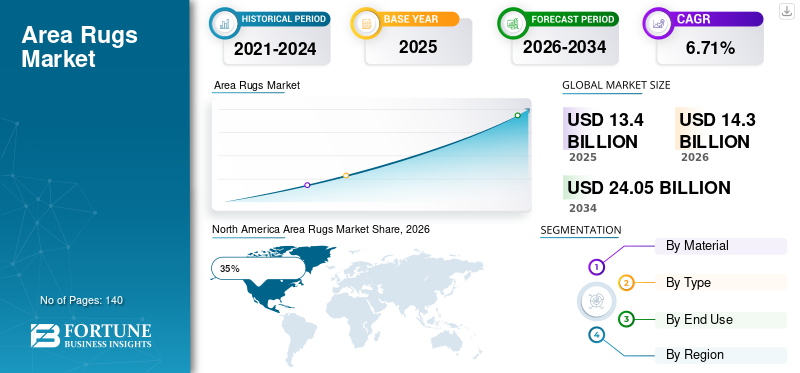
The global area rugs market size was valued at USD 13.40 billion in 2025. The market is projected to grow from USD 14.30 billion in 2026 to USD 24.05 billion by 2034, exhibiting a CAGR of 6.71% during the forecast period.

The area rugs market is experiencing steady expansion due to rising consumer interest in interior decoration, home renovation, luxury flooring products, and personalized living spaces. Area rugs are increasingly used across residential and commercial environments to improve visual aesthetics, thermal comfort, and acoustic insulation. The area rugs market Report highlights strong demand for eco-friendly rugs, premium handcrafted products, stain-resistant synthetic materials, and customizable rug designs. Growth in urban housing projects, hospitality infrastructure, and luxury real estate developments is also supporting market expansion. Manufacturers are introducing modern textures, digital printing technologies, and sustainable raw materials to strengthen product differentiation within the competitive global market landscape.
The USA area rugs market is witnessing strong product demand driven by home remodeling activities, rising consumer spending on home décor, and increasing popularity of premium interior styling trends. Residential consumers are increasingly purchasing area rugs for bedrooms, living rooms, dining areas, and office spaces to improve comfort and visual appeal. The USA area rugs market Analysis highlights rising adoption of machine-made rugs, washable rugs, and sustainable fiber products among middle-income and premium consumer groups. E-commerce expansion, smart home trends, and increasing demand for minimalist interior design styles continue to accelerate growth opportunities within the United States area rugs industry.
Download Free sample to learn more about this report.
Key Takeaways
Market Size & Growth
- Global market size 2025: USD 13.40 billion
- Global market size 2034: USD 24.04 billion
- CAGR (2025–2034): 6.71%
Market Share – Regionals
- North America: 35%
- Europe: 28%
- Asia-Pacific: 25%
- Rest of World: 12%
Country-Level Shares
- Germany: 24% of Europe’s market
- United Kingdom: 19% of Europe’s market
- Japan: 18% of Asia-Pacific market
- China: 41% of Asia-Pacific market
Area Rugs Market Latest Trends
The area rugs market Trends indicate growing consumer preference for sustainable materials including jute, wool, organic cotton, and recycled synthetic fibers. Eco-conscious consumers are increasingly demanding environmentally responsible home décor products that combine durability with modern design aesthetics. Manufacturers are responding by introducing biodegradable rugs, low-emission dyeing technologies, and ethically sourced raw materials. Digital textile printing and customizable rug manufacturing are also becoming increasingly popular across premium residential and hospitality sectors.
Download Free sample to learn more about this report.
Another important trend influencing the area rugs market Growth is the rapid expansion of online retail channels and direct-to-consumer furniture platforms. Consumers are increasingly purchasing rugs through digital marketplaces because of broader product variety, personalized recommendations, and virtual room visualization technologies. The Area Rugs Industry Analysis also highlights rising demand for washable rugs, anti-slip backing materials, pet-friendly flooring products, and multifunctional decorative rugs designed for modern urban lifestyles. Interior designers and hospitality developers are further driving innovation through demand for luxury textures, geometric patterns, and handcrafted artisanal rug collections.
Area Rugs Market Dynamics
DRIVER
Rising Consumer Spending on Home Décor and Interior Renovation
Growing consumer investment in home decoration and residential renovation projects remains one of the strongest drivers supporting area rugs market Growth. Consumers are increasingly prioritizing stylish flooring accessories that improve comfort, aesthetics, and functionality within living spaces. Area rugs are widely used to define interior zones, enhance room décor, reduce floor noise, and improve insulation performance across residential and commercial properties.
The area rugs market Research Report highlights increasing demand for premium rug collections, designer patterns, and customizable home furnishing products among urban households and luxury property owners. Hospitality businesses, hotels, office spaces, and retail establishments are also expanding investments in decorative rug installations to strengthen customer experience and interior ambiance. Growth in real estate construction and renovation activities across emerging economies further contributes to rising market demand. Continuous product innovation in washable materials, eco-friendly fibers, and digitally printed rug designs continues to accelerate consumer adoption globally.
RESTRAINT
Volatility in Raw Material Prices and Manufacturing Costs
One of the major restraints affecting the area rugs market Size is fluctuating raw material pricing associated with wool, silk, cotton, jute, and petroleum-based synthetic fibers. Manufacturing companies often face operational pressure due to rising transportation expenses, labor costs, dyeing material prices, and supply chain disruptions affecting global textile markets. Variations in raw material availability can significantly influence production planning and product pricing strategies within the area rugs industry.
The area rugs market Analysis also identifies increasing competition from low-cost imported rugs and counterfeit decorative flooring products as an additional challenge for established manufacturers. Premium handmade rug producers particularly face profitability concerns because of labor-intensive production methods and rising artisan wages. Consumers in price-sensitive markets may shift toward cheaper alternatives rather than premium handcrafted products. Environmental compliance regulations and sustainability certification requirements also increase manufacturing complexity and operational costs across the global area rugs market.
OPPORTUNITY
Expansion of Sustainable and Customized Rug Collections
The growing consumer preference for sustainable home décor products presents significant opportunities for the area rugs market Opportunities segment. Buyers are increasingly seeking environmentally responsible rugs manufactured using organic fibers, recycled textiles, natural dyes, and ethically sourced materials. Eco-friendly rugs made from wool, jute, bamboo silk, and recycled polyester are gaining strong commercial traction across premium residential and hospitality sectors.
The area rugs market Forecast highlights expanding opportunities associated with personalized rug customization and digital design technologies. Consumers increasingly prefer custom-sized rugs, personalized patterns, and color-coordinated products tailored to specific interior themes. Luxury hotels, boutique offices, and commercial property developers are also investing heavily in bespoke rug solutions designed for unique branding aesthetics. Expansion of online visualization tools and augmented reality applications is helping manufacturers improve customer engagement and product personalization capabilities across global markets.
CHALLENGE
Intense Competition from Alternative Flooring Solutions
One of the key challenges influencing the area rugs market Outlook is increasing competition from alternative flooring products including hardwood flooring, vinyl planks, laminate flooring, and wall-to-wall carpeting systems. Consumers often compare durability, maintenance requirements, installation costs, and long-term performance before selecting flooring accessories for residential or commercial spaces. Area rug manufacturers therefore face continuous pressure to improve product durability, stain resistance, and ease of maintenance.
The Area Rugs Industry Report also highlights challenges related to counterfeit products, fast-changing consumer design preferences, and inventory management complexities. Fashion-driven demand patterns frequently require manufacturers to update product collections and respond quickly to changing interior design trends. Seasonal demand fluctuations and transportation challenges associated with large-sized rugs further complicate global supply chain management. Maintaining consistent product quality while balancing affordability and sustainability remains a significant operational challenge within the area rugs industry.
Area Rugs Market Segmentation
By Material
Nylon accounts for approximately 24% of the area rugs market Share because of its exceptional durability, stain resistance, and affordability. Nylon area rugs are widely used in residential apartments, office spaces, hotels, and high-traffic commercial environments due to their long-lasting performance characteristics. Consumers prefer nylon rugs for busy households because the material resists wear, fading, and moisture damage while maintaining vibrant colors and soft textures over extended periods.
The area rugs market Insights indicate increasing manufacturer focus on advanced nylon fiber engineering technologies that improve resilience, antimicrobial protection, and eco-friendly production efficiency. Nylon rugs are increasingly available in contemporary geometric patterns, minimalist textures, and digitally printed decorative designs targeting modern interior décor preferences. Expansion of machine-made rug manufacturing infrastructure and rising demand for cost-effective flooring solutions continue to strengthen nylon segment growth within the global area rugs market.
Polyester contributes approximately 21% of the area rugs market Share due to rising consumer demand for affordable decorative rugs featuring vibrant colors and soft textures. Polyester rugs are popular among residential consumers because they offer stain resistance, lightweight handling, and compatibility with modern digital printing technologies. The material supports detailed design patterns and contemporary visual aesthetics suitable for living rooms, bedrooms, and commercial spaces.
The area rugs market Trends highlight growing innovation in recycled polyester rug manufacturing as sustainability becomes increasingly important within the textile industry. Manufacturers are investing in eco-friendly polyester fibers produced from recycled plastic materials to improve environmental performance and reduce production waste. Polyester rugs also support affordable pricing strategies, making them highly attractive within price-sensitive markets and online retail channels globally.
Cotton holds approximately 16% of the area rugs market Share because consumers increasingly prefer lightweight, breathable, and washable rug products suitable for modern residential lifestyles. Cotton rugs are especially popular for casual interior settings, kitchens, bedrooms, and family living spaces due to their softness and easy maintenance characteristics. Consumers also value cotton rugs for their compatibility with natural and minimalist interior design themes.
The area rugs market Report highlights rising demand for organic cotton rugs manufactured using sustainable textile processing methods and natural dyes. Manufacturers are introducing handcrafted cotton rugs featuring artisanal weaving techniques and customizable patterns targeting premium home décor consumers. Growing preference for eco-conscious furnishing products and easy-to-clean flooring accessories continues to strengthen the global cotton rugs segment.
Wool represents approximately 22% of the area rugs market Share because of its premium texture, thermal insulation properties, and luxurious visual appeal. Wool rugs are highly valued across luxury residential properties, hospitality infrastructure, and executive office spaces due to their durability and natural comfort characteristics. Consumers prefer wool rugs for colder climates because the material provides excellent warmth retention and acoustic insulation.
The Area Rugs Industry Analysis highlights strong demand for handcrafted wool rugs featuring traditional weaving methods, intricate patterns, and high-end artisanal craftsmanship. Premium wool rugs are increasingly marketed as sustainable luxury products because wool is biodegradable and renewable. Manufacturers continue to expand luxury wool rug collections designed for premium consumers seeking exclusive interior décor products and long-term flooring durability.
Silk accounts for approximately 7% of the area rugs market Share and remains a premium luxury segment within the global market. Silk rugs are primarily purchased by high-income consumers, luxury hotels, art collectors, and interior designers seeking elegant handcrafted décor products with intricate detailing and glossy textures. The material provides exceptional softness and visual sophistication unmatched by most synthetic alternatives.
The area rugs market Research Report highlights increasing demand for hand-knotted silk rugs featuring customized artistic patterns and heritage-inspired weaving techniques. Manufacturers are targeting luxury consumers through exclusive collections, limited-edition designs, and personalized rug craftsmanship. Despite high production costs, silk rugs continue to maintain strong demand within luxury interior decoration markets globally.
Jute contributes approximately 10% of the area rugs market Share because of rising consumer interest in eco-friendly and natural fiber home furnishing products. Jute rugs are widely preferred for rustic, coastal, and minimalist interior design themes due to their earthy texture and environmentally sustainable characteristics. Consumers increasingly choose jute rugs because they are biodegradable, renewable, and visually compatible with organic home décor aesthetics.
The area rugs market Outlook indicates expanding adoption of jute rugs within sustainable hospitality projects, eco-conscious residential developments, and wellness-focused commercial spaces. Manufacturers are increasingly combining jute with cotton and wool blends to improve softness and design flexibility. Rising awareness regarding sustainable living practices and green interior decoration continues to support long-term growth opportunities for jute rug products globally.
To know how our report can help streamline your business, Speak to Analyst
By Type
Handmade rugs account for approximately 43% of the area rugs market Share due to their premium craftsmanship, artistic uniqueness, and luxury consumer appeal. Handmade rugs are widely associated with traditional weaving techniques, heritage artistry, and high-quality material construction. Consumers purchasing handmade rugs often prioritize exclusivity, durability, and customized design aesthetics suitable for luxury residential and hospitality interiors.
The area rugs market Analysis highlights increasing demand for handcrafted wool, silk, and cotton rugs across premium property developments and luxury home décor projects. Artisanal rug manufacturers are expanding personalized customization services, heritage-inspired designs, and limited-edition collections to strengthen market differentiation. Rising consumer appreciation for authentic craftsmanship and sustainable handmade production techniques continues to support global segment expansion.
Machine-made rugs contribute approximately 57% of the area rugs market Share because of their affordability, production scalability, and broad product availability across mass-market retail channels. Machine manufacturing technologies enable rapid production of large rug volumes featuring consistent quality, modern patterns, and cost-efficient pricing structures. Residential consumers increasingly purchase machine-made rugs for apartments, office spaces, and high-traffic environments requiring durable flooring solutions.
The area rugs market Forecast highlights growing investment in automated weaving systems, digital textile printing technologies, and stain-resistant synthetic materials supporting machine-made rug production. E-commerce retailers and furniture chains are significantly driving machine-made rug sales through wide product variety and competitive pricing strategies. Expansion of urban housing projects and affordable interior decoration trends continues to strengthen long-term demand within the machine-made rugs segment.
By End Use
Commercial applications account for approximately 46% of the area rugs market Share due to growing adoption across hotels, corporate offices, retail outlets, restaurants, luxury resorts, and institutional buildings. Commercial establishments increasingly utilize area rugs to improve interior aesthetics, reduce noise levels, enhance customer experience, and create visually differentiated spaces. High-traffic commercial environments require durable rugs with stain resistance, anti-slip backing, and easy-maintenance properties, leading to strong demand for machine-made nylon and polyester rug products.
The area rugs market Analysis highlights rising investments in hospitality infrastructure and premium office interiors as major growth contributors for the commercial segment. Hotels and co-working spaces are increasingly adopting customized area rugs featuring brand-oriented designs and acoustic insulation capabilities. Commercial buyers also prefer modular rug solutions and sustainable flooring materials that support environmental compliance standards. Expansion of luxury retail chains, modern office construction, and tourism infrastructure projects continues to accelerate commercial demand within the global Area Rugs Industry Report.
Household applications contribute approximately 54% of the area rugs market Share because of increasing consumer spending on home decoration, interior renovation, and personalized living spaces. Residential consumers widely use area rugs in bedrooms, living rooms, dining spaces, kitchens, and study areas to improve comfort, insulation, and visual appeal. Rising urbanization, apartment living trends, and social media-driven home décor inspiration are encouraging consumers to purchase premium and decorative rug collections for modern households.
The area rugs market Research Report identifies growing demand for washable rugs, eco-friendly materials, handmade products, and pet-friendly flooring accessories within residential applications. Consumers increasingly prefer rugs featuring minimalist patterns, neutral tones, and sustainable fibers compatible with contemporary interior themes. E-commerce expansion and virtual room visualization technologies are also improving household purchasing behavior by allowing consumers to customize rug designs and room layouts digitally. Growing popularity of smart homes and luxury residential interiors continues supporting long-term household segment expansion globally.
Area Rugs Market Regional Outlook
North America
North America Area Rugs Market Share, 2026 (%)
To get more information on the regional analysis of this market, Download Free sample
North America accounts for approximately 35% of the global area rugs market Share due to high consumer spending on home décor products and strong residential renovation activity. Consumers across the United States and Canada increasingly invest in premium flooring accessories, designer interiors, and personalized living spaces. Area rugs are widely used across residential apartments, luxury homes, hospitality properties, and office environments to improve comfort and visual aesthetics.
The area rugs market Growth in North America is strongly supported by expanding e-commerce furniture platforms and rising demand for eco-friendly decorative products. Manufacturers are increasingly introducing washable rugs, pet-friendly flooring products, and customizable design collections targeting modern urban households. Hospitality infrastructure expansion and luxury real estate projects continue to strengthen regional market demand.
Europe
Europe represents approximately 28% of the global area rugs market Share because of strong consumer preference for premium home furnishings and sustainable interior decoration products. Countries including Germany, the United Kingdom, France, and Italy continue to experience growing demand for handcrafted rugs, natural fiber products, and luxury decorative flooring accessories. European consumers strongly value product quality, artisanal craftsmanship, and environmentally responsible textile manufacturing practices.
The Area Rugs Industry Report highlights rising adoption of wool, jute, and recycled fiber rugs throughout residential and hospitality sectors in Europe. Interior design trends emphasizing minimalist aesthetics, Scandinavian décor themes, and sustainable living continue to influence regional purchasing behavior. Growth in boutique hotels, luxury apartments, and premium office infrastructure also contributes significantly to market expansion.
Germany Area Rugs Market
Germany: Germany accounts for approximately 24% of the European area rugs market Share because of strong demand for premium home décor products and sustainable furnishing materials. German consumers increasingly prefer high-quality wool rugs, eco-friendly jute products, and modern minimalist flooring accessories compatible with contemporary interior design styles. Residential renovation projects and luxury apartment developments continue to support market growth.
The Germany area rugs market Analysis highlights increasing consumer interest in handcrafted rugs, washable flooring products, and natural fiber decorative accessories. Retailers are expanding premium rug collections featuring durable materials, neutral color palettes, and customizable design options. Growth in environmentally conscious purchasing behavior and smart interior decoration trends continues to strengthen long-term demand across Germany.
United Kingdom Area Rugs Market
United Kingdom: The United Kingdom contributes approximately 19% of the European area rugs market Share due to increasing residential remodeling activities and rising consumer investment in luxury home interiors. Area rugs are widely used across urban apartments, hospitality properties, and premium office spaces to improve room aesthetics and comfort levels. British consumers increasingly prefer modern geometric designs, washable rugs, and multifunctional decorative flooring products.
The United Kingdom area rugs market Trends indicate growing online sales of customized rug collections and sustainable textile products. Manufacturers are introducing machine-made rugs featuring stain-resistant materials and easy-maintenance designs suitable for modern lifestyles. Expansion of e-commerce furniture retail and increasing popularity of home styling trends continue to support market growth throughout the UK.
Asia-Pacific
Asia-Pacific accounts for approximately 25% of the global area rugs market Share because of expanding urbanization, rising disposable income, and increasing residential construction activity. Consumers across China, India, Japan, and Southeast Asia are increasingly investing in home decoration products and modern interior furnishings. Growth in middle-class consumer populations and premium housing developments significantly contributes to rising regional rug demand.
The area rugs market Opportunities within Asia-Pacific are strengthened by expanding hospitality infrastructure, commercial office construction, and luxury apartment projects. Manufacturers are increasingly introducing affordable machine-made rugs and sustainable fiber products targeting urban households and commercial buyers. Rapid expansion of digital retail channels and online furniture marketplaces also continues to accelerate market accessibility throughout the region.
Japan Area Rugs Market
Japan: Japan contributes approximately 18% of the Asia-Pacific area rugs market Share due to increasing demand for minimalist interior decoration products and compact living space optimization. Japanese consumers strongly prefer lightweight rugs, neutral textures, and multifunctional flooring products compatible with modern apartment layouts and traditional design aesthetics. Residential consumers increasingly prioritize comfort, acoustic insulation, and easy-maintenance home furnishing products.
The Japan area rugs market Research Report highlights rising demand for washable cotton rugs, sustainable fiber materials, and compact machine-made rug collections. Manufacturers are introducing technologically advanced rug materials featuring antimicrobial protection and anti-slip backing systems designed for urban residential environments. Expansion of premium home furnishing retail and modern interior styling trends continues to support growth within Japan.
China Area Rugs Market
China: China accounts for approximately 41% of the Asia-Pacific area rugs market Share because of large-scale residential construction activity and rapidly expanding middle-income consumer populations. Chinese consumers increasingly invest in modern home décor products, luxury furnishing accessories, and premium interior design solutions. Urban apartment developments and commercial infrastructure projects continue to create substantial demand for decorative flooring products.
The China area rugs market Insights highlight strong growth in machine-made rug production, digital textile printing, and online furniture retail channels. Manufacturers are expanding cost-efficient production capabilities while introducing modern rug patterns and customizable decorative solutions targeting domestic and international markets. Increasing consumer interest in luxury living spaces and smart interior decoration continues to accelerate market growth across China.
Rest of World
Rest of World accounts for approximately 12% of the global area rugs market Share because of increasing urban housing developments and rising demand for decorative home furnishing products across Latin America, the Middle East, and Africa. Consumers in these regions are increasingly investing in premium residential décor and hospitality interior projects featuring luxury flooring accessories.
The area rugs market Opportunities across emerging economies continue to expand because of improving retail infrastructure, rising disposable income, and increasing consumer awareness regarding modern interior decoration trends. Manufacturers are introducing affordable machine-made rugs and regionally inspired design collections tailored to local consumer preferences. Growth in tourism infrastructure and luxury commercial real estate developments further supports long-term market expansion globally.
List of Top Area Rugs Companies
- Mohawk Industries, Inc.
- Shaw Industries Group, Inc.
- Harounian Rugs International (HRI)
- Balta Industries NV
- Milliken
- The Natural Carpet Company
- Nourison
- Capel Rugs
- The Dixie Group
- Agnella
Top two companies with the highest market share
- Mohawk Industries, Inc. – 18% market share
- Shaw Industries Group, Inc. – 15% market share
Investment Analysis and Opportunities
The area rugs market Opportunities segment continues attracting investment from textile manufacturers, luxury furnishing brands, and sustainable material developers. Companies are increasingly investing in eco-friendly production technologies, automated weaving systems, and digital textile printing infrastructure designed to improve manufacturing efficiency and product customization capabilities. Sustainable rugs manufactured from jute, recycled polyester, organic cotton, and biodegradable fibers remain major investment priorities across global markets.
The area rugs market Research Report highlights strong investment activity associated with online retail expansion, luxury interior décor collections, and premium handmade rug manufacturing. Hospitality developers, luxury real estate companies, and commercial office designers are increasingly investing in customized flooring solutions supporting modern interior aesthetics. Technological advancements in washable rug materials, stain-resistant coatings, and antimicrobial fabric engineering continue creating long-term growth opportunities within the area rugs industry.
New Product Development
Innovation within the area rugs market Trends is increasingly focused on sustainable materials, smart textile technologies, and multifunctional design features. Manufacturers are introducing washable rugs, eco-friendly fibers, anti-slip backing systems, and pet-resistant materials targeting modern residential consumers. Digital printing technologies are enabling highly customized rug designs, personalized patterns, and color-matching solutions suitable for contemporary interior décor applications.
The Area Rugs Industry Analysis also highlights growing development of luxury handcrafted collections featuring organic wool, silk blends, and artisanal weaving techniques. Companies are increasingly launching modular rugs, foldable lightweight designs, and antimicrobial flooring products designed for urban apartments and hospitality environments. Expansion of sustainable textile innovation and digital customization tools continues to strengthen product differentiation across the global area rugs market.
Five Recent Developments (2023-2025)
- Mohawk Industries, Inc. expanded sustainable rug manufacturing capabilities using recycled textile materials in 2024.
- Shaw Industries Group, Inc. introduced stain-resistant machine-made rug collections targeting residential consumers in 2025.
- Nourison launched digitally printed luxury area rug designs featuring customizable patterns during 2023.
- Balta Industries NV expanded eco-friendly rug production facilities focused on sustainable fiber technologies in 2024.
- Capel Rugs introduced premium handcrafted wool rug collections for luxury hospitality projects in 2025.
Report Coverage of Area Rugs Market
The area rugs market Report provides comprehensive analysis of raw materials, product innovations, distribution channels, manufacturing technologies, and competitive developments shaping the global area rugs industry. The report evaluates key rug materials including nylon, polyester, cotton, wool, silk, and jute while analyzing applications across handmade and machine-made rug segments. Market coverage additionally examines consumer purchasing behavior, sustainable textile trends, interior decoration preferences, and digital retail expansion influencing market demand.
Request for Customization to gain extensive market insights.
The area rugs market Analysis also includes detailed regional insights covering North America, Europe, Asia-Pacific, and Rest of World along with country-level evaluation for the United States, Germany, the United Kingdom, Japan, and China. The report assesses investment activities, luxury furnishing demand, hospitality infrastructure growth, and product innovation strategies implemented by leading market participants. Competitive benchmarking, sustainability initiatives, and evolving interior design trends remain central focus areas within the global area rugs market research scope.



- 2021-2034
- 2025
- 2021-2024
- 140
-
(Offer valid till 15th Jul 2026)
Get 30-60 hrs Free Customization
Expand Regional and Country Coverage, Segments Analysis, Company Profiles, Competitive Benchmarking, and End-user Insights.



















-
US +1 833 909 2966 ( Toll Free )
-
Get In Touch With Us