 Download Free Sample



Get a Quote
Receive a tailored pricing based on your needs.
- Choose license type
- Multiple user options
- Custom scope & coverage
- Fast turnaround
"Designing Growth Strategies is in our DNA"
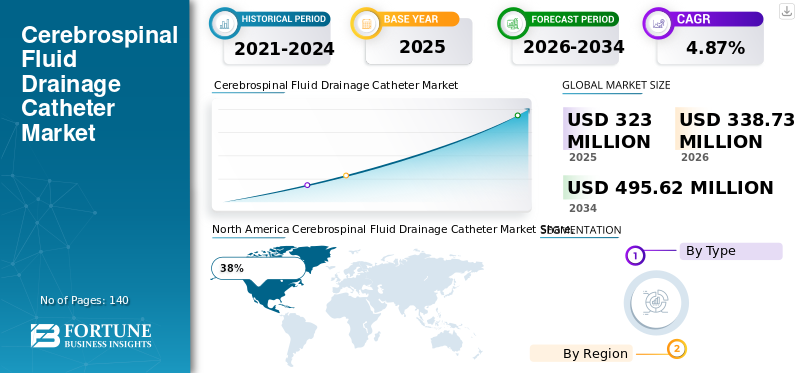
The cerebrospinal fluid drainage catheter market size was valued at USD 323 Million in 2025. The market is projected to grow from USD 338.73 Million in 2026 to USD 495.62 Million by 2034, exhibiting a CAGR of 4.87% during the forecast period.

The cerebrospinal fluid drainage catheter market is a specialized segment of the neurocritical care and neurosurgical device industry focused on managing cerebrospinal fluid pressure and drainage in patients with neurological disorders. Cerebrospinal fluid drainage catheters are widely used in the treatment of hydrocephalus, traumatic brain injury, intracranial hemorrhage, subarachnoid hemorrhage, and postoperative neurological complications. The market is characterized by continuous innovation in catheter materials, infection-control technologies, pressure monitoring integration, and minimally invasive drainage systems. Growing adoption of neurocritical care procedures, increasing hospital investments in neurological treatment infrastructure, and rising awareness regarding intracranial pressure management continue to support demand. The cerebrospinal fluid drainage catheter market report highlights expanding utilization across tertiary hospitals, trauma centers, and specialized neurosurgical facilities. Market participants are focusing on safety-enhanced catheter systems, antimicrobial coatings, and precision drainage technologies to strengthen their competitive position.
The United States represents the largest national market for cerebrospinal fluid drainage catheters due to its advanced neurosurgical ecosystem, extensive trauma care network, and high adoption of innovative medical devices. Neurosurgeons and neurocritical care specialists increasingly utilize ventricular and lumbar drainage catheters for intracranial pressure management and postoperative monitoring. Demand is supported by the growing burden of traumatic brain injuries, stroke-related complications, and hydrocephalus management. Regulatory emphasis on infection prevention and patient safety has encouraged hospitals to adopt advanced catheter technologies with enhanced drainage accuracy and monitoring capabilities.
The USA cerebrospinal fluid drainage catheter market analysis indicates strong procurement activity from academic medical centers and specialized neurological institutes. Increasing investment in neurological intensive care units and the presence of leading manufacturers further strengthen market penetration. Clinical research programs and physician training initiatives continue to improve procedural outcomes and device adoption.
Download Free sample to learn more about this report.
 Global Market Size & Forecast
 Market Share
 Key Regional Highlights
North America
North America led the market with a 38% share, supported by advanced neurocritical care infrastructure and strong demand for cerebrospinal fluid drainage procedures.
Europe
Europe accounted for 29% of the market, driven by established healthcare systems and increasing adoption of advanced neurosurgical technologies.
Asia-Pacific
Asia-Pacific held a 24% share, supported by expanding healthcare infrastructure and growing demand for neurological care.
U.S
The U.S. remains a key market, supported by advanced neurocritical care facilities and strong demand for cerebrospinal fluid drainage systems.
Japan
Japan accounted for approximately 26% of the Asia-Pacific market, supported by advanced healthcare infrastructure and growing demand for specialized neurological devices.
Read More

One of the most prominent cerebrospinal fluid drainage catheter market trends is the integration of advanced monitoring capabilities into drainage systems. Manufacturers are increasingly developing catheter platforms that allow simultaneous intracranial pressure measurement and cerebrospinal fluid drainage. This approach improves clinical decision-making while reducing procedural complexity in neurocritical care environments.
Download Free sample to learn more about this report.
Another significant trend involves infection-prevention technologies. Healthcare providers are prioritizing catheters with antimicrobial coatings, biocompatible materials, and improved drainage control mechanisms. Hospitals are emphasizing infection reduction due to strict patient safety protocols and quality benchmarks. Single-use catheter systems are also gaining attention as healthcare facilities seek to minimize contamination risks.
Digital healthcare integration is becoming increasingly important across the cerebrospinal fluid drainage catheter industry. Smart drainage systems capable of generating real-time clinical data are attracting interest from major healthcare institutions. In addition, growing demand for minimally invasive neurosurgical procedures is encouraging the development of flexible, precision-engineered catheter designs. These innovations are shaping the future cerebrospinal fluid drainage catheter market outlook and creating new opportunities for manufacturers focused on advanced neurocritical care solutions.
Rising Prevalence Of Neurological Disorders and Neurocritical Care Procedures
The primary driver supporting cerebrospinal fluid drainage catheter market growth is the increasing incidence of neurological disorders requiring cerebrospinal fluid management. Conditions such as hydrocephalus, traumatic brain injury, intracranial hemorrhage, brain tumors, and subarachnoid hemorrhage frequently require drainage procedures to control intracranial pressure and prevent neurological deterioration. As healthcare systems continue expanding neurocritical care capabilities, demand for reliable drainage catheters continues to rise.
Hospitals are investing heavily in neurological intensive care units equipped with advanced monitoring and drainage systems. Growing awareness among physicians regarding early intervention and pressure management is also increasing procedural volumes. In addition, expanding trauma care infrastructure and improved emergency response systems are contributing to higher utilization of ventricular and lumbar drainage catheters. These factors collectively strengthen the cerebrospinal fluid drainage catheter market size and support long-term adoption across developed and emerging healthcare markets.
Risk of Catheter-Associated Infections And Procedural Complications
A major restraint affecting the cerebrospinal fluid drainage catheter market is the risk of infection and procedure-related complications. Despite technological improvements, catheter-associated infections remain a concern in neurocritical care settings. Ventriculitis, meningitis, and catheter blockage can increase hospitalization duration and negatively impact patient outcomes.
Healthcare institutions maintain strict protocols regarding catheter placement, monitoring, and replacement, which can increase operational complexity. Concerns related to infection risks often encourage hospitals to evaluate alternative treatment approaches whenever clinically appropriate. In addition, training requirements for neurosurgical staff and intensive care professionals create barriers to adoption in facilities with limited expertise. Regulatory scrutiny regarding device safety and performance further increases compliance requirements for manufacturers. These challenges can slow procurement decisions and affect market expansion in resource-constrained healthcare environments.
Expansion of Advanced Neurocritical Care Infrastructure
A significant opportunity within the cerebrospinal fluid drainage catheter market lies in the expansion of neurocritical care facilities worldwide. Governments and healthcare providers are increasingly investing in specialized neurological treatment centers to address rising neurological disease burdens. This trend creates favorable conditions for catheter manufacturers supplying drainage and intracranial pressure management solutions.
Emerging markets are witnessing growth in neurosurgical procedures due to improved healthcare access and expanding hospital infrastructure. Manufacturers can capitalize on this trend by introducing cost-effective drainage systems tailored to regional healthcare requirements. Technological innovations such as smart monitoring integration, antimicrobial catheter designs, and precision drainage control systems also create opportunities for premium product differentiation. These developments are expected to strengthen cerebrospinal fluid drainage catheter market opportunities across hospitals, trauma centers, and neurological specialty clinics.
High Clinical Standards and Regulatory Compliance Requirements
The cerebrospinal fluid drainage catheter industry faces ongoing challenges associated with stringent regulatory requirements and clinical performance expectations. Healthcare providers demand products that deliver reliable drainage performance while minimizing infection risks and procedural complications. Meeting these expectations requires continuous investment in research, validation studies, and quality assurance programs.
Manufacturers must comply with evolving medical device regulations, clinical evidence requirements, and post-market surveillance obligations. Product recalls or adverse clinical outcomes can significantly affect brand reputation and purchasing decisions. Competition from established market leaders further intensifies pressure on emerging companies. In addition, procurement departments increasingly evaluate long-term clinical value rather than product cost alone, requiring manufacturers to demonstrate measurable improvements in patient outcomes and healthcare efficiency.
Lumbar drainage catheters account for approximately 42% of the cerebrospinal fluid drainage catheter market share. These devices are commonly used to remove cerebrospinal fluid from the lumbar subarachnoid space for intracranial pressure control, cerebrospinal fluid leak management, and postoperative neurological procedures. Their widespread use in elective neurosurgical interventions and diagnostic applications contributes significantly to market demand.
Healthcare providers often prefer lumbar drainage catheters due to their effectiveness in reducing cerebrospinal fluid pressure while avoiding direct ventricular access. The segment benefits from growing adoption in spinal surgery recovery, aneurysm treatment support, and cerebrospinal fluid leakage management. Manufacturers continue enhancing catheter flexibility, drainage precision, and patient comfort through material innovations. The Lumbar Drainage Catheter segment remains a key contributor to the cerebrospinal fluid drainage catheter market forecast due to its broad clinical applicability and favorable procedural outcomes.
Ventricular drainage catheters represent approximately 58% of the cerebrospinal fluid drainage catheter market share, making them the dominant product category. These catheters are extensively utilized in neurocritical care settings for managing hydrocephalus, traumatic brain injury, intracranial hemorrhage, and elevated intracranial pressure. External ventricular drainage procedures remain among the most frequently performed interventions in neurological intensive care units.
The segment benefits from increasing demand for real-time intracranial pressure monitoring combined with cerebrospinal fluid drainage. Hospitals prioritize ventricular drainage systems because they offer direct access to ventricular spaces and enable accurate neurological assessment. Technological advancements such as antimicrobial catheter coatings, integrated pressure sensors, and enhanced drainage control mechanisms continue to improve clinical performance. As neurocritical care infrastructure expands globally, ventricular drainage catheters are expected to maintain leadership within the Cerebrospinal Fluid Drainage Catheter Industry Report.
To know how our report can help streamline your business, Speak to Analyst
North America Cerebrospinal Fluid Drainage Catheter Market Share, 2025 (%)
To get more information on the regional analysis of this market, Download Free sample
North America holds approximately 38% of the global cerebrospinal fluid drainage catheter market share. The region benefits from advanced healthcare infrastructure, widespread availability of neurosurgical specialists, and strong adoption of innovative medical devices. High procedural volumes related to hydrocephalus, traumatic brain injury, and intracranial hemorrhage support consistent demand.
The presence of leading manufacturers and extensive clinical research activity further strengthens regional leadership. Healthcare facilities prioritize infection prevention and precision drainage technologies, encouraging adoption of advanced catheter systems. Investments in neurocritical care units and trauma centers continue to drive procurement activity across the region.
Europe accounts for approximately 29% of the cerebrospinal fluid drainage catheter market share. The region maintains a strong position due to well-established healthcare systems, increasing neurological disease management programs, and extensive neurosurgical expertise. Hospitals across Europe continue upgrading neurocritical care infrastructure and adopting advanced drainage technologies.
Growing emphasis on patient safety and infection control has encouraged healthcare providers to utilize next-generation catheter systems. Public healthcare investments and specialized neurological treatment centers support steady market expansion across major European countries.
Germany represents approximately 28% of the European cerebrospinal fluid drainage catheter market. The country possesses one of the region’s most advanced hospital networks and a strong concentration of neurosurgical specialists. German healthcare institutions consistently invest in precision medical technologies, supporting adoption of advanced drainage systems.
Demand is driven by comprehensive neurological treatment programs, increasing neurocritical care admissions, and strong clinical research activity. Hospitals prioritize infection-resistant catheter technologies and integrated monitoring solutions to improve patient outcomes. The country also benefits from the presence of several medical technology manufacturers and research collaborations focused on neurological care. These factors position Germany as a key contributor to the European Cerebrospinal Fluid Drainage Catheter Industry Analysis.
The United Kingdom accounts for approximately 22% of the European cerebrospinal fluid drainage catheter market. The country maintains significant demand through specialized neurological centers and an expanding focus on neurocritical care services. Hospitals increasingly utilize ventricular drainage systems for managing hydrocephalus, traumatic brain injury, and intracranial pressure disorders.
Clinical emphasis on evidence-based treatment protocols supports adoption of technologically advanced catheter products. Research partnerships, physician training initiatives, and healthcare modernization programs continue enhancing procedural capabilities. The UK market also benefits from increasing awareness of neurological disease management and improved access to specialized treatment facilities.
Asia-Pacific represents approximately 24% of the global cerebrospinal fluid drainage catheter market share. Rapid healthcare infrastructure development, increasing neurological disease awareness, and expanding access to neurosurgical services support regional growth. Countries throughout the region are investing in advanced hospital facilities and specialized neurological treatment centers.
Growing populations and increasing incidence of neurological disorders create significant demand potential. Manufacturers are expanding regional distribution networks and introducing cost-effective catheter solutions tailored to local healthcare requirements. Asia-Pacific remains a major focus area for future cerebrospinal fluid drainage catheter market opportunities.
Japan accounts for approximately 26% of the Asia-Pacific cerebrospinal fluid drainage catheter market. The country’s advanced healthcare system and aging population support strong demand for neurological treatment solutions. Hospitals routinely implement sophisticated neurocritical care protocols, creating favorable conditions for advanced drainage catheter adoption.
Japanese healthcare providers emphasize precision, safety, and technological innovation. As a result, demand remains strong for catheter systems featuring enhanced monitoring capabilities and infection-control technologies. Ongoing investments in neurological research and clinical excellence further strengthen market prospects.
China represents approximately 35% of the Asia-Pacific cerebrospinal fluid drainage catheter market. Rapid healthcare modernization, increasing neurosurgical procedure volumes, and expanding hospital infrastructure drive market development. Major urban healthcare centers are increasingly adopting advanced neurocritical care technologies to improve patient outcomes.
Government healthcare initiatives and rising awareness regarding neurological disease treatment continue supporting market expansion. Domestic and international manufacturers are strengthening their presence through partnerships, distribution agreements, and product localization strategies. These factors contribute to China's growing influence within the regional market.
The Rest of World region accounts for approximately 9% of the global cerebrospinal fluid drainage catheter market share. Growth is supported by improving healthcare access, expanding neurosurgical capabilities, and increasing investment in specialized neurological treatment facilities. Several countries are strengthening trauma care and neurocritical care infrastructure to address growing healthcare demands.
International manufacturers continue exploring opportunities in emerging markets through distributor partnerships and targeted product launches. While adoption levels remain lower than in developed regions, ongoing healthcare modernization initiatives create long-term growth potential.
The cerebrospinal fluid drainage catheter market presents attractive investment opportunities due to the increasing focus on neurological healthcare infrastructure and neurocritical care capabilities. Investors are particularly interested in companies developing infection-resistant catheter technologies, smart monitoring integration, and advanced drainage management systems. Growing demand for precision neurosurgical tools creates opportunities for both established manufacturers and emerging innovators.
Strategic partnerships between device manufacturers, hospitals, and research institutions are accelerating product development. Investment activity is also increasing in emerging markets where healthcare modernization programs are expanding access to advanced neurological treatments. Venture capital firms and medical technology investors continue supporting companies developing next-generation cerebrospinal fluid management platforms. The market’s emphasis on patient safety, procedural efficiency, and clinical outcomes makes it an attractive segment within the broader neurological device industry.
Innovation remains a central focus within the cerebrospinal fluid drainage catheter market. Manufacturers are developing advanced catheter systems incorporating antimicrobial technologies, biocompatible materials, and enhanced drainage precision. New products increasingly feature integrated pressure monitoring capabilities that provide clinicians with real-time neurological data.
Research efforts are also focused on reducing catheter blockage and minimizing infection risks through material engineering and surface modification technologies. Single-use catheter systems are gaining traction as healthcare providers prioritize infection prevention. Digital integration capabilities, including remote monitoring and automated drainage management, are emerging as important areas of product development. These innovations are expected to strengthen the competitive landscape and improve clinical outcomes across neurocritical care settings.
The cerebrospinal fluid drainage catheter market research report provides comprehensive analysis of market structure, competitive dynamics, product innovation, and regional developments. The report evaluates key market segments including lumbar drainage catheters and ventricular drainage catheters, along with major application areas such as hydrocephalus and traumatic brain injury management.
Request for Customization to gain extensive market insights.
Coverage includes detailed assessment of market drivers, restraints, opportunities, and challenges affecting industry performance. The report also analyzes competitive positioning of major manufacturers, investment trends, product development activities, and healthcare infrastructure developments influencing demand. Regional evaluations examine North America, Europe, Asia-Pacific, and Rest of World markets, while country-level analysis highlights major healthcare economies. The cerebrospinal fluid drainage catheter market forecast section focuses on evolving clinical practices, technological advancements, and strategic initiatives shaping future market opportunities.
Fortune Business Insights says that the global market value stood at USD 323 million in 2025 and is projected to reach USD 495.62 million by 2034.
The market is expected to exhibit a CAGR of 4.87% during the forecast period of 2026-2034.
Ventricular drainage catheters led the type segment with approximately 58% market share, driven by their extensive use in neurocritical care for hydrocephalus, traumatic brain injury, and intracranial pressure management.
Key players include Natus Medical, Inc., Desu Medica, Spiegelberg GmbH & Co. KG, Integra LifeSciences Corporation, Medtronic, and Moller Medical GmbH.
Major trends include integrated intracranial pressure monitoring and growing adoption of antimicrobial and infection-prevention catheter technologies, alongside smart drainage systems and minimally invasive designs. North America led with approximately 38% market share.


(Offer valid till 15th Nov 2026)
Get 30-60 hrs Free Customization
Expand Regional and Country Coverage, Segments Analysis, Company Profiles, Competitive Benchmarking, and End-user Insights.













.webp)






Get In Touch With Us
US +1 833 909 2966 ( Toll Free )
Receive a tailored pricing based on your needs.
Discuss your questions with our industry experts.
Have questions? Get quick answers before you purchase.

