Chocolate Market Size, Share & Industry Analysis, By Product (Traditional, Artificial), By Distribution Channel (Convenience Stores, Online), By Region, and Regional Forecast, 2026-2034
 Download Free Sample
Chocolate Market Size & Industry Overview
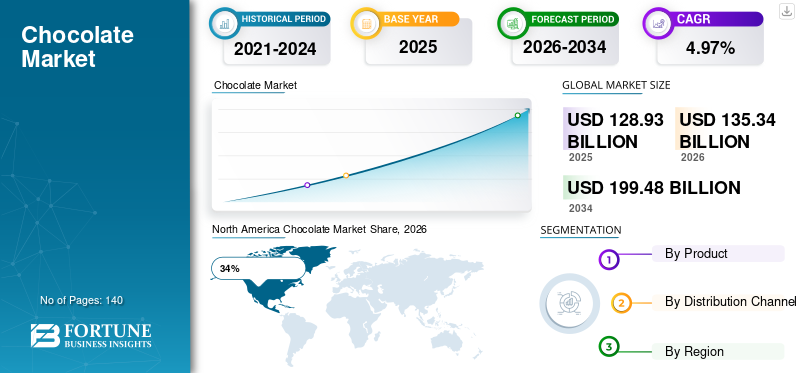
The global chocolate market size was valued at USD 128.93 billion in 2025. The market is projected to grow from USD 135.34 billion in 2026 to USD 199.48 billion by 2034, exhibiting a CAGR of 4.97% during the forecast period.

The chocolate market continues to witness substantial expansion due to increasing consumer demand for premium confectionery products, dark chocolate varieties, organic cocoa ingredients, and innovative flavor combinations. The chocolate market Report highlights growing consumption across retail, gifting, bakery, and foodservice channels. Manufacturers are increasingly focusing on clean-label formulations, sustainable cocoa sourcing, and sugar-reduced chocolate products to align with changing consumer preferences. The Chocolate Industry Analysis also reflects rising demand for artisanal chocolates, vegan chocolate products, and functional chocolate infused with proteins and botanical ingredients. Expanding urban populations, seasonal gifting culture, and premium packaging innovations continue to support chocolate market Growth across developed and emerging economies.
The United States chocolate market remains one of the largest globally due to strong consumer spending on confectionery products and premium snacks. More than 63% of consumers in the country purchase chocolate products weekly through supermarkets, convenience stores, and online retail channels. The chocolate market Analysis in the United States highlights rising demand for dark chocolate, organic cocoa products, and limited-edition seasonal offerings. Functional chocolate with reduced sugar content and plant-based ingredients is gaining strong popularity among health-conscious consumers. Expanding e-commerce platforms, gifting trends, and premium product launches continue to strengthen the chocolate market Outlook across the country.
Download Free sample to learn more about this report.
Chocolate Market Key Takeaways
 Global Market Size & Forecast
- 2025 Market Size: USD 128.93 Billion
- 2026 Market Size: USD 135.34 Billion
- 2034 Forecast Market Size: USD 199.48 Billion
- CAGR: 4.97% from 2026-2034
 Market Share
- North America dominated with a revenue share of 34% in 2025.
- Traditional chocolate products held the largest share at 71%.
- Convenience stores accounted for the largest distribution share at 57%.
 Key Regional Highlights
North America
Held the largest regional share at 34% in 2025.
Asia-Pacific
Accounted for 27% of the global chocolate market.
Europe
Represented 21% of the global market, supported by strong chocolate consumption.
U.S.
Strong demand for traditional, premium, and convenient chocolate products supports market growth.
Japan
Accounted for 22% of the Asia-Pacific chocolate market, reflecting strong regional demand.
Read More

chocolate market Trends
The chocolate market Trends indicate rising consumer preference for premium, organic, and ethically sourced chocolate products. Manufacturers are increasingly investing in sustainable cocoa farming practices, recyclable packaging, and transparent supply chain systems to improve brand positioning and consumer trust. Dark chocolate varieties with high cocoa content are experiencing strong demand due to growing awareness regarding antioxidant-rich ingredients and reduced sugar consumption. The chocolate market Research Report also highlights increasing popularity of vegan chocolate and dairy-free confectionery products among younger consumer groups.
Download Free sample to learn more about this report.
Another significant chocolate market Insight is the rapid growth of personalized and seasonal chocolate offerings. Manufacturers are introducing region-specific flavors, limited-edition collections, and customizable gifting assortments to improve customer engagement. Online chocolate retail platforms and direct-to-consumer subscription models are also transforming distribution strategies within the Chocolate Industry Report. Functional ingredients such as nuts, protein blends, probiotics, and botanical extracts are increasingly being incorporated into premium chocolate products. Smart packaging technologies and digital marketing campaigns are further strengthening chocolate market Opportunities globally.
chocolate market Dynamics
DRIVER
Rising Demand for Premium and Functional Confectionery Products
Increasing consumer preference for premium confectionery and indulgent snacking products is a major driver supporting chocolate market Growth. Consumers are increasingly seeking high-quality chocolate made with ethically sourced cocoa, natural ingredients, and innovative flavor profiles. More than 58% of urban consumers globally prefer premium chocolate variants with high cocoa concentration and specialty fillings. The chocolate market Forecast indicates strong demand for artisanal products, gourmet assortments, and gift-oriented confectionery collections.
Health-conscious consumers are also driving demand for dark chocolate, sugar-reduced products, and functional chocolate enriched with vitamins, proteins, and botanical ingredients. Manufacturers are responding with organic formulations, vegan chocolate alternatives, and allergen-free product lines to capture expanding customer segments. Seasonal gifting trends, festival celebrations, and rising disposable income levels continue to strengthen chocolate consumption worldwide. The chocolate market Analysis further reflects growing product penetration across supermarkets, specialty stores, cafés, and digital retail channels, supporting long-term industry expansion.
RESTRAINT
Volatility in Cocoa Prices and Raw Material Supply
Fluctuating cocoa prices and supply chain disruptions remain major restraints affecting the chocolate market Outlook. Cocoa production is heavily dependent on weather conditions, farming productivity, and geopolitical stability within major cocoa-producing regions. Around 44% of chocolate manufacturers report operational pressure due to rising cocoa bean costs and inconsistent raw material availability. Transportation disruptions and increasing energy expenses also contribute to higher production costs across the confectionery sector.
Manufacturers are additionally facing challenges related to sustainable cocoa sourcing and compliance with ethical farming standards. Regulatory requirements regarding sugar content, food labeling, and ingredient transparency are increasing operational complexity for chocolate producers. The Chocolate Industry Analysis also indicates that inflationary pressures and changing consumer spending behavior may impact premium chocolate sales in price-sensitive markets. Supply shortages of dairy ingredients, nuts, and packaging materials further influence manufacturing efficiency and product pricing strategies globally.
OPPORTUNITY
Expansion of Organic, Vegan, and Personalized Chocolate Products
The growing popularity of organic, vegan, and customized confectionery products presents substantial opportunities within the chocolate market. Consumers are increasingly seeking plant-based chocolate alternatives free from dairy, artificial preservatives, and synthetic additives. Nearly 49% of millennial consumers actively prefer clean-label confectionery products with transparent ingredient sourcing. The chocolate market Opportunities are expanding rapidly across premium dark chocolate, vegan pralines, and protein-infused snack bars.
Digital commerce and personalized gifting trends are also creating new business opportunities for chocolate manufacturers and retailers. Companies are introducing customized packaging, region-specific flavors, and online subscription boxes to improve customer loyalty and repeat purchases. Emerging economies are witnessing growing chocolate consumption due to urbanization, westernized eating habits, and rising middle-class spending capacity. Innovations in sugar alternatives, functional ingredients, and sustainable cocoa farming continue to strengthen long-term chocolate market Growth opportunities across global markets.
CHALLENGE
Regulatory Pressure and Changing Consumer Health Preferences
Regulatory scrutiny related to sugar consumption, food labeling, and sustainability practices remains a major challenge within the chocolate market. Governments across multiple countries are implementing stricter regulations regarding sugar content, nutritional disclosures, and environmental packaging standards. Approximately 36% of confectionery companies report rising compliance costs linked to food safety regulations and sustainability certifications. These requirements increase operational complexity for both multinational and regional chocolate manufacturers.
The chocolate market Research Report also highlights growing consumer concerns regarding obesity, calorie intake, and artificial additives. Health-focused consumers are increasingly shifting toward low-sugar snacks, functional foods, and natural ingredient products, creating pressure on traditional confectionery segments. In addition, climate change and environmental concerns affecting cocoa farming productivity are creating long-term sourcing challenges. Manufacturers must continuously balance product innovation, affordability, sustainability, and nutritional expectations to maintain competitiveness within the Chocolate Industry Report.
chocolate market Segmentation
By Product
Traditional chocolate products account for nearly 71% of the chocolate market Share due to widespread consumer preference for milk chocolate, dark chocolate, filled bars, truffles, and seasonal confectionery products. Traditional chocolate remains highly popular across supermarkets, convenience stores, gifting channels, and bakery applications. The chocolate market Report highlights strong demand for premium boxed chocolates, festive assortments, and flavored cocoa products among urban consumers.
Manufacturers are continuously introducing new textures, fillings, and cocoa blends to maintain product differentiation within the traditional chocolate segment. Seasonal celebrations, holiday gifting trends, and impulse purchasing behavior continue to support high sales volumes. Traditional chocolate products also benefit from strong brand recognition and extensive retail distribution networks globally. The chocolate market Analysis further indicates rising premiumization within this category through organic cocoa sourcing, handcrafted formulations, and luxury packaging innovations designed for premium consumers.
Artificial chocolate products represent approximately 29% of the chocolate market Size and are widely used in bakery, confectionery coatings, industrial food production, and low-cost snack applications. Compound chocolate products made with vegetable fats and cocoa substitutes are increasingly utilized by food manufacturers due to lower production costs and improved shelf stability. The Chocolate Industry Report highlights growing demand for artificial chocolate in emerging economies where affordability remains a key purchasing factor.
Foodservice operators and industrial bakery manufacturers are also increasing utilization of artificial chocolate ingredients for desserts, pastries, frozen products, and confectionery coatings. Manufacturers are focusing on improving flavor consistency, texture quality, and heat resistance properties within artificial chocolate formulations. Technological advancements in cocoa replacement ingredients and flavor enhancement systems are further supporting segment expansion. Rising demand for affordable confectionery products and large-scale industrial applications continues to strengthen chocolate market Opportunities for artificial chocolate manufacturers.
To know how our report can help streamline your business, Speak to Analyst
By Distribution Channel
Convenience stores contribute approximately 57% of the chocolate market Share due to strong impulse purchasing behavior and high accessibility across urban and suburban regions. Chocolate bars, seasonal confectionery, premium snack packs, and single-serve products are widely distributed through convenience retail channels. The chocolate market Trends indicate increasing placement of premium and limited-edition chocolate products near checkout counters to maximize consumer engagement.
Manufacturers are partnering with convenience store chains to improve product visibility, promotional campaigns, and seasonal sales strategies. Ready-to-eat snack formats and portable packaging continue to perform strongly within this distribution channel. The chocolate market Research Report also highlights growing demand for healthier chocolate variants, including sugar-reduced and protein-enriched products, within convenience retail environments. Expansion of fuel station retail outlets and small-format urban stores continues to support strong chocolate product penetration globally.
Online distribution channels account for nearly 43% of the chocolate market Size due to rapid digital commerce expansion and increasing consumer preference for home delivery services. Premium chocolate gifting, subscription boxes, customized assortments, and luxury confectionery collections are experiencing strong online sales growth. The chocolate market Outlook reflects rising investment in direct-to-consumer digital platforms and personalized shopping experiences.
Manufacturers are increasingly using social media marketing, influencer partnerships, and AI-driven recommendation systems to strengthen online customer engagement. E-commerce channels also provide opportunities for niche brands specializing in vegan, organic, and handcrafted chocolate products. Digital retail platforms enable broader market access and support international product distribution. Growing adoption of mobile shopping applications and digital payment systems continues to accelerate online chocolate sales across developed and emerging markets.
chocolate market Regional Outlook
North America
North America Chocolate Market Share, 2025 (%)
To get more information on the regional analysis of this market, Download Free sample
North America holds approximately 34% of the chocolate market Share due to strong consumer demand for premium confectionery products and extensive retail distribution infrastructure. The region continues to experience rising sales of dark chocolate, organic cocoa products, and seasonal gifting assortments. The chocolate market Analysis indicates growing preference for healthier chocolate alternatives with reduced sugar content and functional ingredients.
Manufacturers across North America are increasingly focusing on sustainable cocoa sourcing, recyclable packaging, and innovative product launches to strengthen market competitiveness. Convenience stores, supermarkets, and digital retail platforms remain major distribution channels within the region. Premium gifting trends, holiday consumption patterns, and expansion of artisanal chocolate brands continue to support market growth. The region also benefits from advanced marketing strategies and strong product innovation capabilities within the confectionery sector.
Europe
Europe accounts for nearly 31% of the chocolate market Size due to strong cultural consumption patterns, premium confectionery demand, and established chocolate manufacturing traditions. Consumers across the region show high preference for dark chocolate, artisanal products, and ethically sourced cocoa ingredients. The chocolate market Forecast highlights rising demand for organic and vegan chocolate products across major European economies.
Manufacturers are emphasizing premium packaging, sustainable production methods, and innovative flavor combinations to attract consumers seeking luxury confectionery experiences. Seasonal gifting and tourism-related confectionery sales continue to support market expansion. The Chocolate Industry Analysis also reflects increasing investment in sugar-reduced and functional chocolate formulations to align with changing dietary preferences. Strong retail infrastructure and specialty chocolate boutiques further strengthen Europe’s position within the global chocolate market.
Germany Chocolate Market
Germany contributes approximately 29% of the European chocolate market Share due to high per-capita chocolate consumption and strong domestic manufacturing capabilities. Consumers in Germany increasingly prefer premium dark chocolate, organic cocoa products, and sustainable confectionery options. The chocolate market Report highlights rising demand for high-cocoa-content products and handcrafted chocolate assortments across urban retail channels.
Retail chains and specialty confectionery stores continue expanding premium chocolate product offerings to address changing consumer preferences. Seasonal gifting, holiday consumption, and luxury packaging innovations are major drivers supporting chocolate sales in Germany. Manufacturers are also investing in sugar-reduced formulations and environmentally friendly packaging systems. The chocolate market Insights for Germany indicate growing popularity of vegan and allergen-free chocolate products among younger demographic groups.
United Kingdom Chocolate Market
The United Kingdom represents nearly 24% of the European chocolate market Size due to strong retail penetration, gifting culture, and high demand for confectionery snacks. Consumers increasingly prefer premium boxed chocolates, limited-edition seasonal products, and ethically sourced cocoa ingredients. The chocolate market Analysis in the United Kingdom reflects growing interest in dark chocolate and healthier confectionery alternatives.
Manufacturers are expanding digital sales channels and personalized gifting services to strengthen customer engagement. Supermarkets and convenience retailers remain important distribution channels, while online premium chocolate subscriptions continue gaining popularity. Sustainable sourcing initiatives and recyclable packaging solutions are also influencing product development strategies. Rising demand for artisanal and handcrafted chocolate products continues to create long-term chocolate market Opportunities across the country.
Asia-Pacific
Asia-Pacific holds around 27% of the chocolate market Share due to increasing urbanization, rising disposable incomes, and expanding westernized food consumption patterns. Chocolate manufacturers are rapidly expanding retail presence across emerging economies to capture growing middle-class demand. The chocolate market Research Report highlights rising popularity of premium gifting chocolates and imported confectionery products throughout the region.
Younger consumers are driving demand for innovative flavors, limited-edition products, and digital retail purchasing experiences. Convenience stores, supermarkets, and e-commerce platforms are expanding chocolate product accessibility across metropolitan and secondary cities. Manufacturers are introducing region-specific flavors and smaller packaging formats to improve affordability and market penetration. Rapid growth in café culture and premium bakery chains also continues to strengthen chocolate market Growth throughout Asia-Pacific.
Japan Chocolate Market
Japan accounts for approximately 22% of the Asia-Pacific chocolate market Share due to strong gifting traditions, premium confectionery demand, and innovative product development. Consumers in Japan prefer high-quality chocolate products featuring unique flavors, luxury packaging, and seasonal exclusivity. The chocolate market Trends in Japan indicate rising demand for dark chocolate enriched with functional ingredients and wellness-oriented formulations.
Manufacturers are introducing regionally inspired flavors and premium boxed assortments targeted toward seasonal celebrations and corporate gifting. Convenience retail channels and vending machine distribution systems continue to play important roles within the Japanese chocolate industry. Smart packaging technologies and limited-edition collaborations with luxury brands are further supporting product differentiation. Growing consumer interest in artisanal and handcrafted confectionery products continues to expand the Japanese chocolate market Outlook.
China Chocolate Market
China contributes nearly 38% of the Asia-Pacific chocolate market Size due to rapid urbanization, increasing premium food consumption, and strong digital retail expansion. Younger consumers and middle-class households are increasingly adopting western confectionery consumption habits, supporting strong chocolate demand across urban centers. The chocolate market Analysis indicates rising popularity of premium imported chocolate and luxury gifting products in China.
E-commerce platforms and live-stream retail marketing strategies are transforming chocolate distribution across the country. Manufacturers are focusing on localized flavor innovation, premium packaging, and digital brand engagement to strengthen competitiveness. Growing café culture, gifting traditions, and expansion of convenience retail infrastructure continue to support long-term market growth. Sustainable cocoa sourcing and premium artisanal chocolate trends are also gaining momentum among affluent consumers within China’s confectionery industry.
Rest of World
The Rest of World region accounts for approximately 8% of the chocolate market Share due to increasing urbanization, expanding retail infrastructure, and rising disposable incomes across developing economies. Middle Eastern and Latin American markets are experiencing growing demand for premium confectionery products and seasonal gifting assortments. The chocolate market Opportunities in these regions are supported by expanding supermarket chains and digital retail platforms.
Manufacturers are increasing investments in localized product development and affordable packaging formats to improve market penetration. Tourism-driven confectionery sales and hospitality sector demand also contribute to regional expansion. The Chocolate Industry Report highlights growing popularity of imported premium chocolate and organic confectionery products among urban consumers. Expansion of convenience retail networks and rising youth population continue to support long-term chocolate market Growth across the Rest of World region.
List of Top Chocolate Companies
- Barry Callebaut
- Chocoladefabriken Lindt & Sprüngli AG
- Mondelēz International
- Nestlé S.A.
- THE HERSHEY COMPANY
- Ferrero
- Mars, Incorporated
- The Australian Carob Co.
- Meiji Holdings Co., Ltd.
- Arcor
Top Two Companies by Market Share
- Mars, Incorporated – 15%
- Mondelēz International – 13%
Investment Analysis and Opportunities
The chocolate market is attracting significant investments due to growing premium confectionery demand, digital retail expansion, and sustainable cocoa sourcing initiatives. Manufacturers are investing heavily in automated production technologies, eco-friendly packaging systems, and innovative flavor development to strengthen competitive positioning. Nearly 47% of confectionery investors are prioritizing sustainable and ethically sourced cocoa supply chains within long-term operational strategies.
Emerging markets present substantial chocolate market Opportunities due to rising disposable income levels and increasing urban retail penetration. Investors are focusing on premium dark chocolate, vegan confectionery, and personalized gifting segments with strong consumer demand potential. Digital commerce infrastructure, subscription-based chocolate retail models, and direct-to-consumer distribution strategies are also attracting investment activity. Expansion of café chains, premium bakery outlets, and luxury confectionery boutiques continues to create additional business opportunities across global chocolate markets.
New Product Development
The chocolate market is witnessing rapid innovation focused on healthier ingredients, premium formulations, and sustainable packaging solutions. Manufacturers are increasingly launching vegan chocolate, sugar-free variants, protein-enriched bars, and organic cocoa products to align with evolving consumer preferences. Advanced flavor technologies and region-specific ingredient combinations are helping brands create differentiated premium confectionery experiences.
Companies are also investing in recyclable packaging materials, smart labeling technologies, and digital product authentication systems to improve sustainability and customer engagement. Functional chocolate infused with probiotics, botanical extracts, and energy-support ingredients is becoming increasingly popular among health-focused consumers. Manufacturers are introducing limited-edition seasonal collections and personalized gifting assortments to improve consumer retention. Innovations in cocoa processing techniques and alternative sweetener formulations continue to reshape the chocolate market Forecast globally.
Five Recent Developments (2023-2025)
- Barry Callebaut expanded sustainable cocoa sourcing programs and introduced low-carbon chocolate production initiatives in 2024.
- Mondelēz International launched premium plant-based chocolate products targeting vegan consumers in 2025.
- Ferrero expanded premium gifting chocolate production facilities across Europe in 2023.
- Nestlé S.A. introduced recyclable confectionery packaging solutions for multiple chocolate product lines in 2024.
- Meiji Holdings Co., Ltd. developed functional dark chocolate products with wellness-focused ingredients in 2025.
Report Coverage of chocolate market
The chocolate market Report provides comprehensive analysis of traditional and artificial chocolate products across global retail and industrial applications. The report evaluates chocolate market Trends, consumer preferences, sustainability initiatives, product innovation strategies, and digital retail transformation influencing industry expansion. It includes segmentation analysis by product type, distribution channel, regional consumption patterns, and competitive positioning of major manufacturers.
Request for Customization to gain extensive market insights.
The chocolate Industry Report also examines premium confectionery trends, organic cocoa sourcing practices, packaging innovation, and functional ingredient integration within modern chocolate products. Regional analysis covers North America, Europe, Asia-Pacific, and Rest of World markets, highlighting changing consumer behavior and retail distribution developments. The report further evaluates investment opportunities linked to vegan chocolate, personalized gifting, sustainable production systems, and online confectionery retail expansion shaping the long-term chocolate market Outlook
Frequently Asked Questions
Fortune Business Insights says that the global market value stood at USD 128.93 billion in 2025 and is projected to reach USD 199.48 billion by 2034.
The market is expected to exhibit a CAGR of 4.97% during the forecast period of 2026-2034.
Traditional chocolate was the leading product segment, accounting for nearly 71% of the market, supported by strong demand for milk chocolate, dark chocolate, filled bars, truffles, and seasonal products.
Key players include Barry Callebaut, Chocoladefabriken Lindt & Sprüngli AG, Mondelēz International, Nestlé S.A., THE HERSHEY COMPANY, and Ferrero.
Major trends include rising demand for premium, organic, ethically sourced, vegan, and dairy-free chocolate, along with growth in personalized and seasonal offerings. North America leads regionally with approximately 34% market share.



- 2021-2034
- 2025
- 2021-2024
- 140
-

(Offer valid till 31st Oct 2026)
Get 30-60 hrs Free Customization
Expand Regional and Country Coverage, Segments Analysis, Company Profiles, Competitive Benchmarking, and End-user Insights.




















-
US +1 833 909 2966 ( Toll Free )
-
Get In Touch With Us