Clinical Nutrition Market Size, Share & Industry Analysis, By Product (Parenteral, Enteral, Oral), By Application (Malabsorption/GI Disorder/Diarrhea, Cancer Care), By Sales Channel, By Region, and Regional Forecast, 2026-2034
 Download Free Sample
Clinical Nutrition Market Size & Overview
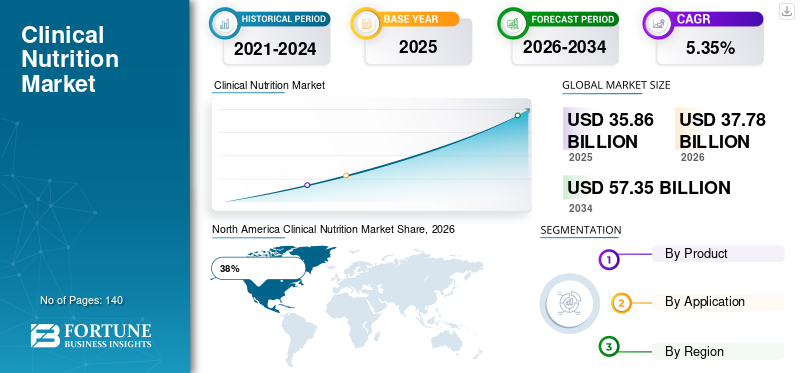
The clinical nutrition market size was valued at USD 34.59 billion in 2025. The market is projected to grow from USD 36.46 billion in 2026 to USD 55.49 billion by 2034, exhibiting a CAGR of 5.39% during the forecast period.

The clinical nutrition market is witnessing strong expansion due to the increasing prevalence of chronic diseases, rising aging populations, and growing awareness regarding disease-related malnutrition in hospitals and homecare settings. Clinical nutrition products are widely used in patient recovery programs, critical care units, cancer therapy support, gastrointestinal disorder management, and elderly nutrition support. Demand for oral nutritional supplements, enteral nutrition, and parenteral nutrition solutions continues to increase across healthcare institutions and rehabilitation centers. clinical nutrition market analysis indicates that healthcare providers are increasingly integrating specialized nutrition therapies into treatment plans to improve patient outcomes, shorten hospitalization periods, and reduce complications.
The United States clinical nutrition market remains one of the most advanced healthcare nutrition sectors globally due to the strong presence of leading manufacturers, advanced hospital infrastructure, and increasing healthcare spending on chronic disease management. Rising obesity rates, diabetes prevalence, and growing elderly demographics are accelerating the adoption of specialized nutritional therapies in the country. Clinical Nutrition Industry Analysis shows that U.S. hospitals and long-term care facilities are rapidly implementing enteral and oral nutrition programs to improve patient recovery and minimize healthcare costs.
Download Free sample to learn more about this report.
Clinical Nutrition Market Key Takeaways
 Global Market Size & Forecast
- 2025 Market Size: USD 34.59 Billion
- 2026 Market Size: USD 36.46 Billion
- 2034 Forecast Market Size: USD 55.49 Billion
- CAGR: 5.39% from 2026-2034
 Market Share
- North America dominated with a 38% regional market share.
- Enteral nutrition held approximately 44% market share.
- Malabsorption, gastrointestinal disorders, and diarrhea management accounted for approximately 42% share.
 Key Regional Highlights
North America
North America led the global market with a 38% share.
Europe
Europe accounted for 29% of the global clinical nutrition market.
Asia-Pacific
Asia-Pacific represented 24% of the global market, driven by increasing demand for clinical nutrition products.
U.S.
The U.S. is a major clinical nutrition market, supported by rising demand for specialized nutritional therapies and healthcare services.
Japan
Japan accounted for approximately 28% of the Asia-Pacific market, supported by increasing demand for nutritional care among aging populations.
Read More

Clinical Nutrition Market Latest Trends
The clinical nutrition market trends indicate substantial transformation driven by personalized healthcare and precision nutrition technologies. Manufacturers are increasingly developing disease-specific formulations targeting diabetes, oncology care, gastrointestinal disorders, metabolic disorders, and elderly nutrition requirements. Plant-based clinical nutrition products are gaining strong traction due to changing consumer preferences toward clean-label and allergen-free formulations. clinical nutrition market research report findings also reveal increased demand for protein-rich supplements and immune-enhancing formulations in critical care environments.
Download Free sample to learn more about this report.
Pediatric clinical nutrition products are experiencing rising adoption due to increasing premature birth rates and pediatric malnutrition concerns globally. Furthermore, pharmaceutical and nutrition companies are investing heavily in innovative amino acid blends, probiotics, omega-based formulas, and micronutrient-enriched supplements. clinical nutrition market outlook data further suggests that collaborations between hospitals and nutrition manufacturers are strengthening product accessibility and improving patient-centric nutritional care worldwide.
Clinical Nutrition Market Dynamics
DRIVER
Rising Prevalence of Chronic Diseases and Malnutrition
The increasing burden of chronic diseases such as cancer, diabetes, gastrointestinal disorders, neurological conditions, and cardiovascular diseases is a major growth driver for the Clinical Nutrition Market. Patients suffering from these conditions often experience nutritional deficiencies, reduced immunity, and muscle loss, increasing the demand for specialized clinical nutrition therapies. Hospitals and healthcare professionals are increasingly recognizing nutrition as an essential part of disease management and recovery programs. clinical nutrition market growth is also being supported by the rapidly aging global population, as elderly individuals frequently require nutritional supplementation due to weakened metabolism and chronic health complications. Rising awareness regarding preventive healthcare and immune health is further encouraging adoption of oral and enteral nutritional products across healthcare settings. The growing use of nutrition therapy in intensive care units and rehabilitation centers is accelerating market penetration globally.
RESTRAINT
High Costs Associated with Specialized Nutrition Therapies
One of the key restraints impacting the clinical nutrition market is the high cost associated with advanced nutritional formulations and long-term nutritional support programs. Specialized enteral and parenteral nutrition therapies often require customized ingredients, medical supervision, and sophisticated delivery systems, making them expensive for many patients and healthcare facilities. In several developing economies, limited reimbursement policies and restricted healthcare budgets reduce patient access to clinical nutrition products. Clinical Nutrition Industry Analysis also indicates that lack of awareness among patients and healthcare workers in low-income regions limits market penetration. Additionally, stringent regulatory requirements for product approvals increase operational costs for manufacturers. The complex manufacturing process associated with sterile parenteral nutrition products also creates supply chain challenges and higher production expenditures.
OPPORTUNITY
Expansion of Personalized Nutrition and Home Healthcare
The growing adoption of personalized healthcare solutions presents major opportunities for the Clinical Nutrition Market. Healthcare providers are increasingly emphasizing tailored nutritional therapies based on patient-specific medical conditions, age groups, metabolic profiles, and treatment requirements. Personalized nutrition formulations are improving treatment effectiveness and patient recovery rates. clinical nutrition market opportunities are also expanding significantly due to the rapid growth of home healthcare services. Patients increasingly prefer home-based nutritional support because it offers convenience, lower treatment costs, and improved quality of life. The development of portable feeding pumps, ready-to-drink nutritional formulas, and telehealth-based monitoring systems is creating new business opportunities for market players. Emerging economies also provide untapped growth potential as healthcare infrastructure improves and nutritional awareness rises among consumers and medical professionals.
CHALLENGE
Regulatory Complexities and Product Safety Concerns
The clinical nutrition market faces major challenges related to regulatory compliance, product safety, and quality assurance standards. Clinical nutrition products must meet strict medical and nutritional regulations before commercialization, increasing approval timelines and operational complexity for manufacturers. Product contamination risks in parenteral nutrition solutions remain a critical concern because improper formulations can result in severe patient complications. clinical nutrition market Forecast studies also indicate that maintaining ingredient stability and nutrient consistency during large-scale manufacturing remains technically challenging. Supply chain disruptions for raw materials, especially amino acids, vitamins, and specialized proteins, further affect production efficiency.
Clinical Nutrition Market Segmentation
By Product
Parenteral nutrition accounts for nearly 22% of the clinical nutrition market Share due to its critical importance in intensive care and surgical recovery treatments. These nutrition products are administered intravenously when patients cannot consume or absorb nutrients through the digestive tract. Hospitals extensively utilize parenteral nutrition for premature infants, cancer patients, critically ill individuals, and patients suffering from severe gastrointestinal disorders. clinical nutrition market research report findings indicate increasing demand for amino acid-based intravenous nutrition formulations and lipid emulsions in emergency care units.
Enteral nutrition holds approximately 44% share of the Clinical Nutrition Market, making it the leading product segment globally. Enteral nutrition involves delivering nutrients directly into the stomach or intestine through feeding tubes and is widely preferred because it supports normal digestive function while reducing infection risks compared to intravenous methods. Hospitals, rehabilitation centers, and home healthcare providers increasingly rely on enteral feeding systems for stroke patients, elderly individuals, neurological disorder patients, and intensive care patients. Clinical Nutrition Industry Report analysis highlights rising demand for high-protein and fiber-enriched enteral formulas designed for disease-specific nutritional management. Technological improvements in portable feeding pumps and tube-feeding accessories are also contributing to market expansion.
Oral clinical nutrition products account for nearly 34% of the clinical nutrition market Share due to growing consumer preference for convenient nutritional supplementation. Oral nutritional supplements are widely used for elderly nutrition, sports recovery, immune support, post-surgical care, and chronic disease management. clinical nutrition market trends reveal increasing demand for ready-to-drink protein beverages, vitamin-enriched supplements, and disease-specific oral formulations. Manufacturers are introducing flavored, lactose-free, gluten-free, and plant-based oral nutrition products to attract broader patient populations. Hospitals and outpatient care facilities increasingly recommend oral supplements to improve recovery rates and reduce hospitalization duration.
To know how our report can help streamline your business, Speak to Analyst
By Application
Malabsorption, gastrointestinal disorders, and diarrhea management collectively represent approximately 42% of the clinical nutrition market Share due to the increasing prevalence of digestive disorders worldwide. Patients suffering from inflammatory bowel disease, Crohn’s disease, ulcerative colitis, and chronic diarrhea often require specialized nutritional therapies to restore nutrient absorption and maintain immune function. clinical nutrition market analysis indicates strong demand for elemental and semi-elemental formulas specifically designed for gastrointestinal tolerance. Healthcare providers increasingly utilize probiotics, amino acid blends, and low-residue nutritional formulas to improve digestive health outcomes.
Cancer care contributes nearly 38% share of the clinical nutrition market due to the growing number of oncology patients requiring nutritional support during chemotherapy, radiation therapy, and post-surgical recovery. Cancer patients frequently experience appetite loss, muscle wasting, immune suppression, and malnutrition, increasing reliance on specialized nutrition products. clinical nutrition market outlook data shows rising adoption of high-protein, immune-enhancing, and calorie-dense nutritional formulations for oncology care. Manufacturers are increasingly developing cancer-specific nutrition products containing omega fatty acids, antioxidants, and micronutrients to support patient recovery and treatment tolerance.
By Sales Channel
Hospitals and healthcare facilities represent the largest sales channel in the Clinical Nutrition Market, accounting for approximately 55% market share. Hospitals are the primary users of clinical nutrition products because many patients require nutritional support during treatment, surgery recovery, and intensive care. Healthcare facilities use enteral, parenteral, and oral nutrition products across multiple departments, including intensive care units, oncology departments, surgical units, and rehabilitation centers. Clinical nutrition plays an important role in improving patient recovery and supporting medical treatment. The Clinical Nutrition Market Analysis indicates that hospitals prefer products from established manufacturers that meet strict quality and safety requirements. Healthcare professionals carefully select nutritional solutions based on patient conditions and nutritional needs.
Increasing hospital infrastructure development, especially in emerging economies, is supporting demand for clinical nutrition products. Healthcare systems are expanding access to specialized nutritional therapies, creating new opportunities for manufacturers. Manufacturers are developing user-friendly packaging, improved flavors, and easy administration formats to support home-based usage. Digital healthcare platforms are also improving access to clinical nutrition products. The expansion of home healthcare services and increasing preference for personalized care models are expected to strengthen this sales channel.
Clinical Nutrition Market Regional Outlook
North America
North America Clinical Nutrition Market Share, 2026 (%)
To get more information on the regional analysis of this market, Download Free sample
North America accounts for nearly 38% of the clinical nutrition market Share and continues to dominate the global healthcare nutrition landscape due to advanced medical infrastructure and strong patient awareness regarding disease-related malnutrition. The United States remains the largest contributor within the region because of the increasing prevalence of cancer, obesity, diabetes, and gastrointestinal disorders requiring nutritional intervention. Hospitals across the region are rapidly adopting enteral and oral nutritional therapies to improve patient recovery outcomes and reduce hospitalization periods. clinical nutrition market analysis indicates that rising elderly populations are significantly increasing demand for nutritional support products in long-term care facilities and rehabilitation centers. Home healthcare services are also expanding rapidly, creating strong demand for portable feeding systems and ready-to-consume nutritional supplements. Canada contributes substantially to regional growth due to increasing healthcare expenditures and growing awareness regarding preventive healthcare nutrition. Major companies are investing heavily in personalized nutrition formulations, immune-support products, and pediatric clinical nutrition solutions.
Europe
Europe represents approximately 29% of the clinical nutrition market Share and remains one of the most established markets for therapeutic nutrition products worldwide. Increasing aging populations and rising chronic disease prevalence are major factors driving market demand throughout the region. clinical nutrition market research report findings indicate strong growth in enteral nutrition and oral nutritional supplements across hospitals, rehabilitation centers, and elderly care facilities. European healthcare systems increasingly emphasize nutritional therapy as an essential component of patient recovery and chronic disease management. Germany, France, the United Kingdom, and Italy remain major contributors to regional market growth due to advanced healthcare infrastructure and strong reimbursement frameworks. Demand for oncology nutrition products is increasing significantly because cancer patients require specialized nutritional support during treatment and recovery phases. clinical nutrition market trends also highlight growing demand for plant-based and allergen-free nutritional formulations across European countries.
Germany Clinical Nutrition Market
Germany holds nearly 24% share of the Europe clinical nutrition market and remains one of the leading countries for advanced medical nutrition solutions. The country benefits from a highly developed healthcare system, strong hospital infrastructure, and increasing investments in elderly care services. clinical nutrition market analysis indicates rising demand for enteral and oral nutrition products due to the growing prevalence of cancer, neurological disorders, and gastrointestinal diseases. Hospitals and rehabilitation centers increasingly utilize disease-specific nutritional therapies to improve patient recovery rates and reduce complications associated with malnutrition. Germany’s aging population is significantly increasing the need for elderly nutrition products and long-term nutritional support programs. Demand for oncology nutrition products is particularly strong because nutritional therapy plays a critical role in cancer treatment management. clinical nutrition market trends also reveal increasing consumer preference for protein-rich and immune-support nutritional supplements. Manufacturers operating in Germany are focusing on innovative formulations enriched with vitamins, probiotics, and amino acids to improve patient health outcomes. Home healthcare nutrition services are rapidly expanding due to rising demand for convenient and cost-effective patient care solutions.
United Kingdom Clinical Nutrition Market
The United Kingdom accounts for nearly 18% share of the Europe clinical nutrition market due to expanding healthcare services and increasing awareness regarding disease-related malnutrition management. Clinical Nutrition Industry Report findings indicate strong demand for oral nutritional supplements across elderly care centers, hospitals, and home healthcare services. Rising incidences of obesity, diabetes, cancer, and gastrointestinal disorders are significantly increasing the need for specialized nutritional therapies throughout the country. Hospitals in the UK are increasingly implementing nutritional screening protocols to improve patient outcomes and minimize treatment complications. Demand for enteral nutrition products continues to rise due to increasing neurological disorders and postoperative recovery requirements. clinical nutrition market trends also highlight growing adoption of pediatric nutrition products aimed at improving infant and child nutritional health.
Asia-Pacific
Asia-Pacific holds approximately 24% of the clinical nutrition market Share and is emerging as the fastest-growing regional market due to rapid healthcare infrastructure development and increasing nutritional awareness. Countries including China, Japan, India, and South Korea are witnessing substantial growth in demand for clinical nutrition therapies because of rising chronic disease prevalence and aging populations. clinical nutrition market research report findings reveal increasing adoption of oral nutritional supplements, pediatric nutrition products, and enteral feeding systems throughout the region. Government healthcare initiatives focused on improving nutrition-related healthcare services are significantly supporting market expansion across Asia-Pacific. Hospitals are increasingly integrating nutritional therapy into oncology care, intensive care treatment, and postoperative recovery programs. Rising middle-class populations and improving healthcare accessibility are also driving demand for specialized nutrition products. clinical nutrition market trends indicate growing consumer preference for preventive healthcare nutrition and immune-support supplements. Manufacturers are expanding production facilities and distribution networks across emerging Asian economies to meet rising product demand. Home healthcare services are becoming more common throughout urban areas, increasing the need for portable feeding systems and ready-to-consume nutritional formulations.
Japan Clinical Nutrition Market
Japan accounts for nearly 28% share of the Asia-Pacific clinical nutrition market due to its rapidly aging population and highly advanced healthcare system. The country experiences strong demand for elderly nutrition products and rehabilitation nutrition therapies because a significant portion of the population requires long-term healthcare support. clinical nutrition market analysis indicates increasing adoption of oral nutritional supplements enriched with proteins, amino acids, and vitamins designed to support healthy aging and improve recovery outcomes. Hospitals and nursing care facilities extensively utilize enteral nutrition products for elderly patients suffering from neurological disorders and swallowing difficulties. Demand for oncology nutrition products is also increasing significantly due to rising cancer treatment programs throughout Japan. clinical nutrition market trends reveal strong investments in personalized healthcare and disease-specific nutritional formulations tailored to individual patient requirements. Japanese consumers are increasingly aware of preventive healthcare nutrition and immune health management, driving adoption of high-quality nutritional supplements.
China Clinical Nutrition Market
China represents approximately 35% share of the Asia-Pacific clinical nutrition market and continues to experience rapid expansion due to improving healthcare infrastructure and rising healthcare expenditures. Increasing incidences of diabetes, cancer, gastrointestinal disorders, and malnutrition are significantly driving demand for specialized nutritional therapies throughout the country. clinical nutrition market Forecast studies indicate growing awareness regarding hospital malnutrition management and preventive healthcare nutrition among healthcare professionals and consumers. Hospitals across China are increasingly integrating nutritional support programs into patient treatment plans to improve recovery outcomes and reduce healthcare complications. Demand for oral nutritional supplements and enteral nutrition products is rising strongly due to increasing elderly populations and chronic disease prevalence. clinical nutrition market trends also reveal growing preference for affordable and locally manufactured nutrition products tailored to regional dietary preferences. International and domestic manufacturers are heavily investing in production facilities and product innovation within China. Pediatric clinical nutrition products are witnessing increasing adoption due to rising awareness regarding infant nutrition and child health management.
Rest of World
The Rest of World region accounts for nearly 9% share of the clinical nutrition market and includes developing healthcare markets across Latin America, the Middle East, and Africa. Improving healthcare infrastructure and rising awareness regarding disease-related malnutrition are major factors supporting market growth throughout these regions. clinical nutrition market analysis indicates increasing demand for pediatric nutrition products, oral nutritional supplements, and hospital nutrition therapies across emerging healthcare systems. Latin America is experiencing substantial growth in clinical nutrition adoption due to increasing chronic disease prevalence and expanding healthcare accessibility. Brazil and Mexico remain key contributors within the region because of rising healthcare investments and growing urban populations. Demand for oncology nutrition products and enteral feeding systems is increasing steadily across private and public healthcare institutions. clinical nutrition market trends also reveal growing awareness regarding preventive healthcare nutrition and immune-support formulations. In the Middle East and Africa, governments are investing heavily in hospital modernization and nutritional healthcare programs to improve patient treatment outcomes.
List of Top Clinical Nutrition Companies
- Abbott
- Pfizer Inc.
- Nestle
- Otsuka Holdings Co., Ltd.
- Mead Johnson & Company, LLC
- Danone S.A.
- Megalabs
- B.Braun
- Fresenius Kabi AG
- Meiji Holdings Co., Ltd.
- Baxter
- Grifols, S.A.
- Daisyfsmp (JIANGSU DAISY FSMP CO., LTD)
- Ausnutria Dairy Corporation Ltd.
- Maifu Nutrition Technology
Top Two Companies by Market Share
- Abbott – Approximately 18% market share
- Nestle – Approximately 15% market share
Investment Analysis and Opportunities
The clinical nutrition market is attracting substantial investments due to increasing healthcare awareness, growing chronic disease prevalence, and rising demand for personalized nutrition therapies. Pharmaceutical companies, healthcare providers, and nutrition manufacturers are investing heavily in research and development activities focused on disease-specific formulations and advanced nutrient delivery technologies. clinical nutrition market opportunities are particularly strong in oncology nutrition, elderly nutrition, pediatric nutrition, and gastrointestinal health management.
Investments in home healthcare infrastructure are also accelerating market expansion globally. Companies are introducing portable enteral feeding systems, telehealth monitoring platforms, and ready-to-consume nutritional products designed for home-based patient care. clinical nutrition market research report findings further indicate increasing venture capital investments in biotechnology firms developing personalized medical nutrition solutions based on genetic and metabolic profiling.
New Product Development
New product development activities within the clinical nutrition market are centered on personalized nutrition, clean-label ingredients, and disease-specific therapeutic formulations. Manufacturers are increasingly launching high-protein oral nutritional supplements enriched with vitamins, minerals, probiotics, and omega fatty acids to support immune health and muscle recovery. clinical nutrition market trends indicate growing development of lactose-free, gluten-free, and plant-based clinical nutrition products to address changing patient preferences and dietary sensitivities.
Smart feeding pumps integrated with digital monitoring technologies are emerging as another major innovation area within the market. Manufacturers are focusing on improving product convenience, shelf stability, taste enhancement, and nutrient bioavailability. Research activities involving microbiome-based nutrition therapies and personalized metabolic nutrition solutions are expected to drive future product innovation across the clinical nutrition sector.
Five Recent Developments (2023-2025)
- Abbott expanded its specialized adult nutrition product portfolio with advanced immune-support formulations in 2024.
- Nestle introduced new plant-based medical nutrition products designed for elderly and oncology patients in 2023.
- Danone S.A. expanded clinical research investments for disease-specific enteral nutrition solutions in 2025.
- Fresenius Kabi AG launched advanced parenteral nutrition products with improved nutrient stability technologies in 2024.
- Otsuka Holdings Co., Ltd. strengthened its clinical nutrition manufacturing capabilities across Asia-Pacific markets in 2025.
Report Coverage of Clinical Nutrition Market
The clinical nutrition market Report provides comprehensive analysis of industry trends, market dynamics, competitive landscape, regional performance, investment opportunities, and future growth potential across global healthcare sectors. The report extensively evaluates key market segments including parenteral nutrition, enteral nutrition, and oral nutritional supplements while analyzing their applications across cancer care, gastrointestinal disorders, malabsorption conditions, and elderly nutrition management.
Request for Customization to gain extensive market insights.
clinical nutrition market research report coverage includes detailed assessment of technological advancements, personalized nutrition developments, and emerging healthcare delivery models influencing industry expansion. The report also examines major growth drivers such as rising chronic disease prevalence, increasing aging populations, and expanding home healthcare services. Market restraints, regulatory challenges, and supply chain complexities are evaluated to provide a balanced industry outlook.
Frequently Asked Questions
Fortune Business Insights says that the global market value stood at USD 34.59 billion in 2025 and is projected to reach USD 55.49 billion by 2034.
The market is expected to exhibit a CAGR of 5.39% during the forecast period of 2025-2034.
Enteral nutrition was the leading product segment, accounting for approximately 44% of the market, owing to its widespread use and ability to support normal digestive function.
Key players include Abbott, Nestle, Pfizer Inc., Otsuka Holdings Co., Ltd., Danone S.A., and Fresenius Kabi AG.
Major trends include the growing adoption of personalized and disease-specific nutrition formulations and increasing demand for plant-based, protein-rich, and immune-support products. North America dominated the market with a 38% share.



- 2021-2034
- 2025
- 2021-2024
- 140
-

(Offer valid till 15th Sep 2026)
Get 30-60 hrs Free Customization
Expand Regional and Country Coverage, Segments Analysis, Company Profiles, Competitive Benchmarking, and End-user Insights.













.webp)






-
US +1 833 909 2966 ( Toll Free )
-
Get In Touch With Us