Domestic Tourism Market Size, Share & Industry Analysis, By Tour Type (Adventure, Spiritual/Cultural, Sports, Weekend Getaways), By Tourism Type, By Mode Of Booking, and Regional Forecast, 2026-2034
 Download Free Sample

Domestic Tourism Market Size & Overview
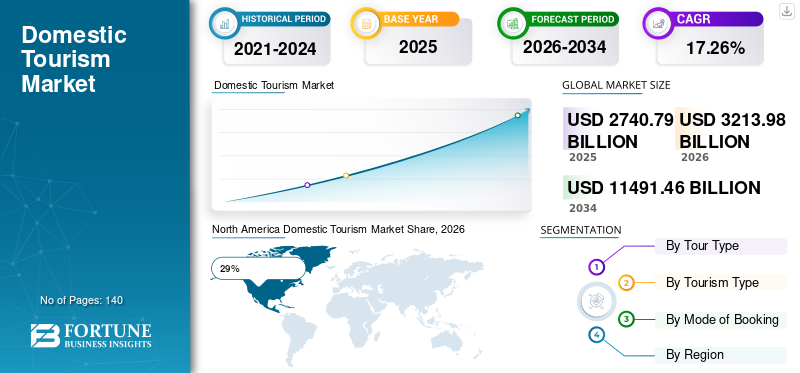
The domestic tourism market size was valued at USD 2740.79 Billion in 2025. The market is projected to grow from USD 3213.98 Billion in 2026 to USD 11491.46 Billion by 2034, exhibiting a CAGR of 17.26% during the forecast period.

The domestic tourism market represents travel activities undertaken by residents within their own country for leisure, business, cultural, religious, and recreational purposes. The market continues to expand due to improved transportation networks, digital booking platforms, rising disposable income, and growing interest in local destinations. Domestic tourism plays a critical role in supporting hospitality, transportation, food services, entertainment, and regional economic development. The domestic tourism market report indicates increasing demand for short-duration trips, adventure experiences, wellness tourism, and heritage exploration. Growing smartphone penetration and personalized travel planning tools are reshaping traveler behavior, creating substantial domestic tourism market opportunities across developed and emerging economies.
Download Free sample to learn more about this report.
USA Domestic Tourism Market Overview
The United States remains one of the largest domestic tourism destinations globally due to its extensive geographic diversity, strong transportation infrastructure, and large consumer base. National parks, coastal destinations, cultural attractions, sports events, and weekend travel continue to drive domestic visitor movement. The Domestic Tourism Industry Analysis for the U.S. highlights increasing demand for road trips, family vacations, outdoor recreation, and experiential travel. Digital booking solutions, loyalty programs, and mobile travel applications are improving traveler convenience. Rising interest in regional tourism and local destination discovery continues to support domestic tourism market growth across multiple states and metropolitan regions.
Domestic Tourism Market Key Takeaways
 Global Market Size & Forecast
- 2025 Market Size: USD 2,740.79 Billion
- 2026 Market Size: USD 3,213.98 Billion
- 2034 Forecast Market Size: USD 11,491.46 Billion
- CAGR: 17.26% from 2026-2034
 Market Share
- The market in Asia-Pacific dominated with a revenue share of 34% in 2025.
- Leisure tourism dominated by tourism type with a market share of approximately 68%.
- Online booking platforms dominated by mode of booking with a market share of approximately 72%.
 Key Regional Highlights
Asia-Pacific
Asia-Pacific led the market with a 34% share, supported by diverse tourism destinations and strong domestic travel demand.
North America
North America accounted for 29% of the market, driven by well-developed tourism infrastructure and strong leisure travel activity.
Europe
Europe held a 26% share, supported by its rich cultural heritage and extensive domestic travel networks.
U.S
The U.S. remains a key market, supported by strong domestic leisure travel and well-developed tourism infrastructure.
Japan
Japan accounted for approximately 16% of the Asia-Pacific market, supported by strong cultural tourism and established domestic travel infrastructure.
Read More

Domestic Tourism Market Latest Trends
The domestic tourism market trends indicate strong growth in experiential travel, eco-tourism, wellness retreats, and destination-based cultural experiences. Travelers increasingly prefer personalized itineraries, flexible bookings, and digital-first travel planning. Artificial intelligence-powered recommendations, contactless services, and mobile payment integration are becoming standard features across the tourism ecosystem. domestic tourism market research report findings suggest that travelers are prioritizing authenticity, sustainability, and convenience when selecting destinations.
Download Free sample to learn more about this report.
Another major trend involves the growth of weekend getaways and short-duration travel. Consumers are taking more frequent trips throughout the year rather than a single extended vacation. Adventure tourism, rural tourism, and culinary tourism are gaining popularity among younger demographics. The domestic tourism market outlook also highlights growing demand for tourism packages centered on festivals, sporting events, wellness activities, and heritage attractions. Tourism operators are increasingly investing in customized packages, digital engagement strategies, and data-driven customer targeting to strengthen market positioning.
Domestic Tourism Market Dynamics
DRIVER
Increasing Preference for Local And Regional Travel Experiences
The primary growth driver in the domestic tourism market is the rising preference for local and regional travel experiences. Travelers increasingly seek convenient and affordable tourism options within their national borders. Improved road infrastructure, high-speed rail connectivity, and expanding domestic airline networks have enhanced accessibility to tourist destinations. Domestic travel eliminates many complexities associated with international travel, including visa requirements, currency exchange issues, and border restrictions.
The domestic tourism market analysis indicates that consumers are allocating larger portions of discretionary spending toward leisure activities, family vacations, and cultural exploration. Social media exposure and digital travel content are inspiring travelers to explore lesser-known destinations. Government initiatives promoting regional tourism, heritage conservation, and sustainable travel further support market expansion. Domestic tourism also benefits local businesses, hospitality providers, and transportation operators, creating a positive economic cycle that strengthens industry growth.
RESTRAINT
Seasonal Demand Fluctuations and Economic Uncertainty
Seasonality remains a significant restraint within the domestic tourism market. Tourist demand often peaks during holidays, vacation periods, and favorable weather conditions, creating uneven revenue distribution throughout the year. Many tourism operators face challenges maintaining occupancy rates and service utilization during off-peak seasons.
Economic uncertainty also affects discretionary spending patterns. Inflation, rising transportation costs, accommodation expenses, and fuel prices may discourage frequent travel. The Domestic Tourism Industry Report highlights that budget-conscious consumers increasingly compare prices and seek discounts before making travel decisions. Additionally, overcrowding at popular destinations during peak seasons can negatively affect visitor experiences. Infrastructure limitations in emerging tourism regions may further restrict market expansion. These factors create operational challenges for tourism providers seeking consistent year-round demand.
OPPORTUNITY
Expansion of Digital Tourism Platforms and Personalized Travel Services
Digital transformation presents substantial opportunities for the domestic tourism market. Online booking platforms, mobile applications, and AI-driven travel planning tools enable travelers to discover destinations, compare services, and customize itineraries efficiently. Tourism companies are leveraging big data analytics to understand customer preferences and deliver personalized recommendations.
The domestic tourism market forecast highlights increasing opportunities in niche tourism segments such as wellness tourism, adventure tourism, culinary tourism, and rural tourism. Emerging destinations are attracting visitors seeking unique experiences away from crowded urban centers. Investments in smart tourism infrastructure, digital payment systems, and virtual destination marketing are creating new revenue streams. Tourism operators can also benefit from growing demand for sustainable travel experiences and environmentally responsible tourism offerings.
CHALLENGE
Infrastructure Gaps and Destination Management Issues
A major challenge within the domestic tourism market is maintaining adequate infrastructure to accommodate growing visitor volumes. Popular destinations often experience congestion, environmental degradation, and pressure on local resources. Transportation networks, accommodation facilities, and public services require continuous investment to support tourism growth.
Destination management also presents challenges. Tourism authorities must balance economic benefits with environmental sustainability and community well-being. The domestic tourism market insights reveal increasing concerns regarding overtourism, waste management, and ecosystem preservation. Smaller destinations may struggle with limited investment capacity, workforce shortages, and seasonal employment patterns. Addressing these challenges requires coordinated efforts among government agencies, tourism operators, and local stakeholders.
Domestic Tourism Market Segmentation
By Tour Type
Adventure tourism represents approximately 28% of the domestic tourism market share. Travelers increasingly seek outdoor experiences such as trekking, hiking, rafting, mountain biking, wildlife exploration, and camping. The segment benefits from growing health awareness and demand for active lifestyles. National parks, protected areas, and natural attractions continue attracting domestic travelers interested in adventure-based activities.
The domestic tourism market growth within adventure tourism is supported by improved safety standards, professional tour operators, and enhanced destination accessibility. Younger travelers and millennials constitute a major customer base. Social media exposure and experiential travel preferences continue strengthening demand for adventure-focused tourism packages.
Spiritual and cultural tourism accounts for approximately 31% of the domestic tourism market size. Religious pilgrimages, heritage site visits, cultural festivals, and historical attractions drive strong visitor demand. Many countries possess extensive cultural assets that attract millions of domestic travelers annually.
The domestic tourism market research report identifies cultural tourism as a resilient segment due to its strong emotional and educational value. Government investments in heritage preservation, museum development, and cultural promotion programs continue supporting growth. Family travel and educational tourism further contribute to segment expansion.
Sports tourism contributes approximately 16% of the domestic tourism market share. Major sporting events, tournaments, marathons, and recreational sports activities generate significant domestic travel demand. Sports enthusiasts frequently travel to attend competitions, training camps, and sporting festivals.
The Domestic Tourism Industry Analysis indicates increasing investments in sports infrastructure and event hosting capabilities. Domestic leagues and regional sporting events create recurring tourism opportunities. Hospitality providers, transportation operators, and local businesses benefit from increased visitor spending associated with sports tourism activities.
Weekend getaways represent approximately 25% of the domestic tourism market share. Urban professionals and families increasingly prefer short-duration trips that require minimal planning and budget commitments. Nearby destinations offering relaxation, recreation, and entertainment attract substantial visitor traffic.
The domestic tourism market outlook highlights strong demand for resort stays, countryside retreats, beach vacations, and wellness escapes. Improved transportation connectivity enables travelers to maximize leisure time while minimizing travel duration. Tourism operators continue developing attractive weekend packages to capitalize on this growing segment.
To know how our report can help streamline your business, Speak to Analyst
By Tourism Type
Leisure tourism dominates the domestic tourism market with approximately 68% market share. Family vacations, recreational activities, sightseeing, and holiday travel constitute the largest portion of domestic tourism demand. Travelers prioritize relaxation, entertainment, and experience-based activities when selecting destinations.
The domestic tourism market analysis indicates strong growth in leisure tourism due to rising disposable income and increasing emphasis on work-life balance. Hospitality providers continue expanding leisure-focused offerings to attract diverse traveler segments.
Business tourism accounts for approximately 32% of the domestic tourism market share. Corporate meetings, conferences, exhibitions, training programs, and professional networking events generate substantial domestic travel activity. Major business centers and convention destinations attract year-round visitor demand.
The Domestic Tourism Industry Report highlights increasing integration of business and leisure travel experiences. Companies continue investing in employee travel, event participation, and professional development activities, supporting sustained demand within this segment.
By Mode of Booking
Online booking platforms account for approximately 72% of the domestic tourism market share. Consumers increasingly utilize digital channels to compare prices, access reviews, and customize travel arrangements. Mobile applications and integrated travel ecosystems enhance convenience and efficiency.
The domestic tourism market trends show strong adoption of AI-powered recommendations, digital payments, and personalized travel planning solutions. Online booking continues gaining market share due to its accessibility and cost advantages.
Offline booking represents approximately 28% of the domestic tourism market share. Traditional travel agencies, tour operators, and direct bookings remain relevant for complex itineraries and premium travel experiences. Some travelers continue preferring personalized assistance and face-to-face consultation.
The domestic tourism market opportunities within offline booking include customized group tours, luxury travel planning, and specialized tourism packages that require expert guidance and destination knowledge.
Domestic Tourism Market Regional Outlook
North America Domestic Tourism Market Share, 2026 (%)
To get more information on the regional analysis of this market, Download Free sample
North America
North America remains a leading region in the domestic tourism market due to advanced transportation infrastructure, strong consumer spending patterns, and diverse tourism offerings. Domestic travelers frequently engage in road trips, national park visits, cultural tourism, and recreational activities. Tourism providers benefit from extensive digital booking adoption and high travel frequency among residents.
The domestic tourism market insights indicate increasing demand for experiential travel, wellness tourism, and outdoor recreation. Regional tourism boards continue promoting local destinations and sustainable tourism initiatives. North America accounts for 29% of the global market.
Europe
Europe maintains a significant position within the domestic tourism market due to its extensive cultural heritage, historical attractions, and well-developed transportation networks. Domestic travelers frequently explore neighboring regions, cultural landmarks, and countryside destinations.
Government support for sustainable tourism and heritage preservation strengthens market development. Tourism operators continue introducing innovative travel experiences focused on culture, gastronomy, and wellness. Europe accounts for 26% of the global market.
Germany Domestic Tourism Market
Germany represents one of Europe's strongest domestic tourism markets. Domestic travelers frequently visit natural parks, wellness resorts, cultural cities, and heritage destinations. Strong rail infrastructure supports convenient travel across regions. Domestic tourism demand benefits from high consumer spending power and a strong preference for regional travel experiences.
The domestic tourism market research report highlights increasing interest in eco-tourism, outdoor recreation, and sustainable tourism practices across Germany. Tourism operators continue investing in digital engagement and personalized travel services. Germany accounts for 22% of the European domestic tourism market.
United Kingdom Domestic Tourism Market
The United Kingdom maintains a robust domestic tourism sector supported by staycations, cultural tourism, coastal destinations, and countryside travel. Historic sites, national parks, and regional attractions generate substantial visitor activity. Domestic tourism remains an important contributor to local economies.
The domestic tourism market outlook for the United Kingdom highlights increasing demand for short breaks, wellness tourism, and experiential travel offerings. Investments in tourism infrastructure and destination marketing support continued market development. The United Kingdom accounts for 18% of the European market.
Asia-Pacific
Asia-Pacific leads the domestic tourism market due to large populations, expanding middle-class demographics, and rising disposable income levels. Domestic travel demand continues increasing across urban and rural destinations. Government investments in transportation infrastructure and tourism promotion strengthen regional growth.
The Domestic Tourism Industry Analysis highlights strong demand for cultural tourism, adventure travel, family vacations, and wellness experiences. Asia-Pacific accounts for 34% of the global market.
Japan Domestic Tourism Market
Japan's domestic tourism market is characterized by extensive rail connectivity, strong regional tourism promotion, and diverse travel experiences. Domestic travelers frequently visit cultural landmarks, hot spring destinations, mountain resorts, and seasonal attractions.
The domestic tourism market trends in Japan include increasing demand for wellness tourism, culinary tourism, and local cultural experiences. Technological innovation and high service quality support continued market expansion. Japan accounts for 16% of the Asia-Pacific market.
China Domestic Tourism Market
China represents the largest domestic tourism market within Asia-Pacific. Massive internal travel demand is supported by extensive transportation infrastructure, digital payment systems, and strong government support for tourism development. Domestic travelers frequently explore cultural attractions, natural landscapes, and urban destinations.
The domestic tourism market growth in China continues to benefit from rising middle-class income levels and increasing travel frequency. Digital tourism platforms and smart tourism initiatives support efficient travel planning. China accounts for 38% of the Asia-Pacific market.
Rest of World
The Rest of World region includes Latin America, the Middle East, and Africa. Domestic tourism development is supported by infrastructure improvements, cultural attractions, and growing regional travel demand. Governments increasingly recognize tourism as a tool for economic diversification and regional development.
The domestic tourism market forecast indicates expanding opportunities in nature tourism, heritage tourism, and community-based tourism initiatives. Rest of World accounts for 11% of the global market.
List of Top Domestic Tourism Companies
- Abercrombie & Kent USA LLC
- Expedia Group
- Cox and Kings Ltd.
- Kensington Tours
- Micato Safari
- Scott Dunn Ltd.
- Tauck, Inc.
- Thomas Cook India Ltd.
- La Vacanza Travel
- Butterfield & Robinson
Top Two Companies by market share
- Expedia Group – 12%
- Thomas Cook India Ltd. – 8%
Investment Analysis and Opportunities
The domestic tourism market presents substantial investment opportunities across transportation, hospitality, travel technology, destination management, and tourism infrastructure. Investors increasingly focus on digital booking platforms, AI-powered travel solutions, and personalized tourism services. Growth in regional tourism creates opportunities for hotel development, transportation upgrades, and destination marketing initiatives.
The domestic tourism market opportunities also include eco-tourism projects, wellness resorts, cultural tourism facilities, and smart tourism technologies. Governments continue supporting tourism development through infrastructure investments and policy initiatives. Private investors are targeting emerging destinations with strong growth potential and increasing visitor demand. Data analytics, customer engagement platforms, and sustainable tourism solutions represent key areas for future investment.
New Product Development
Innovation within the domestic tourism market increasingly focuses on digital transformation and customer experience enhancement. Tourism operators are introducing AI-powered travel assistants, personalized itinerary generators, and real-time travel management applications. Smart destination platforms provide travelers with integrated access to transportation, accommodation, attractions, and local services.
The domestic tourism market trends also highlight innovations in sustainability-focused tourism products. Eco-friendly accommodation, carbon-conscious travel packages, and community-based tourism experiences are gaining popularity. Virtual reality destination previews, digital concierge services, and contactless travel technologies continue improving customer engagement. Advanced analytics platforms enable tourism providers to develop highly targeted products tailored to specific traveler preferences.
Five Recent Developments (2023-2025)
- Expedia Group expanded AI-based trip planning and personalized recommendation capabilities.
- Thomas Cook India enhanced domestic travel portfolios focusing on regional tourism experiences.
- Tauck introduced additional small-group domestic travel programs emphasizing experiential tourism.
- Kensington Tours expanded customized domestic travel itineraries supported by digital planning tools.
- Abercrombie & Kent strengthened luxury domestic travel offerings targeting premium travelers.
Report Coverage
The domestic tourism market report provides comprehensive analysis of market structure, industry dynamics, competitive landscape, emerging trends, and growth opportunities. The report evaluates key tourism segments including adventure tourism, spiritual and cultural tourism, sports tourism, weekend getaways, leisure tourism, business tourism, online booking, and offline booking channels.
Request for Customization to gain extensive market insights.
The domestic tourism market research report also assesses regional performance across North America, Europe, Asia-Pacific, and Rest of World. Detailed country-level analysis covers major tourism markets including the United States, Germany, the United Kingdom, Japan, and China. The report examines technological developments, investment patterns, digital transformation trends, consumer behavior changes, and strategic initiatives adopted by leading industry participants. It serves as a valuable resource for tourism operators, investors, policymakers, hospitality providers, transportation companies, and stakeholders seeking actionable domestic tourism market insights.
Frequently Asked Questions
Fortune Business Insights says that the global market value stood at USD 2,740.79 billion in 2025 and is projected to reach USD 11,491.46 billion by 2034.
The market is expected to exhibit a CAGR of 17.26% during the forecast period of 2026-2034.
Leisure tourism dominated the tourism type segment with approximately 68% market share, driven by strong demand for family vacations, recreation, sightseeing, and holiday travel.
Key players include Expedia Group, Thomas Cook India Ltd., Abercrombie & Kent USA LLC, Cox and Kings Ltd., Kensington Tours, and Micato Safari.
Major trends include the rise of experiential, eco-, and wellness tourism and growing adoption of AI-powered recommendations and digital-first travel planning. Asia-Pacific led with a 34% market share in 2025.


- 2021-2034
- 2025
- 2021-2024
- 140
-

(Offer valid till 15th Nov 2026)
Get 30-60 hrs Free Customization
Expand Regional and Country Coverage, Segments Analysis, Company Profiles, Competitive Benchmarking, and End-user Insights.



















-
US +1 833 909 2966 ( Toll Free )
-
Get In Touch With Us