Dry Eye Treatment Devices Market Size, Share & Industry Analysis, By Technology (MGX, Combination (MGX+IPL)), By End-use (Hospitals, Ophthalmic Clinics), By Region, and Regional Forecast, 2026-2034
 Download Free Sample
Dry Eye Treatment Devices Market Overview
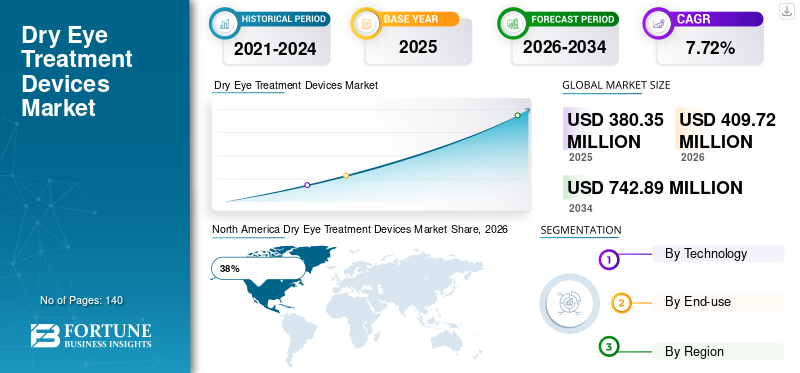
The dry eye treatment devices market size was valued at USD 380.35 Million in 2025. The market is projected to grow from USD 409.72 Million in 2026 to USD 742.89 Million by 2034, exhibiting a CAGR of 7.72% during the forecast period. The market in North America dominated with a revenue share of 38% in 2025.

The dry eye treatment devices market is experiencing significant expansion due to the increasing prevalence of dry eye disease (DED), meibomian gland dysfunction (MGD), prolonged digital screen exposure, and a growing aging population. Device-based therapies have gained strong acceptance among ophthalmologists and eye care professionals because they offer targeted treatment for underlying causes rather than providing temporary symptom relief. Technologies such as Meibomian Gland Expression (MGX), Intense Pulsed Light (IPL), thermal pulsation systems, and combination therapies are becoming integral components of modern eye care practices. The dry eye treatment devices market Report highlights increasing adoption in specialty eye clinics, technological innovation, and growing awareness regarding ocular surface disorders. Demand continues to rise as healthcare providers seek non-invasive, efficient, and long-lasting treatment solutions for patients suffering from chronic dry eye conditions.
The United States represents the largest and most technologically advanced segment of the dry eye treatment devices market. Rising rates of screen-related eye strain, increasing diagnosis of meibomian gland dysfunction, and widespread availability of advanced ophthalmic infrastructure continue to support market penetration. Eye care professionals across hospitals and ophthalmic clinics are increasingly integrating device-based treatment protocols into routine patient management. The presence of leading manufacturers, strong clinical research activity, favorable regulatory pathways, and high patient awareness further strengthen market development. The U.S. dry eye treatment devices market Analysis indicates strong demand for thermal pulsation, IPL-based therapies, and combination treatment systems that improve patient outcomes while reducing dependency on long-term pharmaceutical therapies
Download Free sample to learn more about this report.
Dry Eye Treatment Devices Market Key Takeaways
 Global Market Size & Forecast
- 2025 Market Size: USD 380.35 Million
- 2026 Market Size: USD 409.72 Million
- 2034 Forecast Market Size: USD 742.89 Million
- CAGR: 7.72% from 2026-2034
 Market Share
- The market in North America dominated with a revenue share of 38% in 2025.
- Meibomian Gland Expression (MGX) dominated by technology with a market share of approximately 41%.
- Hospitals dominated by end-use with a market share of approximately 56%.
 Key Regional Highlights
North America
North America led the market with a 38% share, supported by advanced ophthalmic care infrastructure and growing demand for dry eye treatments.
Europe
Europe accounted for 28% of the market, driven by increasing awareness of ocular surface disorders and access to specialized eye care.
Asia-Pacific
Asia-Pacific held a 24% share, supported by expanding healthcare infrastructure and rising demand for advanced ophthalmic technologies.
U.S
The U.S. remains a key market, supported by advanced eye care infrastructure and strong adoption of device-based dry eye treatments.
Japan
Japan accounted for approximately 29% of the Asia-Pacific market, supported by advanced ophthalmic care and growing demand for dry eye management technologies.
Read More

Dry Eye Treatment Devices Market Latest Trends
One of the most prominent dry eye treatment devices market Trends is the increasing use of Intense Pulsed Light technology for treating meibomian gland dysfunction. Clinical studies and physician adoption have accelerated demand for IPL systems due to their ability to address inflammation and gland blockage simultaneously. Healthcare providers increasingly prefer treatments that offer sustained symptom improvement and reduced treatment frequency.
Download Free sample to learn more about this report.
Another important trend in the Dry Eye Treatment Devices Industry Analysis is the emergence of combination therapies integrating MGX and IPL technologies. These systems deliver comprehensive treatment by targeting multiple disease mechanisms within a single therapeutic session. Manufacturers are also developing more compact, user-friendly devices that improve clinical workflow and patient comfort.
Artificial intelligence-assisted diagnostics are beginning to influence treatment planning, enabling clinicians to personalize therapy based on gland imaging and disease severity. Additionally, ophthalmic clinics are expanding dedicated dry eye treatment centers to accommodate increasing patient volumes. The growing popularity of minimally invasive procedures and increasing patient awareness regarding ocular health continue to support innovation across the dry eye treatment devices market Forecast period.
Dry Eye Treatment Devices Market Dynamics
DRIVER
Rising Prevalence of Dry Eye Disease and Meibomian Gland Dysfunction
The primary growth driver in the dry eye treatment devices market is the increasing prevalence of dry eye disease worldwide. Modern lifestyles characterized by prolonged screen exposure, reduced blinking rates, environmental pollution, contact lens usage, and aging populations have significantly increased the incidence of ocular surface disorders. As dry eye symptoms become more common among working professionals and elderly individuals, demand for effective treatment solutions continues to rise.
Traditional therapies such as lubricating eye drops often provide temporary symptom relief without addressing the underlying causes. Consequently, healthcare providers are increasingly adopting device-based treatment approaches that directly target gland dysfunction and inflammation. Growing awareness among ophthalmologists regarding early diagnosis and intervention has further expanded the patient pool eligible for advanced treatments. The dry eye treatment devices market Research Report indicates that increasing diagnosis rates and greater physician acceptance of technology-driven therapies will remain key growth catalysts across developed and emerging healthcare markets.
RESTRAINT
High Treatment Costs and Limited Reimbursement Coverage
Despite increasing demand, the dry eye treatment devices market faces challenges associated with treatment affordability. Advanced technologies such as thermal pulsation systems, IPL platforms, and combination therapy devices often require substantial capital investment by healthcare facilities. These costs can limit adoption among smaller clinics and healthcare providers operating under budget constraints.
Many dry eye treatment procedures are considered elective or premium services, resulting in limited reimbursement support in several healthcare systems. Consequently, patients may bear significant out-of-pocket expenses, which can reduce treatment uptake. The situation is particularly evident in emerging economies where healthcare spending remains constrained. Furthermore, periodic maintenance requirements and staff training costs add operational burdens for providers. These financial considerations continue to influence purchasing decisions and may slow expansion in certain regional markets despite increasing clinical demand.
OPPORTUNITY
Expansion of Specialized Ophthalmic Clinics and Advanced Eye Care Services
A significant opportunity within the dry eye treatment devices market lies in the rapid expansion of specialty ophthalmic clinics and dedicated dry eye treatment centers. Healthcare providers increasingly recognize dry eye disease as a chronic condition requiring specialized management rather than occasional symptom treatment. This shift is creating demand for advanced diagnostic and therapeutic equipment.
Emerging markets present substantial opportunities as awareness of ocular health improves and healthcare infrastructure expands. Manufacturers are investing in physician training programs and clinical education initiatives to increase device utilization. Technological advancements supporting shorter treatment times, improved patient comfort, and enhanced outcomes are also creating favorable conditions for market growth. The dry eye treatment devices market Opportunities segment continues to benefit from increasing healthcare investments and the growing focus on personalized medicine.
CHALLENGE
Variability in Clinical Outcomes And Patient Awareness Gaps
One of the major challenges affecting the dry eye treatment devices market is variability in treatment outcomes across different patient populations. Dry eye disease is multifactorial, making treatment response dependent on underlying causes, disease severity, patient compliance, and coexisting ocular conditions.
Limited awareness among patients regarding advanced treatment options remains another concern. Many individuals continue relying exclusively on artificial tears and over-the-counter remedies despite persistent symptoms. Additionally, inconsistent clinical protocols and differences in practitioner experience can influence treatment effectiveness. Manufacturers must continue supporting evidence-based clinical studies and physician education programs to enhance confidence in device-based therapies. Addressing these challenges will be critical for sustaining long-term adoption across global markets.
Dry Eye Treatment Devices Market Segmentation
By Technology
Meibomian Gland Expression (MGX) remains the largest technology segment within the dry eye treatment devices market, accounting for approximately 41% market share. MGX devices are specifically designed to remove gland obstructions and restore natural lipid secretion essential for maintaining tear film stability. The technology has gained widespread acceptance due to its direct therapeutic approach and proven effectiveness in treating meibomian gland dysfunction, one of the leading causes of evaporative dry eye disease.
Hospitals and ophthalmic clinics increasingly utilize MGX systems because they provide immediate gland clearance and measurable improvements in patient comfort. The segment benefits from extensive clinical validation and physician familiarity. Many practitioners integrate MGX procedures into broader dry eye treatment protocols, supporting recurring demand. Continuous improvements in device ergonomics, treatment precision, and patient comfort further strengthen adoption. The dry eye treatment devices market Insights indicate that MGX will remain a foundational technology across both developed and emerging healthcare markets.
Combination therapy systems integrating MGX and Intense Pulsed Light technology account for approximately 29% market share. These devices have gained substantial attention due to their ability to address multiple disease mechanisms simultaneously. IPL helps reduce inflammation and improve gland functionality, while MGX facilitates physical gland clearance.
Healthcare providers increasingly prefer combination approaches because they deliver comprehensive treatment and enhanced clinical outcomes. Growing evidence supporting synergistic therapeutic effects has encouraged broader adoption among ophthalmologists and specialized eye care centers. Patients also benefit from reduced treatment frequency and longer-lasting symptom improvement. Manufacturers continue investing in integrated platforms that streamline clinical workflows while improving treatment effectiveness. As demand for advanced ocular surface disease management increases, combination therapy systems are expected to strengthen their position within the dry eye treatment devices market Outlook.
To know how our report can help streamline your business, Speak to Analyst
By End-use
Hospitals represent approximately 56% of the dry eye treatment devices market by end-use. Large healthcare institutions maintain extensive ophthalmology departments equipped with advanced diagnostic and treatment technologies. Hospitals frequently serve patients with moderate to severe dry eye conditions, making them important purchasers of sophisticated treatment devices.
The hospital segment benefits from access to skilled ophthalmologists, multidisciplinary care teams, and comprehensive patient management capabilities. Increasing numbers of patients seeking specialized eye care services have encouraged hospitals to expand their dry eye treatment offerings. Furthermore, academic medical centers contribute to technology adoption through clinical research and physician training programs. The Dry Eye Treatment Devices Industry Report suggests that hospitals will continue serving as major end users due to their ability to accommodate high patient volumes and complex treatment requirements.
Ophthalmic clinics account for approximately 44% market share and represent one of the fastest-growing end-use segments. Specialized eye care centers increasingly focus on dry eye management as patient awareness grows and demand for targeted therapies increases. Clinics often provide personalized treatment plans supported by advanced diagnostics and device-based interventions.
Many ophthalmic clinics actively invest in IPL systems, MGX technologies, and combination platforms to differentiate their services and improve patient outcomes. Shorter waiting times, specialized expertise, and convenient access make clinics attractive treatment settings. Growing numbers of dedicated dry eye centers further support segment expansion. The dry eye treatment devices market Analysis indicates that ophthalmic clinics will remain a critical channel for technology adoption as outpatient care continues gaining prominence.
Dry Eye Treatment Devices Market Regional Outlook
North America Dry Eye Treatment Devices Market Share, 2026 (%)
To get more information on the regional analysis of this market, Download Free sample
North America
North America remains the dominant regional market, holding approximately 38% market share. The region benefits from advanced healthcare infrastructure, high awareness of ocular disorders, strong physician adoption of innovative technologies, and the presence of leading industry participants. The United States continues to drive regional demand through extensive utilization of IPL systems, thermal pulsation technologies, and gland expression devices.
Growing screen exposure among working populations, increasing prevalence of meibomian gland dysfunction, and strong clinical research activity support market expansion. Eye care professionals increasingly recommend device-based treatments for chronic dry eye management. Favorable regulatory environments and continuous technological innovation further strengthen regional leadership. The dry eye treatment devices market Forecast indicates sustained demand across hospitals, academic institutions, and specialized ophthalmic clinics throughout North America.
Europe
Europe accounts for approximately 28% market share in the global dry eye treatment devices market. Rising awareness of ocular surface disease, expanding elderly populations, and increasing investment in ophthalmology services support regional growth. Countries across Western Europe continue adopting advanced treatment technologies to address growing patient demand.
The region benefits from established healthcare systems and increasing physician acceptance of device-based therapies. Growing emphasis on early diagnosis and preventive eye care has strengthened demand for advanced diagnostic and therapeutic solutions. Clinical research initiatives and professional education programs continue supporting market expansion throughout Europe.
Germany Dry Eye Treatment Devices Market
Germany represents approximately 26% of the European dry eye treatment devices market. The country maintains a highly developed healthcare system with strong ophthalmology capabilities and extensive adoption of advanced medical technologies. Growing awareness regarding meibomian gland dysfunction and chronic dry eye disease has encouraged healthcare providers to incorporate device-based therapies into standard treatment protocols.
German ophthalmologists increasingly utilize IPL systems and MGX technologies to improve patient outcomes and reduce long-term dependence on pharmaceutical therapies. The country's strong medical device manufacturing ecosystem and emphasis on clinical innovation further support technology adoption. Academic research institutions and specialized eye centers continue contributing to advancements in dry eye management. Demand remains particularly strong among aging populations and individuals experiencing digital eye strain associated with modern work environments.
United Kingdom Dry Eye Treatment Devices Market
The United Kingdom accounts for approximately 22% of the European dry eye treatment devices market. Increasing diagnosis rates, greater public awareness of ocular health, and growing demand for minimally invasive treatments are supporting market development. Ophthalmic clinics across the country are expanding dry eye treatment services to address rising patient needs.
Healthcare providers increasingly adopt advanced technologies capable of addressing underlying disease mechanisms rather than solely managing symptoms. The growing prevalence of screen-related eye fatigue among working professionals has created additional demand for specialized therapies. Educational initiatives and clinical training programs continue strengthening physician confidence in device-based treatments. As healthcare providers emphasize preventive eye care, the UK market is expected to maintain steady expansion.
Asia-Pacific
Asia-Pacific holds approximately 24% market share and represents one of the fastest-evolving regions within the dry eye treatment devices market. Increasing healthcare expenditure, expanding access to ophthalmic services, and growing awareness of dry eye disease are driving regional demand. Rapid urbanization and widespread digital device usage have contributed to rising prevalence rates across major economies.
Healthcare providers throughout Asia-Pacific are investing in advanced diagnostic and therapeutic technologies to improve patient outcomes. Governments and private healthcare organizations continue supporting modernization of ophthalmology services. The region's large patient population presents substantial opportunities for manufacturers seeking long-term growth.
Japan Dry Eye Treatment Devices Market
Japan accounts for approximately 29% of the Asia-Pacific dry eye treatment devices market. The country's aging population and high prevalence of screen-related eye disorders contribute significantly to demand. Japanese healthcare providers are early adopters of advanced ophthalmic technologies and maintain strong emphasis on precision medicine.
Growing awareness of meibomian gland dysfunction and chronic dry eye disease has encouraged adoption of IPL and MGX treatment systems. Research institutions and ophthalmology centers actively participate in clinical studies evaluating new treatment approaches. High healthcare standards and strong patient expectations continue driving demand for innovative therapeutic solutions. The market benefits from a combination of technological sophistication and increasing recognition of ocular surface health.
China Dry Eye Treatment Devices Market
China represents approximately 34% of the Asia-Pacific dry eye treatment devices market. Rapid urbanization, increasing digital device usage, and expanding healthcare infrastructure have significantly influenced market growth. Rising disposable incomes and growing awareness of eye health are encouraging more patients to seek specialized treatment.
Healthcare facilities across major Chinese cities increasingly invest in advanced ophthalmic equipment to meet growing demand. Government initiatives supporting healthcare modernization and medical technology adoption further contribute to market expansion. Local and international manufacturers continue strengthening their presence through distribution partnerships and physician training programs. China remains one of the most attractive markets for future investment and technological innovation.
Rest of World
The Rest of World region accounts for approximately 10% market share. This segment includes Latin America, the Middle East, and Africa, where healthcare infrastructure continues evolving and awareness of dry eye disease is gradually improving. Increasing investment in ophthalmology services and growing access to specialized care are supporting market development.
Private healthcare providers play a significant role in introducing advanced treatment technologies across these regions. Urban healthcare centers increasingly adopt device-based therapies as patient awareness rises. Although market penetration remains lower than in developed regions, substantial opportunities exist due to large underserved populations and expanding healthcare investments. Manufacturers continue exploring strategic partnerships and distribution networks to strengthen regional presence.
List of Top Dry Eye Treatment Devices Companies
- MiBo Medical Group
- Sight Sciences
- Lumenis
- ESW Vision
- Johnson & Johnson Vision Care
- Alcon, Inc.
Top Two Companies with Highest Market Share
- Johnson & Johnson Vision Care – 22%
- Alcon, Inc. – 18%
Investment Analysis and Opportunities
Investment activity within the dry eye treatment devices market continues to increase as healthcare providers prioritize advanced ocular surface disease management. Venture capital firms, strategic investors, and medical device manufacturers are actively supporting innovation focused on improving treatment effectiveness and patient experience. Investment opportunities are particularly strong in technologies addressing meibomian gland dysfunction, personalized therapy solutions, and integrated diagnostic platforms.
Emerging markets present substantial growth potential due to expanding healthcare infrastructure and increasing patient awareness. Companies investing in physician education programs, clinical validation studies, and localized distribution networks are positioned to capture significant market opportunities. Strategic collaborations between device manufacturers and ophthalmology centers continue accelerating technology adoption. The dry eye treatment devices market Opportunities landscape also includes development of portable systems, AI-supported diagnostics, and next-generation combination therapies capable of improving treatment outcomes while enhancing clinical efficiency.
New Product Development
Innovation remains a central focus across the dry eye treatment devices market. Manufacturers are developing advanced systems that integrate diagnostics, imaging, and therapy into unified platforms. New product development efforts emphasize shorter treatment durations, improved patient comfort, and enhanced therapeutic precision.
Intense Pulsed Light technologies continue evolving through optimized energy delivery systems and specialized ocular treatment protocols. Combination devices integrating IPL and MGX functions are gaining attention due to their ability to address multiple disease mechanisms simultaneously. Manufacturers are also exploring smart devices capable of monitoring treatment response and supporting personalized therapy planning. Enhanced gland imaging technologies and digital workflow integration further contribute to product differentiation. These innovations are expected to strengthen competition and expand treatment options across the market.
Five Recent Developments (2023-2025)
- Sight Sciences expanded commercialization activities for advanced dry eye treatment platforms across multiple ophthalmic markets.
- Lumenis increased adoption of its IPL-based dry eye management technology among specialized eye care centers.
- Alcon strengthened its ocular surface disease portfolio through continued enhancements to gland treatment technologies.
- Johnson & Johnson Vision Care expanded physician education initiatives focused on meibomian gland dysfunction treatment.
- Multiple manufacturers introduced integrated diagnostic and treatment solutions designed to improve workflow efficiency and patient outcomes.
Report Coverage
The dry eye treatment devices market Report provides comprehensive evaluation of market dynamics, technology trends, competitive landscape, regional developments, and growth opportunities. The report analyzes major device categories including Meibomian Gland Expression systems, Intense Pulsed Light technologies, and combination treatment platforms. Detailed assessment of hospitals and ophthalmic clinics highlights evolving end-user demand patterns.
Request for Customization to gain extensive market insights.
The study also examines key market drivers, restraints, opportunities, and challenges influencing industry development. Regional analysis covers North America, Europe, Asia-Pacific, and Rest of World markets while providing country-level insights for major economies. Competitive profiling of leading manufacturers supports strategic decision-making for investors, healthcare providers, distributors, and industry participants. The dry eye treatment devices market Research Report further evaluates innovation trends, investment activity, product development initiatives, and emerging opportunities shaping the future of the industry.
Frequently Asked Questions
Fortune Business Insights says that the global market value stood at USD 380.35 million in 2025 and is projected to reach USD 742.89 million by 2034.
The market is expected to exhibit a CAGR of 7.72% during the forecast period of 2026-2034.
Meibomian Gland Expression (MGX) led the technology segment with approximately 41% market share, supported by its direct approach to clearing gland obstructions and treating meibomian gland dysfunction.
Key players include MiBo Medical Group, Sight Sciences, Lumenis, ESW Vision, Johnson & Johnson Vision Care, and Alcon, Inc.
Major trends include increasing adoption of Intense Pulsed Light (IPL) technology and combination MGX+IPL therapies, along with growing use of AI-assisted diagnostics. North America dominated the market with a 38% share in 2025.



- 2021-2034
- 2025
- 2021-2024
- 140
-

(Offer valid till 15th Oct 2026)
Get 30-60 hrs Free Customization
Expand Regional and Country Coverage, Segments Analysis, Company Profiles, Competitive Benchmarking, and End-user Insights.













.webp)






-
US +1 833 909 2966 ( Toll Free )
-
Get In Touch With Us