Garment Active Insulation Market Size, Share & Industry Analysis, By Product (Polyester, Wool), By Sourcing (Branded Insulation), By Application (Outerwear, Footwear), and Regional Forecast, 2026-2034
 Download Free Sample

Garment Active Insulation Market Overview
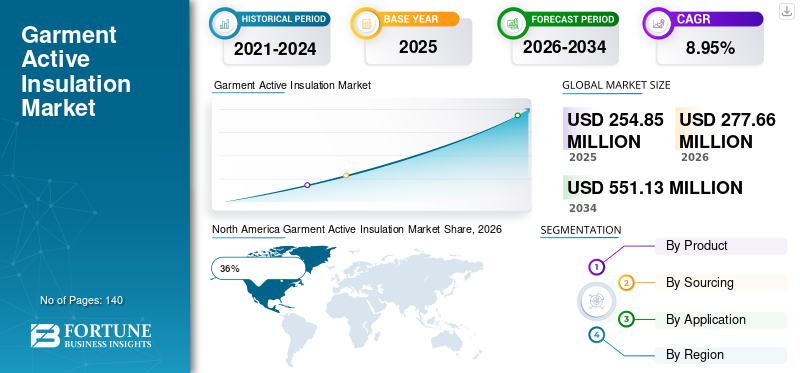
The global garment active insulation market size was valued at USD 254.85 Million in 2025. The market is projected to grow from USD 277.66 Million in 2026 to USD 551.13 Million by 2034, exhibiting a CAGR of 8.95% during the forecast period.

The garment active insulation market is witnessing strong expansion due to increasing consumer demand for lightweight, breathable, and thermally efficient apparel solutions. Active insulation materials are designed to regulate body temperature while maintaining comfort during high-performance outdoor activities, sports, military operations, and everyday wear. The market is driven by innovations in textile engineering and rising preference for multifunctional apparel products that provide warmth without adding bulk. Manufacturers are focusing on sustainable insulation technologies using recycled fibers and advanced synthetic blends. Growing participation in outdoor recreation, fitness activities, and adventure tourism is further accelerating demand for active insulation garments globally.
The United States remains one of the leading contributors to the garment active insulation market due to strong consumer spending on outdoor apparel and performance wear. The country has a well-established outdoor sports industry that supports continuous demand for insulated jackets, activewear, hiking apparel, and cold-weather garments. Brands are increasingly integrating breathable insulation technologies into premium apparel collections to improve thermal regulation and comfort. Military modernization programs and increasing demand for tactical clothing are also influencing market growth. Sustainability trends and growing preference for eco-friendly insulation materials continue to encourage innovation across the U.S. garment active insulation industry.
Download Free sample to learn more about this report.
Garment Active Insulation Market Key Takeaways
 Global Market Size & Forecast
- 2025 Market Size: USD 254.85 Million
- 2026 Market Size: USD 277.66 Million
- 2034 Forecast Market Size: USD 551.13 Million
- CAGR: 8.95% from 2026-2034
 Market Share
- The market in North America dominated with a revenue share of 36% in 2025.
- Polyester-based active insulation dominated by product with the largest market share.
- Outerwear dominated by application with a market share of approximately 37%.
 Key Regional Highlights
North America
North America led the market with a 36% share, supported by strong demand for outdoor apparel and advanced insulation technologies.
Europe
Europe accounted for 29% of the market, driven by growing demand for high-performance and sustainable clothing.
Asia-Pacific
Asia-Pacific held a 25% share, supported by expanding outdoor recreation and rising demand for insulated apparel.
U.S
The U.S. remains a key market, supported by strong demand for outdoor, sportswear, and winter apparel.
Japan
Japan accounted for approximately 21% of the Asia-Pacific market, supported by demand for high-performance and functional outdoor clothing.
Read More

Garment Active Insulation Market Latest Trends
The garment active insulation market is evolving rapidly with continuous innovation in smart textiles and advanced thermal management technologies. One of the major trends shaping the market is the increasing adoption of lightweight synthetic insulation materials that offer improved breathability and moisture control. Consumers are demanding versatile garments suitable for both urban lifestyles and outdoor environments, encouraging manufacturers to develop multifunctional insulation products.
Download Free sample to learn more about this report.
Another key trend is the rising use of recycled polyester and eco-conscious insulation materials in premium outerwear collections. Sustainability initiatives are influencing purchasing decisions across global apparel markets. Companies are also investing in hybrid insulation systems that combine wool, polyester, and engineered fibers to enhance thermal efficiency and flexibility. Technological advancements in garment construction techniques, including seamless insulation layering and adaptive ventilation systems, are strengthening product performance. The growing popularity of outdoor recreation, hiking, winter sports, and adventure tourism continues to drive innovation within the garment active insulation market report, Garment Active Insulation Industry Analysis, garment active insulation market outlook, and garment active insulation market research report segments globally.
Garment Active Insulation Market Dynamics
Driver
Increasing Demand for High-Performance Outdoor and Sports Apparel
The primary growth driver for the garment active insulation market is the rising global demand for high-performance apparel designed for outdoor sports, fitness, and adventure activities. Consumers increasingly prefer insulated garments that provide warmth while maintaining flexibility, breathability, and lightweight comfort. Active insulation technologies have become essential in modern apparel manufacturing because they regulate body temperature during varying physical activity levels.
Outdoor recreation trends, including hiking, skiing, mountaineering, cycling, and trekking, continue to gain popularity worldwide. This shift has encouraged apparel manufacturers to invest heavily in advanced insulation technologies that improve wearer comfort and performance. Military and tactical apparel applications are also contributing to market expansion, as defense organizations require thermally efficient garments for challenging environmental conditions. Growing awareness regarding climate adaptability and all-weather clothing solutions further supports demand. In addition, fashion brands are integrating active insulation materials into urban lifestyle apparel collections, broadening market penetration and strengthening the garment active insulation market Size and Market growth potential.
Restraint
High Production Costs Associated with Advanced Insulation Materials
One of the major restraints affecting the garment active insulation market is the high cost of advanced insulation materials and manufacturing technologies. Premium synthetic fibers, engineered wool blends, and specialized textile treatments significantly increase production expenses. These costs often result in higher retail prices, limiting affordability for price-sensitive consumers.
Manufacturers also face challenges related to supply chain volatility and fluctuating raw material prices. Sustainable insulation materials, including recycled polyester and bio-based fibers, require additional processing and certification standards that further raise operational costs. Smaller apparel manufacturers may struggle to compete with larger brands that possess stronger research and development capabilities. In some developing regions, limited consumer awareness regarding the functional benefits of active insulation garments also restricts market penetration. These factors collectively create barriers for widespread adoption and influence the competitive dynamics of the Garment Active Insulation Industry report landscape.
Opportunity
Rising Focus on Sustainable and Eco-Friendly Apparel Solutions
The growing emphasis on sustainability presents substantial opportunities for the garment active insulation market. Consumers are increasingly seeking environmentally responsible apparel products manufactured using recycled and renewable materials. This shift has encouraged companies to invest in eco-friendly insulation technologies that reduce environmental impact while maintaining thermal performance.
Manufacturers are introducing garments made with recycled polyester fibers, biodegradable insulation materials, and low-emission textile processing methods. Sustainability certifications and environmentally conscious branding strategies are becoming important competitive differentiators in the global apparel industry. Emerging economies also present significant opportunities due to rising disposable incomes and expanding outdoor recreation participation. The integration of smart textiles, adaptive temperature regulation systems, and lightweight insulation technologies is expected to create additional growth potential. These developments continue strengthening the garment active insulation market forecast, Market Opportunities, and Market Insights across both premium and mass-market apparel categories.
Challenge
Intense Competition and Rapid Product Innovation Cycles
The garment active insulation market faces significant challenges related to intense competition and rapidly evolving consumer preferences. Apparel brands are continuously launching new insulation technologies and performance-focused products, creating pressure for ongoing innovation. Companies must invest heavily in research and development to maintain competitive positioning within the market.
Short product life cycles and changing fashion trends further complicate inventory management and production planning. Manufacturers must balance performance, aesthetics, sustainability, and affordability while responding quickly to market demand. Counterfeit products and low-cost imitation garments also impact brand value and pricing strategies. In addition, maintaining consistent thermal performance across different climate conditions remains technically challenging. Companies operating within the garment active insulation market Analysis environment must continue improving product functionality and supply chain efficiency to address these industry challenges effectively.
Garment Active Insulation Market Segmentation
By Product
Polyester-based active insulation dominates the garment active insulation market due to its lightweight structure, moisture resistance, and strong thermal retention capabilities. Polyester insulation materials are widely used in outdoor jackets, sports apparel, and winter clothing because they maintain warmth even in damp conditions. Manufacturers favor polyester insulation because it is durable, cost-effective, and compatible with advanced textile engineering techniques. The growing preference for recycled polyester insulation is significantly influencing segment development. Apparel companies are increasingly utilizing post-consumer recycled materials to address sustainability concerns and strengthen eco-friendly product portfolios.
Wool-based active insulation represents an important segment of the market due to its natural thermal regulation properties and premium comfort characteristics. Wool fibers provide excellent breathability, moisture management, and odor resistance, making them highly suitable for outdoor performance garments and cold-weather apparel. Consumers increasingly value wool insulation for its sustainability advantages and biodegradable composition. Merino wool, in particular, is widely used in high-end sportswear and base-layer garments because of its softness and temperature-regulating capabilities. Manufacturers are blending wool with synthetic fibers to improve durability and enhance performance under demanding environmental conditions.
North America Garment Active Insulation Market Share, 2026 (%)
To get more information on the regional analysis of this market, Download Free sample
By Sourcing
Branded Insulation: Branded insulation applications account for a major portion of the garment active insulation market due to strong consumer trust in premium performance technologies. Leading apparel brands actively market proprietary insulation systems designed to provide superior warmth, breathability, and lightweight comfort. These technologies are widely utilized in sportswear, tactical clothing, and outdoor apparel collections. Manufacturers invest heavily in research and branding strategies to differentiate their insulation solutions from competitors. Consumers are increasingly willing to pay premium prices for garments associated with recognized insulation technologies and performance certifications.
By Application
Outerwear applications represent one of the largest segments within the garment active insulation market due to growing consumer demand for weather-resistant, lightweight, and thermally efficient apparel products. Insulated jackets, parkas, vests, hooded coats, and technical shells are increasingly preferred by consumers participating in outdoor recreation, winter sports, trekking, hiking, mountaineering, and urban commuting activities. Fashion brands are also integrating active insulation systems into lifestyle outerwear collections to combine performance with modern aesthetics. The outerwear segment accounted for approximately 37% of the global garment active insulation market share, reflecting its dominant role within the industry. Rising demand for multifunctional clothing suitable for both outdoor adventures and everyday urban wear continues supporting long-term growth opportunities for insulated outerwear products worldwide.
Footwear applications are becoming increasingly important within the garment active insulation market as consumers seek insulated shoes and boots capable of providing comfort, warmth, and moisture management in cold and demanding environments. Active insulation materials are widely incorporated into hiking boots, winter footwear, snow boots, trail-running shoes, and tactical footwear to improve thermal retention while maintaining flexibility and breathability. The footwear segment contributes nearly 22% of the global garment active insulation market share, highlighting its growing role within the broader insulated apparel industry. Rising innovation in breathable insulation layers, waterproof construction technologies, and sustainable footwear manufacturing continues creating substantial opportunities for market expansion across global outdoor and sportswear sectors.
Garment Active Insulation Market Regional Outlook
North America
North America remains the dominant region within the garment active insulation market due to strong consumer demand for premium outdoor apparel, sportswear, and performance-focused garments. The region benefits from a highly developed outdoor recreation industry across the United States and Canada, where activities such as hiking, skiing, trekking, snowboarding, and camping continue gaining popularity among consumers of all age groups. Increasing participation in fitness and adventure tourism is encouraging demand for lightweight insulated apparel that offers thermal efficiency, flexibility, and moisture management. Consumers are increasingly preferring multifunctional garments suitable for both urban and outdoor environments, supporting continuous product innovation across the region.
Manufacturers operating in North America are heavily investing in advanced synthetic insulation technologies, breathable fabrics, and sustainable textile solutions to strengthen competitive positioning. Growing awareness regarding environmentally friendly apparel products is influencing purchasing decisions, particularly among younger consumers seeking recycled and low-impact insulation materials. North America accounted for approximately 36% of the global garment active insulation market share, reflecting its leadership position within the industry. Military modernization initiatives and rising demand for tactical clothing are also contributing to market expansion.
Europe
Europe represents a major market for garment active insulation products due to increasing consumer interest in outdoor recreation, winter sports, and technically advanced apparel solutions. Countries throughout the region are witnessing rising demand for insulated garments designed for hiking, cycling, skiing, mountaineering, and urban mobility applications. European consumers strongly prioritize sustainability and product durability, encouraging manufacturers to adopt recycled fibers, biodegradable insulation materials, and environmentally responsible production methods. The growing popularity of multifunctional apparel suitable for changing climate conditions is also supporting market expansion across the region.
The European market benefits from advanced textile manufacturing capabilities and continuous innovation in thermal regulation technologies. Demand for premium insulated outerwear remains strong among athletes, outdoor enthusiasts, and lifestyle consumers seeking comfort and performance. Europe contributes nearly 29% of the global garment active insulation market share, making it one of the most influential regional markets worldwide. Manufacturers are increasingly focusing on hybrid insulation systems, breathable fabrics, and lightweight garment construction techniques to meet evolving consumer expectations. Government support for sustainable fashion initiatives and increasing investments in technical sportswear development continue strengthening the regional market outlook and encouraging long-term industry growth across multiple apparel categories.
Germany Garment Active Insulation Market
Germany plays a leading role within the European garment active insulation market due to its strong textile engineering expertise, advanced manufacturing capabilities, and growing demand for outdoor performance apparel. The country has a well-established consumer base for insulated sportswear, hiking gear, winter jackets, and technical clothing designed for varying environmental conditions. German consumers increasingly prefer garments that combine durability, comfort, sustainability, and thermal efficiency, encouraging manufacturers to invest in innovative insulation technologies and eco-friendly textile solutions. Rising participation in outdoor recreation activities and winter sports is further supporting market demand throughout the country.
The market benefits from Germany’s strong retail infrastructure and presence of internationally recognized apparel and textile companies. Manufacturers continue introducing advanced insulated garments featuring lightweight construction, moisture management, and breathable thermal systems suitable for active lifestyles. Germany accounts for approximately 26% of the European garment active insulation market, highlighting its importance within the regional industry landscape. Sustainability regulations and increasing preference for recycled textile materials continue influencing product development strategies among domestic and international brands. Growing investments in premium sportswear, technical outerwear, and sustainable apparel manufacturing are expected to support long-term market expansion and strengthen Germany’s competitive position within the global garment active insulation industry over the coming years.
United Kingdom Garment Active Insulation Market
The United Kingdom remains an important market for garment active insulation products due to increasing consumer preference for versatile, weather-resistant, and performance-oriented apparel solutions. Demand for insulated jackets, sportswear, and outdoor garments continues rising as consumers seek clothing suitable for both urban lifestyles and recreational activities such as hiking, cycling, trekking, and camping. Fashion brands are increasingly integrating active insulation materials into lifestyle apparel collections to improve thermal comfort, flexibility, and moisture management. Growing awareness regarding climate adaptability and functional clothing is further supporting market demand across the country.
The market is also benefiting from rising participation in fitness activities, adventure tourism, and outdoor sports among younger consumers. Apparel manufacturers are focusing on lightweight and breathable insulation systems that enhance mobility while maintaining warmth in changing weather conditions. The United Kingdom contributes nearly 19% of the European garment active insulation market, reflecting its strong role within the regional industry. Sustainability trends and increasing demand for eco-conscious apparel products are encouraging manufacturers to adopt recycled insulation materials and low-impact production methods. Expanding e-commerce platforms, premium sportswear demand, and continuous innovation in technical apparel continue supporting long-term growth opportunities within the United Kingdom garment active insulation market.
Asia-Pacific
Asia-Pacific is emerging as one of the fastest-growing regions within the garment active insulation market due to rising disposable incomes, expanding outdoor recreation culture, and increasing demand for premium apparel products. Consumers across countries such as China, Japan, South Korea, and India are showing greater interest in performance-based clothing suitable for varying weather conditions and active lifestyles. Growing urbanization and changing fashion preferences are encouraging consumers to purchase multifunctional insulated garments that combine comfort, style, and thermal efficiency. Increasing participation in hiking, trekking, skiing, and fitness activities is also contributing significantly to regional market growth.
The region benefits from strong textile manufacturing capabilities and rising investments in sportswear production and advanced fabric technologies. Manufacturers are expanding regional distribution networks and introducing affordable insulation technologies tailored to local consumer preferences and climate conditions. Asia-Pacific accounted for approximately 25% of the global garment active insulation market share, highlighting its growing importance within the industry. E-commerce growth and increasing awareness regarding functional apparel continue accelerating product demand throughout the region. International apparel brands are strengthening their presence through strategic partnerships and localized product offerings. Continuous innovation in lightweight insulation materials and sustainable textile manufacturing is expected to create substantial growth opportunities across the Asia-Pacific garment active insulation industry during the forecast period.
Japan Garment Active Insulation Market
Japan represents a technologically advanced market for garment active insulation products due to strong consumer demand for innovative, lightweight, and high-quality apparel solutions. Japanese consumers prioritize comfort, functionality, durability, and premium textile performance, encouraging manufacturers to develop adaptive insulation systems suitable for changing climate conditions and active lifestyles. The country’s strong fashion culture and preference for technically advanced garments continue supporting demand for insulated outerwear, sportswear, and urban performance apparel. Increasing participation in outdoor recreation activities and winter sports is also contributing to market expansion across Japan.
The country’s aging population and seasonal climate variations support demand for insulated garments suitable for both everyday use and outdoor environments. Apparel companies continue investing in advanced fabric engineering, breathable insulation technologies, and thermal regulation systems to improve product performance and consumer comfort. Japan contributes approximately 21% of the Asia-Pacific garment active insulation market, making it a significant regional contributor. Increasing focus on sustainable textile manufacturing and compact urban lifestyles further supports demand for lightweight insulated apparel products. Strong retail infrastructure, technological innovation, and rising consumer awareness regarding eco-friendly clothing solutions continue strengthening Japan’s position within the regional garment active insulation industry and supporting long-term market development opportunities.
China Garment Active Insulation Market
China remains one of the most influential markets within the Asia-Pacific region due to its massive textile manufacturing industry and rapidly expanding consumer base for performance apparel products. Rising disposable incomes and increasing participation in outdoor recreation activities are significantly influencing demand for insulated garments across urban and semi-urban populations. Consumers are increasingly seeking apparel that combines style, comfort, durability, and thermal efficiency, encouraging manufacturers to introduce innovative active insulation technologies. Growing awareness regarding fitness, adventure tourism, and winter sports is also supporting market expansion throughout the country.
Manufacturers are investing heavily in research and development to improve insulation performance, sustainability standards, and garment functionality. China accounts for approximately 8% of the Asia-Pacific garment active insulation market, reflecting its dominant regional position within the industry. Rapid urbanization, expanding e-commerce platforms, and strong domestic apparel production capabilities continue supporting market growth across multiple consumer segments. International and domestic brands are strengthening distribution networks and introducing affordable insulated apparel tailored to local preferences. The country’s role as a global manufacturing hub further strengthens its competitive advantage within the garment active insulation industry. Continuous investments in sustainable textile technologies and advanced production infrastructure are expected to support long-term market expansion across China.
Rest of World
The Rest of World region, including Latin America, the Middle East, and Africa, is gradually emerging as a promising market for garment active insulation products due to increasing awareness regarding outdoor apparel functionality and thermal comfort. Rising participation in recreational sports, adventure tourism, and fitness activities is supporting demand for insulated garments across these regions. Consumers are increasingly seeking lightweight and weather-resistant apparel suitable for varying climate conditions and outdoor environments. Growing urbanization and improving living standards are also encouraging adoption of premium sportswear and insulated outerwear products among middle-income populations.
Manufacturers are introducing affordable and climate-adaptive products tailored to diverse environmental conditions and regional consumer preferences. Expanding retail networks and improving access to international apparel brands are influencing purchasing patterns and increasing product availability throughout developing economies. The Rest of World region contributed nearly 10% of the global garment active insulation market share, demonstrating its developing role within the industry. Growing tourism activities, rising middle-class populations, and increasing investments in sports infrastructure continue creating new opportunities for market expansion. Government initiatives supporting textile manufacturing and retail modernization are also contributing to industry growth. Continuous improvements in e-commerce accessibility and consumer awareness are expected to strengthen future demand for garment active insulation products across these emerging regional markets.
List of Top Garment Active Insulation Companies
- Covestro AG
- Owens Corning
- Rockwool A/S
- Saint-Gobain
- Knauf Insulation
- Huntsman International LLC
- Dupont
- Armacell
- Johns Manville
- Kingspan Group
- China Jushi Co. Ltd.
- Freudenberg SE
- 3M
- KUIU
- Polartec
- PrimaLoft, Inc.
Top Two Companies by Market Share
- PrimaLoft, Inc. – 17%
- Polartec – 14%
Investment Analysis and Opportunities
The garment active insulation market is attracting substantial investments due to rising consumer demand for performance apparel and sustainable textile technologies. Apparel manufacturers and material science companies are investing heavily in research and development to create lightweight, breathable, and thermally efficient insulation solutions. Strategic partnerships between textile producers and outdoor apparel brands are increasing product innovation and accelerating commercialization of advanced insulation technologies.
Sustainability remains a major investment focus within the industry. Companies are allocating resources toward recycled synthetic fibers, biodegradable insulation materials, and low-emission production processes to align with environmental regulations and consumer expectations. Emerging economies present significant opportunities due to expanding middle-class populations and growing interest in outdoor recreation. Investments in e-commerce distribution channels and digital marketing strategies are also helping companies reach broader consumer segments.
New Product Development
Manufacturers operating within the garment active insulation market are focusing on advanced product development strategies aimed at improving thermal regulation, comfort, and sustainability. Companies are introducing hybrid insulation systems that combine synthetic fibers with natural wool to enhance breathability and moisture management. Lightweight insulation technologies designed for high-intensity outdoor activities are gaining strong consumer acceptance.
Innovation in smart textiles is also transforming the market. Apparel companies are integrating adaptive insulation materials capable of responding to body temperature changes and varying environmental conditions. Recycled polyester insulation and biodegradable thermal fibers are becoming increasingly popular as sustainability concerns influence purchasing decisions. Seamless garment construction techniques and flexible insulation layering systems are improving mobility and wearability. Manufacturers continue launching high-performance insulated jackets, activewear, and footwear products tailored to athletes, outdoor enthusiasts, and urban consumers seeking multifunctional apparel solutions.
Five Recent Developments (2023–2025)
- PrimaLoft introduced advanced recycled insulation materials for sustainable outerwear collections in 2023.
- Polartec expanded breathable insulation fabric technologies for high-performance sports apparel in 2024.
- 3M strengthened thermal textile innovation initiatives focused on lightweight insulation solutions in 2024.
- KUIU launched upgraded insulated hunting apparel systems with enhanced moisture management capabilities in 2025.
- Freudenberg SE expanded eco-friendly textile manufacturing operations to support sustainable garment insulation production in 2025.
Report Coverage
The garment active insulation market report provides comprehensive analysis of market trends, industry dynamics, competitive developments, and technological advancements influencing the global apparel insulation sector. The report evaluates key growth drivers, market restraints, emerging opportunities, and major industry challenges affecting manufacturers, suppliers, and investors.
Request for Customization to gain extensive market insights.
Coverage includes detailed segmentation analysis based on insulation type, application, and regional performance. The report examines polyester and wool insulation technologies along with applications in branded insulation products, outerwear, and footwear. Regional analysis covers North America, Europe, Asia-Pacific, and Rest of World markets with country-level insights for Germany, the United Kingdom, Japan, and China. The study also profiles major companies operating within the industry and highlights strategic initiatives related to product innovation, sustainability, investment activities, and competitive positioning.
Frequently Asked Questions
Fortune Business Insights says that the global market value stood at USD 254.85 million in 2025 and is projected to reach USD 551.13 million by 2034.
The market is expected to exhibit a CAGR of 8.95% during the forecast period of 2026-2034.
Outerwear led the application segment with approximately 37% market share, driven by strong demand for lightweight, weather-resistant, and thermally efficient apparel.
Key players include PrimaLoft, Inc., Polartec, 3M, KUIU, Freudenberg SE, and Covestro AG.
Major trends include rising adoption of lightweight synthetic insulation and growing use of recycled polyester and eco-conscious materials. North America dominated the market with a 36% share.


- 2021-2034
- 2025
- 2021-2024
- 140
-

(Offer valid till 15th Nov 2026)
Get 30-60 hrs Free Customization
Expand Regional and Country Coverage, Segments Analysis, Company Profiles, Competitive Benchmarking, and End-user Insights.














-
US +1 833 909 2966 ( Toll Free )
-
Get In Touch With Us