Handloom Carpet Market Size, Share & Industry Analysis, By Material (Cotton, Silk, Linen, Wool, and Others), By Application (Residential and Commercial), By Distribution Channel (Online and Offline), and Regional Forecast, 2026-2034
 Download Free Sample
(Offer valid till 31st Oct 2026)

KEY MARKET INSIGHTS
 Listen to Audio Version
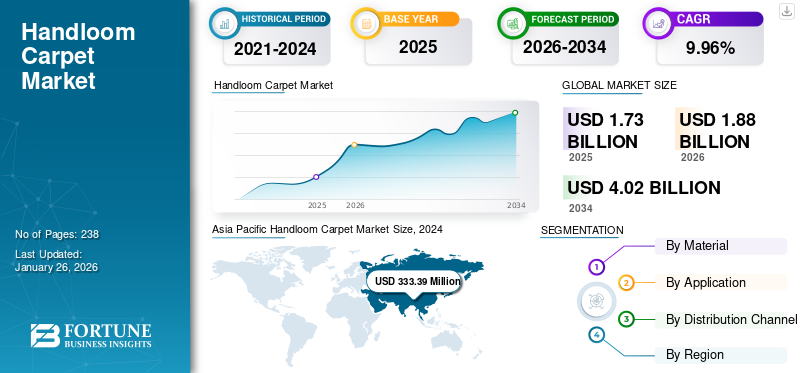
The global handloom carpet market size was valued at USD 1.73 billion in 2025. The market is projected to grow from USD 1.88 billion in 2026 to USD 4.02 billion by 2034, exhibiting a CAGR of 9.96% during the forecast period. Asia Pacific dominated the handloom carpet market with a market share of 34.74% in 2024.
Handloom carpet demand is mainly driven by growing recognition and consumer desire for artisanal workmanship and unique product features. Additionally, rising demand for eco-friendly, sustainable, and hand-crafted home decor goods supplements market growth. Countries, including India, Turkey, and Iran dominate production, while exports in North America and Europe are thriving. Rising disposable incomes and interior design trends fuel growth while expanding e-commerce platforms broadens manufacturers’ geographical reach, attracting consumers seeking unique designs. Moreover, government initiatives such as providing facilities and subsidies to support the handloom industry trigger market growth.
- According to the data cited by the Indian Brand Equity Foundation (IBEF), India is responsible for exporting nearly 40% of the handmade carpets it produces globally. The country’s exports were valued at USD 1.36 billion in FY2023, while in FY2022, it accounted for USD 1.79 billion.
Indian brands such as Jaipur Rugs, Mohawk Industries, Prasad Carpet International, CHANDAN RUGS, and Oriental Weavers compete on quality, customization, and sustainability and hold a significant share in the global market due to skilled labor and cost efficiency.
Download Free sample to learn more about this report.
Handloom Carpet Market Key Takeaways
 Global Market Size & Forecast
- 2025 Market Size: USD 1.73 billion
- 2026 Market Size: USD 1.88 billion
- 2034 Forecast Market Size: USD 4.02 billion
- CAGR: 9.96% from 2026-2034
 Market Share
- Asia Pacific dominated the handloom carpet market with a 34.74% share.
- The wool segment accounted for the largest market share.
- The residential application segment held the highest market share.
 Key Regional Highlights
Asia Pacific
Asia Pacific dominated the global handloom carpet market, supported by strong production and exports.
Europe
Europe is projected to register the highest CAGR during the forecast period.
North America
North America is witnessing steady growth due to rising demand for premium home décor products.
U.S.
Increasing demand for luxury home décor and home renovation activities is driving market growth.
Japan
Rising consumer preference for premium interior furnishings is supporting market expansion.
Read More

MARKET DYNAMICS
MARKET DRIVERS
Rising Demand for Sustainable and Eco-Friendly Flooring Solutions to Drive Market Growth
One of the main factors leading to market growth is the increasing consumer preference for sustainable and eco-friendly flooring solutions. With growing environmental consciousness, consumers are actively seeking home and living room decor products that minimize their carbon footprint. Handloom tufted rugs and carpets, typically made from natural fibers such as cotton, wool, jute, and silk, offer a biodegradable and sustainable alternative over synthetic machine-made flat-woven carpets.
Furthermore, ethical consumerism is influencing purchasing decisions, leading to a higher demand for handmade, artisanal products that support traditional weaving communities. Governments and organizations promoting sustainable practices have also paved a path by encouraging the use of natural and organic materials in home furnishings. Additionally, high-end hospitality and luxury residential sectors are adopting handmade carpets due to their aesthetic appeal, uniqueness, and durability. As sustainability becomes a key priority, the market is expected to witness steady growth, with artisans and manufacturers focusing on eco-friendly production methods and responsibly sourced raw materials to meet this demand.
- Asia Pacific witnessed handloom carpet market growth from USD 310.37 Million in 2023 to USD 333.39 Million in 2024.
Download Free sample to learn more about this report.
MARKET RESTRAINTS
High Production Cost and Pricing Challenges to Hinder Market Expansion
The handloom carpet market growth is restrained by the high cost of production, which leads to hefty end-product pricing. Unlike machine-made, tufted rugs and carpets require skilled artisans who dedicate significant time and effort to crafting intricate designs. The labor-intensive process and the cost of high-quality raw materials such as wool and silk result in premium pricing. This makes flat-woven floor carpets less competitive in mass markets, where consumers often opt for cheaper, machine-made alternatives. Additionally, fluctuations in raw materials prices and rising wages further increase production costs, making it difficult for manufacturers to maintain profit margins. While hand-tufted carpet specifications are valued for their craftsmanship and durability, their high pricing limits their accessibility to a niche market, restricting wider adoption and overall market growth.
MARKET OPPORTUNITIES
Digital Customization and Personalization to Offer Lucrative Growth Opportunities
One major potential growth opportunity in the global market is digital customization and personalization of the product. Consumers increasingly seek tailor-made, unique home decor that reflects their personal style. By integrating digital tools such as AI-driven design platforms and Augmented Reality (AR) visualization, manufacturers can allow customers to personalize colors, patterns, designs, sizes, and even weaves before production. This enhances customer engagement and reduces inventory costs by shifting toward a made-to-order model. Additionally, offering virtual try-before-you-buy experiences can boost online sales. High-end consumers, interior designers, and hospitality businesses are particularly interested in bespoke handwoven carpets, presenting a potential segment. Investing in digital customization can differentiate brands, attract premium buyers, and drive margins in the competitive handloom carpet industry.
Segmentation Analysis
By Material
Higher Resilience and Stain-Resistant Features to Lead Demand for Wool Materials
Based on material, the market is segmented into cotton, silk, linen, wool, and others.
The wool segment accounts for the largest global handloom carpet market share. Wool is a preferred material owing to its durability, softness, and natural insulation properties. Wool fibers are resilient and stain-resistant and maintain their appearance over time, making them a preferred choice for both residential and commercial spaces. Additionally, hand-tufted wool rugs and carpets offer excellent color retention and eco-friendliness, appealing to sustainability-conscious consumers. Their premium look and comfort further consolidate demand, especially in luxury and high-end interior segments, ensuring their dominance over synthetic and other natural fiber alternatives.
The demand for silk carpets is experiencing notable growth, especially in luxury markets. This surge is driven by a combination of factors, including a heightened appreciation for artisanal craftsmanship, the exclusivity of silk as a material, and a global shift toward sustainable and culturally rich products.
By Application
Shift in Lifestyle and Rising Demand for Furnished Homes Strengthened Residential Segment Growth
Based on application, the market is segmented into residential and commercial.
The residential application segment accounted for the highest revenue share of the market in 2024, owing to the rising trend of home decor and furnishings in households to enhance overall aesthetics with unique patterns and colors. The increasing number of home renovation projects and replacing out-of-style or worn carpets, is propelling segment growth. Moreover, the demand for full-furnished residences that offer inclusive solutions for interior decor is on the rise. Carpets serve as a crucial addition to these setups, improving the overall appeal of the furnishing. In addition, evolving preferences and changing lifestyles have led to an increasing appreciation for handmade carpets as indispensable home decor items. They provide unique style and comfort and a personalized taste for homeowners, further driving segment’s growth.
The commercial segment is projected to expand significantly in the coming years, from 2025 to 2032. The carpets usage in commercial applications is witnessing growth due to rising construction activities, including offices, hotels, restaurants, and retail spaces. These products uplift the aesthetics, comfort, and functionality of commercial spaces while enhancing ambiance, acoustics, and safety.
By Distribution Channel
Increase in Number of Physical Retail Stores Boosted Offline Segment Growth
Based on the distribution channel, the market is segmented into online and offline.
The offline segment dominated the market in 2024 due to increasing consumer preference for handloom products such as carpets at specialty stores or brand outlets. These offline stores constantly work to maintain visually appealing merchandise in their stores. Moreover, offering a specialized selection of products, personalized consumer service, and tailored assistance from sales executives drives segmental growth. In addition, hands-on experience of shopping enables customers to scrutinize the craftsmanship of the product and touch and feel the fabric’s quality, encouraging them to buy rugs and carpets in person.
The online segment is poised to grow at the fastest CAGR over the projected years since it provides a convenient, hassle-free, and smooth shopping experience. Additionally, online stores offer access to global brands, along with easy payment options, eliminating the need to visit physical stores further amplifying segmental growth.
Handloom Carpet Market Regional Outlook
By region, the market is categorized into North America, Europe, Asia Pacific, South America, and the Middle East & Africa.
North America
Asia Pacific Handloom Carpet Market Size, 2024 (USD Million)
To get more information on the regional analysis of this market, Download Free sample
The swift expansion of housing and construction activities, particularly in the U.S., bolsters market growth. Rising demand for sustainable and handcrafted products further drives product demand. In addition, North American consumers are embracing global-inspired designs, including Persian, Indian, and Moroccan styles, which are commonly found in handwoven carpets.
The U.S. is the leading country in North America, and the growth is led by an increase in demand for luxury and premium home decor items. Moreover, the surge in home renovation and interior design trends contributes to the market expansion.
Europe
The market in Europe is projected to flourish at the highest CAGR over the assessment period. Consumers are prioritizing eco-friendly and artisanal products. Handloom flooring carpets, often made with natural fibers and traditional techniques, appeal to this growing preference for sustainable home decor that aligns with the region’s agenda of reducing carbon footprint, reinforcing product demand.
Asia Pacific
Asia Pacific region accounted for the largest share of the global market. Asia Pacific is anticipated to grow significantly, with immense potential to expand in the handmade decor industry. As handmade carpets are perceived to be luxurious decor items, the ever-increasing affluent population and interior designers drive demand for exclusive, handcrafted pieces. Also, post-pandemic, there has been a rise in home improvement projects, with homeowners investing in decor pieces that add warmth and character. Handmade carpets, with their rich textures and unique designs, fit well within modern and traditional aesthetics, driving market demand. India's handmade carpets also have colossal demand both domestically and internationally, which drives the Indian carpet market growth and overall region’s expansion.
South America and Middle East & Africa
The markets in South America and the Middle East & Africa are projected to witness considerable growth owing to the availability of handloom products through online marketplaces and direct-to-consumer brands, making them more accessible to a wider audience. Moreover, the expansion of the commercial sector, including hotels, resorts, and luxury offices increasingly incorporating handcrafted designs into their interiors, boosts market growth.
COMPETITIVE LANDSCAPE
Key Industry Players
Product Variety and Customization Options with Online Availability to Give Edge in a Competitive Market
The global handloom carpet market is characterized by intense competition among established players and emerging artisans. Key manufacturers from India, Iran, Turkey, and China dominate production, leveraging centuries-old craftsmanship and modern design innovations. Leading brands such as Jaipur Rugs, Mohawk Industries, and Oriental Weavers compete on quality, customization, and sustainability. Indian manufacturers hold a significant market share due to skilled labor and cost efficiency.
As consumers increasingly demand environmentally friendly, handmade designs, companies are forced to adopt sustainable materials such as organic wool and natural dyes. Digital platforms are expanding market reach, allowing small artisans to compete with global brands.
LIST OF KEY HANDLOOM CARPET COMPANIES PROFILED
- Stark Carpet (U.S.)
- Prasad Carpet International (India)
- CHANDAN RUGS (India)
- Bikaner Handloom Carpets / Rugs & Homes (India)
- Marwar Carpets International (India)
- Bhadohi Rug Gallery (India)
- Jaipur Rugs (India)
- Dream Home Carpets (India)
- Masland Carpets (U.S.)
- Loloi Rugs (U.S.)
KEY INDUSTRY DEVELOPMENTS
- August 2023: With the aim to digitize the handloom and handicraft sector in North East India, Tide, U.K.’s SME-focused business financial platform, signed a MoU with North Eastern Handicrafts and Handlooms Development Corporation (NEHHDC). As part of this partnership, the company is focused on increasing scalability, financial inclusion, and market reach for the artisan community of nearly 2.1 million handloom weavers and 3.5 handicraft artists.
- August 2023: Flipkart, an e-commerce platform, collaborated with the government of Gujarat on National Handloom Day by signing a MoU with the commissioner of the cottage and Rural Industries under the Flipkart Samarth program. This partnership emphasizes the development of crafts in every district and offers an online platform to local businesses while making rigorous efforts to revive struggling crafts within the state.
- July 2023: Open Network for Digital Commerce (ONDC) and the Central Cottage Industries Corporation of India Ltd. (CCIC) collaborated to offer handloom and handicraft products to an online customer base. This campaign offered a 30% discount on handloom and handicraft products as a part of the “Mega Sale” promotional activity to promote traditional Indian craft, art, and craft persons.
- July 2022: Obeetee Carpets, an Indian handcrafted carpet manufacturer, launched a brand new collection called Ajmer Collection. This newly launched range of carpets is produced entirely with motifs and patterns derived from the architecture of Ajmer Fort.
- September 2021: Jaipur Rugs, an India-based handwoven carpet manufacturer, expanded its flagship store in Milan, Italy. The new store houses a wide range of modern, transitional, contemporary, and traditionally designed carpets and rugs.
REPORT COVERAGE
The global handloom carpet market analysis provides market size & forecast by all the segments included in the report. It includes details on the market dynamics and market trends expected to drive the market over the forecast period. It offers information on the adoption rate of carpets in key regions/countries, key industry developments, new product launches, details on partnerships, mergers & acquisitions, and the number of handloom carpet manufacturers in key countries. The report covers a detailed competitive landscape with information on the market share and profiles of key players.
Request for Customization to gain extensive market insights.
Report Scope & Segmentation
|
ATTRIBUTE |
DETAILS |
|
Study Period |
2021-2034 |
|
Base Year |
2025 |
|
Estimated Year |
2026 |
|
Forecast Period |
2026-2034 |
|
Historical Period |
2021-2024 |
|
Growth Rate |
CAGR of 9.96% from 2026-2034 |
|
Unit |
Value (USD Billion) |
|
Segmentation |
By Material
|
|
By Application
|
|
|
By Distribution Channel
|
|
|
By Region
|
Frequently Asked Questions
Fortune Business Insights says that the global market value stood at USD 1.73 billion in 2025 and is projected to record a valuation of USD 4.02 billion by 2034.
In 2025, the market value stood at USD 1.73 billion.
At a CAGR of 9.96%, the market forecast during the assessment period of 2026-2034.
By material, the wool segment leads the market.
Rising demand for eco-friendly and sustainable flooring solutions boosts market growth.
Prasad Carpet International, Stark Carpet, CHANDAN RUGS, Bikaner Handloom Carpet Rugs & Homes, and Marwar Carpets International are among the top players in the market.
Asia Pacific region dominated the market in 2024.
Expansion of the commercial sector, including hotels, resorts, and luxury offices, and a rise in home improvement projects, with homeowners investing in decor, is likely to favor increased product adoption.



- 2021-2034
- 2025
- 2021-2024
- 238
-
(Offer valid till 31st Oct 2026)
Get 30-60 hrs Free Customization
Expand Regional and Country Coverage, Segments Analysis, Company Profiles, Competitive Benchmarking, and End-user Insights.



















Related Reports
-
US +1 833 909 2966 ( Toll Free )
-
Get In Touch With Us