Healthy Foods Market Size, Share & Industry Analysis, By Product (Functional Food & Drinks, Organic Food & Beverages), By Distribution Channel (Supermarket & Hypermarket, Convenience Stores, Specialty Stores), By Regional Forecast, 2026-2034
 Download Free Sample
Healthy Foods Market Overview
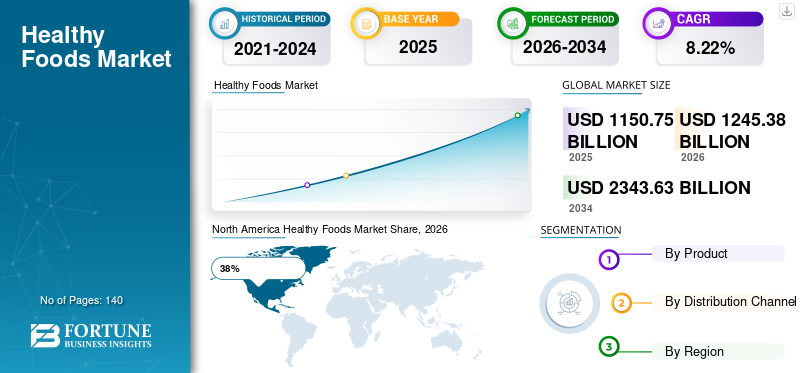
The global healthy foods market size was valued at USD 1,150.75 billion in 2025. The market is projected to grow from USD 1,245.38 billion in 2026 to USD 2,343.63 billion by 2034, exhibiting a CAGR of 8.22% during the forecast period.

The healthy foods market is experiencing substantial expansion due to increasing consumer awareness regarding nutrition, immunity, and preventive healthcare. Consumers worldwide are shifting toward natural, organic, and functional food products that support long-term wellness and balanced lifestyles. The healthy foods market report highlights rising demand for plant-based snacks, fortified beverages, low-calorie meal options, and clean-label packaged foods across retail and institutional channels. Food manufacturers are investing heavily in ingredient transparency, sustainable sourcing, and innovative nutritional formulations to strengthen brand competitiveness. The Healthy Foods Industry Analysis also indicates growing adoption of probiotic drinks, protein-rich snacks, and organic dairy alternatives among urban populations, supporting strong healthy foods market growth and evolving consumer purchasing behavior across global food industries.
The USA healthy foods market remains one of the most advanced and innovation-driven sectors globally due to rising wellness awareness and growing preference for functional nutrition products. American consumers are increasingly purchasing organic foods, plant-based alternatives, fortified cereals, and immunity-support beverages to improve health and lifestyle quality. Retail chains and food manufacturers are expanding healthy food portfolios with sugar-free snacks, gluten-free products, and nutrient-rich meal solutions. The healthy foods market Research Report highlights strong demand for convenient healthy food options among working professionals, fitness enthusiasts, and aging populations. Growth in digital grocery platforms and personalized nutrition trends continues to strengthen the USA healthy foods market Outlook.
Download Free sample to learn more about this report.
Healthy Foods Market Key Takeaways
 Global Market Size & Forecast
- 2025 Market Size: USD 1,150.75 Billion
- 2026 Market Size: USD 1,245.38 Billion
- 2034 Forecast Market Size: USD 2,343.63 Billion
- CAGR: 8.22% from 2026-2034
 Market Share
- North America dominated with a revenue share of 38% in 2025.
- Functional food and drinks led by product with a 57% market share.
- Supermarkets and hypermarkets led by distribution channel with a 48% market share.
 Key Regional Highlights
North America
North America held the largest regional share at 38%, supported by strong demand for functional and organic foods.
Europe
Europe accounted for 30% of the market, driven by growing preference for sustainable and clean-label products.
Asia-Pacific
Asia-Pacific represented 24% of the market, supported by rising health awareness and expanding wellness food consumption.
U.S.
The U.S. remains a major market due to strong demand for functional foods, organic products, and healthy snacks.
Japan
Japan is a key Asia-Pacific market, supported by high demand for nutritious, functional, and wellness-oriented foods.
Read More

Healthy Foods Market Latest Trends
The healthy foods market trends indicate significant growth in plant-based nutrition, functional beverages, and clean-label food products. Consumers are increasingly prioritizing foods that provide additional health benefits such as digestive support, immunity enhancement, and energy management. Functional foods enriched with probiotics, vitamins, minerals, and botanical extracts are gaining popularity among health-conscious consumers. The healthy foods market analysis highlights increasing adoption of vegan snacks, organic beverages, high-protein cereals, and low-sugar nutritional products across both developed and emerging economies. Manufacturers are focusing on ingredient transparency, sustainable sourcing, and reduced artificial additives to align with changing dietary preferences.
Download Free sample to learn more about this report.
Digital transformation is also reshaping the Healthy Foods Industry Report as online grocery platforms and direct-to-consumer food delivery services expand rapidly. Consumers are using health-focused mobile applications and AI-driven nutritional guidance platforms to personalize dietary choices. Sustainable packaging solutions and environmentally responsible production methods are becoming major competitive differentiators in the healthy foods market forecast. Demand for functional hydration drinks, collagen-based supplements, and organic convenience meals continues to increase among urban populations and younger demographics. Food companies are also investing in alternative protein technologies and clean-label innovation to strengthen market positioning and consumer loyalty.
Healthy Foods Market Dynamics
DRIVER
Rising Consumer Focus on Wellness and Preventive Healthcare
Growing awareness regarding healthy lifestyles and preventive healthcare is a primary growth driver in the healthy foods market. Consumers are increasingly linking nutritional habits with immunity, mental wellness, and long-term disease prevention. This shift in consumer behavior is accelerating demand for functional foods, organic beverages, fortified cereals, and plant-based nutritional products. The healthy foods market Report highlights strong growth in clean-label snacks, probiotic drinks, and vitamin-enriched foods designed to support wellness-oriented lifestyles. Health-conscious consumers are actively replacing highly processed foods with natural and minimally processed alternatives containing nutritional ingredients and lower sugar content.
The expansion of fitness culture and rising interest in balanced diets are also contributing to healthy foods market growth. Food manufacturers are introducing healthier product portfolios that include high-protein snacks, gluten-free products, and immunity-support beverages. Retailers are dedicating larger shelf space to wellness foods and organic products to meet evolving consumer demand. The healthy foods market Insights indicate strong adoption of functional nutrition products among millennials, working professionals, and aging populations seeking convenient yet healthier meal solutions. Increasing awareness campaigns related to obesity management and nutritional wellness continue to strengthen global market demand.
RESTRAINT
High Pricing Associated with Premium Healthy Food Products
One of the major restraints impacting the healthy foods market is the relatively high cost of organic and functional food products. Healthy foods often require premium-quality ingredients, sustainable farming methods, and strict quality certifications, which significantly increase production and retail costs. The Healthy Foods Industry Analysis indicates that price-sensitive consumers in developing economies may continue purchasing traditional packaged foods due to affordability concerns. Organic farming practices and specialized nutritional formulations also involve higher operational expenses for manufacturers.
Limited availability of certified organic ingredients and fluctuating raw material prices create additional challenges for producers. The healthy foods market Outlook highlights that premium healthy foods may remain inaccessible for lower-income populations in some regions. Inconsistent labeling standards and misleading health claims can further affect consumer confidence. Manufacturers must therefore balance innovation and affordability to maintain broader market penetration. Supply chain disruptions and higher transportation costs related to fresh and minimally processed foods also contribute to elevated retail prices within the healthy foods market.
OPPORTUNITY
Expansion of Personalized Nutrition and Plant-Based Foods
The increasing popularity of personalized nutrition and plant-based diets is creating significant opportunities in the healthy foods market. Consumers are actively seeking tailored dietary products that address specific health goals such as weight management, digestive wellness, immunity enhancement, and sports nutrition. The healthy foods market Research Report indicates growing demand for vegan protein products, dairy-free beverages, and functional nutritional supplements enriched with natural ingredients and botanical extracts.
Manufacturers are investing heavily in research and development to create personalized wellness foods and scientifically formulated meal solutions. The healthy foods market Opportunities are expanding through digital nutrition platforms that offer customized dietary recommendations based on consumer health profiles. Rising vegan populations and increasing awareness regarding sustainable food consumption are further supporting market expansion. Food companies are also introducing eco-friendly packaging, alternative protein ingredients, and low-calorie convenience foods to strengthen product differentiation. Emerging economies with growing middle-class populations are expected to provide substantial opportunities for healthy food manufacturers and retail distributors.
CHALLENGE
Maintaining Supply Chain Efficiency and Regulatory Compliance
The healthy foods market faces considerable challenges related to supply chain complexity and compliance with evolving food regulations. Manufacturers depend heavily on consistent availability of organic ingredients, natural preservatives, and high-quality nutritional components to maintain product standards. Seasonal agricultural fluctuations, climate-related disruptions, and limited supply of certified raw materials can affect production efficiency and increase operational costs. The healthy foods market Analysis highlights that preserving freshness and nutritional integrity during transportation remains a major challenge for food suppliers.
Another challenge involves meeting strict food labeling regulations and certification requirements across international markets. Companies must comply with standards related to organic sourcing, allergen disclosures, nutritional transparency, and sustainability practices. The healthy foods market Forecast indicates rising pressure on manufacturers to reduce environmental impact while maintaining product quality and affordability. Counterfeit organic labeling and inconsistent certification practices may also reduce consumer trust. Food manufacturers are therefore investing in advanced traceability systems, digital quality monitoring, and sustainable sourcing strategies to address these operational challenges.
Healthy Foods Market Segmentation
By Product
Functional food and drinks dominate the healthy foods market with approximately 57% market share due to increasing consumer demand for wellness-oriented nutrition products. Functional beverages, fortified cereals, probiotic yogurts, and protein-rich snacks are gaining strong popularity because they provide health benefits beyond basic nutrition. The healthy foods market Report highlights rising demand for energy-support drinks, immunity-boosting supplements, and digestive wellness products among urban consumers and fitness-focused populations.
Manufacturers are introducing innovative formulations enriched with vitamins, minerals, probiotics, and plant-based proteins to strengthen market competitiveness. Clean-label positioning and reduced sugar content are becoming critical product differentiators within the healthy foods market Analysis. Functional hydration beverages and nutritional snacks are particularly popular among millennials and working professionals seeking convenient wellness solutions. Increasing awareness regarding lifestyle-related health conditions is further accelerating demand for functional foods and beverages globally. Retailers are also expanding dedicated healthy food sections to improve product visibility and accessibility for consumers.
Organic food and beverages account for nearly 43% of the healthy foods market Share due to rising consumer preference for pesticide-free, non-GMO, and environmentally sustainable food products. Consumers increasingly perceive organic products as safer, healthier, and nutritionally superior compared to conventional packaged foods. The healthy foods market Research Report indicates strong demand for organic fruits, vegetables, dairy products, and natural beverages across developed economies.
Manufacturers are focusing on sustainable farming practices, transparent sourcing methods, and eco-friendly packaging to strengthen brand credibility. Organic snacks, dairy alternatives, and plant-based meal solutions are gaining significant traction among environmentally conscious consumers. The healthy foods market Outlook highlights increasing penetration of organic foods into supermarkets, specialty wellness stores, and online retail platforms. Rising concerns regarding chemical additives and synthetic ingredients continue to support long-term demand for organic food and beverage products within the global healthy foods industry.
To know how our report can help streamline your business, Speak to Analyst
By Distribution Channel
Supermarkets and hypermarkets hold approximately 48% of the healthy foods market Share because they provide extensive product variety, competitive pricing, and strong retail accessibility. Consumers prefer these retail channels for purchasing organic foods, functional beverages, fortified cereals, and healthy snacks due to convenience and broad product availability. The healthy foods market Trends indicate that large retail chains are increasing shelf space dedicated to wellness-oriented food categories.
Retailers are partnering with food manufacturers to launch private-label healthy food products and premium nutritional brands. Improved cold-chain logistics and digital inventory management systems are supporting wider distribution of fresh organic products. The healthy foods market Analysis highlights growing integration of healthy ready-to-eat meals and functional beverages into supermarket offerings. Rising urbanization and changing dietary habits continue to strengthen the role of supermarkets and hypermarkets within the global healthy foods distribution landscape.
Convenience stores account for nearly 28% of the healthy foods market Size as consumers increasingly seek quick and portable healthy food options. Busy lifestyles and growing demand for on-the-go nutrition products are encouraging higher sales of protein bars, low-calorie snacks, and ready-to-drink wellness beverages. The healthy foods market Report highlights strong consumer interest in compact healthy meal solutions available through convenience retail outlets.
Manufacturers are introducing single-serving packaging formats and healthier snack alternatives specifically designed for convenience store distribution. Refrigerated functional beverages and fresh nutritional products are becoming more widely available due to improved supply chain infrastructure. The healthy foods market Forecast also indicates increasing collaboration between convenience store chains and healthy food brands to improve product visibility and accessibility. Urban working professionals and younger consumers remain key target demographics within this retail segment.
Specialty stores represent approximately 24% of the healthy foods market Share due to their strong focus on premium organic products, personalized nutrition solutions, and wellness-oriented customer experiences. Consumers visiting specialty stores often seek expert guidance regarding dietary supplements, vegan foods, and functional nutritional products. The Healthy Foods Industry Report highlights rising demand for gluten-free foods, herbal beverages, and plant-based nutritional products through specialty retail channels.
These stores differentiate themselves through curated product selections, educational marketing strategies, and premium-quality organic offerings. The healthy foods market Insights indicate growing popularity of customized wellness foods and scientifically formulated dietary products among health-conscious consumers. Specialty retailers are also integrating digital subscription programs and wellness consultation services to strengthen customer loyalty. Expanding urban wellness communities and rising disposable incomes continue to support growth in this application segment.
Healthy Foods Market Regional Outlook
North America
North America Healthy Foods Market Share, 2026 (%)
To get more information on the regional analysis of this market, Download Free sample
North America accounts for approximately 38% of the healthy foods market Share due to strong consumer awareness regarding preventive healthcare, balanced nutrition, and fitness-oriented lifestyles. Consumers across the region are increasingly purchasing organic foods, plant-based beverages, and clean-label nutritional products to improve long-term wellness. The healthy foods market Report highlights rising demand for fortified snacks, probiotic beverages, and low-calorie meal solutions throughout the United States and Canada.
The region benefits from advanced retail infrastructure, high product innovation, and strong penetration of premium healthy food brands. Food manufacturers are investing heavily in sustainable ingredient sourcing, alternative protein technologies, and personalized nutrition products. Increasing popularity of digital grocery platforms and wellness subscription services is also supporting healthy foods market Growth in North America.
Europe
Europe holds nearly 30% of the healthy foods market Size supported by increasing preference for sustainable nutrition and organic food consumption. European consumers are actively adopting vegan diets, natural beverages, and minimally processed foods as part of healthier lifestyles. The healthy foods market Analysis highlights growing demand for probiotic dairy alternatives, organic bakery products, and clean-label snacks across the region.
Governments and food safety authorities are encouraging healthier dietary habits and stricter labeling standards, supporting growth in organic and functional food categories. Manufacturers are emphasizing environmentally responsible production methods and transparent ingredient sourcing. Rising consumer interest in plant-based nutrition and wellness-oriented meal solutions continues to strengthen the European healthy foods industry.
Germany Healthy Foods Market
Germany accounts for approximately 27% of the European healthy foods market Share due to strong demand for organic nutrition products and sustainable food consumption practices. German consumers prioritize clean-label foods, organic dairy alternatives, and natural nutritional beverages to maintain healthier lifestyles. The healthy foods market Research Report highlights increasing popularity of vegan snacks, sugar-free drinks, and fortified cereals throughout Germany.
Food manufacturers are focusing on sustainable agriculture, eco-friendly packaging, and premium-quality ingredients to strengthen brand differentiation. Specialty organic supermarkets and wellness-focused retail chains continue expanding across urban regions. The healthy foods market Outlook indicates rising interest in immunity-support products and personalized nutrition solutions among younger consumers and aging populations in Germany.
United Kingdom Healthy Foods Market
The United Kingdom healthy foods market represents approximately 22% of the regional market share due to rising awareness regarding balanced nutrition and wellness-focused lifestyles. Consumers in the UK are increasingly purchasing functional beverages, plant-based foods, and low-sugar snacks to improve health outcomes. The Healthy Foods Industry Analysis highlights growing demand for gluten-free products, organic packaged foods, and protein-rich nutritional products across the country.
Retailers and manufacturers are introducing innovative healthy food options through supermarkets, convenience stores, and digital grocery platforms. Consumers are also showing strong interest in environmentally sustainable food products and ethically sourced ingredients. The healthy foods market Insights indicate increasing adoption of personalized wellness foods and immunity-support beverages among working professionals and health-conscious consumers throughout the United Kingdom.
Asia-Pacific
Asia-Pacific captures approximately 24% of the healthy foods market Share due to rapid urbanization, rising disposable income levels, and growing health awareness among consumers. Countries such as China, Japan, India, and South Korea are witnessing increasing demand for functional beverages, organic snacks, and fortified dairy products. The healthy foods market Forecast highlights strong growth in plant-based nutritional products and wellness-oriented convenience foods throughout the region.
Manufacturers are expanding localized healthy food portfolios tailored to regional taste preferences and dietary habits. Online grocery platforms and modern retail infrastructure are improving product accessibility across urban and semi-urban populations. Rising awareness regarding preventive healthcare and immunity enhancement continues to create substantial opportunities within the Asia-Pacific healthy foods industry.
Japan Healthy Foods Market
Japan holds approximately 18% of the Asia-Pacific healthy foods market Share due to high consumer focus on longevity, wellness nutrition, and scientifically formulated food products. Japanese consumers widely prefer probiotic drinks, fortified teas, nutritional supplements, and low-calorie healthy snacks to maintain balanced lifestyles. The healthy foods market Analysis highlights increasing demand for collagen beverages, digestive wellness foods, and immunity-support nutritional products across Japan.
Manufacturers are emphasizing advanced food processing technologies, premium ingredient quality, and innovative packaging solutions. Functional convenience meals and personalized wellness foods are gaining popularity among aging populations and urban consumers. The healthy foods market Research Report also indicates strong growth in plant-based nutrition products and environmentally sustainable packaging across the Japanese healthy foods market.
China Healthy Foods Market
China represents approximately 42% of the Asia-Pacific healthy foods market Size due to rising middle-class spending, increasing wellness awareness, and rapid digital grocery expansion. Chinese consumers are actively purchasing organic foods, nutritional beverages, and fortified snacks to improve immunity and long-term health. The healthy foods market Trends indicate strong demand for plant-based protein products, sugar-free beverages, and functional dairy alternatives across China.
Domestic and international manufacturers are expanding production facilities and introducing localized nutritional products tailored to evolving consumer preferences. Government initiatives promoting healthier dietary habits are supporting broader market expansion. The healthy foods market Outlook highlights increasing popularity of online healthy food retailing and AI-based nutrition platforms among younger demographics in China.
Rest of World
The Rest of World region accounts for approximately 8% of the healthy foods market Share due to rising awareness regarding wellness nutrition and healthier dietary habits across Latin America, the Middle East, and Africa. Consumers are gradually shifting toward organic snacks, fortified beverages, and plant-based meal solutions as part of preventive healthcare practices. The Healthy Foods Industry Report highlights growing demand for nutritional supplements and functional food products throughout emerging economies.
Retail modernization and increasing digital grocery penetration are improving accessibility to healthy food products across developing regions. Manufacturers are introducing affordable wellness-oriented food options and localized nutritional formulations to strengthen regional market presence. Rising urbanization and fitness-focused lifestyles continue to create new opportunities within the Rest of World healthy foods industry.
List of Top Healthy Foods Companies
- Nestlé S.A.
- Danone S.A.
- PepsiCo Inc.
- General Mills Inc.
- Kraft Heinz Company
- Mondelez International Inc.
- GlaxoSmithKline PLC
- Abbott Laboratories
- Herbalife Nutrition Ltd.
- Archer Daniels Midland Company
Top Two Healthy Foods Market Companies by Market Share
- Nestlé S.A. – 15% market share
- PepsiCo Inc. – 11% market share
Healthy Foods Market Investment Analysis and Opportunities
The healthy foods market is attracting strong investment activity due to growing consumer demand for wellness-oriented nutrition products and sustainable food solutions. Food manufacturers are investing in plant-based proteins, functional beverages, and personalized nutrition technologies to strengthen product innovation and market competitiveness. The healthy foods market Research Report highlights increasing funding for sustainable agriculture, alternative protein development, and digital nutrition platforms.
Investment opportunities are also expanding in organic food processing, eco-friendly packaging, and direct-to-consumer healthy meal delivery services. Manufacturers are forming strategic partnerships to improve ingredient sourcing, production efficiency, and retail penetration. The healthy foods market Opportunities continue to grow through rising demand for immunity-support products, low-calorie snacks, and scientifically formulated wellness foods. Emerging markets with expanding middle-class populations are expected to create significant investment potential for healthy food brands and retail distributors.
Healthy Foods Market New Product Development
Innovation remains a major competitive factor in the healthy foods market as manufacturers introduce advanced nutritional products tailored to changing consumer lifestyles. Companies are launching plant-based dairy alternatives, probiotic beverages, high-protein snacks, and fortified cereals designed to support immunity and digestive wellness. The healthy foods market Trends indicate increasing consumer preference for clean-label products containing natural ingredients and reduced artificial additives.
Manufacturers are also developing personalized nutrition products based on age groups, fitness goals, and dietary preferences. Functional hydration drinks enriched with vitamins, minerals, and botanical extracts are gaining substantial popularity among urban consumers. The healthy foods market Analysis highlights increasing investment in eco-friendly packaging technologies, sustainable ingredient sourcing, and AI-driven nutritional customization. Innovation in vegan snacks, gluten-free meal solutions, and low-sugar beverages continues to shape product development strategies across the healthy foods industry.
Five Recent Developments in the Healthy Foods Market (2023-2025)
- Nestlé S.A. expanded its plant-based nutrition and functional beverage portfolio in 2024.
- Danone S.A. increased investment in probiotic dairy alternatives and organic nutrition products during 2023.
- PepsiCo Inc. introduced healthier snack formulations with reduced sodium and natural ingredients in 2025.
- Abbott Laboratories launched advanced adult nutritional products focused on immunity and digestive health in 2024.
- General Mills Inc. expanded production capabilities for clean-label cereals and protein-rich snacks in 2025.
Report Coverage of Healthy Foods Market
The healthy foods market Report provides comprehensive analysis of consumer trends, competitive dynamics, product innovation, and retail distribution strategies across global healthy food industries. The report covers major product categories including functional foods, organic beverages, plant-based nutrition products, and fortified snacks. Detailed segmentation analysis evaluates distribution channels such as supermarkets, convenience stores, and specialty wellness retailers. The healthy foods market Research Report also examines changing dietary habits, sustainability initiatives, and personalized nutrition trends influencing future market development.
Request for Customization to gain extensive market insights.
Regional analysis within the report covers North America, Europe, Asia-Pacific, and Rest of World markets, highlighting retail expansion, wellness consumption patterns, and investment opportunities. Competitive profiling evaluates major manufacturers based on innovation strategies, product portfolios, and market positioning. The Healthy Foods Industry Analysis further examines regulatory developments, digital grocery transformation, supply chain trends, and emerging consumer preferences shaping the future outlook of the global healthy foods market.
Frequently Asked Questions
Fortune Business Insights says that the global market value stood at USD 1,150.75 billion in 2025 and is projected to reach USD 2,343.63 billion by 2034.
The market is expected to exhibit a CAGR of 8.22% during the forecast period of 2026-2034.
Functional food and drinks was the leading product segment, accounting for approximately 57% of the market, driven by rising demand for wellness-oriented nutrition products.
Key players include Nestlé S.A., Danone S.A., PepsiCo Inc., General Mills Inc., Kraft Heinz Company, and Mondelez International Inc.
Major trends include growing demand for plant-based nutrition, functional beverages, and clean-label products, alongside increasing adoption of personalized nutrition and sustainable packaging. North America led the market with approximately 38% share.



- 2021-2034
- 2025
- 2021-2024
- 140
-

(Offer valid till 31st Oct 2026)
Get 30-60 hrs Free Customization
Expand Regional and Country Coverage, Segments Analysis, Company Profiles, Competitive Benchmarking, and End-user Insights.



















-
US +1 833 909 2966 ( Toll Free )
-
Get In Touch With Us