Intravascular Warming Systems Market Size, Share & Industry Analysis, By Application (Acute Care, Perioperative Care), By End-use (Operating Rooms, ICUs, Emergency Rooms), By Region, and Regional Forecast, 2026-2034
 Download Free Sample
Intravascular Warming Systems Market Overview
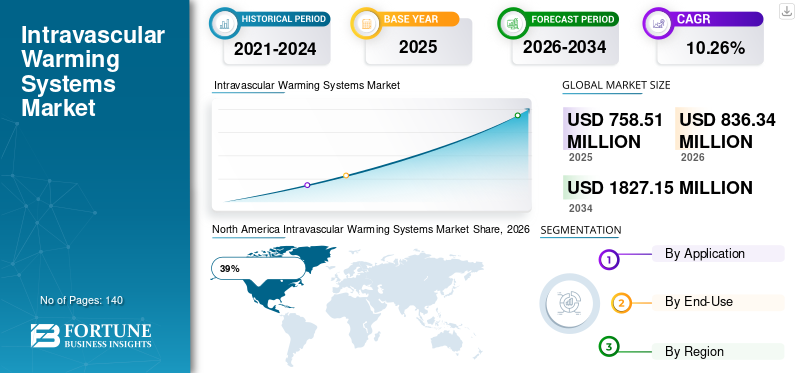
The intravascular warming systems market size was valued at USD 758.51 Million in 2025. The market is projected to grow from USD 836.34 Million in 2026 to USD 1827.15 Million by 2034, exhibiting a CAGR of 10.26% during the forecast period.

The intravascular warming systems market is expanding steadily as healthcare providers increasingly focus on maintaining normothermia during surgical procedures, trauma management, and critical care interventions. Intravascular warming systems are widely utilized in hospitals to regulate patient body temperature through advanced catheter-based and fluid warming technologies. Growing awareness regarding perioperative hypothermia prevention, rising volumes of complex surgical procedures, and increasing adoption of temperature management protocols are supporting market expansion. The intravascular warming systems market report highlights growing demand from operating rooms, intensive care units, and emergency departments where patient temperature stabilization plays a crucial role in improving clinical outcomes and reducing complications.
The United States represents the largest contributor to the intravascular warming systems market due to advanced healthcare infrastructure, high surgical procedure volumes, and widespread adoption of temperature management technologies. Hospitals across the country increasingly implement patient warming protocols to reduce infection risks, shorten recovery periods, and improve procedural outcomes. Academic medical centers and specialized surgical facilities continue investing in advanced warming systems integrated with monitoring platforms. The intravascular warming systems industry analysis indicates that cardiovascular surgery, trauma care, and critical care departments remain major end users. Strong regulatory oversight and continuous innovation by leading manufacturers further strengthen market penetration throughout the U.S. healthcare ecosystem.
Download Free sample to learn more about this report.
Intravascular Warming Systems Market Key Takeaways
 Global Market Size & Forecast
- 2025 Market Size: USD 758.51 Million
- 2026 Market Size: USD 836.34 Million
- 2034 Forecast Market Size: USD 1,827.15 Million
- CAGR: 10.26% from 2026-2034
 Market Share
- The market in North America dominated with a revenue share of 39% in 2025.
- Perioperative care led the application segment with a 58% market share.
- Operating rooms dominated end-use with a 51% market share.
 Key Regional Highlights
North America
North America held the leading regional position with a 39% market share in 2025, supported by advanced healthcare infrastructure and high adoption of temperature management technologies.
Europe
Europe accounted for 28% of the market, driven by established surgical care systems and growing demand for advanced patient warming solutions.
Asia-Pacific
Asia-Pacific captured 24% of the market, supported by expanding healthcare infrastructure and increasing surgical volumes.
U.S
The U.S. remains a major market due to advanced hospital infrastructure, high surgical volumes, and strong adoption of advanced warming technologies.
Japan
Japan is a key Asia-Pacific market, supported by advanced healthcare facilities and growing demand for effective perioperative temperature management.
Read More

Intravascular Warming Systems Market Latest Trends
One of the most prominent trends in the intravascular warming systems market is the integration of intelligent temperature management software with warming devices. Healthcare providers are increasingly adopting systems capable of real-time monitoring, automated adjustments, and enhanced patient safety features. These technologies improve workflow efficiency and enable clinicians to maintain precise thermal control throughout surgical and critical care procedures. The intravascular warming systems market research report also identifies growing demand for disposable components that help reduce cross-contamination risks and support infection control programs.
Download Free sample to learn more about this report.
Another significant trend involves the rising use of intravascular warming systems in emergency medicine and trauma management. Healthcare institutions are emphasizing rapid patient stabilization during severe blood loss, cardiac emergencies, and shock conditions. Manufacturers are responding with compact and portable systems suitable for diverse clinical settings. Furthermore, advancements in catheter materials, improved thermal exchange technologies, and greater compatibility with hospital information systems are influencing purchasing decisions. These developments continue to shape the intravascular warming systems market outlook among hospitals seeking improved patient outcomes and operational efficiency.
Intravascular Warming Systems Market Dynamics
DRIVER
Rising Demand for Patient Temperature Management During Surgical Procedures
The growing emphasis on maintaining normothermia during medical procedures remains a major driver of the intravascular warming systems market growth. Healthcare providers increasingly recognize the clinical consequences associated with unintended hypothermia, including prolonged recovery periods, higher infection risks, and increased postoperative complications. As surgical volumes continue to rise globally, hospitals are strengthening perioperative temperature management protocols.
Advanced intravascular warming technologies provide precise thermal regulation compared with conventional warming methods. This capability is particularly valuable in cardiovascular surgery, transplant procedures, neurosurgery, and trauma care. Healthcare organizations are adopting evidence-based warming practices to improve patient safety and optimize treatment outcomes. The increasing number of elderly patients requiring complex surgical interventions further strengthens demand. As a result, healthcare facilities continue allocating resources toward advanced warming systems, supporting long-term expansion of the intravascular warming systems market Size.
RESTRAINT
High Equipment Acquisition and Maintenance Costs
A significant restraint affecting the intravascular warming systems market involves the substantial investment required for equipment acquisition, maintenance, and staff training. Many healthcare facilities, particularly in emerging economies and smaller hospitals, face budget limitations that restrict access to advanced warming technologies. Capital-intensive purchasing processes often delay replacement cycles and technology upgrades.
In addition to procurement costs, healthcare institutions must consider expenditures associated with disposable accessories, catheter systems, servicing requirements, and regulatory compliance. Cost-sensitive facilities may continue relying on conventional warming methods rather than transitioning to sophisticated intravascular systems. Limited reimbursement frameworks in certain healthcare markets also affect adoption rates. Consequently, despite growing clinical benefits, financial constraints remain an important factor influencing purchasing decisions and slowing broader market penetration.
OPPORTUNITY
Expansion of Critical Care and Emergency Medicine Infrastructure
The rapid expansion of emergency care facilities, trauma centers, and intensive care infrastructure presents a major opportunity for the intravascular warming systems market. Governments and private healthcare organizations are increasing investments in critical care capacity to address rising patient volumes and complex disease burdens. Temperature management has become an essential component of emergency treatment protocols.
Intravascular warming systems offer precise and rapid thermal regulation that supports patient stabilization during severe trauma, hemorrhage, cardiac arrest, and critical illness. Growing awareness among clinicians regarding the benefits of active warming solutions is encouraging wider adoption across emergency departments. Manufacturers are also developing portable and user-friendly devices designed for rapid deployment. These developments create substantial opportunities for suppliers seeking to expand their presence within high-acuity healthcare environments and strengthen their position in the intravascular warming systems market forecast.
CHALLENGE
Regulatory Requirements and Clinical Adoption Barriers
The intravascular warming systems market faces challenges associated with strict regulatory standards governing medical device safety, efficacy, and clinical performance. Manufacturers must invest considerable resources in product testing, documentation, and approval processes before introducing new technologies. Regulatory complexity often extends development timelines and increases operational costs.
Healthcare providers also require comprehensive clinical evidence before adopting new warming systems. Procurement committees frequently assess patient outcomes, infection prevention capabilities, interoperability, and long-term cost effectiveness before approving purchases. Training requirements for clinical personnel can further delay implementation. Competitive pressure from alternative patient warming technologies adds another layer of complexity. These factors collectively create challenges for manufacturers attempting to accelerate product adoption and market expansion.
Intravascular Warming Systems Market Segmentation
By Application
Acute care applications account for approximately 42% of the intravascular warming systems market share due to increasing utilization within emergency departments, trauma centers, and critical care units. Patients experiencing severe blood loss, shock, hypothermia, and emergency cardiovascular events often require rapid temperature stabilization to support recovery and improve survival outcomes. Intravascular warming technologies provide precise thermal management that assists healthcare professionals during high-acuity interventions.
The segment continues benefiting from expanding emergency healthcare infrastructure and growing awareness regarding temperature-related complications. Hospitals are integrating advanced warming systems into standardized emergency treatment protocols. The intravascular warming systems market analysis indicates increasing procurement activity among tertiary care hospitals seeking advanced critical care capabilities. Demand remains particularly strong in facilities handling complex trauma cases and emergency surgical procedures.
Perioperative care represents nearly 58% of the intravascular warming systems market share and remains the dominant application segment. Temperature management during preoperative, intraoperative, and postoperative stages has become an essential component of modern surgical practice. Maintaining normothermia reduces complications, supports patient recovery, and enhances procedural efficiency across multiple surgical specialties.
Healthcare providers increasingly implement warming protocols for cardiovascular surgery, orthopedic procedures, neurosurgery, and transplant operations. Advanced intravascular systems offer precise temperature regulation throughout extended surgical procedures where thermal fluctuations may affect patient outcomes. The intravascular warming systems industry report identifies perioperative care as a primary area of investment among hospitals focused on improving surgical quality indicators and patient satisfaction metrics.
To know how our report can help streamline your business, Speak to Analyst
By End-Use
Operating rooms account for approximately 51% of the intravascular warming systems market share, making them the leading end-use segment. Surgical environments require reliable temperature management solutions to minimize hypothermia risks and support positive patient outcomes. Intravascular warming systems are increasingly incorporated into comprehensive perioperative care pathways across major healthcare institutions.
The segment benefits from growing surgical volumes and increasing complexity of procedures requiring prolonged operative times. Hospitals continue upgrading operating room infrastructure with advanced monitoring and temperature management technologies. The intravascular warming systems market Insights reveal sustained demand from facilities seeking integrated systems capable of supporting multiple surgical specialties while maintaining stringent patient safety standards.
Intensive Care Units represent roughly 29% of the intravascular warming systems market share. Critically ill patients frequently require active temperature management due to sepsis, trauma, cardiac complications, and postoperative recovery needs. Intravascular warming systems provide clinicians with precise thermal control capabilities essential for managing vulnerable patient populations.
Growing ICU admissions and increasing adoption of evidence-based critical care protocols continue supporting demand. Healthcare institutions are prioritizing investments in advanced patient monitoring and thermal management technologies to improve outcomes and reduce complication rates. The segment remains a significant contributor to overall intravascular warming systems market opportunities, particularly in developed healthcare markets.
Emergency rooms contribute close to 20% of the intravascular warming systems market share. These settings require rapid-response temperature management solutions capable of supporting trauma patients, cardiac emergencies, and severe hypothermia cases. Intravascular warming technologies provide efficient thermal stabilization during critical treatment windows.
The increasing prevalence of emergency medical conditions and expansion of trauma care networks support segment growth. Hospitals continue enhancing emergency preparedness by incorporating advanced warming systems into emergency care protocols. The intravascular warming systems market research report highlights growing demand for portable and easy-to-deploy solutions suitable for dynamic emergency environments.
Intravascular Warming Systems Market Regional Outlook
North America
North America Intravascular Warming Systems Market Share, 2025 (%)
To get more information on the regional analysis of this market, Download Free sample
North America remains the largest regional market, accounting for approximately 39% of global demand. The region benefits from advanced healthcare infrastructure, extensive adoption of surgical technologies, and strong awareness regarding perioperative temperature management. Healthcare facilities across the United States and Canada prioritize patient warming protocols to improve clinical outcomes and reduce postoperative complications.
Leading medical device manufacturers maintain significant operations throughout the region, contributing to product innovation and market accessibility. Hospitals continue investing in operating room modernization and critical care enhancements. The presence of established reimbursement frameworks and extensive clinical research further supports the region’s leadership position within the intravascular warming systems market.
Europe
Europe represents approximately 28% of the global intravascular warming systems market share. Healthcare providers across the region increasingly focus on patient safety initiatives and evidence-based surgical care practices. Rising volumes of cardiovascular, orthopedic, and transplant procedures contribute to demand for advanced warming technologies.
Public healthcare systems and university hospitals remain major purchasers of intravascular warming equipment. Investments in healthcare modernization, infection prevention programs, and critical care infrastructure continue supporting market expansion. Regulatory emphasis on quality outcomes and patient safety encourages adoption of advanced thermal management systems across European healthcare institutions.
Germany Intravascular Warming Systems Market
Germany accounts for approximately 26% of the European intravascular warming systems market. The country possesses one of the most advanced healthcare systems in Europe, supported by extensive hospital networks and strong medical technology adoption. German healthcare providers emphasize precision medicine and procedural quality, creating favorable conditions for temperature management solutions.
Large surgical volumes and increasing demand for minimally invasive procedures continue supporting market growth. Academic hospitals and specialized surgical centers regularly invest in advanced warming technologies to enhance patient outcomes. The country’s strong medical device manufacturing ecosystem also contributes to product innovation and market accessibility. Demand remains particularly strong within cardiovascular surgery, critical care medicine, and transplant services.
United Kingdom Intravascular Warming Systems Market
The United Kingdom represents approximately 19% of the European intravascular warming systems market. National healthcare initiatives aimed at improving surgical outcomes and reducing hospital-acquired complications support demand for advanced patient warming technologies. Hospitals increasingly integrate temperature management protocols into standard perioperative care pathways.
Growing pressure to improve operational efficiency and patient recovery metrics has encouraged broader adoption of intravascular warming systems. Major healthcare institutions continue upgrading operating room infrastructure and critical care capabilities. Demand is particularly evident in tertiary hospitals performing complex surgical procedures requiring precise thermal regulation. Continuous emphasis on patient safety further strengthens market development throughout the country.
Asia-Pacific
Asia-Pacific accounts for approximately 24% of the global intravascular warming systems market share and represents the fastest-developing regional market. Expanding healthcare infrastructure, increasing surgical procedure volumes, and growing awareness regarding patient temperature management contribute to regional growth.
Healthcare investments across China, Japan, India, South Korea, and Southeast Asia continue creating favorable market conditions. Rising healthcare expenditure and modernization of hospital facilities support greater adoption of advanced medical technologies. Manufacturers increasingly target the region through distribution partnerships and localized product strategies, strengthening long-term market opportunities.
Japan Intravascular Warming Systems Market
Japan contributes approximately 22% of the Asia-Pacific intravascular warming systems market. The country’s aging population and high prevalence of chronic conditions drive demand for surgical interventions and advanced patient care technologies. Healthcare providers place strong emphasis on procedural precision and postoperative recovery outcomes.
Japanese hospitals continue integrating advanced thermal management systems into surgical and critical care environments. Technological sophistication, stringent quality standards, and widespread adoption of innovative medical devices support market growth. Demand remains particularly strong in cardiovascular care, oncology procedures, and intensive care settings where temperature regulation significantly influences clinical outcomes.
China Intravascular Warming Systems Market
China represents approximately 34% of the Asia-Pacific intravascular warming systems market, making it the largest regional contributor. Rapid healthcare infrastructure development, increasing hospital capacity, and rising surgical volumes continue supporting demand. Government initiatives focused on healthcare modernization further strengthen market expansion.
Large urban hospitals increasingly adopt advanced warming systems to improve patient safety and align with international clinical standards. Domestic and international manufacturers are expanding their presence through strategic partnerships and distribution networks. Growing awareness among healthcare professionals regarding normothermia management has accelerated adoption across operating rooms, emergency departments, and intensive care units.
Rest of World
The Rest of World region accounts for approximately 9% of the global intravascular warming systems market share. Countries across Latin America, the Middle East, and Africa are gradually increasing investments in healthcare infrastructure and critical care capabilities. Although adoption remains lower than in developed regions, awareness regarding advanced temperature management technologies continues to improve.
Expanding private healthcare networks and modernization initiatives support market penetration. International manufacturers are strengthening regional distribution channels and educational programs to increase product awareness among healthcare providers. Demand is particularly evident in major urban hospitals seeking advanced solutions for surgical and emergency care applications.
List of Top Intravascular Warming Systems Companies
- ZOLL Medical Corporation
- BD (Becton, Dickinson and Company)
- Geratherm Medical AG
- Medtronic
- Stryker
- Estill Medical Technologies, Inc.
- Smiths Group plc
- Inspiration Healthcare Group plc
- 3M
Top Two Companies by market share
- ZOLL Medical Corporation – 22%
- BD (Becton, Dickinson and Company) – 18%
Investment Analysis and Opportunities
Investment activity within the intravascular warming systems market continues to increase as healthcare providers prioritize advanced patient temperature management capabilities. Medical device manufacturers are allocating resources toward product innovation, software integration, and expansion of manufacturing capacity. Venture capital firms and strategic healthcare investors are also showing interest in companies developing next-generation thermal management technologies.
Significant opportunities exist in emerging healthcare markets where surgical infrastructure and critical care capabilities continue to expand. Hospitals increasingly seek integrated systems capable of supporting multiple clinical applications while reducing workflow complexity. The intravascular warming systems market opportunities are further enhanced by rising demand for disposable accessories, portable warming solutions, and digitally connected devices. Companies focusing on clinician training, service support, and localized distribution strategies are well positioned to strengthen market presence and achieve long-term growth.
New Product Development
Manufacturers within the intravascular warming systems market are actively introducing advanced technologies designed to improve precision, usability, and patient safety. Recent product development efforts focus on automated temperature regulation, enhanced catheter performance, and integration with hospital monitoring systems. These innovations allow clinicians to maintain consistent thermal control while reducing manual intervention requirements.
Companies are also emphasizing compact system designs and improved portability to support emergency and critical care applications. Disposable components featuring enhanced infection control characteristics have gained considerable attention among healthcare providers. Artificial intelligence-enabled monitoring functions and predictive temperature management capabilities are emerging areas of innovation. The intravascular warming systems market trends indicate that future product development will increasingly focus on interoperability, workflow efficiency, and personalized patient temperature management strategies.
Five Recent Developments (2023–2025)
- ZOLL Medical Corporation expanded its temperature management portfolio with enhanced intravascular warming capabilities and improved monitoring integration.
- BD strengthened its critical care solutions portfolio through continued advancements in catheter-based temperature management technologies.
- Medtronic increased investment in perioperative patient management technologies supporting surgical temperature control initiatives.
- Stryker expanded its patient warming solutions strategy through broader integration of thermal management systems across hospital care pathways.
- Multiple manufacturers introduced disposable warming accessories designed to improve infection prevention and simplify clinical workflows.
Report Coverage
The intravascular warming systems market report provides comprehensive analysis of industry structure, competitive positioning, product innovation, application trends, and regional demand patterns. The report evaluates factors influencing adoption across acute care, perioperative care, operating rooms, intensive care units, and emergency departments. Detailed assessment of market drivers, restraints, opportunities, and challenges offers valuable strategic insights for stakeholders.
Request for Customization to gain extensive market insights.
The report also examines manufacturer strategies, technological developments, distribution networks, and healthcare investment trends shaping the competitive landscape. Regional analysis covers North America, Europe, Asia-Pacific, and Rest of World markets with country-level insights for major healthcare economies. The intravascular warming systems industry analysis further evaluates procurement behavior, clinical adoption patterns, and emerging opportunities supporting future market expansion.
Frequently Asked Questions
Fortune Business Insights says that the global market value stood at USD 758.51 million in 2025 and is projected to reach USD 1,827.15 million by 2034.
The market is expected to exhibit a CAGR of 10.26% during the forecast period of 2025-2034.
Perioperative care was the leading application segment, accounting for nearly 58% of the market, driven by the need to maintain normothermia during surgical procedures.
Key players include ZOLL Medical Corporation, BD, Geratherm Medical AG, Medtronic, Stryker, and Estill Medical Technologies, Inc.
Major trends include the integration of intelligent temperature-management technologies and growing demand for disposable and portable warming systems. North America leads regionally with approximately 39% market share.



- 2021-2034
- 2025
- 2021-2024
- 140
-

(Offer valid till 15th Oct 2026)
Get 30-60 hrs Free Customization
Expand Regional and Country Coverage, Segments Analysis, Company Profiles, Competitive Benchmarking, and End-user Insights.













.webp)






-
US +1 833 909 2966 ( Toll Free )
-
Get In Touch With Us