Kickboxing Equipment Market Size, Share & Industry Analysis, By Product (Gloves, Protective Gear, Punching Bags), By Application, By Distribution Channel (Online, Offline), and Regional Forecast, 2026-2034
 Download Free Sample
Kickboxing Equipment Market Overview
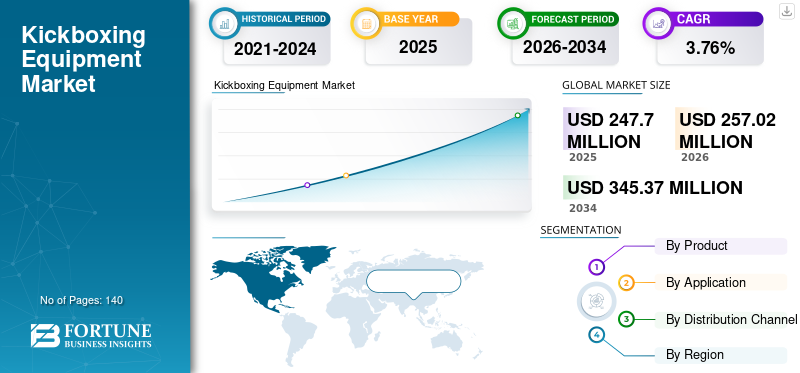
The kickboxing equipment market size was valued at USD 247.7 million in 2025. The market is projected to grow from USD 257.02 million in 2026 to USD 345.37 million by 2034, exhibiting a CAGR of 3.76% during the forecast period.

The kickboxing equipment market is witnessing strong expansion due to increasing participation in combat sports, fitness training programs, self-defense classes, and professional kickboxing events. Demand for gloves, punching bags, protective gear, shin guards, and training accessories continues to rise among professional athletes, fitness enthusiasts, and commercial fitness centers. The market is influenced by growing awareness regarding physical fitness, endurance training, and high-intensity workout routines. Manufacturers are focusing on durable materials, ergonomic designs, and enhanced impact protection systems. Rising online retail penetration and increasing investments in sports infrastructure are further supporting the kickboxing equipment market growth, creating new opportunities for product innovation and consumer engagement across multiple regions.
Download Free sample to learn more about this report.
Kickboxing Equipment Market Key Takeaways
 Global Market Size & Forecast
- 2025 market size: USD 247.7 Million
- 2026 market size: USD 257.02 Million
- 2034 Forecast market size: USD 345.37 Million
- CAGR: 3.76% from 2026-2034
 Market Share
- North America dominated with a regional market share of 34% in 2025.
- Gloves led by product type with approximately 38% market share.
- Offline distribution channels accounted for approximately 56% market share.
 Key Regional Highlights
North America
North America held the largest regional share at 34% of the global market.
Asia-Pacific
Asia-Pacific accounted for 31% of the global market, supported by rising combat sports participation.
Europe
Europe represented 27% of the global market, driven by growing fitness and martial arts activities.
U.S
The U.S. remains a major market, supported by strong participation in kickboxing, fitness, and combat sports.
Japan
Japan accounted for 18% of the Asia-Pacific market, supported by established martial arts culture and training demand.
Read More

Kickboxing Equipment Market Latest Trends
The kickboxing equipment market trends indicate a growing shift toward premium protective equipment and technologically enhanced training products. Manufacturers are introducing gloves with improved wrist stabilization, impact absorption layers, antimicrobial linings, and lightweight synthetic materials. Smart training equipment integrated with sensors is becoming increasingly popular among professional athletes and fitness enthusiasts seeking performance tracking and real-time training feedback. Sustainable manufacturing practices are also gaining attention as consumers increasingly prefer eco-friendly materials and recyclable packaging solutions.
Download Free sample to learn more about this report.
Another significant trend shaping the kickboxing equipment market analysis is the rapid growth of e-commerce distribution channels. Consumers increasingly purchase equipment online due to broader product availability, detailed specifications, and competitive pricing. Home fitness trends continue supporting demand for compact punching bags, portable training kits, and multi-purpose equipment. Combat fitness classes offered by gyms and wellness centers are further driving equipment replacement cycles. Premium branding, athlete endorsements, and customized gear designs are strengthening market competition while encouraging continuous product innovation.
Kickboxing Equipment Market Dynamics
DRIVER
Rising Participation in Fitness-Based Combat Sports
The primary driver supporting the kickboxing equipment market growth is the increasing popularity of combat sports as fitness activities. Consumers are increasingly adopting kickboxing workouts to improve cardiovascular health, strength, flexibility, and stress management. Fitness centers worldwide are introducing kickboxing-inspired training sessions that require specialized gloves, pads, punching bags, and protective equipment. Professional combat leagues and amateur competitions are also encouraging equipment purchases among athletes and training facilities.
Growing awareness regarding self-defense skills and personal fitness has expanded the consumer base beyond professional fighters. Schools, universities, and community fitness programs are incorporating martial arts training into recreational activities. Equipment manufacturers continue benefiting from repeat purchases because gloves, wraps, and protective gear require regular replacement. Rising social media influence, athlete endorsements, and digital fitness platforms further stimulate demand across both developed and emerging markets. The growing preference for high-intensity training routines continues creating substantial opportunities for the kickboxing equipment market forecast.
RESTRAINT
Availability of Low-Cost Counterfeit Products
One major restraint affecting the kickboxing equipment market outlook is the widespread availability of counterfeit and low-quality products. Many consumers purchase inexpensive alternatives that fail to meet professional safety standards. These products often offer inadequate protection and shorter product lifecycles, creating challenges for established manufacturers seeking to maintain premium pricing strategies.
Price-sensitive consumers in developing markets frequently prioritize affordability over product quality, limiting adoption of advanced equipment. Counterfeit products also create brand reputation concerns because injuries associated with inferior gear may negatively affect consumer confidence. Additionally, fluctuating raw material costs impact manufacturing expenses, making it difficult for premium brands to maintain competitive pricing. The presence of numerous regional suppliers increases market fragmentation and intensifies pricing pressure across several product categories. These factors collectively limit profitability and create obstacles for long-term market expansion.
OPPORTUNITY
Expansion of Smart Training Equipment
The integration of digital technologies into combat sports equipment presents significant opportunities for the kickboxing equipment market opportunities segment. Smart gloves equipped with impact sensors, performance analytics, and motion-tracking capabilities are attracting professional athletes and advanced fitness users. These innovations help improve training efficiency while providing measurable performance data.
Growing consumer interest in connected fitness ecosystems creates favorable conditions for technology-enabled equipment. Manufacturers are collaborating with fitness application developers and wearable technology providers to create comprehensive training solutions. Virtual coaching platforms and remote training programs also increase demand for intelligent equipment capable of delivering real-time feedback. As consumers increasingly seek personalized fitness experiences, smart kickboxing equipment is expected to become a key growth area. Investments in research and development continue generating new product categories that enhance user engagement and strengthen market competitiveness.
CHALLENGE
Rising Manufacturing and Logistics Costs
One of the major challenges confronting the kickboxing equipment industry report is the increasing cost of production and global logistics. Premium gloves, protective gear, and punching bags require specialized materials including high-density foam, synthetic leather, and reinforced stitching components. Rising transportation expenses and supply chain disruptions directly impact manufacturing efficiency.
Manufacturers must balance product quality with competitive pricing, particularly in highly price-sensitive markets. International distribution networks also face challenges associated with regulatory requirements, customs procedures, and inventory management. Seasonal demand fluctuations create additional forecasting complexities for producers and retailers. Companies must continuously optimize sourcing strategies and production processes to maintain profitability while meeting consumer expectations for performance, safety, and durability. Failure to address these operational challenges could affect long-term market positioning and growth potential.
Kickboxing Equipment Market Segmentation
By Product
Gloves represent the largest segment within the kickboxing equipment market size, accounting for approximately 38% of overall product demand. Professional athletes, recreational practitioners, and fitness participants all require gloves for training, sparring, and competition activities. Continuous advancements in wrist support systems, shock-absorption technologies, and ergonomic construction have improved product performance and safety. Premium gloves manufactured using synthetic leather and multilayer foam structures are gaining strong consumer acceptance. Growing participation in combat sports training has increased replacement frequency because gloves experience significant wear during regular use. Fitness centers and martial arts academies also purchase gloves in bulk to support large membership bases. Product customization, branded collaborations, and athlete-endorsed collections further strengthen sales. The Gloves segment remains a cornerstone of the kickboxing equipment market research report due to its essential role in every level of participation.
Protective gear accounts for nearly 32% of the kickboxing equipment market share. This category includes headguards, shin guards, mouthguards, chest protectors, hand wraps, and ankle supports. Growing awareness regarding injury prevention has increased adoption across professional and amateur user groups. Training facilities emphasize safety compliance, driving consistent demand for certified protective products. Manufacturers are focusing on lightweight materials, improved ventilation systems, and enhanced mobility features. Consumers increasingly prefer protective equipment that combines comfort with superior impact resistance. Regulatory standards introduced by sports organizations have further encouraged adoption. Rising participation among youth athletes and beginners continues supporting segment expansion. The Protective Gear segment remains one of the fastest-evolving categories within the global kickboxing equipment market.
Punching bags contribute approximately 30% of total market demand and remain essential training tools for both commercial and residential users. Heavy bags, freestanding models, speed bags, and wall-mounted systems are widely utilized for endurance training, strength development, and technical skill improvement. Home fitness adoption has significantly increased demand for compact punching bag solutions. Commercial fitness centers continue investing in durable punching bag systems capable of withstanding intensive daily use. Product innovations include adjustable-weight designs, advanced suspension mechanisms, and enhanced impact-resistant materials. Growing popularity of combat fitness programs and individual workout routines supports sustained demand. As training methodologies evolve, punching bags remain fundamental components of the kickboxing equipment market analysis and equipment purchasing decisions.
By Distribution Channel
Online distribution channels account for approximately 44% of the kickboxing equipment market share. Consumers increasingly prefer online purchasing due to broader product selections, detailed product comparisons, customer reviews, and competitive pricing. E-commerce platforms provide access to both global and regional brands, enabling customers to evaluate specifications before making purchasing decisions. The growth of mobile commerce and digital payment systems has strengthened online equipment sales. Manufacturers are investing heavily in direct-to-consumer channels to improve customer engagement and brand visibility. Online-exclusive product launches and personalized marketing campaigns further support channel expansion. The online segment continues gaining importance within the kickboxing equipment market forecast due to changing consumer shopping behavior.
Offline retail channels maintain approximately 56% market share and continue playing a critical role in product sales. Sporting goods stores, specialty martial arts retailers, fitness equipment outlets, and brand-owned stores provide consumers with opportunities to physically evaluate products before purchase. Professional athletes often prefer offline channels because fitting, comfort assessment, and product testing remain important purchasing considerations. Retail partnerships with gyms and training academies strengthen equipment accessibility. Offline channels also benefit from professional recommendations and personalized customer service. Many consumers continue valuing expert guidance when selecting gloves, protective gear, and training accessories. Despite rapid e-commerce expansion, offline distribution remains a significant contributor to the overall kickboxing equipment industry analysis.
Kickboxing Equipment Market Regional Outlook
North America
North America accounts for approximately 34% of the global kickboxing equipment market. The region benefits from extensive fitness infrastructure, strong participation in combat sports, and widespread availability of premium training equipment. The United States dominates regional demand due to growing interest in boxing-inspired fitness programs and martial arts training. Commercial fitness centers, professional training facilities, and recreational users collectively support equipment sales across multiple categories.
Manufacturers actively introduce advanced gloves, protective gear, and technology-enabled training products within the region. High consumer spending on fitness-related activities supports premium equipment adoption. Sports organizations, amateur leagues, and professional competitions contribute to ongoing product replacement demand. Strong brand presence and established distribution networks continue positioning North America as a leading contributor to global market development.
Europe
Europe represents approximately 27% of the global kickboxing equipment market share. The region benefits from well-established sports clubs, amateur combat leagues, and growing fitness participation. Countries including Germany, the United Kingdom, France, and the Netherlands maintain active combat sports communities that support equipment demand. Regulatory emphasis on athlete safety has increased adoption of certified protective gear and premium training products.
European consumers increasingly seek durable and sustainable sporting equipment. Fitness studios offering combat training programs continue expanding across urban centers. Manufacturers focus on high-performance materials, ergonomic designs, and environmentally responsible production methods. Strong retail infrastructure and increasing online sales support regional market growth. Europe remains an important region within the global kickboxing equipment market outlook.
Germany Kickboxing Equipment Market
Germany accounts for approximately 24% of the European kickboxing equipment market. The country benefits from a structured sports club system, strong amateur participation, and increasing demand for fitness-oriented combat training. Specialized martial arts academies and commercial fitness facilities regularly invest in premium gloves, protective gear, and punching bags to support growing membership levels.
German consumers place significant emphasis on product quality, durability, and safety compliance. Demand for professional-grade equipment remains strong among competitive athletes and recreational participants. Online retail channels are expanding rapidly, providing consumers with access to international brands and specialized product categories. Continued investment in sports infrastructure and wellness initiatives strengthens Germany's position as one of Europe's leading kickboxing equipment markets.
United Kingdom Kickboxing Equipment Market
The United Kingdom represents approximately 19% of the European kickboxing equipment market. Growing interest in fitness boxing, self-defense training, and combat sports competitions continues driving equipment demand. Urban fitness studios increasingly incorporate kickboxing sessions into group exercise programs, generating steady demand for gloves, protective equipment, and training accessories.
The UK market also benefits from strong digital commerce adoption and active social media fitness communities. Consumers increasingly seek high-quality products designed for performance and injury prevention. Professional competitions, amateur tournaments, and youth participation programs contribute to market expansion. Product innovation and premium branding strategies remain important competitive factors within the United Kingdom kickboxing equipment market.
Asia-Pacific
Asia-Pacific accounts for approximately 31% of global market demand and remains one of the fastest-expanding regions. Strong martial arts traditions, growing fitness awareness, and increasing disposable income support equipment purchases across multiple countries. Commercial training centers, combat sports academies, and recreational fitness users contribute significantly to regional growth.
Countries including China, Japan, Thailand, South Korea, and India demonstrate increasing participation in combat sports activities. Manufacturers benefit from large consumer populations and expanding e-commerce penetration. Product affordability and regional manufacturing capabilities further strengthen market competitiveness. Asia-Pacific continues representing a key growth engine within the global kickboxing equipment market trends.
Japan Kickboxing Equipment Market
Japan accounts for approximately 18% of the Asia-Pacific kickboxing equipment market. The country possesses a strong combat sports culture supported by professional competitions, traditional martial arts programs, and modern fitness facilities. Demand for premium equipment remains high among athletes seeking performance, safety, and durability.
Japanese consumers value advanced product engineering and innovative training solutions. Manufacturers focus on lightweight protective materials, ergonomic glove construction, and enhanced shock absorption systems. Fitness clubs and specialized training centers continue investing in upgraded equipment to accommodate growing participation. Strong consumer awareness regarding product quality supports stable market development throughout Japan.
China Kickboxing Equipment Market
China holds approximately 28% of the Asia-Pacific kickboxing equipment market and remains the region's largest national market. Rapid urbanization, increasing health awareness, and expanding sports infrastructure support strong equipment demand. Commercial gyms, martial arts schools, and combat sports academies continue increasing purchases of gloves, punching bags, and protective equipment.
The country also serves as a major manufacturing hub for combat sports products. Domestic brands and international companies compete aggressively through online retail channels and specialized sporting goods stores. Growing youth participation and increasing popularity of combat fitness programs strengthen long-term market potential. Investments in sports development initiatives continue supporting sustained demand for kickboxing equipment throughout China.
Rest of World
The Rest of World region accounts for approximately 8% of the global kickboxing equipment market share. Countries across Latin America, the Middle East, and Africa are experiencing increasing participation in combat sports and fitness training activities. Urbanization, growing awareness of physical fitness, and expanding sports infrastructure support equipment adoption.
Fitness centers, martial arts academies, and community sports programs are creating new demand opportunities. Consumers increasingly seek affordable yet durable products suitable for training and recreational use. International brands are expanding distribution networks to capitalize on emerging market opportunities. Rising interest in professional combat sports events and self-defense training continues strengthening regional demand for kickboxing equipment and accessories.
List of Top Kickboxing Equipment Companies
- Adidas
- Century Martial Arts.
- EVERLAST WORLDWIDE INC.
- Hayabusa Fightwear Inc.
- TWINS SPECIAL
- Combat Brands
- Fairtex Global
- KING PRO BOXING
- Revgear
- Ringside Boxing
Top Two Companies by market share
- EVERLAST WORLDWIDE INC. – 16%
- Adidas – 13%
Investment Analysis and Opportunities
The kickboxing equipment market opportunities landscape continues expanding as investors recognize growing consumer demand for combat sports and fitness-related products. Capital investments are increasingly directed toward advanced manufacturing facilities, sustainable material development, and technology-enabled training equipment. Companies are allocating resources toward research programs focused on impact absorption systems, smart sensors, and connected fitness ecosystems.
Emerging markets present attractive opportunities due to expanding fitness participation and rising disposable income levels. E-commerce infrastructure development enables manufacturers to reach previously underserved customer segments. Strategic partnerships between sports organizations, fitness chains, and equipment suppliers further support market penetration. Investors are particularly interested in premium equipment categories and smart training products capable of delivering measurable performance insights. These developments continue strengthening long-term investment attractiveness across the kickboxing equipment market Research landscape.
New Product Development
Product innovation remains a major competitive strategy within the kickboxing equipment market. Manufacturers are introducing gloves featuring biometric tracking sensors, enhanced wrist stabilization systems, and advanced moisture-management technologies. Smart training equipment capable of monitoring punch force, speed, and training intensity is attracting increasing attention among professional athletes and fitness enthusiasts.
Sustainability initiatives are also influencing new product development efforts. Companies are experimenting with eco-friendly synthetic materials, recyclable packaging solutions, and environmentally responsible manufacturing practices. Protective gear designs increasingly emphasize lightweight construction and improved mobility without compromising safety performance. Customized products, athlete-inspired collections, and digitally connected equipment continue reshaping consumer expectations. These innovations contribute significantly to the evolution of the global kickboxing equipment industry report.
Five Recent Developments (2023-2025)
- Everlast introduced smart boxing gloves featuring biometric monitoring and training analytics capabilities in 2023.
- Fairtex expanded development of sensor-integrated training gloves designed for performance tracking applications in 2023.
- Multiple combat sports brands increased investments in eco-friendly synthetic leather alternatives during 2024.
- Manufacturers expanded direct-to-consumer online sales channels and customized equipment offerings throughout 2024 and 2025.
- Advanced protective gear featuring lightweight impact-resistant materials gained broader commercial adoption across gyms and training centers during 2025.
Report Coverage Of Kickboxing Equipment Market
The kickboxing equipment market Report provides comprehensive analysis of market size, market share, industry trends, growth drivers, restraints, opportunities, and competitive developments. The report evaluates major product categories including gloves, protective gear, and punching bags while examining demand patterns across online and offline distribution channels. Regional analysis covers North America, Europe, Asia-Pacific, and Rest of World markets with detailed country-level assessments.
Request for Customization to gain extensive market insights.
The study also examines technological advancements, product innovation strategies, investment patterns, and competitive positioning among leading manufacturers. Market insights include consumer purchasing behavior, fitness industry developments, commercial facility demand, and emerging opportunities associated with smart training equipment. The report supports strategic decision-making for manufacturers, distributors, investors, retailers, and industry stakeholders seeking actionable intelligence regarding the kickboxing equipment market forecast, industry analysis, market trends, and future growth opportunities.
Frequently Asked Questions
Fortune Business Insights says that the global market value stood at USD 247.7 million in 2025 and is projected to reach USD 345.37 million by 2034.
The market is expected to exhibit a CAGR of 3.76% during the forecast period of 2026-2034.
Gloves was the leading product segment, accounting for approximately 38% of overall product demand, driven by their essential use in training, sparring, and competitions.
Key players include Adidas, Century Martial Arts, EVERLAST WORLDWIDE INC., Hayabusa Fightwear Inc., TWINS SPECIAL, and Combat Brands.
Major trends include the shift toward premium protective and smart sensor-integrated training equipment and growing adoption of sustainable materials and e-commerce channels. North America leads with approximately 34% market share, supported by strong combat-sports participation and fitness infrastructure.



- 2021-2034
- 2025
- 2021-2024
- 140
-

(Offer valid till 30th Sep 2026)
Get 30-60 hrs Free Customization
Expand Regional and Country Coverage, Segments Analysis, Company Profiles, Competitive Benchmarking, and End-user Insights.



















-
US +1 833 909 2966 ( Toll Free )
-
Get In Touch With Us