Laboratory Filtration Market Size, Share & Industry Analysis, By Technology (Microfiltration, Nanofiltration, Vacuum Filtration, Ultrafiltration), By Product (Filtration Media, Filtration Assemblies, Filtration Accessories) and Regional Forecast, 2026-2034
 Download Free Sample
Laboratory Filtration Market Overview
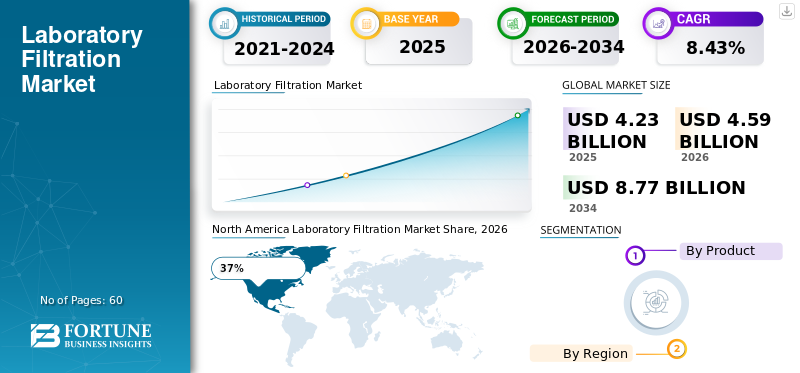
The laboratory filtration market size was valued at USD 4.58 billion in 2025. The market is projected to grow from USD 4.97 billion in 2026 to USD 9.56 billion by 2034, exhibiting a CAGR of 8.53% during the forecast period.

The Laboratory Filtration Market is expanding as laboratories increasingly require reliable separation, clarification, sterilization, concentration, and sample-preparation solutions. Laboratory filtration is used across pharmaceutical research, biotechnology, clinical diagnostics, environmental testing, food analysis, academic research, and chemical laboratories. The market includes membrane filters, filter papers, syringe filters, vacuum filtration units, filtration assemblies, ultrafiltration devices, and supporting accessories. Microfiltration remains a major technology because of its broad use in particulate removal and sample clarification. Filtration media also represents the largest product category in the current market structure. The Laboratory Filtration Market is increasingly shaped by single-use designs, low-binding membranes, higher throughput, sustainability, and application-specific filtration formats.
The USA Laboratory Filtration Market benefits from a large pharmaceutical and biotechnology research base, extensive clinical laboratory infrastructure, advanced academic research, and strong demand for reproducible analytical workflows. Laboratories across the country use syringe filters, membrane filters, vacuum filtration assemblies, ultrafiltration devices, and sterile filtration systems for sample preparation and contamination control. The strong presence of pharmaceutical development, biologics research, diagnostics, food testing, and environmental monitoring supports consistent procurement of laboratory filtration products.
Demand in the USA is also shifting toward convenient, validated, and application-specific filtration products. Laboratories increasingly prefer products that reduce preparation time, minimize sample loss, provide predictable flow characteristics, and integrate easily with existing laboratory equipment. Single-use filtration assemblies and specialized membrane materials are gaining attention because they support contamination control while simplifying routine workflows. The USA therefore remains one of the most commercially important markets for laboratory filtration manufacturers and distributors.
Download Free sample to learn more about this report.
Key Takeaways
Market Size & Growth
- Global market size 2025: USD 4.58 Billion
- Global market size 2034: USD 9.56 Billion
- CAGR (2025–2034): 8.53%
Market Share – Regionals
- North America: 35.5%
- Europe: 28.0%
- Asia-Pacific: 24.4%
- Rest of World: 12.1%
Country-Level Shares
- Germany:31% of Europe’s market
- United Kingdom: 20% of Europe’s market
- Japan: 18% of Asia-Pacific market
- China: 35% of Asia-Pacific market
Laboratory Filtration Market Latest Trends
A major Laboratory Filtration Market Trend is the movement toward single-use filtration systems and ready-to-use filtration assemblies. Pharmaceutical, biotechnology, and research laboratories are seeking products that can be installed quickly without extensive cleaning or validation procedures. Bottle-top filters, syringe filters, disposable membrane units, sterile filtration devices, and single-use ultrafiltration cassettes are increasingly aligned with these requirements. Commercial portfolios now include filtration solutions covering sample volumes from small analytical quantities to larger laboratory-scale workflows.
Download Free sample to learn more about this report.
Another important Laboratory Filtration Market Trend is the development of low-binding, high-throughput membrane materials. Membrane selection is increasingly based on protein recovery, chemical compatibility, extractables, flow rate, pore-size distribution, and sample integrity rather than filtration capacity alone. PES, PVDF, PTFE, nylon, cellulose acetate, and mixed cellulose ester membranes are being positioned for different laboratory requirements. Manufacturers are also emphasizing sustainability through reduced plastic consumption, recyclable packaging, and material-efficient designs. Sartorius, for example, introduced a laboratory TFF cassette with a redesigned housing and substantially reduced plastic use.
Laboratory Filtration Market Dynamics
DRIVER
Expansion of pharmaceutical, biotechnology, and analytical laboratory activities
The increasing number of pharmaceutical and biotechnology research programs is a major driver of the Laboratory Filtration Market. Drug discovery, biologics development, cell culture, protein research, vaccine development, molecular biology, and analytical testing all require filtration at different stages. Filtration can remove particulate matter, microorganisms, aggregates, and unwanted contaminants while supporting sample clarification and preparation before downstream analysis. The expansion of biologics and advanced therapy research is particularly important because these applications require careful handling of proteins, nucleic acids, cells, viruses, and other sensitive biological materials. Ultrafiltration and tangential flow filtration are increasingly used for concentration and buffer exchange, while sterile membrane filtration supports contamination control. Research laboratories are also processing greater numbers of samples, creating demand for filtration products that provide consistent performance and reduce manual handling.
The broader laboratory ecosystem contributes to this demand. Pharmaceutical quality-control laboratories, contract research organizations, academic institutions, hospitals, diagnostic laboratories, food laboratories, and environmental testing facilities use filtration products as routine consumables. The recurring nature of membrane, syringe-filter, and filtration-media purchases provides manufacturers with a stable demand base. Consequently, pharmaceutical R&D expansion, biotechnology investment, and laboratory automation remain central factors influencing Laboratory Filtration Market Growth and Laboratory Filtration Market Outlook.
RESTRAINT
High product costs and membrane selection complexity
Product cost and selection complexity remain important restraints in the Laboratory Filtration Market. Advanced membrane materials, sterile assemblies, specialty filtration devices, and high-performance ultrafiltration systems can require greater purchasing budgets than basic filter papers or conventional filtration products. Smaller academic laboratories and laboratories operating under strict procurement budgets may prioritize lower-cost alternatives, reusable systems, or standard filtration formats. Another restraint is the technical complexity involved in choosing the appropriate membrane chemistry, pore size, filter area, operating pressure, and filtration configuration. An unsuitable filter can result in low recovery, excessive adsorption, membrane fouling, slow flow, chemical incompatibility, or sample contamination. Laboratories therefore require trained personnel to select the correct filtration solution. This becomes more significant for protein-based samples, organic solvents, aggressive chemicals, and complex biological matrices.
Supply-chain considerations can also affect purchasing decisions. Laboratories often require consistent membrane characteristics across repeated experiments, meaning they may be reluctant to switch suppliers when a validated filtration material is already incorporated into an established protocol. Qualification requirements can increase the time and cost associated with changing filtration products. These factors can slow adoption of new products even when they provide technological improvements. As a result, manufacturers need to demonstrate measurable improvements in throughput, recovery, reproducibility, sustainability, or workflow efficiency to justify premium filtration products.
MARKET OPPORTUNITY
Increasing adoption of sustainable and application-specific filtration technologies
Sustainability represents a significant Laboratory Filtration Market Opportunity. Laboratory filtration traditionally relies heavily on disposable plastics, packaging, membrane housings, and single-use assemblies. As laboratories establish environmental targets, manufacturers are increasingly developing products that reduce material consumption without compromising filtration performance. Opportunities are particularly strong for products that combine sustainability with improved operational efficiency. Reduced-plastic housings, recyclable packaging, bulk configurations, reusable filter components, and higher-capacity membranes can lower material consumption while reducing the number of filtration units required. Sartorius has demonstrated this direction through redesigned laboratory filtration products and its Vivaflow SU TFF cassette, which uses less plastic than the previous design.
Application-specific filtration also creates opportunities for manufacturers. Pharmaceutical laboratories require sterile and low-binding filtration, environmental laboratories require particulate and microbiological analysis, food laboratories require rapid sample clarification, and analytical laboratories require solvent-compatible filtration. Developing products around these individual workflows allows suppliers to differentiate beyond basic pore-size specifications. Digital monitoring is another emerging opportunity. Filtration systems equipped with sensors or connected laboratory equipment can potentially monitor pressure, flow, filter loading, and operating conditions. These capabilities can support preventive maintenance and improve reproducibility. The combination of sustainability, workflow automation, membrane innovation, and application-specific design is expected to create attractive Laboratory Filtration Market Opportunities for established manufacturers and specialized suppliers.
CHALLENGE
Maintaining filtration performance across increasingly complex laboratory samples
A key Laboratory Filtration Market Challenge is the increasing complexity of samples processed by modern laboratories. Biological fluids, protein solutions, cell culture media, environmental samples, pharmaceutical formulations, solvents, and food matrices can have significantly different viscosity, particle loads, chemical characteristics, and contamination risks. A filtration membrane that performs well in one application may not provide equivalent results in another. Membrane fouling is a persistent technical issue. High particulate loading or interaction between sample components and the membrane surface can reduce flow rates and shorten filter life. Adsorption can also reduce recovery of valuable proteins, peptides, nucleic acids, or other analytes. Laboratories therefore require filters with carefully engineered surface properties, pore structures, and chemical compatibility.
Manufacturers also face the challenge of balancing filtration speed with retention efficiency. Increasing flow rate can improve productivity but may influence pressure requirements or separation performance. Smaller pore sizes can improve particle retention but may reduce throughput. In pharmaceutical and biotechnology applications, filtration systems must additionally satisfy stringent quality and validation requirements. Sustainability adds another layer of complexity because laboratories want disposable products for contamination control while simultaneously reducing plastic waste. Manufacturers must therefore develop filtration products that combine sterility, reliability, performance, regulatory suitability, and lower environmental impact. Successfully balancing these requirements will remain a central competitive challenge in the Laboratory Filtration Industry.
Laboratory Filtration Market Segmentation
By Technology
Microfiltration is the leading technology segment in the Laboratory Filtration Market, accounting for an estimated 35.3% share of the global market. Its broad application range makes it a core laboratory filtration technique for clarification, particulate removal, microbiological testing, sample preparation, and sterile filtration. Microfiltration generally uses membranes with relatively larger pores than ultrafiltration and nanofiltration, allowing laboratories to remove suspended particles and microorganisms while allowing smaller dissolved components to pass through. Microfiltration is widely incorporated into syringe filters, membrane discs, vacuum filtration assemblies, bottle-top filtration systems, and analytical filtration devices. Pharmaceutical laboratories use microfiltration for clarification and sterile processing, while environmental and food laboratories use it for microbial and particulate analysis. The technology also supports preparation of samples before chromatography and other analytical methods. The market opportunity for microfiltration is strengthened by its relatively straightforward operation and wide compatibility with laboratory equipment. Improvements in PES, cellulose acetate, nylon, PTFE, and other membrane materials are increasing the range of applications. Low-binding membranes are particularly valuable for biological samples where analyte recovery is important. Microfiltration is therefore expected to remain a central technology in Laboratory Filtration Market Analysis, particularly in routine laboratory workflows requiring reliable particle and microbial retention.
Ultrafiltration represents an important technology segment because it enables selective concentration, purification, and buffer exchange of macromolecules. It is particularly relevant to pharmaceutical research, biotechnology, protein science, molecular biology, and advanced analytical applications. Ultrafiltration membranes are selected according to molecular-weight cut-off and sample characteristics, allowing laboratories to concentrate proteins, peptides, nucleic acids, and other biological materials. The segment is estimated to account for approximately 27.0% of the Laboratory Filtration Market. Growth in biopharmaceutical research is supporting demand for laboratory-scale ultrafiltration devices, centrifugal concentrators, pressure-driven systems, and tangential flow filtration. TFF is increasingly relevant to research laboratories processing larger sample volumes because it can support concentration, desalting, and buffer exchange. Product innovation is focusing on easier setup, reduced sample loss, improved membrane recovery, and lower consumable waste. Sartorius launched Vivaflow SU in 2024 as a laboratory-focused TFF cassette designed to simplify ultrafiltration and diafiltration while reducing material use. The development illustrates the wider direction of the Laboratory Filtration Market toward accessible, compact, and sustainable ultrafiltration technologies.
Vacuum filtration is estimated to hold approximately 20.5% of the Laboratory Filtration Market. It is widely used for rapid separation of solids and liquids, media preparation, particulate removal, microbiological testing, and routine laboratory sample processing. Vacuum filtration can provide faster throughput than gravity filtration and is therefore useful when laboratories need to process larger sample volumes within limited operating time. Vacuum filtration products include filter flasks, funnel assemblies, bottle-top filters, membrane filtration units, reusable holders, and disposable filtration devices. Pharmaceutical and biotechnology laboratories frequently use vacuum filtration to prepare cell culture media and buffers, while environmental laboratories use it for particulate and microbiological analysis. Manufacturers are improving vacuum filtration through higher-flow membranes, ergonomic designs, parallel filtration stations, and single-use assemblies. Sustainable packaging and reduced-plastic designs are also emerging as competitive factors. These developments are particularly relevant to laboratories that perform repeated filtration procedures each day. The Laboratory Filtration Market Forecast is therefore influenced by continued demand for efficient filtration hardware that can support standardized, repeatable workflows.
Nanofiltration is estimated to account for approximately 17.2% of the Laboratory Filtration Market. It occupies a specialized position between conventional membrane filtration and tighter molecular separation techniques. Nanofiltration is increasingly relevant where laboratories need selective removal of very small particles, dissolved organic compounds, multivalent ions, or specific molecular components. The technology is useful in environmental research, water analysis, pharmaceutical development, chemical laboratories, and specialized separation studies. Nanofiltration systems can provide greater selectivity than microfiltration and may be used as part of multi-stage purification processes. Demand is supported by increasing analytical interest in trace contaminants, complex aqueous systems, and advanced separation techniques. The segment has opportunities for technological development in membrane surface chemistry, pressure efficiency, fouling resistance, and selective molecular transport. Manufacturers that can improve membrane longevity while maintaining separation performance can strengthen their position in specialized Laboratory Filtration Market Opportunities. Nanofiltration is likely to remain a technically important segment even though its application base is narrower than microfiltration.
To know how our report can help streamline your business, Speak to Analyst
By Product
Filtration media is the largest product category, accounting for an estimated 58.3% share of the Laboratory Filtration Market. This category includes membrane filters, filter papers, syringe filters, capsule filters, microplates, and other filtration materials. Its leading position reflects the recurring nature of media consumption across laboratories. Membrane selection is increasingly application-specific. PES membranes are commonly selected where high throughput and low binding are important, while PTFE is valuable for solvent filtration and gas applications. Cellulose acetate, nylon, PVDF, mixed cellulose ester, and other materials provide additional options depending on chemical compatibility and sample characteristics. Commercial laboratory portfolios now provide multiple pore sizes, membrane materials, diameters, and sterile configurations to accommodate different workflows. The market opportunity within filtration media is also expanding through premium products designed for low extractables, high recovery, fast flow, and contamination control. Laboratories performing chromatography, mass spectrometry, microbiology, cell culture, and molecular biology increasingly require filtration media tailored to specific analytical requirements.
Filtration assemblies account for an estimated 25.0% share of the Laboratory Filtration Market. These products integrate membranes or filtration media with housings, funnels, receivers, tubing, or other components to create a complete filtration workflow. Examples include bottle-top filtration systems, vacuum filtration units, sterile filter devices, TFF cassettes, and specialized laboratory assemblies. The major advantage of filtration assemblies is workflow simplification. Instead of assembling individual components, laboratory users can employ a preconfigured product designed for a defined sample volume and application. This can reduce handling time, lower contamination risks, and support reproducibility. Sterile laboratory filtration systems are increasingly offered in formats suitable for small volumes through larger laboratory-scale preparation. Demand is particularly strong in pharmaceutical, biotechnology, and cell culture laboratories where contamination control is critical. Single-use assemblies are also gaining attention because they reduce cleaning requirements and simplify changeover between experiments. Future product development is expected to focus on high-flow designs, compact formats, lower material consumption, and integration with laboratory automation.
Filtration accessories account for an estimated 16.7% share of the Laboratory Filtration Market. This category includes filter holders, filter flasks, funnels, cartridges, housings, dispensers, vacuum pumps, connectors, seals, and other supporting components. Accessories are essential for enabling laboratories to use membrane filters and filtration media safely and efficiently. The demand for accessories is influenced by the installed base of laboratory filtration systems and the need for replacement or additional components. Laboratories may select reusable holders when flexibility and long-term use are priorities, while disposable accessories are preferred where contamination control and rapid workflow are more important. Manufacturers are improving accessories through ergonomic designs, compatibility with multiple filter formats, easier connections, and improved sealing. The growth of parallel filtration systems also creates opportunities for accessories that enable multiple samples to be processed simultaneously. As laboratories seek higher throughput, accessories that support standardized workflows and reduce setup time are becoming increasingly valuable in Laboratory Filtration Market Analysis.
Laboratory Filtration Market Regional Outlook
North America
North America Laboratory Filtration Market Share, 2025 (%)
To get more information on the regional analysis of this market, Download Free sample
North America represents an estimated 35.5% share of the global Laboratory Filtration Market and remains the largest regional market. The region benefits from extensive pharmaceutical and biotechnology research, mature laboratory infrastructure, strong clinical diagnostics activity, and a large installed base of analytical equipment. The USA is the principal contributor, supported by pharmaceutical development, biologics research, academic laboratories, food testing, environmental analysis, and contract research organizations. Laboratory filtration demand in North America is increasingly influenced by high-performance sample preparation, sterile filtration, and contamination-control requirements. Laboratories are adopting products that reduce manual intervention and provide predictable filtration performance. Syringe filters, membrane discs, vacuum units, bottle-top filters, and ultrafiltration devices remain important consumable categories. The region also provides strong opportunities for sustainable filtration. Laboratories are examining plastic waste, packaging intensity, and consumable utilization when selecting suppliers. Manufacturers that combine performance with reduced material use can gain an advantage in institutional and pharmaceutical procurement. The Laboratory Filtration Market Outlook for North America is therefore closely connected to biotechnology investment, pharmaceutical R&D, diagnostics expansion, and laboratory automation.
Europe
Europe holds an estimated 28.0% share of the Laboratory Filtration Market. The region has a mature pharmaceutical, biotechnology, chemical, food-testing, and academic research ecosystem that creates sustained demand for laboratory filtration products. Germany, the United Kingdom, France, Italy, and other European markets contribute to regional consumption through research institutions and regulated industrial laboratories. European customers place strong emphasis on product quality, documentation, sustainability, chemical compatibility, and operational efficiency. This environment favors suppliers with validated membrane technologies and consistent manufacturing standards. The region is also becoming increasingly important for sustainable laboratory products, including reduced-plastic filtration assemblies and more efficient single-use formats. Europe's pharmaceutical manufacturing and research activities create demand for sterile filtration, ultrafiltration, microfiltration, and sample preparation products. Environmental testing is another significant application area because laboratories monitor water quality, contaminants, microorganisms, and industrial pollutants. The combination of regulatory requirements and sustainability objectives is influencing purchasing criteria. Manufacturers that can provide documented performance alongside lower environmental impact are positioned to capture emerging Laboratory Filtration Market Opportunities in Europe.
Germany Laboratory Filtration Market
Germany accounts for an estimated 31% of Europe’s Laboratory Filtration Market. The German market is supported by a strong pharmaceutical and biotechnology industry, advanced chemical manufacturing, university research, diagnostics, and highly developed laboratory infrastructure. Demand is particularly strong for precision filtration products used in pharmaceutical quality control, microbiology, analytical chemistry, and bioprocess research. German laboratories generally emphasize reproducibility, technical documentation, reliability, and equipment compatibility. Filtration products used in regulated environments must provide predictable performance and consistent specifications. This supports demand for high-quality membranes, sterile filtration assemblies, ultrafiltration devices, and specialized laboratory accessories. Sustainability is also becoming an important consideration. Laboratories and manufacturers are seeking lower-waste filtration designs, reduced packaging, and improved material efficiency. German companies are well positioned to develop advanced filtration technologies because of the country's engineering capabilities and established life sciences ecosystem. Demand for laboratory-scale TFF, membrane filtration, and specialized sample-preparation systems is expected to remain important to Germany Laboratory Filtration Market Growth.
United Kingdom Laboratory Filtration Market
The United Kingdom represents an estimated 20% of Europe’s Laboratory Filtration Market. The UK market benefits from strong pharmaceutical research, biotechnology development, university laboratories, clinical research, and contract research organizations. London, Cambridge, Oxford, and other research centers contribute to high demand for advanced laboratory consumables and analytical filtration technologies. Pharmaceutical and biotechnology laboratories use filtration for cell culture, protein research, molecular biology, sterile sample preparation, and purification. Diagnostic laboratories also require filtration products for sample preparation and microbiological testing. The UK's strong research ecosystem encourages adoption of high-quality laboratory consumables that can improve reproducibility and throughput. Sustainability and laboratory efficiency are increasingly relevant purchasing factors. Laboratories are evaluating single-use filtration systems against waste-reduction targets, while manufacturers are exploring recyclable packaging and reduced-material designs. The UK Laboratory Filtration Market therefore presents opportunities for companies offering compact, automated, high-performance, and environmentally conscious filtration technologies.
Asia-Pacific
Asia-Pacific accounts for an estimated 24.4% share of the global Laboratory Filtration Market. The region is supported by expanding pharmaceutical manufacturing, biotechnology research, clinical diagnostics, food testing, environmental monitoring, and academic research. China, Japan, India, South Korea, and other Asian markets are increasing laboratory capacity and adopting more sophisticated analytical workflows. The region presents strong opportunities for manufacturers because laboratories are moving from basic filtration methods toward application-specific membrane products and integrated assemblies. Pharmaceutical manufacturing expansion is increasing demand for sterile filtration and quality-control products, while environmental concerns are strengthening demand for water and sample filtration. Cost remains important in several Asian markets, creating opportunities for manufacturers that can deliver reliable products at competitive prices. Local production, regional distribution networks, and broader product portfolios can improve market access. The Asia-Pacific Laboratory Filtration Market Forecast is also influenced by increasing biotechnology activity and the modernization of research laboratories.
Japan Laboratory Filtration Market
Japan represents an estimated 18% of the Asia-Pacific Laboratory Filtration Market. The Japanese market is characterized by advanced pharmaceutical research, precision manufacturing, biotechnology, diagnostics, electronics-related laboratories, food testing, and academic research. Laboratories typically emphasize consistency, reliability, product quality, and efficient workflows. Demand exists across microfiltration, ultrafiltration, vacuum filtration, and specialized membrane products. Pharmaceutical and biotechnology laboratories require sterile filtration and low-binding membranes for sensitive biological samples. Analytical laboratories use syringe filters and membrane products for sample preparation before chromatography and other testing procedures. Japan's mature laboratory infrastructure creates opportunities for premium filtration products rather than only basic consumables. Manufacturers that offer precise specifications, reliable supply, compact equipment, and application-specific membrane chemistries can compete effectively. Sustainability and efficient use of laboratory resources are also becoming increasingly relevant in procurement decisions.
China Laboratory Filtration Market
China represents an estimated 35% of the Asia-Pacific Laboratory Filtration Market. The country's expanding pharmaceutical manufacturing, biotechnology research, environmental testing, food analysis, and academic research sectors are driving demand for laboratory filtration products. The development of domestic research capacity and modernization of laboratories are broadening the customer base. Chinese laboratories increasingly require filtration products for sterile processing, sample preparation, microbial analysis, chemical testing, and biopharmaceutical research. Microfiltration remains important for routine applications, while ultrafiltration and other membrane technologies are gaining adoption in specialized biotechnology workflows. The market provides opportunities for both international and domestic manufacturers. Competitive pricing, local distribution, product availability, and technical support are important purchasing factors. As Chinese laboratories adopt more sophisticated research and quality-control processes, demand is expected to move toward higher-performance membranes, integrated filtration assemblies, and application-specific filtration systems.
Rest of World
Rest of World represents an estimated 12.1% share of the global Laboratory Filtration Market and includes Latin America, the Middle East, and Africa. Market development is supported by pharmaceutical manufacturing, clinical diagnostics, food testing, environmental monitoring, water-quality analysis, and university research. Laboratories in these markets commonly require cost-effective filtration media, syringe filters, membrane discs, vacuum filtration equipment, and basic filtration accessories. However, increasing investment in healthcare infrastructure and research facilities is gradually creating demand for more advanced filtration products. Environmental monitoring represents a notable opportunity because water quality, industrial pollution, microbiological contamination, and food safety require laboratory testing. Pharmaceutical manufacturing expansion also creates demand for sterile filtration and quality-control consumables. Suppliers with regional distribution capabilities, technical support, and broad product portfolios can benefit from the fragmented nature of these markets. The Rest of World segment is also attractive for manufacturers seeking geographic diversification. Local partnerships and distributor networks can help companies address differences in regulatory requirements, procurement practices, technical expertise, and product availability. The Laboratory Filtration Market Opportunities across these countries are expected to remain concentrated in reliable, affordable, and application-focused products.
List of Top Laboratory Filtration Companies
- Advantec Toyo Roshi Kaisha, Ltd.
- AMD Manufacturing Inc.
- Danaher Corporation
- STERIS plc
- Hawach Scientific Co. Ltd.
- Sterlitech Corporation
- Veolia Water Technologies
- Macherey-Nagel GmbH & Co. KG
- Thermo Fisher Scientific, Inc.
- Merck KGaA
- Sartorius AG
- Pall Corporation
- Agilent Technologies, Inc.
- GVS S.p.A.
- Meissner Filtration Products, Inc.
Top Two Companies by Market Share
- Thermo Fisher Scientific, Inc. – estimated 8.5%
- Merck KGaA – estimated 7.8%
Investment Analysis and Opportunities
Investment opportunities in the Laboratory Filtration Market are concentrated in membrane technology, sustainable consumables, single-use filtration systems, ultrafiltration, and automated laboratory workflows. Companies investing in high-performance membrane materials can address increasing demand for lower binding, higher recovery, improved chemical compatibility, and faster flow rates. Investments in manufacturing capacity are also important because filtration products are frequently purchased as recurring laboratory consumables. Another attractive investment area is application-specific filtration. Pharmaceutical and biotechnology laboratories require products designed around sterile processing, cell culture, protein research, and molecular analysis. Environmental laboratories require filtration systems optimized for water and particulate testing. Food and beverage laboratories require reliable sample clarification and microbiological analysis. Developing specialized solutions can provide manufacturers with stronger customer relationships and improved differentiation. Sustainability provides another investment opportunity. Manufacturers can invest in reduced-plastic housings, recyclable packaging, reusable components, and higher-capacity membranes that decrease consumable requirements. Digital monitoring and laboratory automation also provide opportunities to integrate filtration into broader automated sample-preparation systems.
New Product Development
New product development in the Laboratory Filtration Market is focused on improving flow performance, sample recovery, ease of use, contamination control, and sustainability. Modern syringe filters are being offered with multiple membrane chemistries and pore sizes so laboratories can select products according to sample composition and analytical requirements. Sterile and non-sterile configurations are also being developed for different workflows.
Ultrafiltration is another major area of innovation. Laboratory-scale TFF products are becoming easier to operate, with simplified flow paths and single-use configurations. Sartorius' 2024 Vivaflow SU launch demonstrates the direction of development toward easier setup, broader membrane choices, and reduced material consumption.
Sustainability is also becoming embedded in filtration design. In 2025, Merck reported the introduction of filter devices using its Millipore Express Ace 0.2 µm PES membrane, designed without intentionally added PFAS and with a lower carbon footprint than the referenced filter design. Such developments indicate that membrane performance is increasingly being evaluated alongside environmental impact, material efficiency, and lifecycle considerations.
Five Recent Developments (2023-2025)
- 2023 – Sartorius: The company continued expanding filtration and purification technologies for biopharmaceutical workflows, including high-throughput clarification and purification solutions supporting cell-line development and advanced bioprocessing applications.
- 2024 – Sartorius: Sartorius introduced the next-generation Vivaflow SU laboratory TFF cassette for ultrafiltration and diafiltration, emphasizing simplified operation, improved performance, and lower material consumption.
- 2024 – Sartorius: The redesigned Sartolab RF|BT laboratory vacuum filtration portfolio emphasized improved ergonomics, parallel filtration capability, and reduced packaging and plastic use in selected configurations.
- 2025 – Merck: Merck reported the launch of filter devices incorporating Millipore Express Ace 0.2 µm PES membrane technology, emphasizing PFAS-free design and improved filtration capacity alongside sustainability objectives.
- 2025 – Major filtration suppliers: Manufacturers continued expanding single-use sterile filtration, membrane filtration, sample-preparation, and laboratory-scale purification portfolios as laboratories increased demand for contamination control, high throughput, and simplified workflows. Current product portfolios from leading suppliers demonstrate the broadening of sterile filtration, vacuum filtration, membrane, and ultrafiltration solutions.
Report Coverage of Laboratory Filtration Market
The Laboratory Filtration Market Report covers major technologies, product categories, regional markets, competitive positioning, market dynamics, investment opportunities, product development, and industry trends. Technology analysis includes microfiltration, ultrafiltration, vacuum filtration, and nanofiltration, with attention to the applications and performance characteristics that influence adoption. Product analysis includes filtration media, filtration assemblies, and filtration accessories. Filtration media encompasses membrane filters, filter papers, syringe filters, and related consumables, while filtration assemblies include bottle-top systems, sterile filtration devices, vacuum filtration units, and laboratory-scale ultrafiltration products. Accessories include holders, funnels, flasks, housings, pumps, connectors, and related hardware.
Request for Customization to gain extensive market insights.
Regional analysis covers North America, Europe, Asia-Pacific, and Rest of World, with detailed consideration of the USA, Germany, United Kingdom, Japan, and China. The report evaluates regional demand based on pharmaceutical research, biotechnology, clinical diagnostics, environmental testing, food analysis, and academic laboratory activity. The Laboratory Filtration Market Research Report also reviews market drivers, restraints, opportunities, and challenges affecting purchasing decisions. Competitive analysis covers major companies including Thermo Fisher Scientific, Merck KGaA, Sartorius AG, Danaher Corporation, STERIS, GVS, Agilent Technologies, Pall Corporation, Veolia Water Technologies, Macherey-Nagel, Sterlitech, and other established suppliers. The Laboratory Filtration Industry Report is designed to support manufacturers, distributors, investors, procurement teams, pharmaceutical companies, biotechnology organizations, research institutions, and other B2B stakeholders evaluating Laboratory Filtration Market Size, Market Share, Market Growth, Market Trends, Market Insights, and Market Opportunities.
Frequently Asked Questions
Fortune Business Insights says that the global Laboratory Filtration Market value stood at USD 4.58 billion in 2025 and is projected to reach USD 9.56 billion by 2034.
The market is expected to exhibit a CAGR of 8.53% during the forecast period of 2026-2034.
Membrane filters were the leading product segment, accounting for approximately 39% of the market, driven by their extensive use in microbiological testing, sterile filtration, and molecular analysis.
Key players include Thermo Fisher Scientific, Merck Millipore, Sigma-Aldrich, GE Healthcare, Sartorius Group, and 3M Purification, Inc.
Major trends include growing adoption of advanced membrane, automated, and single-use filtration technologies, along with increasing integration of digital monitoring and AI-assisted laboratory automation. North America leads with approximately 37% of the market share.



- 2021-2034
- 2025
- 2021-2024
- 60
-

(Offer valid till 15th Oct 2026)
Get 30-60 hrs Free Customization
Expand Regional and Country Coverage, Segments Analysis, Company Profiles, Competitive Benchmarking, and End-user Insights.













.webp)






-
US +1 833 909 2966 ( Toll Free )
-
Get In Touch With Us