Large Volume Parenteral LVP Market Size, Share & Industry Analysis, by Volume (100–250 ML, 250–500 ML, 500–1, 000 ML, and More), Application (Therapeutic, Fluid-Balance, and More), Packaging (Glass Bottles, Flexible Bags), Manufacturing Technology (Aseptic Fill-Finish, Blow-Fill-Seal), End User (Hospitals, Home-Care, and More), and Geography (North America, Europe, Asia-Pacific, MEA, South America), and Regional Forecast, 2026-2034
 Download Free Sample
Large Volume Parenteral LVP Market Overview
The large volume parenteral (LVP) market size was valued at USD 9.02 billion in 2025. The market is projected to grow from USD 9.44 billion in 2026 to USD 13.63 billion by 2034, exhibiting a CAGR of 4.7% during the forecast period.

The Large Volume Parenteral LVP Market is a critical segment of sterile pharmaceutical products used for intravenous fluid replacement, electrolyte management, nutrition support, medication administration, and other infusion-based therapies. LVP products are generally supplied in containers exceeding 100 mL and include flexible bags, plastic bottles, and glass bottles. The Large Volume Parenteral LVP Market Report covers product volumes, therapeutic applications, packaging formats, manufacturing technologies, healthcare end users, and regional demand. The Large Volume Parenteral LVP Market Analysis indicates that hospitals remain the primary consumption environment, while home infusion and ambulatory care are expanding the addressable market.
The USA Large Volume Parenteral LVP Market is supported by extensive hospital infrastructure, high utilization of intravenous therapies, emergency care requirements, surgical procedures, chronic disease management, and demand for reliable sterile fluid supplies. Hospitals require large quantities of standard solutions such as sodium chloride, dextrose, balanced electrolyte solutions, irrigation solutions, and nutritional formulations. Domestic manufacturing capacity and diversified distribution networks are therefore strategically important to healthcare providers.
The U.S. market is also experiencing greater interest in flexible, ready-to-administer containers, automated production, supply-chain resilience, and products designed to reduce handling risks. Manufacturers are investing in domestic sterile manufacturing and distribution capabilities, while healthcare organizations increasingly evaluate suppliers according to product availability, packaging safety, manufacturing quality, and continuity of supply. The USA Large Volume Parenteral LVP Market Outlook is additionally influenced by the expansion of outpatient and home-based infusion services.
Download Free sample to learn more about this report.
Key Takeaways
Market Size & Growth
- Global market size 2025: USD 9.02 Billion
- Global market size 2034: USD 13.63 Billion
- CAGR (2025–2034): 4.7%
Market Share – Regionals
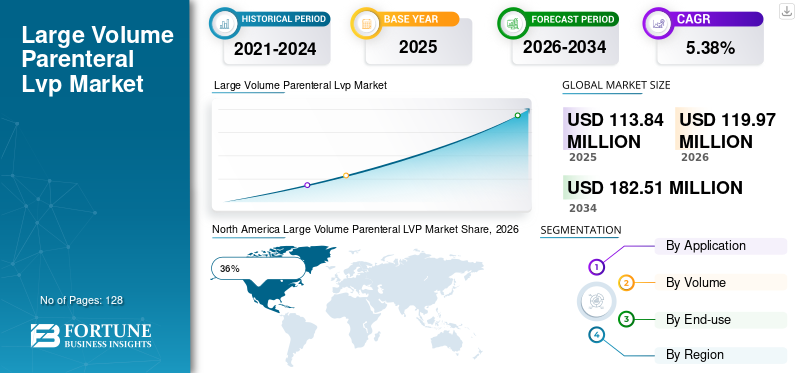
- North America: 36%
- Europe: 29%
- Asia-Pacific: 26%
- Rest of World: 9%
Country-Level Shares
- Germany:30% of Europe’s market
- United Kingdom: 22% of Europe’s market
- Japan: 19% of Asia-Pacific market
- China: 38% of Asia-Pacific market
Large Volume Parenteral (LVP) Market Latest Trends
The latest Large Volume Parenteral LVP Market Trends show a shift toward lightweight flexible containers, non-PVC materials, multilayer packaging, and improved container-closure systems. Flexible bags are increasingly attractive because they can reduce breakage concerns, simplify transportation, and support convenient administration. Manufacturers are also developing packaging configurations that improve compatibility with infusion equipment and help reduce interactions between formulations and packaging materials. FDA guidance recognizes flexible bags, glass bottles, and other container systems as potential LVP packaging formats and emphasizes assessment of packaging-product interactions.
Download Free sample to learn more about this report.
Automation is another important trend shaping the Large Volume Parenteral LVP Market Growth. Blow-Fill-Seal technology integrates container forming, filling, and sealing into a controlled manufacturing process and is increasingly used for sterile liquid products. Aseptic processing, automated inspection, digital monitoring, process analytical technologies, and improved environmental controls are helping manufacturers strengthen production consistency. The industry is also paying greater attention to sustainability, including lower-material packaging, efficient manufacturing, and reduced transportation weight. Customized parenteral nutrition, multi-chamber bags, and ready-to-use infusion products are creating additional product differentiation.
Large Volume Parenteral LVP Market Dynamics
DRIVER
Increasing demand for intravenous fluid therapy and hospital-based care
The primary driver of the Large Volume Parenteral LVP Market is the continuing requirement for intravenous fluid therapy across hospitals, emergency departments, surgical facilities, intensive-care units, and other clinical environments. LVP solutions are fundamental to hydration, electrolyte replacement, fluid maintenance, medication dilution, and nutritional support. Patients who cannot receive adequate fluids or nutrients orally or enterally may require intravenous administration, creating recurring institutional demand for standardized sterile products.
Hospital procurement departments typically require dependable supplies of frequently used solutions, making LVP products an important component of pharmaceutical inventory planning. The demand base extends across developed healthcare systems as well as emerging markets where hospital capacity and access to modern medical treatment are expanding. Increasing surgical activity, emergency treatment, chronic disease management, and supportive care contribute to recurring consumption.
Another driver is the growing preference for ready-to-administer products. Healthcare facilities can reduce preparation requirements when standardized solutions are supplied in appropriate containers. This can support pharmacy workflow, reduce unnecessary handling, and improve operational efficiency. As hospitals increasingly focus on medication safety and supply continuity, manufacturers with broad product portfolios and strong sterile manufacturing capabilities are positioned to benefit from Large Volume Parenteral LVP Market Opportunities.
RESTRAINT
Manufacturing complexity, pricing pressure, and stringent quality requirements
The Large Volume Parenteral LVP Market faces significant restraints because sterile injectable manufacturing requires highly controlled facilities, validated processes, specialized personnel, pharmaceutical-grade utilities, and rigorous quality testing. Any contamination event can have serious consequences, requiring manufacturers to maintain strict environmental controls and comprehensive quality systems. Packaging materials must also be evaluated for compatibility, extractables, leachables, adsorption, absorption, and other potential interactions with the drug product.
Pricing pressure is another important restraint. Many LVP products are standardized hospital products purchased through competitive procurement processes. Buyers often prioritize dependable supply while simultaneously negotiating aggressively on product costs. Manufacturers therefore need to balance high-volume production with investments in automation, quality systems, packaging development, utilities, and distribution.
Supply-chain disruptions can further affect the availability of specialized packaging materials, pharmaceutical-grade components, and production equipment. Glass remains important for selected applications but can introduce additional weight and breakage considerations. Flexible polymer packaging reduces some operational issues but introduces its own material compatibility and sustainability requirements. These factors increase the technical and financial barriers to entry and make scale, manufacturing expertise, and regulatory capability important competitive advantages.
OPPORTUNITIES
Expansion of home infusion, specialized nutrition, and advanced packaging
The Large Volume Parenteral LVP Market Opportunities are expanding beyond conventional hospital use. Home-care and alternate-site infusion programs are creating demand for products that are lightweight, easy to handle, stable during transportation, and compatible with infusion pumps. As more therapies move toward outpatient settings, LVP manufacturers can develop packaging and delivery formats suited to non-hospital environments.
Parenteral nutrition provides another opportunity. Healthcare providers increasingly require nutritional formulations that can address different patient needs, including specialized combinations of amino acids, glucose, lipids, electrolytes, vitamins, and trace elements. Multi-chamber bags can keep components separated during storage and permit mixing immediately before administration, providing a practical approach to complex nutritional therapy.
Packaging innovation also offers opportunities for manufacturers. PVC-free and DEHP-free containers, multilayer polymer structures, larger flexible bags, and improved ports can address safety, handling, and sustainability requirements. Digital manufacturing systems provide another opportunity by improving batch monitoring, traceability, predictive maintenance, and quality documentation. Companies that combine formulation expertise with advanced packaging and automation can strengthen their Large Volume Parenteral LVP Market Position.
CHALLENGE
Maintaining consistent sterile production and uninterrupted supply
A major Large Volume Parenteral LVP Industry challenge is maintaining consistent production while meeting stringent sterile pharmaceutical requirements. LVP products are manufactured at large scale, so a problem affecting a production line can influence substantial volumes of healthcare products. Manufacturers must manage contamination controls, sterilization validation, environmental monitoring, container integrity, filling accuracy, and finished-product testing throughout the production cycle.
Supply continuity is equally important because hospitals cannot easily substitute essential intravenous fluids when inventories become constrained. Large manufacturers are therefore investing in manufacturing redundancy, regional production, inventory management, distribution capabilities, and supply-chain monitoring. Baxter, for example, highlights manufacturing diversification and supply-chain investments intended to improve continuity for IV solutions.
The challenge becomes more complex when companies operate internationally. Different regulatory requirements, transportation conditions, packaging specifications, and healthcare procurement practices must be addressed simultaneously. Manufacturers must also introduce new technologies without compromising validated processes. Balancing production efficiency, product quality, regulatory compliance, sustainability, and supply reliability remains a central challenge in the Large Volume Parenteral LVP Market Forecast.
Large Volume Parenteral LVP Market Segmentation
By Volume
The 100–250 mL segment serves clinical applications requiring comparatively smaller LVP presentations, including selected medication administration, fluid therapy, dilution, and supportive infusion applications. In this Large Volume Parenteral LVP Market Analysis, the segment represents an estimated 18% share. Its importance comes from the need for convenient volumes that can be administered within shorter clinical workflows without requiring the storage and handling associated with larger containers. Manufacturers focus on container integrity, port design, compatibility with infusion sets, labeling, and efficient sterilization. Flexible bags and plastic containers are particularly useful where handling convenience is important. The segment can also benefit from growing outpatient infusion activity because smaller containers can be easier to transport and manage outside conventional hospital environments. Product differentiation increasingly centers on non-PVC materials, ready-to-administer configurations, and compatibility with automated medication-management systems.
The 250–500 mL segment is widely used for infusion therapy, medication dilution, fluid management, and clinical treatments requiring moderate fluid volumes. It represents an estimated 25% share of the Large Volume Parenteral LVP Market. The segment benefits from broad applicability across hospitals, clinics, ambulatory facilities, and specialty treatment centers. This volume range provides a balance between sufficient treatment capacity and practical storage and handling. Flexible bags are increasingly favored where breakage resistance and lightweight logistics are priorities. Manufacturers are also developing improved closure systems, standardized ports, and ready-to-use presentations. For B2B purchasers, reliability, packaging compatibility, product availability, and ease of integration with infusion equipment are major procurement considerations. The segment remains attractive because it serves a broad group of routine and specialized infusion requirements.
The 500–1,000 mL segment is the leading volume category in the Large Volume Parenteral LVP Market, accounting for an estimated 39% share. The strong position of this segment is associated with widespread use of standard intravenous fluid therapy, electrolyte replacement, hydration, maintenance therapy, and drug administration. Market assessments identify 500–1,000 mL as the dominant LVP volume range. Hospitals require these formats across emergency care, surgery, intensive care, inpatient treatment, and general medical wards. Flexible bags are particularly important because they provide convenient storage, transportation, and administration. Manufacturers are investing in high-throughput lines capable of producing standardized products at scale while maintaining strict sterility controls. Demand for 500 mL and 1,000 mL presentations also supports manufacturing efficiencies because these formats can be standardized across multiple markets. This segment is expected to remain central to procurement strategies and overall Large Volume Parenteral LVP Market Growth.
The More segment includes containers exceeding 1,000 mL and specialized larger-format presentations used primarily for nutritional support, specialized infusion, irrigation, and other selected applications. It represents an estimated 18% share of the Large Volume Parenteral LVP Market. Larger containers can reduce the frequency of bag replacement for suitable clinical applications and support specific nutrition and fluid-management protocols. The segment requires careful attention to container strength, storage, transportation, administration equipment, and product stability. Multi-chamber technologies are particularly relevant to parenteral nutrition because different components can remain separated until administration. Some manufacturers also provide large-volume containers for specialized clinical applications. As home-care infusion and complex nutrition programs develop, demand for larger formats may create opportunities for specialized flexible packaging and pump-compatible products.
To know how our report can help streamline your business, Speak to Analyst
By Application
Therapeutic applications represent the largest application category in the Large Volume Parenteral LVP Market, accounting for an estimated 45% share. These products support medication administration and clinical treatment programs where intravenous delivery is required. Therapeutic LVP solutions can serve as diluents, carriers, or infusion vehicles for medicines used across hospital departments. Demand is supported by surgery, emergency medicine, oncology-related treatment, infection management, and other clinical areas requiring controlled intravenous administration. Ready-to-administer presentations can reduce preparation steps and support standardized hospital workflows. Buyers increasingly evaluate therapeutic LVP products according to sterility assurance, formulation stability, container compatibility, labeling clarity, and availability. Product development is increasingly connected to patient safety and operational efficiency. Manufacturers are developing packaging that improves handling and reduces the potential for leakage, breakage, or unnecessary manipulation. The Large Volume Parenteral LVP Market Research Report therefore considers therapeutic applications a core segment for manufacturers with broad sterile product portfolios.
Fluid-balance applications account for an estimated 34% share of the Large Volume Parenteral LVP Market and include solutions used for hydration, electrolyte replacement, maintenance therapy, and management of fluid requirements. These products are essential in hospitals because changes in fluid and electrolyte status can occur during surgery, acute illness, dehydration, trauma, and other medical conditions. Standardized sodium chloride, dextrose-containing solutions, balanced electrolyte solutions, and other formulations are used according to clinical requirements. Product selection can depend on electrolyte composition, tonicity, patient condition, treatment setting, and physician or institutional protocols. Manufacturers therefore compete through product breadth, packaging choices, reliability, and supply continuity. Flexible containers are increasingly important in fluid-balance applications because hospitals handle large numbers of units and value lightweight, durable packaging. The Large Volume Parenteral LVP Market Outlook for this category is also influenced by improvements in fluid-management practices and healthcare providers' focus on appropriate fluid selection.
Nutritious and parenteral nutrition applications account for an estimated 21% share and represent one of the more specialized areas of the Large Volume Parenteral LVP Market. Parenteral nutrition products provide nutrients intravenously for patients who cannot obtain adequate nutrition through the gastrointestinal tract. Formulations may contain carbohydrates, amino acids, lipids, electrolytes, vitamins, and trace elements. The segment encourages product innovation because nutritional requirements can vary considerably between patients. Multi-chamber containers provide a practical manufacturing and administration approach by separating incompatible components until use. Manufacturers are also improving container materials, filling technologies, and stability management to support increasingly complex formulations. Demand from hospitals remains important, while home parenteral nutrition creates additional opportunities. Suppliers serving this segment need expertise in formulation development, sterile manufacturing, packaging compatibility, stability studies, and regulatory compliance. These characteristics create higher technical barriers and provide opportunities for manufacturers offering specialized LVP solutions.
By Packaging
Glass bottles remain an established packaging format within the Large Volume Parenteral LVP Market, particularly for intravenous solutions that require proven container performance, chemical stability, and strong resistance to interaction with the formulation. Glass provides a well-established barrier against gases and moisture and has a long history of use in sterile pharmaceutical packaging. Hospitals and pharmaceutical manufacturers continue to use glass presentations for selected intravenous fluids, nutritional formulations, and specialty parenteral products where the characteristics of glass are advantageous. The Large Volume Parenteral LVP Market Analysis indicates that glass bottles are particularly relevant in healthcare systems with established sterile-product procurement practices. Their transparent structure can provide visibility of the solution, supporting visual inspection before administration. Glass can also tolerate sterilization processes and is available in standardized container configurations. However, its greater weight and potential for breakage compared with flexible polymer containers can increase transportation and handling requirements.
From a B2B procurement perspective, glass packaging remains attractive when product stability, established manufacturing processes, and compatibility with existing hospital procedures are priorities. Manufacturers continue to improve bottle design, closure systems, labeling, and secondary packaging to address handling requirements. In this Large Volume Parenteral LVP Market Report, glass bottles account for an estimated 34% of packaging demand.
Flexible bags are increasingly important in the Large Volume Parenteral LVP Market because they provide lightweight handling, reduced breakage risk, compact storage, and convenient administration. Flexible containers are commonly manufactured from polymer-based materials and can be designed with different layers to provide suitable mechanical strength and product compatibility. Their ability to collapse as fluid is administered can also reduce the need for external air replacement in appropriate infusion systems. The demand for flexible bags is supported by hospitals seeking efficient storage and transportation of high-volume IV products. A facility managing thousands of infusion units can benefit from packaging that occupies less space and is easier for clinical personnel to handle. Flexible bags are also important in parenteral nutrition, electrolyte solutions, hydration products, and other large-volume formulations.
Innovation is increasingly focused on PVC-free and DEHP-free materials, multilayer structures, improved ports, enhanced seals, and compatibility with infusion equipment. Flexible bags also provide opportunities for multi-chamber configurations, particularly in nutritional applications where components can be separated before administration. For manufacturers, automated bag production and high-speed filling can support large-scale production. The Large Volume Parenteral LVP Market Outlook therefore favors flexible packaging as healthcare providers increasingly emphasize convenience, safety, sustainability, and efficient logistics.
By Manufacturing Technology
Aseptic fill-finish is a critical manufacturing technology in the Large Volume Parenteral LVP Market because sterile products must be filled and sealed under tightly controlled conditions. The process involves sterilized components, controlled environments, validated procedures, trained personnel, and extensive quality monitoring. Maintaining sterility throughout filling and closing is essential because LVP products are administered directly into the body through intravenous routes. Aseptic manufacturing requires sophisticated cleanroom infrastructure, environmental monitoring, automated filling equipment, container-closure controls, and inspection systems. Pharmaceutical manufacturers invest heavily in process validation because even small deviations can affect product quality and production continuity. Modern facilities increasingly use automation to reduce manual interventions and improve process consistency.
Manufacturers are also integrating digital manufacturing systems into aseptic operations. Real-time process monitoring, electronic batch documentation, automated inspection, and improved environmental controls can strengthen production visibility. These capabilities are increasingly relevant to B2B customers seeking dependable suppliers with strong quality systems and scalable manufacturing capacity. Aseptic fill-finish represents an estimated 58% share of manufacturing technology demand in this market assessment.
Blow-Fill-Seal technology is gaining importance because it combines container formation, filling, and sealing within an integrated automated process. In an LVP manufacturing environment, polymer resin can be formed into a container, filled with the pharmaceutical solution, and sealed within a controlled production sequence. This approach can reduce the number of handling stages and supports high-throughput sterile manufacturing. BFS is particularly relevant to plastic containers and selected flexible or semi-rigid presentations. The technology can improve manufacturing efficiency while reducing opportunities for external contamination associated with multiple handling stages. It also provides manufacturers with flexibility in container design, allowing packaging to be developed around particular formulation volumes and administration requirements.
BFS is also supporting product-development opportunities in lightweight plastic containers and customized sterile packaging. As pharmaceutical companies focus on production efficiency and supply reliability, manufacturers with established BFS expertise can strengthen their competitive position. BFS represents an estimated 42% share of manufacturing technology demand in this assessment.
By End User
Hospitals represent the primary end-user segment of the Large Volume Parenteral LVP Market because they consume substantial quantities of intravenous fluids across emergency departments, operating rooms, intensive-care units, medical wards, oncology departments, and other clinical environments. LVP products are routinely used for hydration, electrolyte replacement, medication administration, fluid management, and nutritional support. Hospital demand is strongly influenced by patient volumes, surgical procedures, emergency treatment, critical care requirements, and availability of intravenous therapies. Procurement teams generally prioritize product availability, consistent quality, packaging safety, compatibility with infusion equipment, and reliable delivery. Large hospital networks may also negotiate centralized purchasing agreements to standardize products across multiple facilities. Hospitals are also becoming more interested in packaging innovations that can simplify clinical handling. Flexible bags, improved ports, clear labeling, and ready-to-administer formulations can support workflow efficiency. The increasing adoption of electronic inventory management can further improve forecasting and procurement. Hospitals account for an estimated 76% share of LVP end-user demand.
Home-care is an emerging end-user segment for the Large Volume Parenteral LVP Market as selected infusion therapies increasingly move outside traditional hospital environments. Home infusion can support patients requiring extended treatment while reducing the need for prolonged hospital stays. LVP products used in these settings must be convenient to transport, store, connect, and administer under appropriate clinical supervision. The Large Volume Parenteral LVP Market Opportunities in home-care extend beyond traditional fluid therapy. Specialized nutrition, long-term infusion treatment, and supportive therapies can generate demand for products designed specifically for alternate-site administration. Although smaller than hospital demand, home-care is strategically important because healthcare systems continue to explore outpatient treatment models.
The "More" end-user category includes ambulatory surgery centers, specialty clinics, outpatient infusion centers, pharmacies, long-term care facilities, and other healthcare environments. These users collectively create additional demand for LVP products outside traditional acute-care hospitals. Their requirements can differ from those of large hospitals because they may operate with smaller inventories, fewer storage facilities, and more specialized treatment workflows. Ambulatory facilities can require IV fluids for surgical procedures and recovery, while outpatient infusion centers may use LVP products for scheduled therapies. Long-term care facilities can require selected hydration and nutritional products according to clinical needs. Pharmacies may participate in compounding, dispensing, or distribution activities involving parenteral products.
B2B buyers in this segment increasingly evaluate products based on handling efficiency and supply reliability. Manufacturers capable of serving hospitals and smaller healthcare facilities through diversified distribution networks can gain advantages as healthcare delivery becomes more decentralized.
Large Volume Parenteral LVP Market Regional Outlook
North America
North America Large Volume Parenteral LVP Market Share, 2025 (%)
To get more information on the regional analysis of this market, Download Free sample
North America represents an estimated 36% share of the global Large Volume Parenteral LVP Market. The region benefits from advanced hospital infrastructure, established sterile pharmaceutical manufacturing, strong demand for intravenous therapies, and sophisticated healthcare procurement systems. The United States is the principal market, supported by extensive use of standard IV fluids, nutrition products, emergency therapies, and infusion-based treatment. Supply security has become a strategic purchasing consideration following disruptions affecting critical injectable products. Manufacturers are therefore emphasizing domestic capacity, diversified production, inventory planning, and logistics resilience. Baxter identifies multiple North American manufacturing sites and ongoing investment in IV-solution supply infrastructure. Flexible containers, PVC-free materials, ready-to-administer products, and automated manufacturing are increasingly relevant. Canada and Mexico provide additional regional demand through hospitals, clinics, surgical facilities, and expanding healthcare infrastructure. The North American Large Volume Parenteral LVP Market Outlook is strongly associated with product reliability, manufacturing resilience, packaging innovation, and adoption of advanced infusion technologies.
Europe
Europe accounts for an estimated 29% share of the global Large Volume Parenteral LVP Market and has a well-developed ecosystem of sterile pharmaceutical manufacturers, hospitals, contract manufacturers, packaging suppliers, and infusion technology providers. Germany, the United Kingdom, France, Italy, and other European countries maintain established demand for standard infusion solutions, nutritional products, and specialty sterile formulations. Sustainability is increasingly relevant as healthcare providers examine packaging materials, production efficiency, waste reduction, and transportation requirements. European manufacturers operate glass, polymer, flexible-bag, aseptic, and terminal-sterilization capabilities. Fresenius Kabi facilities demonstrate the diversity of available technologies, including flexible bags, glass bottles, BFS containers, and large-volume formats. The European market also benefits from cross-border pharmaceutical supply networks, although manufacturers must maintain compliance with applicable regulatory and quality requirements. Demand for non-PVC containers, multi-chamber bags, automated production, and specialized nutrition products is creating new Large Volume Parenteral LVP Market Opportunities.
Germany Large Volume Parenteral LVP Market
Germany represents an estimated 30% share of the European Large Volume Parenteral LVP Market. The country has a strong pharmaceutical manufacturing base, advanced hospital infrastructure, and significant expertise in sterile production and medical technology. German healthcare providers require dependable supplies of infusion solutions for inpatient care, surgery, emergency treatment, and specialized therapies. Manufacturers operating in Germany increasingly combine traditional filling with advanced polymer and BFS technologies. Fresenius Kabi's Friedberg operation, for example, includes flexible bags, glass-bottle filling, large-volume containers, and BFS production for selected sterile products. Germany's industrial capabilities also support investment in automated inspection, process controls, cleanroom systems, and production optimization. Sustainability is becoming a more important consideration in packaging decisions, particularly where lightweight polymer containers can reduce handling and logistics burdens. The Germany Large Volume Parenteral LVP Market is therefore positioned around high-quality manufacturing, technology adoption, supply reliability, and specialized infusion products.
United Kingdom Large Volume Parenteral LVP Market
The United Kingdom accounts for an estimated 22% share of Europe's Large Volume Parenteral LVP Market. Demand is supported by hospitals, outpatient treatment, emergency medicine, surgical procedures, and home-care services. Procurement organizations place considerable importance on continuity of supply because IV fluids are essential healthcare products. This encourages suppliers to maintain robust inventory strategies and dependable distribution networks. Flexible bags are increasingly relevant because they can simplify handling and reduce breakage risks compared with heavier glass presentations. The UK market also provides opportunities for ready-to-administer products and specialized nutritional formulations. Digital inventory management and automated healthcare workflows can further improve procurement and utilization planning. Manufacturers targeting the United Kingdom must address pharmaceutical quality requirements, product labeling, distribution reliability, and institutional procurement expectations. The United Kingdom Large Volume Parenteral LVP Market Outlook therefore includes opportunities in flexible packaging, specialized infusion products, home-care applications, and supply-chain optimization.
Asia-Pacific
Asia-Pacific represents an estimated 26% share of the global Large Volume Parenteral LVP Market and offers significant opportunities due to expanding healthcare infrastructure, large patient populations, pharmaceutical manufacturing capabilities, and increasing access to infusion therapies. China, Japan, India, South Korea, Australia, and Southeast Asian markets contribute to regional demand. Local manufacturers are expanding sterile production and improving packaging and filling technologies, while multinational companies continue to strengthen regional supply networks. India is an important manufacturing location for parenteral products, while China has significant large-volume injection production capabilities. The region's combination of mature markets and developing healthcare systems creates demand for both standardized low-cost solutions and specialized products. Flexible bags, plastic bottles, BFS manufacturing, and parenteral nutrition are gaining attention. B2B opportunities are particularly strong in hospital supply contracts, contract manufacturing, sterile facility upgrades, and regional export production. The Asia-Pacific Large Volume Parenteral LVP Market Growth outlook is supported by healthcare expansion and manufacturing localization.
Japan Large Volume Parenteral LVP Market
Japan accounts for an estimated 19% share of the Asia-Pacific Large Volume Parenteral LVP Market. The market benefits from advanced healthcare infrastructure, a sophisticated pharmaceutical industry, and significant demand for infusion solutions in hospitals and long-term care settings. An aging population increases the importance of supportive medical treatment, hydration, nutrition, and hospital-based therapies. Japanese manufacturers have longstanding expertise in intravenous solutions and parenteral nutrition, creating a competitive environment focused on quality and reliability. Otsuka Pharmaceutical Factory is an established participant in IV solutions and nutrition-related products. Japanese healthcare organizations increasingly value efficient packaging, precise manufacturing, and products that support safe administration. The Japan Large Volume Parenteral LVP Market also offers opportunities for specialized nutrition formulations and packaging technologies that simplify handling. Suppliers must maintain rigorous quality standards while adapting products to changing clinical workflows and healthcare delivery models.
China Large Volume Parenteral LVP Market
China represents an estimated 38% share of the Asia-Pacific Large Volume Parenteral LVP Market. The country's large healthcare system, extensive pharmaceutical manufacturing base, and demand for intravenous therapies make it a central regional market. Domestic manufacturers produce substantial quantities of large-volume injections and infusion products, while investments in production technology are improving efficiency and quality. China also provides opportunities for export-oriented manufacturing because companies can leverage large production facilities and established pharmaceutical supply chains. Hospitals remain major users of standard fluid products, while nutritional formulations, specialty therapies, and modern flexible packaging add further opportunities. The China Large Volume Parenteral LVP Market is increasingly influenced by automation, quality modernization, packaging improvements, and manufacturing localization. Competition is expected to remain strong among domestic and international suppliers, encouraging manufacturers to differentiate through product reliability, technology, formulation capability, and distribution reach.
Rest of World
Rest of World represents an estimated 9% share of the global Large Volume Parenteral LVP Market and includes Latin America, the Middle East, and Africa. Demand varies significantly between countries, reflecting differences in healthcare infrastructure, pharmaceutical manufacturing, hospital capacity, import dependence, and procurement systems. Latin American markets offer opportunities through expanding hospital networks, pharmaceutical manufacturing, and demand for essential intravenous therapies. Brazil is an important regional manufacturing and consumption center, while Mexico supports production and distribution links across the Americas. The Middle East is supported by healthcare infrastructure investments, specialized hospitals, and increasing interest in modern pharmaceutical technologies. African markets provide longer-term opportunities as access to healthcare expands and pharmaceutical manufacturing capabilities develop. Supply-chain reliability remains a key consideration because some countries depend substantially on imports. Manufacturers that establish regional partnerships, local production capabilities, reliable distribution, and regulatory expertise can strengthen their position. The Rest of World Large Volume Parenteral LVP Market Outlook therefore centers on healthcare expansion, localization, essential medicine availability, and improved sterile manufacturing infrastructure.
List of Top Large Volume Parenteral LVP Companies
- Pfizer, Inc.
- B. Braun SE
- Otsuka Pharmaceutical Co.
- Fresenius Kabi AG
- Baxter International Inc.
Top two companies by estimated market share
- 17% — Baxter International Inc.
- 13% — B. Braun SE
Investment Analysis and Opportunities
Investment activity in the Large Volume Parenteral LVP Market is increasingly concentrated on sterile manufacturing capacity, packaging modernization, automation, and supply-chain resilience. Investors and pharmaceutical manufacturers are assessing opportunities to expand regional production because hospitals require dependable supplies of essential IV products. Modernization of filling lines, cleanroom infrastructure, sterilization systems, inspection equipment, and pharmaceutical-grade utilities can improve production reliability while supporting larger product portfolios.
Flexible packaging and non-PVC technologies represent another attractive investment area. Manufacturers can differentiate through lightweight containers, improved ports, multi-chamber systems, and packaging designed around specific clinical workflows. Specialized parenteral nutrition provides opportunities for higher-value product development because formulation complexity creates technical barriers and requires specialized manufacturing capabilities.
Contract manufacturing is also becoming relevant for pharmaceutical companies that require sterile filling without building every production capability internally. Fresenius Kabi, for example, provides sterile filling and manufacturing capabilities across multiple facilities and container formats. The Large Volume Parenteral LVP Market Opportunities therefore extend across manufacturing expansion, technology upgrades, packaging innovation, specialized formulations, and regional supply-chain development.
New Product Development
New product development in the Large Volume Parenteral LVP Market is focused on improving safety, convenience, formulation flexibility, and manufacturing efficiency. Flexible bags made from advanced polymer structures are being developed as alternatives to conventional glass presentations where appropriate. PVC-free and DEHP-free packaging is gaining attention, while improved ports and multilayer materials can support compatibility and administration requirements.
Multi-chamber bags represent an important innovation for parenteral nutrition because separate components can remain isolated during storage and be mixed before use. BFS technology is another major development area because it combines container manufacturing and filling within an integrated process. Manufacturers are also introducing automated visual inspection, digital batch records, improved environmental monitoring, and process controls.
Product developers are increasingly considering the complete patient and hospital workflow rather than only the formulation. This includes easier storage, reduced handling, compatibility with infusion devices, clear labeling, and efficient disposal. Sustainability is also entering product-development programs through material optimization and lower-weight containers. The Large Volume Parenteral LVP Market Research Report therefore identifies packaging, automation, nutrition, and sterile-process innovation as important areas for new product development.
Five Recent Developments (2023-2025)
- 2023 – B. Braun: Continued development of infusion and packaging solutions emphasizing safe administration, material performance, and sustainability within its IV therapy portfolio.
- 2024 – Baxter: Continued investment in IV-solution manufacturing and distribution infrastructure, including measures designed to strengthen supply resilience and manufacturing capacity in North America.
- 2024 – Fresenius Kabi: Continued modernization and technology development across sterile manufacturing operations, including BFS, flexible-bag production, glass-bottle filling, and specialized parenteral nutrition capabilities.
- 2024 – Otsuka Pharmaceutical: Continued expansion and development of intravenous solution and parenteral nutrition capabilities, supporting its role in the global infusion-products ecosystem.
- 2025 – B. Braun: Introduced Tromethamine Injection in a 500 mL flexible EXCEL IV Container in the United States, providing a flexible-container presentation designed as an alternative to conventional glass packaging.
Report Coverage of Large Volume Parenteral LVP Market
The Large Volume Parenteral LVP Market Report covers product volume, application, packaging, manufacturing technology, end-user environment, geography, competitive positioning, investment activity, and product development. The Large Volume Parenteral LVP Market Research Report evaluates four major volume categories: 100–250 mL, 250–500 mL, 500–1,000 mL, and larger formats. It examines therapeutic, fluid-balance, and nutritious or parenteral-nutrition applications, along with glass bottles and flexible bags.
The Large Volume Parenteral LVP Industry Report also considers aseptic fill-finish and Blow-Fill-Seal manufacturing, hospitals, home-care and alternate-site infusion, ambulatory settings, and regional demand. Geographic coverage includes North America, Europe, Asia-Pacific, Middle East and Africa, South America, Germany, the United Kingdom, Japan, and China.
Request for Customization to gain extensive market insights.
The Large Volume Parenteral LVP Industry Analysis emphasizes major B2B purchasing factors such as sterile manufacturing capacity, packaging compatibility, product availability, quality systems, regulatory compliance, supply-chain resilience, automation, and product differentiation. The Large Volume Parenteral LVP Market Insights also assess how healthcare delivery is shifting toward outpatient and home-based treatment, creating demand for convenient and reliable infusion products. The Large Volume Parenteral LVP Market Forecast framework incorporates emerging opportunities in flexible packaging, specialized nutrition, automated production, and regional manufacturing.
Frequently Asked Questions
Fortune Business Insights says that the global market value stood at USD 9.02 billion in 2025 and is projected to reach USD 13.63 billion by 2034.
The market is expected to exhibit a CAGR of 4.7% during the forecast period of 2026-2034.
Therapeutic injections was the leading application segment, accounting for approximately 45% of the market, driven by extensive use in drug administration, infection management, chemotherapy support, and critical care.
Key players include B. Braun SE, Fresenius Kabi AG, Baxter, Otsuka Pharmaceutical Co., Ltd., Sichuan Kelun, and Albert David Ltd.
Major trends include the adoption of advanced flexible and non-PVC packaging technologies and rising demand for customized nutritional and therapeutic infusion solutions. North America led the market with approximately 36% share, while Asia-Pacific accounted for 26%.



- 2021-2034
- 2025
- 2021-2024
- 128
-

(Offer valid till 30th Sep 2026)
Get 30-60 hrs Free Customization
Expand Regional and Country Coverage, Segments Analysis, Company Profiles, Competitive Benchmarking, and End-user Insights.













.webp)






-
US +1 833 909 2966 ( Toll Free )
-
Get In Touch With Us