Maritime Safety System Market Size, Share & Industry Analysis, By System (Automatic Identification Systems, Navigation & Surveillance Systems), By Component (Hardware, Software) and Regional Forecast, 2026-2034
 Download Free Sample
Maritime Safety System Market Overview
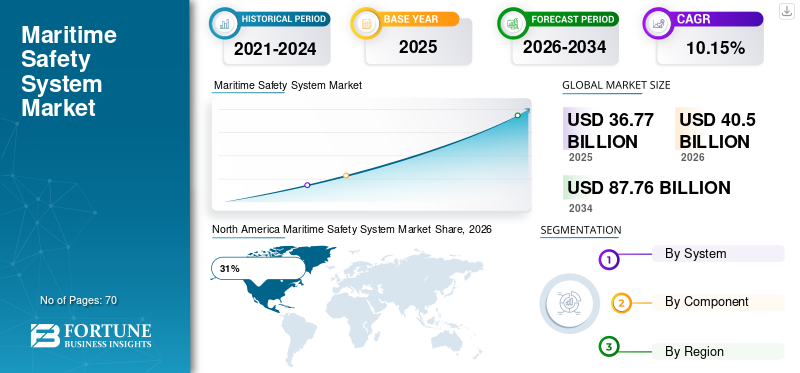
The global maritime safety system market size was valued at USD 36.77 billion in 2025. The market is projected to grow from USD 40.50 billion in 2026 to USD 87.76 billion by 2034, exhibiting a CAGR of 10.15% during the forecast period.

The maritime safety system market is witnessing strong global demand due to increasing maritime trade activities, rising naval modernization programs, and growing concerns regarding vessel security and operational safety. Maritime safety systems are widely utilized across commercial shipping fleets, naval vessels, offshore platforms, and port authorities to improve navigation accuracy, collision avoidance, surveillance, and emergency response capabilities. maritime safety system market analysis indicates rising adoption of digital navigation technologies, integrated bridge systems, and satellite communication platforms continues supporting industry expansion worldwide.
The United States maritime safety system market remains one of the leading regional markets because of strong naval defense infrastructure, advanced maritime transportation systems, and increasing investments in coastal surveillance technologies. Commercial shipping companies, port operators, and naval agencies across the country increasingly deploy advanced maritime safety systems to improve operational efficiency and maritime security. Maritime Safety System Industry Report findings indicate rising demand for automatic identification systems, radar surveillance platforms, and integrated navigation technologies throughout the U.S. maritime sector. Government initiatives supporting maritime border security, offshore energy infrastructure protection, and digital vessel management continue accelerating market expansion.
Download Free sample to learn more about this report.
maritime safety system market Key Takeaways
 Global Market Size & Forecast
- 2025 Market Size: USD 36.77 Billion
- 2026 Market Size: USD 40.50 Billion
- 2034 Forecast Market Size: USD 87.76 Billion
- CAGR: 10.15% from 2026-2034
 Market Share
- The market in Asia-Pacific dominated with a regional share of 33% in 2025.
- Navigation and surveillance systems held approximately 54% share of the market.
- Hardware accounted for approximately 63% share of the market.
 Key Regional Highlights
Asia-Pacific
Asia-Pacific led the market with a 33% regional share, supported by maritime trade and fleet modernization.
North America
North America accounted for 31% of the market, driven by maritime security and advanced navigation technologies.
Europe
Europe held 29% share, supported by stringent maritime safety regulations and fleet upgrades.
U.S.
The U.S. remains a major market, supported by investments in maritime security, surveillance, and naval modernization.
Japan
Japan accounted for 22% of the Asia-Pacific market, supported by advanced maritime infrastructure and shipping activities.
Read More

maritime safety system market Latest Trends
The maritime safety system market trends reveal increasing adoption of AI-enabled navigation systems, autonomous vessel technologies, and integrated maritime surveillance platforms. Maritime operators are increasingly investing in advanced digital bridge systems capable of improving navigation accuracy, vessel tracking, and collision prevention capabilities. maritime safety system market Research Report findings indicate strong demand for cloud-based fleet monitoring systems, satellite communication technologies, and predictive maintenance software within commercial and defense maritime operations.
Manufacturers are introducing AI-powered radar systems, automated distress communication platforms, and real-time weather monitoring technologies to improve maritime operational efficiency. maritime safety system market Outlook further highlights increasing adoption of Internet of Things-enabled maritime sensors and integrated command-and-control systems designed for vessel traffic management and offshore surveillance applications globally.
Download Free sample to learn more about this report.
maritime safety system market Dynamics
DRIVER
Rising Maritime Security Concerns and Naval Modernization Programs
The increasing need for maritime security and naval modernization remains one of the primary drivers supporting maritime safety system Market growth globally. Governments and commercial shipping companies are heavily investing in advanced navigation systems, surveillance platforms, and vessel monitoring technologies to improve operational safety and prevent maritime accidents. maritime safety system market analysis indicates rising geopolitical tensions, piracy threats, and offshore infrastructure protection requirements continue accelerating adoption of advanced maritime safety technologies. Expansion of international shipping routes and increasing maritime trade volumes are also significantly contributing to market demand. Naval agencies are increasingly deploying integrated bridge systems, automatic identification systems, and maritime communication technologies to strengthen coastal security and vessel tracking capabilities worldwide.
RESTRAINT
High Implementation and Maintenance Costs
One of the major restraints affecting the maritime safety system market is the high cost associated with installation, integration, and maintenance of advanced maritime safety technologies. Modern maritime safety systems require sophisticated hardware, software platforms, communication infrastructure, and continuous technical upgrades, significantly increasing operational expenditures for vessel operators and port authorities. Maritime Safety System Industry Report findings indicate smaller commercial shipping companies often face budget limitations preventing rapid adoption of high-end safety technologies. Regulatory compliance costs and complex integration requirements for legacy vessel systems further create operational challenges. In addition, cybersecurity concerns and technical training requirements may increase long-term ownership expenses across the maritime safety industry globally.
OPPORTUNITY
Expansion of Autonomous Shipping and Smart Port Infrastructure
The rapid expansion of autonomous shipping technologies and smart port development projects presents substantial opportunities for the maritime safety system market. Maritime operators increasingly seek intelligent navigation platforms, AI-based surveillance systems, and real-time vessel management solutions designed to improve operational efficiency and reduce human error. maritime safety system market Opportunities are also growing because of increasing investments in digital fleet management, autonomous maritime transportation, and offshore monitoring technologies. Governments worldwide are supporting smart maritime infrastructure initiatives focused on improving port efficiency, vessel safety, and environmental monitoring. Emerging economies with expanding maritime trade networks continue creating strong commercial opportunities for maritime safety technology providers globally.
CHALLENGE
Cybersecurity Threats and Complex Regulatory Compliance
The maritime safety system market faces significant challenges related to cybersecurity vulnerabilities and evolving international maritime safety regulations. Shipping companies and naval organizations increasingly rely on interconnected digital systems, making maritime infrastructure more vulnerable to cyberattacks and data breaches. maritime safety system market Forecast studies indicate maintaining secure communication networks and operational continuity remains a critical challenge for industry participants. Manufacturers must continuously update software platforms, encryption systems, and monitoring technologies to address evolving cybersecurity threats. Compliance with international maritime regulations and vessel certification standards also creates operational complexity. Additionally, integration of advanced technologies into older vessel fleets remains technically challenging and resource-intensive for maritime operators globally.
maritime safety system market Segmentation
By System
Automatic Identification Systems account for approximately 46% of the maritime safety system market share due to their critical role in vessel tracking, collision prevention, and maritime communication management. These systems enable ships and coastal authorities to exchange real-time navigation information including vessel location, speed, direction, and identification data. maritime safety system market Research Report findings indicate rising deployment of AIS technologies across commercial shipping fleets, fishing vessels, and naval operations to improve maritime situational awareness and traffic management efficiency. Governments are increasingly mandating AIS integration within commercial vessels to strengthen maritime security and operational transparency.
Navigation and surveillance systems contribute nearly 54% share of the maritime safety system market because maritime operators increasingly require advanced radar technologies, integrated bridge systems, sonar equipment, and coastal monitoring platforms for safe navigation and maritime security. maritime safety system market trends indicate rising adoption of AI-powered surveillance systems capable of detecting unauthorized vessels, environmental hazards, and navigation risks in real time. Naval modernization programs and offshore energy infrastructure protection activities continue supporting demand for high-performance maritime surveillance technologies. Manufacturers are increasingly integrating satellite communication, weather analytics, and predictive navigation software into maritime safety systems to improve operational efficiency.
To know how our report can help streamline your business, Speak to Analyst
By Component
Hardware applications account for approximately 63% of the maritime safety system market share because maritime safety operations heavily depend on physical infrastructure including radar systems, communication equipment, sonar devices, sensors, and navigation consoles. maritime safety system market analysis highlights increasing demand for integrated bridge systems, vessel traffic management hardware, and advanced maritime surveillance equipment across commercial and defense maritime sectors. Governments and shipping companies continue investing heavily in modern maritime communication networks and coastal security infrastructure. Hardware manufacturers are increasingly developing compact, energy-efficient, and AI-enabled navigation devices designed to improve maritime safety and operational reliability.
Software applications contribute nearly 37% share of the maritime safety system market due to increasing adoption of digital fleet management platforms, predictive analytics systems, and AI-based maritime monitoring technologies. maritime safety system market Outlook studies indicate strong demand for cloud-based navigation software, cybersecurity platforms, and vessel performance analytics tools designed to improve operational efficiency and reduce accident risks. Shipping companies increasingly utilize software solutions for route optimization, weather forecasting, maintenance scheduling, and regulatory compliance management.
maritime safety system market Regional Outlook
North America
North America holds approximately 31% share of the maritime safety system market and remains one of the most technologically advanced regions for maritime surveillance and navigation technologies. The United States dominates regional demand because of increasing investments in naval modernization, coastal security, and commercial shipping infrastructure. maritime safety system market analysis indicates strong adoption of integrated bridge systems, automatic identification systems, and radar surveillance platforms across naval and commercial maritime sectors. Canada also contributes significantly due to increasing maritime trade activities and Arctic surveillance investments. maritime safety system market trends reveal growing demand for AI-powered vessel monitoring systems, cybersecurity platforms, and autonomous maritime navigation technologies throughout the region. Governments are heavily investing in smart port infrastructure and advanced maritime communication systems designed to improve vessel traffic management and maritime border security. Expansion of offshore energy exploration and increasing focus on environmental monitoring continue strengthening demand for maritime safety technologies across North America.
Europe
Europe accounts for nearly 29% share of the maritime safety system market and remains a major hub for maritime technology innovation and regulatory-driven safety modernization. Strict European maritime safety regulations and increasing investments in smart port infrastructure continue supporting regional market expansion. maritime safety system market Research Report findings indicate strong demand for navigation radar systems, coastal surveillance platforms, and vessel traffic management technologies across major shipping nations including Germany, the United Kingdom, France, and Norway. maritime safety system market trends also highlight increasing adoption of autonomous vessel technologies, digital fleet management systems, and AI-enabled maritime analytics platforms throughout Europe. Governments and maritime agencies are heavily investing in environmental monitoring systems, offshore security technologies, and maritime cybersecurity infrastructure to strengthen operational safety and sustainability.
Germany maritime safety system market
Germany represents nearly 25% share of the Europe maritime safety system market due to its strong maritime engineering capabilities and advanced port infrastructure. The country remains a major center for commercial shipping operations, naval technologies, and maritime automation innovation. maritime safety system market analysis in Germany highlights increasing adoption of integrated bridge systems, radar surveillance platforms, and digital fleet management technologies across shipping and naval sectors. Government investments in smart ports and maritime cybersecurity initiatives continue accelerating market expansion. German maritime operators increasingly deploy AI-enabled navigation systems and vessel monitoring platforms designed to improve operational efficiency and maritime safety. Expansion of offshore renewable energy infrastructure further strengthens demand for advanced maritime safety systems throughout Germany.
United Kingdom maritime safety system market
The United Kingdom accounts for approximately 18% share of the Europe maritime safety system market because of increasing investments in naval modernization, port security, and maritime traffic management technologies. maritime safety system market trends indicate strong demand for coastal surveillance systems, integrated communication platforms, and autonomous vessel navigation solutions throughout the country. Government initiatives focused on maritime border protection and offshore infrastructure security continue supporting technology adoption. Commercial shipping operators and port authorities increasingly invest in cloud-based vessel management systems and AI-driven monitoring technologies. Expansion of smart maritime infrastructure and rising emphasis on environmental compliance further contribute to long-term Market growth across the United Kingdom maritime safety system industry.
Asia-Pacific
Asia Pacific Maritime Safety System Market Share, 2025 (%)
To get more information on the regional analysis of this market, Download Free sample
Asia-Pacific holds approximately 33% share of the maritime safety system market and remains the largest regional market due to expanding maritime trade activities, naval modernization programs, and rapid port infrastructure development. Countries such as China, Japan, India, and South Korea are witnessing strong demand for vessel monitoring systems, maritime communication technologies, and coastal surveillance platforms. maritime safety system market Insights reveal increasing investments in smart ports, autonomous shipping technologies, and maritime cybersecurity infrastructure throughout the region. Governments are increasingly implementing advanced vessel traffic management systems and integrated navigation platforms to improve shipping efficiency and maritime safety. maritime safety system market trends also indicate growing adoption of AI-based radar systems, satellite communication technologies, and cloud-integrated maritime analytics solutions across commercial and defense maritime sectors. Expansion of offshore energy exploration, naval fleet modernization, and regional maritime security initiatives further strengthen demand for advanced maritime safety systems throughout Asia-Pacific.
Japan maritime safety system market
Japan contributes nearly 22% share of the Asia-Pacific maritime safety system market due to its advanced maritime engineering sector and strong emphasis on vessel safety technologies. Japanese maritime operators increasingly adopt AI-powered navigation systems, integrated bridge technologies, and autonomous vessel platforms designed to improve operational efficiency and maritime security. maritime safety system market analysis indicates rising investments in smart port development, offshore monitoring systems, and maritime cybersecurity infrastructure across the country. Government support for digital shipping technologies and advanced maritime communication systems continues strengthening Market growth. Expansion of autonomous shipping research projects and environmental monitoring initiatives further supports demand for innovative maritime safety solutions within Japan.
China maritime safety system market
China represents approximately 44% share of the Asia-Pacific maritime safety system market due to rapid maritime trade expansion, large-scale port development, and increasing naval modernization activities. maritime safety system market Forecast studies indicate strong demand for vessel tracking systems, coastal surveillance technologies, and integrated maritime communication platforms throughout the country. Government investments in smart ports, autonomous shipping technologies, and maritime security infrastructure continue accelerating market expansion. Commercial shipping operators increasingly deploy AI-enabled navigation systems and cloud-based fleet management solutions to improve operational efficiency and regulatory compliance. Expansion of offshore energy projects and increasing maritime transportation activities further strengthen China’s dominant position within the global maritime safety system industry.
Rest of World
The Rest of World region accounts for nearly 7% share of the maritime safety system market and includes expanding maritime industries across Latin America, the Middle East, and Africa. Increasing maritime trade activities, offshore energy exploration, and coastal security initiatives are supporting market expansion throughout these regions. maritime safety system market analysis indicates rising adoption of vessel tracking systems, navigation radar platforms, and maritime communication technologies among commercial shipping operators and naval agencies. Latin American countries are increasingly investing in port modernization and maritime traffic management infrastructure to improve shipping efficiency and regional trade operations. The Middle East continues experiencing strong demand for maritime surveillance systems and offshore security technologies due to expanding oil and gas transportation activities. African markets are gradually increasing adoption of advanced maritime safety systems because of growing port development and coastal monitoring requirements. maritime safety system market trends also reveal increasing collaboration between international maritime technology providers and regional governments to strengthen maritime infrastructure and vessel safety capabilities.
List of Top Maritime Safety System Companies
- Anschütz
- BAE Systems
- Elbit Systems Ltd.
- Honeywell International Inc.
- L3Harris Technologies, Inc.
- Northrop Grumman
- OSI MARITIME SYSTEMS
- Saab Group
- Smiths Group plc
- Thales
Top Two Companies by Market Share
- Thales – Approximately 17% market share
- L3Harris Technologies, Inc. – Approximately 15% market share
Investment Analysis and Opportunities
The maritime safety system market is attracting substantial investments due to increasing maritime trade activities, naval modernization programs, and rising demand for autonomous shipping technologies. Governments, defense agencies, and commercial shipping operators are heavily investing in advanced vessel monitoring systems, integrated bridge technologies, and maritime cybersecurity platforms designed to improve operational safety and maritime security. maritime safety system market Opportunities are particularly strong in smart port infrastructure, AI-enabled navigation systems, and cloud-based fleet management solutions.
Emerging economies across Asia-Pacific and the Middle East offer significant investment potential because of expanding maritime transportation infrastructure and increasing port modernization activities. Manufacturers are increasingly investing in connected maritime ecosystems, autonomous vessel platforms, and integrated surveillance technologies to strengthen competitive positioning within the global maritime safety system industry.
New Product Development
New product development within the maritime safety system market is heavily focused on autonomous navigation technologies, AI-driven maritime analytics, and integrated vessel monitoring platforms. Manufacturers are increasingly introducing smart radar systems, cloud-based fleet management software, and automated collision avoidance technologies designed to improve maritime operational safety and efficiency. maritime safety system market trends indicate strong innovation in satellite communication systems, digital bridge platforms, and predictive maintenance solutions integrated with real-time analytics capabilities.
Companies are also investing heavily in cybersecurity-enhanced maritime communication systems and AI-powered surveillance technologies to address evolving maritime security threats. Autonomous vessel technologies, unmanned maritime systems, and smart port integration platforms are gaining substantial popularity among commercial shipping operators and naval organizations. maritime safety system industry analysis highlights increasing demand for energy-efficient navigation hardware, weather forecasting technologies, and IoT-enabled maritime sensors capable of improving vessel tracking and environmental monitoring.
Five Recent Developments (2023-2025)
- Thales expanded AI-enabled maritime surveillance and navigation technologies for naval applications in 2024.
- L3Harris Technologies, Inc. introduced advanced integrated maritime communication systems for commercial shipping fleets in 2025.
- Saab Group strengthened investments in autonomous maritime safety and coastal surveillance technologies in 2023.
- Honeywell International Inc. launched upgraded smart vessel monitoring solutions integrated with predictive analytics capabilities in 2024.
- OSI MARITIME SYSTEMS expanded integrated bridge system deployment for naval modernization programs in 2025.
Report Coverage of maritime safety system market
The maritime safety system market Report provides comprehensive analysis of market trends, competitive landscape, regional performance, and technological advancements across the global maritime transportation and naval defense industry. The report evaluates major market segments including automatic identification systems and navigation and surveillance systems while analyzing applications across hardware and software technologies. maritime safety system market Research Report coverage includes detailed examination of smart shipping trends, maritime cybersecurity developments, autonomous vessel technologies, and digital port infrastructure influencing market expansion.
Request for Customization to gain extensive market insights.
The report further analyzes key growth drivers such as increasing maritime trade activities, rising naval modernization programs, and growing demand for integrated vessel monitoring systems. Market restraints related to high implementation costs, cybersecurity risks, and regulatory compliance complexities are also assessed extensively. maritime safety system market Insights additionally highlight emerging opportunities associated with autonomous shipping platforms, AI-powered navigation systems, and cloud-based maritime analytics solutions.
Frequently Asked Questions
Fortune Business Insights says that the global market value stood at USD 36.77 billion in 2025 and is projected to reach USD 87.76 billion by 2034.
The market is expected to exhibit a CAGR of 10.15% during the forecast period of 2026-2034.
Navigation and surveillance systems were the leading system segment, accounting for nearly 54% of the market, driven by growing demand for radar, integrated bridge systems, sonar, and coastal monitoring technologies.
Key players include Thales, L3Harris Technologies, Inc., BAE Systems, Elbit Systems Ltd., Honeywell International Inc., and Saab Group.
Major trends include rising adoption of AI-enabled navigation and autonomous vessel technologies and growing demand for integrated maritime surveillance and cloud-based fleet monitoring systems. Asia-Pacific was the largest regional market, accounting for approximately 33% share.



- 2021-2034
- 2025
- 2021-2024
- 70
-

(Offer valid till 15th Sep 2026)
Get 30-60 hrs Free Customization
Expand Regional and Country Coverage, Segments Analysis, Company Profiles, Competitive Benchmarking, and End-user Insights.




















-
US +1 833 909 2966 ( Toll Free )
-
Get In Touch With Us