Matcha Market Size, Share & Industry Analysis, By Grade, By Application (Regular Tea, Matcha Beverages, Food, Personal Care), By Distribution Channel, and Regional Forecast, 2026-2034
 Download Free Sample
Matcha Market Overview
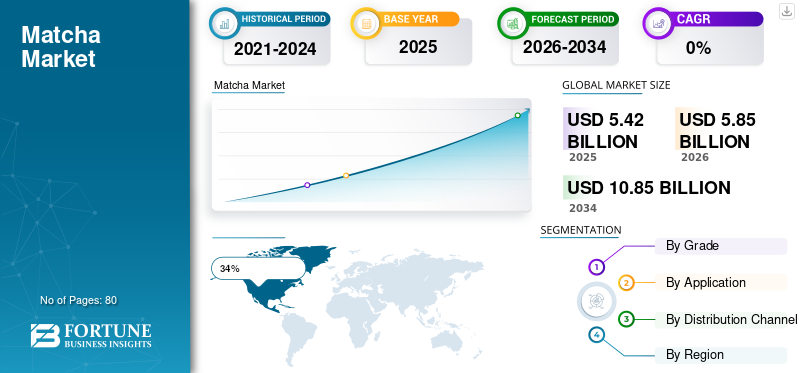
The global matcha market size was valued at USD 5.42 billion in 2025. The market is projected to grow from USD 5.85 billion in 2026 to USD 10.85 billion by 2034, exhibiting a CAGR of 8.02% during the forecast period.

The matcha market is experiencing strong global demand driven by rising consumer preference for natural beverages, functional food ingredients and plant-based wellness products. Matcha, derived from finely ground green tea leaves, has become increasingly popular among health-conscious consumers due to its antioxidant profile, natural caffeine content, and premium positioning in the beverage industry. matcha market analysis indicates expanding applications across ready-to-drink beverages, bakery products, confectionery, dietary supplements, and skincare formulations. Foodservice operators, café chains, and wellness brands are incorporating matcha into premium product portfolios to attract younger consumers seeking clean-label and organic alternatives. Growing awareness regarding Japanese tea culture and healthy lifestyle consumption patterns continues shaping the matcha market Outlook globally.
The USA matcha market has developed into one of the largest consumption hubs outside Asia due to increasing demand for functional beverages and premium tea products. Consumers in the United States are increasingly adopting matcha-based drinks as alternatives to traditional coffee and sugary beverages. matcha market Research Report insights show that cafés, health food retailers, and e-commerce platforms are expanding matcha offerings across organic and specialty product categories. The growing popularity of vegan diets, clean-label ingredients, and antioxidant-rich beverages has accelerated demand for ceremonial and culinary grade matcha across the country. Food manufacturers are also integrating matcha into snacks, desserts, protein blends, and wellness formulations to meet evolving consumer preferences.
Download Free sample to learn more about this report.
Matcha Market Key Takeaways
 Global Market Size & Forecast
- 2025 Market Size: USD 5.42 Billion
- 2026 Market Size: USD 5.85 Billion
- 2034 Forecast Market Size: USD 10.85 Billion
- CAGR: 8.02% from 2026-2034
 Market Share
- North America dominated with a 34% market share.
- Ceremonial-grade matcha accounted for approximately 38% market share.
- Matcha beverages held approximately 36% market share by application.
 Key Regional Highlights
North America
North America led the market with a 34% regional share.
Asia-Pacific
Asia-Pacific accounted for 31% of the global market, supported by strong matcha consumption and production.
Europe
Europe held 26% share, driven by growing demand for premium and wellness-oriented beverages.
U.S.
The U.S. is a key market, supported by rising demand for matcha beverages and premium tea products.
Japan
Japan accounted for 48% of the Asia-Pacific market, supported by its established matcha culture and traditional production expertise.
Read More

Matcha Market Latest Trends
The matcha market trends landscape is evolving rapidly with the expansion of premium organic matcha products and ready-to-drink formulations. Beverage companies are introducing canned matcha lattes, sparkling matcha drinks, and functional wellness beverages targeting health-conscious consumers. matcha market Growth is also supported by increasing product innovation in bakery, confectionery, and dairy-free dessert categories. Brands are emphasizing sustainability, organic farming practices, and traditional Japanese production methods to strengthen premium product positioning in competitive retail markets.
Another major trend influencing the matcha industry analysis environment is the rising adoption of matcha within personal care and cosmetic products. Manufacturers are incorporating matcha extracts into skincare creams, face masks, cleansers, and anti-aging products because of the ingredient’s antioxidant and anti-inflammatory properties. matcha market Insights further reveal strong demand for ceremonial-grade matcha among younger consumers influenced by social media wellness culture and café-style beverage experiences. Subscription-based tea delivery models, premium tea ceremonies, and direct-to-consumer online sales channels are also contributing to expanding market penetration across international markets.
Download Free sample to learn more about this report.
Matcha Market Dynamics
Drivers of Market Growth
Rising Consumer Demand for Healthy and Functional Beverages
Growing consumer awareness regarding health, nutrition, and wellness is one of the primary drivers supporting matcha market Growth globally. Consumers are increasingly seeking natural beverages with functional health benefits, including antioxidants, amino acids, and sustained energy support. matcha market Report analysis indicates that consumers prefer matcha beverages because they offer a combination of caffeine and calming compounds without the sharp energy crashes associated with conventional energy drinks.
The expanding popularity of clean-label beverages, plant-based nutrition, and organic food consumption continues driving strong market demand. Foodservice operators and café chains are actively promoting matcha-based beverages as premium lifestyle products targeting millennials and urban consumers. matcha market forecast trends also show increasing use of matcha in smoothies, protein shakes, desserts, and wellness supplements. Rising awareness regarding Japanese tea traditions and holistic wellness lifestyles has strengthened consumer interest in premium ceremonial-grade matcha products. These factors are collectively accelerating market expansion across retail, hospitality, and food manufacturing sectors.
Market Restraints
High Production Costs and Limited Premium-Grade Supply
The matcha market faces restraints related to high cultivation costs and limited availability of premium-quality tea leaves required for authentic matcha production. Producing ceremonial-grade matcha involves specialized shading, harvesting, steaming, drying, and stone-grinding processes that significantly increase operational expenses. matcha market analysis highlights that supply limitations often create price volatility and restrict product accessibility across price-sensitive consumer markets.
Climate conditions and agricultural dependency also affect production consistency. Regions producing high-quality matcha require controlled environmental conditions and experienced farming expertise, limiting large-scale expansion opportunities. In addition, counterfeit and low-quality products entering international markets create consumer confusion and impact brand trust. matcha market Research Report findings indicate that many consumers struggle to differentiate between authentic ceremonial matcha and lower-grade blended powders. Import regulations, organic certification costs, and rising transportation expenses further complicate international market expansion strategies for manufacturers and distributors.
Market Opportunities
Expansion of Matcha Applications Across Food and Personal Care Industries
The increasing use of matcha across food processing and beauty industries presents substantial matcha market opportunities worldwide. Manufacturers are integrating matcha into bakery products, confectionery, frozen desserts, protein snacks, and nutritional supplements to capitalize on rising functional ingredient demand. matcha market Outlook analysis suggests that food innovation and product diversification are creating new growth pathways for producers and beverage companies.
The personal care industry is also emerging as an important opportunity area because skincare manufacturers are incorporating matcha extracts into anti-aging creams, facial masks, cleansers, and wellness cosmetics. Consumers increasingly prefer botanical ingredients with antioxidant benefits and clean-label positioning. matcha market Insights additionally reveal rising demand for premium café experiences and artisanal beverages across urban retail environments. Expanding e-commerce platforms and direct-to-consumer subscription models are enabling brands to reach international customer bases more efficiently. These developments continue strengthening long-term business opportunities across the global matcha industry.
Market Challenges
Maintaining Authenticity and Quality Consistency Across Global Markets
One of the major challenges affecting the matcha market is maintaining product authenticity and quality consistency amid rapidly expanding global demand. Premium ceremonial matcha requires highly controlled cultivation and processing methods that are difficult to replicate outside traditional production regions. matcha market trends indicate that inconsistent quality standards and counterfeit labeling practices continue creating challenges for consumers and distributors.
Manufacturers also face difficulties balancing large-scale production with preservation of traditional processing methods. Expanding international demand has increased pressure on supply chains, leading to concerns regarding adulteration and lower-quality ingredient blending. Consumer education remains limited in several emerging markets, making it difficult for buyers to distinguish authentic products from inferior alternatives. Additionally, fluctuating agricultural conditions, labor shortages, and increasing organic certification requirements continue impacting operational efficiency. These factors create ongoing challenges for producers attempting to maintain premium positioning within the highly competitive matcha market size landscape.
Matcha Market Segmentation
By Ceremonial Grade
Ceremonial grade matcha represents the premium segment within the matcha market due to its superior texture, vibrant green color, and refined flavor profile. matcha market share analysis estimates that ceremonial-grade products account for approximately 38% of the global market because of strong demand among premium tea consumers and specialty café operators.
This grade is primarily consumed as traditional tea and is favored by health-conscious consumers seeking authentic Japanese matcha experiences. Luxury cafés, wellness brands, and organic retailers continue promoting ceremonial-grade matcha as a premium lifestyle beverage. matcha market Research Report findings reveal increasing adoption among younger urban consumers interested in mindfulness, clean-label nutrition, and artisanal beverage experiences. The segment also benefits from rising demand for organic certified tea products and premium subscription-based beverage services. Manufacturers are investing in sustainable farming methods and traditional stone-grinding techniques to preserve product quality and strengthen premium brand identity.
To know how our report can help streamline your business, Speak to Analyst
By Application
The Regular Tea application segment remains a core area within the matcha market because traditional tea consumption continues driving steady product demand globally. matcha market share analysis suggests that regular tea applications account for approximately 29% of the market due to growing consumer interest in healthy beverage alternatives.
Consumers increasingly prefer matcha tea because it provides sustained energy and antioxidant benefits while supporting wellness-focused lifestyles. Specialty tea retailers and café operators are expanding premium tea menus featuring ceremonial-grade matcha and organic blends. matcha market forecast analysis also highlights rising demand for single-origin tea products and authentic Japanese preparation experiences. Subscription-based tea services and premium retail packaging strategies continue supporting product visibility across international consumer markets.
Matcha Beverages represent the largest application segment within the matcha market analysis landscape because of strong consumer demand for functional and premium drinks. Matcha-based beverages contribute approximately 36% market share globally due to rising adoption across cafés, restaurants, and ready-to-drink beverage categories.
Manufacturers are launching bottled matcha lattes, sparkling tea drinks, dairy-free smoothies, and protein beverages targeting health-conscious consumers. Café chains are integrating matcha beverages into seasonal menus to attract younger demographics seeking visually appealing and wellness-oriented products. matcha market Insights reveal growing popularity of iced matcha drinks, flavored latte formulations, and plant-based beverage combinations across urban markets. Beverage innovation and premium café culture continue driving significant market expansion within this segment.
The Food application segment is rapidly expanding within the matcha industry analysis environment due to increasing use of matcha as a functional ingredient in desserts, confectionery, bakery products, and packaged snacks. matcha market Outlook data indicates that food applications account for approximately 24% of the global market.
Food manufacturers are introducing matcha-flavored cookies, chocolates, cakes, frozen desserts, breakfast cereals, and protein snacks to capitalize on clean-label and antioxidant-rich product trends. Consumers increasingly seek visually distinctive and naturally flavored products, supporting demand for matcha-infused food innovations. Premium dessert chains and artisanal bakery brands are particularly active in expanding matcha product offerings. Product diversification across food categories continues strengthening this segment globally.
Personal Care applications are gaining momentum within the matcha market Growth landscape due to increasing consumer demand for botanical skincare and wellness formulations. Matcha-based personal care products contribute approximately 11% market share globally because of growing interest in antioxidant-rich cosmetic ingredients.
Beauty brands are incorporating matcha extracts into facial masks, anti-aging creams, cleansers, and exfoliating products. Consumers increasingly prefer natural skincare products with plant-derived ingredients and sustainable positioning. matcha market trends indicate strong product innovation across organic beauty and wellness categories. Expanding clean beauty movements and premium cosmetic product launches continue creating new growth opportunities for matcha ingredient suppliers.
By Distribution Channel
The Distribution Channel segment includes supermarkets, specialty stores, cafés, online retail platforms, and direct-to-consumer subscription services. matcha market analysis suggests that online and specialty retail channels collectively account for approximately 44% market share globally due to increasing digital commerce adoption and premium product demand.
E-commerce platforms enable brands to reach health-conscious consumers seeking organic and imported matcha products. Subscription models and direct-to-consumer sales strategies are becoming increasingly popular among premium tea companies. Specialty cafés and wellness retailers also play a significant role in consumer education and product visibility. Retail expansion and digital marketing strategies continue strengthening global distribution efficiency within the matcha industry.
Matcha Market Regional Outlook
North America
To get more information on the regional analysis of this market, Download Free sample
North America represents one of the most dynamic regions within the matcha market due to rising health awareness and premium beverage consumption trends. matcha market share analysis indicates that North America accounts for approximately 34% of the global market because consumers increasingly prefer plant-based and antioxidant-rich beverages.
The United States and Canada are witnessing strong demand across cafés, supermarkets, organic retailers, and e-commerce channels. Consumers are incorporating matcha into smoothies, protein drinks, desserts, and wellness routines. Food manufacturers are launching innovative ready-to-drink matcha beverages and functional snacks targeting younger demographics. The expansion of premium café culture and wellness-oriented consumer behavior continues supporting market development across North America.
Europe
Europe remains a rapidly expanding region within the matcha market Outlook ecosystem due to growing demand for organic beverages and functional food ingredients. Matcha market Growth analysis suggests that Europe contributes approximately 26% market share globally.
Consumers across Germany, France, Italy, and the United Kingdom are increasingly adopting matcha beverages as healthier alternatives to traditional caffeinated drinks. Specialty cafés and premium retail stores are introducing authentic Japanese tea products and wellness beverages to meet evolving consumer preferences. Food manufacturers are integrating matcha into bakery products, desserts, and nutritional supplements across the region. Sustainable packaging and organic certification trends continue strengthening European market demand.
Germany Matcha Market
Germany is emerging as one of Europe’s leading matcha consumption markets due to increasing health-conscious consumer behavior and growing organic food demand. Matcha market Insights indicate that Germany contributes approximately 24% share within the European market.
German consumers increasingly prefer premium tea products, plant-based beverages, and antioxidant-rich wellness ingredients. Organic retailers, specialty cafés, and natural food chains are expanding matcha product offerings across urban markets. Food manufacturers are incorporating matcha into bakery items, vegan desserts, and nutritional supplements targeting wellness-oriented consumers. Growing popularity of clean-label lifestyles and sustainable product sourcing continues supporting market expansion across Germany.
United Kingdom Matcha Market
The United Kingdom remains a strong growth center within the European matcha market because of rising café culture and expanding demand for functional beverages. Matcha market Research Report analysis suggests that the United Kingdom contributes approximately 21% share within the European market.
British consumers are increasingly purchasing ready-to-drink matcha beverages, iced lattes, and premium tea products through cafés and online retail platforms. Wellness-focused consumers are also incorporating matcha into fitness nutrition and plant-based dietary routines. Foodservice operators are launching innovative menu items featuring matcha flavors across desserts, bakery products, and specialty beverages. Social media influence and premium beverage branding continue strengthening consumer interest in the United Kingdom market.
Asia-Pacific
Asia-Pacific dominates the matcha market because of strong cultural familiarity, established tea consumption habits, and extensive production infrastructure. matcha market size analysis indicates that Asia-Pacific accounts for approximately 31% of the global market.
Japan and China remain the primary production and consumption centers within the region. Consumers continue favoring traditional tea ceremonies and premium tea products while younger demographics increasingly adopt modern matcha beverages and desserts. Food manufacturers and café operators are expanding product innovation across functional beverages and wellness foods. Export growth and rising international demand continue supporting regional market development.
Japan Matcha Market
Japan represents the global center of traditional matcha production and premium ceremonial tea manufacturing. matcha market forecast analysis indicates that Japan contributes approximately 48% share within the Asia-Pacific market because of its established agricultural expertise and cultural heritage.
Japanese producers maintain strong emphasis on traditional cultivation techniques, premium tea grading, and sustainable farming practices. Domestic demand remains high across ceremonial tea consumption, wellness beverages, and premium confectionery categories. International exports of ceremonial-grade matcha continue increasing due to rising global consumer interest in authentic Japanese tea products. Government support for agricultural exports and cultural branding initiatives further strengthens Japan’s leadership position.
China Matcha Market
China is rapidly expanding within the matcha market due to increasing tea innovation, large-scale agricultural production, and growing consumer awareness regarding wellness beverages. matcha market analysis suggests that China contributes approximately 33% share within the Asia-Pacific market.
Chinese manufacturers are increasing production of culinary-grade matcha for domestic food processing and international export markets. Café chains, beverage companies, and dessert brands are actively incorporating matcha into product portfolios targeting younger urban consumers. E-commerce expansion and social media-driven wellness trends are also accelerating product adoption across major metropolitan regions. Investments in organic farming and premium tea production continue supporting long-term market growth across China.
Rest of World
The Rest of World region, including Latin America, the Middle East, and Africa, is gradually strengthening its position within the matcha market due to growing awareness regarding healthy beverages and premium tea culture. matcha market share analysis indicates that the region contributes approximately 9% of the global market.
Urban consumers are increasingly adopting matcha-based beverages through café chains, specialty retailers, and wellness-focused foodservice operators. Importers and distributors are introducing premium Japanese tea products across emerging economies targeting affluent consumer segments. Food manufacturers are also exploring matcha applications in desserts, beverages, and dietary supplements. Rising digital commerce and wellness-oriented consumer behavior continue creating opportunities across developing international markets.
List of Top Matcha Companies
- Aiya America Inc.
- The AOI Tea Company
- Ippodo Tea USA
- Vivid Vitality Ltd
- DoMatcha
- Encha
- Garden To Cup Organics
- TEAJA Organic
- Midori Spring
- Jade Monk
Top Two Companies with Highest Market Share
- Aiya America Inc. – 16% market share
- The AOI Tea Company – 13% market share
Investment Analysis and Opportunities
Investment activity within the matcha market is increasing as food manufacturers, beverage brands, and wellness companies seek opportunities within the premium functional beverage sector. Investors are focusing on organic tea farming, sustainable packaging technologies, and ready-to-drink beverage innovation. matcha market opportunities are particularly strong across premium café chains, direct-to-consumer retail platforms, and wellness-oriented subscription services.
Food processing companies are expanding investments in matcha-infused desserts, bakery products, nutritional supplements, and plant-based beverages. International tea exporters are also increasing investments in cultivation infrastructure and quality certification programs to meet growing global demand for premium ceremonial-grade products. E-commerce growth and rising health-conscious consumer behavior continue supporting long-term investment potential within the global matcha industry.
New Product Development
Innovation within the matcha market is increasingly centered around convenient beverage formulations, premium wellness products, and clean-label food applications. Manufacturers are launching ready-to-drink matcha lattes, sparkling tea beverages, instant matcha sachets, and dairy-free smoothie blends targeting younger consumers seeking functional nutrition products.
Companies are additionally developing matcha-infused skincare formulations, protein snacks, energy bars, and organic dessert products to expand application diversity. matcha market trends indicate strong product innovation within plant-based nutrition and premium café beverage categories. Sustainable packaging, single-origin sourcing, and organic certification remain important priorities for manufacturers seeking stronger premium positioning within competitive international markets.
Five Recent Developments (2023-2025)
- Aiya America Inc. expanded organic ceremonial-grade production facilities in 2024.
- Encha launched ready-to-drink matcha beverage formulations in 2025.
- Midori Spring introduced premium single-origin matcha blends in 2023.
- The AOI Tea Company increased international export partnerships across Europe in 2024.
- DoMatcha developed sustainable packaging initiatives for retail products in 2025.
Report Coverage of Matcha Market
The matcha market Report provides detailed analysis of premium tea production, functional beverage applications, organic ingredient demand, and global distribution trends across the matcha industry. The report evaluates market drivers, restraints, opportunities, and operational challenges influencing product adoption across beverage, food, wellness, and personal care sectors. matcha market Research Report coverage includes segmentation analysis based on grade, application, distribution channel, and regional demand patterns to provide comprehensive business insights.
Request for Customization to gain extensive market insights.
The report additionally examines evolving consumer preferences regarding clean-label nutrition, antioxidant-rich beverages, and sustainable food sourcing practices. matcha market Outlook analysis covers product innovation, premium café culture, e-commerce expansion, organic certification trends, and international trade developments influencing global market competition. Competitive landscape evaluation includes major tea manufacturers, wellness beverage brands, and specialty food companies operating across key international regions.
Frequently Asked Questions
Fortune Business Insights says that the global market value stood at USD 5.42 billion in 2025 and is projected to reach USD 10.85 billion by 2034.
The market is expected to exhibit a CAGR of 8.02% during the forecast period of 2026-2034.
Matcha Beverages was the leading application segment, accounting for approximately 36% of the global market, driven by strong demand for functional and premium drinks.
Key players include Aiya America Inc., The AOI Tea Company, Ippodo Tea USA, Vivid Vitality Ltd, DoMatcha, and Encha.
Major trends include rising demand for premium organic matcha and ready-to-drink formulations, along with growing use in personal care and cosmetics. North America held the largest regional share at approximately 34%.



- 2021-2034
- 2025
- 2021-2024
- 80
-

(Offer valid till 31st Oct 2026)
Get 30-60 hrs Free Customization
Expand Regional and Country Coverage, Segments Analysis, Company Profiles, Competitive Benchmarking, and End-user Insights.




















-
US +1 833 909 2966 ( Toll Free )
-
Get In Touch With Us