Maternity Wear Market Size, Share & Industry Analysis, By Product (Outerwear, Innerwear, Nightwear), By Distribution Channel (Store-based, Online), By Region, and Regional Forecast, 2026-2034
 Download Free Sample
Maternity Wear Market Size & Overview
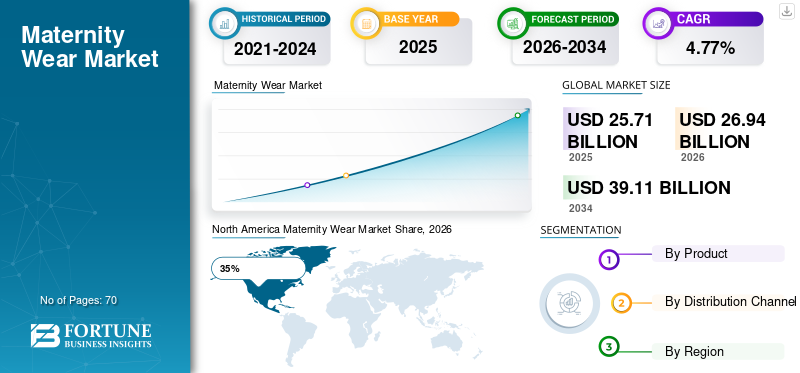
The global maternity wear market size was valued at USD 25.71 billion in 2025. The market is projected to grow from USD 26.94 billion in 2026 to USD 39.11 billion by 2034, exhibiting a CAGR of 4.77% during the forecast period.

The maternity wear market is experiencing strong expansion due to rising awareness regarding maternal comfort, increasing fashion consciousness among pregnant women, and growing availability of stylish maternity apparel across online and offline retail channels. Modern maternity wear products are designed to combine comfort, flexibility, and fashion, supporting women throughout pregnancy and postnatal recovery. The maternity wear market report highlights increasing consumer preference for breathable fabrics, stretchable materials, and multifunctional clothing suitable for both casual and professional settings. Brands are focusing on inclusive sizing, sustainable fabrics, and adaptive designs to meet evolving consumer expectations. maternity wear market analysis also indicates growing demand for premium maternity collections across urban populations globally.
The United States maternity wear market is witnessing steady growth due to increasing spending on maternity fashion, rising working female population, and strong e-commerce penetration. Consumers in the country increasingly prefer maternity apparel that combines functionality with contemporary fashion trends. Demand for maternity leggings, nursing bras, workwear, and casual dresses continues to rise among urban mothers seeking comfort and style during pregnancy. maternity wear industry analysis indicates that social media influence and celebrity maternity fashion trends are significantly shaping purchasing behavior in the USA market. Retailers are also expanding digital shopping experiences and personalized sizing solutions to improve customer engagement and strengthen maternity wear market growth nationwide.
Download Free sample to learn more about this report.
Maternity Wear Market Key Takeaways
 Global Market Size & Forecast
- 2025 Market Size: USD 25.71 Billion
- 2026 Market Size: USD 26.94 Billion
- 2034 Forecast Market Size: USD 39.11 Billion
- CAGR: 4.77% from 2026-2034
 Market Share
- The market in North America dominated with a regional share of 35% in 2025.
- Outerwear held approximately 46% share of the global market.
- Store-based retail channels accounted for nearly 58% share of the market.
 Key Regional Highlights
North America
North America led the market with a 35% regional share, supported by strong demand for fashionable maternity apparel.
Asia-Pacific
Asia-Pacific accounted for 30% of the market, driven by rising disposable incomes and expanding retail channels.
Europe
Europe held 28% share, supported by demand for premium and sustainable maternity clothing.
U.S.
The U.S. remains a major market, supported by strong consumer demand for comfortable and fashionable maternity wear.
Japan
Japan accounted for 16% of the Asia-Pacific market, supported by demand for comfortable, functional, and high-quality maternity apparel.
Read More

Maternity Wear Market Latest Trends
The maternity wear market trends are increasingly influenced by fashion innovation, digital retail growth, and sustainable clothing preferences. One of the most significant trends is the rising demand for multifunctional maternity clothing that can be worn during pregnancy and postpartum periods. Consumers increasingly seek stylish and versatile garments suitable for work, leisure, fitness, and nursing purposes. maternity wear market insights reveal growing popularity of seamless maternity innerwear, organic cotton apparel, and adjustable-fit clothing designed to support changing body shapes throughout pregnancy.
Another major trend shaping the maternity wear industry Report is the rapid expansion of online maternity fashion platforms. Digital retail channels allow consumers to access wider product selections, personalized recommendations, and size-inclusive collections from global brands. Social media marketing and influencer-driven promotions are significantly impacting maternity fashion purchasing decisions. Sustainable fashion is also becoming a central focus, with manufacturers introducing eco-friendly fabrics, recycled materials, and ethical production methods. maternity wear market forecast indicates increasing innovation in smart fabrics, moisture-wicking textiles, and temperature-regulating maternity apparel to improve comfort and support long-term consumer demand.
Download Free sample to learn more about this report.
Maternity Wear Market Dynamics
DRIVER
Rising Demand for Fashionable and Comfortable Maternity Apparel
The increasing preference for fashionable yet comfortable maternity clothing is a major factor driving the maternity wear market growth globally. Modern consumers no longer view maternity clothing as purely functional apparel, instead seeking products that reflect personal style while supporting physical comfort during pregnancy. Working women especially demand maternity office wear, stretchable activewear, and versatile casual clothing suitable for daily activities. maternity wear market research report findings indicate strong consumer interest in breathable fabrics, seamless designs, and adjustable garments that accommodate body changes throughout different pregnancy stages.
Growing awareness regarding maternal health and wellness is also supporting market expansion. Healthcare professionals increasingly recommend comfortable and supportive maternity clothing to improve physical well-being during pregnancy. Fashion brands are responding by launching premium maternity collections featuring innovative fabrics and modern designs. The influence of celebrity culture, social media platforms, and maternity fashion influencers is further encouraging consumers to invest in stylish maternity apparel. Expanding retail accessibility through online platforms and mobile shopping applications continues creating strong maternity wear market opportunities worldwide.
RESTRAINT
High Product Pricing and Short Usage Duration
One of the primary restraints affecting the maternity wear market outlook is the relatively high cost of premium maternity apparel combined with its limited usage period. Many consumers hesitate to spend heavily on maternity clothing that may only be worn for a few months during pregnancy and early motherhood. Premium maternity brands offering specialized fabrics, adaptive designs, and fashionable collections often maintain higher pricing structures that limit affordability for budget-conscious consumers.
Limited availability of size-inclusive maternity products in certain markets also restricts consumer adoption. Some consumers still rely on oversized regular clothing instead of purchasing dedicated maternity wear due to cost concerns and lack of product accessibility. maternity wear industry analysis also highlights supply chain challenges and rising textile production costs that impact product pricing globally. In developing regions, lower awareness regarding specialized maternity apparel and cultural preferences for traditional clothing may further limit market penetration. Counterfeit products and low-quality alternatives in online marketplaces also create challenges for established maternity fashion brands.
OPPORTUNITY
Expansion of Online Retail and Sustainable Maternity Fashion
The rapid growth of online retail channels presents significant opportunities for the maternity wear market. E-commerce platforms enable brands to reach wider customer bases while offering personalized shopping experiences, virtual fitting tools, and detailed product customization options. Consumers increasingly prefer online maternity shopping because it offers convenience, privacy, and access to diverse product collections. maternity wear market analysis highlights growing opportunities for subscription-based maternity fashion services and rental platforms catering to temporary clothing needs during pregnancy.
Sustainable maternity fashion also represents a major growth opportunity. Consumers are increasingly seeking organic fabrics, eco-friendly dyes, and ethically manufactured maternity apparel that align with environmental values. Brands focusing on recyclable materials, biodegradable packaging, and responsible sourcing are gaining competitive advantages. Growing demand for nursing-friendly clothing and postpartum recovery apparel further expands product diversification opportunities. Emerging markets with rising middle-class populations and increasing female workforce participation are expected to create strong long-term maternity wear market opportunities for global manufacturers and retailers.
CHALLENGE
Managing Fashion Trends and Inventory Complexities
The maternity wear market faces challenges related to rapidly changing fashion trends and inventory management complexities. Consumer preferences evolve quickly, requiring brands to continuously update product collections while maintaining comfort and functionality standards. Seasonal demand fluctuations and unpredictable sizing requirements create inventory planning difficulties for manufacturers and retailers. maternity wear market forecast reports indicate that maintaining broad size availability without increasing inventory costs remains a significant operational challenge.
Competition from mainstream apparel brands entering the maternity segment is also intensifying market pressure. Consumers increasingly expect maternity clothing to resemble standard fashion apparel in terms of style, quality, and affordability. Balancing fashion innovation with product practicality requires substantial investment in design and textile development. Supply chain disruptions, rising raw material costs, and labor shortages in garment manufacturing further complicate operational efficiency. Brands must also address sustainability concerns and ethical production expectations while remaining competitively priced in global markets.
Maternity Wear Market Segmentation
By Type
Outerwear dominates the maternity wear market with approximately 46% market share due to high consumer demand for maternity dresses, tops, jackets, leggings, and professional workwear. Pregnant women increasingly seek stylish outerwear products that combine comfort, flexibility, and fashion-forward designs suitable for various social and professional environments. maternity wear market report findings indicate strong demand for stretchable fabrics, adjustable waistbands, and layered clothing solutions that adapt to changing body shapes during pregnancy.
Fashion-conscious consumers are driving innovation in maternity outerwear collections featuring breathable cotton blends, sustainable fabrics, and versatile styling options. Working women particularly contribute to demand for formal maternity office wear and multifunctional apparel suitable for business settings. Seasonal outerwear collections including maternity coats, hoodies, and knitwear are also gaining popularity across colder climate regions. Online retail platforms continue expanding accessibility to premium maternity outerwear brands offering personalized sizing and inclusive fashion collections. Increasing influence of celebrity maternity fashion trends further strengthens demand within this segment globally.
Innerwear accounts for nearly 32% market share in the maternity wear market because of increasing awareness regarding maternal comfort and body support during pregnancy and nursing periods. Maternity bras, nursing bras, shapewear, support belts, and seamless underwear are essential products designed to provide physical support and reduce discomfort associated with body changes. maternity wear industry analysis highlights rising consumer preference for moisture-wicking fabrics, wireless designs, and soft elastic materials that improve comfort throughout pregnancy.
Manufacturers are increasingly focusing on ergonomic designs and adaptive sizing technologies to improve functionality and fit. Nursing-friendly innerwear with easy-access features is becoming particularly popular among postpartum consumers. The growing fitness trend among pregnant women is also driving demand for maternity activewear bras and supportive undergarments suitable for prenatal exercise routines. Sustainable and skin-friendly fabric innovations are further shaping this segment, with brands introducing organic cotton and hypoallergenic maternity innerwear collections. Digital retail channels are significantly improving product accessibility and consumer awareness globally.
Nightwear holds approximately 22% market share in the maternity wear market due to increasing consumer demand for comfortable sleepwear and nursing-friendly apparel. Pregnant women often experience physical discomfort and sleep disturbances, encouraging demand for soft, breathable, and stretchable nightwear products. maternity wear market insights indicate growing popularity of nursing nightgowns, pajama sets, robes, and loungewear designed for both pregnancy and postpartum use.
Manufacturers are focusing on lightweight fabrics, temperature-regulating textiles, and seamless stitching to enhance nighttime comfort. Stylish maternity sleepwear collections featuring modern patterns and relaxed silhouettes are increasingly preferred by younger consumers. The expansion of home-based lifestyles and remote work culture has also contributed to rising demand for multifunctional maternity loungewear suitable for daily home use. Premium maternity brands are introducing luxury sleepwear collections using organic fabrics and sustainable materials to attract environmentally conscious consumers. Increasing online shopping adoption further supports market growth in the maternity nightwear segment.
To know how our report can help streamline your business, Speak to Analyst
By Application
Store-based retail channels dominate the maternity wear market with nearly 58% market share because many consumers prefer physical shopping experiences when purchasing maternity apparel. Pregnant women often seek in-store assistance for sizing, fabric evaluation, and comfort testing before making purchasing decisions. Department stores, specialty maternity boutiques, supermarkets, and branded retail outlets continue serving as important sales channels for maternity fashion products. maternity wear market analysis indicates strong consumer trust in physical retail environments where personalized service and immediate product availability enhance shopping confidence.
Retail stores also allow brands to showcase seasonal maternity collections and provide tailored fitting services. Premium maternity fashion retailers increasingly offer exclusive shopping experiences, styling consultations, and nursing wear demonstrations to attract customers. Store-based channels remain particularly strong in developing regions where online retail infrastructure is still evolving. However, retailers are increasingly integrating digital technologies such as smart mirrors, virtual fitting tools, and omnichannel services to improve customer engagement and maintain competitiveness in the maternity apparel industry.
Online retail channels account for approximately 42% market share in the maternity wear market due to rapid e-commerce growth and changing consumer shopping preferences. Digital platforms provide consumers with access to broader product selections, flexible pricing options, and convenient home delivery services. maternity wear market research report findings indicate increasing preference for online shopping among working women seeking privacy, convenience, and easy product comparisons during pregnancy.
Social media platforms and influencer marketing significantly influence online maternity fashion purchasing decisions. Brands increasingly use personalized recommendations, virtual fitting technologies, and subscription services to improve customer satisfaction. Online retail channels also support expansion of niche maternity fashion brands offering sustainable, size-inclusive, and designer maternity collections. The growing adoption of mobile commerce and digital payment systems is further strengthening online market penetration globally. Manufacturers continue investing in direct-to-consumer platforms and advanced logistics networks to enhance delivery efficiency and customer retention within the online maternity wear segment.
maternity wear market Regional outlook
North America
North America Maternity Wear Market Share, 2026 (%) To get more information on the regional analysis of this market, Download Free sample
North America holds nearly 35% market share in the maternity wear market due to high consumer spending on maternity fashion, strong online retail penetration, and increasing awareness regarding maternal wellness. The United States dominates regional demand because of rising preference for premium maternity clothing and nursing wear products. maternity wear market trends in North America indicate growing demand for sustainable fabrics, inclusive sizing, and multifunctional maternity apparel suitable for professional and casual environments.
Retailers across the region increasingly focus on digital shopping experiences and personalized maternity fashion services. Social media influence and celebrity maternity trends strongly impact consumer purchasing behavior in North America. The expansion of maternity activewear, nursing bras, and postpartum recovery clothing continues supporting regional market growth. Technological advancements in smart fabrics and temperature-regulating textiles are also shaping product innovation. Strong presence of global maternity fashion brands and advanced e-commerce infrastructure further strengthen market development across the region.
Europe
Europe accounts for approximately 28% market share in the maternity wear market due to increasing focus on sustainable fashion, premium apparel quality, and maternal comfort. Countries including Germany, the United Kingdom, France, and Italy are major contributors to regional market expansion. maternity wear industry Report findings indicate growing demand for eco-friendly maternity collections made from organic cotton, recycled fibers, and ethically sourced materials.
Fashion-conscious consumers across Europe increasingly seek versatile maternity clothing suitable for workplace, social gatherings, and nursing purposes. Online retail growth and strong brand competition are driving innovation in adaptive sizing and fashionable maternity designs. European manufacturers are also focusing heavily on sustainable production processes and environmentally responsible packaging solutions. Rising participation of women in professional workforces and increasing emphasis on maternal health continue creating strong maternity wear market opportunities throughout the region.
Germany maternity wear market
Germany represents nearly 24% share within the European maternity wear market due to strong consumer demand for high-quality maternity fashion and sustainable apparel solutions. German consumers increasingly prioritize comfort, durability, and eco-friendly production practices when purchasing maternity clothing. maternity wear market growth in Germany is supported by rising awareness regarding organic fabrics and ethical fashion standards.
Retailers in the country are expanding digital maternity fashion platforms and personalized shopping services to improve customer experience. Professional working women continue driving demand for maternity office wear, nursing apparel, and multifunctional clothing suitable for daily activities. Germany’s strong textile manufacturing capabilities and sustainability-focused fashion culture are encouraging innovation in recyclable fabrics and adaptive maternity designs. Demand for premium maternity innerwear and postpartum recovery clothing is also increasing steadily across urban consumer populations.
United Kingdom maternity wear market
The United Kingdom holds nearly 19% share within the European maternity wear market due to strong online retail adoption and growing fashion awareness among pregnant consumers. British consumers increasingly seek stylish maternity clothing inspired by mainstream fashion trends while maintaining comfort and practicality. maternity wear market outlook in the UK highlights rising demand for maternity dresses, activewear, and nursing-friendly apparel suitable for modern lifestyles.
E-commerce platforms and social media marketing continue playing a major role in shaping consumer purchasing decisions. Sustainable maternity fashion is gaining popularity as consumers become more environmentally conscious. Retailers are introducing inclusive sizing collections and flexible return policies to strengthen customer engagement. The growing popularity of maternity rental services and subscription fashion platforms is also creating additional business opportunities within the UK maternity apparel industry.
Asia-Pacific
Asia-Pacific accounts for approximately 30% market share in the maternity wear market due to rising urbanization, growing middle-class populations, and increasing female workforce participation. Countries such as China, Japan, India, and South Korea are witnessing strong demand for affordable yet fashionable maternity apparel. maternity wear market forecast for the region indicates increasing adoption of online shopping platforms and digital maternity fashion brands.
Consumers across Asia-Pacific increasingly seek multifunctional maternity clothing suitable for work, casual wear, and nursing purposes. Expanding e-commerce infrastructure and smartphone penetration continue improving product accessibility. Manufacturers are focusing on lightweight fabrics, climate-friendly materials, and cost-effective designs tailored to regional preferences. Social media influence and celebrity-driven maternity fashion trends are further supporting market growth. Rising healthcare awareness and improved disposable income levels continue creating significant maternity wear market opportunities across Asia-Pacific countries.
Japan maternity wear market
Japan accounts for nearly 16% share within the Asia-Pacific maternity wear market due to strong consumer preference for premium-quality and highly functional maternity clothing. Japanese consumers prioritize comfort, minimalist design aesthetics, and high-performance fabrics when purchasing maternity apparel. maternity wear market analysis in Japan indicates growing demand for nursing-friendly clothing, maternity activewear, and seamless innerwear collections.
Retailers in Japan increasingly focus on innovative textile technologies such as moisture-wicking fabrics and temperature-regulating materials. Urban consumers seek compact and versatile maternity wardrobes suitable for professional and home environments. E-commerce growth and mobile shopping adoption continue strengthening digital maternity fashion sales. Manufacturers are also introducing eco-conscious maternity collections aligned with Japan’s growing sustainability awareness and premium lifestyle preferences.
China maternity wear market
China represents nearly 41% share within the Asia-Pacific maternity wear market because of its large population base, expanding middle-class consumer segment, and rapidly growing e-commerce industry. Chinese consumers increasingly invest in fashionable maternity clothing inspired by celebrity and influencer trends. maternity wear market research report findings indicate strong demand for affordable maternity dresses, leggings, nursing wear, and premium postpartum recovery apparel.
Online retail platforms dominate maternity fashion sales in China due to convenience, competitive pricing, and broad product availability. Domestic brands are rapidly expanding product portfolios while international maternity fashion companies continue strengthening market presence. Rising healthcare awareness and increasing focus on maternal wellness are encouraging consumers to purchase specialized maternity apparel instead of standard oversized clothing. Technological innovation in textile manufacturing and strong digital marketing strategies continue driving market expansion throughout China.
Rest of World
The Rest of World region holds nearly 7% market share in the maternity wear market due to growing urbanization, expanding retail infrastructure, and increasing awareness regarding maternal comfort. Latin America, the Middle East, and Africa are witnessing gradual growth in maternity fashion adoption as disposable income levels and female workforce participation continue improving. maternity wear market insights indicate rising demand for affordable maternity basics, nursing apparel, and modest maternity clothing across these regions.
Retailers are expanding both physical and online distribution networks to improve product accessibility in developing economies. Cultural preferences and climate conditions influence product designs, encouraging manufacturers to introduce region-specific maternity collections. Commercial partnerships with healthcare institutions and maternity clinics are also helping brands increase consumer awareness regarding specialized maternity apparel. Growing smartphone penetration and social media engagement continue supporting online maternity fashion sales throughout emerging regional markets.
List of Top Maternity Wear Companies
- Seraphine
- FirstCry
- H&M Group
- ASOS
- Mamacouture
- House of Napius
- The Gap, Inc.
- Hotmilk Lingerie
- Pinkblush Maternity
- Belabumbum
Top two companies with the highest market share
- H&M Group – 14%
- The Gap, Inc. – 11%
Investment analysis and Opportunities
The maternity wear market continues attracting strong investment due to rising demand for stylish, comfortable, and multifunctional maternity apparel. Investors are increasingly focusing on digital maternity fashion platforms, subscription-based clothing services, and sustainable apparel manufacturing. maternity wear market opportunities are especially strong in online retail channels where personalized shopping experiences and size-inclusive collections improve customer engagement and retention.
Manufacturers are investing heavily in sustainable textile technologies, organic fabrics, and adaptive clothing designs to align with changing consumer preferences. Emerging markets across Asia-Pacific and Latin America offer significant growth potential due to increasing female workforce participation and expanding middle-class populations. Investors are also supporting innovation in nursing wear, postpartum recovery apparel, and maternity activewear segments. Strategic collaborations between fashion brands, healthcare providers, and e-commerce platforms continue strengthening market competitiveness. The growing popularity of eco-conscious fashion and premium maternity collections is expected to create long-term investment opportunities throughout the global maternity wear industry.
New Product Development
Innovation in the maternity wear market is focused on improving comfort, adaptability, sustainability, and fashion appeal. Manufacturers are developing smart maternity fabrics with moisture-wicking, temperature-regulating, and stretch-control properties to enhance consumer comfort throughout pregnancy. maternity wear market trends indicate increasing introduction of nursing-friendly clothing with hidden access features and multifunctional designs suitable for postpartum use.
Brands are also investing in sustainable product development using organic cotton, bamboo fabrics, and recycled materials. Adaptive sizing technologies and seamless garment construction are becoming increasingly popular in maternity activewear and innerwear collections. Digital customization and AI-driven fit recommendations are improving online shopping experiences for maternity consumers. Fashion retailers are introducing inclusive sizing and body-positive marketing strategies to strengthen brand loyalty. Technological advancements in lightweight fabrics, ergonomic support systems, and eco-friendly packaging continue shaping innovation across the maternity apparel industry.
Five Recent Developments (2023-2025)
- H&M Group expanded its sustainable maternity clothing collection using recycled and organic fabrics.
- ASOS launched inclusive maternity fashion ranges with enhanced size diversity.
- Seraphine introduced multifunctional maternity and nursing apparel collections for professional women.
- FirstCry expanded maternity wear distribution across emerging urban markets.
- Hotmilk Lingerie developed advanced nursing bras featuring seamless support and moisture-control fabrics.
Report Coverage of maternity wear market
The maternity wear market report provides comprehensive analysis of market trends, consumer behavior, competitive developments, and product innovation across global maternity apparel industries. The report evaluates demand patterns for outerwear, innerwear, and nightwear categories while examining changing consumer preferences related to comfort, sustainability, and fashion adaptability. maternity wear market analysis also covers evolving retail strategies across online and store-based distribution channels.
Request for Customization to gain extensive market insights.
Regional coverage within the report includes North America, Europe, Asia-Pacific, and Rest of World markets, highlighting demographic trends, retail expansion, and maternity fashion adoption patterns. The report examines leading company strategies, product launches, partnerships, and digital transformation initiatives influencing market competition. maternity wear market insights additionally assess opportunities linked to sustainable fashion, nursing apparel, adaptive textiles, and e-commerce growth. Detailed segmentation analysis helps manufacturers, investors, retailers, and fashion brands identify emerging demand trends and future business opportunities across the global maternity wear industry.
Frequently Asked Questions
Fortune Business Insights says that the global market value stood at USD 25.71 billion in 2025 and is projected to reach USD 39.11 billion by 2034.
The market is expected to exhibit a CAGR of 4.77% during the forecast period of 2026-2034.
Outerwear was the leading product segment, accounting for approximately 46% of the market, driven by demand for stylish, comfortable, and flexible maternity dresses, tops, leggings, and workwear.
Key players include Seraphine, FirstCry, H&M Group, ASOS, Mamacouture, and House of Napius.
Major trends include growing demand for multifunctional, sustainable maternity clothing and rapid expansion of online maternity fashion platforms. North America held the largest regional share at approximately 35% in 2025.



- 2021-2034
- 2025
- 2021-2024
- 70
-

(Offer valid till 15th Oct 2026)
Get 30-60 hrs Free Customization
Expand Regional and Country Coverage, Segments Analysis, Company Profiles, Competitive Benchmarking, and End-user Insights.







-
US +1 833 909 2966 ( Toll Free )
-
Get In Touch With Us