 Download Free Sample



Get a Quote
Receive a tailored pricing based on your needs.
- Choose license type
- Multiple user options
- Custom scope & coverage
- Fast turnaround
"Designing Growth Strategies is in our DNA"
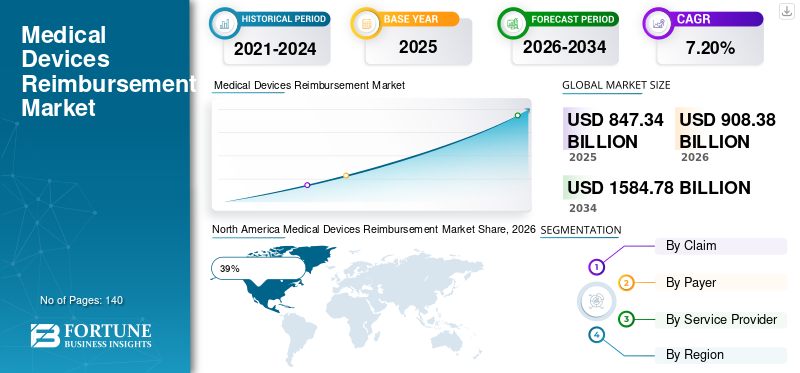
The global medical devices reimbursement market size was valued at USD 847.34 billion in 2025. The market is projected to grow from USD 908.38 billion in 2026 to USD 1584.78 billion by 2034, exhibiting a CAGR of 7.20% during the forecast period.

The medical devices reimbursement market is expanding steadily due to increasing healthcare expenditure, rising adoption of advanced medical technologies, and growing emphasis on patient access to innovative treatment solutions. Reimbursement systems play a critical role in supporting the affordability and adoption of diagnostic, therapeutic, and monitoring devices across healthcare facilities. Governments, insurance providers, and private healthcare organizations are continuously revising reimbursement frameworks to improve healthcare efficiency and clinical outcomes. The medical devices reimbursement market report highlights growing demand for transparent payment structures, value-based healthcare models, and faster reimbursement approvals. Technological advancements in implantable devices, remote monitoring systems, and minimally invasive equipment are further strengthening market demand globally.
The USA medical devices reimbursement market remains one of the most advanced globally due to the presence of sophisticated healthcare infrastructure, favorable insurance coverage systems, and extensive adoption of innovative medical devices. Public and private healthcare payers in the United States are increasingly focused on reimbursement models that support patient-centric treatment and cost optimization. The market is witnessing strong demand for reimbursement coverage for robotic surgery systems, cardiac devices, orthopedic implants, and digital health technologies. Regulatory agencies and healthcare organizations are continuously updating reimbursement policies to improve access to advanced medical procedures. The medical devices reimbursement industry analysis indicates increasing collaboration between device manufacturers, insurers, and healthcare providers across the United States healthcare sector.
Download Free sample to learn more about this report.
 Global Market Size & Forecast
 Market Share
 Key Regional Highlights
North America
North America led the market with a 39% share, supported by strong healthcare infrastructure and advanced insurance systems.
Europe
Europe accounted for 28% of the market, driven by established healthcare systems and comprehensive reimbursement frameworks.
Asia-Pacific
Asia-Pacific held a 24% share, supported by expanding healthcare infrastructure and growing demand for medical devices.
U.S
The U.S. remains a key market, supported by advanced healthcare services and established public and private reimbursement systems.
Japan
Japan accounted for approximately 18% of the Asia-Pacific market, supported by advanced healthcare infrastructure and established reimbursement frameworks.
Read More

The medical devices reimbursement market trends are evolving rapidly with the increasing adoption of value-based reimbursement systems and digital healthcare technologies. Healthcare payers are moving away from traditional fee-for-service models and focusing more on patient outcomes, treatment efficiency, and long-term healthcare savings. Reimbursement policies are increasingly being designed to encourage the use of innovative medical devices that improve clinical performance and reduce hospitalization duration. Artificial intelligence-enabled diagnostic devices, wearable monitoring systems, and telehealth technologies are gaining stronger reimbursement support across developed healthcare markets.
Download Free sample to learn more about this report.
Another major trend in the medical devices reimbursement market research report is the expansion of reimbursement coverage for remote patient monitoring and home healthcare devices. The growing aging population and rising prevalence of chronic diseases are encouraging healthcare systems to support outpatient and home-based treatment solutions. Public and private insurers are introducing reimbursement programs for connected healthcare technologies that improve patient engagement and disease management. Healthcare providers are also increasingly integrating digital reimbursement processing systems to improve claim efficiency and reduce administrative delays. The medical devices reimbursement market outlook further reflects rising investment in personalized healthcare technologies, specialty reimbursement consulting services, and integrated payment management platforms that support healthcare innovation and operational efficiency.
Rising Adoption of Advanced Medical Technologies
The increasing adoption of advanced medical technologies is a major driver supporting the growth of the medical devices reimbursement market growth. Hospitals, ambulatory care centers, and specialty clinics are rapidly implementing innovative devices such as robotic surgery systems, implantable cardiac devices, insulin pumps, and digital monitoring platforms. Healthcare providers are emphasizing improved patient outcomes, early disease detection, and minimally invasive procedures, creating strong demand for reimbursement support across healthcare systems.
Government healthcare agencies and insurance providers are expanding reimbursement frameworks to encourage the use of high-quality medical technologies that reduce long-term treatment costs and improve healthcare efficiency. The growing burden of chronic diseases, including cardiovascular disorders, diabetes, and neurological conditions, is increasing the need for advanced treatment devices and reimbursement coverage. Medical device manufacturers are also collaborating with healthcare payers to demonstrate clinical value and cost-effectiveness. The medical devices reimbursement market analysis indicates that expanding patient access to innovative therapies and diagnostic technologies will continue to accelerate reimbursement adoption globally.
Complex Reimbursement Approval Processes
One of the primary restraints affecting the medical devices reimbursement market size is the complexity associated with reimbursement approval procedures and policy variations across different healthcare systems. Medical device manufacturers often face lengthy evaluation timelines and extensive clinical evidence requirements before obtaining reimbursement authorization. These complex approval processes can delay product commercialization and limit patient access to advanced healthcare technologies.
Differences in reimbursement regulations between public and private insurance systems further create operational challenges for manufacturers and healthcare providers. Small and mid-sized medical device companies may struggle to manage the high costs associated with clinical documentation, coding procedures, and reimbursement negotiations. In certain developing economies, limited insurance coverage and healthcare budget constraints continue to restrict reimbursement availability for high-cost medical devices. The medical devices reimbursement industry report also highlights concerns regarding inconsistent payment structures and reimbursement reductions for certain procedures. These challenges can impact innovation incentives and reduce the adoption pace of emerging healthcare technologies.
Expansion of Digital Health Reimbursement Programs
The increasing expansion of digital health reimbursement programs presents significant opportunities within the medical devices reimbursement market opportunities landscape. Healthcare systems worldwide are recognizing the value of telemedicine, wearable monitoring devices, and remote patient management technologies in improving treatment efficiency and reducing hospital readmissions. Public and private insurers are introducing reimbursement models that support connected healthcare devices and digital therapeutic solutions.
The rising demand for home healthcare and personalized treatment management is also creating favorable opportunities for reimbursement service providers and medical device manufacturers. Healthcare organizations are investing in integrated reimbursement management software and automated claims processing systems to improve operational efficiency. The medical devices reimbursement market forecast further indicates growing demand for reimbursement coverage related to artificial intelligence-driven diagnostics, robotic surgery technologies, and smart implantable devices. Emerging economies are also modernizing healthcare reimbursement frameworks to improve access to advanced medical technologies. Strategic partnerships between healthcare providers, insurance companies, and technology developers are expected to create long-term growth opportunities across the global reimbursement ecosystem.
Rising Healthcare Costs and Reimbursement Limitations
The medical devices reimbursement market challenges are increasing due to rising healthcare expenditures and reimbursement limitations imposed by healthcare payers. Governments and insurance providers are under growing pressure to control medical spending while maintaining patient access to advanced healthcare technologies. As a result, reimbursement authorities are implementing stricter cost-effectiveness evaluations and pricing regulations for high-cost medical devices.
Medical device manufacturers must continuously demonstrate clinical superiority, long-term healthcare savings, and patient outcome improvements to secure reimbursement approvals. Rapid technological advancements also create challenges for reimbursement systems because payment policies often struggle to keep pace with innovation. Healthcare providers may face financial risks when reimbursement rates do not fully cover device acquisition and operational costs. The medical devices reimbursement market research report also highlights concerns related to coding inconsistencies, claim denials, and administrative burdens that can delay payment processing. These financial and operational pressures continue to influence market competitiveness and reimbursement policy development across healthcare systems globally.
The underpaid segment accounts for nearly 43% of the medical devices reimbursement market Share and represents reimbursement scenarios where healthcare providers receive payments lower than the actual procedural or device-related costs. This segment is particularly significant in healthcare systems experiencing budget constraints and reimbursement policy revisions. Hospitals and specialty care providers often encounter underpayment issues related to advanced implantable devices, robotic surgery technologies, and specialized diagnostic equipment. Increasing demand for innovative healthcare technologies has intensified pressure on reimbursement systems to balance affordability with clinical advancement. The medical devices reimbursement market report highlights that healthcare institutions are actively implementing revenue cycle management systems and reimbursement optimization strategies to reduce financial losses associated with underpaid claims. Insurance providers are increasingly reviewing coding structures and payment models to improve reimbursement accuracy and healthcare sustainability.
The full paid segment represents approximately 57% of the global medical devices reimbursement market size and includes reimbursement systems where healthcare providers receive complete payment coverage for approved medical devices and procedures. This segment plays a crucial role in supporting the widespread adoption of advanced healthcare technologies, particularly in developed economies with strong insurance infrastructure. Public healthcare programs and private insurers are increasingly focusing on full reimbursement policies for devices that demonstrate strong clinical outcomes and long-term cost efficiency. The medical devices reimbursement market outlook indicates rising demand for reimbursement support related to cardiovascular implants, orthopedic devices, diabetes monitoring systems, and remote patient monitoring technologies. Healthcare providers benefit significantly from full payment structures because they reduce financial risk and encourage investment in advanced treatment solutions.
To know how our report can help streamline your business, Speak to Analyst
The public segment dominates the medical devices reimbursement market growth with nearly 62% market share due to the strong role of government healthcare programs and national insurance systems in supporting medical device accessibility. Public reimbursement programs are particularly important for elderly populations, chronic disease management, and low-income patient groups requiring advanced medical treatment solutions. Governments worldwide are expanding reimbursement frameworks to improve healthcare equity and encourage the adoption of clinically effective medical devices. Healthcare agencies are increasingly prioritizing reimbursement support for cardiovascular devices, diagnostic imaging systems, insulin pumps, and orthopedic implants to address growing healthcare demands. The medical devices reimbursement industry analysis indicates that public reimbursement systems are also supporting digital healthcare technologies and telemedicine solutions aimed at reducing hospitalization costs and improving healthcare delivery efficiency.
The private segment accounts for approximately 38% of the medical devices reimbursement market insights and is driven by the increasing role of private insurance companies and employer-sponsored healthcare plans. Private reimbursement systems often provide broader access to advanced and specialized medical technologies, particularly in developed healthcare markets. Patients with private insurance coverage frequently benefit from faster reimbursement approvals, expanded treatment options, and greater access to innovative healthcare devices. Private insurers are increasingly introducing customized reimbursement plans focused on preventive healthcare, remote monitoring technologies, and minimally invasive treatment procedures.
Hospitals represent a major service provider segment in the medical devices reimbursement market due to their central role in advanced patient care, surgical procedures, and diagnostic services. This segment accounts for nearly 54% of the overall market share because hospitals manage a high volume of medical device utilization, including cardiovascular implants, orthopedic devices, robotic surgery systems, and diagnostic imaging equipment. Public and private hospitals increasingly rely on reimbursement support to offset operational expenses associated with advanced medical technologies. Growing demand for minimally invasive procedures, chronic disease management, and technologically advanced treatment systems continues to strengthen reimbursement requirements across hospital networks. The medical devices reimbursement market report highlights rising investment by hospitals in digital reimbursement management systems and automated claims processing platforms to improve payment efficiency and reduce administrative delays.
North America Medical Devices Reimbursement Market Share, 2026 (%)
To get more information on the regional analysis of this market, Download Free sample
North America holds nearly 39% of the global medical devices reimbursement market Share due to its advanced healthcare reimbursement systems and widespread adoption of innovative medical technologies. The region benefits from strong insurance infrastructure, high healthcare spending, and extensive use of advanced diagnostic and therapeutic devices. Public healthcare programs and private insurance providers are increasingly supporting reimbursement coverage for robotic surgery systems, implantable devices, and digital healthcare technologies.
The medical devices reimbursement market analysis for North America also reflects strong collaboration between healthcare providers, insurers, and medical device manufacturers focused on value-based healthcare delivery. The United States remains the leading contributor due to continuous healthcare policy updates and increasing reimbursement support for remote patient monitoring technologies. Canada is also improving reimbursement access for innovative treatment solutions through healthcare modernization initiatives. Rising demand for chronic disease management technologies and minimally invasive procedures continues to strengthen market growth across the region.
Europe accounts for approximately 28% of the global medical devices reimbursement market size due to strong public healthcare systems and expanding support for advanced medical technologies. Countries across Western Europe are increasingly adopting value-based reimbursement frameworks aimed at improving healthcare efficiency and patient outcomes. Healthcare authorities are prioritizing reimbursement coverage for digital healthcare devices, implantable technologies, and minimally invasive treatment equipment.
The medical devices reimbursement market research report highlights increasing investment in healthcare digitalization and reimbursement modernization across European healthcare systems. Public insurance programs and private healthcare organizations are working together to improve reimbursement transparency and streamline claims processing procedures. Aging populations and rising chronic disease prevalence continue to drive demand for innovative medical devices and reimbursement support across the region. Strong regulatory standards and expanding healthcare infrastructure are also contributing to market development within Europe.
Germany contributes nearly 26% of the European medical devices reimbursement market outlook due to its highly developed healthcare infrastructure and advanced reimbursement framework. The country has a strong public healthcare system supported by statutory health insurance programs that provide reimbursement coverage for a broad range of medical technologies. German hospitals and specialty care providers are rapidly adopting advanced diagnostic devices, orthopedic implants, and robotic surgery systems.
The German reimbursement market is also benefiting from increasing healthcare digitalization and growing demand for remote patient monitoring technologies. Healthcare providers are focusing on improving treatment efficiency and patient outcomes through evidence-based reimbursement models. Medical device manufacturers are actively collaborating with healthcare authorities to demonstrate clinical effectiveness and secure favorable reimbursement approvals. Rising healthcare innovation and government support for advanced medical technologies continue to strengthen Germany’s position within the European reimbursement industry.
The United Kingdom represents approximately 7% of the European medical devices reimbursement market forecast landscape due to the strong presence of publicly funded healthcare programs and increasing adoption of innovative medical technologies. Healthcare authorities are emphasizing reimbursement policies that support cost-effective treatment solutions and improved patient care outcomes. The market is witnessing growing demand for reimbursement coverage related to digital health devices, cardiovascular implants, and minimally invasive surgical technologies.
The medical devices reimbursement industry report indicates increasing investment in healthcare modernization initiatives and digital reimbursement processing systems across the United Kingdom. Public healthcare institutions are collaborating with technology developers and medical device manufacturers to improve reimbursement efficiency and treatment accessibility. Rising prevalence of chronic diseases and increasing healthcare demand among aging populations continue to support reimbursement expansion. The country’s focus on healthcare innovation and patient-centered treatment solutions is expected to further strengthen market development.
Asia-Pacific holds nearly 24% of the global medical devices reimbursement market growth and is emerging as a rapidly expanding region due to healthcare infrastructure development and increasing insurance coverage. Governments across the region are modernizing reimbursement frameworks to improve access to advanced medical technologies and reduce healthcare disparities. Countries such as Japan, China, South Korea, and India are investing heavily in healthcare modernization and reimbursement reform initiatives.
The medical devices reimbursement market trends in Asia-Pacific also reflect growing adoption of digital healthcare technologies, remote patient monitoring systems, and implantable devices. Rising middle-class populations, increasing healthcare awareness, and expanding chronic disease burdens are supporting demand for reimbursement-supported treatment solutions. Public and private healthcare organizations are collaborating to improve healthcare affordability and reimbursement transparency. Increasing participation from multinational medical device manufacturers is also strengthening market competition and innovation throughout the region.
Japan accounts for nearly 18% of the Asia-Pacific medical devices reimbursement market Share due to its technologically advanced healthcare system and strong reimbursement support for innovative medical technologies. The country has a well-established public healthcare insurance system that provides broad reimbursement coverage for advanced treatment devices and diagnostic technologies. Japanese healthcare providers are increasingly adopting robotic surgery systems, wearable health monitoring devices, and precision diagnostic equipment.
The medical devices reimbursement market insights for Japan also highlight growing investment in digital healthcare infrastructure and telemedicine reimbursement programs. Healthcare authorities are emphasizing cost-effective treatment approaches and preventive healthcare strategies to manage the country’s aging population. Medical device manufacturers are actively developing technologies tailored to Japan’s healthcare needs, including remote monitoring solutions for elderly patients. Continuous innovation and favorable reimbursement policies continue to support market growth across the Japanese healthcare sector.
China contributes approximately 39% of the Asia-Pacific medical devices reimbursement market size due to rapid healthcare expansion and increasing government support for healthcare accessibility. Public healthcare reforms and expanding insurance coverage are improving reimbursement availability for advanced medical technologies across urban and rural healthcare systems. Chinese hospitals are increasingly adopting diagnostic imaging systems, cardiovascular devices, and minimally invasive surgical technologies.
The medical devices reimbursement market forecast for China reflects strong investment in healthcare digitalization, reimbursement modernization, and domestic medical device manufacturing. Government healthcare initiatives aimed at improving treatment affordability are supporting wider adoption of innovative healthcare devices. Private insurance providers are also expanding reimbursement offerings for premium healthcare services and advanced treatment technologies. Rising healthcare awareness, expanding middle-class populations, and increasing chronic disease prevalence continue to strengthen reimbursement demand throughout the Chinese healthcare market.
The Rest of World region accounts for approximately 9% of the global medical devices reimbursement market Share and includes Latin America, the Middle East, and Africa. Healthcare systems across these regions are gradually improving reimbursement structures to support access to essential and advanced medical technologies. Governments and private healthcare organizations are investing in healthcare modernization initiatives aimed at strengthening reimbursement efficiency and patient access.
The medical devices reimbursement market opportunities within emerging economies are supported by rising healthcare awareness, increasing chronic disease prevalence, and growing healthcare infrastructure investments. Middle Eastern countries are expanding reimbursement coverage for advanced treatment technologies and specialty healthcare services. Latin America is also witnessing increased adoption of insurance-supported healthcare programs and digital reimbursement systems. Despite progress, reimbursement limitations, healthcare disparities, and budget constraints continue to influence market development across these regions.
The medical devices reimbursement market Investment Analysis reflects increasing investments in healthcare digitalization, reimbursement automation platforms, and advanced medical technology integration. Insurance providers and healthcare organizations are allocating substantial resources toward modernizing reimbursement systems to improve claims efficiency, reduce administrative costs, and support patient-centric healthcare delivery. Medical device manufacturers are also investing heavily in clinical evidence generation and reimbursement consulting services to secure favorable payment approvals for innovative technologies.
Growing demand for telemedicine, wearable health devices, and remote patient monitoring technologies is creating strong investment opportunities within reimbursement management solutions. Venture capital firms and private equity investors are increasingly focusing on healthcare technology companies that develop artificial intelligence-driven reimbursement systems and healthcare analytics platforms. Emerging economies are also attracting investment due to expanding healthcare infrastructure and reimbursement policy reforms. Strategic partnerships between insurers, healthcare providers, and medical technology firms are accelerating innovation across the reimbursement ecosystem. Increasing adoption of value-based healthcare models and personalized treatment technologies is expected to create long-term market opportunities globally.
The medical devices reimbursement market trends are increasingly shaped by new product development focused on digital reimbursement management and advanced healthcare technology integration. Healthcare technology providers are developing automated reimbursement platforms that use artificial intelligence and machine learning to improve claims processing accuracy and reduce approval delays. These platforms are helping healthcare providers streamline billing procedures and improve reimbursement transparency.
Medical device manufacturers are also introducing innovative technologies specifically designed to meet evolving reimbursement requirements and value-based healthcare standards. Remote patient monitoring systems, wearable diagnostic devices, and connected healthcare platforms are gaining stronger reimbursement support due to their ability to improve patient outcomes and reduce hospitalization rates. Reimbursement consulting firms are developing advanced software tools that assist healthcare organizations in coding optimization and policy compliance. The medical devices reimbursement market outlook further highlights increasing innovation in digital healthcare ecosystems, predictive analytics solutions, and integrated payment management technologies that improve operational efficiency and support healthcare modernization.
The medical devices reimbursement market report provides comprehensive coverage of reimbursement trends, healthcare payment systems, insurance policies, and medical technology adoption across global healthcare markets. The report evaluates reimbursement structures related to diagnostic devices, implantable technologies, robotic surgery systems, remote monitoring devices, and digital healthcare platforms. It also analyzes healthcare policy developments, coding standards, and payer-provider collaboration strategies influencing reimbursement dynamics.
Request for Customization to gain extensive market insights.
The medical devices reimbursement market research report further examines segmentation by reimbursement type, application, healthcare setting, and regional healthcare infrastructure. Detailed analysis of public and private reimbursement systems, healthcare modernization initiatives, and value-based payment models is included. The report also highlights competitive positioning of major industry participants, reimbursement consulting strategies, and emerging healthcare technologies shaping market expansion. Regional insights covering North America, Europe, Asia-Pacific, and Rest of World markets provide detailed understanding of reimbursement accessibility, healthcare investment trends, and policy reforms influencing medical device adoption globally.
Fortune Business Insights says that the global market value stood at USD 847.34 billion in 2025 and is projected to reach USD 1,584.78 billion by 2034.
The market is expected to exhibit a CAGR of 7.20% during the forecast period of 2026-2034.
The public payer segment was the leading segment, accounting for nearly 62% of the market, supported by the strong role of government healthcare programs and national insurance systems.
Key players include MCRA (IQVIA), WellCare Health Plans, Inc., BNP Paribas, Boston Scientific, Humana, and Cigna Healthcare.
Major trends include increasing adoption of value-based reimbursement and digital healthcare technologies, along with expanding reimbursement coverage for remote patient monitoring and home healthcare devices. North America led the market with a 39% share.


(Offer valid till 31st Oct 2026)
Get 30-60 hrs Free Customization
Expand Regional and Country Coverage, Segments Analysis, Company Profiles, Competitive Benchmarking, and End-user Insights.













.webp)






Get In Touch With Us
US +1 833 909 2966 ( Toll Free )
Receive a tailored pricing based on your needs.
Discuss your questions with our industry experts.
Have questions? Get quick answers before you purchase.

