 Download Free Sample



Get a Quote
Receive a tailored pricing based on your needs.
- Choose license type
- Multiple user options
- Custom scope & coverage
- Fast turnaround
"Designing Growth Strategies is in our DNA"
The global medical grade silicone rubber market size was valued at USD 799.91 million in 2025. The market is projected to grow from USD 855.18 million in 2026 to USD 1459.44 million by 2034, exhibiting a CAGR of 6.91% during the forecast period.

The medical grade silicone rubber market is witnessing substantial expansion due to increasing demand for biocompatible materials in healthcare applications, medical devices, implants, and wearable technologies. Medical grade silicone rubber is widely preferred because of its flexibility, thermal stability, chemical resistance, and compatibility with human tissue. Healthcare manufacturers are increasingly utilizing silicone-based materials in catheters, tubing, respiratory devices, prosthetics, and surgical equipment. The medical grade silicone rubber market report highlights growing adoption of advanced silicone formulations across minimally invasive medical procedures and disposable healthcare products. Continuous innovation in healthcare materials and rising demand for durable, sterilization-compatible elastomers continue to strengthen market growth globally.
The USA medical grade silicone rubber market remains a major contributor due to strong medical device manufacturing infrastructure and increasing healthcare technology advancements. Medical manufacturers across the United States are rapidly integrating silicone rubber materials into implantable devices, wearable health monitoring systems, and surgical instruments. Rising prevalence of chronic diseases and expanding demand for minimally invasive medical procedures are significantly increasing the use of high-performance silicone materials. The medical grade silicone rubber industry analysis also reflects growing investment in biocompatible polymers and healthcare-grade elastomers designed for long-term clinical applications. Strong regulatory standards and advanced healthcare manufacturing capabilities continue to support market development across the United States.
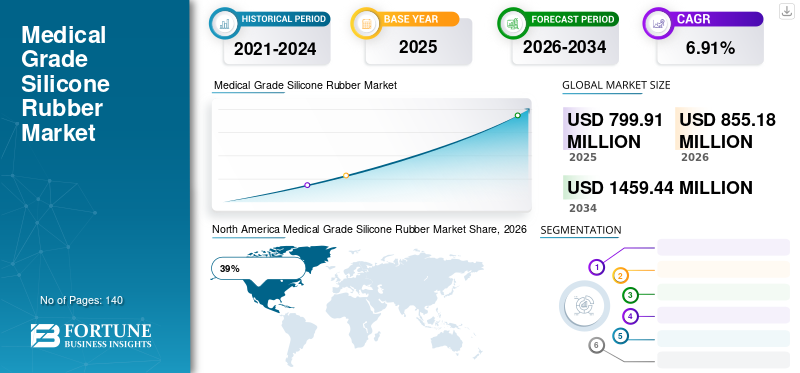
Download Free sample to learn more about this report.
 Global Market Size & Forecast
 Market Share
 Key Regional Highlights
North America
North America led the market with a 39% share, supported by advanced healthcare infrastructure and strong demand for medical-grade materials.
Europe
Europe accounted for 28% of the market, driven by established healthcare systems and increasing demand for medical devices.
Asia-Pacific
Asia-Pacific held a 25% share, supported by expanding healthcare infrastructure and rising adoption of advanced medical technologies.
U.S
The U.S. remains a key market, supported by advanced healthcare infrastructure and strong demand for medical devices and healthcare products.
Japan
Japan accounted for approximately 30% of the Asia-Pacific market, supported by advanced healthcare infrastructure and established medical device manufacturing.
Read More

The medical grade silicone rubber market trends are evolving rapidly with increasing adoption of liquid silicone rubber technologies and high-performance biocompatible elastomers in healthcare manufacturing. Medical device companies are emphasizing lightweight, flexible, and sterilization-resistant materials that improve patient safety and product durability. Advanced molding technologies and automated manufacturing systems are enabling efficient production of complex silicone-based medical components.
Download Free sample to learn more about this report.
Another important trend in the medical grade silicone rubber market research report is the growing demand for silicone materials in wearable healthcare devices and implantable medical technologies. Manufacturers are increasingly developing transparent and antimicrobial silicone formulations designed for enhanced patient comfort and infection control. Healthcare providers are also emphasizing disposable medical products that utilize medical-grade silicone due to its resistance to temperature fluctuations and chemical exposure. The medical grade silicone rubber market outlook further highlights increasing adoption of silicone materials in respiratory care devices, prosthetics, and advanced drug delivery systems. Continuous innovation in healthcare materials science is expected to drive long-term demand across global medical manufacturing industries.
Rising Demand for Biocompatible Medical Materials
The growing demand for biocompatible materials in healthcare manufacturing is a major driver supporting the medical grade silicone rubber market Growth. Medical device manufacturers are increasingly adopting silicone rubber materials due to their flexibility, durability, and compatibility with human tissue. These materials are widely utilized in catheters, implants, prosthetics, respiratory devices, and surgical equipment because they offer excellent sterilization resistance and long-term clinical performance.
Healthcare organizations are emphasizing advanced medical materials that improve patient safety and support minimally invasive treatment procedures. The medical grade silicone rubber market analysis highlights increasing demand for silicone-based elastomers across wearable healthcare technologies and implantable medical devices. Rising healthcare expenditure and expanding production of disposable medical products are further strengthening market demand. Pharmaceutical and healthcare manufacturers are also investing in advanced molding technologies that improve production efficiency and product customization capabilities. Continuous expansion of the global medical device industry is expected to maintain strong demand for medical-grade silicone rubber solutions.
Volatility in Raw Material Pricing and Regulatory Compliance
One of the major restraints affecting the medical grade silicone rubber market size is the fluctuation in raw material prices associated with silicone production. Manufacturers often experience supply chain disruptions and increasing procurement costs related to specialty chemicals and healthcare-grade polymer materials. These pricing challenges can impact profit margins and production scalability, particularly for small and medium-sized healthcare manufacturers.
Strict regulatory compliance requirements for medical materials also create commercialization challenges within the industry. Healthcare-grade silicone products must undergo rigorous testing related to biocompatibility, sterilization compatibility, and long-term safety performance. The medical grade silicone rubber industry report further highlights the complexity associated with meeting international healthcare manufacturing standards and documentation procedures. Delays in product approvals and increasing quality assurance costs may restrict market expansion in certain regions. These operational and regulatory barriers continue to influence competitive dynamics across the global healthcare materials industry.
Expansion of Wearable Healthcare and Implantable Devices
The increasing expansion of wearable healthcare technologies and implantable medical devices presents significant opportunities within the medical grade silicone rubber market Opportunities landscape. Silicone rubber materials are becoming increasingly important in smart healthcare devices, biosensors, prosthetics, and advanced monitoring systems due to their flexibility and patient-friendly characteristics. Healthcare manufacturers are rapidly developing innovative products that require lightweight and durable silicone-based components.
The medical grade silicone rubber market forecast also highlights rising opportunities associated with personalized healthcare technologies and minimally invasive surgical equipment. Medical device companies are investing in advanced silicone formulations that provide improved antimicrobial properties, enhanced durability, and greater compatibility with digital healthcare systems. Emerging healthcare markets are strengthening medical device manufacturing capabilities, creating additional demand for healthcare-grade silicone materials. Growing investment in telemedicine devices, wearable diagnostics, and implantable healthcare technologies is expected to create long-term opportunities across the global medical materials sector.
Complex Manufacturing Processes and Quality Control
The medical grade silicone rubber market Challenges are increasing due to the complexity of healthcare-grade manufacturing processes and strict quality control requirements. Silicone rubber materials used in medical applications require highly controlled production environments to ensure product consistency, sterility, and biocompatibility. Manufacturers must continuously monitor curing conditions, material purity, and contamination risks throughout production operations.
The medical grade silicone rubber market research report also highlights challenges related to maintaining regulatory compliance across multiple healthcare markets and adapting to evolving medical device standards. Healthcare manufacturers often require specialized equipment and skilled professionals capable of handling precision molding technologies and advanced material testing procedures. Product recalls or quality inconsistencies can significantly impact brand reputation and operational performance. Additionally, increasing competition from alternative healthcare polymers and material innovations may create pressure on pricing and product differentiation strategies within the global medical silicone industry.
Liquid Silicone Rubber accounts for nearly 58% of the global medical grade silicone rubber market share due to its superior flexibility, precision molding capability, and compatibility with advanced healthcare manufacturing processes. Medical device manufacturers increasingly utilize liquid silicone rubber in wearable healthcare products, respiratory masks, tubing systems, implants, and surgical instruments because of its biocompatibility and thermal stability. The material is highly suitable for injection molding applications that require detailed product designs and consistent production quality. The medical grade silicone rubber market report highlights growing demand for liquid silicone rubber in minimally invasive medical technologies and disposable healthcare products.
High Consistency Rubber represents approximately 42% of the medical grade silicone rubber market size and remains an important segment for durable medical applications requiring enhanced mechanical strength and long-term reliability. This material is commonly utilized in prosthetics, long-term implants, seals, medical tubing, and orthopedic devices due to its excellent elasticity and resistance to extreme environmental conditions. Manufacturers are increasingly adopting high consistency rubber for products that require structural stability and extended clinical performance. The medical grade silicone rubber market analysis indicates rising demand for customized healthcare-grade elastomers capable of supporting complex medical applications and long-duration patient use. High consistency rubber materials are also gaining popularity in advanced drug delivery systems and durable healthcare equipment.
To know how our report can help streamline your business, Speak to Analyst
Disposables account for approximately 61% of the medical grade silicone rubber market Growth due to increasing demand for single-use healthcare products and infection prevention solutions. Medical grade silicone rubber is widely utilized in disposable respiratory masks, syringes, medical tubing, wound care products, and surgical accessories because of its flexibility, sterility, and chemical resistance. Healthcare providers are increasingly emphasizing disposable products that minimize contamination risks and improve patient safety across hospitals and clinical environments. The medical grade silicone rubber market Insights indicate growing investment in disposable healthcare manufacturing technologies and automated silicone molding systems. Rising prevalence of infectious diseases and increasing surgical procedures are significantly strengthening demand for single-use healthcare products.
Catheter applications represent nearly 39% of the medical grade silicone rubber market outlook due to increasing utilization of minimally invasive medical procedures and long-term patient care devices. Medical grade silicone rubber is highly preferred in catheter manufacturing because of its biocompatibility, flexibility, smooth surface characteristics, and resistance to body fluids. Hospitals and healthcare providers increasingly utilize silicone-based catheters in cardiovascular, urinary, neurological, and respiratory care procedures. The medical grade silicone rubber market research report highlights rising demand for antimicrobial silicone catheter technologies and advanced patient-friendly healthcare devices. Manufacturers are emphasizing precision extrusion technologies and customized silicone formulations to improve catheter performance and reduce patient discomfort. Increasing prevalence of chronic diseases and growing elderly populations are significantly increasing the need for long-term catheterization solutions.
North America Medical Grade Silicone Rubber Market Share, 2026 (%)
To get more information on the regional analysis of this market, Download Free sample
North America holds nearly 39% of the global medical grade silicone rubber market share due to advanced healthcare manufacturing infrastructure and strong demand for high-performance medical materials. Medical device manufacturers across the United States and Canada are rapidly adopting silicone rubber technologies for implants, respiratory devices, prosthetics, and wearable healthcare systems. The region benefits from extensive healthcare innovation and strong regulatory standards supporting biocompatible material adoption.
The medical grade silicone rubber market analysis for North America also highlights increasing investment in medical device research and healthcare material development. Hospitals and healthcare providers are emphasizing durable, sterilization-compatible products designed for advanced clinical procedures. Growing prevalence of chronic diseases and rising healthcare expenditure continue to strengthen demand for medical silicone products. Continuous innovation in minimally invasive healthcare technologies is expected to maintain strong market leadership across North America.
Europe accounts for approximately 28% of the global medical grade silicone rubber market size due to increasing healthcare modernization and growing demand for advanced medical materials. Medical manufacturers across the region are increasingly utilizing silicone rubber technologies in implants, catheters, prosthetics, and wearable healthcare devices. Healthcare providers are emphasizing patient safety and durable healthcare materials compatible with modern sterilization procedures.
The medical grade silicone rubber market research report highlights rising collaboration between healthcare material manufacturers and medical device companies throughout Europe. Countries across the region are strengthening healthcare infrastructure and increasing investment in minimally invasive treatment technologies. Rising focus on infection prevention and personalized healthcare products is significantly supporting market demand. Technological advancements in medical molding systems and biocompatible elastomers continue to accelerate regional market growth.
Germany contributes nearly 10% of the European medical grade silicone rubber market outlook due to its advanced healthcare manufacturing ecosystem and strong medical technology sector. Medical device companies across Germany are increasingly utilizing healthcare-grade silicone materials in respiratory devices, implants, prosthetics, and diagnostic equipment. The country’s strong industrial capabilities and healthcare innovation initiatives continue to support demand for advanced silicone rubber technologies.
The medical grade silicone rubber market Insights for Germany also reflect increasing investment in precision medical manufacturing and healthcare material research. Hospitals and medical device manufacturers are prioritizing durable and biocompatible materials capable of supporting advanced treatment procedures. Government support for healthcare modernization and technological innovation is further strengthening market growth. Rising adoption of minimally invasive medical technologies and wearable healthcare systems continues to expand opportunities within Germany’s healthcare materials industry.
The United Kingdom represents approximately 7% of the European medical grade silicone rubber market forecast due to increasing adoption of advanced healthcare materials and expanding medical device manufacturing activities. Healthcare providers and manufacturers across the country are emphasizing high-quality silicone materials for disposable products, catheters, respiratory devices, and wearable monitoring systems. Rising demand for minimally invasive healthcare technologies is significantly supporting market expansion.
The medical grade silicone rubber industry report highlights growing investment in healthcare material innovation and advanced polymer research across the United Kingdom. Medical manufacturers are increasingly adopting automated molding technologies and customized silicone formulations designed for patient safety and product durability. Increasing prevalence of chronic diseases and aging populations continue to strengthen demand for long-term medical devices and implantable healthcare technologies. Continuous advancements in healthcare manufacturing capabilities are expected to support market growth further.
Asia-Pacific accounts for nearly 25% of the global medical grade silicone rubber market Growth and is emerging as a rapidly expanding region due to increasing healthcare infrastructure development and medical device manufacturing activity. Countries such as China, Japan, South Korea, and India are strengthening healthcare production capabilities and investing in advanced medical materials technologies. Rising healthcare expenditure and expanding hospital networks are significantly supporting regional market demand.
The medical grade silicone rubber market trends in Asia-Pacific also reflect increasing adoption of disposable healthcare products and wearable medical technologies. Healthcare manufacturers across the region are rapidly integrating silicone rubber materials into respiratory care devices, prosthetics, and diagnostic systems. Governments are supporting healthcare modernization initiatives and domestic medical manufacturing expansion, creating strong opportunities for silicone material suppliers. Growing patient awareness and increasing medical tourism activities continue to accelerate market growth throughout Asia-Pacific.
Japan contributes approximately 30% of the Asia-Pacific medical grade silicone rubber market share due to its technologically advanced healthcare system and strong medical device manufacturing capabilities. Medical manufacturers across Japan are increasingly utilizing silicone materials in robotic surgery equipment, implants, catheters, and wearable health monitoring devices. The country’s aging population and growing healthcare demand continue to strengthen the adoption of advanced medical materials.
The medical grade silicone rubber market analysis for Japan highlights rising investment in healthcare innovation and precision medical technologies. Manufacturers are developing specialized silicone formulations designed for long-term clinical use and advanced sterilization compatibility. Healthcare providers are emphasizing patient comfort, durability, and safety across medical product development. Government support for healthcare modernization and advanced medical manufacturing continues to strengthen Japan’s role within the regional healthcare materials industry.
China accounts for nearly 37% of the Asia-Pacific medical grade silicone rubber market size due to rapid healthcare manufacturing expansion and increasing domestic medical device production. Public healthcare reforms and rising healthcare expenditure are significantly improving demand for medical-grade materials across hospitals and clinical environments. Medical manufacturers are increasingly utilizing silicone rubber in respiratory care products, disposable medical devices, and minimally invasive healthcare technologies.
The medical grade silicone rubber market forecast for China also reflects growing investment in advanced healthcare manufacturing infrastructure and medical polymer technologies. Domestic companies are strengthening production capabilities to meet rising demand for healthcare-grade elastomers and biocompatible materials. Increasing awareness regarding infection prevention and patient safety is significantly supporting adoption of disposable silicone-based healthcare products. Government initiatives supporting medical device manufacturing and healthcare modernization continue to accelerate market development throughout China.
The Rest of World region represents approximately 8% of the global medical grade silicone rubber market share and includes Latin America, the Middle East, and Africa. Healthcare systems across these regions are gradually improving medical manufacturing infrastructure and expanding access to advanced healthcare technologies. Governments and private healthcare organizations are increasingly investing in healthcare modernization and medical device production capabilities.
The medical grade silicone rubber market Opportunities within emerging economies are supported by rising healthcare awareness, expanding hospital infrastructure, and increasing demand for disposable medical products. Middle Eastern countries are investing heavily in advanced healthcare facilities and medical technology adoption. Latin America is also witnessing growth in medical device manufacturing and healthcare material demand. Despite operational and infrastructure challenges, ongoing healthcare development initiatives continue to support gradual market expansion throughout these regions.
The medical grade silicone rubber market Investment analysis highlights increasing investment in healthcare material innovation, medical device manufacturing, and biocompatible polymer technologies. Medical manufacturers are allocating substantial resources toward advanced silicone molding systems, precision extrusion technologies, and antimicrobial healthcare materials. Venture capital firms and healthcare investors are also supporting companies involved in wearable healthcare technologies and implantable medical devices that require high-performance silicone materials.
The medical grade silicone rubber market Opportunities are expanding due to rising demand for disposable healthcare products, minimally invasive medical technologies, and personalized healthcare devices. Emerging economies are strengthening medical manufacturing capabilities and investing in healthcare infrastructure modernization, creating additional growth opportunities for silicone material suppliers. research organizations and healthcare companies are increasingly collaborating on advanced silicone formulations designed for enhanced durability and patient comfort.
The medical grade silicone rubber market trends are increasingly shaped by innovation in antimicrobial silicone materials, advanced molding technologies, and flexible healthcare elastomers. Manufacturers are developing transparent silicone formulations designed for wearable healthcare systems, respiratory devices, and minimally invasive surgical equipment. Advanced liquid silicone molding systems are also improving manufacturing precision and product customization capabilities across healthcare applications.
The medical grade silicone rubber market research report further highlights innovation in implant-grade silicone materials with improved durability, chemical resistance, and sterilization compatibility. Medical manufacturers are focusing on lightweight and patient-friendly silicone products that support long-term clinical performance. Healthcare technology companies are also integrating silicone-based materials into biosensors, smart wearable devices, and advanced drug delivery systems. Continuous development of environmentally optimized healthcare materials and high-performance silicone elastomers is expected to strengthen future market competitiveness globally.
The medical grade silicone rubber market report provides comprehensive coverage of healthcare-grade elastomers, medical material innovations, manufacturing technologies, and healthcare application trends across global markets. The report evaluates market segmentation by type, application, healthcare product category, and regional manufacturing infrastructure. It also analyzes technological advancements in liquid silicone molding, implant-grade elastomers, antimicrobial silicone formulations, and precision healthcare material processing systems.
Request for Customization to gain extensive market insights.
The medical grade silicone rubber market Industry analysis further examines healthcare manufacturing trends, medical device demand patterns, regulatory developments, and competitive strategies adopted by leading silicone material companies. Detailed analysis of disposable medical products, catheter applications, wearable healthcare technologies, and implantable devices is included. Regional coverage across North America, Europe, Asia-Pacific, and Rest of World markets provides insights into healthcare modernization, medical device production, and healthcare infrastructure investment trends. The report also highlights emerging opportunities associated with minimally invasive healthcare technologies, personalized medicine, and advanced healthcare materials innovation.
Fortune Business Insights says that the global market value stood at USD 799.91 million in 2025 and is projected to reach USD 1,459.44 million by 2034.
The market is expected to exhibit a CAGR of 6.91% during the forecast period of 2026-2034.
Disposables was the leading application segment, accounting for approximately 61% of the market, driven by increasing demand for single-use healthcare products and infection prevention solutions.
Key players include Dow, Wacker Chemie AG, Shin-Etsu Chemical Co., Ltd., Momentive Performance Materials, Elkem ASA, and Avantor, Inc.
Major trends include increasing adoption of liquid silicone rubber and high-performance biocompatible elastomers, alongside advanced molding and automated manufacturing technologies. North America led the market with a 39% share.


(Offer valid till 15th Nov 2026)
Get 30-60 hrs Free Customization
Expand Regional and Country Coverage, Segments Analysis, Company Profiles, Competitive Benchmarking, and End-user Insights.













.webp)






Get In Touch With Us
US +1 833 909 2966 ( Toll Free )
Receive a tailored pricing based on your needs.
Discuss your questions with our industry experts.
Have questions? Get quick answers before you purchase.

