Near Infrared Imaging Market Size, Share & Industry Analysis, By Product (Devices, Reagents), By Indication (Preclinical Imaging, Cancer Surgeries), By End Use, and Regional Forecast, 2026–2034
 Download Free Sample
Near Infrared Imaging Market Overview
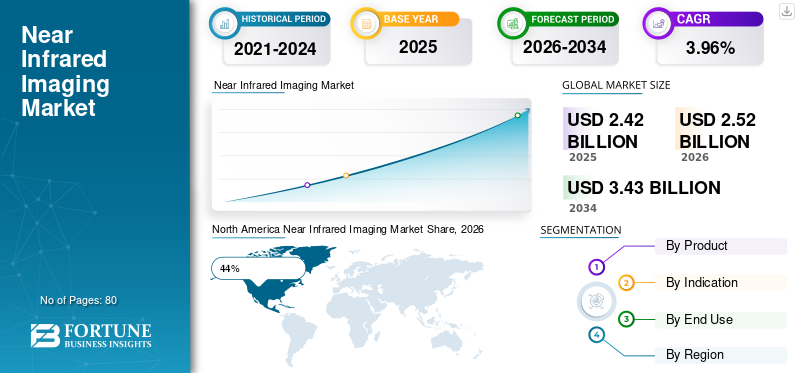
The global near infrared imaging market size was valued at USD 2.42 billion in 2025 and is projected to grow from USD 2.52 billion in 2026 to USD 3.43 billion by 2034, exhibiting a CAGR of 3.96% during the forecast period.

The near infrared imaging market is expanding steadily due to increasing adoption of advanced imaging technologies across surgical visualization, oncology diagnostics, cardiovascular assessment, and preclinical research applications. Near infrared imaging systems provide enhanced tissue visualization, improved image contrast, and real-time fluorescence guidance during minimally invasive procedures. Growing demand for precision diagnostics and image-guided surgeries is accelerating near infrared imaging market Growth across hospitals, research laboratories, and specialty healthcare centers. Healthcare providers are increasingly integrating fluorescence imaging platforms with robotic surgical systems to improve procedural accuracy. Continuous advancements in optical imaging sensors, fluorescence reagents, and AI-assisted image analysis technologies are strengthening near infrared imaging market Trends worldwide.
The North America accounts for 44% share of the near infrared imaging market due to strong healthcare infrastructure, advanced surgical technology adoption, and increasing oncology research activities. More than 72% of major surgical centers in the country utilize fluorescence-guided imaging systems for cancer surgeries and vascular assessments. Growing prevalence of chronic diseases and rising demand for minimally invasive procedures are supporting market expansion. Research institutions and biotechnology companies are investing heavily in preclinical imaging technologies and targeted fluorescence agents. Hospitals are increasingly adopting AI-assisted visualization platforms to improve surgical precision and patient outcomes.
Download Free sample to learn more about this report.
Near Infrared Imaging Market Key Takeaways
 Global Market Size & Forecast
- 2025 Market Size: USD 2.42 Billion
- 2026 Market Size: USD 2.52 Billion
- 2034 Forecast Market Size: USD 3.43 Billion
- CAGR: 3.96% from 2026-2034
 Market Share
- The market in North America dominated with a regional share of 44% in 2025.
- Devices held approximately 63% share of the global market.
- Cancer surgeries accounted for approximately 54% share of the market.
 Key Regional Highlights
North America
North America led the market with a 44% regional share, supported by advanced surgical imaging adoption.
Europe
Europe accounted for 27% of the market, driven by healthcare technology advancements.
Asia-Pacific
Asia-Pacific held 22% share, supported by expanding healthcare infrastructure and research activities.
U.S.
The U.S. remains a major market, supported by strong adoption of fluorescence-guided imaging technologies.
Japan
Japan accounted for 34% of the Asia-Pacific market, supported by advanced medical imaging and surgical technologies.
Read More

Near Infrared Imaging Market Latest Trends
The near infrared imaging market is witnessing rapid technological transformation driven by increasing adoption of fluorescence-guided surgery, AI-assisted imaging analysis, and advanced optical sensor technologies. Healthcare providers are integrating near infrared imaging systems into oncology procedures, cardiovascular diagnostics, and neurosurgical applications to improve real-time tissue visualization and surgical precision. More than 61% of tertiary healthcare institutions now utilize fluorescence imaging technologies for minimally invasive surgical procedures and intraoperative imaging support.
Integration of robotic-assisted surgery platforms with near infrared imaging systems is becoming a major trend across advanced healthcare environments. Pharmaceutical and biotechnology companies are also investing heavily in fluorescence reagents and targeted imaging probes to improve diagnostic specificity. The near infrared imaging market Analysis highlights increasing adoption of portable imaging devices and compact visualization systems for outpatient and ambulatory healthcare settings.
Download Free sample to learn more about this report.
Near Infrared Imaging Market Dynamics
DRIVER
Rising Demand for Fluorescence-Guided Minimally Invasive Surgeries.
The increasing adoption of minimally invasive surgical procedures is a major factor driving near infrared imaging market Growth worldwide. Surgeons are increasingly utilizing near infrared fluorescence imaging systems to improve tissue visualization, identify critical anatomical structures, and enhance procedural accuracy during complex surgeries. More than 67% of advanced oncology surgeries in specialized healthcare institutions utilize fluorescence-guided imaging technologies for real-time tumor visualization and margin assessment. Hospitals are integrating near infrared imaging systems with robotic surgical platforms to improve precision and reduce procedural complications. Growing prevalence of chronic diseases including cancer, cardiovascular disorders, and neurological conditions is further increasing demand for image-guided surgical procedures. Healthcare providers are investing heavily in advanced visualization technologies to improve patient outcomes and reduce hospitalization periods.
RESTRAINT
High Equipment Costs and Limited Reimbursement Support.
The near infrared imaging market faces restraints due to the high cost associated with advanced imaging devices, fluorescence imaging systems, and specialized optical reagents. Hospitals and diagnostic centers require significant capital investment for procurement, integration, and maintenance of near infrared imaging infrastructure. Smaller healthcare facilities and outpatient centers often face financial limitations that restrict adoption of advanced visualization systems. Limited reimbursement support for fluorescence-guided procedures in several healthcare systems also impacts market penetration. More than 39% of healthcare providers in developing regions delay investment in advanced imaging technologies because of budget constraints and uncertain reimbursement frameworks. The requirement for skilled surgical professionals and specialized technical training further increases operational complexity. Regulatory approval procedures for new fluorescence agents and imaging systems may also delay commercialization timelines.
OPPORTUNITY
Expansion of Precision Medicine and Oncology Imaging Applications.
Growing focus on precision medicine and personalized oncology treatment is creating strong near infrared imaging market Opportunities globally. Near infrared imaging technologies are increasingly utilized for targeted tumor visualization, lymph node mapping, and real-time surgical navigation in cancer treatment procedures. More than 58% of oncology research programs now incorporate fluorescence-guided imaging systems for preclinical and clinical applications. Biotechnology companies are investing heavily in targeted fluorescence probes and molecular imaging agents designed to improve diagnostic specificity and treatment planning accuracy. Healthcare institutions are expanding research collaborations focused on image-guided therapies and minimally invasive surgical innovation. The growing use of AI-powered image analysis platforms is improving diagnostic workflow efficiency and enhancing intraoperative decision-making capabilities.
CHALLENGE
Technical Complexity and Standardization Limitations.
The near infrared imaging market faces operational challenges associated with technical complexity, imaging standardization, and integration of advanced visualization systems within existing surgical workflows. Healthcare providers require specialized training to effectively utilize fluorescence-guided imaging technologies during complex procedures. Variations in imaging protocols, fluorescence agent performance, and equipment calibration can impact diagnostic consistency and surgical outcomes. More than 42% of healthcare institutions report operational difficulties related to integration of imaging software with robotic surgical platforms and hospital information systems. Limited standardization across imaging devices and fluorescence technologies may also create interoperability concerns between manufacturers. Research institutions face additional challenges related to clinical validation and regulatory approval of new molecular imaging agents.
Near Infrared Imaging Market Segmentation
By Product
Devices account for 63% share of the near infrared imaging market due to increasing adoption of fluorescence-guided imaging systems across surgical procedures and diagnostic applications. Hospitals and specialty surgical centers are investing heavily in advanced optical imaging platforms capable of providing high-resolution real-time visualization during minimally invasive procedures. More than 69% of tertiary healthcare institutions utilize near infrared imaging devices for oncology surgeries, vascular imaging, and neurological assessments. Manufacturers are introducing compact imaging systems with AI-assisted visualization capabilities and improved fluorescence sensitivity.
Reagents represent 37% share of the near infrared imaging market because of increasing use of fluorescence dyes, contrast agents, and targeted molecular imaging probes in clinical diagnostics and preclinical research. Fluorescence reagents improve tissue visualization and enable accurate identification of tumors, blood vessels, and lymphatic structures during surgical procedures. Biotechnology companies are heavily investing in development of next-generation targeted fluorescence probes with improved specificity and reduced toxicity. Research laboratories and pharmaceutical companies are utilizing advanced reagents for molecular imaging and drug development applications. More than 52% of oncology-focused imaging studies now incorporate targeted fluorescence agents for tumor mapping and therapeutic monitoring.
To know how our report can help streamline your business, Speak to Analyst
By Indication
Preclinical imaging accounts for 46% share of the near infrared imaging market due to rising biotechnology research and pharmaceutical drug development activities. Research organizations and academic institutions increasingly utilize near infrared imaging technologies for molecular imaging, disease modeling, and therapeutic evaluation studies. More than 64% of preclinical oncology research programs utilize fluorescence imaging systems for monitoring tumor progression and treatment response. Biotechnology companies are investing heavily in targeted molecular probes and advanced optical imaging technologies to improve research precision and workflow efficiency.
Cancer surgeries hold 54% share of the near infrared imaging market because of increasing demand for fluorescence-guided tumor visualization and intraoperative navigation technologies. Surgeons utilize near infrared imaging systems to improve tumor margin detection, identify lymphatic structures, and reduce procedural complications during oncology procedures. Hospitals are increasingly adopting image-guided surgical platforms for breast cancer, colorectal cancer, and brain tumor surgeries. More than 71% of advanced oncology surgical centers now integrate fluorescence imaging technologies into minimally invasive cancer procedures. Healthcare providers are also utilizing targeted fluorescence agents to improve surgical precision and optimize patient outcomes.
By End Use
End-use healthcare facilities account for 100% utilization across hospitals, specialty surgical centers, research laboratories, and academic institutions within the near infrared imaging market. Hospitals remain the leading end users due to increasing adoption of fluorescence-guided imaging systems for oncology surgeries and vascular procedures. More than 74% of advanced healthcare institutions utilize near infrared imaging platforms for minimally invasive procedures and intraoperative visualization support. Research laboratories and academic institutions are expanding investment in preclinical imaging technologies and molecular diagnostics research. Specialty surgical centers are also adopting portable fluorescence imaging systems to improve procedural accuracy and workflow efficiency.
Near Infrared Imaging Market Regional Outlook
North America
North America Near Infrared Imaging Market Share, 2025 (%)
To get more information on the regional analysis of this market, Download Free sample
North America dominates the near infrared imaging market with 44% share because of advanced healthcare infrastructure, strong surgical technology adoption, and increasing investment in precision medicine programs. The region records high demand for fluorescence-guided surgical procedures and molecular imaging technologies across oncology, cardiovascular, and neurological applications. Hospitals and research institutions are heavily investing in AI-assisted imaging systems and robotic surgery integration platforms. The United States remains the largest contributor due to extensive use of near infrared imaging systems in cancer surgeries and preclinical imaging research. More than 72% of advanced surgical centers in the region utilize fluorescence-guided imaging technologies during minimally invasive procedures. Canada is also increasing adoption of optical imaging systems for research and diagnostic applications. Biotechnology companies continue expanding development of targeted fluorescence agents and molecular imaging probes.
Europe
Europe accounts for 27% share of the near infrared imaging market supported by growing adoption of minimally invasive imaging technologies and expanding oncology research activities. Healthcare providers across the region are integrating fluorescence-guided surgical systems and advanced optical visualization platforms into clinical practice. More than 59% of tertiary hospitals in Europe utilize near infrared imaging technologies for oncology procedures and vascular diagnostics. Germany, the United Kingdom, France, and Italy remain major contributors because of advanced healthcare infrastructure and strong biotechnology research capabilities. Hospitals are increasingly implementing AI-powered imaging analysis systems to improve diagnostic precision and intraoperative efficiency. Research institutions are also investing heavily in molecular imaging and targeted fluorescence agent development. Expansion of robotic-assisted surgeries and precision medicine initiatives continues supporting near infrared imaging market Opportunities across European healthcare systems.
Germany Near Infrared Imaging Market
Germany holds 31% share within the European near infrared imaging market due to advanced medical imaging infrastructure and strong adoption of fluorescence-guided surgical technologies. Hospitals and research institutions across the country are increasingly utilizing near infrared imaging systems for oncology procedures, vascular diagnostics, and neurological assessments. More than 48% of specialized surgical centers in Germany utilize AI-assisted visualization platforms during minimally invasive procedures. Biotechnology companies are investing heavily in molecular imaging probes and targeted fluorescence agents for clinical applications. Strong healthcare reimbursement support and advanced medical research capabilities continue strengthening imaging technology adoption. Increasing demand for robotic-assisted surgery and precision diagnostics further supports Germany near infrared imaging market Outlook.
United Kingdom Near Infrared Imaging Market
The United Kingdom accounts for 26% share within the European near infrared imaging market because of increasing demand for advanced surgical visualization systems and precision diagnostics technologies. Hospitals and specialty healthcare centers are integrating fluorescence-guided imaging systems into oncology and cardiovascular procedures to improve surgical precision and patient outcomes. Healthcare institutions are increasingly implementing AI-supported imaging analysis software for enhanced diagnostic workflow efficiency. Research organizations are expanding investment in preclinical imaging and molecular diagnostics programs. Rising adoption of minimally invasive surgical procedures and robotic-assisted technologies continues supporting market demand. Government-supported healthcare modernization initiatives and expanding biotechnology research activities further strengthen near infrared imaging market Growth across the United Kingdom.
Asia-Pacific
Asia-Pacific represents 22% share of the near infrared imaging market due to expanding healthcare infrastructure, rising oncology treatment demand, and increasing biotechnology research activities. Countries including Japan, China, South Korea, and Australia are investing heavily in advanced imaging technologies and fluorescence-guided surgical systems. Hospitals are increasingly adopting minimally invasive imaging platforms for oncology procedures and cardiovascular diagnostics. More than 53% of tertiary healthcare institutions across the region utilize advanced optical imaging technologies for precision surgical applications. Biotechnology companies are also expanding development of targeted fluorescence reagents and molecular imaging solutions. Government-supported healthcare modernization programs are improving adoption of digital imaging technologies across urban and regional healthcare facilities. Rising prevalence of chronic diseases and increasing healthcare expenditure continue strengthening near infrared imaging market Forecast throughout Asia-Pacific healthcare systems.
Japan Near Infrared Imaging Market
Japan contributes 34% share within the Asia-Pacific near infrared imaging market because of advanced medical imaging infrastructure and strong investment in precision healthcare technologies. Hospitals and academic institutions are increasingly integrating fluorescence-guided imaging systems into oncology surgeries and preclinical research applications. More than 57% of specialized healthcare facilities in Japan utilize AI-assisted imaging platforms for surgical visualization and diagnostic support. Biotechnology companies are investing in next-generation fluorescence probes and compact imaging systems to improve clinical efficiency. Rising demand for robotic-assisted surgery and minimally invasive procedures continues strengthening imaging technology adoption. Strong healthcare investment and technological innovation further support Japan near infrared imaging market Research Report across multiple clinical applications.
China Near Infrared Imaging Market
China accounts for 9% share within the Asia-Pacific near infrared imaging market due to rapid healthcare modernization and increasing investment in advanced diagnostic imaging technologies. Hospitals and research institutions across the country are adopting fluorescence-guided imaging systems for oncology surgeries and molecular diagnostics applications. More than 46% of tertiary hospitals in China utilize optical imaging platforms for minimally invasive procedures and preclinical imaging studies. Domestic manufacturers are increasing production of imaging devices and fluorescence reagents to improve affordability and accessibility. Government healthcare initiatives are supporting expansion of advanced medical imaging infrastructure throughout urban healthcare systems. Rising biotechnology research activities and increasing prevalence of chronic diseases continue strengthening China near infrared imaging market Insights.
Rest of World
Rest of World holds 7% share of the near infrared imaging market because of improving healthcare infrastructure and increasing adoption of advanced imaging technologies across emerging economies. Countries in Latin America, the Middle East, and Africa are investing in surgical modernization programs and precision diagnostics infrastructure. Hospitals are increasingly adopting portable fluorescence imaging systems for oncology surgeries and vascular procedures. Healthcare providers are implementing minimally invasive imaging technologies to improve procedural accuracy and reduce patient recovery times. Research institutions are also expanding investment in preclinical imaging and molecular diagnostics capabilities. Government-supported healthcare modernization initiatives are improving access to advanced imaging technologies in urban healthcare environments. Biotechnology companies are strengthening regional distribution networks for imaging devices and fluorescence reagents. Rising awareness regarding precision medicine and increasing oncology treatment demand continue supporting near infrared imaging market Size across Rest of World healthcare systems.
List of Top Near Infrared Imaging Market Companies
- Quest Diagnostics Incorporated
- Stryker
- KARL STORZ SE & Co. KG
- Olympus
- Hamamatsu Photonics K.K.
- Mizuho Medical Co., Ltd.
- Shimadzu Corporation
- Leica Microsystems
- Medtronic (Visionsense)
- PerkinElmer
- Zeiss Group
- FLUOPTICS SAS
Top Two Companies with Highest Market Share
- Olympus – 16% market share
- Stryker – 13% market share
Investment Analysis and Opportunities
The near infrared imaging market is attracting substantial investment due to rising demand for fluorescence-guided surgery, precision diagnostics, and advanced molecular imaging technologies. Healthcare institutions are increasing investment in AI-assisted visualization systems and robotic-assisted surgical platforms to improve procedural accuracy and patient outcomes. More than 56% of healthcare technology investors are prioritizing imaging platforms capable of supporting minimally invasive surgical procedures and oncology applications.
Biotechnology companies are investing heavily in targeted fluorescence reagents, molecular probes, and compact optical imaging systems to strengthen product portfolios. Research organizations are also expanding funding for preclinical imaging and translational medicine programs focused on cancer diagnostics and neurological disorders. Emerging healthcare markets are modernizing imaging infrastructure and increasing adoption of portable diagnostic systems, creating additional growth opportunities for manufacturers.
New Product Development
Innovation within the near infrared imaging market is accelerating due to growing demand for compact imaging systems, targeted fluorescence agents, and AI-assisted visualization technologies. Manufacturers are developing high-resolution optical imaging devices capable of delivering enhanced tissue contrast and real-time surgical guidance during minimally invasive procedures. More than 58% of newly introduced imaging systems focus on improving portability, fluorescence sensitivity, and workflow integration.
Biotechnology companies are expanding development of next-generation fluorescence probes with improved targeting accuracy and reduced toxicity profiles. Portable imaging platforms designed for outpatient surgical settings and ambulatory care centers are gaining increasing popularity across healthcare systems. AI-powered image analysis software is also being integrated into imaging devices to improve diagnostic interpretation and intraoperative decision-making efficiency.
Five Recent Developments (2023-2025)
- Olympus expanded fluorescence-guided surgical imaging capabilities in 2024 through development of enhanced near infrared visualization systems.
- Stryker introduced upgraded AI-assisted imaging integration platforms in 2025 for minimally invasive surgical procedures.
- Hamamatsu Photonics K.K. launched advanced optical sensor technologies in 2023 for high-resolution fluorescence imaging applications.
- Medtronic (Visionsense) expanded robotic-assisted imaging solutions in 2024 for precision oncology surgeries and vascular procedures.
- Shimadzu Corporation introduced compact near infrared imaging systems in 2025 targeting outpatient diagnostic and research applications.
Report Coverage of Near Infrared Imaging Market
The near infrared imaging market Report provides comprehensive analysis of industry trends, imaging technologies, and competitive developments across surgical visualization, oncology diagnostics, and molecular imaging applications. The report evaluates major market drivers, restraints, opportunities, and operational challenges influencing adoption of fluorescence-guided imaging systems and optical visualization technologies.
Request for Customization to gain extensive market insights.
The report includes segmentation analysis by device type, reagents, application areas, and end-use healthcare facilities. It highlights increasing adoption of near infrared imaging technologies across preclinical imaging, cancer surgeries, and minimally invasive procedures. Regional analysis covers North America, Europe, Asia-Pacific, and emerging healthcare markets, identifying investment trends and healthcare infrastructure modernization initiatives.
Frequently Asked Questions
Fortune Business Insights says that the global market value stood at USD 2.42 billion in 2025 and is projected to reach USD 3.43 billion by 2034.
The market is expected to exhibit a CAGR of 3.96% during the forecast period of 2026-2034.
Devices were the leading product segment, accounting for 63% of the market, driven by increasing adoption of fluorescence-guided imaging systems in surgical and diagnostic applications.
Key players include Olympus, Stryker, KARL STORZ SE & Co. KG, Hamamatsu Photonics K.K., Mizuho Medical Co., Ltd., and Shimadzu Corporation.
Major trends include rising adoption of fluorescence-guided surgery and AI-assisted imaging and increasing integration with robotic-assisted surgical platforms. North America led the market with a 44% share.



- 2021-2034
- 2025
- 2021-2024
- 80
-

(Offer valid till 15th Oct 2026)
Get 30-60 hrs Free Customization
Expand Regional and Country Coverage, Segments Analysis, Company Profiles, Competitive Benchmarking, and End-user Insights.













.webp)






-
US +1 833 909 2966 ( Toll Free )
-
Get In Touch With Us