Paracetamol IV Market Size, Share & Industry Analysis, By Indication (Pain, Pyrexia), By Application (Surgical, Non-surgical), By End Use (Hospitals, Clinics), and Regional Forecast, 2026-2034
 Download Free Sample
Paracetamol IV Market Overview
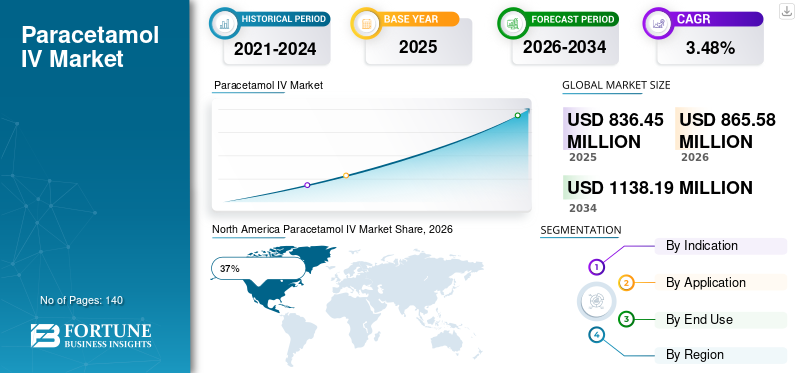
The paracetamol IV market size was valued at USD 836.45 Million in 2025. The market is projected to grow from USD 865.58 Million in 2026 to USD 1,138.19 Million by 2034, exhibiting a CAGR of 3.48% during the forecast period.

The paracetamol IV market is witnessing sustained expansion due to the increasing adoption of intravenous analgesics across hospital settings, emergency care units, intensive care departments, and post-operative treatment facilities. Intravenous paracetamol is widely utilized for rapid pain relief and fever management when oral administration is not feasible. Growing emphasis on opioid-sparing pain management strategies, rising surgical volumes, and expanding healthcare infrastructure are supporting paracetamol IV market growth. Pharmaceutical manufacturers are focusing on sterile manufacturing technologies, improved packaging formats, and wider geographic distribution networks. The Paracetamol IV market report highlights increasing demand from hospitals seeking effective non-opioid analgesic solutions for inpatient care and acute treatment protocols.
The United States represents one of the most established markets for intravenous paracetamol due to advanced hospital infrastructure, high surgical procedure volumes, and strong adoption of multimodal pain management protocols. Healthcare providers increasingly utilize intravenous paracetamol in post-operative recovery programs to reduce opioid dependence and improve patient outcomes. The growing prevalence of trauma cases, orthopedic procedures, and emergency admissions continues to support demand. Procurement contracts between hospitals and pharmaceutical suppliers have strengthened product availability across healthcare facilities. In addition, clinical guidelines promoting non-opioid pain control have encouraged broader use of intravenous formulations in surgical wards, intensive care units, and ambulatory care centers.
Download Free sample to learn more about this report.
Paracetamol IV Market Key Takeaways
 Global Market Size & Forecast
- 2025 Market Size: USD 836.45 Million
- 2026 Market Size: USD 865.58 Million
- 2034 Forecast Market Size: USD 1,138.19 Million
- CAGR: 3.48% from 2026–2034
 Market Share
- North America dominated with a revenue share of 37% in 2025.
- Pain indications held the largest indication share at approximately 61%.
- Hospitals accounted for the largest end-use share at approximately 72%.
 Key Regional Highlights
North America
North America led the market with a 37% share in 2025, supported by strong hospital infrastructure and demand for intravenous pain management.
Europe
Europe accounted for 29% of the market, driven by established healthcare systems and rising surgical procedures.
Asia-Pacific
Asia-Pacific held a 25% share, supported by expanding healthcare infrastructure and increasing hospital admissions.
U.S
The U.S. market is supported by high surgical volumes, advanced hospital systems, and growing adoption of multimodal pain management.
Japan
Japan accounted for 18% of the Asia-Pacific market, supported by advanced healthcare services and demand for effective inpatient pain and fever management.
Read More

Paracetamol IV Market Latest Trends
The paracetamol IV market analysis indicates a growing shift toward multimodal pain management approaches in healthcare institutions. Hospitals are increasingly combining intravenous paracetamol with other non-opioid therapies to enhance pain control while minimizing opioid exposure. This trend is particularly visible in orthopedic surgery, cardiac procedures, and outpatient surgical programs. Healthcare administrators are also emphasizing shorter recovery periods, creating demand for fast-acting intravenous analgesics.
Download Free sample to learn more about this report.
Another notable paracetamol IV market Trend involves the expansion of generic intravenous formulations across emerging economies. Pharmaceutical companies are investing in sterile injectable manufacturing capabilities to meet hospital procurement requirements. Demand for ready-to-use infusion bags and single-dose packaging formats is increasing because these solutions reduce medication preparation time and improve clinical workflow efficiency. Digital hospital inventory systems and centralized procurement platforms are further supporting market penetration. The paracetamol IV industry report also highlights rising adoption within pediatric and geriatric care segments where rapid fever control and precise dosing are essential clinical priorities.
Paracetamol IV Market Dynamics
DRIVER
Rising Demand for Non-Opioid Pain Management Solutions
The primary growth driver in the paracetamol IV market is the increasing demand for effective non-opioid analgesic therapies. Healthcare systems worldwide are implementing strategies to reduce opioid prescriptions while maintaining high standards of pain management. Intravenous paracetamol has emerged as a preferred option because it provides rapid analgesic and antipyretic effects without the addiction risks associated with opioid medications. Hospitals are integrating intravenous paracetamol into enhanced recovery after surgery programs, helping improve patient mobility and post-operative outcomes.
The rising number of surgical procedures globally is also contributing significantly to market expansion. Orthopedic surgeries, gastrointestinal procedures, cardiac interventions, and trauma care frequently require immediate pain control, creating strong demand for intravenous formulations. Furthermore, growing awareness among clinicians regarding opioid-sparing treatment protocols has accelerated adoption. The paracetamol IV market research report identifies increased utilization across intensive care units and emergency departments as a key factor strengthening long-term market demand.
RESTRAINT
Availability of Alternative Analgesic Therapies
One of the major restraints affecting the paracetamol IV market is the availability of numerous alternative pain management therapies. Nonsteroidal anti-inflammatory drugs, regional anesthesia techniques, opioid medications, and combination analgesic regimens continue to compete with intravenous paracetamol across healthcare facilities. In several regions, clinicians may prefer established therapeutic protocols that limit the adoption of newer intravenous pain management options.
Pricing pressures within hospital procurement systems also influence purchasing decisions. Public healthcare institutions often prioritize low-cost therapeutic alternatives when budgets are constrained. Additionally, strict regulatory requirements associated with sterile injectable manufacturing can increase operational expenses for pharmaceutical companies. Supply chain disruptions involving active pharmaceutical ingredients and packaging materials may create temporary shortages that affect product availability. These factors can slow penetration rates in certain developing healthcare markets despite rising clinical demand for effective intravenous analgesic products.
OPPORTUNITY
Expansion of Healthcare Infrastructure in Emerging Economies
Significant opportunities are emerging from the rapid modernization of healthcare infrastructure across Asia-Pacific, Latin America, and parts of the Middle East. Governments are investing heavily in hospital construction, critical care facilities, surgical centers, and emergency medicine departments. These developments are creating favorable conditions for wider adoption of intravenous paracetamol products.
The paracetamol IV market outlook remains positive as pharmaceutical companies strengthen distribution partnerships and establish regional manufacturing capabilities. Growing healthcare expenditure and increased patient access to advanced treatments are encouraging healthcare providers to adopt intravenous formulations for acute pain and fever management. Opportunities are also developing in pediatric care, oncology support services, and post-operative rehabilitation programs. Manufacturers introducing cost-effective generic products can further expand market reach among public hospitals and healthcare networks seeking clinically effective yet affordable therapeutic solutions.
CHALLENGE
Regulatory Compliance and Manufacturing Complexity
A major challenge within the paracetamol IV market involves maintaining compliance with stringent pharmaceutical manufacturing standards. Intravenous formulations require highly controlled sterile production environments, rigorous quality testing, and comprehensive validation procedures. Regulatory agencies impose strict requirements related to contamination control, packaging integrity, and product stability, increasing operational complexity.
Manufacturers must continuously invest in advanced production technologies and quality assurance systems to maintain regulatory approval. Any production disruption can result in supply shortages affecting healthcare providers and procurement agencies. Furthermore, increasing competition from generic manufacturers creates pricing pressure across multiple markets. Companies must balance affordability with quality and regulatory compliance while sustaining profitability. The paracetamol IV industry analysis also identifies transportation and cold-chain management requirements as operational challenges for suppliers serving geographically diverse healthcare networks.
Paracetamol IV Market Segmentation
By Indication
The pain segment dominates the paracetamol IV market and accounts for approximately 61% market share. Intravenous paracetamol is extensively used in post-operative pain management, trauma treatment, orthopedic procedures, and emergency medicine settings. Hospitals favor this formulation because it provides rapid onset of analgesic action and supports opioid-sparing treatment strategies. Increasing emphasis on enhanced recovery protocols has further strengthened demand across surgical departments.
The paracetamol IV market Size for pain management applications continues to expand due to rising surgical volumes worldwide. Healthcare providers increasingly administer intravenous paracetamol before, during, and after procedures to improve patient comfort and reduce dependence on stronger narcotic medications. Demand is particularly strong in cardiac surgery, abdominal surgery, and joint replacement procedures. Pharmaceutical manufacturers are responding through expanded production capacity and improved supply chain capabilities designed specifically for hospital procurement channels.
The pyrexia segment represents approximately 39% market share and remains a critical component of the paracetamol IV market forecast. Intravenous administration is especially beneficial for patients experiencing severe fever who cannot tolerate oral medications because of gastrointestinal complications, unconsciousness, or critical illness. Intensive care units frequently utilize intravenous paracetamol for rapid temperature management in hospitalized patients.
Growing prevalence of infectious diseases and increasing hospital admissions associated with acute fever episodes are supporting segment demand. Pediatric and geriatric populations are significant contributors because healthcare providers often require precise dosing and immediate therapeutic response. The paracetamol IV market Insights indicate rising use of intravenous antipyretic therapies in emergency departments and specialty care facilities. As healthcare systems focus on improving inpatient treatment outcomes, demand for intravenous fever management solutions is expected to remain stable across developed and emerging markets.
To know how our report can help streamline your business, Speak to Analyst
By Application
The surgical segment accounts for nearly 58% of the paracetamol IV market share. Surgical patients frequently require immediate pain control during the perioperative period, making intravenous paracetamol a valuable component of multimodal analgesia programs. Hospitals utilize these formulations to improve recovery experiences and reduce opioid-related complications.
Growing numbers of orthopedic, cardiovascular, neurological, and gastrointestinal procedures are driving segment expansion. Intravenous administration ensures rapid therapeutic delivery, supporting effective pain management during critical recovery phases. Healthcare facilities increasingly include intravenous paracetamol within standardized surgical care pathways to improve patient satisfaction and operational efficiency. The paracetamol IV market research report highlights particularly strong adoption among large tertiary care hospitals and specialized surgical centers seeking evidence-based pain management solutions.
The non-surgical segment holds approximately 42% market share and includes emergency care, intensive care treatment, infectious disease management, and trauma services. Intravenous paracetamol is commonly administered when rapid fever reduction or pain control is required in hospitalized patients who cannot receive oral medication.
The segment benefits from increasing emergency admissions, rising chronic disease burden, and expanding critical care infrastructure. Healthcare professionals value intravenous paracetamol because of its favorable safety profile and broad applicability across patient populations. Demand is also growing within oncology support services and respiratory care programs where effective symptom management remains essential. The paracetamol IV market opportunities within non-surgical applications continue to expand as healthcare systems modernize acute care facilities and strengthen emergency medicine capabilities.
By End Use
Hospitals represent approximately 72% of the paracetamol IV market and remain the largest end-use category. Large healthcare institutions perform the majority of surgical procedures and manage complex inpatient cases requiring intravenous therapies. Procurement departments increasingly prioritize reliable suppliers capable of meeting high-volume demand and stringent quality standards.
Hospital adoption is supported by growing utilization of enhanced recovery programs, emergency treatment protocols, and critical care services. Intravenous paracetamol is widely integrated into medication formularies because of its effectiveness in pain and fever management. The paracetamol IV market growth within hospitals is further strengthened by expanding healthcare infrastructure investments and rising patient admissions globally.
Clinics account for approximately 28% market share and are emerging as important users of intravenous paracetamol products. Specialty clinics, ambulatory surgery centers, and outpatient treatment facilities increasingly administer intravenous medications to improve patient outcomes and treatment efficiency.
The growing shift toward outpatient procedures has enhanced demand within this segment. Clinics benefit from ready-to-use intravenous formulations that simplify medication administration and reduce preparation requirements. Expansion of same-day surgical programs and specialized treatment centers continues to support segment growth. Pharmaceutical suppliers are increasingly targeting clinic networks through tailored distribution strategies and product packaging designed for lower-volume healthcare environments.
Paracetamol IV Market Regional Outlook
North America
North America Paracetamol IV Market Share, 2025 (%)
To get more information on the regional analysis of this market, Download Free sample
North America holds approximately 37% of the global paracetamol IV market share. The region benefits from advanced healthcare infrastructure, strong hospital purchasing power, and widespread implementation of multimodal pain management protocols. Healthcare providers increasingly favor intravenous paracetamol as part of opioid reduction strategies, particularly within post-operative care settings. Large-scale adoption across emergency departments and intensive care units supports sustained demand.
The United States remains the primary contributor due to high surgical procedure volumes and strong reimbursement structures. Canada also demonstrates increasing utilization driven by healthcare modernization initiatives and clinical focus on non-opioid analgesics. Pharmaceutical manufacturers maintain extensive distribution networks throughout the region, ensuring consistent product availability. The North America paracetamol IV market outlook remains favorable due to ongoing investments in hospital services, patient safety programs, and evidence-based pain management practices.
Europe
Europe accounts for approximately 29% of the global paracetamol IV market share. The region demonstrates strong adoption of intravenous analgesics due to established healthcare systems, growing elderly populations, and increasing numbers of surgical procedures. Hospitals across Western Europe continue to implement enhanced recovery programs that emphasize reduced opioid usage and improved patient outcomes.
Government-supported healthcare frameworks facilitate broad access to intravenous medications across public and private institutions. Demand remains particularly strong in Germany, the United Kingdom, France, and Italy. Manufacturers operating within Europe benefit from sophisticated pharmaceutical distribution channels and high clinical awareness regarding intravenous pain management. The Paracetamol IV industry analysis suggests continued expansion driven by aging demographics, chronic disease management requirements, and ongoing healthcare infrastructure improvements.
Germany Paracetamol IV Market
Germany represents approximately 24% of the European paracetamol IV market. The country’s advanced hospital network, strong pharmaceutical sector, and high volume of surgical interventions support robust demand for intravenous analgesic products. Healthcare providers frequently incorporate intravenous paracetamol into perioperative treatment protocols aimed at reducing opioid consumption and improving recovery outcomes.
The German healthcare system emphasizes evidence-based treatment approaches and patient safety standards, encouraging adoption of reliable intravenous medications. Increasing demand for pain management solutions in orthopedic, cardiovascular, and oncology care settings continues to strengthen market performance. Pharmaceutical manufacturers benefit from established procurement systems and strong clinical acceptance of non-opioid therapies. Growing investment in hospital modernization and critical care services is expected to sustain demand across major healthcare facilities.
United Kingdom paracetamol IV market
The United Kingdom contributes approximately 21% of the European paracetamol IV market. National healthcare institutions increasingly prioritize efficient pain management strategies that reduce opioid exposure and support enhanced patient recovery. Intravenous paracetamol is widely used within surgical departments, emergency medicine units, and critical care environments.
Rising demand for same-day procedures and outpatient surgical services has encouraged broader use of fast-acting intravenous therapies. Healthcare providers value the medication’s safety profile and compatibility with multimodal analgesia programs. Continued investment in healthcare infrastructure and clinical service expansion is supporting long-term market development. Procurement initiatives emphasizing quality and cost-effectiveness have also strengthened opportunities for manufacturers supplying intravenous paracetamol products across the United Kingdom.
Asia-Pacific
Asia-Pacific holds approximately 25% of the global paracetamol IV market share and represents one of the fastest-developing regional markets. Rapid urbanization, expanding healthcare infrastructure, and increasing healthcare expenditure are creating substantial opportunities for pharmaceutical manufacturers. Rising awareness regarding modern pain management techniques is accelerating adoption across hospitals and specialty treatment centers.
Countries throughout the region are investing in advanced surgical facilities, emergency care departments, and critical care services. Expanding patient populations and increasing prevalence of chronic illnesses further support market demand. Generic pharmaceutical manufacturers play a significant role by improving affordability and accessibility. The Asia-Pacific paracetamol IV market forecast remains positive due to continuing healthcare modernization and rising demand for high-quality intravenous therapeutic solutions.
Japan Paracetamol IV Market
Japan accounts for approximately 18% of the Asia-Pacific paracetamol IV market. The country’s aging population and sophisticated healthcare system create strong demand for effective pain and fever management solutions. Hospitals increasingly utilize intravenous paracetamol for surgical recovery, geriatric care, and critical care treatment programs.
Healthcare providers prioritize therapies that offer strong safety profiles and predictable clinical outcomes. Intravenous paracetamol aligns with these objectives and is commonly integrated into perioperative care pathways. Technological advancements in healthcare delivery and growing focus on patient-centered treatment continue to support market growth. Pharmaceutical suppliers benefit from stable regulatory frameworks and strong institutional demand across major healthcare networks.
China Paracetamol IV Market
China contributes approximately 34% of the Asia-Pacific paracetamol IV market. Rapid expansion of healthcare infrastructure, increasing hospital admissions, and significant government investment in medical services have strengthened market demand. Large patient populations and growing awareness of advanced pain management techniques continue to drive adoption.
Chinese hospitals are increasingly implementing modern perioperative care protocols that incorporate non-opioid analgesics. Domestic pharmaceutical manufacturers are expanding production capabilities to meet rising demand for intravenous medications. Growing numbers of surgeries, emergency treatments, and intensive care admissions support continued market development. Improvements in healthcare accessibility and distribution networks are further enhancing the availability of intravenous paracetamol products across urban and regional healthcare facilities.
Rest of World
The Rest of World region accounts for approximately 9% of the global paracetamol IV market share. Latin America, the Middle East, and Africa are experiencing gradual adoption of intravenous analgesic therapies as healthcare infrastructure improves. Governments and private healthcare providers are investing in hospital expansion, surgical services, and emergency care capabilities.
Demand is particularly evident in urban healthcare centers where advanced treatment options are becoming more accessible. International pharmaceutical companies continue to expand regional distribution networks and strategic partnerships. Increasing awareness regarding opioid-sparing pain management and rising surgical procedure volumes are supporting market penetration. Although infrastructure limitations remain in certain areas, ongoing healthcare modernization initiatives are expected to strengthen long-term opportunities for intravenous paracetamol manufacturers.
List of Top Paracetamol IV Companies
- Mallinckrodt (Mallinckrodt Pharmaceuticals)
- Cipla Inc.
- Lupin
- Dr Reddy's Laboratories Ltd.
- Aurobindo Pharma
- Sun Pharmaceutical Industries Limited
- Novartis AG
- Pfizer Inc.
- Abbott
- Sanofi
- Bristol-Myers Squibb Company
Top Two Companies by market share
- Mallinckrodt (Mallinckrodt Pharmaceuticals) – 18%
- Pfizer Inc. – 14%
Investment Analysis and Opportunities
The paracetamol IV market is attracting significant investment from pharmaceutical manufacturers focused on sterile injectable production. Companies are expanding manufacturing facilities, upgrading quality control systems, and strengthening supply chain resilience to meet growing hospital demand. Investment activity is particularly strong in Asia-Pacific, where healthcare infrastructure expansion is creating new procurement opportunities for injectable medications.
Private and public healthcare investments are also supporting demand growth through hospital construction projects, critical care unit expansion, and modernization of surgical facilities. Strategic partnerships between pharmaceutical companies and healthcare distributors are enhancing product accessibility across emerging markets. The paracetamol IV market opportunities are further strengthened by rising adoption of generic formulations and increasing demand for cost-effective analgesic therapies. Investors are focusing on manufacturers capable of delivering regulatory compliance, scalable production, and reliable distribution capabilities. Emerging opportunities also exist in advanced packaging technologies, ready-to-use infusion systems, and specialized formulations designed for pediatric and geriatric patient populations.
New Product Development
Innovation within the paracetamol IV market is centered on improving convenience, safety, and operational efficiency for healthcare providers. Manufacturers are introducing ready-to-administer infusion bags, advanced packaging systems, and improved vial technologies that reduce preparation time and minimize medication errors. These developments support hospital workflow optimization while maintaining high standards of patient care.
Research efforts are also focused on extending product stability, enhancing sterility assurance, and developing packaging solutions that support longer shelf life. Pharmaceutical companies continue investing in manufacturing automation and digital quality monitoring systems to improve production consistency. New product development strategies increasingly target specialized healthcare settings such as pediatric care units, ambulatory surgery centers, and intensive care facilities. The paracetamol IV market trends indicate growing emphasis on user-friendly delivery formats that simplify administration and support efficient inventory management across healthcare institutions.
Five Recent Developments (2023-2025)
- Mallinckrodt expanded injectable pharmaceutical production capabilities to strengthen hospital supply availability.
- Multiple generic pharmaceutical manufacturers increased intravenous paracetamol distribution across Asia-Pacific healthcare networks.
- Leading suppliers introduced enhanced sterile packaging technologies for hospital-use intravenous analgesics.
- Several healthcare systems incorporated intravenous paracetamol into updated opioid-reduction and multimodal pain management protocols.
- Pharmaceutical companies invested in manufacturing automation and quality assurance technologies to improve injectable product reliability.
Report Coverage
The paracetamol IV market report provides comprehensive analysis of industry structure, competitive positioning, demand patterns, and emerging growth opportunities. The report evaluates market performance across indications, applications, end-use sectors, and geographic regions. It examines factors influencing hospital procurement decisions, healthcare infrastructure development, and pharmaceutical manufacturing strategies.
Request for Customization to gain extensive market insights.
The paracetamol IV market research report also covers key industry participants, distribution networks, technological advancements, regulatory frameworks, and investment trends. Detailed segmentation analysis highlights demand variations across pain management, pyrexia treatment, surgical applications, non-surgical care, hospitals, and clinics. Regional assessments evaluate market conditions across North America, Europe, Asia-Pacific, and Rest of World territories. The report further explores competitive dynamics, product innovation initiatives, healthcare modernization programs, and strategic opportunities shaping future industry development.
Frequently Asked Questions
According to Fortune Business Insights, the global Paracetamol IV market was valued at USD 836.45 million in 2025 and is projected to reach USD 1,138.19 million by 2034.
The market is expected to grow at a CAGR of 3.48% during the forecast period of 2026–2034.
Pain was the leading indication segment, accounting for approximately 61% of the market, driven by extensive use in post-operative pain management, trauma care, and opioid-sparing treatment strategies.
Key players include Mallinckrodt, Cipla Inc., Lupin, Dr. Reddy's Laboratories Ltd., Aurobindo Pharma, and Sun Pharmaceutical Industries Limited.
Major trends include the growing shift toward multimodal, opioid-sparing pain management and the expansion of generic intravenous formulations, ready-to-use infusion bags, and single-dose packaging. North America led the market with a 37% share.



- 2021-2034
- 2025
- 2021-2024
- 140
-

(Offer valid till 15th Oct 2026)
Get 30-60 hrs Free Customization
Expand Regional and Country Coverage, Segments Analysis, Company Profiles, Competitive Benchmarking, and End-user Insights.













.webp)






-
US +1 833 909 2966 ( Toll Free )
-
Get In Touch With Us