Parenteral Nutrition Market Size, Share & Industry Analysis, By Nutrient Type (Carbohydrates, Parenteral Lipid Emulsion, Vitamins & Minerals), By Stage Type (Others), By Indication, By Sales Channel (Online, Retail), and Regional Forecast, 2026–2034
 Download Free Sample
Parenteral Nutrition Market Overview
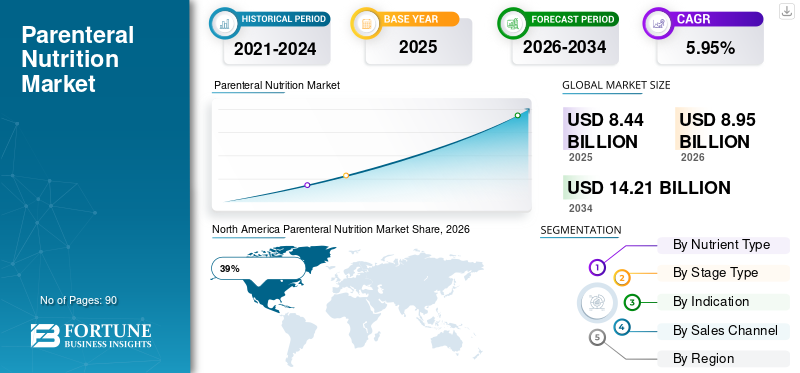
The global parenteral nutrition market size was valued at USD 8.44 billion in 2025. The market is projected to grow from USD 8.95 billion in 2026 to USD 14.21 billion by 2034, exhibiting a CAGR of 5.95% during the forecast period.

The parenteral nutrition market is expanding steadily due to rising prevalence of gastrointestinal disorders, malnutrition cases, premature births, and chronic diseases requiring intravenous nutritional support. Hospitals, specialty clinics, and home healthcare providers are increasingly adopting advanced nutritional infusion therapies for patients unable to consume food orally. The parenteral nutrition market Report highlights growing demand for amino acid formulations, lipid emulsions, vitamins, and trace mineral solutions across critical care settings. Increasing surgical procedures and long-term intensive care admissions are supporting parenteral nutrition market Growth globally. Technological advancements in sterile compounding systems and multi-chamber bags are also improving treatment efficiency and patient safety within the Parenteral Nutrition Industry Analysis landscape.
The USA parenteral nutrition market remains one of the largest healthcare nutrition sectors because of advanced hospital infrastructure, rising incidence of digestive disorders, and growing elderly population requiring nutritional support therapies. More than 34% of critically ill patients in intensive care settings require nutritional infusion management during treatment periods. Hospitals across the country are increasing adoption of ready-to-use parenteral nutrition formulations to reduce contamination risks and improve operational workflow. Home healthcare nutrition services are also expanding rapidly due to rising preference for outpatient treatment solutions. The parenteral nutrition market Outlook for the United States remains strong because of advanced pharmaceutical manufacturing capabilities and increasing investments in specialized clinical nutrition products.
Download Free sample to learn more about this report.
Parenteral Nutrition Market Key Takeaways
 Global Market Size & Forecast
- 2025 Market Size: USD 8.44 Billion
- 2026 Market Size: USD 8.95 Billion
- 2034 Forecast Market Size: USD 14.21 Billion
- CAGR: 5.95% from 2026-2034
 Market Share
- The market in North America dominated with a regional share of 39% in 2025.
- Carbohydrates held approximately 41% share of the global market.
- Adult applications accounted for approximately 62% share of the market.
 Key Regional Highlights
North America
North America led the market with a 39% regional share, supported by advanced critical care infrastructure.
Europe
Europe accounted for 28% of the market, driven by rising demand for specialized nutritional therapies.
Asia-Pacific
Asia-Pacific held 24% share, supported by expanding healthcare facilities and nutritional care programs.
U.S.
The U.S. remains a major market, supported by strong demand for nutritional therapies in hospitals and home healthcare.
Japan
Japan accounted for 19% of the Asia-Pacific market, supported by advanced healthcare infrastructure and an aging population.
Read More

Parenteral Nutrition Market Latest Trends
The parenteral nutrition market is witnessing major transformation due to increasing demand for personalized nutritional therapies and advanced intravenous feeding technologies. Healthcare providers are increasingly adopting ready-to-use multi-chamber parenteral nutrition bags that simplify preparation procedures and reduce contamination risks in hospital environments. Automated compounding systems and digital infusion monitoring technologies are improving dosage precision and patient safety across critical care settings. Rising prevalence of gastrointestinal diseases, cancer-related malnutrition, and chronic metabolic disorders is also accelerating clinical demand for specialized nutritional formulations.
Lipid emulsions containing omega fatty acids and balanced nutrient compositions are gaining popularity because of improved patient tolerance and reduced inflammatory complications. Pediatric nutritional therapies are becoming increasingly specialized with formulations designed for premature infants and neonatal intensive care patients. The parenteral nutrition market Research Report highlights growing investment in home healthcare nutrition programs that support long-term treatment outside hospital settings. Telehealth integration and remote infusion monitoring are also improving treatment management efficiency.
Download Free sample to learn more about this report.
Parenteral Nutrition Market Dynamics
DRIVER
Rising Prevalence of Gastrointestinal and Chronic Diseases.
Increasing incidence of gastrointestinal disorders, cancer, Crohn’s disease, short bowel syndrome, and severe malnutrition is significantly driving parenteral nutrition market Growth worldwide. Patients suffering from digestive complications often require intravenous nutritional support when oral or enteral feeding becomes ineffective. Hospitals and intensive care units are witnessing higher demand for amino acid solutions, lipid emulsions, and micronutrient supplementation therapies. Growing elderly population and rising number of premature births are further increasing demand for specialized nutritional care. The parenteral nutrition market Analysis also highlights strong growth in home healthcare nutrition services due to increasing preference for long-term outpatient treatment. Technological advancements in sterile infusion systems and multi-chamber nutritional bags continue improving treatment safety and operational efficiency across healthcare facilities.
RESTRAINT
High Risk of Bloodstream Infections and Metabolic Complications.
The parenteral nutrition market faces significant restraints because intravenous nutritional therapy carries risks associated with catheter-related bloodstream infections and metabolic abnormalities. Long-term infusion treatment may lead to liver dysfunction, electrolyte imbalance, and micronutrient deficiencies when nutritional management is not properly monitored. Healthcare facilities must maintain strict sterile handling procedures and advanced monitoring protocols to minimize complications. Smaller hospitals and clinics often face limitations in accessing specialized compounding equipment and trained clinical nutrition professionals. High dependency on hospital infrastructure and skilled pharmacists also increases operational complexity for treatment providers. The parenteral nutrition market Forecast indicates that patient safety concerns and strict regulatory compliance requirements may limit adoption across certain developing healthcare systems.
OPPORTUNITY
Expansion of Home Healthcare Nutrition Services.
Growing demand for home-based clinical care is creating substantial parenteral nutrition market Opportunities worldwide. Patients requiring long-term nutritional support increasingly prefer outpatient treatment options that reduce hospitalization duration and healthcare costs. Home infusion therapy providers are investing in portable infusion pumps, remote patient monitoring systems, and customized nutritional formulations to improve treatment convenience. Rising elderly population and increasing prevalence of chronic digestive disorders are supporting expansion of home healthcare nutritional services globally. Pharmaceutical companies are also developing user-friendly ready-to-administer formulations that simplify treatment administration outside hospital environments. The Parenteral Nutrition Industry Analysis highlights increasing partnerships between hospitals, infusion service providers, and specialty pharmacies to strengthen long-term patient care management.
CHALLENGE
Rising Manufacturing and Sterile Production Costs.
Manufacturers operating in the parenteral nutrition market face major challenges related to sterile production requirements, raw material sourcing, and quality compliance standards. Production of intravenous nutritional formulations requires advanced cleanroom facilities, contamination control systems, and specialized packaging technologies. Supply chain disruptions involving amino acids, lipid components, and trace minerals may affect production consistency and inventory availability. Regulatory requirements regarding pharmaceutical sterility and product stability further increase operational complexity for manufacturers. Healthcare providers also face financial pressure associated with long-term nutritional therapy management and infusion monitoring systems. The parenteral nutrition market Research Report highlights that maintaining product quality while controlling manufacturing expenses remains a major operational challenge across the industry.
Parenteral Nutrition Market Segmentation
By Nutrient Type
Carbohydrates account for 41% of the global parenteral nutrition market Share because glucose-based formulations remain essential energy sources in intravenous nutritional therapy. Hospitals and intensive care units widely use carbohydrate solutions for critically ill patients requiring rapid nutritional supplementation. Increasing surgical procedures and gastrointestinal disorder cases continue driving demand for dextrose-based parenteral formulations globally. Manufacturers are developing balanced glucose infusion products that improve metabolic stability and reduce complications associated with prolonged intravenous nutrition. Home healthcare providers are also adopting portable infusion systems that support carbohydrate administration for long-term outpatient care.
Parenteral lipid emulsion products represent 36% of the global parenteral nutrition market Share due to growing use of intravenous fat emulsions for energy supplementation and immune support. Omega fatty acid-enriched lipid formulations are gaining popularity because they help reduce inflammatory responses and improve patient recovery outcomes. Hospitals increasingly prefer mixed-oil lipid emulsions that combine soybean oil, olive oil, and fish oil components for balanced nutritional delivery. Pediatric and neonatal intensive care units are witnessing rising demand for specialized lipid therapies designed for premature infants.
Vitamins and minerals contribute 23% of the global parenteral nutrition market Share because micronutrient supplementation remains essential for patients receiving long-term intravenous feeding therapy. Critical care patients often require trace elements, electrolytes, and vitamin formulations to maintain metabolic balance and support immune function. Hospitals are increasing adoption of customized micronutrient blends tailored to individual patient conditions and nutritional deficiencies. Rising prevalence of chronic diseases and malnutrition cases is further strengthening demand for intravenous vitamin supplementation therapies. Pharmaceutical manufacturers are developing stable multi-vitamin formulations with improved compatibility and longer storage capabilities.
To know how our report can help streamline your business, Speak to Analyst
By Stage Type
Adult applications account for 62% of the global parenteral nutrition market Share due to rising incidence of cancer, gastrointestinal disorders, and critical illness among aging populations. Intensive care units and surgical recovery departments remain major users of adult nutritional infusion therapies. Hospitals increasingly adopt personalized nutrient formulations that address patient-specific metabolic requirements and recovery needs. Long-term nutritional support for chronic digestive disorders and oncology treatment patients is also expanding rapidly. Home infusion therapy programs are becoming more common among adults requiring continuous nutritional supplementation outside hospital settings. The parenteral nutrition market Outlook highlights strong demand for portable infusion systems and remote monitoring technologies within adult patient care management.
Pediatric applications represent 21% of the global parenteral nutrition market Share because premature infants and neonatal intensive care patients frequently require specialized nutritional support therapies. Pediatric nutritional formulations are carefully designed to support growth, organ development, and metabolic stability in vulnerable patient populations. Hospitals are increasing investment in neonatal nutritional management systems and pediatric infusion safety technologies. Specialized amino acid formulations and balanced lipid emulsions are becoming increasingly important within pediatric care environments. The parenteral nutrition market Research Report highlights growing focus on minimizing complications and improving long-term developmental outcomes among neonatal patients receiving intravenous nutritional therapy.
By Indication-based applications contribute 11% of the global parenteral nutrition market Share due to rising use of intravenous nutrition for conditions such as short bowel syndrome, severe pancreatitis, inflammatory bowel disease, and cancer-associated malnutrition. Patients undergoing gastrointestinal surgery or chemotherapy frequently require temporary or long-term nutritional supplementation through intravenous administration. Hospitals and specialty clinics are implementing advanced nutritional assessment protocols to improve treatment precision and recovery outcomes. Demand for disease-specific nutritional formulations continues increasing among healthcare providers seeking personalized patient care solutions.
By Sales Channel
Online and retail sales channels account for 6% of the global parenteral nutrition market Share because healthcare providers increasingly prefer digital procurement systems and specialized pharmacy distribution networks. Hospitals and home healthcare providers are adopting online ordering platforms to improve inventory management and supply chain efficiency. Retail pharmacy participation is also increasing for supplementary nutritional products and infusion accessories. Digital healthcare procurement systems help improve product availability and streamline distribution processes across clinical facilities. Manufacturers are investing in cold-chain logistics systems and secure pharmaceutical transportation networks to support expanding online sales activity.
Parenteral Nutrition Market Regional Outlook
North America
North America Parenteral Nutrition Market Share, 2025 (%)
To get more information on the regional analysis of this market, Download Free sample
North America dominates the parenteral nutrition market with 39% market share due to strong healthcare infrastructure, advanced pharmaceutical production capabilities, and increasing use of intravenous nutritional therapies in critical care settings. Hospitals throughout the region widely use amino acid formulations, lipid emulsions, vitamins, and micronutrient supplements for patients suffering from gastrointestinal disorders, cancer-associated malnutrition, and severe metabolic diseases. Intensive care units remain major end users because critically ill patients frequently require long-term nutritional support during treatment and recovery periods. The United States remains the largest contributor within the region due to high surgical procedure volumes and rising prevalence of chronic digestive disorders. Healthcare providers are increasingly adopting ready-to-use nutritional formulations and automated compounding systems to improve operational efficiency and reduce contamination risks. Canada is also witnessing rising demand for pediatric nutritional support and neonatal intensive care therapies.
Europe
Europe accounts for 28% of the global parenteral nutrition market Share because of advanced healthcare systems, increasing elderly population, and strong clinical nutrition management practices. Hospitals and specialty clinics across the region are increasingly adopting parenteral lipid emulsions, amino acid solutions, and micronutrient supplementation therapies for critically ill and post-surgical patients. Rising prevalence of inflammatory bowel disease, cancer, and malnutrition cases continues supporting regional market expansion. Healthcare providers are investing heavily in sterile pharmaceutical technologies and automated infusion systems to improve patient safety and treatment precision. Western European countries remain major contributors due to extensive healthcare reimbursement systems and strong pharmaceutical research infrastructure. Home healthcare nutrition services are becoming increasingly popular because long-term outpatient treatment reduces hospitalization burden and improves patient convenience. Pediatric nutritional support programs and neonatal intensive care units are also contributing significantly to market demand.
Germany Parenteral Nutrition Market
Germany represents 27% of the European parenteral nutrition market Share because of advanced pharmaceutical manufacturing infrastructure and strong hospital care systems. Intensive care units and specialty clinics across the country increasingly use intravenous nutritional therapies for surgical recovery, chronic digestive disorders, and oncology treatment support. Hospitals are investing in automated nutrient compounding systems and advanced infusion monitoring technologies to improve clinical outcomes and reduce operational errors. Rising elderly population and increasing prevalence of gastrointestinal diseases continue driving long-term nutritional therapy demand throughout Germany. Home healthcare nutritional support programs are also expanding steadily due to increasing preference for outpatient treatment services. The parenteral nutrition market Forecast for Germany remains positive because healthcare providers continue strengthening investments in sterile pharmaceutical technologies and personalized nutritional care systems.
United Kingdom Parenteral Nutrition Market
The United Kingdom contributes 22% of the European parenteral nutrition market Share due to growing demand for intensive care nutritional therapies and expanding home infusion treatment services. Hospitals throughout the country increasingly adopt ready-to-administer nutritional formulations to improve workflow efficiency and minimize contamination risks during infusion preparation. Pediatric nutritional care and neonatal support therapies remain important contributors to regional market expansion. Healthcare providers are investing in customized micronutrient formulations, digital infusion monitoring systems, and automated pharmaceutical compounding technologies to improve patient recovery outcomes. Long-term outpatient nutritional therapy programs are also witnessing strong growth because healthcare systems are focusing on reducing hospital admissions and improving patient convenience. The parenteral nutrition market Research Report highlights increasing demand for advanced sterile manufacturing systems and personalized clinical nutrition solutions throughout the United Kingdom healthcare sector.
Asia-Pacific
Asia-Pacific holds 24% of the global parenteral nutrition market Share because of rapid healthcare infrastructure expansion, rising premature birth rates, and increasing prevalence of chronic digestive disorders. Countries including China, Japan, India, and South Korea are investing heavily in hospital modernization, specialized nutritional therapy programs, and advanced infusion technologies. Demand for amino acid formulations, lipid emulsions, vitamins, and pediatric nutritional support therapies continues increasing across regional healthcare facilities. Healthcare providers throughout Asia-Pacific are increasingly adopting automated infusion systems and sterile pharmaceutical production technologies to improve treatment safety and operational efficiency. Rising awareness regarding malnutrition management and chronic disease treatment is also supporting regional parenteral nutrition market Growth. Home healthcare infusion programs are gaining popularity because of growing elderly population and increasing preference for outpatient treatment services. Pharmaceutical manufacturers are expanding regional production capabilities and investing in preservative-free nutritional formulations to strengthen competitive positioning throughout Asia-Pacific healthcare markets.
Japan Parenteral Nutrition Market
Japan accounts for 19% of the Asia-Pacific parenteral nutrition market Share due to advanced healthcare infrastructure and growing elderly population requiring long-term nutritional support therapies. Hospitals and long-term care centers increasingly use intravenous nutritional formulations for gastrointestinal disorders, surgical recovery, and chronic disease management. Home healthcare nutritional programs continue expanding steadily because patients increasingly prefer treatment outside hospital environments. Healthcare providers are investing in automated infusion technologies, customized micronutrient formulations, and multi-chamber nutritional bag systems to improve patient care quality and operational efficiency. Rising prevalence of chronic digestive disorders and increasing clinical focus on personalized nutrition therapies continue strengthening market demand throughout Japan. The Parenteral Nutrition Industry Analysis highlights strong adoption of sterile pharmaceutical technologies and advanced infusion monitoring systems across Japanese healthcare facilities.
China Parenteral Nutrition Market
China represents 32% of the Asia-Pacific parenteral nutrition market Share because of large patient population, rapid hospital infrastructure expansion, and increasing demand for clinical nutrition therapies. Rising prevalence of malnutrition, cancer, gastrointestinal disorders, and premature births continues driving demand for intravenous nutritional support throughout the country. Hospitals increasingly adopt advanced infusion systems and sterile nutrient compounding technologies to improve treatment safety and operational productivity. Pediatric nutritional therapies and neonatal intensive care programs are expanding rapidly due to increasing healthcare investment and rising awareness regarding infant nutritional management. Domestic pharmaceutical companies are strengthening production capabilities and investing heavily in clinical nutrition research to improve product availability and treatment quality. The parenteral nutrition market Insights landscape highlights increasing adoption of personalized nutritional formulations and automated infusion technologies across China’s healthcare sector.
Rest of World
Rest of World accounts for 9% of the global parenteral nutrition market Share because of improving healthcare accessibility and rising awareness regarding intravenous nutritional support therapies. Latin America, the Middle East, and Africa are witnessing increasing demand for amino acid solutions, lipid emulsions, and micronutrient supplementation therapies due to growing chronic disease burden and hospital modernization programs. Healthcare facilities are gradually strengthening adoption of advanced infusion technologies and sterile pharmaceutical systems. Regional pharmaceutical companies are investing in cold-chain logistics infrastructure and sterile manufacturing capabilities to improve product distribution efficiency and treatment accessibility. Home healthcare nutritional services are also expanding steadily because outpatient treatment programs help reduce hospitalization costs and improve patient convenience. Governments across emerging economies are increasing healthcare investments and strengthening awareness regarding malnutrition management and clinical nutrition therapies. The parenteral nutrition market Outlook highlights growing demand for affordable infusion solutions and customized nutritional support products throughout developing healthcare markets.
List of Top Parenteral Nutrition Companies
- Baxter
- Otsuka Pharmaceutical Factory, Inc.
- Grifols, S.A.
- Braun Melsungen AG
- Vifor Pharma
- Fresenius Kabi AG
- Sichuan Kelun Pharmaceutical Co., Ltd.
- Pfizer Inc.
- ICU Medical, Inc.
- JW Pharmaceutical
- Aculife
Top Two Companies with Highest Market Share
- Baxter – 21% market share
- Fresenius Kabi AG – 18% market share
Investment Analysis and Opportunities
The parenteral nutrition market is attracting strong investment activity due to increasing demand for clinical nutrition therapies and advanced infusion technologies. Pharmaceutical manufacturers are investing heavily in sterile production facilities, automated compounding systems, and ready-to-use nutritional formulations to improve product safety and operational efficiency. Hospitals and healthcare providers are also expanding spending on digital infusion monitoring technologies and personalized nutritional therapy programs. Rising chronic disease prevalence and growing elderly population continue strengthening long-term market opportunities across critical care and outpatient healthcare settings.
Home healthcare nutrition services are becoming major investment areas because patients increasingly prefer outpatient treatment solutions for long-term nutritional management. Companies are expanding cold-chain logistics infrastructure and specialized pharmaceutical distribution systems to improve product accessibility. Pediatric nutritional formulations and neonatal care products are also witnessing rising investment due to increasing premature birth rates globally. The parenteral nutrition market Research Report highlights growing collaboration between pharmaceutical manufacturers, healthcare institutions, and infusion therapy providers to develop advanced clinical nutrition solutions and improve treatment accessibility worldwide.
New Product Development
Innovation within the parenteral nutrition market is increasingly focused on ready-to-use formulations, advanced lipid emulsions, and personalized nutritional therapies. Manufacturers are developing multi-chamber nutritional bags that simplify preparation procedures and reduce contamination risks within hospital environments. Omega fatty acid-enriched lipid emulsions and balanced micronutrient formulations are becoming increasingly important because they improve patient tolerance and support faster recovery outcomes. Preservative-free nutritional products are also gaining attention among healthcare providers seeking safer infusion solutions for pediatric and critical care patients.
Companies are investing in digital infusion systems with automated dosage monitoring and real-time patient tracking capabilities to improve treatment precision. Portable infusion pumps and remote healthcare monitoring technologies are strengthening home nutrition therapy programs globally. Pharmaceutical manufacturers are also introducing customized amino acid formulations tailored to disease-specific nutritional requirements. The Parenteral Nutrition Industry Report highlights rising development of sterile packaging systems and extended shelf-life formulations that improve supply chain efficiency and product stability across healthcare facilities.
Five Recent Developments (2023-2025)
- In 2023, Baxter expanded production capacity for ready-to-use parenteral nutrition formulations in North America.
- In 2023, Fresenius Kabi AG introduced advanced lipid emulsion products designed for critical care nutrition management.
- In 2024, ICU Medical, Inc. launched upgraded infusion monitoring technologies for hospital nutritional therapy systems.
- In 2024, Otsuka Pharmaceutical Factory, Inc. expanded pediatric nutritional product distribution across Asia-Pacific healthcare markets.
- In 2025, B. Braun Melsungen AG invested in automated sterile manufacturing technologies for intravenous nutrition products.
Report Coverage of Parenteral Nutrition Market
The parenteral nutrition market Report provides comprehensive analysis of global clinical nutrition trends, product innovation strategies, healthcare infrastructure developments, and competitive market dynamics. The report evaluates demand for carbohydrate solutions, lipid emulsions, vitamins, minerals, and customized nutrient formulations across hospitals, specialty clinics, and home healthcare environments. Detailed segmentation analysis covers adult and pediatric applications, disease indications, and distribution channel developments influencing market expansion worldwide.
Request for Customization to gain extensive market insights.
Regional analysis within the parenteral nutrition market Research Report examines North America, Europe, Asia-Pacific, and Rest of World healthcare markets, highlighting regional treatment adoption trends, pharmaceutical manufacturing capabilities, and infusion technology advancements. The report also evaluates competitive strategies among leading companies focusing on sterile production systems, personalized nutritional therapies, automated infusion monitoring technologies, and home healthcare nutrition solutions. Investment activity, product development trends, clinical safety standards, and healthcare policy developments are further analyzed to provide detailed parenteral nutrition market Insights for pharmaceutical manufacturers, healthcare providers, distributors, and institutional investors operating within the global clinical nutrition industry.
Frequently Asked Questions
Fortune Business Insights says that the global market value stood at USD 8.44 billion in 2025 and is projected to reach USD 14.21 billion by 2034.
The market is expected to exhibit a CAGR of 5.95% during the forecast period of 2026-2034.
Carbohydrates were the leading nutrient type segment, accounting for 41% of the market, as glucose-based formulations remain essential energy sources in intravenous nutritional therapy.
Key players include Baxter, Otsuka Pharmaceutical Factory, Inc., Grifols, S.A., B. Braun Melsungen AG, Vifor Pharma, and Fresenius Kabi AG.
Major trends include growing adoption of ready-to-use multi-chamber bags and automated compounding systems, alongside increasing demand for personalized nutritional therapies and home healthcare nutrition services. North America led the market with a 39% share.



- 2021-2034
- 2025
- 2021-2024
- 90
-

(Offer valid till 30th Sep 2026)
Get 30-60 hrs Free Customization
Expand Regional and Country Coverage, Segments Analysis, Company Profiles, Competitive Benchmarking, and End-user Insights.













.webp)






-
US +1 833 909 2966 ( Toll Free )
-
Get In Touch With Us