Scopolamine Market Size, Share & Industry Analysis, By Dosage Form (Injectables, Tablet, Transdermal Patches, And Other Dosage Forms), By Distribution Channel, and Regional Forecast, 2026-2034
 Download Free Sample
Scopolamine Market Overview
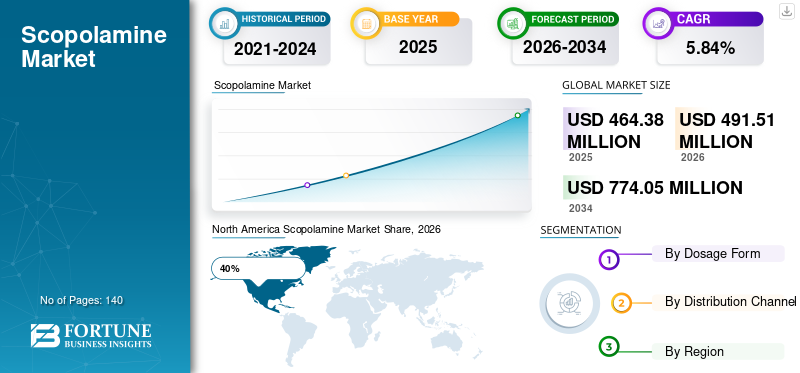
The global Scopolamine market size was valued at USD 464.38 billion in 2025. The market is projected to grow from USD 491.51 billion in 2026 to USD 774.05 billion by 2034, exhibiting a CAGR of 5.84% during the forecast period.

The scopolamine market is an important segment of the pharmaceutical industry, driven by the widespread use of scopolamine in motion sickness prevention, postoperative nausea management, and specific gastrointestinal and neurological applications. Scopolamine is an anticholinergic agent widely utilized in hospitals, ambulatory surgical centers, and outpatient settings due to its effectiveness in controlling nausea and vomiting. The market is benefiting from increasing surgical procedure volumes, rising travel activities, and growing awareness regarding motion sickness treatment options. Pharmaceutical manufacturers continue focusing on improved drug delivery systems and enhanced patient compliance. The scopolamine market Report highlights expanding therapeutic applications and continuous product innovation.
The United States accounts for approximately 41% market share in the global scopolamine market. Strong healthcare infrastructure, high surgical procedure volumes, and widespread adoption of preventive antiemetic therapies contribute significantly to market demand. Scopolamine transdermal patches are commonly prescribed for motion sickness and postoperative nausea management, supporting consistent product utilization. The country benefits from advanced pharmaceutical research capabilities and well-established distribution networks. Growing travel activity and increasing awareness among healthcare professionals regarding nausea prevention continue driving demand. The USA scopolamine market outlook remains positive due to continued innovation in drug delivery technologies and expanding clinical applications.
Download Free sample to learn more about this report.
Scopolamine Market Key Takeaways
 Global Market Size & Forecast
- 2025 Market Size: USD 464.38 Billion
- 2026 Market Size: USD 491.51 Billion
- 2034 Forecast Market Size: USD 774.05 Billion
- CAGR: 5.84% from 2026-2034
 Market Share
- North America dominated with a 40% regional market share.
- Transdermal patches led the dosage form segment with a 48% market share.
- Hospital pharmacies led the distribution channel segment with a 46% market share.
 Key Regional Highlights
North America
North America leads with a 40% share, supported by strong surgical activity and demand for antiemetic therapies.
Europe
Europe accounts for 28% of the market, driven by established healthcare infrastructure and pharmaceutical distribution networks.
Asia-Pacific
Asia-Pacific holds 23%, supported by rising healthcare expenditure and increasing surgical procedures.
U.S
Demand is supported by high surgical volumes and widespread use of scopolamine for motion sickness and postoperative nausea.
Japan
The market benefits from advanced healthcare infrastructure and growing demand for convenient drug-delivery solutions.
Read More

Scopolamine Market Latest Trends
The scopolamine market trends indicate growing adoption of advanced drug delivery systems designed to improve patient convenience and therapeutic effectiveness. Transdermal patches continue to gain popularity due to their ability to provide sustained drug release and reduce dosing frequency. Pharmaceutical companies are increasingly investing in formulation technologies that improve absorption characteristics and patient compliance. Another significant trend within the scopolamine market Analysis landscape is the growing utilization of scopolamine in perioperative care protocols. Healthcare providers increasingly incorporate preventive antiemetic therapies to improve patient outcomes and reduce postoperative complications.
Download Free sample to learn more about this report.
This trend has strengthened demand across hospitals and surgical centers. The expansion of travel and tourism activities has also contributed to market growth by increasing awareness regarding motion sickness prevention. Digital healthcare platforms and telemedicine services are improving patient access to prescription medications. Continuous research into alternative dosage forms and combination therapies further supports innovation. These developments continue shaping the scopolamine market research report environment and influencing long-term market dynamics.
Scopolamine Market Dynamics
DRIVER
Increasing prevalence of motion sickness and postoperative nausea management
The primary driver of the scopolamine market Growth is the increasing demand for effective prevention and treatment of motion sickness and postoperative nausea. Rising surgical procedure volumes worldwide have strengthened the need for antiemetic therapies that improve patient recovery experiences. Scopolamine remains a widely utilized option because of its proven efficacy and extended duration of action. Growing travel activity, including air, sea, and road transportation, has also increased demand for motion sickness prevention products. Healthcare providers continue emphasizing preventive treatment strategies to enhance patient comfort and reduce complications. These factors collectively contribute to sustained growth within the Scopolamine Industry Analysis landscape.
RESTRAINT
Side effects associated with anticholinergic medications
A key restraint affecting the scopolamine market is the potential occurrence of side effects associated with anticholinergic medications. Patients may experience dry mouth, blurred vision, dizziness, or drowsiness depending on dosage and individual sensitivity. These effects can limit product adoption among specific patient populations. Healthcare professionals must carefully evaluate patient suitability before prescribing scopolamine. Additionally, availability of alternative antiemetic therapies creates competitive pressure within the market. Regulatory oversight and safety monitoring requirements also influence product development activities. These factors can moderate market expansion despite strong therapeutic demand.
OPPORTUNITY
Expansion of transdermal drug delivery technologies
A major opportunity within the scopolamine market opportunities landscape is the continued advancement of transdermal drug delivery technologies. Patients increasingly prefer convenient dosage forms that reduce administration frequency and improve compliance. Transdermal patches offer sustained drug release and simplified treatment regimens, making them attractive options for motion sickness prevention and postoperative care. Pharmaceutical companies are investing in innovative patch technologies and improved formulation strategies to enhance therapeutic performance. Emerging healthcare markets and increasing access to pharmaceutical products further create growth opportunities. These developments support long-term expansion within the scopolamine market Forecast environment.
CHALLENGE
Regulatory complexity and supply chain management
One of the major challenges facing the scopolamine market is maintaining regulatory compliance while ensuring consistent product availability. Pharmaceutical manufacturers must adhere to strict quality standards, manufacturing regulations, and safety monitoring requirements. Variability in regulatory frameworks across different countries can complicate market expansion strategies. Supply chain disruptions affecting active pharmaceutical ingredients or specialized manufacturing processes may impact product availability. Companies must also invest in pharmacovigilance and post-market surveillance activities to maintain regulatory approval. These challenges require continuous operational and strategic management within the scopolamine market Insights landscape.
Scopolamine Market Segmentation
By Dosage Form
Injectables account for approximately 22% market share in the scopolamine market and are primarily utilized in hospitals, surgical centers, and emergency care settings where rapid therapeutic action is required. Injectable scopolamine formulations are commonly administered for the prevention and management of postoperative nausea and vomiting, particularly in patients undergoing complex surgical procedures. Healthcare professionals prefer injectable forms when immediate symptom control is necessary and oral administration is not suitable. Increasing surgical volumes worldwide continue supporting demand for injectable antiemetic therapies. Hospitals emphasize effective perioperative care strategies to improve patient recovery and satisfaction. Pharmaceutical manufacturers focus on maintaining product quality, sterility, and regulatory compliance.
Tablets represent approximately 18% market share within the scopolamine market and provide a convenient oral dosage form for specific patient populations. Tablet formulations are commonly used for motion sickness prevention and selected outpatient treatment applications where ease of administration is important. Patients often prefer oral medications because they are familiar, portable, and simple to use. Pharmaceutical companies continue improving tablet formulations to enhance absorption, stability, and patient compliance. Growing travel activity and increasing awareness regarding motion sickness management contribute to sustained demand for oral scopolamine products. Healthcare providers may recommend tablet formulations for patients requiring short-term preventive therapy.
Transdermal patches dominate the scopolamine market with approximately 48% market share and represent the most widely adopted dosage form. These patches provide continuous and controlled drug delivery through the skin over an extended period, reducing the need for frequent dosing. Patients and healthcare providers favor transdermal systems due to their convenience, improved compliance, and consistent therapeutic effectiveness. Motion sickness prevention and postoperative nausea management are the primary applications driving segment demand. Manufacturers continue investing in advanced patch technologies that improve adhesion, comfort, and drug-release performance.
Other dosage forms account for approximately 12% market share in the scopolamine market and include specialized formulations developed for niche therapeutic requirements. This category may include compounded preparations, investigational delivery systems, and alternative administration methods designed to improve treatment flexibility. Pharmaceutical companies continue exploring innovative formulation technologies aimed at enhancing patient convenience and therapeutic outcomes. Demand for alternative dosage forms is influenced by specific patient needs, clinical preferences, and emerging healthcare applications. Research and development activities continue supporting innovation in drug delivery science.
To know how our report can help streamline your business, Speak to Analyst
By Distribution Channel
Hospital pharmacies account for approximately 46% market share in the scopolamine market and represent the leading distribution channel due to extensive use of scopolamine products in surgical and inpatient healthcare settings. Scopolamine is frequently administered for the prevention of postoperative nausea and vomiting, making hospital pharmacies a critical supply point for healthcare providers. Growing numbers of surgical procedures, increasing hospitalization rates, and expanding adoption of preventive antiemetic therapies continue supporting demand through this channel. Hospital pharmacies maintain strict inventory management and quality control standards, ensuring consistent availability of pharmaceutical products. The increasing emphasis on patient recovery outcomes and perioperative care protocols further strengthens the importance of this segment within the scopolamine market Growth landscape.
Scopolamine Market Regional Outlook
North America Scopolamine Market Share, 2026 (%)
To get more information on the regional analysis of this market, Download Free sample
North America
North America accounts for approximately 40% market share in the global scopolamine market and remains the dominant regional market due to advanced healthcare infrastructure and strong pharmaceutical adoption. The region experiences substantial demand for scopolamine products used in motion sickness prevention and postoperative nausea management. Hospitals and surgical centers frequently incorporate scopolamine therapies into perioperative care protocols to improve patient recovery outcomes. The United States contributes the largest share of regional demand because of high surgical procedure volumes and extensive prescription activity. Growing travel and tourism activities further support product utilization across consumer segments. Pharmaceutical companies continue investing in advanced transdermal patch technologies and improved drug delivery systems. Strong healthcare reimbursement frameworks and broad pharmacy networks enhance product accessibility. Continuous clinical research and innovation contribute to market development. These factors collectively strengthen North America's position within the scopolamine market outlook.
Europe
Europe holds approximately 28% market share in the global scopolamine market and remains a significant contributor due to strong healthcare systems and widespread pharmaceutical availability. Healthcare providers increasingly utilize scopolamine products to manage postoperative nausea and motion sickness across various patient populations. Rising surgical procedure volumes and growing emphasis on patient comfort have strengthened demand for preventive antiemetic therapies. Pharmaceutical manufacturers continue introducing improved formulations and delivery technologies designed to enhance treatment effectiveness. The region benefits from well-established hospital networks and extensive pharmacy distribution channels. Increasing travel activity across European countries also contributes to market demand. Regulatory focus on patient safety and pharmaceutical quality supports product reliability and consumer confidence. Ongoing healthcare modernization initiatives continue driving adoption. These factors support sustained growth within the Europe scopolamine market Analysis landscape.
Germany Scopolamine Market
Germany accounts for approximately 26% market share within the European scopolamine market and represents one of the largest pharmaceutical markets in Europe. The country benefits from advanced healthcare infrastructure, strong pharmaceutical manufacturing capabilities, and widespread access to medical treatments. Hospitals frequently utilize scopolamine products as part of perioperative nausea management strategies to improve patient outcomes. Demand is also supported by increasing awareness regarding motion sickness prevention among domestic and international travelers. Healthcare professionals continue emphasizing preventive care approaches that reduce treatment complications and improve recovery experiences. Pharmaceutical companies operating in Germany focus on product quality, regulatory compliance, and innovation. Strong healthcare spending and efficient distribution systems further support market expansion. These factors contribute positively to the Germany scopolamine market Growth environment.
United Kingdom Scopolamine Market
The United Kingdom represents approximately 18% market share within the European scopolamine market and continues to demonstrate stable demand for antiemetic therapies. Scopolamine products are widely prescribed for motion sickness prevention and postoperative nausea management across healthcare settings. Hospitals increasingly integrate preventive treatment protocols into surgical care pathways to improve patient satisfaction and recovery outcomes. The country’s extensive healthcare network ensures broad access to pharmaceutical products through hospital, retail, and online pharmacies. Rising travel activity and increasing awareness regarding nausea prevention contribute to growing product utilization. Pharmaceutical companies continue strengthening distribution networks and improving product accessibility. Healthcare modernization efforts and emphasis on patient-centered care support continued market development. These factors reinforce the long-term outlook for the United Kingdom scopolamine market.
Asia-Pacific
Asia-Pacific accounts for approximately 23% market share in the global scopolamine market and is emerging as a major growth region. Expanding healthcare infrastructure, increasing pharmaceutical accessibility, and rising awareness regarding nausea management therapies are driving market expansion. Countries including China, Japan, India, and South Korea continue investing in healthcare modernization and pharmaceutical distribution capabilities. Growing surgical procedure volumes have increased demand for effective antiemetic medications used in perioperative care. Rising travel and tourism activities across the region further contribute to scopolamine utilization. Pharmaceutical manufacturers are strengthening regional production and distribution networks to improve product availability. Increasing healthcare expenditure and patient awareness regarding preventive treatments support market growth. Government initiatives focused on improving healthcare access also contribute positively. These factors position Asia-Pacific as a key contributor to the scopolamine market Forecast.
Japan Scopolamine Market
Japan accounts for approximately 21% market share within the Asia-Pacific scopolamine market and benefits from one of the most advanced healthcare systems globally. Healthcare providers regularly utilize scopolamine products for postoperative nausea prevention and motion sickness management. Strong emphasis on patient comfort and treatment quality supports widespread adoption of preventive antiemetic therapies. The country's aging population and high surgical procedure volumes contribute to sustained pharmaceutical demand. Japanese pharmaceutical companies continue investing in innovative drug delivery technologies and improved treatment options. Growing travel activity also supports demand for motion sickness prevention products. Efficient healthcare delivery systems and broad pharmaceutical access further strengthen market performance. These factors continue supporting the Japan scopolamine market outlook.
China Scopolamine Market
China represents approximately 35% market share within the Asia-Pacific scopolamine market, making it the largest regional contributor. Rapid healthcare infrastructure development and increasing pharmaceutical consumption continue driving market growth. Rising surgical procedure volumes and expanding hospital networks have strengthened demand for antiemetic medications. Growing awareness regarding motion sickness treatment options and postoperative care requirements contributes to increased product utilization. Domestic pharmaceutical manufacturers are expanding production capacity and improving distribution efficiency to meet growing demand. Government healthcare modernization initiatives continue improving patient access to prescription medications. The expansion of healthcare coverage and rising disposable incomes further support pharmaceutical consumption. These factors position China as a major growth center within the scopolamine market Insights landscape.
Rest of World
The Rest of World region accounts for approximately 9% market share in the global scopolamine market and includes Latin America, the Middle East, and Africa. Market growth is supported by improving healthcare infrastructure and increasing pharmaceutical accessibility across these regions. Healthcare providers are becoming more aware of preventive antiemetic therapies and their role in improving patient outcomes. Growing numbers of surgical procedures and expanding healthcare services continue supporting product demand. Pharmaceutical companies are strengthening distribution networks to improve medication availability. Increasing awareness regarding motion sickness management among travelers also contributes to market expansion. Governments and private healthcare organizations continue investing in healthcare modernization initiatives. Although market penetration remains lower than in developed economies, significant long-term growth opportunities exist. These developments support expansion within the Rest of World scopolamine market.
List of Top Scopolamine Companies
- GlaxoSmithKline plc.
- Novartis AG
- Caleb Pharmaceuticals, Inc.
- Perrigo Company plc.
- Alchem International
- Phytex Australia
- Baxter International Inc.
- Centroflora-Cms
- Alkaloids of Australia
- Myungmoon Pharma Co. LTD.
- Fine Chemicals Corporation
Top Two Companies with Highest Market Share
- GlaxoSmithKline plc. – 18% market share
- Perrigo Company plc. – 14% market share
Investment Analysis and Opportunities
The scopolamine market presents attractive investment opportunities due to increasing demand for motion sickness prevention and postoperative nausea management therapies. Pharmaceutical companies continue investing in advanced transdermal delivery technologies that improve patient compliance and therapeutic effectiveness. Growing surgical procedure volumes and increasing travel activity support long-term demand for scopolamine products. Manufacturers are expanding production capabilities and strengthening distribution networks to improve market accessibility. Emerging economies offer additional opportunities due to healthcare infrastructure development and increasing pharmaceutical consumption. Strategic collaborations, formulation innovation, and expansion into new therapeutic applications continue attracting investment. The scopolamine market opportunities landscape remains favorable for companies capable of delivering safe, effective, and patient-friendly treatment solutions.
New Product Development
Innovation within the scopolamine market is focused primarily on enhancing drug delivery efficiency and patient convenience. Pharmaceutical companies continue improving transdermal patch technologies to provide more consistent drug release and enhanced comfort. Research efforts are exploring extended-duration formulations and alternative delivery systems capable of improving therapeutic outcomes. Manufacturers are also investing in packaging improvements and patient-friendly administration methods. Digital healthcare integration and remote prescription management systems are supporting broader access to treatment. Ongoing advancements in pharmaceutical manufacturing processes contribute to product quality and regulatory compliance. These innovations continue shaping the scopolamine market trends landscape and supporting competitive differentiation.
Five Recent Developments (2023–2025)
- GlaxoSmithKline plc. expanded focus on advanced transdermal delivery technologies in 2023.
- Perrigo Company plc. enhanced distribution capabilities for antiemetic products during 2024.
- Alchem International increased pharmaceutical ingredient production capacity in 2024.
- Baxter International Inc. strengthened hospital-focused pharmaceutical supply initiatives in 2025.
- Myungmoon Pharma Co. LTD. expanded product availability across selected Asia-Pacific markets in 2025.
Report Coverage of Scopolamine Market
The scopolamine market Report provides comprehensive analysis of market dynamics, therapeutic applications, competitive developments, and regional performance. The report evaluates key factors influencing demand, including increasing surgical procedures, growing travel activity, and rising utilization of antiemetic therapies. Market segmentation analysis covers dosage forms such as injectables, tablets, transdermal patches, and other formulations. Distribution channel assessment includes hospital pharmacies, retail pharmacies, and online pharmacies.
Request for Customization to gain extensive market insights.
Regional coverage spans North America, Europe, Asia-Pacific, and Rest of World markets, highlighting key growth opportunities and competitive trends. The report also examines investment activity, product innovation, regulatory developments, and pharmaceutical manufacturing strategies. The scopolamine market research report provides detailed insights into industry structure, market opportunities, and future business prospects across global healthcare markets.
Frequently Asked Questions
Fortune Business Insights says that the global market value stood at USD 464.38 billion in 2025 and is projected to reach USD 774.05 billion by 2034.
The market is expected to exhibit a CAGR of 5.84% during the forecast period of 2026–2034.
Transdermal patches were the leading dosage-form segment, accounting for approximately 48% of the market, owing to sustained drug delivery, convenience, reduced dosing frequency, and improved patient compliance.
Key players include GlaxoSmithKline plc., Novartis AG, Caleb Pharmaceuticals, Inc., Perrigo Company plc., Alchem International, and Baxter International Inc.
Major trends include growing adoption of advanced transdermal drug-delivery systems and increasing use of scopolamine in perioperative care and preventive antiemetic protocols. North America led the market with approximately 40% share.



- 2021-2034
- 2025
- 2021-2024
- 140
-

(Offer valid till 30th Sep 2026)
Get 30-60 hrs Free Customization
Expand Regional and Country Coverage, Segments Analysis, Company Profiles, Competitive Benchmarking, and End-user Insights.













.webp)






-
US +1 833 909 2966 ( Toll Free )
-
Get In Touch With Us