Silage Inoculant Market Size, Share, and Industry Analysis, By Type (Homofermentive and Htrofermentive), By Form (Dry and Liquid), By Crop Type (Corn, Sorghum, Alfalfa, Clovers, and Others), and Regional Forecast, 2026-2034
 Download Free Sample
Silage Inoculant Market Size and Industry Overview
The global silage inoculant market size was valued at USD 141.40 million in 2025. The market is projected to grow from USD 152.54 million in 2026 to USD 279.84 million by 2034, exhibiting a CAGR of 7.88% during the forecast period. The market in North America dominated with a revenue share of 36% in 2025.

The silage inoculant market is an essential component of modern agricultural and livestock management practices, driven by the increasing need for efficient feed preservation and enhanced nutritional value. Silage inoculants are widely used microbial additives that improve fermentation, reduce spoilage, and maintain feed quality for extended periods. The silage inoculant market Analysis highlights growing adoption among dairy and beef producers aiming to maximize livestock productivity and minimize feed losses. The silage inoculant market Growth is supported by advancements in microbial technology and the rising demand for high-performance feed solutions. Increasing focus on sustainable agriculture and cost-efficient livestock production further strengthens the silage inoculant market Outlook.
The United States silage inoculant market is a key contributor to global market expansion due to its well-established livestock industry and advanced agricultural practices. The silage inoculant market Research Report indicates strong adoption of silage additives among dairy farms and large-scale cattle operations. Farmers are increasingly utilizing inoculants to improve feed efficiency and reduce wastage. The Silage Inoculant Industry Analysis highlights the role of precision agriculture technologies in enhancing silage quality. Government support for sustainable farming practices and increasing awareness of feed optimization are driving demand. The USA silage inoculant market continues to grow with innovation in microbial formulations and digital farm management solutions.
Silage Inoculant Market Key Takeaways
 Global Market Size & Forecast
- 2025 Market Size: USD 141.40 Million
- 2026 Market Size: USD 152.54 Million
- 2034 Forecast Market Size: USD 279.84 Million
- CAGR: 7.88% from 2026-2034
 Market Share
- The market in North America dominated with a revenue share of 36% in 2025.
- Dry silage inoculants dominated with a market share of 63% in 2025.
- Homofermentative inoculants held the largest share of 58% in 2025.
 Key Regional Highlights
North America
North America led the market with a 36% share, supported by its advanced livestock industry and modern agricultural practices.
Europe
Europe accounted for 29% of the market, driven by sustainable agriculture and regulatory compliance.
Asia Pacific
Asia-Pacific held a 23% share and is among the fastest-growing regions due to expanding livestock production.
United Kingdom
Accounted for 9% of the market, supported by its well-developed livestock sector and sustainable farming focus.
Japan
Held approximately 6% of the Asia-Pacific market, supported by advanced agricultural technologies and efficiency-focused farming.
Read More

silage inoculant market Latest Trends
The silage inoculant market Trends are evolving with the growing integration of biotechnology and precision agriculture. One of the most prominent trends in the silage inoculant market Report is the adoption of multi-strain microbial inoculants that enhance fermentation efficiency and nutrient preservation. These advanced formulations are designed to improve silage stability under varying environmental conditions. The silage inoculant market Analysis highlights increasing demand for organic and sustainable feed additives as livestock producers shift toward eco-friendly practices.
Another key trend is the development of crop-specific inoculants tailored for corn, grass, and alfalfa silage, enabling better performance and higher feed value. The silage inoculant market Growth is also supported by the integration of digital tools that allow farmers to monitor fermentation processes in real time. The use of enzyme-enhanced inoculants is gaining traction as it improves digestibility and feed conversion efficiency.
Download Free sample to learn more about this report.
Silage Inoculant Market Dynamics
DRIVER
Increasing demand for high-quality animal feed
The rising demand for high-quality animal feed is the primary driver of the silage inoculant market Growth. Livestock producers are increasingly focusing on improving feed efficiency, nutritional value, and overall animal health. Silage inoculants play a crucial role in enhancing fermentation, preserving nutrients, and reducing spoilage losses. The silage inoculant market Analysis shows that increasing global consumption of dairy and meat products is driving the need for optimized feed solutions. Farmers are adopting advanced silage management practices to maximize productivity and profitability. Additionally, technological advancements in microbial formulations are improving the effectiveness of inoculants, further supporting market expansion. The emphasis on sustainable farming and cost reduction is also encouraging the adoption of silage inoculants across various agricultural sectors.
RESTRAINT
Limited awareness and cost sensitivity in developing regions
Limited awareness about the benefits of silage inoculants in developing regions acts as a significant restraint for the silage inoculant market. Many farmers continue to rely on traditional feed preservation methods, which may not provide optimal results. The silage inoculant market Analysis highlights that lack of technical knowledge and training programs hinders adoption. Additionally, the initial cost of advanced inoculant products can be a barrier for small and medium-scale farmers. Price sensitivity and limited access to modern agricultural inputs further restrict market penetration. The silage inoculant market Growth is also impacted by inadequate distribution networks in rural areas. Addressing these challenges requires increased awareness campaigns, government support, and affordable product offerings tailored to local markets.
OPPORTUNITY
Expansion of livestock farming and sustainable agriculture
The expansion of livestock farming, particularly in emerging economies, presents significant opportunities for the silage inoculant market. Increasing demand for dairy and meat products is driving the need for efficient feed management solutions. The silage inoculant market Opportunities are further enhanced by the growing focus on sustainable agriculture practices. Farmers are adopting environmentally friendly feed additives to reduce waste and improve resource utilization. The silage inoculant market Insights indicate that government initiatives promoting modern farming techniques are supporting adoption. Additionally, advancements in biotechnology are enabling the development of innovative inoculant solutions. The rising trend of precision agriculture and digital farming is also creating new growth avenues. These factors collectively contribute to the expansion of the silage inoculant market Outlook.
CHALLENGE
Variability in environmental conditions and silage quality
Variability in environmental conditions such as temperature, moisture, and crop composition presents a major challenge for the silage inoculant market. These factors can significantly impact fermentation efficiency and overall silage quality. The silage inoculant market Analysis highlights the need for adaptable and resilient inoculant formulations that can perform effectively under diverse conditions. Farmers often face difficulties in maintaining consistent silage quality due to unpredictable weather patterns. Additionally, improper application techniques can reduce the effectiveness of inoculants. The silage inoculant market Growth is also challenged by the need for continuous product innovation to address these issues. Companies must invest in research and development to create robust solutions capable of delivering consistent performance across different environments.
Silage Inoculant Market Segmentation
By Type
To know how our report can help streamline your business, Speak to Analyst
Homofermentative inoculants account for approximately 58% of the silage inoculant market Share, making them the leading segment due to their efficiency in producing lactic acid during fermentation. These inoculants rapidly lower the pH level of silage, helping preserve nutrients and prevent spoilage. Farmers widely prefer homofermentative products for crops such as corn and grass due to their ability to improve feed digestibility and enhance animal performance. These inoculants also help reduce dry matter losses, making them cost-effective for large-scale livestock operations.
Heterofermentative inoculants hold around 42% of the silage inoculant market Share, driven by their ability to improve aerobic stability and extend silage shelf life. These inoculants produce both lactic acid and acetic acid, which help inhibit the growth of yeast and molds. This makes them particularly useful when silage is exposed to air during feeding. Farmers are increasingly adopting heterofermentative products to reduce spoilage losses and maintain consistent feed quality. These inoculants are especially beneficial in regions with high humidity and temperature variations.
By Form
Dry silage inoculants account for approximately 63% of the silage inoculant market Share, making them the most widely used application type. These products are easy to store, transport, and apply, making them convenient for farmers and large-scale agricultural operations. Dry formulations have a longer shelf life and are less sensitive to environmental conditions compared to liquid forms. They are commonly applied during harvesting and are suitable for bulk usage. Cost-effectiveness and ease of handling are key factors driving their adoption.
Liquid silage inoculants hold around 37% of the silage inoculant market Share, driven by their ability to provide uniform application and precise dosage. These products are typically mixed with water and applied using spraying systems during silage preparation. Liquid formulations ensure better distribution of microbial cultures, leading to consistent fermentation results. They are particularly preferred in advanced farming operations where precision is important.
By Crop Type
Corn accounts for approximately 41% of the silage inoculant market Share, making it the dominant crop type due to its high nutritional value and widespread use in livestock feed. Corn silage is rich in energy and is extensively used in dairy and beef production, driving strong demand for inoculants to enhance fermentation quality. Silage inoculants help improve lactic acid production, reduce spoilage, and maintain feed consistency. Farmers prefer corn silage because of its high yield and predictable fermentation characteristics.
Sorghum holds around 18% of the silage inoculant market Share, driven by its adaptability to diverse climatic conditions and drought resistance. Sorghum is widely cultivated in regions with water scarcity, making it an important crop for silage production. However, sorghum silage can present fermentation challenges due to lower sugar content, increasing the need for silage inoculants to improve fermentation efficiency. Inoculants help enhance nutrient preservation and reduce spoilage, making sorghum silage more effective as animal feed. The growing focus on sustainable agriculture and climate-resilient crops is supporting the adoption of sorghum.
Alfalfa accounts for approximately 16% of the silage inoculant market Share, driven by its high protein content and nutritional benefits for livestock. Alfalfa is commonly used in dairy farming to improve milk production and animal health. However, alfalfa silage is more difficult to ferment due to its low sugar levels and high buffering capacity. Silage inoculants play a crucial role in improving fermentation quality and reducing nutrient losses. Farmers rely on inoculants to ensure consistent feed quality and prevent spoilage.
Clovers contribute approximately 12% of the silage inoculant market Share, supported by their role as a protein-rich forage crop. Clovers are often used in mixed silage systems and provide essential nutrients for livestock. Similar to alfalfa, clovers have fermentation challenges due to lower sugar content, making inoculants necessary for effective preservation. Silage inoculants help improve fermentation stability and reduce the risk of spoilage.
The Others segment, accounting for approximately 13% of the silage inoculant market Share, includes crops such as grasses, wheat, barley, and other forage varieties. These crops are widely used in regions with diverse agricultural practices and varying climatic conditions. Silage inoculants are essential for improving fermentation quality and preserving nutrients in these crops. Farmers use inoculants to ensure consistent feed quality and reduce spoilage losses.
Silage Inoculant Market Regional Outlook
North America
North America Silage Inoculant Market Share, 2025 (%)
To get more information on the regional analysis of this market, Download Free sample
North America accounts for approximately 36% of the silage inoculant market Share, making it the leading regional market due to its highly advanced livestock industry and strong adoption of modern agricultural practices. The region, particularly the United States and Canada, demonstrates widespread usage of silage inoculants among dairy and beef producers who prioritize feed efficiency and productivity. The silage inoculant market Analysis indicates that farmers are increasingly adopting microbial additives to enhance fermentation quality, reduce spoilage, and improve nutrient retention. Technological advancements, including precision agriculture tools and real-time monitoring systems, are enabling better silage management across large-scale farms. The presence of major agribusiness companies and continuous investment in research and development further strengthens market growth. Government support in the form of subsidies and training programs encourages farmers to adopt innovative feed preservation techniques.
Europe
Europe holds approximately 29% of the silage inoculant market Share, supported by a well-established agricultural sector and a strong focus on sustainability and regulatory compliance. The silage inoculant market Analysis highlights that countries such as Germany, the United Kingdom, France, and the Netherlands are contributors to regional demand due to their advanced livestock industries. European farmers prioritize high-quality feed and efficient silage management to enhance productivity and meet stringent environmental standards. The market is driven by increasing awareness of feed optimization and the need to reduce agricultural waste. The silage inoculant market Trends indicate growing adoption of organic and non-GMO inoculants as sustainability becomes a key focus. Research collaborations between agricultural institutions and industry players are fostering innovation in microbial technologies. Government policies supporting sustainable farming practices further encourage adoption.
Germany Silage Inoculant Market
Germany represents approximately 10% of the silage inoculant market Share within Europe, making it a key contributor to regional growth due to its strong agricultural base and technological advancement. The silage inoculant market Analysis highlights that German farmers are highly focused on improving feed efficiency, reducing losses, and maintaining high-quality livestock nutrition. The country benefits from advanced research and development capabilities, with continuous innovation in microbial formulations and silage technologies. Strict environmental regulations encourage the adoption of sustainable and eco-friendly agricultural inputs, including advanced inoculants. The demand for silage inoculants is further driven by the need to optimize fermentation processes and improve storage stability. Strong collaboration between agricultural institutions and industry players enhances product development and market penetration. Additionally, Germany’s well-developed distribution network ensures easy access to advanced products.
United Kingdom Silage Inoculant Market
The United Kingdom accounts for approximately 9% of the silage inoculant market Share, driven by its well-developed livestock sector and increasing focus on sustainable agricultural practices. The silage inoculant market Analysis shows that UK farmers are increasingly adopting silage inoculants to improve feed efficiency, reduce spoilage, and enhance overall livestock productivity. The market is supported by strong regulatory frameworks promoting environmental sustainability and efficient resource utilization. The silage inoculant market Trends indicate rising demand for high-quality and eco-friendly feed additives, particularly among dairy and beef producers. Technological advancements in silage management, including digital monitoring tools, are enabling farmers to optimize fermentation processes and improve feed quality. Research and development activities are driving innovation in microbial formulations, ensuring better performance under varying conditions.
Asia-Pacific
Asia-Pacific accounts for approximately 23% of the silage inoculant market Share and is one of the fastest-growing regions globally due to its expanding livestock industry and rising demand for high-quality animal feed. The silage inoculant market Analysis highlights that countries such as China, India, Japan, and Australia are key contributors to regional growth, driven by increasing population and changing dietary patterns. The region is witnessing a shift toward modern farming practices and improved feed management techniques, supported by government initiatives and investments in agricultural infrastructure. The silage inoculant market Trends indicate growing adoption of cost-effective and efficient inoculant solutions among small and large-scale farmers. Increasing awareness about feed optimization and livestock productivity is driving demand for advanced microbial additives. Additionally, expanding dairy and meat consumption is creating strong demand for improved silage quality. Technological advancements and digital farming tools are gradually being adopted to enhance efficiency.
Japan Silage Inoculant Market
Japan holds approximately 6% of the silage inoculant market Share in Asia-Pacific, supported by its advanced agricultural technologies and strong focus on efficiency and quality. The silage inoculant market Analysis indicates that Japanese farmers are highly inclined toward adopting innovative and high-performance silage solutions to maximize productivity and maintain consistent feed quality. The country’s agricultural sector is characterized by precision farming practices and the use of advanced technologies for monitoring and optimizing silage processes. The silage inoculant market Trends highlight increasing demand for premium and customized inoculant formulations designed for specific crops and environmental conditions. Government support for agricultural modernization and sustainability initiatives further drives market growth. Additionally, the need to optimize limited agricultural resources encourages the adoption of efficient feed preservation techniques.
China Silage Inoculant Market
China accounts for approximately 7% of the silage inoculant market Share, driven by its large livestock population and rapidly expanding agricultural sector. The silage inoculant market Analysis highlights strong demand for feed additives as the country continues to increase dairy and meat production to meet growing consumer demand. Government initiatives promoting modern farming practices and improving agricultural productivity are supporting market growth. The silage inoculant market Trends indicate rising adoption of cost-effective and efficient silage solutions among farmers. Increasing awareness about feed quality and livestock health is encouraging the use of advanced inoculants. The expansion of distribution networks and improved access to agricultural inputs are further driving adoption.
Rest of World
The Rest of World accounts for approximately 12% of the silage inoculant market Share, encompassing regions such as Latin America, the Middle East, and Africa, where agricultural practices are evolving rapidly. The silage inoculant market Analysis indicates steady growth driven by increasing livestock production and improving agricultural infrastructure. Farmers in these regions are gradually adopting modern feed preservation techniques to enhance productivity and reduce losses. The silage inoculant market Trends highlight rising demand for affordable and efficient inoculant solutions tailored to local farming conditions. Government initiatives and international collaborations are supporting agricultural development and technology transfer. Increasing awareness about sustainable farming and feed optimization is encouraging adoption. Additionally, population growth and rising demand for animal-based products are driving market expansion. While the market is still developing, it presents significant untapped opportunities for global manufacturers.
List of Top Silage Inoculant Companies
- Archer-Daniels-Midland Company (U.S.)
- ADDCON Group GmbH (Germany)
- Kemin Industries (U.S.)
- Corteva (U.S.)
- Cargill Inc. (U.S.)
- Volac International Ltd. (U.K)
- Agri-King Inc. (U.S.)
- Lallemand Inc. (Canada)
- Schaumann BioEnergy GmbH (Germany)
- Biomin Holding GmbH (Austria)
Top Two Companies by Market Share
- Cargill Inc. – 18%
- Archer-Daniels-Midland – 15%
Investment Analysis and Opportunities
The silage inoculant market is experiencing a significant rise in investment activity as agricultural stakeholders increasingly recognize the importance of feed efficiency and livestock productivity. Investments are primarily directed toward the development of advanced microbial inoculant technologies that enhance fermentation quality, reduce spoilage, and improve nutrient retention. The silage inoculant market Analysis highlights that major agribusiness companies are expanding their portfolios through mergers, acquisitions, and partnerships with biotechnology firms to strengthen their market position.
The silage inoculant market Opportunities are particularly strong in emerging economies where livestock production is expanding rapidly, creating demand for efficient feed preservation solutions. Governments and agricultural organizations are supporting investments through subsidies, training programs, and initiatives promoting modern farming practices. Additionally, the integration of digital agriculture technologies such as data analytics and real-time monitoring systems is opening new investment avenues.
New Product Development
New product development in the silage inoculant market is focused on enhancing microbial performance, improving adaptability to environmental conditions, and delivering higher efficiency in feed preservation. Companies are increasingly developing multi-strain inoculants that combine beneficial bacteria to optimize fermentation and improve silage stability. The silage inoculant market Trends indicate a growing emphasis on biologically advanced formulations that can perform effectively under varying moisture levels, temperatures, and crop types.
Innovations also include enzyme-enhanced inoculants designed to improve fiber breakdown and increase digestibility, thereby enhancing livestock productivity. The silage inoculant market Growth is further supported by the development of crop-specific solutions tailored for corn, grass, and alfalfa silage. Manufacturers are also focusing on sustainable product development by utilizing natural and non-GMO microbial strains.
Five Recent Developments (2023-2025)
- Introduction of advanced multi-strain silage inoculants designed to enhance fermentation efficiency and nutrient preservation across different crop types
- Expansion of global manufacturing and distribution facilities by leading companies to meet increasing demand from large-scale livestock producers
- Strategic collaborations between agricultural firms and biotechnology companies to accelerate innovation in microbial inoculant technologies
- Launch of eco-friendly and sustainable inoculant products aligned with organic farming and environmental regulations
- Integration of digital agriculture tools and smart farming technologies with silage management systems to improve monitoring, efficiency, and overall feed quality
Report Coverage of Silage Inoculant Market
The silage inoculant market Report provides a comprehensive and detailed analysis of the global market, covering all critical aspects required for strategic decision-making. The report includes in-depth insights into the silage inoculant market Size, Market Share, Market Growth, Market Trends, and Market Outlook. It evaluates the impact of technological advancements, including microbial innovation and precision agriculture, on market development.
Request for Customization to gain extensive market insights.
The silage inoculant market Analysis encompasses a thorough assessment of key drivers, restraints, opportunities, and challenges influencing industry dynamics. The report also provides a detailed segmentation analysis by type and application, offering insights into the performance of different product categories. Regional analysis highlights market trends and growth opportunities across North America, Europe, Asia-Pacific, and other regions.
|
By Type |
By Form |
By Crop Type |
By Geography |
|
|
|
|
Frequently Asked Questions
Fortune Business Insights says that the global market value stood at USD 141.40 million in 2025 and is projected to reach USD 279.84 million by 2034.
The market is expected to exhibit a CAGR of 7.88% during the forecast period of 2026-2034.
Homofermentative inoculants led the type segment with approximately 58% share, owing to their efficiency in producing lactic acid during fermentation.
Key players include Cargill Inc., Archer-Daniels-Midland Company, Kemin Industries, Corteva, ADDCON Group GmbH, and Volac International Ltd.
Major trends include adoption of multi-strain microbial inoculants and rising demand for organic and sustainable feed additives; North America leads with 36% share.


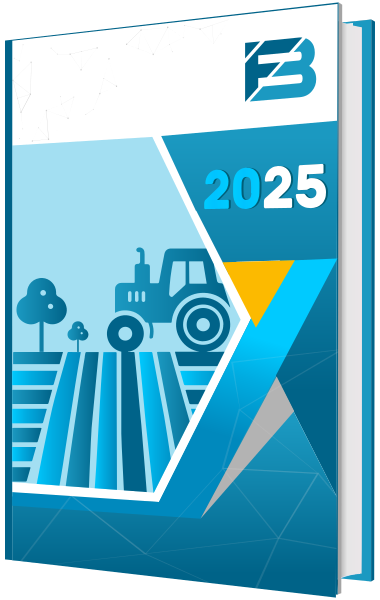
- 2021-2034
- 2025
- 2021-2024
- 80
-

(Offer valid till 15th Oct 2026)
Get 30-60 hrs Free Customization
Expand Regional and Country Coverage, Segments Analysis, Company Profiles, Competitive Benchmarking, and End-user Insights.









-
US +1 833 909 2966 ( Toll Free )
-
Get In Touch With Us