Spirits Market Size, Share & Industry Analysis, By Product (Vodka, Whiskey, Rum, Brandy, Gin), By Price Point (Economy, Mid-Premium, Supper-Premium), By Distribution Channel, By Product - Price Point - Distribution Channel, By Region, and Regional Forecast, 2026-2034
 Download Free Sample
(Offer valid till 15th Jul 2026)
Spirits Market Overview
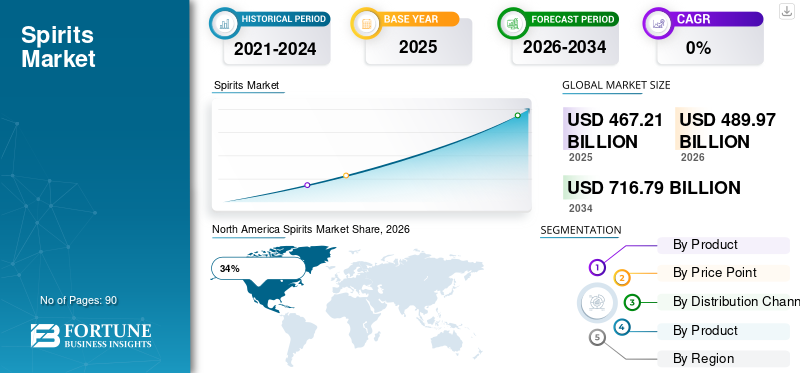
The global spirits market size was valued at USD 467.20 billion in 2025. The market is projected to grow from USD 489.96 billion in 2026 to USD 716.79 billion by 2034, exhibiting a CAGR of 4.87 % during the forecast period.

The spirits market is experiencing substantial global expansion, driven by shifting consumer lifestyles, premiumization trends, and rising demand for flavored and craft alcoholic beverages. Consumers are increasingly seeking unique taste experiences, aged products, and premium-quality spirits across both developed and emerging economies. The spirits market Report highlights growing popularity of cocktail culture, social drinking occasions, and innovative packaging formats that support market penetration worldwide. Manufacturers are focusing on artisanal production methods, sustainable sourcing, and limited-edition product launches to strengthen brand positioning. Spirit market Analysis also indicates rising demand for whiskey, vodka, gin, and rum products among younger adult consumers seeking premium drinking experiences and authentic beverage craftsmanship.
The United States spirits market continues to grow due to increasing demand for premium and super-premium alcoholic beverages, rising cocktail consumption, and expanding nightlife culture. Consumers in the country increasingly prefer craft spirits, flavored liquors, and ready-to-drink spirit-based beverages. Whiskey and tequila remain highly popular categories, while premium vodka and gin products are gaining strong traction among urban consumers. Spirits Industry Analysis indicates that digital marketing, celebrity-backed brands, and experiential retail strategies are strongly influencing purchasing behavior in the USA market. Growth of premium bars, restaurants, and e-commerce alcohol delivery services is further strengthening spirits market Growth across the United States.
Download Free sample to learn more about this report.
Key Takeaways
Market Size & Growth
· Global market size 2025: USD 467.20 billion
· Global market size 2034: USD 716.79 billion
· CAGR (2025–2034): 4.87%
Market Share – Regionals
· North America: 34%
· Europe: 31%
· Asia-Pacific: 25%
· Rest of World: 10%
Country-Level Shares
· Germany: 18% of Europe’s market
· United Kingdom: 22% of Europe’s market
· Japan: 19% of the Asia-Pacific market
· China: 43% of the Asia-Pacific market
Spirits Market Latest Trends
The spirits market Trends are increasingly shaped by premiumization, craft beverage innovation, and changing consumer preferences toward unique flavor experiences. One major trend is the rising popularity of craft distilleries producing small-batch whiskey, artisanal gin, and aged rum products with regional ingredients and distinctive flavor profiles. Consumers increasingly value authenticity, heritage branding, and premium packaging when selecting spirits. spirits market Insights reveal strong growth in flavored vodka, botanical gin, and barrel-aged spirits among younger legal-age consumers seeking premium drinking experiences.
Another important trend shaping the Spirits Industry Report is the rapid growth of ready-to-drink cocktails and low-alcohol spirit products. Manufacturers are launching convenient canned cocktails, spirit mixers, and lower-calorie alcoholic beverages targeting health-conscious consumers. Sustainable production practices, recyclable packaging, and organic ingredient sourcing are also becoming significant competitive factors within the industry. Digital engagement through social media promotions, virtual tastings, and influencer marketing is transforming brand-consumer interaction globally. spirits market Forecast indicates increasing innovation in premium craft products, exotic flavor infusions, and alcohol-free spirit alternatives designed to capture evolving consumer demand patterns.
Download Free sample to learn more about this report.
Spirits Market Dynamics
DRIVER
Increasing Demand for Premium and Craft Alcoholic Beverages
The increasing demand for premium and craft alcoholic beverages across developed and emerging economies primarily drives the spirits market Growth. Approximately 48% of consumers prefer premium spirits due to improved taste quality, authentic production methods, and premium brand perception. Whiskey contributes nearly 31% of premium spirits demand, while vodka and gin collectively account for around 37% of high-end spirit consumption globally. Around 44% of urban consumers are influenced by cocktail culture and social drinking experiences, especially in nightlife venues and premium restaurants. Craft distilleries represent approximately 29% of new product launches, reflecting rising interest in artisanal and small-batch alcoholic beverages. Nearly 41% of consumers prefer flavored and infused spirits products due to evolving taste preferences and demand for unique beverage experiences.
The market is further supported by increasing hospitality and tourism activities, where approximately 36% of premium spirit sales are generated through bars, hotels, and entertainment venues. Around 39% of manufacturers are investing in innovative packaging and luxury branding to improve consumer engagement. Digital marketing campaigns influence nearly 34% of purchasing decisions among younger adult consumers. Approximately 32% of companies are expanding ready-to-drink spirit-based cocktail portfolios to meet convenience-driven demand. In addition, nearly 27% of premium spirit consumption is driven by gifting culture and celebratory occasions, strengthening the spirits market Analysis across international markets.
RESTRAINT
Strict Regulations and Rising Health Awareness Regarding Alcohol Consumption
The spirits market faces restraints due to strict government regulations and increasing health awareness associated with alcohol consumption. Approximately 42% of countries impose strict taxation and advertising regulations on alcoholic beverages, affecting pricing strategies and brand promotions. Around 35% of consumers are reducing alcohol intake because of rising health concerns related to obesity, liver disorders, and lifestyle diseases. Regulatory compliance costs impact nearly 31% of manufacturers operating in multiple international markets. Nearly 26% of alcohol advertising campaigns face restrictions across digital and traditional media channels, limiting consumer outreach and promotional activities.
Further restraints include growing demand for low-alcohol and alcohol-free beverages, where approximately 29% of younger consumers are shifting toward healthier lifestyle choices. Around 24% of regional markets experience limitations due to religious and cultural restrictions on alcohol consumption. Counterfeit alcoholic products affect approximately 21% of distribution channels in developing regions, impacting consumer trust and brand reputation. Supply chain disruptions and fluctuating raw material prices influence nearly 28% of production costs globally. Additionally, approximately 23% of manufacturers face operational challenges related to sustainability regulations and packaging waste reduction initiatives, affecting overall spirits market Outlook.
OPPORTUNITY
Expansion of Premiumization and Ready-To-Drink Spirit Innovations
The spirits market Opportunities are expanding rapidly with increasing premiumization trends and rising demand for ready-to-drink alcoholic beverages. Approximately 46% of consumers are willing to spend more on premium and super-premium spirit products offering unique flavors and premium packaging. Ready-to-drink cocktails contribute nearly 33% of innovation-focused product development across global beverage markets. Around 38% of manufacturers are investing in flavored whiskey, botanical gin, and craft rum products to attract younger consumers seeking customized drinking experiences. Premium hospitality venues account for approximately 35% of demand for luxury spirits and limited-edition collections.
Further opportunities are emerging through digital alcohol retailing and e-commerce expansion, where approximately 31% of consumers purchase spirits products through online platforms. Around 29% of companies are investing in sustainable packaging and eco-friendly distillation technologies to improve environmental positioning. Travel retail channels contribute nearly 22% of premium spirits sales in international markets. Approximately 37% of emerging market consumers are increasing spending on imported alcoholic beverages due to rising disposable incomes and urban lifestyles. In addition, around 34% of manufacturers are focusing on low-calorie and alcohol-free spirit alternatives, strengthening the spirits market Forecast for future product diversification.
CHALLENGE
Intense Market Competition and Changing Consumer Preferences
The spirits market Challenges are strongly influenced by intense competition and rapidly changing consumer preferences across global beverage industries. Approximately 43% of manufacturers face pricing pressure due to the increasing presence of regional distilleries, craft brands, and private-label alcoholic beverages. Around 36% of consumers frequently switch between spirit categories based on flavor innovation, promotional campaigns, and seasonal trends. Product differentiation challenges impact nearly 32% of established brands competing in premium and super-premium categories. Nearly 27% of companies struggle to maintain long-term consumer loyalty because of evolving drinking habits and increasing demand for healthier beverage alternatives.
Further challenges include rising production and packaging costs, where approximately 30% of manufacturers report profit margin pressure due to inflation and raw material shortages. Around 25% of global supply chains experience disruptions affecting distribution efficiency and product availability. Sustainability expectations influence approximately 33% of beverage companies to invest continuously in environmentally responsible production systems. Additionally, nearly 28% of spirit producers face challenges related to counterfeit products and unauthorized distribution in developing regions. Around 35% of companies are increasing research and development spending to maintain innovation competitiveness within the spirits market Research Report landscape.
Spirits Market Segmentation
By Type
Vodka dominates the spirits market with approximately 29% market share due to its versatility, widespread global acceptance, and strong presence in cocktail culture. Consumers prefer vodka because of its neutral flavor profile, which allows easy blending with mixers, juices, and flavored ingredients. spirits market Report findings indicate rising demand for flavored vodka products infused with fruits, herbs, spices, and botanical extracts, especially among younger legal-age consumers.
Premium vodka categories continue gaining traction in bars, restaurants, and nightlife venues due to increasing interest in sophisticated cocktails and luxury beverage experiences. Manufacturers are introducing organic, gluten-free, and small-batch vodka varieties to attract health-conscious and premium consumers. Packaging innovation, celebrity-backed brands, and limited-edition product launches further strengthen segment competitiveness. Emerging markets in Asia-Pacific and Latin America are also witnessing rising vodka consumption driven by urbanization and evolving social drinking patterns.
Whiskey accounts for nearly 27% market share in the spirits market because of strong consumer preference for aged spirits and premium craftsmanship. Scotch whiskey, bourbon, Irish whiskey, and Japanese whiskey varieties continue attracting global consumers seeking authentic flavor complexity and heritage branding. Spirits Industry Analysis highlights increasing demand for single malt and small-batch whiskey products across premium hospitality and luxury retail sectors.
Consumers increasingly associate whiskey with sophistication, exclusivity, and high-quality production standards. Distilleries are investing in extended barrel aging, innovative cask finishes, and regional ingredient sourcing to strengthen product differentiation. Whiskey tourism, tasting events, and collector-focused marketing strategies are also supporting market growth. Emerging middle-class consumers in developing regions are increasingly adopting premium whiskey products as symbols of status and lifestyle aspiration. Growth in cocktail culture is further expanding whiskey usage across bars and restaurants globally.
Rum holds approximately 16% market share due to rising popularity of tropical cocktails, flavored alcoholic beverages, and premium aged rum products. Consumers increasingly prefer dark rum, spiced rum, and craft rum varieties featuring unique regional flavor characteristics. spirits market Insights indicate strong demand for rum in hospitality sectors, beach tourism destinations, and nightlife entertainment venues.
Manufacturers are introducing premium aged rum collections with artisanal production methods and heritage branding to attract affluent consumers. Flavored rum products infused with vanilla, coconut, cinnamon, and exotic fruits are gaining popularity among younger drinkers. Cocktail trends such as mojitos, daiquiris, and tiki-inspired beverages continue strengthening rum consumption globally. Expanding tourism industries and social entertainment culture in emerging economies further support long-term market expansion within the rum segment.
Brandy represents nearly 13% market share in the spirits market because of increasing consumer interest in aged and premium distilled beverages. Brandy products are especially popular among mature consumers seeking smooth flavor profiles and luxury drinking experiences. spirits market Analysis highlights growing demand for cognac, fruit brandy, and premium grape-based spirits across high-end hospitality and gifting applications.
Manufacturers are investing in barrel-aging techniques, premium packaging, and heritage-focused marketing to strengthen product positioning. Brandy consumption is also expanding in emerging markets where affluent consumers increasingly adopt premium imported alcoholic beverages. Seasonal demand during festivals, celebrations, and formal gatherings contributes significantly to market growth. Luxury hospitality venues and duty-free retail channels continue promoting premium brandy products among international consumers.
Gin accounts for approximately 15% market share due to rapid growth in craft cocktails and botanical spirit innovation. Consumers increasingly prefer gin products featuring herbal, citrus, floral, and spice-infused flavor profiles. spirits market Research Report findings indicate strong demand for artisanal and small-batch gin products across urban nightlife markets and premium restaurants.
Craft distilleries are experimenting with unique botanical combinations and regional ingredients to create differentiated gin offerings. Premium tonic pairings and cocktail-focused consumption trends are further strengthening segment expansion. Social media marketing and mixology culture continue driving gin popularity among younger consumers seeking premium beverage experiences. Manufacturers are also introducing alcohol-free gin alternatives and sustainable production methods to address evolving consumer expectations regarding health and environmental responsibility.
To know how our report can help streamline your business, Speak to Analyst
By Application
The economy segment dominates the spirits market with nearly 44% market share due to high consumption volumes and affordability across developing and price-sensitive markets. Economy spirits are widely consumed through retail stores, bars, restaurants, and social gatherings where affordability remains a key purchasing factor. spirits market Growth in this segment is driven by expanding urban populations and increasing social drinking culture in emerging economies.
Manufacturers focus on large-scale production, cost-efficient packaging, and widespread distribution strategies to maintain competitiveness in the economy category. Whiskey, rum, and vodka products remain particularly popular within this segment because of broad consumer familiarity and accessibility. Despite rising premiumization trends, economy spirits continue maintaining strong demand among middle-income consumers and rural populations. Retail promotions and value-focused product offerings further support segment stability globally.
Mid-premium spirits account for approximately 36% market share because consumers increasingly seek improved quality and branding without entering luxury price categories. This segment benefits strongly from urbanization, rising disposable income, and evolving consumer aspirations. spirits market Outlook indicates growing demand for mid-premium whiskey, vodka, gin, and rum products across restaurants, nightlife venues, and retail channels.
Consumers in this category prioritize taste, packaging quality, and brand image while remaining price conscious. Manufacturers continue expanding flavored spirit portfolios and cocktail-focused products tailored to younger adult consumers. Mid-premium products also benefit from increasing gifting culture and social celebration trends. Hospitality and entertainment industries continue supporting demand for high-quality but affordable spirit products globally.
The super-premium segment represents nearly 20% market share due to rising consumer preference for luxury alcoholic beverages and exclusive drinking experiences. Affluent consumers increasingly purchase aged whiskey, artisanal gin, luxury vodka, and limited-edition rum collections as status-oriented lifestyle products. spirits market Forecast findings indicate strong demand for handcrafted spirits, collectible bottles, and premium packaging solutions.
Manufacturers invest heavily in heritage storytelling, small-batch production, and celebrity collaborations to strengthen super-premium brand positioning. Luxury bars, fine-dining restaurants, and duty-free travel retail channels play important roles in supporting segment growth. Consumers increasingly associate super-premium spirits with sophistication, exclusivity, and high social value. Expanding wealth among urban populations and growing premium gifting culture continue creating significant business opportunities within this segment.
Spirits Market Regional Outlook
North America
North America Spirits Market Share, 2026 (%) To get more information on the regional analysis of this market, Download Free sample
North America holds nearly 34% market share in the spirits market due to strong premiumization trends, developed nightlife culture, and high consumer spending on alcoholic beverages. The United States remains the largest contributor because of rising demand for whiskey, tequila, vodka, and craft spirits. spirits market Trends in North America highlight increasing popularity of artisanal distilleries, ready-to-drink cocktails, and flavored spirit products.
Consumers across the region increasingly seek premium beverage experiences through cocktail culture, social events, and luxury hospitality venues. E-commerce alcohol delivery platforms and digital marketing campaigns continue improving market accessibility. Sustainability initiatives and low-calorie alcoholic beverage innovation are also shaping regional market dynamics. Strong distribution infrastructure and continuous product diversification further support market expansion throughout North America.
Europe
Europe accounts for approximately 31% market share because of deep-rooted alcoholic beverage traditions, strong premium spirit consumption, and established distillation industries. Countries including the United Kingdom, Germany, France, and Italy are major contributors to regional market growth. Spirits Industry Report findings indicate rising demand for craft gin, premium whiskey, and aged brandy products across hospitality and retail sectors.
Consumers increasingly prioritize heritage branding, authentic production methods, and artisanal craftsmanship when selecting spirits. Tourism and nightlife culture continue supporting high consumption volumes across major European cities. Manufacturers are introducing sustainable packaging and organic spirit products to align with environmental awareness trends. Growth in cocktail bars and luxury hospitality sectors further strengthens spirits market Opportunities across Europe.
Germany Spirits Market
Germany represents nearly 18% share within the European spirits market due to strong consumer demand for premium alcoholic beverages and established nightlife culture. German consumers increasingly prefer whiskey, herbal liqueurs, gin, and vodka products with premium quality positioning and regional authenticity. spirits market Insights in Germany highlight rising popularity of craft distilleries and botanical spirit innovation.
Manufacturers continue investing in sustainable production techniques, recyclable packaging, and artisanal flavor development to strengthen competitiveness. Cocktail culture and premium bar experiences are expanding across major German cities, increasing demand for high-quality spirits. Retail channels also continue diversifying product portfolios to include international premium brands and limited-edition releases. The country’s strong hospitality infrastructure and affluent urban consumers continue supporting long-term market growth.
United Kingdom Spirits Market
The United Kingdom holds nearly 22% share within the European spirits market due to strong gin consumption, expanding cocktail culture, and increasing premium spirit demand. Consumers increasingly seek small-batch gin, flavored vodka, and aged whiskey products across retail and hospitality channels. spirits market Analysis in the UK indicates rising popularity of craft distilleries and locally inspired botanical ingredients.
Digital alcohol retail platforms and social media promotions significantly influence consumer purchasing decisions. Premiumization remains a dominant trend, with consumers favoring sophisticated packaging and unique flavor experiences. The hospitality sector continues expanding premium cocktail menus and luxury beverage offerings. Growing demand for low-alcohol and alcohol-free spirit alternatives is also shaping product innovation across the United Kingdom spirits industry.
Asia-Pacific
Asia-Pacific accounts for approximately 25% market share in the spirits market due to rapid urbanization, expanding middle-class populations, and evolving social drinking culture. China, Japan, India, and Australia are major contributors to regional market expansion. spirits market Forecast findings indicate increasing demand for whiskey, premium vodka, and flavored alcoholic beverages among younger urban consumers.
Manufacturers are investing heavily in localized flavors, regional branding strategies, and distribution network expansion to strengthen market presence. Hospitality and nightlife industries across major Asian cities continue supporting premium spirits demand. E-commerce alcohol delivery services and social media marketing campaigns are also accelerating consumer engagement. Rising disposable income and increasing acceptance of Western drinking culture continue driving market growth across Asia-Pacific.
Japan Spirits Market
Japan accounts for nearly 19% share within the Asia-Pacific spirits market because of strong consumer preference for premium whiskey, high-quality craftsmanship, and refined drinking culture. Japanese whiskey products continue gaining international recognition for their smooth flavor profiles and artisanal production methods. spirits market Research Report findings indicate increasing domestic demand for craft gin and premium cocktail beverages.
Manufacturers in Japan focus heavily on small-batch production, barrel-aging expertise, and elegant packaging design to strengthen luxury positioning. Urban nightlife culture and premium dining experiences continue driving spirits consumption across metropolitan areas. Consumers increasingly seek authenticity, heritage branding, and sophisticated flavor complexity in alcoholic beverages. Innovation in flavored spirits and ready-to-drink cocktails also contributes to market expansion throughout Japan.
China Spirits Market
China represents nearly 43% share within the Asia-Pacific spirits market due to massive consumer populations, growing urban middle class, and expanding premium beverage consumption. Younger consumers increasingly adopt Western-style spirits including whiskey, vodka, gin, and rum products alongside traditional alcoholic beverages. spirits market Outlook in China highlights rising demand for imported premium spirits and luxury gifting products.
Manufacturers continue strengthening distribution networks and digital marketing strategies to improve brand visibility across online and offline channels. Premium nightlife venues, luxury hotels, and social entertainment culture continue driving spirits consumption in urban regions. E-commerce alcohol sales and influencer-driven promotions significantly impact consumer purchasing behavior. Increasing disposable incomes and evolving lifestyle preferences continue creating substantial spirits market Opportunities throughout China.
Rest of World
The Rest of World region holds nearly 10% market share in the spirits market due to growing urbanization, tourism expansion, and rising alcoholic beverage consumption across Latin America, the Middle East, and Africa. Consumers increasingly seek premium and flavored spirit products influenced by international beverage trends and nightlife culture. spirits market Insights indicate rising demand for rum, vodka, whiskey, and gin products in developing economies.
Hospitality sectors, tourism industries, and entertainment venues continue supporting market penetration across emerging regions. Manufacturers are introducing affordable premium products and localized flavor profiles to improve consumer engagement. Digital alcohol retail channels and social media marketing campaigns are also increasing product accessibility and brand awareness. Rising disposable income and expansion of modern retail infrastructure continue strengthening long-term market growth across Rest of World regions.
List of Top Spirits Companies
- Asahi Group Holdings, Ltd.
- Diageo plc
- Pernod Ricard S.A.
- Campari Group
- Constellation Brands, Inc.
- Tilaknagar Industries Ltd.
- Bacardi Limited
- Suntory Holdings Limited
- Louis Royer
- Cognac Hardy
Top two companies with the highest market share
· Diageo plc – 18%
· Pernod Ricard S.A. – 13%
Investment Analysis and Opportunities
The spirits market continues attracting strong investment due to premiumization trends, increasing global nightlife culture, and rising demand for craft alcoholic beverages. Investors are increasingly focusing on premium whiskey distilleries, artisanal gin producers, and ready-to-drink cocktail brands targeting younger legal-age consumers. spirits market Opportunities are particularly strong in emerging economies where urbanization and rising disposable incomes continue expanding alcohol consumption.
Manufacturers are investing heavily in sustainable production methods, innovative packaging technologies, and flavor diversification to strengthen competitive positioning. E-commerce alcohol delivery platforms and digital beverage marketing are also receiving significant investment support. Luxury hospitality expansion and premium travel retail channels continue creating opportunities for super-premium spirit categories. Strategic acquisitions and partnerships among beverage corporations are accelerating product portfolio diversification and regional market expansion across the global spirits industry.
New Product Development
Innovation in the spirits market is increasingly focused on premium flavors, sustainable production, and convenience-oriented beverage formats. Manufacturers are launching botanical gin infusions, flavored whiskey variants, barrel-aged rum products, and organic vodka collections to attract evolving consumer preferences. spirits market Trends indicate rising development of low-calorie alcoholic beverages and alcohol-free spirit alternatives designed for health-conscious consumers.
Ready-to-drink cocktails and canned spirit mixers continue gaining popularity because of convenience and portability advantages. Companies are also experimenting with sustainable packaging materials, biodegradable labels, and eco-friendly distillation techniques to address environmental concerns. Advanced aging technologies, regional ingredient sourcing, and limited-edition product launches are strengthening premium brand positioning. Innovation in craft beverage formulations and personalized cocktail experiences continues shaping future development within the global spirits industry.
Five Recent Developments (2023-2025)
· Diageo plc expanded its premium whiskey portfolio with limited-edition aged releases.
· Pernod Ricard S.A. launched new ready-to-drink cocktail products targeting younger consumers.
· Campari Group introduced sustainable packaging initiatives across multiple premium spirit brands.
· Suntory Holdings Limited expanded craft gin distribution in international markets.
· Bacardi Limited developed flavored rum collections featuring tropical fruit infusions.
Report Coverage of The Spirits Market
The spirits market Report provides a comprehensive analysis of market trends, competitive developments, consumer behavior, and product innovation across the global alcoholic beverage industry. The report evaluates demand patterns for vodka, whiskey, rum, brandy, and gin categories while examining application segments including economy, mid-premium, and super-premium spirits. spirits market Analysis also covers changing consumer preferences related to premiumization, cocktail culture, and sustainable beverage production.
Request for Customization to gain extensive market insights.
Regional coverage within the report includes North America, Europe, Asia-Pacific, and Rest of World markets, highlighting distribution trends, hospitality industry expansion, and retail developments influencing market growth. The report examines major company strategies, mergers, product launches, and marketing initiatives shaping industry competition. spirits market Insights additionally assess opportunities related to ready-to-drink cocktails, alcohol-free spirits, digital retail platforms, and luxury beverage experiences. Detailed segmentation and competitive profiling support manufacturers, investors, distributors, and hospitality operators in identifying emerging market opportunities and future industry trends.



- 2021-2034
- 2025
- 2021-2024
- 90
-
(Offer valid till 15th Jul 2026)
Get 30-60 hrs Free Customization
Expand Regional and Country Coverage, Segments Analysis, Company Profiles, Competitive Benchmarking, and End-user Insights.


















-
US +1 833 909 2966 ( Toll Free )
-
Get In Touch With Us