 Download Free Sample



Get a Quote
Receive a tailored pricing based on your needs.
- Choose license type
- Multiple user options
- Custom scope & coverage
- Fast turnaround
"Designing Growth Strategies is in our DNA"
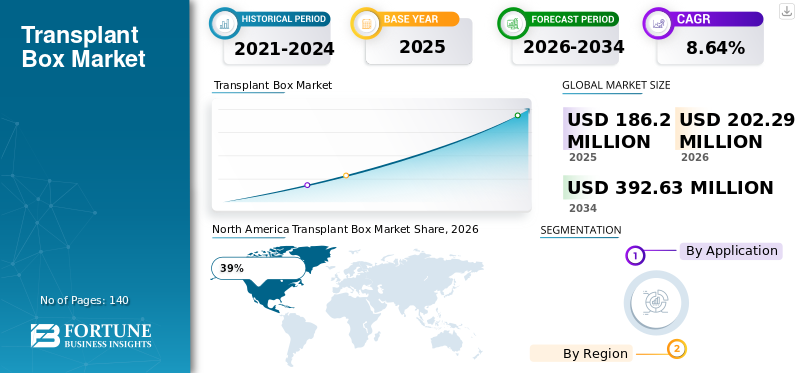
The transplant box market size was valued at USD 186.2 Million in 2025. The market is projected to grow from USD 202.29 Million in 2026 to USD 392.63 Million by 2034, exhibiting a CAGR of 8.64% during the forecast period.

The transplant box market is gaining significant attention within the global medical logistics and organ preservation ecosystem due to the growing demand for advanced organ transportation systems. Transplant boxes are designed to maintain controlled environmental conditions for organs such as kidneys, livers, hearts, and lungs during transit between donor and recipient locations. Healthcare institutions are increasingly adopting technologically advanced transplant preservation systems to improve organ viability, reduce ischemic damage, and enhance transplant success rates. The market is witnessing strong innovation in temperature-controlled packaging, real-time monitoring systems, and portable perfusion technologies. Rising organ donation awareness programs and improvements in transplant infrastructure continue to support transplant box market Growth and transplant box market opportunities across developed and emerging healthcare systems.
The United States represents one of the most developed markets for transplant preservation technologies due to its extensive transplant network, advanced hospital infrastructure, and high adoption of organ transportation innovations. Organ procurement organizations across the country are investing in advanced transplant boxes capable of maintaining stable preservation environments for longer transport durations. Increasing numbers of kidney, heart, liver, and lung transplant procedures are strengthening demand for specialized transportation solutions. Regulatory support for organ preservation technologies, ongoing clinical research, and growing investment in machine perfusion systems are creating favorable conditions for market expansion. The presence of leading manufacturers and strong healthcare spending further support the United States transplant box market Outlook and long-term industry development.
Download Free sample to learn more about this report.
 Global Market Size & Forecast
 Market Share
 Key Regional Highlights
North America
North America held the largest regional share at 39% in 2025, supported by advanced healthcare infrastructure.
Europe
Europe accounted for 28% of the global market, driven by established transplant networks and organ-sharing programs.
Asia-Pacific
Asia-Pacific represented 24% of the market, supported by rising transplant volumes and healthcare infrastructure development.
U.S
The U.S. remains a major market, supported by high transplant procedure volumes and advanced organ preservation technologies.
Japan
Japan accounted for 22% of the Asia-Pacific market, supported by advanced healthcare infrastructure and growing adoption of transplant technologies.
Read More

The transplant box market is undergoing rapid transformation due to technological advancements focused on improving organ survival rates during transportation. One of the most significant trends involves the integration of smart monitoring technologies that provide real-time tracking of temperature, humidity, location, and preservation conditions. Healthcare providers are increasingly demanding connected systems that allow immediate intervention whenever deviations occur during transport.
Download Free sample to learn more about this report.
Another notable trend in the transplant box market Analysis is the growing adoption of normothermic and hypothermic machine perfusion technologies. These systems maintain organs in near-physiological conditions rather than conventional cold storage methods. Market participants are also focusing on lightweight materials, reusable preservation containers, and enhanced insulation technologies to improve transport efficiency. Artificial intelligence-assisted monitoring and predictive analytics are emerging as valuable tools for transplant logistics management. Sustainability initiatives are encouraging manufacturers to develop environmentally responsible packaging solutions. These developments continue to reshape the competitive landscape and strengthen transplant box market Trends across healthcare institutions and transplant centers worldwide.
Rising Number of Organ Transplantation Procedures Worldwide
The increasing prevalence of chronic diseases, organ failure conditions, and aging populations has significantly increased the demand for transplantation procedures globally. Kidney failure, liver disease, cardiovascular disorders, and respiratory complications are contributing to larger transplant waiting lists. Healthcare systems are actively promoting organ donation awareness programs to address organ shortages, creating higher demand for advanced transportation solutions.
Transplant boxes play a critical role in preserving organ quality between retrieval and implantation. Modern transplant centers require sophisticated preservation systems capable of extending organ viability and minimizing transportation risks. Growing investments in transplant infrastructure, expanded donor networks, and improved logistics capabilities are driving widespread adoption of technologically advanced transplant boxes. The increasing use of cross-border organ sharing programs and long-distance transportation further supports the need for reliable preservation technologies. As transplant volumes continue to rise, demand for specialized transport systems is expected to remain a key growth driver within the Transplant Box Industry Analysis.
High Cost of Advanced Preservation and Transportation Systems
Despite strong demand, the high cost associated with advanced transplant boxes remains a significant barrier for many healthcare providers. Modern systems often incorporate sophisticated monitoring devices, machine perfusion technologies, and specialized insulation materials, resulting in substantial acquisition and maintenance expenses.
Smaller hospitals and healthcare facilities in developing economies frequently struggle to justify the investment required for premium preservation technologies. Budget constraints may force organizations to continue using traditional cold-storage methods despite clinical advantages offered by advanced solutions. Regulatory compliance requirements and certification costs further increase financial burdens for manufacturers and healthcare institutions. Limited reimbursement structures in certain healthcare systems can also slow adoption rates. These economic challenges continue to influence procurement decisions and represent an important restraint affecting overall transplant box market Size and market penetration.
Expansion of Organ Preservation Technologies and Remote Transplant Networks
Significant opportunities are emerging through the expansion of advanced preservation technologies capable of extending organ viability beyond traditional storage limitations. Improved preservation periods allow organs to travel longer distances, creating access to larger donor pools and increasing transplant success rates.
Healthcare providers are increasingly establishing regional and international transplant collaborations, creating demand for sophisticated transportation infrastructure. Emerging markets are investing heavily in transplant programs and healthcare modernization initiatives, generating new growth avenues for manufacturers. Portable machine perfusion systems, cloud-based monitoring platforms, and predictive logistics technologies offer additional commercial opportunities. Companies developing integrated preservation ecosystems that combine hardware, software, and monitoring capabilities are expected to benefit substantially. These developments create attractive opportunities for stakeholders seeking long-term participation in the transplant box market Forecast.
Complex Regulatory Requirements and Operational Risks
The transplant ecosystem operates under strict regulatory frameworks designed to ensure patient safety and organ integrity. Manufacturers must comply with extensive medical device regulations, transportation standards, and quality assurance requirements across multiple jurisdictions.
Achieving regulatory approvals often requires lengthy validation processes and significant investment in clinical testing. Operational challenges include maintaining consistent preservation conditions, coordinating transportation logistics, and minimizing delays during organ transfers. Unexpected disruptions such as weather conditions, transportation failures, or monitoring system malfunctions can negatively impact transplant outcomes. Workforce shortages in specialized transplant logistics and increasing cybersecurity concerns related to connected monitoring platforms add further complexity. These challenges continue to influence strategic planning and product development activities throughout the transplant box market Research Report landscape.
Kidney transplant boxes represent the largest segment of the market, accounting for approximately 33% market Share. The high prevalence of chronic kidney disease and end-stage renal disease has significantly increased global demand for kidney transplantation procedures. Healthcare institutions prioritize reliable preservation solutions capable of maintaining optimal temperature and organ viability during transport.
Manufacturers are focusing on specialized kidney preservation systems incorporating advanced insulation technologies, monitoring sensors, and machine perfusion capabilities. Growing transplant waiting lists and increased living donor programs continue to support demand. Kidney-focused preservation technologies remain a major contributor to transplant box market Growth due to the large volume of procedures performed annually across developed and emerging healthcare markets.
Liver transplant boxes account for nearly 24% market Share within the global market. Liver transplantation requires highly specialized preservation methods due to the organ's sensitivity to ischemic injury and transportation delays. Advanced liver preservation systems increasingly utilize oxygenated perfusion technologies that support extended preservation durations.
Growing incidences of liver cirrhosis, fatty liver disease, hepatitis-related complications, and liver cancer are increasing transplant demand globally. Healthcare providers are investing in innovative transport systems designed to improve graft survival and post-transplant outcomes. The liver segment remains an important area of investment and product innovation within the broader Transplant Box Industry Report framework.
Heart transplant boxes hold approximately 18% market Share. Cardiac transplantation requires exceptionally precise preservation conditions because donor hearts have limited viability windows under traditional storage methods. Advanced preservation technologies have transformed heart transportation through systems that maintain near-physiological conditions.
Growing adoption of portable organ care systems has expanded transportation distances and increased donor organ utilization. Continuous monitoring, temperature regulation, and perfusion technologies are becoming standard features within premium heart preservation solutions. The heart segment continues to attract significant research and development investments due to the critical importance of organ quality during transplantation procedures.
Lung transplant boxes represent roughly 15% market Share. Lung preservation requires specialized environmental control due to the complexity and sensitivity of pulmonary tissues. Advanced preservation systems support improved oxygenation management and reduced tissue deterioration during transportation.
Increasing prevalence of chronic respiratory diseases and greater acceptance of lung transplantation as a treatment option are supporting segment growth. Manufacturers continue to develop innovative preservation technologies capable of extending transport windows while maintaining lung function. Growing clinical adoption of machine perfusion techniques further strengthens demand within this specialized segment.
The remaining applications account for approximately 10% market Share and include pancreas, intestine, and multi-organ transplant procedures. Although smaller in volume, these procedures require highly customized transportation solutions tailored to unique preservation requirements.
Research institutions and transplant centers are exploring advanced preservation methods for less commonly transplanted organs. Technological innovations developed for major organ categories are increasingly being adapted for specialized transplant applications. This segment presents niche opportunities for manufacturers focused on customized preservation systems and emerging transplantation techniques.
To know how our report can help streamline your business, Speak to Analyst
North America accounts for approximately 39% of the global market. The region benefits from advanced healthcare infrastructure, established organ donation networks, and widespread adoption of innovative preservation technologies. High transplant procedure volumes continue to generate sustained demand for premium transplant transportation systems.
Healthcare providers across the region increasingly utilize connected monitoring platforms and machine perfusion technologies. Strong clinical research activity and favorable reimbursement frameworks support continued investment in preservation innovations. North America remains a key contributor to overall transplant box market Share due to technological leadership and strong healthcare spending.
Europe represents approximately 28% market Share and maintains a highly developed transplant ecosystem supported by robust regulatory standards and collaborative organ-sharing programs. Several countries have established comprehensive transplant networks that rely on advanced transportation solutions.
Healthcare institutions continue investing in modern preservation systems to improve organ utilization rates and clinical outcomes. Innovation in sustainable packaging materials and environmentally responsible transport solutions is also gaining momentum. Europe remains a strategic market for both established manufacturers and emerging technology providers.
Asia-Pacific accounts for approximately 24% market Share and represents one of the fastest-evolving regional markets. Rapid healthcare infrastructure development, increasing awareness regarding organ donation, and rising transplant volumes are creating substantial demand for advanced preservation systems.
Governments throughout the region are supporting healthcare modernization initiatives that include transplant program expansion. Growing investments in medical technology and logistics infrastructure are encouraging broader adoption of sophisticated transplant boxes. The region offers significant long-term opportunities for market participants seeking expansion.
Latin America contributes approximately 5% market Share. Expanding transplant programs, healthcare investments, and growing awareness regarding organ donation are supporting market development. Countries across the region are strengthening transplant infrastructure and improving transportation capabilities.
Healthcare institutions are gradually adopting advanced preservation technologies to enhance transplant success rates. Although adoption remains uneven, ongoing healthcare modernization initiatives continue to create growth opportunities for manufacturers.
The Middle East and Africa account for approximately 4% market Share. Increasing healthcare investments, medical tourism initiatives, and development of specialized transplant centers are supporting market Growth across several countries.
Governments and private healthcare providers are expanding access to advanced medical technologies, including organ preservation solutions. While infrastructure challenges persist in certain areas, long-term demand prospects remain positive due to increasing healthcare modernization efforts.
North America Transplant Box Market Share, 2025 (%)
To get more information on the regional analysis of this market, Download Free sample
North America remains the dominant regional market with approximately 39% share. The region benefits from sophisticated healthcare infrastructure, extensive transplant networks, and strong adoption of advanced organ preservation technologies. Hospitals and transplant centers increasingly utilize real-time monitoring systems and machine perfusion solutions to improve organ viability during transport.
The presence of leading medical technology companies and substantial healthcare investments continues to strengthen regional leadership. Growing awareness regarding organ donation, favorable reimbursement frameworks, and ongoing clinical research contribute to continued market expansion. Demand for integrated preservation ecosystems that combine monitoring, logistics, and transportation capabilities remains particularly strong throughout the region.
Europe accounts for approximately 28% market Share and maintains one of the most structured transplant ecosystems globally. Cross-border organ-sharing initiatives and strong regulatory oversight have encouraged adoption of high-performance transplant transportation systems. Healthcare providers increasingly prioritize technologies that support longer preservation durations and improved transplant outcomes.
Sustainability is becoming an important focus area within the region, encouraging development of reusable and environmentally responsible preservation solutions. Continuous investment in healthcare innovation and transplant infrastructure supports steady demand for advanced transplant boxes across major European healthcare markets.
Germany represents approximately 24% of the European market. The country maintains a highly developed healthcare system with extensive transplant expertise and advanced medical infrastructure. German transplant centers actively invest in preservation technologies that improve organ viability and support complex transplantation procedures.
Research institutions and healthcare providers collaborate closely on clinical innovation initiatives focused on organ preservation and transportation. The adoption of machine perfusion technologies and advanced monitoring systems continues to increase. Strong regulatory compliance standards and emphasis on clinical outcomes drive demand for premium transplant transportation solutions. Germany remains a major center for medical device innovation and plays a significant role in shaping European transplant box market Insights.
The United Kingdom accounts for approximately 19% of the European market. National efforts to strengthen organ donation participation have contributed to increased transplantation activity and growing demand for preservation technologies. Healthcare providers are investing in transportation systems that support extended preservation windows and enhanced monitoring capabilities.
Clinical research organizations and transplant centers continue evaluating innovative preservation methods designed to improve organ utilization rates. Government support for healthcare modernization and increasing adoption of advanced logistics solutions contribute to market development. The United Kingdom remains an important market for manufacturers introducing next-generation transplant preservation technologies.
Asia-Pacific holds approximately 24% market Share and continues to emerge as a key growth region. Rapid urbanization, healthcare infrastructure development, and increasing transplant awareness programs are supporting demand for advanced transportation solutions. Several countries are investing heavily in transplant program expansion and medical technology modernization.
The region also benefits from rising healthcare expenditures and increasing collaboration between public and private healthcare organizations. Growing adoption of digital monitoring technologies and machine perfusion systems is expected to strengthen market development across major economies.
Japan represents approximately 22% of the Asia-Pacific market. The country's advanced healthcare infrastructure and strong focus on medical technology innovation support adoption of sophisticated transplant preservation systems. Healthcare institutions prioritize precision, reliability, and patient safety when selecting transportation solutions.
Japanese researchers continue exploring improved preservation techniques that extend organ viability and enhance transplant outcomes. Integration of automation, sensor technologies, and data analytics into transplant logistics systems is becoming increasingly common. These factors position Japan as a significant contributor to regional market advancement.
China accounts for approximately 34% of the Asia-Pacific market. Rapid healthcare expansion, increasing transplant procedure volumes, and government support for healthcare modernization are driving substantial demand for transplant preservation technologies. Major hospitals and transplant centers are investing in advanced transportation systems to improve operational efficiency.
Growing domestic medical device manufacturing capabilities and increasing research investments support technological innovation within the sector. Rising awareness regarding organ donation and improved healthcare accessibility further strengthen market prospects. China remains one of the most attractive markets for companies seeking long-term growth opportunities in transplant logistics.
The Rest of World region holds approximately 9% market Share. Countries within Latin America, the Middle East, and Africa continue investing in healthcare modernization and transplant infrastructure development. Expanding access to specialized medical services is creating demand for advanced preservation technologies.
Healthcare providers increasingly recognize the value of modern transplant transportation systems in improving clinical outcomes and maximizing organ utilization. Continued investment in healthcare facilities and medical training programs is expected to support future market development throughout these emerging regions.
Investment activity within the transplant box market continues to increase as healthcare providers seek advanced solutions capable of improving transplant success rates. Venture capital firms, medical technology investors, and strategic healthcare organizations are actively supporting innovation in organ preservation and transportation systems. Funding is particularly focused on machine perfusion technologies, smart monitoring platforms, and portable preservation solutions.
Significant opportunities exist in emerging healthcare markets where transplant infrastructure is expanding rapidly. Companies developing integrated ecosystems that combine transportation hardware, monitoring software, and logistics management services are attracting strong investor interest. Strategic partnerships between healthcare institutions, technology developers, and transplant organizations are accelerating commercialization efforts. Growing demand for extended preservation capabilities and remote monitoring technologies creates additional opportunities for market participants seeking competitive differentiation and long-term growth.
Product development activities within the market are increasingly centered on improving preservation efficiency and extending organ viability. Manufacturers are introducing transplant boxes equipped with real-time environmental monitoring, GPS tracking, cloud connectivity, and predictive maintenance capabilities. These innovations help healthcare providers maintain strict control over preservation conditions throughout transportation.
Advanced machine perfusion systems represent another major area of innovation. Companies are developing portable solutions capable of maintaining organs in near-physiological states during transit. Improvements in insulation materials, battery technology, and sensor integration are further enhancing product performance. Sustainability-focused initiatives are encouraging development of reusable preservation containers and environmentally friendly materials. These innovations continue to strengthen the overall transplant box market Outlook and competitive landscape.
The transplant box market Report provides comprehensive analysis of industry trends, market dynamics, competitive developments, technological innovations, and regional performance indicators. The study evaluates key drivers, restraints, opportunities, and challenges influencing market development across major healthcare systems. Detailed assessment of application segments including kidney, liver, heart, lung, and other transplant categories provides valuable insights into demand patterns and adoption trends.
Request for Customization to gain extensive market insights.
The report further examines regional market performance across North America, Europe, Asia-Pacific, Latin America, and the Middle East & Africa. Competitive analysis includes profiling of major manufacturers, product development activities, investment trends, and strategic initiatives shaping the industry landscape. The research also highlights emerging opportunities in smart monitoring systems, machine perfusion technologies, and integrated transplant logistics solutions. The report serves as a valuable resource for stakeholders seeking actionable transplant box market Insights, transplant box market Research Report findings, and long-term business opportunities.
Fortune Business Insights says that the global market value stood at USD 186.19 million in 2025 and is projected to reach USD 392.62 million by 2034.
The market is expected to exhibit a CAGR of 8.64% during the forecast period of 2026-2034.
Kidney transplant boxes were the leading application segment, accounting for approximately 33% of the market, driven by the high prevalence of chronic kidney disease and demand for kidney transplantation.
Key players include TransMedics, Inc., Organ Recovery Systems, XVIVO, Paragonix Technologies, Inc., OrganOx Limited, and Hibernicor.
Major trends include the integration of smart real-time monitoring technologies and growing adoption of normothermic and hypothermic machine perfusion technologies. North America led the market with approximately 39% share.


(Offer valid till 31st Oct 2026)
Get 30-60 hrs Free Customization
Expand Regional and Country Coverage, Segments Analysis, Company Profiles, Competitive Benchmarking, and End-user Insights.













.webp)






Get In Touch With Us
US +1 833 909 2966 ( Toll Free )
Receive a tailored pricing based on your needs.
Discuss your questions with our industry experts.
Have questions? Get quick answers before you purchase.

