Ultrasound Wound Debridement Devices Market Size, Share & Industry Analysis, By Product (Systems, Accessories/Consumables), By Indication (Chronic Wounds, Acute Wounds), By End Use (Hospitals, Specialty Clinics), By Region, and Regional Forecast, 2026-2034
 Download Free Sample
Ultrasound Wound Debridement Devices Market Overview
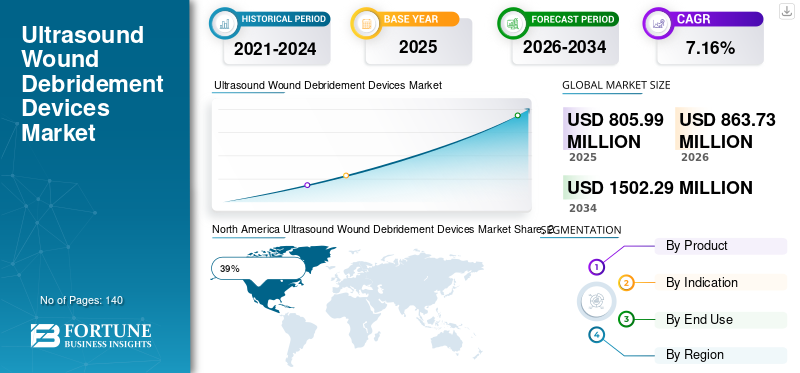
The ultrasound wound debridement devices market size was valued at USD 805.99 Million in 2025. The market is projected to grow from USD 863.73 Million in 2026 to USD 1502.29 Million by 2034, exhibiting a CAGR of 7.16% during the forecast period.

The ultrasound wound debridement devices market is witnessing strong adoption across advanced wound care environments due to the increasing burden of chronic wounds, diabetic ulcers, pressure injuries, surgical wounds, and trauma-related tissue damage. Ultrasound wound debridement technology enables selective removal of necrotic tissue while preserving healthy tissue, making it a preferred option among healthcare providers. Hospitals and specialty wound care centers are increasingly integrating ultrasonic debridement systems into treatment protocols to improve wound bed preparation, infection control, and healing outcomes. The ultrasound wound debridement devices market report highlights growing demand for minimally invasive wound management technologies, expansion of outpatient wound care services, and rising clinical acceptance of ultrasound-assisted debridement procedures.
The United States remains the largest contributor to the ultrasound wound debridement devices market due to the high prevalence of diabetes, obesity-related wounds, pressure ulcers, and post-surgical wound complications. Healthcare facilities across the country are investing in advanced wound care technologies to reduce hospitalization periods and improve patient outcomes. The ultrasound wound debridement devices industry analysis indicates that favorable reimbursement structures, strong presence of leading manufacturers, and increasing awareness among wound care specialists continue to support market penetration. Growing adoption of portable ultrasonic systems in ambulatory surgical centers and outpatient clinics further strengthens demand throughout the U.S. healthcare ecosystem.
Download Free sample to learn more about this report.
Ultrasound Wound Debridement Devices Market Key Takeaways
 Global Market Size & Forecast
- 2025 Market Size: USD 805.99 Million
- 2026 Market Size: USD 863.73 Million
- 2034 Forecast Market Size: USD 1,502.29 Million
- CAGR: 7.16% from 2026-2034
 Market Share
- The market in North America dominated with a revenue share of 39% in 2025.
- Systems dominated by product with a market share of approximately 68%.
- Chronic wounds dominated by indication with a market share of approximately 58%.
 Key Regional Highlights
North America
North America led the market with a 39% share, supported by advanced healthcare infrastructure and growing demand for wound care technologies.
Europe
Europe accounted for 28% of the market, driven by established healthcare systems and increasing adoption of advanced wound management solutions.
Asia-Pacific
Asia-Pacific held a 23% share, supported by rising healthcare investments and the growing burden of chronic wounds.
U.S
The U.S. remains a key market, supported by advanced wound care infrastructure and strong adoption of ultrasonic debridement technologies.
Japan
Japan accounted for approximately 27% of the Asia-Pacific market, supported by advanced healthcare facilities and growing demand for innovative wound care solutions.
Read More

Ultrasound Wound Debridement Devices Market Latest Trends
One of the most significant ultrasound wound debridement devices market trends is the growing preference for non-invasive and tissue-preserving wound care procedures. Healthcare professionals increasingly favor ultrasound-assisted technologies because they provide precise debridement while minimizing discomfort and reducing damage to surrounding healthy tissues. This trend is particularly visible in diabetic foot ulcer management, where wound preservation is critical for limb salvage and long-term recovery.
Download Free sample to learn more about this report.
Another important trend within the ultrasound wound debridement devices market research report is the development of portable and compact systems. Manufacturers are introducing lightweight devices that can be deployed in outpatient centers, specialty clinics, and home-care settings. Integration of digital monitoring capabilities and improved ergonomic designs is enhancing workflow efficiency. The market is also witnessing growing demand for disposable accessories and consumables that improve infection control standards. Increasing collaboration between wound care specialists, hospitals, and technology providers is accelerating innovation and expanding clinical applications across acute and chronic wound management.
Ultrasound Wound Debridement Devices Market Dynamics
DRIVER
Rising Prevalence of Chronic Wounds and Diabetic Foot Ulcers
The primary growth driver in the ultrasound wound debridement devices market is the increasing incidence of chronic wounds worldwide. Conditions such as diabetes, vascular disorders, obesity, and aging-related complications contribute significantly to the growing patient population requiring advanced wound care interventions. Chronic wounds often demand repeated debridement procedures to remove devitalized tissue and stimulate healing. Ultrasound-based technologies offer an efficient and selective solution that aligns with modern clinical requirements.
Healthcare providers are increasingly adopting ultrasonic debridement systems because they support faster wound bed preparation and improved healing conditions. Hospitals are also focusing on reducing infection rates and minimizing treatment complications. As wound care departments expand and specialized wound management programs become more common, demand for ultrasound wound debridement equipment continues to increase. The ultrasound wound debridement devices market outlook remains favorable due to the rising number of diabetic foot ulcer cases, pressure injuries among elderly patients, and complex wounds associated with surgical procedures.
RESTRAINT
High Acquisition and Maintenance Costs of Advanced Systems
Despite growing adoption, the ultrasound wound debridement devices market faces challenges associated with the high cost of advanced equipment. Healthcare facilities, particularly in developing economies, often encounter budget limitations that restrict investment in premium wound care technologies. Initial procurement expenses, staff training requirements, and ongoing maintenance costs can create barriers for smaller hospitals and outpatient facilities.
Many healthcare providers continue to rely on conventional wound debridement techniques because of lower operational costs and familiarity among clinicians. In addition, reimbursement variability across different healthcare systems may limit purchasing decisions. The need for specialized accessories and consumables can further increase overall treatment expenses. These financial considerations may slow adoption rates in cost-sensitive markets and create disparities between developed and emerging healthcare regions. As a result, affordability remains an important factor influencing purchasing decisions across the Ultrasound Wound Debridement Devices Industry.
OPPORTUNITY
Expansion of Outpatient Wound Care And Specialty Clinics
A major opportunity within the ultrasound wound debridement devices market lies in the expansion of outpatient wound care services. Healthcare systems are increasingly shifting treatment from inpatient settings to specialized clinics and ambulatory care facilities. This transition supports demand for portable and user-friendly ultrasonic debridement devices capable of delivering effective treatment outside traditional hospital environments.
The growing number of wound care centers presents attractive opportunities for manufacturers seeking market expansion. Specialty clinics focus heavily on diabetic ulcers, venous leg ulcers, pressure injuries, and postoperative wounds, all of which require advanced debridement solutions. Manufacturers are developing compact systems and disposable components that meet the operational needs of these facilities. Emerging economies are also investing in specialized wound care infrastructure, creating new opportunities for product commercialization. The ultrasound wound debridement devices market forecast indicates strong potential for broader adoption across outpatient healthcare settings.
CHALLENGE
Limited Awareness and Shortage of Trained Professionals
One of the major challenges affecting the ultrasound wound debridement devices market is the shortage of healthcare professionals trained in advanced wound care technologies. Successful implementation of ultrasonic debridement systems requires clinical expertise, proper device handling, and understanding of wound assessment protocols. In many regions, access to specialized wound care education remains limited.
Healthcare providers unfamiliar with ultrasound-assisted debridement may hesitate to transition from conventional methods. Lack of standardized training programs can also create inconsistencies in treatment outcomes. In rural and underserved areas, healthcare institutions often face staffing shortages that further restrict technology adoption. Manufacturers must invest in clinician education, certification programs, and ongoing technical support to address these challenges. Strengthening professional awareness remains essential for expanding utilization across broader healthcare markets and achieving long-term growth in the ultrasound wound debridement devices market.
Ultrasound Wound Debridement Devices Market Segmentation
By Product
Systems represent the dominant category in the ultrasound wound debridement devices market and account for approximately 68% market share. These systems include console-based units, portable ultrasonic debridement platforms, integrated irrigation solutions, and advanced wound management technologies designed for clinical use. Hospitals and specialty wound care centers rely heavily on these systems because they offer consistent performance, precision tissue removal, and enhanced treatment efficiency.
The ultrasound wound debridement devices market analysis indicates that demand for systems is driven by increasing treatment volumes for diabetic ulcers, pressure injuries, and surgical wounds. Manufacturers continue introducing compact designs with improved ergonomics and user-friendly interfaces. Healthcare facilities prefer advanced systems that support infection control protocols and deliver predictable clinical outcomes. Growing investments in wound care infrastructure further strengthen adoption across both developed and emerging healthcare markets.
Accessories and consumables account for nearly 32% market share and play a critical role in recurring revenue generation within the ultrasound wound debridement devices market. This segment includes disposable probes, irrigation components, sterile kits, tubing systems, and treatment-specific accessories used during debridement procedures. Rising emphasis on infection prevention and patient safety supports increasing demand for single-use products.
Hospitals and clinics are adopting disposable consumables to reduce contamination risks and comply with stringent healthcare regulations. Manufacturers are expanding product portfolios with specialized accessories designed for chronic wound management and complex surgical applications. Continuous utilization of consumables creates a stable demand cycle, supporting long-term growth opportunities. The Ultrasound Wound Debridement Devices Industry Report highlights accessories and consumables as a strategically important segment due to recurring purchasing patterns and expanding treatment volumes worldwide.
To know how our report can help streamline your business, Speak to Analyst
By Indication
Chronic wounds represent approximately 58% market share within the ultrasound wound debridement devices market. This segment includes diabetic foot ulcers, venous leg ulcers, pressure ulcers, and other long-term wounds that require repeated debridement interventions. The increasing prevalence of diabetes and aging populations has significantly expanded the number of patients requiring advanced wound care solutions.
Ultrasound-assisted debridement is particularly effective for chronic wounds because it selectively removes necrotic tissue while minimizing trauma to healthy tissue structures. Healthcare providers increasingly incorporate ultrasonic technologies into comprehensive wound management programs aimed at accelerating healing and reducing complications. The ultrasound wound debridement devices market research report identifies chronic wound treatment as a major growth area due to rising patient volumes and increasing demand for evidence-based therapeutic approaches.
Acute wounds account for nearly 42% market share and include traumatic injuries, burns, surgical wounds, and other short-term tissue damage requiring rapid intervention. Hospitals and emergency care facilities utilize ultrasonic debridement systems to improve wound cleansing and support faster recovery processes. Growing numbers of surgical procedures globally continue to drive demand within this segment.
Acute wound management often requires precise tissue removal to prevent infection and optimize healing conditions. Ultrasound technology offers advantages by enhancing wound bed preparation and reducing procedural trauma. Increasing awareness of advanced wound care standards and expanding surgical volumes support market growth. The ultrasound wound debridement devices market insights indicate strong opportunities for manufacturers targeting trauma centers, burn units, and surgical departments.
By End Use
Hospitals hold approximately 48% market share and remain the largest end-user segment in the ultrasound wound debridement devices market. These facilities manage a broad range of chronic and acute wound cases, making advanced debridement technologies essential components of wound care programs. Hospitals often possess the financial resources and clinical expertise required for successful implementation of ultrasonic systems.
The growing emphasis on reducing wound-related complications and improving patient outcomes continues to drive procurement activities. Large healthcare institutions increasingly integrate ultrasound-assisted wound care into multidisciplinary treatment pathways. Rising surgical procedures, expanding wound care departments, and ongoing investments in medical technology further support demand across hospital settings.
Specialty clinics account for nearly 34% market share and represent one of the fastest-expanding end-user categories. Dedicated wound care centers focus on chronic wound management, diabetic ulcer treatment, and outpatient debridement procedures. These facilities prioritize efficient, minimally invasive technologies capable of delivering consistent clinical outcomes.
The shift toward outpatient treatment models has accelerated adoption of portable ultrasonic systems within specialty clinics. Patients benefit from convenient access to advanced wound care without prolonged hospital stays. The ultrasound wound debridement devices market opportunities continue to expand as healthcare systems encourage cost-effective outpatient treatment strategies and specialized wound management services.
Ultrasound Wound Debridement Devices Market Regional Outlook
North America
North America Ultrasound Wound Debridement Devices Market Share, 2026 (%)
To get more information on the regional analysis of this market, Download Free sample
North America remains the leading regional market with approximately 39% market share. The region benefits from advanced healthcare infrastructure, widespread awareness of wound management practices, and strong adoption of innovative medical technologies. Hospitals and specialty wound care centers across the United States and Canada routinely utilize ultrasonic debridement devices for chronic wound treatment, diabetic ulcer management, and postoperative care.
The presence of major manufacturers and continuous investment in clinical research support sustained market development. Increasing prevalence of diabetes and obesity contributes to growing demand for advanced wound care solutions. Healthcare providers are focused on reducing treatment complications and improving patient recovery outcomes, creating favorable conditions for market expansion.
Europe
Europe accounts for nearly 28% market share in the global ultrasound wound debridement devices market. The region demonstrates strong demand due to aging populations, increasing chronic disease prevalence, and growing emphasis on advanced wound management practices. Healthcare systems across Western Europe continue to invest in technologies that improve treatment quality and reduce long-term healthcare costs.
Clinical adoption is particularly strong in countries with established wound care programs and specialized treatment centers. Regulatory support for innovative medical technologies further contributes to market growth. Continuous expansion of outpatient wound care services and increasing focus on evidence-based treatment approaches strengthen regional demand.
Germany Ultrasound Wound Debridement DevicesMarket
Germany represents approximately 24% of the European ultrasound wound debridement devices market. The country benefits from a highly developed healthcare infrastructure and strong adoption of advanced medical technologies. Hospitals and specialized wound care facilities increasingly utilize ultrasonic debridement systems to manage diabetic foot ulcers, pressure injuries, and complex postoperative wounds.
German healthcare providers emphasize clinical effectiveness and patient safety, encouraging adoption of precision-based wound management solutions. Research institutions and medical technology companies actively support innovation in wound care. Growing elderly populations and rising incidence of chronic conditions continue to generate demand for advanced debridement procedures. Integration of specialized wound care programs across healthcare networks further strengthens Germany’s position within the regional market.
United Kingdom Ultrasound Wound Debridement Devices Market
The United Kingdom accounts for approximately 19% of the European ultrasound wound debridement devices market. Rising demand for efficient wound management solutions is driving adoption across hospitals, community healthcare services, and specialty clinics. The healthcare sector continues to focus on reducing treatment costs associated with chronic wounds while improving patient outcomes.
Increasing prevalence of diabetes and pressure ulcers has created substantial demand for advanced debridement technologies. Healthcare providers are implementing evidence-based wound care protocols that incorporate ultrasonic treatment options. Growing awareness among clinicians and expansion of outpatient wound care services support market growth. The United Kingdom remains an important market for manufacturers seeking broader penetration across Europe.
Asia-Pacific
Asia-Pacific holds approximately 23% market share and represents one of the most dynamic regions in the ultrasound wound debridement devices market. Rapid healthcare modernization, increasing healthcare expenditure, and growing awareness of advanced wound care are supporting regional expansion. Countries throughout the region are investing in medical technology upgrades and specialized treatment infrastructure.
The increasing burden of diabetes and chronic wounds is creating significant demand for effective wound management solutions. Healthcare providers are adopting advanced debridement technologies to improve treatment quality and reduce infection risks. Expanding hospital networks and growing private healthcare sectors further strengthen regional market opportunities.
Japan Ultrasound Wound Debridement DevicesMarket
Japan represents approximately 27% of the Asia-Pacific ultrasound wound debridement devices market. The country’s aging population contributes significantly to the growing incidence of chronic wounds and pressure injuries. Healthcare institutions are actively adopting advanced wound care technologies to address the needs of elderly patients and improve recovery outcomes.
Japanese healthcare providers prioritize precision and technological innovation, making ultrasonic debridement systems attractive treatment options. Strong healthcare infrastructure and widespread access to advanced medical services support market penetration. Continuous investments in clinical research and specialized wound care programs further contribute to demand across hospitals and specialty clinics.
China Ultrasound Wound Debridement DevicesMarket
China accounts for approximately 31% of the Asia-Pacific ultrasound wound debridement devices market. Rapid healthcare development, increasing hospital construction, and rising awareness of advanced wound management are driving substantial market expansion. The growing diabetic population has created significant demand for specialized wound care interventions.
Healthcare providers are increasingly adopting innovative technologies that improve clinical outcomes and reduce complications. Government initiatives supporting healthcare modernization and expansion of medical device utilization further enhance market opportunities. Domestic manufacturers and international suppliers continue expanding their presence across major healthcare institutions, supporting long-term growth in China’s wound care sector.
Rest of World
The Rest of World region accounts for approximately 10% market share. Countries in Latin America, the Middle East, and Africa are gradually increasing adoption of advanced wound care technologies due to growing awareness of chronic wound management and healthcare modernization initiatives. Demand is particularly evident in urban healthcare centers and private hospital networks.
Healthcare providers are seeking solutions that improve treatment outcomes while minimizing procedural complications. Expansion of healthcare infrastructure and rising investment in medical technologies continue to create favorable market conditions. As awareness of advanced wound care practices increases, ultrasonic debridement devices are expected to gain broader acceptance throughout emerging healthcare markets.
List of Top Ultrasound Wound Debridement Devices Companies
- Mavera Medical
- Esacrom
- Bioventus (Misonix Inc.)
- SANUWAVE Health, Inc
- Bioevopeak Co., Ltd.
- Arobella Medical LLC
- Söring GmbH
- Alliqua Biomedical
- Shenzhen Acare International Industrial Co., Ltd.
- GUNZE LIMITED
Top Two Companies by Market Share
- Bioventus (Misonix Inc.) – 18%
- Söring GmbH – 14%
Investment Analysis and Opportunities
The ultrasound wound debridement devices market is attracting increasing investment from medical device manufacturers, private equity firms, and healthcare technology investors. Funding activities are focused on research and development, product miniaturization, clinical validation studies, and expansion into emerging healthcare markets. Investors recognize the growing need for advanced wound care solutions driven by chronic disease prevalence and aging populations.
Significant opportunities exist in outpatient wound care, portable device development, and disposable accessory manufacturing. Companies are expanding production capabilities to address rising demand from hospitals and specialty clinics. Strategic partnerships between healthcare providers and technology developers are supporting commercialization efforts. Emerging markets offer additional opportunities due to improving healthcare infrastructure and increasing awareness of advanced wound management. The ultrasound wound debridement devices market opportunities continue to expand as healthcare systems prioritize efficient and minimally invasive treatment solutions.
New Product Development
Innovation remains a key focus within the ultrasound wound debridement devices market. Manufacturers are developing next-generation systems featuring enhanced precision, improved ergonomic designs, and advanced irrigation technologies. Portable devices with compact footprints are gaining attention due to their suitability for outpatient and home-based treatment settings.
Recent product development efforts also emphasize infection prevention, digital integration, and workflow optimization. Companies are introducing disposable treatment accessories designed to improve sterility and reduce procedural risks. Advanced software capabilities enabling treatment monitoring and clinical documentation are becoming increasingly important. Research initiatives focused on improving energy delivery, tissue selectivity, and patient comfort continue to drive innovation across the market. These developments support broader adoption and strengthen the competitive landscape.
Five Recent Developments (2023–2025)
- Bioventus expanded commercialization efforts for advanced ultrasonic wound debridement technologies across multiple healthcare markets.
- Söring GmbH strengthened its ultrasonic-assisted wound debridement portfolio with expanded clinical application initiatives.
- SANUWAVE Health increased focus on advanced wound healing technologies and integrated wound management solutions.
- Several manufacturers introduced portable ultrasound debridement systems targeting outpatient and specialty clinic environments.
- Industry participants expanded distribution agreements and regional partnerships to improve access to advanced wound care technologies.
Report Coverage
The ultrasound wound debridement devices market report provides detailed evaluation of market trends, competitive positioning, product categories, end-user adoption patterns, and regional developments. The report analyzes major growth drivers, restraints, opportunities, and challenges influencing industry expansion. It also examines technological advancements, innovation strategies, and evolving clinical preferences shaping future market dynamics.
Request for Customization to gain extensive market insights.
The scope of the ultrasound wound debridement devices market research report includes segmentation by product, indication, end use, and geography. Coverage extends across North America, Europe, Asia-Pacific, and Rest of World markets while highlighting country-level developments in major healthcare economies. The report further evaluates competitive strategies, investment activity, product innovation pipelines, and emerging opportunities within advanced wound care technologies. This comprehensive assessment supports decision-making for manufacturers, investors, healthcare providers, distributors, and industry stakeholders seeking actionable ultrasound wound debridement devices market insights.
Frequently Asked Questions
Fortune Business Insights says that the global market value stood at USD 805.99 million in 2025 and is projected to reach USD 1,502.29 million by 2034.
The market is expected to exhibit a CAGR of 7.16% during the forecast period of 2026-2034.
Systems led the product segment with approximately 68% market share, supported by their consistent performance, precision tissue removal, and enhanced treatment efficiency.
Key players include Mavera Medical, Esacrom, Bioventus (Misonix Inc.), SANUWAVE Health, Inc., Bioevopeak Co., Ltd., and Arobella Medical LLC.
Major trends include growing preference for non-invasive, tissue-preserving wound care and development of portable, compact ultrasonic systems. North America led with approximately 39% market share.



- 2021-2034
- 2025
- 2021-2024
- 140
-

(Offer valid till 15th Oct 2026)
Get 30-60 hrs Free Customization
Expand Regional and Country Coverage, Segments Analysis, Company Profiles, Competitive Benchmarking, and End-user Insights.













.webp)






-
US +1 833 909 2966 ( Toll Free )
-
Get In Touch With Us