Uveitis Treatment Market Size, Share & Industry Analysis, By Treatment (Corticosteroids, Immunosuppressant, Monoclonal Antibodies), By Disease, By Cause, By Distribution Channel, and Regional Forecast, 2026-2034
 Download Free Sample
Uveitis Treatment Market Overview
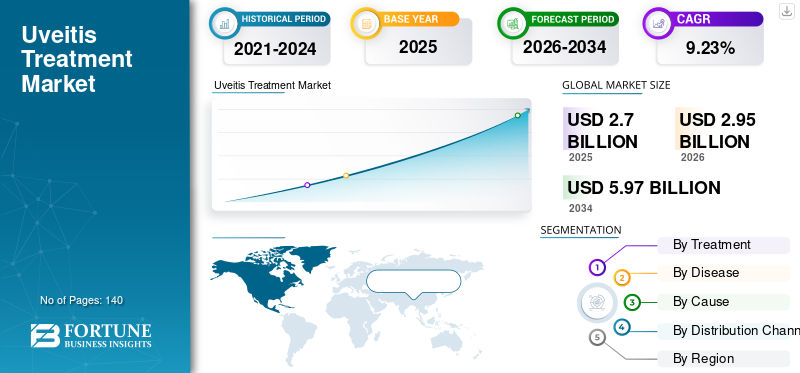
The global uveitis treatment market size was valued at USD 2.69 billion in 2025. The market is projected to grow from USD 2.94 billion in 2026 to USD 5.97 billion by 2034, exhibiting a CAGR of 9.23% during the forecast period.

The uveitis treatment market is expanding steadily due to increasing prevalence of inflammatory eye disorders, rising autoimmune disease incidence, and growing awareness regarding early ophthalmic diagnosis. Uveitis treatment includes corticosteroids, immunosuppressants, biologics, monoclonal antibodies, and advanced ocular drug delivery systems aimed at reducing inflammation and preventing vision loss. Healthcare providers are increasingly adopting targeted therapies and long-acting injectable formulations to improve treatment outcomes and patient compliance. The uveitis treatment market report highlights rising demand for specialized ophthalmology care, increasing investments in biologic therapies, and expansion of retinal disease treatment infrastructure globally. Technological advancements in ocular therapeutics and increasing availability of specialty eye clinics continue supporting long-term uveitis treatment market growth worldwide.
The United States uveitis treatment market is witnessing substantial growth due to increasing autoimmune disease prevalence, rising diabetic eye complications, and growing demand for advanced ophthalmology services. Hospitals, specialty eye clinics, and ambulatory care centers are actively integrating biologic therapies and corticosteroid implants into uveitis management programs to improve patient outcomes. The Uveitis Treatment industry analysis indicates rising adoption of monoclonal antibody therapies and sustained-release ocular drug delivery systems throughout the country. Expansion of retinal care infrastructure and increasing healthcare expenditure continue accelerating market development across the United States.
Download Free sample to learn more about this report.
Uveitis Treatment Market Key Takeaways
 Global Market Size & Forecast
- 2025 Market Size: USD 2.69 Billion
- 2026 Market Size: USD 2.94 Billion
- 2034 Forecast Market Size: USD 5.97 Billion
- CAGR: 9.23% from 2026-2034
 Market Share
- North America dominated with a revenue share of 41% in 2025.
- Corticosteroids accounted for the largest share of the market.
- Anterior uveitis was the leading disease segment.
 Key Regional Highlights
North America
North America led the market with a 41% share, supported by advanced ophthalmic care and growing adoption of innovative treatments.
Europe
Europe accounted for 27% of the market, driven by increasing access to specialized eye care and advanced therapeutics.
Asia-Pacific
Asia-Pacific held a 26% share, supported by rising healthcare investments and growing awareness of uveitis treatment.
U.S.
The U.S. market is supported by advanced ophthalmology infrastructure and increasing adoption of biologic and corticosteroid therapies.
Japan
Japan accounted for 24% of the Asia-Pacific market, supported by advanced eye care services and increasing demand for specialized treatments.
Read More

Uveitis Treatment Market Latest Trends
The uveitis treatment market trends indicate increasing adoption of biologic therapies and targeted monoclonal antibody treatments for chronic inflammatory eye disorders. Ophthalmologists are increasingly utilizing advanced corticosteroid implants and injectable biologics because these therapies improve long-term inflammation control and reduce recurrence risks. Pharmaceutical companies are heavily investing in sustained-release ocular drug delivery technologies designed to improve treatment efficiency and patient compliance. The uveitis treatment market research report highlights growing integration of teleophthalmology platforms and AI-assisted retinal imaging systems within specialty eye care services.
Another major trend shaping the uveitis treatment industry report is the rising expansion of personalized ophthalmic therapies and immunomodulatory treatment approaches. Hospitals and ophthalmology clinics are increasingly focusing on precision medicine strategies targeting autoimmune and infectious uveitis conditions. Biopharmaceutical manufacturers are actively developing next-generation biologics and non-steroidal anti-inflammatory formulations to minimize long-term corticosteroid complications. Increasing awareness regarding early diagnosis and preventive retinal healthcare is significantly supporting demand for advanced uveitis treatment services globally. Continuous innovation in ocular therapeutics and specialty ophthalmology infrastructure continues strengthening long-term uveitis treatment market opportunities worldwide.
Download Free sample to learn more about this report.
Uveitis Treatment Market Dynamics
DRIVER
Rising Prevalence of Autoimmune and Inflammatory Eye Disorders
The increasing prevalence of autoimmune diseases and inflammatory ocular conditions is one of the strongest drivers accelerating uveitis treatment market growth globally. Diseases such as rheumatoid arthritis, sarcoidosis, Behçet’s disease, and inflammatory bowel disorders are increasingly associated with uveitis complications requiring long-term ophthalmic treatment. Patients suffering from chronic inflammatory conditions frequently require corticosteroids, immunosuppressants, and biologic therapies to prevent retinal damage and vision impairment.
The uveitis treatment market analysis highlights strong demand for advanced biologic therapies and targeted ocular drug delivery systems within hospitals and specialty ophthalmology clinics. Healthcare providers are increasingly emphasizing early diagnosis and aggressive inflammation management to reduce risks of permanent blindness and retinal complications. Increasing aging populations and rising diabetic eye disease incidence are also significantly supporting market expansion. Pharmaceutical companies continue investing in innovative monoclonal antibodies and sustained-release corticosteroid implants designed to improve patient outcomes and reduce treatment frequency.
RESTRAINT
High Treatment Costs and Side Effects of Corticosteroid Therapies
One of the major restraints affecting the uveitis treatment market outlook is the high cost associated with biologic therapies, monoclonal antibodies, and long-term ophthalmic treatment programs. Advanced uveitis therapies often require repeated injections, sustained-release implants, and specialized monitoring procedures, significantly increasing treatment expenses for patients and healthcare systems. Smaller healthcare facilities in developing regions may face limitations in accessing premium biologic medications and advanced retinal care technologies.
The uveitis treatment market research report also indicates concerns regarding long-term corticosteroid side effects including glaucoma, cataracts, elevated intraocular pressure, and systemic complications. Some patients may experience treatment resistance or require extended immunosuppressive therapy, creating additional clinical challenges for ophthalmologists. Regulatory approval requirements and complex biologic manufacturing processes further increase operational costs for pharmaceutical companies. Limited awareness regarding early ophthalmic screening and delayed diagnosis in certain regions may additionally restrict timely treatment adoption. Continuous need for specialized ophthalmology expertise and patient monitoring remains another challenge affecting broader uveitis treatment market development globally.
OPPORTUNITY
Growth in Biologics and Sustained-Release Ocular Therapies
The rapid growth of biologic therapies and sustained-release ocular drug delivery systems is creating substantial uveitis treatment market opportunities worldwide. Pharmaceutical companies are increasingly developing monoclonal antibodies and targeted immunomodulatory therapies capable of improving long-term inflammation control while minimizing systemic side effects. Sustained-release corticosteroid implants and injectable ocular therapeutics are becoming increasingly important because they improve patient adherence and reduce treatment frequency.
The uveitis treatment market forecast highlights strong opportunities associated with personalized medicine and precision ophthalmology approaches targeting autoimmune-related uveitis conditions. Hospitals and specialty eye clinics are actively investing in advanced retinal imaging systems and minimally invasive ocular treatment technologies to improve patient outcomes. Emerging economies are expanding ophthalmology infrastructure and retinal care services due to rising healthcare modernization initiatives and increasing awareness regarding vision preservation. Teleophthalmology platforms and AI-assisted diagnostic systems are also improving healthcare accessibility and early disease detection.
CHALLENGE
Complex Diagnosis and Limited Specialist Availability
The uveitis treatment market faces significant challenges related to complex diagnosis procedures and limited availability of specialized ophthalmology professionals. Uveitis can result from autoimmune diseases, infections, trauma, or systemic inflammatory disorders, making accurate diagnosis and treatment planning highly complex. Patients often require multidisciplinary care involving ophthalmologists, rheumatologists, immunologists, and infectious disease specialists to manage chronic ocular inflammation effectively.
The uveitis treatment market report additionally highlights challenges associated with treatment adherence and long-term disease recurrence management. Chronic uveitis frequently requires extended therapy duration and continuous patient monitoring to prevent retinal damage and permanent vision loss. Many developing regions continue facing shortages of advanced retinal imaging equipment and trained ophthalmic specialists, limiting healthcare accessibility. Rising healthcare costs and inconsistent insurance reimbursement for biologic therapies may further affect patient treatment adoption. Continuous investment in ophthalmology training, biologic research, and diagnostic technology development is required to address these challenges and strengthen long-term uveitis treatment market expansion globally.
Uveitis Treatment Market Segmentation
By Treatment
Corticosteroids dominate the uveitis treatment market because they remain the primary first-line therapy for controlling ocular inflammation and preventing retinal damage in patients suffering from acute and chronic uveitis. These drugs are widely administered through eye drops, oral formulations, periocular injections, and sustained-release implants depending on disease severity and anatomical involvement. Hospitals and ophthalmology clinics increasingly utilize corticosteroid implants because they provide long-term inflammation control and improved patient compliance. Pharmaceutical companies continue investing in sustained-release technologies and advanced steroid formulations designed to minimize systemic side effects and improve therapeutic efficiency. Rising incidence of autoimmune eye disorders and increasing ophthalmology treatment accessibility continue supporting strong segment growth globally.
The immunosuppressant segment represents a significant portion of the uveitis treatment market because chronic and recurrent uveitis cases often require long-term immune modulation beyond corticosteroid therapy. Immunosuppressive medications are increasingly utilized in patients suffering from autoimmune-related ocular inflammation where steroid-sparing treatment strategies are necessary to minimize long-term complications. Rheumatologists and ophthalmologists frequently prescribe immunosuppressants in combination with corticosteroids to improve disease management and reduce recurrence rates. Pharmaceutical manufacturers continue expanding research activities focused on safer immunosuppressive formulations with improved long-term tolerability and reduced toxicity risks.
Monoclonal antibodies are experiencing rapid growth within the uveitis treatment market because targeted biologic therapies are becoming increasingly important in managing severe non-infectious and autoimmune-related uveitis conditions. Biologic drugs specifically target inflammatory cytokines and immune pathways responsible for ocular inflammation, improving long-term disease control and reducing corticosteroid dependency. Specialty ophthalmology centers and tertiary healthcare institutions increasingly utilize monoclonal antibodies for patients with recurrent or treatment-resistant uveitis.
By Disease
The disease-based segment in the uveitis treatment market includes anterior uveitis, posterior uveitis, intermediate uveitis, and panuveitis treatment applications. Anterior uveitis remains the dominant disease category because it represents the most commonly diagnosed form of ocular inflammation globally. Hospitals and ophthalmology clinics increasingly utilize corticosteroids, biologics, and immunosuppressants to manage chronic inflammatory conditions and prevent vision complications associated with severe uveitis cases. Healthcare providers are actively expanding multidisciplinary care programs focused on chronic inflammatory disease management and long-term retinal preservation. Increasing patient awareness regarding early ophthalmic screening and advanced retinal treatment options continues supporting strong market growth across disease-based treatment applications globally.
By Cause
The by cause segment within the uveitis treatment market includes autoimmune uveitis, infectious uveitis, traumatic uveitis, and idiopathic inflammatory conditions. Autoimmune-related uveitis accounts for a substantial share because systemic inflammatory diseases and immune dysfunctions remain major contributors to chronic ocular inflammation. Healthcare providers increasingly emphasize targeted biologic therapies and immunomodulatory treatment strategies to address autoimmune disease progression and retinal damage risks. The uveitis treatment market analysis indicates rising demand for precision diagnostics and laboratory testing capable of identifying underlying inflammatory triggers and infectious causes associated with chronic uveitis conditions. Hospitals and specialty eye care centers are increasingly integrating multidisciplinary treatment frameworks involving rheumatology, immunology, and ophthalmology specialists to improve disease management outcomes.
By Distribution Channel
The distribution channel segment in the uveitis treatment market includes hospital pharmacies, retail pharmacies, specialty ophthalmology centers, and online pharmaceutical distribution platforms. Hospital pharmacies dominate the market because severe uveitis cases frequently require biologic therapies, corticosteroid injections, and specialized retinal treatment procedures administered within institutional healthcare environments. Specialty ophthalmology clinics are also witnessing strong growth due to increasing patient demand for advanced ocular therapeutics and precision retinal care services. The distribution channel segment accounts for approximately 23% of the global uveitis treatment market share. The uveitis treatment market forecast highlights increasing adoption of online pharmaceutical platforms and digital prescription management systems because patients increasingly prefer convenient medication accessibility and long-term therapy support.
Uveitis Treatment Market Regional Outlook
North America
North America Uveitis Treatment Market Share, 2025 (%)
To get more information on the regional analysis of this market, Download Free sample
North America holds approximately 41% of the global uveitis treatment market share because of advanced ophthalmology infrastructure, increasing autoimmune disease prevalence, and rising adoption of biologic therapies. The United States dominates the regional market due to strong availability of specialty eye clinics, retinal care centers, and advanced biologic treatment programs. Hospitals and ophthalmology providers are increasingly integrating corticosteroid implants, monoclonal antibodies, and sustained-release ocular drug delivery systems to improve patient outcomes and reduce recurrence rates associated with chronic inflammatory eye disorders. Increasing awareness regarding early diagnosis and preventive retinal healthcare is significantly supporting regional market expansion.
The uveitis treatment market report highlights strong investments in retinal imaging technologies, AI-assisted ophthalmology diagnostics, and teleophthalmology services throughout North America. Pharmaceutical companies are actively expanding biologic drug development and precision medicine programs targeting autoimmune-related ocular inflammation. Specialty ophthalmology centers are increasingly focusing on minimally invasive ocular therapies and outpatient retinal care solutions to improve patient accessibility and treatment efficiency. Rising healthcare expenditure and increasing insurance support for advanced ophthalmic therapies continue strengthening long-term uveitis treatment market growth across North America.
Europe
Europe accounts for nearly 27% of the global uveitis treatment market Size because of increasing prevalence of inflammatory eye diseases, expanding ophthalmology research activities, and rising adoption of biologic therapies across healthcare systems. Countries throughout the region are increasingly investing in retinal disease management programs and advanced ocular diagnostics to improve treatment accessibility and patient outcomes.
The uveitis treatment market analysis indicates rising demand for personalized ophthalmic therapies and precision retinal care services throughout Europe. Healthcare providers increasingly integrate multidisciplinary treatment approaches involving rheumatologists, immunologists, and ophthalmologists to improve disease management outcomes. Germany, the United Kingdom, France, and Italy remain major regional contributors because of strong pharmaceutical research infrastructure and advanced healthcare systems. Increasing awareness regarding autoimmune eye disorders and expansion of outpatient ophthalmology services continue supporting long-term uveitis treatment market opportunities across Europe.
Germany Uveitis Treatment Market
Germany contributes approximately 32% of Europe’s uveitis treatment market because of strong ophthalmology research capabilities, advanced retinal care infrastructure, and increasing demand for biologic therapies. Hospitals and specialty eye clinics across Germany are increasingly utilizing corticosteroid implants and monoclonal antibodies to manage chronic inflammatory ocular disorders and reduce long-term vision complications. Healthcare providers are actively integrating AI-assisted retinal imaging technologies and minimally invasive ocular treatment systems to improve diagnostic efficiency and patient outcomes.
The uveitis treatment industry report highlights increasing investments in ophthalmology clinical trials and biologic drug development programs throughout Germany. Pharmaceutical companies are actively collaborating with healthcare institutions to expand precision medicine approaches targeting autoimmune-related uveitis conditions. Specialty retinal care centers are also expanding outpatient treatment services and long-acting ocular therapeutic programs to improve patient adherence and reduce hospitalization burden. Rising healthcare modernization and growing awareness regarding preventive ophthalmic care continue supporting long-term uveitis treatment market expansion throughout Germany.
United Kingdom Uveitis Treatment Market
The United Kingdom accounts for approximately 21% of Europe’s uveitis treatment market share because of increasing inflammatory eye disease prevalence and growing adoption of advanced retinal care services. Hospitals and ophthalmology clinics are actively expanding biologic therapy programs and minimally invasive ocular treatment procedures to improve patient outcomes and manage chronic autoimmune-related uveitis conditions. Increasing healthcare awareness regarding early ophthalmic diagnosis is significantly supporting market development across the country.
The uveitis treatment market research report indicates rising demand for specialty eye care centers, digital retinal imaging systems, and targeted anti-inflammatory therapies throughout the United Kingdom. Healthcare providers are increasingly implementing teleophthalmology platforms and AI-assisted screening programs to improve healthcare accessibility and retinal disease management. Pharmaceutical companies are also strengthening biologic therapy distribution networks and specialty ophthalmic drug portfolios to address rising patient demand. Expansion of outpatient retinal treatment services and increasing investments in ophthalmology research continue strengthening long-term uveitis treatment market growth across the United Kingdom.
Asia-Pacific
Asia-Pacific dominates the uveitis treatment market with approximately 26% market share because of expanding healthcare infrastructure, increasing diabetic eye disease prevalence, and rising awareness regarding inflammatory ocular disorders. China, Japan, India, and South Korea remain major regional contributors because hospitals and ophthalmology clinics are actively expanding retinal care services and biologic treatment accessibility. Increasing aging populations and growing autoimmune disease incidence are significantly supporting demand for advanced ophthalmic therapies throughout the region.
The uveitis treatment market forecast highlights rising investments in specialty eye hospitals, retinal imaging technologies, and ophthalmology research programs throughout Asia-Pacific. Governments and private healthcare organizations are increasingly modernizing healthcare infrastructure and expanding biologic therapy availability to improve treatment outcomes for chronic ocular inflammatory diseases. Teleophthalmology services and outpatient retinal treatment programs are also improving healthcare accessibility across urban and semi-urban markets. Expansion of pharmaceutical manufacturing capabilities and increasing patient awareness regarding preventive eye care continue supporting strong long-term uveitis treatment market opportunities throughout Asia-Pacific.
Japan Uveitis Treatment Market
Japan contributes nearly 24% of Asia-Pacific’s uveitis treatment market because of its technologically advanced healthcare infrastructure and increasing adoption of precision ophthalmology treatments. Hospitals and specialty retinal care centers across Japan increasingly utilize monoclonal antibodies, sustained-release corticosteroid implants, and advanced biologic therapies to manage chronic inflammatory eye disorders and preserve long-term vision quality. Japanese healthcare providers strongly emphasize early diagnosis and preventive retinal care strategies, significantly supporting market development.
The uveitis treatment market outlook highlights increasing investments in ophthalmology robotics, AI-assisted retinal imaging, and advanced ocular diagnostics throughout Japan. Pharmaceutical companies are actively developing targeted biologic therapies and immunomodulatory treatments aimed at reducing long-term corticosteroid dependency and improving patient safety. Specialty ophthalmology centers are also expanding outpatient retinal care services and personalized treatment programs targeting autoimmune-related ocular inflammation. Rising aging populations and increasing healthcare expenditure continue supporting long-term uveitis treatment market growth across Japan.
China Uveitis Treatment Market
China accounts for approximately 12% of Asia-Pacific’s uveitis treatment market share because of rapidly expanding ophthalmology infrastructure, increasing inflammatory eye disease incidence, and growing healthcare modernization initiatives. Hospitals and specialty eye clinics across China are significantly increasing adoption of corticosteroid therapies, biologics, and advanced retinal imaging systems to improve diagnosis and long-term disease management. Rising diabetic populations and increasing autoimmune disease prevalence are strongly supporting market expansion across the country.
The uveitis treatment market research report highlights increasing investments in biologic drug manufacturing and specialty ophthalmology services throughout China. Government healthcare reforms and expansion of public healthcare accessibility are significantly improving patient access to advanced retinal care treatments and ophthalmic diagnostics. Pharmaceutical companies are actively strengthening biologic therapy research and local ophthalmic drug production capabilities to improve market competitiveness. Teleophthalmology services and digital patient management systems are also expanding rapidly due to rising healthcare digitization initiatives. Continuous investments in specialty eye care infrastructure continue strengthening long-term uveitis treatment market opportunities across China.
Rest of World
The Rest of World region holds approximately 6% of the global uveitis treatment market share because of increasing ophthalmology awareness and expanding retinal care infrastructure across Latin America, the Middle East, and Africa. Hospitals and specialty eye clinics in emerging economies are increasingly integrating corticosteroids, immunosuppressants, and advanced ocular diagnostics into inflammatory eye disease management programs. Rising healthcare awareness regarding vision preservation and autoimmune disease complications is significantly supporting market growth throughout developing healthcare markets.
The uveitis treatment market outlook indicates increasing investments in ophthalmology training programs, retinal imaging systems, and biologic therapy accessibility across emerging economies. Governments and private healthcare providers are actively modernizing healthcare infrastructure and improving specialty eye care services to address growing patient demand for advanced ophthalmic treatments. International pharmaceutical companies are also expanding ophthalmic drug distribution networks and biologic therapy availability within underserved regions. Growing healthcare expenditure and increasing adoption of digital retinal screening programs continue creating long-term uveitis treatment market growth opportunities throughout the Rest of World region.
List of Top Uveitis Treatment Companies
- AbbVie Inc.
- Santen Pharmaceutical Co., Ltd.
- Bausch Health Companies Inc.
- Regeneron Pharmaceuticals Inc.
- EyePoint Pharmaceuticals, Inc.
- Novartis AG
- Ocular Therapeutix, Inc.
- Ophthotech Corporation
- Pfizer Inc.
Top Two Companies with Highest Market Share
- AbbVie Inc. – 19% market share
- Novartis AG – 14% market share
Investment Analysis and Opportunities
The uveitis treatment market is attracting substantial investments because of increasing demand for biologic therapies, advanced retinal care technologies, and targeted immunomodulatory treatments. Pharmaceutical companies are heavily investing in monoclonal antibody research, sustained-release corticosteroid implants, and precision ophthalmology platforms to improve long-term disease management and patient outcomes.
The uveitis treatment market opportunities are also expanding because of increasing adoption of personalized medicine and teleophthalmology solutions. Biopharmaceutical manufacturers are investing in next-generation biologics and AI-assisted retinal diagnostics aimed at improving early disease detection and reducing recurrence rates. Emerging economies are modernizing ophthalmology infrastructure and expanding access to specialty eye care services due to rising healthcare awareness and diabetic eye disease incidence. Strategic collaborations between pharmaceutical companies, retinal care providers, and healthcare institutions continue accelerating innovation within biologic ophthalmic therapies.
New Product Development
New product development within the uveitis treatment market is focused on biologic innovation, sustained-release ocular therapeutics, and minimally invasive retinal treatment technologies. Pharmaceutical companies are increasingly introducing monoclonal antibodies, injectable biologics, and corticosteroid implants designed to improve inflammation control and reduce long-term corticosteroid dependency. Sustained-release ocular drug delivery systems are becoming highly important because they improve treatment adherence and reduce the frequency of intraocular injections for chronic uveitis patients.
The uveitis treatment market trends additionally highlight increasing innovation in AI-assisted retinal imaging systems and precision ophthalmology diagnostics aimed at improving early disease detection and treatment planning. Specialty ophthalmology providers are actively integrating teleophthalmology platforms and digital patient monitoring technologies to improve healthcare accessibility and treatment coordination. Pharmaceutical manufacturers continue expanding biologic pipelines targeting autoimmune-related ocular inflammation and chronic retinal diseases.
Five Recent Developments (2023-2025)
- AbbVie Inc. expanded biologic therapy applications for non-infectious uveitis treatment in 2024.
- EyePoint Pharmaceuticals, Inc. launched advanced sustained-release corticosteroid implants for retinal inflammation management in 2025.
- Santen Pharmaceutical Co., Ltd. introduced innovative ocular anti-inflammatory therapies in 2023.
- Regeneron Pharmaceuticals Inc. expanded retinal biologic research collaborations for chronic inflammatory eye disorders in 2024.
- Ocular Therapeutix, Inc. developed next-generation ophthalmic drug delivery technologies targeting chronic uveitis in 2025.
Report Coverage of Uveitis Treatment Market
The uveitis treatment market report provides comprehensive analysis of market trends, growth drivers, restraints, opportunities, and competitive landscape influencing global market development. The report evaluates corticosteroids, immunosuppressants, and monoclonal antibodies along with disease-based, cause-based, and distribution channel applications utilized across hospitals, specialty ophthalmology centers, and retinal care clinics. Detailed analysis of biologic therapies, ocular drug delivery technologies, retinal imaging advancements, and personalized ophthalmology treatments is also included throughout the study.
Request for Customization to gain extensive market insights.
The uveitis treatment industry report further covers regional market outlook across North America, Europe, Asia-Pacific, and Rest of World regions with country-level analysis for Germany, the United Kingdom, Japan, and China. market share analysis, biologic therapy adoption, ophthalmology infrastructure investments, and retinal disease management trends are comprehensively examined throughout the report. Competitive profiling of leading ophthalmic pharmaceutical manufacturers and evaluation of recent developments are additionally included. Emerging opportunities associated with teleophthalmology, biologic innovation, AI-assisted diagnostics, and sustained-release ocular therapeutics are extensively analyzed within the global uveitis treatment market report.
Frequently Asked Questions
Fortune Business Insights says that the global market value stood at USD 2.69 billion in 2025 and is projected to reach USD 5.97 billion by 2034.
The market is expected to exhibit a CAGR of 9.23% during the forecast period of 2026-2034.
Corticosteroids were the leading treatment segment because they remain the primary first-line therapy for controlling ocular inflammation and preventing retinal damage.
Key players include AbbVie Inc., Santen Pharmaceutical Co., Ltd., Bausch Health Companies Inc., Regeneron Pharmaceuticals Inc., EyePoint Pharmaceuticals, Inc., and Novartis AG.
Major trends include increasing adoption of biologic therapies and targeted monoclonal antibodies, along with sustained-release ocular drug delivery technologies. North America led the market with a 41% share.



- 2021-2034
- 2025
- 2021-2024
- 140
-

(Offer valid till 30th Sep 2026)
Get 30-60 hrs Free Customization
Expand Regional and Country Coverage, Segments Analysis, Company Profiles, Competitive Benchmarking, and End-user Insights.













.webp)






-
US +1 833 909 2966 ( Toll Free )
-
Get In Touch With Us