Vaginal Rejuvenation Market Size, Share & Industry Analysis, By Treatment Type (Reconstructive, Cosmetic), By Application, By Age Category and Regional Forecast, 2026-2034
 Download Free Sample
Vaginal Rejuvenation Market Size & Industry Overview
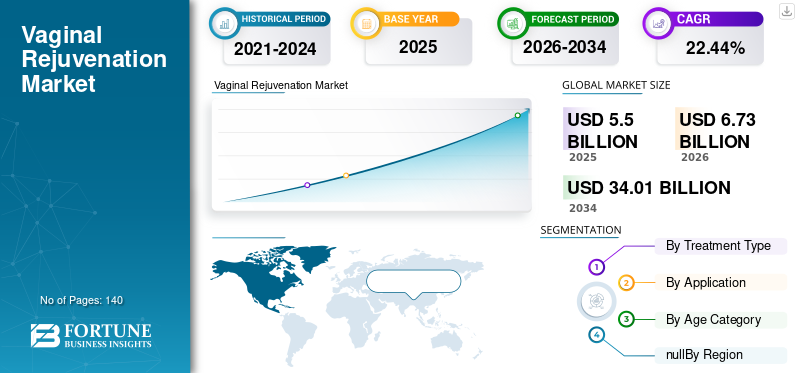
The vaginal rejuvenation market size was valued at USD 5.50 billion in 2025. The market is projected to grow from USD 6.73 billion in 2026 to USD 34.01billion by 2034, exhibiting a CAGR of 22.44% during the forecast period.

The vaginal rejuvenation market is experiencing strong expansion due to increasing awareness regarding women’s intimate health, rising adoption of minimally invasive aesthetic procedures, and growing acceptance of non-surgical rejuvenation treatments. Healthcare providers and aesthetic clinics are increasingly offering laser-based and radiofrequency-based vaginal rejuvenation solutions designed to improve tissue tightening, urinary incontinence management, and overall feminine wellness. The vaginal rejuvenation market report highlights growing consumer interest in advanced cosmetic gynecology procedures driven by lifestyle changes, post-pregnancy recovery needs, and aging-related concerns. Technological advancements in energy-based devices and personalized treatment protocols continue to strengthen the vaginal rejuvenation market analysis across hospitals, specialty clinics, and medical aesthetic centers.
The USA vaginal rejuvenation market is witnessing strong demand due to rising awareness of women’s wellness treatments and increasing availability of minimally invasive cosmetic gynecology procedures. Women across different age groups are seeking vaginal rejuvenation therapies for post-childbirth recovery, menopausal symptom management, and aesthetic enhancement. Medical spas, dermatology clinics, and specialized women’s healthcare centers are expanding treatment offerings featuring advanced laser and radiofrequency technologies. The Vaginal Rejuvenation Industry Report for the USA highlights increasing consumer preference for non-surgical procedures that involve shorter recovery periods and improved comfort. Rising social acceptance of aesthetic wellness treatments and increasing investments in women’s healthcare services continue to support market expansion across the country.
Download Free sample to learn more about this report.
Vaginal Rejuvenation Market Key Takeaways
 Global Market Size & Forecast
- 2025 Market Size: USD 5.50 Billion
- 2026 Market Size: USD 6.73 Billion
- 2034 Forecast Market Size: USD 34.01 Billion
- CAGR: 22.44% from 2026-2034
 Market Share
- The market in North America dominated with a revenue share of 41% in 2025.
- Reconstructive treatments accounted for approximately 56% of the market share.
- Cosmetic treatments accounted for approximately 44% of the market share.
 Key Regional Highlights
North America
North America led the market with a 41% share, supported by growing demand for minimally invasive women’s health and wellness procedures.
Europe
Europe accounted for 27% of the market, driven by increasing awareness of vaginal wellness and advanced treatment technologies.
Asia-Pacific
Asia-Pacific held a 23% share, supported by improving healthcare infrastructure and rising awareness of women’s wellness procedures.
U.S.
The U.S. market is supported by advanced healthcare facilities and increasing adoption of minimally invasive vaginal rejuvenation technologies.
Japan
Japan accounted for 24% of the Asia-Pacific market, supported by advanced healthcare infrastructure and growing demand for women’s wellness treatments.
Read More

Vaginal Rejuvenation Market Latest Trends
The vaginal rejuvenation market trends are increasingly influenced by rising demand for non-invasive procedures, technological innovation in energy-based devices, and growing consumer awareness regarding feminine wellness. Laser-based vaginal rejuvenation systems and radiofrequency devices are becoming highly preferred due to their ability to deliver tissue tightening, collagen stimulation, and symptom relief without requiring major surgical intervention. Women are increasingly seeking outpatient treatments that offer shorter recovery periods, reduced discomfort, and personalized therapeutic outcomes.
Download Free sample to learn more about this report.
Another major trend shaping the vaginal rejuvenation market outlook is the growing integration of regenerative medicine and personalized wellness therapies into cosmetic gynecology procedures. Clinics are increasingly offering combination treatments involving platelet-rich plasma therapies, laser systems, and hormone-supportive wellness programs to improve patient satisfaction. The vaginal rejuvenation market Research Report also highlights increasing demand for AI-assisted treatment planning and advanced imaging technologies that improve procedural accuracy. Medical tourism and the expansion of premium women’s wellness clinics are further supporting market growth. Technological advancements in handheld devices, temperature-controlled energy delivery systems, and minimally invasive treatment platforms continue to strengthen competition across the global market.
Vaginal Rejuvenation Market Dynamics
DRIVER
Increasing Awareness Regarding Women’s Intimate Wellness and Non-Invasive Treatments
The growing awareness regarding feminine wellness, post-pregnancy recovery, and age-related intimate health concerns is a major driver accelerating the vaginal rejuvenation market growth. Women are increasingly seeking medical and aesthetic procedures that improve vaginal laxity, urinary incontinence, dryness, and overall tissue health. Rising acceptance of cosmetic gynecology procedures and greater openness regarding women’s intimate wellness issues are encouraging more consumers to explore advanced rejuvenation therapies.
The vaginal rejuvenation market insights indicate that healthcare providers are expanding educational programs and awareness campaigns focused on minimally invasive treatment options. Non-surgical laser and radiofrequency technologies are gaining popularity because they offer shorter recovery periods and reduced procedural discomfort compared to traditional surgical methods. Increasing disposable income, changing beauty standards, and the expansion of medical aesthetic clinics are also contributing to stronger market demand. Aging populations and growing post-menopausal healthcare needs continue to support long-term growth opportunities within the vaginal rejuvenation market forecast.
RESTRAINT
High Treatment Costs and Limited Reimbursement Coverage
One of the major restraints affecting the vaginal rejuvenation market is the high cost associated with advanced energy-based procedures and aesthetic wellness treatments. Laser and radiofrequency-based vaginal rejuvenation therapies often require multiple treatment sessions and specialized clinical expertise, increasing overall treatment expenses for patients. Many consumers consider these procedures elective treatments, limiting accessibility among price-sensitive populations.
The Vaginal Rejuvenation Industry Analysis also identifies limited reimbursement coverage as a significant challenge impacting market expansion. Insurance providers in many regions do not fully cover cosmetic gynecology procedures unless they are medically necessary for severe functional conditions. Regulatory scrutiny regarding treatment claims and clinical efficacy can also influence patient confidence and adoption rates. Additionally, lack of awareness in rural and underserved regions restricts access to specialized women’s wellness services. Concerns regarding procedural safety, treatment outcomes, and social stigma in conservative societies continue to affect market penetration across certain demographic groups.
OPPORTUNITY
Expansion of Non-Surgical Technologies and Women’s Wellness Clinics
The increasing popularity of non-invasive aesthetic procedures presents substantial opportunities within the vaginal rejuvenation market. Medical aesthetic centers, dermatology clinics, and women’s wellness facilities are rapidly expanding treatment offerings focused on intimate rejuvenation and post-pregnancy wellness. Non-surgical laser and radiofrequency systems are becoming highly attractive due to their shorter recovery periods, reduced downtime, and improved patient convenience.
The vaginal rejuvenation market opportunities are also strengthening through advancements in regenerative medicine and personalized treatment protocols. Clinics are increasingly integrating platelet-rich plasma therapies, collagen stimulation technologies, and customized wellness programs into vaginal rejuvenation services. Emerging economies are witnessing growing investments in women’s healthcare infrastructure and medical tourism, creating additional opportunities for device manufacturers and service providers. Increasing social media influence and digital healthcare marketing are improving awareness regarding feminine wellness procedures. Rising consumer preference for minimally invasive cosmetic enhancements continues to support innovation and expansion within the market.
CHALLENGE
Regulatory Scrutiny and Lack of Standardized Treatment Protocols
One of the key challenges within the vaginal rejuvenation market is the increasing regulatory scrutiny surrounding energy-based intimate wellness procedures. Regulatory authorities in several countries have raised concerns regarding marketing claims and the clinical evidence supporting certain vaginal rejuvenation treatments. Manufacturers and healthcare providers must comply with evolving safety standards, patient consent requirements, and treatment documentation regulations.
The vaginal rejuvenation market report also highlights challenges associated with the lack of standardized treatment protocols across different healthcare providers and aesthetic clinics. Variations in treatment techniques, energy settings, and patient selection criteria can influence procedural outcomes and patient satisfaction. Maintaining consistent treatment quality and practitioner training standards remains essential for market credibility. Social stigma and cultural sensitivity regarding intimate wellness treatments also create marketing and educational challenges in conservative regions. Furthermore, competition among aesthetic device manufacturers continues to increase pricing pressure and product differentiation requirements across the industry.
Vaginal Rejuvenation Market Segmentation
By Treatment Type
Reconstructive treatments dominate the vaginal rejuvenation market share with approximately 56% of the global market due to increasing demand for functional restoration procedures related to childbirth recovery, urinary incontinence, and age-related tissue weakening. Women experiencing pelvic floor dysfunction, vaginal laxity, and discomfort following childbirth are increasingly seeking reconstructive rejuvenation therapies to improve quality of life and physical comfort. Hospitals and specialty women’s health clinics are expanding treatment availability for reconstructive procedures using laser technologies, radiofrequency systems, and surgical interventions. The vaginal rejuvenation market analysis indicates rising adoption of minimally invasive reconstructive procedures because they reduce recovery time and procedural complications compared to traditional surgical methods. Healthcare providers are increasingly combining regenerative therapies and pelvic floor rehabilitation programs with reconstructive treatments to improve long-term outcomes. Technological advancements in energy-controlled devices and tissue stimulation platforms continue to improve treatment precision and patient safety. Growing awareness regarding post-menopausal wellness and urinary health management also supports strong demand for reconstructive vaginal rejuvenation procedures globally.
Cosmetic treatments account for nearly 44% of the vaginal rejuvenation market size due to rising consumer interest in aesthetic enhancement, tissue tightening, and intimate wellness improvement. Women are increasingly seeking cosmetic vaginal rejuvenation procedures to address concerns related to aging, appearance, and self-confidence. Medical spas, cosmetic gynecology clinics, and aesthetic centers are rapidly expanding cosmetic rejuvenation services utilizing laser and radiofrequency technologies. The vaginal rejuvenation market Research Report highlights growing demand for non-invasive cosmetic treatments that provide collagen stimulation, improved tissue elasticity, and enhanced patient comfort without surgery. Younger demographics and post-pregnancy consumers are becoming key contributors to cosmetic treatment demand. Clinics are also integrating wellness consultations and personalized treatment planning into cosmetic rejuvenation programs. The expansion of social media influence and increasing awareness regarding aesthetic wellness procedures continue to strengthen adoption of cosmetic vaginal rejuvenation services across developed and emerging markets.
By Application
Application-based segmentation contributes approximately 42% of the vaginal rejuvenation market outlook and includes procedures focused on urinary incontinence management, vaginal tightening, dryness relief, and post-partum recovery. Urinary incontinence treatment remains a major application area because many women seek non-surgical therapies to improve bladder control and pelvic floor function. Laser and radiofrequency technologies are increasingly utilized to stimulate collagen production and tissue regeneration.
The vaginal rejuvenation market Trends indicate rising demand for post-partum recovery procedures designed to improve tissue tone and physical comfort following childbirth. Healthcare providers are expanding women’s wellness programs that combine rejuvenation procedures with pelvic rehabilitation therapies and lifestyle counseling. Personalized treatment plans and minimally invasive technologies continue to improve patient satisfaction and procedural outcomes. Increasing awareness regarding women’s intimate wellness is expected to strengthen demand across multiple application areas.
By Age Category
Age category segmentation accounts for approximately 33% of the vaginal rejuvenation market share as treatment demand varies significantly across different demographic groups. Women aged between 35 and 55 represent the largest consumer segment due to increasing concerns regarding menopausal symptoms, tissue laxity, and urinary incontinence. Aging populations and rising awareness regarding post-menopausal wellness continue to strengthen demand for rejuvenation therapies.
The vaginal rejuvenation market forecast highlights increasing adoption of non-invasive rejuvenation procedures among younger women seeking post-pregnancy recovery and cosmetic enhancement treatments. Clinics are developing age-specific treatment protocols and wellness programs to address varying physiological needs and patient expectations. Older demographics are also increasingly seeking minimally invasive therapies that improve comfort and quality of life without requiring surgery. Rising focus on preventive wellness and healthy aging continues to support long-term market expansion.
Type-based segmentation contributes approximately 25% of the vaginal rejuvenation market growth and includes laser-based systems, radiofrequency devices, and combination treatment platforms. Laser technologies remain highly popular because they support collagen stimulation, tissue resurfacing, and controlled energy delivery with minimal downtime. Radiofrequency systems are also gaining strong market acceptance due to their non-invasive tissue tightening capabilities and patient comfort advantages.
The vaginal rejuvenation industry report highlights increasing adoption of combination treatment platforms that integrate multiple energy modalities to improve treatment effectiveness and customization flexibility. Device manufacturers are introducing portable systems, advanced cooling technologies, and AI-assisted treatment planning tools to improve procedural precision. Continuous innovation in minimally invasive treatment technologies continues to strengthen competition and product differentiation within the market.
Vaginal Rejuvenation Market Regional Outlook
North America
North America holds approximately 41% of the vaginal rejuvenation market share due to advanced healthcare infrastructure, rising awareness regarding women’s wellness treatments, and widespread adoption of aesthetic medical procedures. The United States and Canada are major contributors to regional growth because of increasing demand for minimally invasive rejuvenation therapies and expanding medical aesthetic clinic networks. Consumers are increasingly prioritizing intimate wellness and post-pregnancy recovery solutions.
The vaginal rejuvenation market analysis for North America highlights strong adoption of laser-based and radiofrequency-based treatment technologies across hospitals, specialty clinics, and medical spas. Healthcare providers are investing in advanced treatment platforms and personalized wellness programs to improve patient outcomes. Rising social acceptance of cosmetic gynecology procedures and increasing availability of outpatient treatment options continue to support market expansion throughout the region.
Europe
Europe accounts for nearly 27% of the vaginal rejuvenation market size due to growing awareness regarding feminine wellness, increasing medical tourism, and expanding adoption of minimally invasive aesthetic procedures. Countries such as Germany, the United Kingdom, France, and Italy are witnessing rising demand for non-surgical rejuvenation treatments among aging and post-partum populations. Women’s healthcare clinics and aesthetic centers are increasingly offering personalized rejuvenation programs.
The vaginal rejuvenation market Research Report indicates strong demand for energy-based treatment systems and regenerative wellness therapies across European healthcare facilities. Consumers are increasingly seeking procedures with shorter recovery times and enhanced patient comfort. Medical aesthetic regulations and advanced healthcare standards continue to influence procedural quality and treatment innovation. Increasing investments in women’s wellness infrastructure remain a major driver of regional market expansion.
Germany Vaginal Rejuvenation Market
Germany contributes approximately 28% of the European vaginal rejuvenation market due to its advanced healthcare system and strong adoption of aesthetic medical technologies. Women’s healthcare clinics across Germany are increasingly offering laser and radiofrequency rejuvenation procedures for post-menopausal wellness, urinary incontinence management, and cosmetic enhancement. Rising awareness regarding feminine wellness and pelvic health continues to strengthen treatment demand.
The vaginal rejuvenation market insights for Germany highlight increasing investment in minimally invasive treatment technologies and regenerative medicine applications. Healthcare providers are emphasizing patient safety, clinical precision, and customized treatment protocols. The country’s strong medical tourism industry and advanced cosmetic healthcare infrastructure also support market growth. Continuous technological innovation and growing consumer acceptance of intimate wellness treatments continue to strengthen the German market.
United Kingdom Vaginal Rejuvenation Market
The United Kingdom represents nearly 22% of the European vaginal rejuvenation market due to rising demand for non-surgical cosmetic procedures and increasing awareness regarding women’s wellness therapies. Women across the country are increasingly seeking minimally invasive treatments for tissue tightening, urinary health improvement, and post-childbirth recovery. Medical spas and aesthetic clinics are expanding rejuvenation treatment offerings utilizing advanced laser and radiofrequency technologies.
The vaginal rejuvenation market report for the United Kingdom highlights growing consumer preference for outpatient procedures that offer reduced downtime and personalized wellness benefits. Healthcare providers are integrating wellness consultations and preventive care programs into treatment services. Social media influence and digital healthcare marketing are also contributing to increased awareness regarding intimate rejuvenation procedures. Rising investment in aesthetic healthcare infrastructure continues to support long-term market expansion.
Asia-Pacific
Asia-Pacific accounts for approximately 23% of the vaginal rejuvenation market outlook due to rising healthcare awareness, increasing medical tourism, and growing adoption of aesthetic wellness procedures across China, Japan, South Korea, and Southeast Asia. Expanding middle-class populations and changing beauty standards are encouraging greater interest in minimally invasive rejuvenation treatments. Medical aesthetic clinics and specialty women’s healthcare centers are rapidly increasing service availability throughout the region.
The vaginal rejuvenation market Trends in Asia-Pacific reveal strong demand for laser-based rejuvenation procedures and non-invasive tissue tightening therapies. Manufacturers are expanding regional distribution networks and introducing cost-effective treatment technologies tailored to emerging markets. Increasing focus on women’s wellness and preventive healthcare continues to support long-term market demand. The rapid expansion of medical tourism and digital health marketing also strengthens consumer awareness regarding rejuvenation procedures.
Japan Vaginal Rejuvenation Market
Japan contributes approximately 24% of the Asia-Pacific vaginal rejuvenation market due to strong demand for minimally invasive aesthetic treatments and increasing awareness regarding healthy aging and feminine wellness. Women in Japan are increasingly seeking non-surgical rejuvenation therapies for menopausal symptom management, urinary health improvement, and tissue tightening. Healthcare providers are prioritizing advanced treatment technologies with enhanced safety and precision.
The vaginal rejuvenation market forecast for Japan highlights rising adoption of radiofrequency systems and collagen stimulation therapies within premium aesthetic clinics. Consumers are highly focused on treatment comfort, recovery efficiency, and long-term wellness benefits. Technological innovation in energy-based devices and increasing investment in women’s healthcare services continue to support market growth. Expanding wellness-focused healthcare culture remains an important factor driving treatment demand.
China Vaginal Rejuvenation Market
China accounts for nearly 37% of the Asia-Pacific vaginal rejuvenation market due to rapid expansion of medical aesthetic services and increasing consumer awareness regarding intimate wellness procedures. Urban populations are increasingly seeking cosmetic and reconstructive rejuvenation treatments influenced by changing beauty standards and growing social acceptance of aesthetic healthcare services. Medical aesthetic clinics and wellness centers are rapidly expanding treatment offerings across major metropolitan regions.
The vaginal rejuvenation market analysis for China indicates strong demand for laser-based rejuvenation systems and minimally invasive cosmetic gynecology procedures. Domestic and international device manufacturers are expanding partnerships with aesthetic clinics and hospitals to strengthen market presence. Rising disposable income and increasing medical tourism activities continue to support treatment adoption. Digital healthcare marketing and social media platforms are also contributing significantly to consumer awareness regarding rejuvenation procedures.
Rest of World
The Rest of World region holds approximately 9% of the vaginal rejuvenation market share due to increasing awareness regarding women’s wellness and expanding access to aesthetic healthcare services across Latin America, the Middle East, and Africa. Growing urbanization and rising healthcare investments are improving accessibility to minimally invasive rejuvenation treatments. Medical tourism and private healthcare expansion are also contributing to regional market development.
The vaginal rejuvenation market opportunities across emerging regions are expanding through increasing adoption of laser technologies, women’s wellness clinics, and personalized healthcare services. International device manufacturers are strengthening partnerships with local healthcare providers to improve treatment availability. Rising focus on post-partum recovery, menopausal wellness, and preventive women’s healthcare continues to support market growth. Ongoing investment in healthcare infrastructure modernization remains a key factor influencing long-term industry expansion.
List of Top Vaginal Rejuvenation Companies
- Alma Lasers
- Lutronic
- Viveve
- BTL Group of Companies
- VenusConcept
- Fotona
- Candela Corporation
- Hironic
- Cynosure
- Lumenis
Top Two Companies by Market Share
- Lumenis – 17%
- Alma Lasers – 14%
Investment Analysis and Opportunities
The vaginal rejuvenation market is witnessing increasing investment activity driven by rising demand for minimally invasive women’s wellness treatments and aesthetic healthcare technologies. Medical device manufacturers are investing heavily in advanced laser systems, radiofrequency platforms, and regenerative medicine technologies to improve treatment safety and effectiveness. Healthcare providers and aesthetic clinic networks are also expanding women’s wellness service portfolios to capture growing consumer demand.
The vaginal rejuvenation market opportunities are further strengthened by increasing medical tourism and expansion of premium cosmetic healthcare services in emerging economies. Investors are focusing on energy-based device innovation, AI-assisted treatment planning systems, and personalized wellness programs to improve patient satisfaction. Strategic partnerships between device manufacturers and aesthetic clinics are supporting wider market penetration and training programs for healthcare professionals. Rising consumer interest in preventive wellness and post-pregnancy recovery solutions continues to create long-term investment potential within the global market.
New Product Development
Innovation within the vaginal rejuvenation market is centered on non-invasive treatment technologies, regenerative medicine applications, and enhanced patient comfort systems. Manufacturers are introducing advanced laser and radiofrequency platforms capable of delivering controlled energy stimulation with improved safety and precision. Temperature-controlled treatment systems and integrated cooling technologies are becoming increasingly important for improving patient experience and reducing procedural discomfort.
The vaginal rejuvenation market Trends also highlight strong product development activity in combination therapies involving platelet-rich plasma treatments, collagen stimulation technologies, and personalized wellness programs. Portable and handheld rejuvenation devices are gaining popularity among outpatient clinics and medical aesthetic centers due to their operational flexibility. AI-assisted treatment planning and digital imaging technologies are improving procedural customization and clinical accuracy. Continuous innovation in minimally invasive treatment platforms continues to strengthen competition and technological advancement across the market.
Five Recent Developments (2023-2025)
- Lumenis introduced upgraded energy-based rejuvenation platforms with enhanced tissue stimulation capabilities.
- Alma Lasers expanded minimally invasive women’s wellness treatment technologies for outpatient clinical applications.
- Viveve launched advanced radiofrequency systems focused on tissue tightening and patient comfort optimization.
- Fotona introduced integrated laser platforms supporting combination rejuvenation and regenerative therapy procedures.
- BTL Group of Companies expanded women’s wellness treatment portfolios with AI-assisted procedural customization features.
Report Coverage of Vaginal Rejuvenation Market
The vaginal rejuvenation market report provides comprehensive analysis of treatment technologies, aesthetic healthcare trends, women’s wellness adoption patterns, and competitive developments influencing global market expansion. The report evaluates reconstructive and cosmetic rejuvenation procedures while analyzing advancements in laser systems, radiofrequency devices, and regenerative medicine applications. It also examines growing consumer demand for minimally invasive treatments and personalized wellness solutions.
Request for Customization to gain extensive market insights.
The vaginal rejuvenation market analysis further includes regional demand patterns, investment trends, competitive positioning, and healthcare infrastructure developments shaping industry growth. The report covers segmentation based on treatment type, application category, age demographics, and technology platforms. Strategic partnerships, product innovation activities, and technological advancements among leading medical device manufacturers are also evaluated. Additionally, the report highlights opportunities associated with women’s wellness awareness, medical tourism expansion, and preventive healthcare initiatives influencing the future outlook of the global vaginal rejuvenation industry.
Frequently Asked Questions
Fortune Business Insights says that the global market value stood at USD 5.49 billion in 2025 and is projected to reach USD 34.01 billion by 2034.
The market is expected to exhibit a CAGR of 22.44% during the forecast period of 2026-2034.
Reconstructive treatments were the leading treatment type segment, accounting for approximately 56% of the market share, driven by demand for functional restoration following childbirth, urinary incontinence, and age-related tissue weakening.
Key players include Alma Lasers, Lutronic, Viveve, BTL Group of Companies, VenusConcept, and Fotona.
Major trends include rising adoption of non-invasive laser and radiofrequency procedures and growing integration of regenerative medicine and personalized wellness therapies. North America led the market with a 41% share.



- 2021-2034
- 2025
- 2021-2024
- 140
-

(Offer valid till 30th Sep 2026)
Get 30-60 hrs Free Customization
Expand Regional and Country Coverage, Segments Analysis, Company Profiles, Competitive Benchmarking, and End-user Insights.













.webp)






-
US +1 833 909 2966 ( Toll Free )
-
Get In Touch With Us