 Download Free Sample



Get a Quote
Receive a tailored pricing based on your needs.
- Choose license type
- Multiple user options
- Custom scope & coverage
- Fast turnaround
"Designing Growth Strategies is in our DNA"
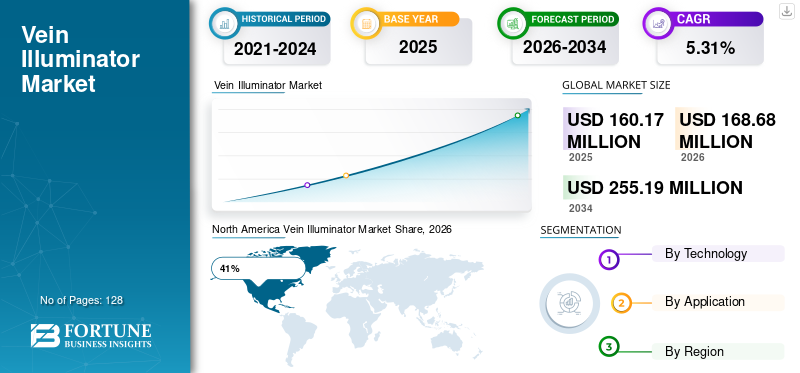
The vein illuminator market size was valued at USD 160.17 Million in 2025. The market is projected to grow from USD 168.68 Million in 2026 to USD 255.19 Million by 2034, exhibiting a CAGR of 5.31% during the forecast period.

The vein illuminator market is witnessing strong adoption across healthcare facilities due to the growing need for accurate vascular access procedures. Vein illuminators use advanced imaging technologies to visualize subcutaneous veins, helping healthcare professionals improve first-stick success rates and reduce patient discomfort. Increasing use of intravenous therapies, blood collection procedures, emergency care services, and chronic disease management programs is supporting demand across hospitals, clinics, diagnostic laboratories, and ambulatory care centers. The market is also benefiting from technological improvements in infrared imaging, portable device designs, and enhanced visualization capabilities that improve workflow efficiency and patient safety. Growing emphasis on reducing procedural errors continues to strengthen market expansion globally.
The United States remains a leading contributor to the vein illuminator market due to advanced healthcare infrastructure, high patient volumes, and widespread adoption of medical imaging technologies. Hospitals and outpatient centers increasingly utilize vein illuminators to improve venipuncture accuracy, particularly among pediatric, geriatric, and obese patient populations. Demand is further supported by rising chronic disease prevalence requiring frequent intravenous access and blood sampling procedures. The country also benefits from strong product innovation activities, favorable procurement capabilities, and increasing awareness regarding patient-centered care. Integration of vein visualization systems into emergency departments and specialty treatment centers continues to create substantial opportunities within the U.S. healthcare ecosystem.
Download Free sample to learn more about this report.
 Global Market Size & Forecast
 Market Share
 Key Regional Highlights
North America
North America held the largest regional share at 41% in 2025, supported by advanced healthcare infrastructure.
Europe
Europe accounted for 27% of the global market, driven by increasing adoption of advanced vascular access technologies.
Asia-Pacific
Asia-Pacific represented 24% of the market, supported by expanding healthcare facilities and rising procedural volumes.
U.S
The U.S. remains a major market, supported by high demand for advanced vein visualization technologies.
Japan
Japan accounted for 28% of the Asia-Pacific market, supported by advanced healthcare systems and growing adoption of medical technologies.
Read More

The vein illuminator market is experiencing significant technological transformation driven by the adoption of near-infrared imaging systems, lightweight portable devices, and enhanced digital projection capabilities. Manufacturers are focusing on compact handheld solutions that can be used in hospitals, ambulatory centers, and home healthcare settings. Improved image clarity and real-time vein mapping functionalities are increasing clinical confidence and procedural efficiency.
Download Free sample to learn more about this report.
Another major trend in the vein illuminator market is the growing demand for patient-friendly vascular access solutions. Healthcare providers are prioritizing technologies that reduce repeated needle insertion attempts and improve patient satisfaction scores. The increasing use of vein illuminators in pediatric care, oncology treatment centers, dialysis clinics, and blood donation facilities is expanding the addressable market. Artificial intelligence-assisted imaging enhancements, wireless connectivity features, rechargeable battery systems, and ergonomic device designs are also influencing product development strategies. These innovations are strengthening market penetration while supporting broader adoption across developed and emerging healthcare markets.
Rising Demand for Accurate Intravenous Access Procedures
The primary growth driver for the vein illuminator market is the increasing demand for successful intravenous access and venipuncture procedures across healthcare settings. Medical professionals frequently encounter challenges in locating veins among pediatric, elderly, obese, and chronically ill patients. Vein illuminators significantly improve visualization, enabling healthcare workers to perform procedures with greater precision and confidence. This capability helps reduce failed insertion attempts, minimizes patient discomfort, and decreases procedure-related complications.
The growing prevalence of diabetes, cancer, cardiovascular diseases, and kidney disorders has increased the number of patients requiring regular intravenous therapies, chemotherapy treatments, and blood testing procedures. Hospitals are increasingly investing in advanced vein visualization technologies to improve clinical outcomes and operational efficiency. Healthcare institutions are also emphasizing patient experience metrics, making vein illuminators valuable tools for improving satisfaction levels and reducing treatment delays. These factors collectively contribute to sustained demand across the Vein Illuminator Industry.
High Procurement and Maintenance Costs
One of the major restraints affecting the vein illuminator market is the relatively high acquisition cost associated with advanced imaging systems. Smaller healthcare facilities, rural hospitals, and independent clinics often face budget limitations that restrict investment in specialized medical technologies. While vein illuminators improve procedural success rates, purchasing decisions may be delayed due to competing healthcare equipment priorities.
Maintenance requirements, staff training expenses, and device calibration needs can further increase total ownership costs. Some healthcare providers continue to rely on traditional vein location techniques due to familiarity and lower operational expenses. In developing economies, limited reimbursement structures and constrained healthcare budgets may slow adoption rates. The challenge becomes more significant when institutions seek large-scale deployment across multiple departments. Consequently, cost sensitivity remains a notable factor influencing purchasing behavior within the vein illuminator market analysis landscape.
Expansion across Emerging Healthcare Markets
A major opportunity within the vein illuminator market lies in the expansion of healthcare infrastructure across emerging economies. Countries throughout Asia-Pacific, Latin America, the Middle East, and parts of Africa are increasing investments in hospitals, specialty clinics, and diagnostic centers. These developments create favorable conditions for advanced vascular access technologies.
Rising healthcare awareness, improving medical standards, and growing patient populations are encouraging providers to adopt innovative solutions that enhance treatment quality. Manufacturers are introducing cost-effective and portable devices specifically designed for resource-constrained healthcare environments. Demand from emergency medical services, blood donation campaigns, vaccination programs, and mobile healthcare units is also creating new growth avenues. Strategic partnerships with distributors, healthcare organizations, and government institutions can further accelerate market penetration. These developments position emerging regions as important contributors to the future vein illuminator market outlook.
Limited Awareness and Training Among Healthcare Professionals
Despite technological advantages, limited awareness and inadequate training remain significant challenges for the vein illuminator market. Successful implementation requires healthcare personnel to understand device operation, imaging interpretation, and optimal positioning techniques. Without proper training, clinical benefits may not be fully realized.
Many healthcare facilities continue to depend on conventional venipuncture methods because experienced practitioners may be reluctant to alter established workflows. Resistance to technology adoption can delay purchasing decisions and reduce utilization rates. Additionally, inconsistent training standards across healthcare systems create variability in user proficiency. Manufacturers must invest in educational programs, clinical demonstrations, and ongoing support initiatives to maximize adoption. Addressing these knowledge gaps is essential for improving acceptance and expanding the overall vein illuminator market share across diverse healthcare environments.
Infrared technology represents the dominant segment in the vein illuminator market and accounts for approximately 65% market share. Infrared vein illuminators use near-infrared light to detect hemoglobin-rich blood vessels beneath the skin surface and project a visible vein pattern. This technology offers superior visualization accuracy, making it highly suitable for difficult venous access cases. Healthcare professionals increasingly prefer infrared systems because they provide real-time imaging without exposing patients to harmful radiation.
The segment benefits from extensive utilization in hospitals, emergency departments, pediatric units, oncology centers, and intensive care facilities. Continuous advancements in sensor performance, image resolution, and portability are further enhancing product effectiveness. Manufacturers are focusing on compact infrared devices with improved battery life and wireless capabilities. As healthcare providers seek solutions that improve first-attempt success rates and reduce procedural complications, infrared technology continues to lead the vein illuminator market research report landscape.
Transillumination technology holds approximately 35% of the vein illuminator market. These systems operate by transmitting light through biological tissue to highlight underlying veins and vascular structures. Transillumination devices are often valued for their simplicity, affordability, and ease of operation, particularly in smaller healthcare facilities and outpatient environments.
The segment is commonly used in blood collection centers, diagnostic laboratories, and primary healthcare clinics where rapid vein identification is essential. Technological improvements have enhanced illumination quality and portability, making these devices more practical for routine clinical procedures. Although transillumination systems may not offer the same imaging depth as infrared technologies, they remain a cost-effective option for many healthcare providers. Their accessibility and operational simplicity continue to support demand, especially in emerging healthcare markets where affordability plays a critical role in purchasing decisions.
To know how our report can help streamline your business, Speak to Analyst
Intravenous access represents the largest application segment, accounting for nearly 48% of the vein illuminator market. The growing volume of intravenous therapies, fluid administration procedures, and medication delivery applications has increased demand for reliable vein visualization technologies. Vein illuminators help clinicians identify suitable veins quickly, reducing procedure times and improving treatment efficiency.
Healthcare facilities increasingly deploy these devices in emergency medicine, oncology care, intensive care units, and pediatric departments. The technology is particularly valuable for patients with difficult venous access conditions, including elderly individuals, obese patients, and those undergoing repeated medical treatments. Improved first-stick success rates contribute to better patient experiences while reducing resource utilization. These advantages continue to strengthen the position of intravenous access applications within the broader Vein Illuminator industry analysis framework.
Blood draw applications account for approximately 30% of the vein illuminator market. Accurate blood collection remains a fundamental requirement across diagnostic laboratories, hospitals, research institutions, and blood donation centers. Vein illuminators assist phlebotomists in locating veins efficiently, minimizing unsuccessful attempts and improving specimen collection quality.
The segment is benefiting from increasing diagnostic testing volumes worldwide. Growing awareness regarding patient comfort and procedural accuracy is encouraging healthcare organizations to adopt advanced visualization tools. Blood donation campaigns and preventive healthcare initiatives further support demand for vein illumination systems. As diagnostic services continue expanding globally, the blood draw segment is expected to maintain a strong position within the vein illuminator market trends landscape.
Sclerotherapy and vein treatment applications represent roughly 22% of the vein illuminator market. Cosmetic and therapeutic vein procedures require accurate visualization to improve treatment precision and clinical outcomes. Vein illuminators assist physicians in identifying targeted vascular structures during varicose vein treatments, spider vein management, and related procedures.
Growing interest in minimally invasive aesthetic treatments is supporting demand across dermatology clinics, vascular treatment centers, and cosmetic surgery facilities. Enhanced visualization helps practitioners perform procedures with greater confidence while reducing treatment variability. Technological innovations focused on high-definition imaging and improved vascular mapping continue to strengthen adoption within this application segment. As demand for aesthetic and therapeutic vein interventions increases, this category remains an important contributor to overall market expansion.
North America Vein Illuminator Market Share, 2025 (%)
To get more information on the regional analysis of this market, Download Free sample
North America remains the leading regional market and accounts for approximately 41% of global market share. The region benefits from advanced healthcare infrastructure, widespread adoption of innovative medical technologies, and strong awareness regarding patient safety initiatives. Hospitals and specialty care facilities routinely invest in vein visualization devices to improve procedural outcomes and reduce healthcare costs associated with failed venous access attempts.
The region's large population of chronic disease patients requiring ongoing intravenous therapies and diagnostic testing further supports demand. Strong presence of leading manufacturers, favorable healthcare spending patterns, and continuous product innovation contribute to regional leadership. Increasing use of vein illuminators in pediatric care, emergency medicine, and oncology treatment centers continues to reinforce market expansion across North America.
Europe represents a significant regional market with approximately 27% market share. The region benefits from well-established healthcare systems, increasing adoption of patient-centered medical technologies, and growing emphasis on procedural efficiency. Healthcare providers across Europe are actively implementing vein visualization solutions to improve vascular access success rates and enhance patient experiences.
Demand is particularly strong in hospitals, diagnostic centers, and specialty treatment facilities. Regulatory support for advanced medical devices and ongoing investments in healthcare modernization contribute to favorable market conditions. Growing awareness among healthcare professionals regarding the benefits of vein illuminators is also encouraging wider adoption throughout the region.
Germany accounts for approximately 29% of the European vein illuminator market. The country possesses one of the most advanced healthcare systems in Europe, supported by extensive hospital networks, strong medical technology adoption rates, and significant clinical research activities. German healthcare providers increasingly utilize vein illuminators to improve treatment quality and procedural consistency.
Demand is driven by rising chronic disease management requirements, expanding outpatient services, and increasing use of minimally invasive medical procedures. Healthcare facilities prioritize technologies that improve operational efficiency while enhancing patient satisfaction. Continuous investments in digital healthcare infrastructure and advanced diagnostic solutions further strengthen the market. Germany's strong medical device manufacturing ecosystem also supports innovation and technology adoption within the vein visualization segment.
The United Kingdom represents approximately 22% of the European vein illuminator market. Growing emphasis on reducing procedural complications and improving patient outcomes has encouraged healthcare providers to adopt advanced vein visualization technologies. Hospitals, community healthcare centers, and specialist treatment facilities increasingly integrate vein illuminators into routine clinical workflows.
The market benefits from rising healthcare modernization efforts and increased focus on efficient resource utilization. Demand is particularly strong in pediatric care, oncology services, and emergency medicine departments. Healthcare professionals are recognizing the value of vein visualization systems in reducing unsuccessful venipuncture attempts and improving overall patient experiences. Ongoing innovation and procurement initiatives continue to create favorable growth conditions within the United Kingdom market.
Asia-Pacific accounts for approximately 24% of the global vein illuminator market. Rapid healthcare infrastructure development, increasing patient populations, and growing awareness regarding advanced medical technologies are driving regional expansion. Governments and private healthcare organizations are investing heavily in hospital modernization and diagnostic capabilities.
Demand is particularly strong in major economies such as China, Japan, India, South Korea, and Australia. Rising prevalence of chronic diseases, increasing healthcare expenditures, and expanding access to medical services support broader adoption. Manufacturers are also targeting the region with affordable and portable solutions designed for diverse healthcare environments. These factors continue to strengthen Asia-Pacific's position within the vein illuminator market forecast landscape.
Japan contributes approximately 28% of the Asia-Pacific vein illuminator market. The country's aging population and advanced healthcare system create strong demand for technologies that improve vascular access procedures. Elderly patients frequently present challenges related to fragile veins, making vein visualization systems valuable clinical tools.
Healthcare providers in Japan emphasize precision, efficiency, and patient comfort. Hospitals and specialty treatment centers increasingly deploy advanced imaging technologies to support intravenous therapies, diagnostic testing, and chronic disease management programs. Strong healthcare spending and technological sophistication continue to drive adoption across the country. Continuous product innovation and growing acceptance of digital medical devices further strengthen market prospects.
China accounts for approximately 35% of the Asia-Pacific vein illuminator market. Rapid healthcare expansion, increasing hospital construction projects, and rising demand for advanced medical equipment are supporting market growth. Large patient volumes and expanding healthcare access programs create substantial opportunities for vein visualization technologies.
The country is witnessing increasing adoption of portable and cost-effective vein illuminator systems across hospitals, community healthcare facilities, and diagnostic centers. Government initiatives aimed at healthcare modernization continue to encourage investment in innovative medical technologies. Domestic manufacturing capabilities and expanding distribution networks further support market development. As healthcare quality standards improve nationwide, demand for advanced vascular access solutions continues to rise.
The Rest of World region accounts for approximately 8% of the vein illuminator market. Markets across Latin America, the Middle East, and Africa are gradually increasing adoption of advanced vein visualization technologies as healthcare infrastructure improves. Growing awareness regarding patient safety and procedural accuracy is encouraging investment in specialized medical devices.
Healthcare modernization initiatives, increasing hospital construction activities, and expanding diagnostic service capabilities are supporting demand. International manufacturers are strengthening regional presence through partnerships, distributor agreements, and targeted product offerings. Although adoption rates remain lower compared to developed regions, ongoing healthcare investments create significant long-term opportunities for market participants operating within these emerging economies.
The vein illuminator market continues to attract investment due to increasing demand for patient-focused healthcare technologies. Investors are targeting companies involved in portable imaging systems, advanced infrared visualization platforms, and digital healthcare integration solutions. Healthcare providers are allocating capital toward technologies that improve clinical efficiency, reduce procedural complications, and enhance patient satisfaction metrics.
Significant opportunities exist within emerging healthcare markets where infrastructure expansion is accelerating demand for modern medical equipment. Strategic acquisitions, product portfolio diversification, and regional expansion initiatives remain common investment strategies. Venture capital firms and medical technology investors are particularly interested in companies developing artificial intelligence-enhanced imaging capabilities and next-generation portable devices. Growth opportunities are also emerging within home healthcare services, ambulatory care centers, and specialized vascular treatment facilities. These trends create an attractive environment for long-term investment within the Vein Illuminator industry report landscape.
Product development activities within the vein illuminator market are focused on enhancing visualization accuracy, portability, and clinical usability. Manufacturers are introducing lightweight handheld systems with improved image projection quality and extended battery performance. Advanced infrared sensors and digital imaging algorithms are enabling clearer vein mapping across a broader range of patient demographics.
Innovation efforts also emphasize wireless connectivity, touchscreen interfaces, and integration with hospital information systems. Several companies are developing compact devices suitable for emergency response teams, ambulatory care centers, and home healthcare applications. Artificial intelligence-assisted vein detection and automated image enhancement technologies are gaining attention as potential differentiators. Enhanced ergonomic designs, faster startup times, and user-friendly operating systems continue to shape product development strategies. These innovations support expanding adoption across diverse healthcare environments and strengthen overall vein illuminator market opportunities.
The vein illuminator market report provides comprehensive analysis of industry trends, competitive developments, technological advancements, and emerging growth opportunities. The report evaluates market dynamics including drivers, restraints, opportunities, and challenges influencing industry expansion. Detailed segmentation analysis covers technology categories, application areas, end-user environments, and regional markets.
Request for Customization to gain extensive market insights.
The study further examines competitive positioning of leading manufacturers, product innovation strategies, investment activities, and distribution developments. Regional assessment includes North America, Europe, Asia-Pacific, and Rest of World markets, along with country-level insights for major healthcare economies. The report also reviews adoption patterns across hospitals, clinics, diagnostic laboratories, and specialty treatment centers. Extensive evaluation of market trends, healthcare modernization initiatives, and technological advancements provides valuable insights for stakeholders seeking strategic decision-making support within the global vein illuminator market analysis framework.
Fortune Business Insights says that the global market value stood at USD 160.17 million in 2025 and is projected to reach USD 255.19 million by 2034.
The market is expected to exhibit a CAGR of 5.31% during the forecast period of 2026-2034.
Infrared technology was the leading technology segment, accounting for approximately 65% of the market, due to its superior visualization accuracy and real-time vein imaging capabilities.
Key players include AccuVein, Inc., Christie Medical Holdings, Inc., Hellovein, Veinlite, Venoscope, and Koninklijke Philips N.V.
Major trends include growing adoption of near-infrared imaging and lightweight portable devices, along with increasing demand for AI-assisted imaging and patient-friendly vascular access solutions. North America led the market with approximately 41% share in 2025.


(Offer valid till 31st Oct 2026)
Get 30-60 hrs Free Customization
Expand Regional and Country Coverage, Segments Analysis, Company Profiles, Competitive Benchmarking, and End-user Insights.













.webp)






Get In Touch With Us
US +1 833 909 2966 ( Toll Free )
Receive a tailored pricing based on your needs.
Discuss your questions with our industry experts.
Have questions? Get quick answers before you purchase.

