Cannabis Edibles Market Size, Share & Industry Analysis, By Product Type (Confectionery, Baked Goods, Beverages, Savory Snacks, Dietary Supplements, and Tinctures), By Dosage Strength (Low-dose, Standard-dose, and High-dose), By Source (Marijuana-derived and Hemp-derived), By End Users (Recreational Users, Medical Users, and Wellness/Functional Users ), By Distribution Channel (Licensed Dispensaries, Online/E-commerce, Pharmacies/Medical and Specialty Wellness Stores), and Regional Forecast, 2026-2034
 Download Free Sample
(Offer valid till 31st Jul 2026)
Cannabis Edibles Market Size and Future Outlook
 Listen to Audio Version
The global cannabis edibles market size was valued at USD 19.16 billion in 2025. The market is projected to grow from USD 21.23 billion in 2026 to USD 52.23 billion by 2034, exhibiting a CAGR of 11.91% during the forecast period. North America dominated the cannabis edibles market with a market share of 74.26% in 2025.
Cannabis edibles are foods and drinks that have cannabinoids like THC or CBD added to them. Examples include gummies, chocolates, baked goods, drinks, and other foods that are manufactured using cannabis. The edible product demand is growing quickly as more countries legalize cannabis, and consumers want discreet, smoke-free ways to consume it. Moreover, edibles let users control their dose, provide longer-lasting effects of cannabis, and come in a wide variety. This appeals to both recreational and medical users. As consumer awareness and acceptance of these products are increasing, more stores are selling edibles, and manufacturers are performing product innovation, which is boosting the growth of the edibles cannabis market.
Companies such as Canopy Growth Corporation, Tilray Brands, Inc., Aurora Cannabis Inc., and others are some of the key players operating in this market. New product launch is the key strategy that is boosting product sales and supporting market growth.
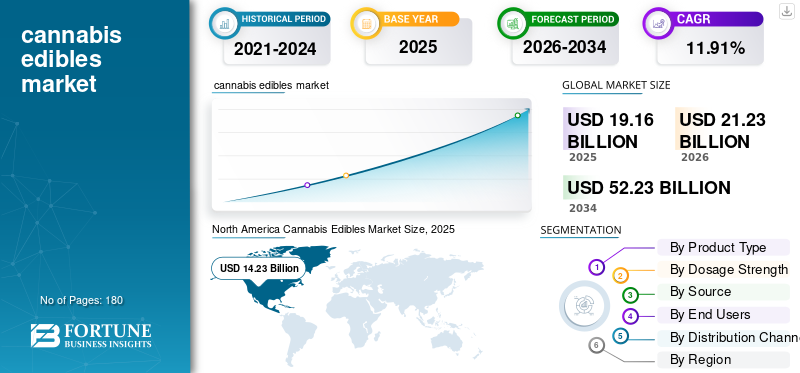
Download Free sample to learn more about this report.
Cannabis Edibles Market Key Takeaways
 Market Size & Forecast
- 2025 Market Size: USD 19.16 Billion
- 2026 Market Size: USD 21.23 Billion
- 2034 Forecast Market Size: USD 52.23 Billion
- CAGR: 11.91% from 2026–2034
 Market Share
- North America dominated the cannabis edibles market with a 74.26% share in 2025.
- The low-dose segment is projected to grow at a CAGR of 12.10% during the forecast period.
- The hemp-derived segment is projected to grow at a CAGR of 12.46% during the forecast period.
 Key Regional Highlights
Asia Pacific
Asia Pacific generated USD 1.67 billion in 2025.
North America
North America generated USD 14.23 billion in 2025.
Europe
Europe generated USD 2.17 billion in 2025.
U.S.
The cannabis edibles market generated USD 12.17 billion in 2025.
Japan
The cannabis edibles market generated USD 0.34 billion in 2025, accounting for approximately 1.75% of global revenue.
Read More

CANNABIS EDIBLES MARKET TRENDS
Growing Preference for Premium and Precisely Dosed Products Driving Innovation in Edibles Market
More people are looking for premium, gourmet, and health-focused high-quality cannabis edibles, including options such as sugar-free, vegan, and organic products. Companies are paying more attention to precise dosing and micro-dosing to make products safer and improve the user experience. Edible cannabis products are expanding to include beverages and functional foods, and this trend is becoming more popular. Branding and packaging are also getting more creative, helping companies stand out in a crowded market. New infusion technologies are making edibles work faster and more effectively, while consumers are also becoming better informed about these products.
MARKET DYNAMICS
MARKET DRIVERS
Download Free sample to learn more about this report.
Increasing Legalization and Preference for Smoke-Free Consumption Driving Rapid Market Growth
The significant expansion in the cannabis edibles market growth is primarily due to more countries are legalizing cannabis for both recreational and medical use. Many people now prefer smoke-free and discreet ways to use cannabis, so edibles have become a popular choice instead of traditional methods. Cannabis is gaining acceptance for wellness uses like stress relief, pain management, and improving sleep, which is driving up demand. New flavors, different formats, and improved dosing control are making edibles attractive to a wider consumer segment. The growth of retail options, such as licensed dispensaries and online stores, is making edibles easier to access and helping the market grow.
MARKET RESTRAINTS
Complex Regulatory Frameworks and Concerns Over Dosage Control Limiting Market Expansion
The market faces several challenges, such as complicated and changing regulations that differ widely from one country or region to another. Strict rules about THC levels, labeling, and distribution can make products harder to find and slow down their entry into the market. High taxes and prices can also make it difficult for people to buy these products, especially in markets where customers are sensitive to price. Lack of standardization and quality control in some regions poses challenges for consumer trust and industry growth.
MARKET OPPORTUNITIES
Rising Demand for Functional and Low-Dose Wellness Products Creating New Growth Avenues
There are strong opportunities to develop low-dose and functional cannabis edibles that address health and wellness needs like sleep, relaxation, and focus. As CBD-based products become more popular, especially since they are non-psychoactive, new groups of consumers are showing interest. Expanding into emerging markets where regulations are changing offers new chances for growth. Working together, cannabis companies and major food and beverage brands can create new products and reach more customers. New formulation technologies that improve taste, consistency, and enhance product taste and flavor are also opening up more ways to grow.
Segmentation Analysis
By Dosage Strength
Higher Consumer Preference for Stronger and Consistent Effects Driving Dominance of Standard-Dose Segment
The market is segmented by dosage strength into low-dose, standard-dose, and high-dose.
The standard-dose cannabis edibles segment held the largest market share in 2025. They appeal to regular and experienced users who want reliable and noticeable effects. These products usually provide set THC doses, which makes them a suitable choice for recreational users who want consistent strength and good value in each serving. Standard-dose edibles are easy to find in dispensaries and make up most product selections because people buy them more often, and demand is higher in legal markets. Additionally, they offer better price-to-effect value, making them more attractive compared to low-dose alternatives.
The low-dose holds the second-largest market share and is expected to grow at a CAGR of 12.10% during the forecast period. Their popularity is growing as more new users, wellness-focused buyers, and people looking for mild effects choose them. People often use these products for micro-dosing because they lower the risk of taking too much and make the experience easier to manage. They are also becoming more popular among health-focused and CBD-oriented customers. However, people often see them as less effective and more expensive per dose than standard options. This keeps low-dose edibles as a growing market.
By Source
Higher THC Potency and Strong Recreational Consumer Demand Driving Dominance of Marijuana-Derived Edibles
Based on source, the market is segmented into marijuana-derived and hemp-derived.
The marijuana-derived edibles segment accounted for the largest cannabis edibles market share in 2025 due to their higher THC content, which gives stronger effects that many recreational users prefer. Marijuana edibles are easy to find at licensed dispensaries and benefit from reliable supply chains and new product ideas. Offering many dosage options and flavors also makes these products more attractive to buyers. High demand from experienced users and the ability to charge more per product help keep these edibles in the top spot.
Hemp-derived segment makes up the second-largest share of the market and are expected to grow at a CAGR of 12.46% during the forecast period. Hemp-derived edibles have the second-largest market share. Their non-psychoactive or low-THC content appeals to consumers who are focused on wellness. People often use CBD products to help with stress, pain, and overall well-being. However, these products have a smaller market because they have little to no psychoactive effects and face strict THC regulations.
By Distribution Channel
Strict Regulatory Frameworks and Controlled Operation Driving Dominance of Licensed Dispensaries
The market is segmented by distribution channel into licensed dispensaries, online/e-commerce, pharmacies/medical, and specialty wellness stores.
The licensed dispensaries segment led the global market in 2025 as they follow regulations, offer authentic products, and operate in a controlled setting. These stores give customers access to lab-tested products that meet safety and quality standards, which is especially important in a tightly regulated industry. Dispensaries also help customers in person, guiding them to choose the right dosages and products. This support builds trust and makes people feel more confident when buying.
Online and e-commerce channels are another major segment that has a CAGR of 11.88% during the forecast period. Online and e-commerce channels make up the second-largest share of the market. Their popularity comes from being convenient, offering privacy, and the growth of digital platforms. But in many areas, strict rules, age checks, and delivery limits slow their growth compared to physical dispensaries.
By End User
Expanding Legalization and Strong Consumer Preference Driving Dominance of Recreational Users
The market is segmented by end user into recreational users, medical users, and wellness/functional users.
The recreational users segment led the global market in 2025 since cannabis has been legalized for non-medical use in many areas. These consumers choose edibles to relax, enjoy social situations, or as an alternative to smoking. Edibles are popular because they are discreet, have longer-lasting effects, and come in many forms like gummies, chocolates, and drinks. Recreational users also tend to buy edibles more often and sometimes on impulse, which leads to higher sales volumes. As more stores sell edibles and new products are introduced, demand in this group continues to grow.
The medical users segment accounted for the second largest market share in 2025 and is expected to register a CAGR of 11.62% during the forecast period. Medical users make up the second-largest group, mainly because they use cannabis edibles to help with pain, anxiety, and sleep problems. Although demand remains steady, it is lower than in other groups because of stricter rules, the need for prescriptions, and more controlled use. Medical consumers usually focus on getting the right formulations and dosages, so they tend to use smaller amounts than recreational users.
By Product Type
High Consumer Preference for Convenient and Precisely Dosed Products Driving Dominance of Confectionery Segment
The market is segmented by product type into confectionery, baked goods, beverages, savory snacks, dietary supplements, and tinctures.
The confectionery segment led the global market in 2025 and holds the largest market share because it appeals to consumers, is easy to eat, and feels familiar. People prefer gummies, chocolates, and candies since they make dosing easy, last longer, and are convenient and discreet to use. Gummies stand out because they are easy to carry, come in many flavors, and efficiently hide the taste of cannabis. Confectionery also lets manufacturers get creative with shapes, flavors, and recipes, which helps attract many types of consumers, even those trying edibles for the first time.
The baked goods segment accounted for the second largest market share in 2025 and is expected to register a CAGR of 11.71% during the forecast period. because classic cannabis-infused treats like brownies and cookies are still popular with consumers. People prefer these products because they are familiar and often remind them of homemade or artisanal treats. However, baked goods have a smaller market share because they do not last as long, dosing can vary more, and it is harder to keep the products consistent.
To know how our report can help streamline your business, Speak to Analyst
Cannabis Edibles Market Regional Outlook
By region, the market is categorized into Europe, North America, Asia Pacific, and Rest of the World.
Asia Pacific
North America Cannabis Edibles Market Size, 2025 (USD Billion)
To get more information on the regional analysis of this market, Download Free sample
The Asia Pacific market was valued at USD 1.67 billion in 2025. The Asia Pacific region is a growing market where cannabis edibles are being adopted slowly, but interest is gradually increasing. Most countries in the region have strict rules that limit THC-based products. However, interest in CBD-based edibles is rising in places like Australia, Japan, and some Southeast Asian countries.
People are becoming more aware of the wellness benefits, and as incomes rise, demand for these products is growing. However, cultural perceptions and regulatory barriers remain significant challenges. As policies change and more people learn about these products, the region is likely to see slow but steady market growth.
India Cannabis Edibles Market
The Indian market in 2025 was valued at around USD 0.09 billion, accounting for roughly 0.51% of the global market demand.
China Cannabis Edibles Market
China’s market in 2025 was valued at around USD 0.46 billion, representing roughly 2.41% of the global market share. China is an important producer of hemp and extracts CBD mainly for export. Although most consumers are not familiar with them, and cannabis products are closely watched by regulators, its ability to be produced on a large scale makes it a major supplier in the global market.
Japan Cannabis Edibles Market
The Japanese market in 2025 reached a valuation of around USD 0.34 billion, accounting for roughly 1.75% of global market revenues.
North America
The market in North America reached a valuation of USD 14.23 billion in 2025, and it is the leading region in the world. North America is ahead in the market due to widespread legalization in the U.S. and Canada, along with strong consumer support. The region’s strong retail network, including licensed dispensaries and online platforms, makes these products easy to find. High demand for recreational use, new products such as gummies and beverages, and the presence of major companies all drive market growth. But differences in regulations between states and provinces still affect market operations.
U.S. Cannabis Edibles Market
In 2025, the U.S. market reached USD 12.17 billion. The U.S. has the world’s largest market. This growth comes from widespread legalization in many states for both recreational and medical use. Many consumers prefer discreet, smoke-free ways to use cannabis, which has made edibles like gummies, chocolates, and drinks more popular. The market is growing thanks to new product ideas, strong retail networks, and high consumer awareness. Even with these challenges, ongoing legalization and more wellness uses are expected to keep the market growing strongly.
Europe
The European market reached a valuation of USD 2.17 billion in 2025. Europe’s market is still developing, with growth mainly coming from the rising acceptance of medical cannabis and CBD products. Germany, the U.K, and the Netherlands are important markets where regulations are still changing. Most products in the market are low-THC or CBD edibles because rules for recreational cannabis are stricter. Increasing consumer interest in wellness and functional products is supporting demand. But unclear regulations and limited legalization for recreational use are slowing down fast growth. Still, the market is expected to grow steadily over time.
Germany Cannabis Edibles Market
The market in Germany in 2025 reached around USD 0.58 billion, representing roughly 3.36% of global market revenues. Germany’s market is still developing and mainly centers on medical cannabis and CBD products. Strict rules make THC edibles hard to find, but as more people accept cannabis for medical use, demand is rising.
U.K. Cannabis Edibles Market
The U.K. market reached approximately USD 0.42 billion in 2025, equivalent to around 2.40% of global market sales.
Rest of the World
The rest of the world in 2025 recorded USD 1.10 billion in the market. The cannabis edibles in South America and the Middle East & Africa market is growing slowly, mainly because countries like Uruguay and some areas of Brazil and Argentina are making progress in cannabis legalization. People are becoming more aware of the health benefits, and new uses in healthcare are helping to boost demand. Even with these challenges, better laws and more investment in growing and processing cannabis should help the market grow over time. Growth is also held back by low awareness among consumers and cultural barriers. As rules change and acceptance grows, the market will likely develop slowly, with some growth in countries that are more open to change.
Brazil Cannabis Edibles Market
Brazil market is set to grow at a CAGR of 9.61% during the forecast period. Brazil’s market is in its early stages, as medical cannabis and CBD products are gradually gaining acceptance. Current laws permit limited medical use of cannabis, but edibles remain restricted and are carefully monitored. Most people interested in these products are patients seeking alternative treatments for chronic pain, epilepsy, or anxiety.
COMPETITIVE LANDSCAPE
Key Industry Players
Rising Consumer Demand for Discreet Consumption Driving Intensified Competition Among the Industry Players
The cannabis edibles market is very competitive and changing quickly. Both well-known companies and new businesses are focusing on creating new products and building their brands. Major companies like Canopy Growth Corporation, Aurora Cannabis, Tilray Brands, and Curaleaf lead the market with strong distribution, licensed operations, and a wide range of products. Companies are heavily investing in R&D to develop differentiated products with precise dosing, improved taste, and faster onset times. Partnerships, mergers, and acquisitions are common as companies look to grow into new regions and strengthen their ability to meet regulations. Because regulations differ by region, companies with strong compliance systems and local strategies have an advantage, making the market even more competitive in the cannabis industry.
LIST OF CANNABIS EDIBLES COMPANIES PROFILED IN REPORT
- Canopy Growth Corporation (Canada)
- Tilray Brands, Inc. (U.S.)
- Aurora Cannabis Inc. (Canada)
- Curaleaf Holdings, Inc. (U.S.)
- Green Thumb Industries (GTI) (U.S.)
- Trulieve Cannabis Corp. (U.S.)
- Cronos Group Inc. (Canada)
- Organigram Holdings Inc. (Canada)
- Charlotte’s Web Holdings, Inc. (U.S.)
- Kiva Confections (U.S.)
KEY INDUSTRY DEVELOPMENTS
- January 2026: Wyld, a leading cannabis edibles company, has acquired its competitor Grön in a major merger and acquisition deal. Wyld’s products are sold in 16 states and Canada, reaching about 7,500 retail locations. Grön’s products can be found in almost 4,500 stores across nine states and Canada.
- June 2025: The Cannabist Company Holdings Inc. has introduced COAST Cannabis Co. edibles, offering a new range of high-quality gummies for both adult-use customers and medical patients.
- March 2025: Edible Brands has launched Edibles.com, a new online marketplace for hemp products. The company also owns Edible Arrangements, freshfruit.com, and Rōti Modern Mediterranean.
- April 2022: Tilray Brands, Inc. has launched Solei Bites, marking the Solei brand’s first step into edibles and introducing the first ready-to-eat THC edible in the Canadian market.
- August 2021: Tilray, Inc. launched medical cannabis edibles, offering both THC and CBD-rich chocolates and soft chew gummies. The new Tilray medical cannabis edibles are available to patients throughout Canada.
REPORT COVERAGE
The global cannabis edibles market research provides an in-depth study of the market size & forecast by all the market segments included in the report. The market forecast includes details on the market dynamics and market trends expected to drive the market during the forecast period. It offers information on the technological advancements, new product launches, key industry developments, and details on partnerships, mergers & acquisitions. The industry also encompasses a detailed competitive landscape with information on the market segmentation, market share, and profiles of key operating players.
Request for Customization to gain extensive market insights.
Report Scope & Segmentation
| ATTRIBUTE | DETAILS |
| Study Period | 2021-2034 |
| Base Year | 2025 |
| Estimated Year | 2026 |
| Forecast Period | 2026-2034 |
| Historical Period | 2021-2024 |
| Growth Rate | CAGR of 11.91% from 2026-2034 |
| Unit | Value (USD Billion) |
| Segmentation | By Product Type, By Dosage Strength, By Source, By End Users, By Distribution Channel, and Region |
| By Product Type |
|
| By Dosage Strength |
|
| By Source |
|
| By End Users |
|
| By Distribution Channel |
|
| By Region |
|
Frequently Asked Questions
Fortune Business Insights says that the global market value stood at USD 19.16 billion in 2025 and is projected to reach USD 52.23 billion by 2034.
In 2025, North Americas market value stood at USD 14.23 billion.
The market is expected to exhibit a CAGR of 11.91% during the forecast period.
By end user, the recreational users segment led the global market in 2025.
Increasing legalization and preference for smoke-free consumption are driving the rapid growth of the cannabis edibles market.
Canopy Growth Corporation, Tilray Brands, Inc., and Aurora Cannabis Inc. are a few of the players in the global market.
North America held the largest market share in 2025.
Growing preference for premium, health-oriented, and precisely dosed products is driving innovation in the edibles market.



- 2021-2034
- 2025
- 2021-2024
- 180
-
(Offer valid till 31st Jul 2026)
Get 30-60 hrs Free Customization
Expand Regional and Country Coverage, Segments Analysis, Company Profiles, Competitive Benchmarking, and End-user Insights.




















Related Reports
-
US +1 833 909 2966 ( Toll Free )
-
Get In Touch With Us