Antidiabetics Market Size, Share & Industry Analysis, By Drug Class (GLP-1 Receptor Agonists, Insulin), By Diabetes Type (Type 1, 2), By Route Of Administration (Oral, Intravenous), By Distribution Channel and Regional Forecast, 2026–2034
 Download Free Sample
Antidiabetics Market Overview
The antidiabetics market size was valued at USD 102.59 billion in 2025. The market is projected to grow from USD 113.78 billion in 2026 to USD 260.57 billion by 2034, exhibiting a CAGR of 10.91% during the forecast period.

The antidiabetics market represents one of the most important segments of the global pharmaceutical industry due to the increasing prevalence of diabetes, obesity, sedentary lifestyles, and aging populations. Demand for antidiabetic therapies continues to expand as healthcare providers focus on long-term glycemic control, reduction of diabetes-related complications, and patient-centric treatment strategies. The market includes insulin products, GLP-1 receptor agonists, oral antidiabetic drugs, combination therapies, and emerging biologics. Continuous innovation in drug formulations, improved treatment adherence, and growing awareness of diabetes management are supporting market expansion. The antidiabetics market Report highlights increasing adoption of advanced therapies, broader treatment accessibility, and rising investments in metabolic disease management.
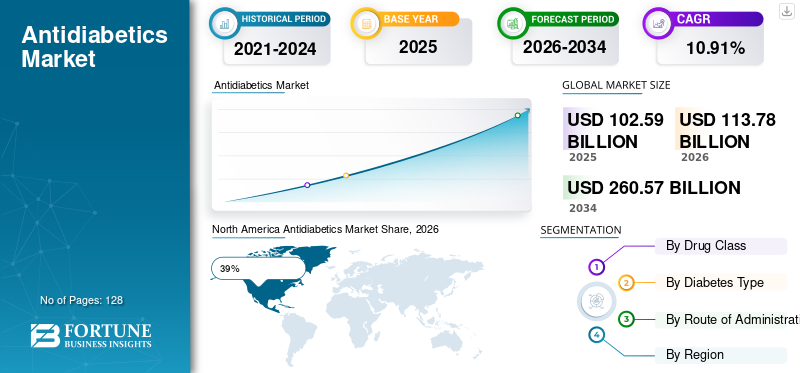
Download Free sample to learn more about this report.
Antidiabetics Market Key Takeaways
 Global Market Size & Forecast
- 2025 Market Size: USD 102.59 Million
- 2026 Market Size: USD 113.78 Million
- 2034 Forecast Market Size: USD 260.57 Million
- CAGR: 10.91% from 2026-2034
 Market Share
- North America dominated with a revenue share of 39% in 2025.
- GLP-1 receptor agonists dominated by drug class with approximately 58% market share.
- Type 2 diabetes dominated by diabetes type with approximately 76% market share.
 Key Regional Highlights
North America
North America held the largest regional share at 39% in 2025, supported by advanced diabetes care infrastructure.
Europe
Europe accounted for 28% of the global market, driven by established healthcare systems and diabetes treatment demand.
Asia-Pacific
Asia-Pacific represented 25% of the market, supported by rising diabetes prevalence and expanding healthcare access.
U.S
The U.S. remains a major market, supported by strong demand for innovative diabetes therapies and advanced treatment options.
Japan
Japan accounted for 18% of the Asia-Pacific market, supported by an aging population and increasing demand for diabetes management.
Read More

USA antidiabetics market Overview
The United States remains the largest contributor to the antidiabetics market due to the significant diabetic population, advanced healthcare infrastructure, strong pharmaceutical innovation, and extensive insurance coverage for diabetes therapies. The country demonstrates high adoption of next-generation antidiabetic medications, particularly GLP-1 receptor agonists and modern insulin analogs. Healthcare providers increasingly focus on reducing cardiovascular risks associated with diabetes, encouraging the use of multifunctional therapies. The USA antidiabetics market Industry Analysis also reflects strong clinical research activity, rapid regulatory approvals, growing telehealth integration, and increasing use of digital diabetes management platforms. Pharmaceutical manufacturers continue expanding production capacities and launching innovative products to address the evolving needs of diabetic patients.
antidiabetics market Latest Trends
The antidiabetics market trends indicate a major shift toward therapies that provide both glucose control and weight management benefits. GLP-1 receptor agonists have emerged as a preferred treatment category because they address multiple metabolic conditions simultaneously. Healthcare professionals increasingly recommend these products for broader patient populations, creating strong momentum within the market.
Download Free sample to learn more about this report.
Another significant trend involves the integration of digital health technologies into diabetes care. Smart insulin pens, connected glucose monitoring systems, and mobile health applications are improving treatment adherence and patient engagement. Pharmaceutical companies are collaborating with technology providers to develop comprehensive disease management ecosystems.
The antidiabetics market analysis also reveals rising demand for personalized medicine approaches. Treatment selection is increasingly based on patient-specific characteristics, including cardiovascular risk, obesity status, kidney health, and lifestyle factors. This trend supports greater use of precision therapies.
Additionally, manufacturers are investing heavily in oral formulations of traditionally injectable drugs. Improved convenience and patient compliance are driving interest in innovative delivery mechanisms. Expansion into emerging economies, increasing awareness programs, and broader healthcare access continue to create favorable conditions for long-term market development.
antidiabetics market Dynamics
DRIVER
Rising Global Prevalence of Diabetes and Obesity
The primary growth driver for the antidiabetics market is the continuous increase in diabetes cases worldwide. Urbanization, unhealthy dietary habits, sedentary lifestyles, and growing obesity rates have significantly increased the number of patients requiring long-term glucose management therapies. Type 2 diabetes remains the most prevalent form, creating substantial demand for both oral and injectable medications. Healthcare systems across developed and developing countries are prioritizing diabetes prevention and treatment programs, further supporting market expansion.
Growing awareness regarding early diagnosis is also contributing to treatment adoption. Screening initiatives, government healthcare campaigns, and improved access to diagnostic services are identifying patients at earlier stages of disease progression. This trend increases the number of individuals entering therapeutic treatment pathways. Furthermore, advancements in drug efficacy, safety profiles, and convenience have encouraged healthcare professionals to prescribe newer therapies. The antidiabetics market growth is therefore strongly linked to the expanding diabetic population and the need for effective long-term disease management solutions.
RESTRAINT
High Treatment Costs and Reimbursement Limitations
Despite substantial market opportunities, treatment affordability remains a major restraint. Many advanced antidiabetic therapies, especially innovative biologics and GLP-1 receptor agonists, carry premium pricing. In several regions, reimbursement policies remain inconsistent, limiting patient access to newer medications. Cost-sensitive healthcare systems often prioritize generic alternatives, which can slow adoption of innovative products.
Patients requiring lifelong therapy frequently face financial burdens associated with medication purchases, glucose monitoring devices, physician consultations, and complication management. These factors may reduce adherence rates and negatively impact treatment outcomes. In lower-income economies, limited healthcare infrastructure and insufficient insurance coverage further restrict market penetration. Additionally, regulatory pricing pressures imposed by governments and healthcare organizations can affect manufacturer profitability and influence investment decisions. The antidiabetics market industry report identifies affordability challenges as a critical factor that continues to shape competitive strategies and market accessibility.
OPPORTUNITY
Expansion of Personalized and Combination Therapies
The increasing focus on personalized medicine presents substantial opportunities for market participants. Healthcare providers are moving away from one-size-fits-all treatment models and adopting individualized therapeutic approaches. Drug combinations that target multiple disease pathways simultaneously are becoming increasingly attractive because they simplify treatment regimens and improve patient outcomes.
Advancements in genomics, biomarker research, and artificial intelligence-driven healthcare analytics are creating opportunities for tailored treatment recommendations. Pharmaceutical companies are developing combination products that address diabetes alongside obesity, cardiovascular disease, and kidney disorders. These integrated treatment approaches enhance clinical value and support broader adoption.
Emerging markets also represent significant growth opportunities. Improvements in healthcare infrastructure, expanding insurance coverage, and increasing public awareness are driving treatment demand in developing regions. The antidiabetics market opportunities landscape is further strengthened by ongoing research into oral biologics, next-generation insulin formulations, and innovative drug delivery systems that improve convenience and adherence.
CHALLENGE
Intensifying Competition and Regulatory Complexity
The antidiabetics market faces significant challenges associated with intense competition among pharmaceutical manufacturers. Numerous established companies compete across insulin, oral medications, and advanced biologic categories. Patent expirations and the introduction of generic alternatives increase pricing pressure and reduce product differentiation.
Regulatory requirements for safety, efficacy, and post-market surveillance continue to become more stringent. Manufacturers must invest substantial resources in clinical trials, regulatory compliance, and pharmacovigilance activities. Delays in approval timelines can impact commercialization strategies and revenue generation.
The market also faces challenges related to patient adherence. Diabetes treatment often requires long-term lifestyle modifications alongside medication use. Poor adherence can limit therapeutic effectiveness and affect real-world outcomes. Additionally, supply chain disruptions, manufacturing complexities, and fluctuating raw material costs can influence product availability. These factors collectively create operational and strategic challenges for companies operating within the antidiabetics market outlook.
antidiabetics market Segmentation
By Drug Class
GLP-1 receptor agonists account for approximately 58% of the antidiabetics market share within advanced injectable therapies. These medications have gained substantial popularity because they provide effective blood glucose control while supporting weight reduction. Healthcare providers increasingly prefer GLP-1 therapies for patients with obesity-related diabetes and elevated cardiovascular risk profiles. Their ability to address multiple metabolic conditions simultaneously has transformed treatment approaches across many healthcare systems.
The antidiabetics market research report highlights growing adoption of GLP-1 receptor agonists across hospitals, specialty clinics, and outpatient settings. Pharmaceutical companies continue investing in expanded indications, longer-acting formulations, and improved delivery mechanisms. Demand is particularly strong in developed healthcare markets where physicians prioritize comprehensive metabolic management. The category benefits from strong clinical evidence supporting improved patient outcomes and reduced disease complications, making it one of the fastest-growing segments within the broader antidiabetic treatment landscape.
Insulin represents approximately 42% of the antidiabetics market share by drug class and remains essential for Type 1 diabetes management as well as advanced Type 2 diabetes treatment. Despite the emergence of innovative therapies, insulin continues to play a foundational role in diabetes care due to its proven effectiveness in glycemic regulation. Modern insulin analogs provide improved pharmacokinetic profiles and enhanced patient convenience.
Manufacturers are focusing on ultra-long-acting formulations, biosimilar products, and smart insulin delivery technologies. Demand remains particularly strong among patients requiring intensive glucose management. The antidiabetics market Industry Analysis indicates that insulin adoption is supported by increasing diabetes prevalence, expanding healthcare access, and continuous product innovation. Hospitals and endocrinology specialists continue to rely heavily on insulin-based treatment protocols, ensuring its long-term relevance within the global market.
To know how our report can help streamline your business, Speak to Analyst
By Diabetes Type
Type 1 diabetes applications account for approximately 24% of the antidiabetics market size. This segment relies heavily on insulin therapy due to the body's inability to produce sufficient insulin naturally. Growing awareness, earlier diagnosis, and improvements in disease monitoring technologies are enhancing treatment outcomes for patients with Type 1 diabetes.
The segment benefits from advances in continuous glucose monitoring systems, insulin pumps, and integrated digital healthcare platforms. Healthcare providers increasingly adopt personalized treatment plans designed to improve glycemic control and reduce complications. The antidiabetics market insights indicate sustained demand for innovative insulin products and advanced delivery systems within this patient population. Research efforts aimed at improving treatment precision continue to support segment development.
Type 2 diabetes represents approximately 76% of the antidiabetics market share and constitutes the largest application segment. Rising obesity rates, aging populations, and lifestyle-related risk factors continue to drive patient growth. Treatment approaches include oral medications, injectable therapies, and combination regimens tailored to individual patient requirements.
The antidiabetics market forecast suggests strong demand for therapies that offer glucose control, weight management benefits, and cardiovascular protection. Healthcare providers increasingly adopt multidisciplinary treatment strategies that combine pharmaceutical interventions with lifestyle modifications. The segment attracts substantial investment from pharmaceutical manufacturers due to its large patient base and long-term treatment requirements.
By Route of Administration
Oral administration accounts for approximately 61% of the antidiabetics market share. Oral therapies remain highly popular because of convenience, patient preference, and ease of long-term adherence. Drug categories such as metformin, SGLT2 inhibitors, and DPP-4 inhibitors contribute significantly to segment performance.
The antidiabetics market trends indicate increasing development of advanced oral formulations designed to improve efficacy and patient compliance. Pharmaceutical companies continue investing in combination products that simplify treatment regimens. Oral therapies remain a critical component of diabetes management strategies across both developed and emerging healthcare markets.
Intravenous administration represents approximately 39% of the market within specialized clinical settings. These therapies are primarily utilized in hospitals, emergency care environments, and complex patient management situations requiring immediate glycemic control.
Demand within this segment is driven by acute care requirements and specialized treatment protocols. Healthcare facilities continue adopting advanced intravenous insulin management systems to improve patient outcomes. Although smaller than the oral segment, intravenous therapies remain an essential component of comprehensive diabetes care.
Distribution channels include hospital pharmacies, retail pharmacies, and online pharmacies. Retail pharmacies collectively account for approximately 52% of the antidiabetics market share due to widespread accessibility and established patient purchasing patterns. Hospital pharmacies maintain strong demand for specialized therapies and acute care products, while online pharmacies continue gaining traction through convenience and home-delivery services.
The antidiabetics market growth is supported by digital transformation across pharmaceutical distribution networks. Online platforms are expanding access to medications, particularly in underserved regions. Healthcare providers and pharmaceutical companies increasingly collaborate with distribution partners to improve treatment availability and patient adherence. Growth in e-commerce healthcare ecosystems is expected to further strengthen distribution efficiency and market accessibility.
antidiabetics market Regional Outlook
North America Antidiabetics Market Share, 2025 (%)
To get more information on the regional analysis of this market, Download Free sample
North America
North America holds approximately 39% of the global antidiabetics market share. The region benefits from advanced healthcare infrastructure, extensive diabetes awareness programs, strong reimbursement frameworks, and high adoption of innovative therapies. Demand for GLP-1 receptor agonists, modern insulin analogs, and combination treatments continues to increase as healthcare providers focus on comprehensive metabolic disease management.
Research and development activities remain concentrated within North America, enabling rapid commercialization of new products. Pharmaceutical companies maintain substantial investments in clinical trials, manufacturing facilities, and digital healthcare integration. The antidiabetics market Report identifies the region as a major center for innovation, particularly in next-generation diabetes therapies and patient monitoring technologies.
Europe
Europe accounts for approximately 28% of the global antidiabetics market share. The region benefits from universal healthcare systems, strong regulatory oversight, and growing awareness regarding diabetes prevention and treatment. Demand is supported by aging populations and increasing rates of obesity-related diabetes.
European healthcare providers increasingly adopt advanced therapies that offer cardiovascular and metabolic benefits beyond glucose control. Market participants continue expanding their regional presence through partnerships, product launches, and investment in research activities. The region remains a significant contributor to global antidiabetic treatment innovation and adoption.
Germany antidiabetics market
Germany represents approximately 24% of the European antidiabetics market. The country benefits from a highly developed healthcare system, extensive insurance coverage, and strong pharmaceutical manufacturing capabilities. Diabetes management programs are widely implemented across hospitals, clinics, and primary care networks, supporting early diagnosis and treatment accessibility.
Healthcare providers in Germany increasingly utilize advanced antidiabetic medications, including GLP-1 receptor agonists and innovative insulin formulations. Demand is further supported by an aging population and rising prevalence of lifestyle-related metabolic disorders. Pharmaceutical companies continue investing in clinical research and patient education initiatives to strengthen market penetration. The Germany antidiabetics market industry report highlights sustained adoption of technologically advanced treatment solutions and integrated disease management programs.
United Kingdom antidiabetics market
The United Kingdom accounts for approximately 19% of the European antidiabetics market. Strong public healthcare infrastructure and national diabetes awareness initiatives contribute significantly to treatment accessibility. Healthcare providers increasingly emphasize preventive care and early intervention strategies to reduce long-term complications.
Demand for advanced therapies continues growing as clinicians adopt evidence-based treatment guidelines. The market also benefits from increasing use of digital health technologies that support remote patient monitoring and medication adherence. Pharmaceutical manufacturers actively collaborate with healthcare organizations to improve treatment outcomes and expand access to innovative antidiabetic products across the country.
Asia-Pacific
Asia-Pacific holds approximately 25% of the global antidiabetics market share. Rapid urbanization, growing healthcare expenditures, and rising diabetes prevalence are key factors supporting regional growth. Countries across the region are investing heavily in healthcare infrastructure and chronic disease management initiatives.
The antidiabetics market opportunities in Asia-Pacific are significant due to the large patient population and increasing awareness regarding diabetes treatment. Pharmaceutical manufacturers continue expanding regional operations to address growing demand for both affordable and premium therapies.
Japan antidiabetics market
Japan represents approximately 18% of the Asia-Pacific antidiabetics market. The country's aging demographic profile contributes significantly to diabetes prevalence and treatment demand. Healthcare providers emphasize early intervention, regular monitoring, and personalized treatment strategies.
Advanced medical technologies and strong healthcare infrastructure support widespread adoption of innovative therapies. Pharmaceutical companies continue introducing improved formulations designed to enhance patient convenience and treatment adherence. The Japan antidiabetics market analysis indicates strong demand for next-generation products addressing complex metabolic conditions.
China antidiabetics market
China accounts for approximately 41% of the Asia-Pacific antidiabetics market. The country possesses one of the world's largest diabetic populations, creating substantial demand for effective treatment solutions. Government healthcare reforms and expanding insurance coverage continue improving access to medications.
Domestic and international pharmaceutical manufacturers are investing aggressively in production facilities, research activities, and distribution networks. Rising public awareness and increasing healthcare expenditures further support market development. The China antidiabetics market outlook remains highly favorable due to continued patient population growth and expanding healthcare access.
Rest of World
Rest of World accounts for approximately 8% of the global antidiabetics market share. This region includes Latin America, the Middle East, and Africa, where diabetes prevalence continues rising due to urbanization and changing lifestyles. Governments and healthcare organizations increasingly prioritize diabetes prevention and treatment initiatives.
Growing healthcare investments, improving diagnostic capabilities, and broader access to medications are supporting market expansion. Pharmaceutical companies are expanding regional distribution networks and launching educational campaigns to increase treatment awareness. Continued improvements in healthcare infrastructure are expected to enhance long-term market penetration.
List of Top antidiabetics market Companies
- Novo Nordisk
- Eli Lilly and Company
- Sanofi
- Merck & Co., Inc.
- AstraZeneca plc
- Johnson & Johnson Services Inc.
- Boehringer Ingelheim
- Novartis AG
- Takeda Pharmaceutical Company
- Bayer AG
Top Two Companies by Antidiabetics Market Share
- Novo Nordisk – 34%
- Eli Lilly and Company – 29%
Investment Analysis and Opportunities
Investment activity within the antidiabetics market continues accelerating as pharmaceutical companies seek to address growing global demand for diabetes therapies. Capital allocation is increasingly directed toward GLP-1 receptor agonists, next-generation insulin products, biosimilars, and digital healthcare platforms. Strategic partnerships between biotechnology firms and pharmaceutical manufacturers are supporting innovation and expanding product pipelines.
The antidiabetics market opportunities landscape includes investments in manufacturing expansion, clinical research, and advanced drug delivery technologies. Emerging markets present attractive opportunities due to improving healthcare infrastructure and increasing treatment accessibility. Venture capital funding is also supporting development of artificial intelligence-enabled diabetes management tools and remote monitoring solutions.
Institutional investors view the market favorably because diabetes remains a chronic condition requiring long-term treatment. Companies capable of delivering differentiated therapies, improved patient outcomes, and enhanced convenience are expected to attract continued investment interest. Expansion into obesity-related metabolic treatment areas further strengthens the overall investment outlook.
New Product Development
Product innovation remains a defining characteristic of the antidiabetics market. Manufacturers are developing therapies that provide comprehensive metabolic benefits beyond glucose control. New formulations focus on improved efficacy, reduced side effects, extended dosing intervals, and enhanced patient convenience.
Research efforts increasingly target oral biologics, advanced insulin analogs, and combination therapies that address diabetes alongside obesity and cardiovascular disease. Smart drug delivery devices integrated with digital monitoring technologies are also gaining attention. These innovations help improve treatment adherence and patient engagement.
The antidiabetics market research report highlights significant interest in personalized medicine approaches supported by artificial intelligence and predictive analytics. Pharmaceutical companies continue investing in novel mechanisms of action, precision therapies, and integrated healthcare ecosystems designed to optimize patient outcomes and strengthen competitive positioning.
Five Recent Developments (2023–2025)
- Novo Nordisk expanded manufacturing capacity for GLP-1 therapies to address rising global demand.
- Eli Lilly introduced additional clinical programs focused on obesity and diabetes combination treatment approaches.
- Sanofi advanced next-generation insulin development initiatives emphasizing improved patient convenience.
- AstraZeneca expanded indications for selected diabetes therapies targeting cardiovascular risk reduction.
- Boehringer Ingelheim strengthened strategic partnerships focused on innovative metabolic disease research.
Report Coverage
The antidiabetics market Report provides comprehensive analysis of industry structure, competitive landscape, product innovation, therapeutic categories, and regional performance. Coverage includes evaluation of key growth drivers, restraints, opportunities, and challenges influencing market development. The report examines changing treatment preferences, emerging technologies, and evolving healthcare policies affecting diabetes management.
Request for Customization to gain extensive market insights.
The antidiabetics market Industry Analysis further assesses drug class performance, application segments, distribution channels, investment trends, and company strategies. Detailed regional insights highlight market dynamics across North America, Europe, Asia-Pacific, and Rest of World markets. The report also reviews product development pipelines, competitive positioning, strategic partnerships, and manufacturing expansion activities.
Additionally, the antidiabetics market forecast section evaluates future demand patterns, innovation trends, healthcare infrastructure developments, and patient population changes influencing industry direction. The scope supports decision-making for pharmaceutical manufacturers, investors, healthcare providers, distributors, and other stakeholders seeking actionable market intelligence.
Frequently Asked Questions
Fortune Business Insights says that the global market value stood at USD 102.59 million in 2025 and is projected to reach USD 260.57 million by 2034.
The market is expected to exhibit a CAGR of 10.91% during the forecast period of 2026-2034.
Type 2 diabetes was the leading diabetes-type segment, accounting for approximately 76% of the market, driven by rising obesity, aging populations, and lifestyle-related risk factors.
Key players include Novo Nordisk, Eli Lilly and Company, Sanofi, Merck & Co., Inc., AstraZeneca plc, and Johnson & Johnson Services Inc.
Major trends include growing adoption of GLP-1 receptor agonists for glucose control and weight management and increasing integration of digital health technologies into diabetes care. North America led the market with approximately 39% share.



- 2021-2034
- 2025
- 2021-2024
- 128
-

(Offer valid till 15th Oct 2026)
Get 30-60 hrs Free Customization
Expand Regional and Country Coverage, Segments Analysis, Company Profiles, Competitive Benchmarking, and End-user Insights.













.webp)






-
US +1 833 909 2966 ( Toll Free )
-
Get In Touch With Us