Ashwagandha Supplements Market Size, Share & Industry Analysis, By Form (Capsules, Tablets & Pills, Powder, Liquid), By Distribution Channel (Hospital Pharmacy, Retail Pharmacy, Online Pharmacy), By Region, and Regional Forecast, 2026-2034
 Download Free Sample
Ashwagandha Supplements Market Overview
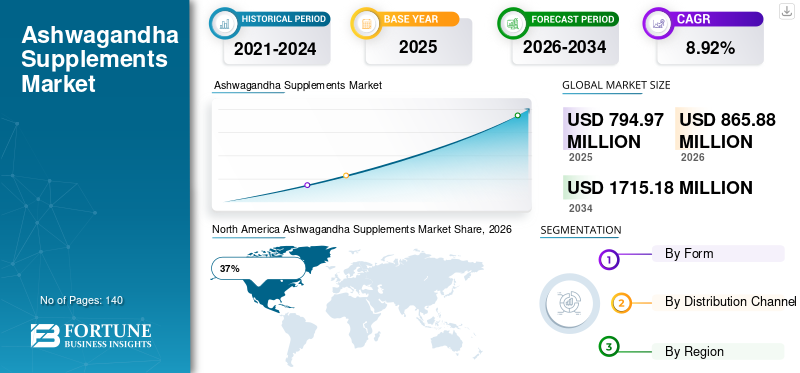
The ashwagandha supplements market size was valued at USD 794.97 Million in 2025. The market is projected to grow from USD 865.88 Million in 2026 to USD 1715.18 Million by 2034, exhibiting a CAGR of 8.92% during the forecast period.

The ashwagandha supplements market is witnessing strong expansion due to growing consumer interest in herbal wellness, stress management products, adaptogenic formulations, and preventive healthcare solutions. Ashwagandha supplements are increasingly incorporated into daily health routines because of their association with cognitive wellness, sleep support, energy enhancement, and immune system maintenance. Manufacturers are introducing standardized extracts, clean-label formulations, vegan capsules, and functional blends to meet evolving consumer preferences. The ashwagandha supplements market report indicates that product diversification, digital health awareness, and increasing acceptance of Ayurvedic ingredients in mainstream nutrition continue to strengthen industry demand. The market is also benefiting from rising investments in clinical validation, premium product positioning, and international distribution networks.
The United States remains one of the most influential markets within the global Ashwagandha supplements industry. Consumer demand is driven by increasing interest in stress reduction supplements, sleep support products, sports nutrition, and natural cognitive health solutions. Retailers are expanding shelf space for botanical supplements, while e-commerce channels continue to increase accessibility across urban and suburban markets.
The U.S. market is also characterized by strong demand for premium formulations containing standardized root extracts, organic certifications, and third-party testing. Functional wellness trends, personalized nutrition programs, and holistic healthcare adoption are supporting the expansion of the ashwagandha supplements market size across multiple consumer categories.
Download Free sample to learn more about this report.
Key Takeaways
Market Size & Growth
- Global market size 2025: USD 794.97 Million
- Global market size 2034: USD 1715.18 Million
- CAGR (2025–2034): 8.92%
Market Share – Regionals
- North America: 37%
- Europe: 28%
- Asia-Pacific: 25%
- Rest of World: 10%
Country-Level Shares
- Germany: 29% of Europe’s market
- United Kingdom: 24% of Europe’s market
- Japan: 18% of Asia-Pacific market
- China: 31% of Asia-Pacific market
Ashwagandha Supplements Market Latest Trends
The ashwagandha supplements market trends reveal significant movement toward clinically supported formulations and multifunctional wellness products. Consumers increasingly seek supplements that provide stress management, sleep support, focus enhancement, and energy optimization within a single formulation. As a result, manufacturers are introducing innovative blends combining ashwagandha with magnesium, probiotics, mushrooms, vitamins, and nootropic ingredients.
Download Free sample to learn more about this report.
Another major trend shaping the ashwagandha supplements market analysis is the rise of premium extract technologies such as standardized withanolide formulations. Brands are emphasizing transparency, ingredient sourcing, organic cultivation, and sustainability credentials to gain competitive advantages. The online wellness ecosystem has further accelerated market visibility through health influencers, fitness communities, and direct-to-consumer marketing initiatives.
Product innovation is extending beyond capsules into gummies, liquid extracts, powders, ready-to-mix beverages, and functional foods. Companies are also investing in sustainable packaging and traceable supply chains to meet evolving consumer expectations. The ashwagandha supplements market outlook remains favorable as demand continues expanding across wellness, fitness, and preventive healthcare sectors.
Ashwagandha Supplements Market Dynamics
Driver
Rising Consumer Demand for Natural Stress Management Solutions
The primary growth driver within the ashwagandha supplements market is the increasing demand for natural solutions addressing stress, anxiety, sleep quality, and overall wellness. Modern lifestyles characterized by work pressure, digital overload, and demanding schedules have encouraged consumers to seek adaptogenic supplements that support mental and physical resilience. Ashwagandha has emerged as one of the most recognized herbal ingredients within the global wellness sector because of its long-standing use in traditional medicine and growing scientific interest.
The ashwagandha supplements market research report highlights rising consumer awareness regarding holistic health management. Fitness enthusiasts, working professionals, students, and aging populations increasingly incorporate herbal supplements into daily wellness routines. Additionally, growing acceptance of plant-based healthcare products and preventive wellness strategies is expanding the addressable consumer base. Manufacturers continue to benefit from increasing retail visibility, stronger healthcare practitioner recommendations, and wider availability across pharmacies and online platforms. These factors collectively strengthen long-term market demand and support sustained industry expansion.
Restraint
Quality Inconsistency and Regulatory Complexity
A significant restraint affecting the Ashwagandha supplements industry is the variation in product quality across manufacturers. Differences in extraction methods, raw material sourcing, withanolide concentration, and formulation standards often create inconsistencies in product performance. Such variations can affect consumer confidence and create purchasing hesitation within premium health supplement categories.
The market also faces regulatory complexities across different countries. Requirements for labeling, health claims, ingredient approvals, and manufacturing compliance vary considerably among regions. Small and medium-sized manufacturers often encounter challenges when expanding internationally due to these regulatory obligations. Furthermore, concerns regarding adulteration, contamination, and counterfeit products can impact market credibility. Maintaining quality assurance, third-party testing, and transparent sourcing practices requires substantial investment. These factors may limit market penetration in highly regulated healthcare environments and create operational barriers for emerging brands seeking international growth opportunities.
Opportunity
Expansion of Personalized Nutrition and Functional Wellness Products
One of the most promising opportunities within the ashwagandha supplements market lies in personalized nutrition and targeted wellness formulations. Consumers increasingly prefer supplements designed for specific outcomes such as stress reduction, sleep improvement, athletic recovery, hormonal balance, cognitive support, and workplace productivity. This shift allows manufacturers to create differentiated products that address niche consumer needs.
The integration of digital health platforms, wellness assessments, subscription models, and personalized supplement recommendations further enhances growth prospects. Companies can leverage consumer data to develop customized formulations that improve engagement and long-term customer retention. Growing demand for organic, vegan, non-GMO, and clean-label supplements also creates premium pricing opportunities. Emerging markets in Asia-Pacific, Europe, and Latin America present additional avenues for expansion as awareness of adaptogenic ingredients continues increasing. These developments support attractive investment prospects across manufacturing, branding, ingredient sourcing, and e-commerce segments.
Challenge
Intensifying Competition and Consumer Education Requirements
The ashwagandha supplements market faces increasing competition as new entrants continue launching products across retail and digital channels. The availability of numerous brands offering similar formulations creates challenges related to product differentiation and customer loyalty. Companies must continuously invest in branding, research, packaging innovation, and clinical validation to maintain competitive positioning.
Consumer education remains another important challenge. Although awareness of herbal wellness products is increasing, many consumers still require information regarding dosage, formulation quality, extract standardization, and expected outcomes. Misleading marketing claims and inconsistent product standards may generate skepticism among potential buyers. Additionally, healthcare professionals often emphasize the importance of evidence-based supplementation, creating pressure for manufacturers to support products with credible scientific research. Successfully addressing these challenges requires ongoing investment in research, consumer communication, and transparent product development strategies.
Ashwagandha Supplements Market Segmentation
By Form
Capsules account for approximately 47% of the ashwagandha supplements market share, making them the dominant product format. Their popularity stems from convenience, portability, precise dosage delivery, and consumer familiarity. Health-conscious individuals often prefer capsules because they simplify daily supplementation routines while ensuring consistent intake levels.
Manufacturers continue introducing advanced capsule formulations featuring standardized extracts, organic ingredients, and enhanced bioavailability. Premium products frequently highlight withanolide content and third-party quality verification. The ashwagandha supplements market forecast indicates continued demand for capsule-based products due to growing wellness awareness, subscription-based supplement programs, and pharmacy distribution expansion. Professional consumers, fitness enthusiasts, and preventive healthcare users remain major purchasers within this segment.
Tablets and pills represent nearly 24% of the global ashwagandha supplements market size. This segment benefits from cost-effective manufacturing, extended shelf life, and broad retail availability. Consumers seeking affordable supplementation options often select tablets because they provide standardized formulations at competitive price points.
Manufacturers are increasingly developing coated tablets and combination formulations containing vitamins, minerals, and adaptogenic herbs. The segment continues gaining traction within large retail pharmacy networks and wellness stores. Product innovation emphasizing convenience and dosage accuracy is strengthening demand among first-time supplement users. Tablets remain particularly popular among mature consumers who prefer traditional supplement formats and established purchasing habits.
Powder formulations hold around 18% of the ashwagandha supplements market share. Traditional wellness consumers and fitness-focused individuals frequently select powder products because they can be incorporated into smoothies, protein shakes, teas, and functional beverages. The versatility of powders appeals to consumers seeking customized wellness routines.
The powder segment is benefiting from increasing demand for natural nutrition products and clean-label wellness ingredients. Manufacturers are introducing flavored variants and organic formulations to enhance consumer acceptance. Growing interest in holistic wellness practices and functional nutrition supports continued expansion. Powder products also align with consumer preferences for flexible dosing and integration into broader health regimens.
Liquid formulations account for approximately 11% of the market. Although smaller than capsules and tablets, the segment is experiencing rising demand among consumers seeking rapid absorption and convenient consumption methods. Liquid extracts are increasingly utilized within premium wellness categories and functional beverage applications.
Manufacturers are introducing concentrated tinctures, herbal blends, and ready-to-consume liquid supplements targeting stress support and energy enhancement. Younger consumers and wellness enthusiasts demonstrate strong interest in innovative delivery formats. Expansion of functional beverage markets and personalized health programs is expected to support future growth opportunities within this segment.
To know how our report can help streamline your business, Speak to Analyst
By Distribution Channel
Hospital pharmacies contribute approximately 19% of the ashwagandha supplements market share. This segment benefits from increasing integration of complementary wellness solutions within broader healthcare frameworks. Certain consumers purchase herbal supplements through hospital-associated pharmacies due to trust, professional recommendations, and perceived quality assurance.
Growing awareness regarding preventive healthcare and patient wellness programs is supporting demand within institutional settings. Healthcare providers increasingly recognize consumer interest in botanical wellness products, creating opportunities for reputable manufacturers. Hospital pharmacy distribution also enhances credibility and facilitates access to consumers seeking medically supervised supplementation approaches.
Retail pharmacies dominate the distribution landscape with nearly 47% market share. Consumers frequently purchase ashwagandha supplements from retail pharmacies because of product accessibility, professional guidance, and trusted purchasing environments. The segment benefits from extensive geographic coverage and established consumer purchasing habits.
Major pharmacy chains continue expanding herbal wellness product portfolios to meet rising demand. Shelf visibility, promotional campaigns, and pharmacist recommendations contribute significantly to product adoption. The retail pharmacy channel remains essential for market penetration and brand recognition across both urban and rural consumer segments.
Online pharmacies account for approximately 34% of the ashwagandha supplements market share and represent one of the fastest-evolving channels. Consumers increasingly prefer online purchasing due to convenience, product variety, subscription options, and access to reviews. Digital platforms allow manufacturers to engage directly with customers while reducing reliance on traditional retail intermediaries.
The expansion of e-commerce infrastructure, digital health awareness, and mobile shopping behavior continues supporting channel growth. Online pharmacies also facilitate personalized recommendations and targeted marketing strategies. Brands benefit from broader geographic reach and improved customer engagement, making this segment a critical growth driver within the global Ashwagandha supplements industry.
Ashwagandha Supplements Market Regional Outlook
North America Ashwagandha Supplements Market Share, 2026 (%)
To get more information on the regional analysis of this market, Download Free sample
North America
North America holds approximately 37% of the global ashwagandha supplements market share. The region benefits from advanced retail infrastructure, widespread supplement adoption, and strong consumer awareness regarding preventive healthcare. Demand is particularly high among consumers seeking stress management solutions, sleep support products, and performance-enhancing wellness supplements.
The market continues expanding due to increased acceptance of botanical ingredients within mainstream health and nutrition categories. Premium formulations, subscription wellness services, and direct-to-consumer sales models contribute to regional market development. Product innovation, clinical research investments, and strong distribution networks further strengthen North America's leadership position.
Europe
Europe accounts for approximately 28% of the global ashwagandha supplements market share. Consumer interest in herbal wellness, natural health products, and adaptogenic supplements continues increasing throughout the region. Regulatory emphasis on product quality and transparency has encouraged manufacturers to adopt stringent quality standards.
Growing awareness of stress management and holistic health practices supports demand across multiple demographic groups. Expanding retail availability and e-commerce penetration contribute to market accessibility. Europe remains an important growth region for manufacturers seeking premium positioning and sustainable product differentiation.
Germany Ashwagandha Supplements Market
Germany represents approximately 29% of the European ashwagandha supplements market. The country benefits from a well-established natural health products sector and strong consumer trust in botanical wellness solutions. German consumers increasingly prioritize preventive healthcare, natural stress relief, and functional nutrition products.
Demand for organic, sustainably sourced, and scientifically validated supplements remains particularly strong. Retail pharmacies and specialty wellness stores play significant roles in product distribution. Manufacturers focusing on transparency, quality certification, and premium formulations are achieving favorable market positioning. Growing awareness of adaptogens among professionals and wellness-focused consumers continues supporting market expansion.
United Kingdom Ashwagandha Supplements Market
The United Kingdom contributes approximately 24% of the European market. Rising consumer awareness regarding mental wellness, workplace stress management, and holistic health practices is driving demand for ashwagandha supplements. Online retail platforms have significantly increased product accessibility across the country.
Consumers increasingly seek natural alternatives that support relaxation, sleep quality, and daily performance. The growing popularity of wellness subscriptions and personalized nutrition programs further supports market development. Manufacturers continue launching innovative formulations targeting modern lifestyle challenges, strengthening the overall ashwagandha supplements market outlook within the United Kingdom.
Asia-Pacific
Asia-Pacific holds approximately 25% of the global ashwagandha supplements market share. The region benefits from growing disposable income, expanding wellness awareness, and strong cultural familiarity with herbal medicine traditions. Rising urbanization and health consciousness continue driving supplement adoption across multiple countries.
Manufacturers benefit from expanding retail infrastructure, digital commerce growth, and increasing investment in wellness-focused product categories. The region also plays a significant role in raw material cultivation and supply chain development. These factors support long-term growth opportunities across the Ashwagandha supplements industry.
Japan Ashwagandha Supplements Market
Japan accounts for approximately 18% of the Asia-Pacific market. Consumer demand is supported by strong interest in healthy aging, cognitive wellness, and stress management solutions. Japanese consumers often favor premium formulations backed by quality assurance and scientific validation.
Functional foods and nutritional supplements continue gaining popularity among health-conscious populations. Manufacturers are increasingly adapting product formats and marketing strategies to align with local preferences. Growing wellness awareness and interest in preventive healthcare remain important drivers supporting market expansion within Japan.
China ashwagandha supplements market
China represents approximately 31% of the Asia-Pacific market. Rising middle-class income, expanding e-commerce infrastructure, and increasing interest in natural wellness products contribute to market growth. Consumers are becoming more receptive to global herbal supplement trends while maintaining strong interest in traditional health practices.
Digital retail channels significantly influence purchasing behavior, enabling rapid market penetration for domestic and international brands. Product innovation, premium positioning, and health education campaigns continue supporting demand. China remains one of the most attractive growth markets within the broader ashwagandha supplements market analysis.
Rest of World
The Rest of World region accounts for approximately 10% of global market share. Growing health awareness, urbanization, and wellness product availability are supporting demand across Latin America, the Middle East, and Africa. Consumers increasingly seek plant-based supplements that align with preventive health objectives.
Manufacturers are expanding distribution networks and introducing region-specific product strategies to capture emerging opportunities. E-commerce adoption and retail modernization are improving product accessibility. As awareness of adaptogenic ingredients continues increasing, the region presents substantial long-term opportunities for market participants seeking geographic diversification.
List of Top Ashwagandha Supplements Companies
- NOW Foods
- Swanson
- KSM-66
- Nature Made
- Nature's Bounty
- Himalaya Wellness Company
- Dabur
- Solaray
- Gaia Herbs
- Four Sigmatic
Top Two Companies by Market Share
- KSM-66 – 14%
- Himalaya Wellness Company – 11%
Investment Analysis and Opportunities
Investment activity within the ashwagandha supplements market continues increasing as demand for herbal wellness products expands globally. Investors are focusing on ingredient standardization technologies, sustainable sourcing initiatives, manufacturing automation, and direct-to-consumer business models. Companies with strong research capabilities and premium brand positioning are attracting particular attention from strategic investors.
The ashwagandha supplements market opportunities are especially prominent within personalized nutrition, functional beverages, sports recovery products, and mental wellness solutions. E-commerce expansion enables brands to scale internationally while maintaining strong customer engagement. Additional opportunities exist in organic cultivation, contract manufacturing, private-label development, and clinical research partnerships.
Investment interest is also growing in supply chain integration, ensuring consistent raw material quality and traceability. Emerging economies offer favorable expansion prospects due to rising healthcare awareness and increasing disposable income. These trends collectively create a highly attractive environment for long-term market participation.
New Product Development
Innovation remains a defining characteristic of the Ashwagandha supplements industry. Manufacturers are introducing advanced formulations designed to address specific consumer needs such as sleep support, stress management, athletic performance, cognitive enhancement, and hormonal wellness. Product developers increasingly combine ashwagandha with complementary ingredients including magnesium, probiotics, mushrooms, vitamins, and botanical extracts.
The market is also witnessing growth in gummies, chewables, flavored powders, liquid concentrates, and ready-to-drink wellness beverages. Clean-label positioning, vegan certification, and organic sourcing continue influencing product development strategies. Brands are investing in improved extraction methods and standardized formulations to ensure consistency and efficacy.
research-driven innovation is becoming increasingly important as consumers seek evidence-based wellness products. Companies that successfully combine scientific validation with consumer-friendly formats are strengthening their competitive positions within the global market.
Five Recent Developments (2023-2025)
- KSM-66 expanded international distribution partnerships to strengthen global availability of standardized ashwagandha extracts.
- Swanson introduced new ashwagandha gummy formulations targeting stress support and daily wellness applications.
- Himalaya Wellness Company expanded its herbal supplement portfolio with enhanced ashwagandha-based wellness products.
- Several leading manufacturers launched organic and vegan-certified ashwagandha formulations to address clean-label demand.
- Multiple brands increased investments in clinical research and third-party testing programs to strengthen product credibility and consumer trust.
Report Coverage of Ashwagandha Supplements Market
The ashwagandha supplements market report provides detailed analysis of industry structure, competitive landscape, product segmentation, regional performance, and distribution channel developments. Coverage includes assessment of key growth drivers, emerging opportunities, market challenges, and evolving consumer purchasing behavior.
Request for Customization to gain extensive market insights.
The report evaluates product categories including capsules, tablets, powders, and liquid formulations while examining distribution channels such as hospital pharmacies, retail pharmacies, and online pharmacies. Regional analysis covers North America, Europe, Asia-Pacific, and Rest of World markets with country-level evaluation of major growth regions.
Additional coverage includes competitive benchmarking, innovation strategies, investment trends, supply chain developments, and regulatory influences affecting industry participants. The report serves as a strategic resource for manufacturers, distributors, investors, retailers, and stakeholders seeking comprehensive ashwagandha supplements market insights and business intelligence.



- 2021-2034
- 2025
- 2021-2024
- 140
-

(Offer valid till 31st Oct 2026)
Get 30-60 hrs Free Customization
Expand Regional and Country Coverage, Segments Analysis, Company Profiles, Competitive Benchmarking, and End-user Insights.




















-
US +1 833 909 2966 ( Toll Free )
-
Get In Touch With Us