CAR T-cell Therapy Market Size, Share & Industry Analysis, By Product (Kymriah, Yescarta, Tecartus, Breyanzi, Abecma, Carvykti, and Others), By Indication (Large B-cell Lymphoma, Follicular Lymphoma, Mantle Cell Lymphoma, Chronic Lymphocytic Leukemia/Small Lymphocytic Lymphoma, B-cell Acute Lymphoblastic Leukemia, Multiple Myeloma, and Others), By Age Group (Pediatric and Adults), By End User (Hospital-based CAR T-cell Treatment Centers, Standalone Cancer Treatment Centers, and Others), and Regional Forecast, 2026-2034
 Download Free Sample
CAR T-Cell Therapy Market Size & Overview
 Listen to Audio Version
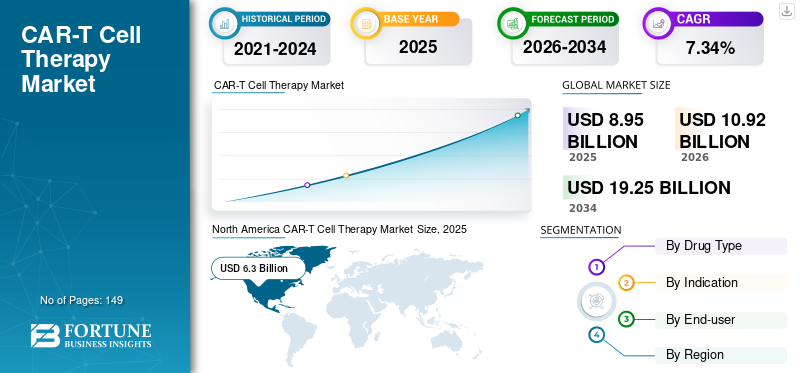
The global CAR T-cell therapy market size was valued at USD 8.62 billion in 2025 and is projected to grow from USD 12.08 billion in 2026 to USD 109.95 billion by 2034, exhibiting a CAGR of 31.80% during the forecast period. North America dominated the CAR T-cell therapy market with a market share of 46.98% in 2025.
The global CAR T-cell therapy market has evolved from an advanced treatment platform for heavily pretreated blood cancers into a commercially significant cellular immunotherapy ecosystem. Growth is supported by durable clinical responses, expanding regulatory approvals, broader treatment-center accreditation, and increasing investment in engineered cell therapies.
Although adoption remains concentrated in specialized oncology networks, the addressable market is widening through earlier-line treatment, additional hematologic indications, and improved manufacturing capacity. The CAR T-cell therapy market size is increasingly influenced by treatment eligibility, production throughput, reimbursement conditions, and clinical infrastructure rather than patient prevalence alone.
The industry ecosystem includes biotechnology developers, pharmaceutical manufacturers, viral-vector suppliers, cell-processing technology providers, logistics companies, accredited treatment centers, and specialized contract development and manufacturing organizations. Value capture is shifting toward integrated capabilities spanning cell collection, genetic modification, quality control, supply-chain coordination, and post-infusion monitoring. This structure is influencing CAR T-cell therapy market share among companies with established commercial products and scalable manufacturing networks.
CAR T-cell therapy, which stands for Chimeric Antigen Receptor T-cell therapy, involves modifying specialized T-cells, a component of the immune system, to target and eliminate cancer cells specifically. The global market is poised for exponential growth due to the increasing adoption of personalized immunotherapies for patients with relapsed or refractory hematological malignancies.
Expanding regulatory approvals, wider use across different blood cancer indications, and increasing clinical evidence regarding durable patient responses are encouraging healthcare providers to integrate CAR-T therapy into specialized cancer treatment pathways. Pharmaceutical and biotechnology companies are also investing in faster manufacturing processes, decentralized production, allogeneic or off-the-shelf platforms, dual-target therapies, and programs for solid tumors.
- For instance, in December 2025, Bristol Myers Squibb received U.S. FDA approval for Breyanzi for adults with relapsed or refractory marginal zone lymphoma. The approval made Breyanzi the first and only CAR T-cell therapy approved for this patient population and expanded its use to a fifth cancer type. This development highlights the increasing focus of pharmaceutical companies on broadening CAR-T therapy indications, addressing unmet treatment needs, and expanding the commercial reach of established cell therapy platforms.
Key players, such as Johnson & Johnson, Legend Biotech Corporation, Gilead Sciences, Inc., and Bristol-Myers Squibb Company, are actively participating in new product launches, strategic collaborations, acquisitions, and regulatory approval and investment initiatives to expand market presence.
Download Free sample to learn more about this report.
Latest Product Launches and Major Indication Expansions
|
Product Name |
Company Name |
Description |
|
Satricabtagene Autoleucel – Satri-cel |
CARsgen Therapeutics |
Approved by China’s NMPA in June 2026 for Claudin18.2-positive, HER2-negative advanced gastric or gastroesophageal-junction adenocarcinoma after at least two prior treatment lines. |
|
Aucatzyl – Obecabtagene Autoleucel |
Autolus Therapeutics |
The first U.S. commercial sale occurred in January 2025 following FDA approval in November 2024 for adults with relapsed or refractory B-cell precursor acute lymphoblastic leukemia. |
|
Breyanzi – Marginal Zone Lymphoma Expansion |
Bristol Myers Squibb |
Received U.S. FDA approval in December 2025 for adults with relapsed or refractory marginal zone lymphoma. This expanded Breyanzi’s commercial coverage to five B-cell malignancy categories. |
|
Carvykti – Earlier-line Multiple Myeloma Expansion |
Johnson & Johnson and Legend Biotech |
Approved by the FDA in April 2024 for patients with relapsed or refractory multiple myeloma after at least one prior treatment line, significantly expanding its addressable patient population. |
CAR T-Cell Therapy Market Trends
Increasing Pipeline Candidates and Clinical Trials for Innovative CAR-T Therapies to Emerge as a Key Market Trend
The global market is witnessing a growing number of pipeline candidates and clinical trials focused on improving treatment safety, effectiveness, durability, and patient access. Pharmaceutical and biotechnology companies are developing dual-target and multi-target CAR-T therapies to reduce antigen escape and disease relapse. Clinical research is also expanding beyond blood cancer into solid tumors and autoimmune diseases, creating new commercial applications for CAR-T technology.
Key companies are further investigating improved CAR designs, faster manufacturing techniques, safety switches, and combination treatment strategies to reduce severe adverse events and enhance therapeutic responses. The successful progression of these candidates through clinical development is expected to expand the addressable patient population and support the long-term growth of the market.
- For instance, in June 2026, Legend Biotech presented first-in-human Phase 1 clinical data for LB2102, an investigational DLL3-targeted CAR T-cell therapy for patients with relapsed or refractory small-cell lung cancer and large-cell neuroendocrine carcinoma. The candidate demonstrated encouraging clinical activity and a manageable safety profile, with responses reported among heavily pretreated patients. This development highlights the increasing focus of companies on extending CAR-T therapy beyond hematological malignancies and developing innovative treatment options for difficult-to-treat solid tumors.
In addition, several market players are entering into partnerships for the development of CAR T-cell therapy involving the treatment of cancer.
- For instance, in February 2026, BioNTech SE, an immunotherapy company, and Autolus Therapeutics plc, a biopharmaceutical company, formed a partnership aimed at advancing both companies' autologous CAR-T programs toward commercialization, pending regulatory approvals.
MARKET DYNAMICS
MARKET DRIVERS
Download Free sample to learn more about this report.
Rising Prevalence of Hematological Cancer is Driving Market Growth
The increasing burden of leukemia, lymphoma, and multiple myeloma is expected to enlarge the patient population requiring advanced treatment after conventional therapies fail. CAR-T therapies can provide deep and durable responses in selected patients with relapsed or refractory disease, supporting their adoption across specialized cancer centers. Improved diagnosis, longer patient survival, and repeated disease relapse are also increasing the number of patients who may become eligible for CAR-T treatment. Moreover, the movement of these therapies into earlier treatment lines is expected to expand their addressable patient population and increase treatment volumes. Consequently, the growing clinical burden of hematological cancer is likely to boost CAR T-cell therapy market growth in the coming years.
- For instance, in April 2024, Johnson & Johnson received U.S. FDA approval for CARVYKTI for patients with relapsed or refractory multiple myeloma who had received at least one prior line of therapy. The expanded indication allowed the therapy to be used from the first relapse, compared with its earlier use after multiple previous treatments. The development highlights how the increasing multiple myeloma patient burden and demand for effective relapse treatment are expanding the eligible population for CAR-T therapies.
Another major driver of the CAR T-cell therapy market is the growing clinical validation of durable responses in relapsed or refractory hematologic cancers. Patients with limited treatment options are creating sustained demand for therapies capable of achieving deep remission, particularly across aggressive B-cell lymphomas, acute lymphoblastic leukemia, and multiple myeloma. Expanding approvals are progressively moving CAR T-cell therapy beyond narrowly defined salvage settings.
Investment in cellular immunotherapy infrastructure is reinforcing market development. Pharmaceutical companies, biotechnology firms, and healthcare systems are allocating capital toward manufacturing facilities, specialized treatment centers, cryogenic logistics, and quality-control capabilities. These investments improve commercial readiness while reducing operational bottlenecks that previously restricted patient access.
Earlier-line treatment adoption is also expanding the eligible population. Clinical evidence supporting CAR T-cell use before multiple rounds of chemotherapy is increasing physician consideration and changing treatment algorithms. This shift strengthens the CAR T-cell therapy market growth outlook, although reimbursement and capacity constraints remain relevant.
Technological progress provides an additional demand catalyst. Improvements in vector design, T-cell engineering, manufacturing automation, and toxicity management are enhancing treatment consistency. Faster production timelines and better cell fitness can increase treatment-center throughput while reducing logistical complexity.
|
Rank |
Market Drivers |
Expected Impact on Market Growth |
Estimated Gross Market Growth Contribution (USD Billion) |
Impact: 2026-2028 |
Impact: 2029-2031 |
Impact: 2032-2034 |
|
1 |
Rising burden of hematological cancer and unmet needs among relapsed patients |
High |
31.60 |
High |
High |
High |
|
2 |
Expansion into earlier treatment lines and additional indications |
High |
27.10 |
Medium |
High |
High |
|
3 |
Growing pipeline and clinical trials for solid tumors and non-oncology diseases |
High |
23.20 |
High |
High |
Medium |
|
4 |
Development of allogeneic, rapid-manufacturing, and in vivo CAR-T platforms |
Medium-High |
19.00 |
Medium |
High |
High |
|
5 |
Increasing regulatory approvals, reimbursement support, and treatment-center capacity |
Medium |
15.00 |
Medium |
Medium |
High |
|
6 |
Others |
Low |
11.00 |
Low |
Low |
Low |
|
Total Gross Growth Contribution |
126.90 |
MARKET RESTRAINTS
High Treatment Cost of CAR-T Therapies to Limit Market Growth
The high cost of CAR T-cell therapy is expected to restrict its wider adoption, particularly in countries with limited healthcare funding and reimbursement coverage. In addition to the expensive therapy product, the total treatment cost includes T-cell collection, genetic modification and manufacturing, hospitalization, specialized monitoring, and management of adverse events such as cytokine release syndrome. These expenses create a considerable financial burden for patients, hospitals, insurers, and public healthcare systems. Uncertainty regarding reimbursement can also delay patient referrals and discourage smaller treatment centers from establishing CAR-T programs. Consequently, affordability and cost-effectiveness concerns may limit patient access despite the strong clinical benefits offered by CAR-T treatments.
- For instance, in December 2025, NICE issued final draft guidance recommending that the NHS should not routinely use Gilead Sciences’ Tecartus for relapsed or refractory mantle cell lymphoma. NICE concluded that the available evidence did not demonstrate sufficient value for money and that the therapy’s cost-effectiveness estimates were above the range considered an acceptable use of NHS resources. The decision led Gilead to submit appeals, highlighting the risk that high treatment and delivery costs could remove access to an important CAR-T option. Although NICE subsequently agreed in June 2026 to reconsider the recommendation, the case demonstrates how unfavorable cost-effectiveness assessments can restrict reimbursement and commercial adoption of expensive CAR-T therapies.
The CAR T-cell therapy market remains constrained by complex manufacturing requirements, high treatment costs, and limited delivery capacity. Autologous production depends on patient-specific cell collection, genetic modification, quality testing, and controlled logistics. Manufacturing failures, scheduling delays, or inadequate cell quality can interrupt treatment plans and reduce provider confidence.
Treatment economics represent another significant limitation. Product costs extend beyond the therapy itself and include leukapheresis, lymphodepletion, hospitalization, toxicity management, intensive monitoring, and long-term follow-up. These expenses complicate reimbursement negotiations and restrict adoption in healthcare systems with constrained oncology budgets.
Clinical infrastructure also limits market penetration. CAR T-cell administration requires specialized centers, trained multidisciplinary teams, intensive-care access, and protocols for managing cytokine release syndrome and immune effector cell-associated neurotoxicity syndrome. Such requirements concentrate treatment in major academic hospitals and established cancer networks.
|
Rank |
Market Restraints |
Expected Impact on Market Growth |
Estimated Reduction in Market Size (USD Billion) |
Impact: 2026-2028 |
Impact: 2029-2031 |
Impact: 2032-2034 |
|
1 |
High therapy, hospitalization, and adverse-event management costs |
High |
10.50 |
High |
High |
Medium |
|
2 |
Complex manufacturing process and long treatment turnaround time |
Medium-High |
8.20 |
High |
Medium |
Medium |
|
3 |
Severe toxicities and limited specialized treatment infrastructure |
Medium |
6.30 |
Medium |
Medium |
Low |
|
4 |
Others |
Low |
4.03 |
Low |
Low |
Low |
|
Total Market Reduction |
29.03 |
MARKET OPPORTUNITIES
Heavy R&D Investment in Therapeutic Applications of CAR T-cell therapy to Create Market Growth Opportunities
The development of allogeneic or off-the-shelf CAR-T therapies is expected to create substantial growth opportunities by addressing the manufacturing and accessibility limitations of autologous treatments. These therapies use T cells obtained from healthy donors. They can be manufactured in advance, stored, and supplied when required, eliminating the need to produce a separate treatment for every patient. This approach may shorten treatment waiting periods, improve manufacturing consistency, and enable a single production batch to serve multiple patients.
Greater scalability could also support treatment delivery across a wider network of hospitals and community cancer centers while potentially reducing production costs. Therefore, successful late-stage development of safe and durable off-the-shelf products could significantly broaden the eligible patient population and accelerate market expansion.
- For instance, in November 2025, Caribou Biosciences announced positive Phase 1 ANTLER trial results for Vispacabtagene Regedleucel, an investigational allogeneic anti-CD19 CAR-T therapy for relapsed or refractory B-cell non-Hodgkin lymphoma. The company also reported that the therapy was generally well tolerated and could be administered in an outpatient setting. These findings highlight the potential of off-the-shelf CAR-T products to offer readily available and scalable treatment with clinical outcomes approaching those of patient-specific therapies.
The strongest opportunity in the CAR T-cell therapy market lies in expanding treatment access beyond highly specialized academic centers. Regional manufacturing hubs, satellite treatment networks, and standardized referral pathways could reduce geographic concentration and improve patient throughput. Companies supporting decentralized logistics, cell tracking, and treatment-center coordination may capture value without developing proprietary therapies.
Indication expansion offers another substantial growth avenue. Clinical development is progressing toward earlier-line use, additional B-cell malignancies, and plasma-cell disorders with high unmet need. Products demonstrating durable responses with manageable toxicity can strengthen reimbursement cases and increase physician adoption across broader treatment populations.
Manufacturing technology represents an attractive investment segment. Automated systems, non-viral gene delivery, closed processing platforms, rapid release testing, and improved cryopreservation can address the industry’s cost and reliability challenges. Suppliers enabling shorter production cycles may benefit across multiple commercial products and pipeline programs.
MARKET CHALLENGES
Severe Treatment-related Toxicities to Complicate the Clinical Management of Patients
CAR-T cell therapies can cause serious adverse events, including cytokine release syndrome, immune effector cell-associated neurotoxicity syndrome, prolonged cytopenias, severe infections, and secondary hematological malignancies. These complications may develop rapidly after infusion and require continuous monitoring, immediate supportive treatment, and access to intensive-care facilities. As a result, CAR-T therapy must generally be administered by specialized centers with trained oncologists, neurologists, critical-care teams, and established toxicity-management protocols. The possibility of life-threatening reactions can also make physicians cautious when selecting elderly, medically fragile, or heavily pretreated patients.
- For instance, in April 2024, the U.S. FDA required boxed warnings for all approved BCMA- and CD19-directed autologous CAR-T therapies following reports of T-cell malignancies, including CAR-positive lymphoma, in treated patients. The agency also required patients and clinical-trial participants to undergo lifelong monitoring for secondary malignancies. This regulatory action highlighted the potential for serious long-term safety complications and increased the monitoring responsibilities of healthcare providers administering CAR-T therapies.
Segmentation Analysis
By Product
The product structure of the CAR T-cell therapy market is concentrated around six approved commercial platforms: Kymriah, Yescarta, Tecartus, Breyanzi, Abecma, and Carvykti. Their market positions differ by indication coverage, treatment-line placement, clinical outcomes, manufacturing reliability, and treatment-center familiarity. Product-level market share therefore reflects both therapeutic performance and commercial execution across referral networks.
At the product level, future CAR T-cell therapy market growth will depend on indication expansion, manufacturing scale, durability of response, safety management, and the ability to support earlier treatment use. Products with broad labels and dependable supply chains are likely to capture greater institutional value than products relying on narrow clinical niches.
Carvykti Segment Led Market Due to Its Broad Therapeutic Utility
Carvykti, developed through collaboration between Janssen, now part of Johnson & Johnson, and Legend Biotech, has gained importance in multiple myeloma due to strong clinical activity in heavily pretreated patients. Its market position is supported by efficacy expectations, but manufacturing capacity and treatment access remain central constraints. The product illustrates how clinical differentiation can generate demand faster than production networks can respond.
The Carvykti segment dominated the market in 2025 due to its strong clinical performance in relapsed or refractory multiple myeloma. The product addresses a sizeable population of patients who experience disease progression after initial therapy and require a treatment capable of producing deep and durable responses.
Increasing manufacturing capacity, wider activation of treatment centers, and continued international launches also improved product availability. These factors increased treatment volumes and allowed Carvykti to grow more rapidly than several established CD19-directed CAR-T therapies.
- For instance, in January 2026, Legend Biotech Corporation provided an update on the Company's recent commercial and clinical progress and outlined its strategic priorities for 2026. This update mentioned the completion of the physical expansion of the Raritan facility, marking the largest cell therapy manufacturing facility in the U.S. and providing installed capacity to support treatment of up to 10,000 patients annually.
Kymriah, developed by Novartis, maintains relevance in B-cell acute lymphoblastic leukemia and selected lymphoma settings. Its early market entry established significant clinical and operational precedent, particularly in pediatric oncology. However, competition has intensified as newer products offer broader adult indications, improved manufacturing timelines, or stronger commercial momentum.
Yescarta, developed by Kite Pharma, a Gilead Sciences company, has achieved a strong position in large B-cell lymphoma. Its adoption benefits from extensive treatment-center relationships, established physician familiarity, and expanding use in earlier treatment lines. The product’s commercial strength is closely tied to manufacturing capacity and its integration into Gilead’s broader oncology portfolio.
Tecartus addresses mantle cell lymphoma and selected B-cell malignancies. Its positioning is supported by activity in difficult-to-treat patient populations and the strategic value of extending CAR T-cell therapy into additional lymphoma subtypes. Its growth depends on maintaining clinical relevance as competing products enter overlapping indications.
Breyanzi, developed by Bristol Myers Squibb, is positioned across large B-cell lymphoma, follicular lymphoma, and other approved hematologic settings. Its differentiation is linked to expansion into broader lymphoma populations and the company’s ability to support treatment-center access. Product adoption increasingly depends on comparative evidence, manufacturing consistency, and physician confidence in patient selection.
Abecma, developed by Bristol Myers Squibb and 2seventy bio, targets BCMA-positive multiple myeloma. It competes in a rapidly evolving plasma-cell therapy segment where treatment sequencing, prior exposure to novel agents, and patient fitness influence demand. Its commercial position is affected by competition from Carvykti and the development of alternative BCMA-directed approaches.
The other segment is expected to grow at a CAGR of 45.82% over the forecast period.
To know how our report can help streamline your business, Speak to Analyst
By Indication
Indication segmentation determines commercial potential because disease prevalence, treatment sequencing, antigen expression, physician referral behavior, and patient eligibility vary substantially across hematologic cancers. The market is increasingly moving from salvage therapy toward earlier intervention, but each indication presents distinct clinical and operational requirements.
Across indications, market growth depends on the interaction between clinical benefit and treatment feasibility. Diseases with high relapse rates create demand, but products must also deliver manageable toxicity, reliable production, and meaningful survival outcomes. Indication expansion will remain a principal mechanism for increasing market size.
Wide Product Availability and Earlier-line Use to Drive Large B-cell Lymphoma Segment Dominance
Based on indication, the market is divided into large B-cell lymphoma, follicular lymphoma, mantle cell lymphoma, chronic lymphocytic leukemia/small lymphocytic lymphoma, B-cell acute lymphoblastic leukemia, multiple myeloma, and others.
The large B-cell lymphoma segment is estimated to dominate the market over the forecast period, owing to the availability of multiple commercial CAR-T therapies for different forms and treatment stages of the disease. The segment has benefited from the relatively early introduction of CAR-T therapy, creating established referral pathways and greater physician experience than in several newer indications.
Large B-cell lymphoma represents one of the most commercially significant segments. The category includes diffuse large B-cell lymphoma and related aggressive subtypes with substantial unmet need after relapse or treatment failure. CAR T-cell therapy is gaining importance in earlier lines for selected patients, expanding the eligible population. Adoption is strongest where referral systems can rapidly identify candidates and treatment centers can manage complex post-infusion monitoring.
Moreover, extensive real-world evidence and long-term clinical data have increased physician confidence in using CAR-T products across a broader group of patients. Consequently, the combination of multiple approved products, earlier treatment use, and established hospital infrastructure supports the segment’s leading market position.
- For instance, in December 2025, Kite presented an analysis showing that second-line Yescarta provided consistent clinical benefits across a broad population of patients with relapsed or refractory large B-cell lymphoma, including patients who were ineligible for high-dose chemotherapy and autologous stem-cell transplantation. The findings expanded the clinical relevance of CAR-T therapy beyond transplant-eligible patients and supported treatment adoption across a wider LBCL population.
Follicular lymphoma offers a growing opportunity because the disease often follows a relapsing course and may become resistant after multiple therapies. CAR T-cell products can provide a treatment option for patients with heavily pretreated disease. However, the commercial pathway differs from aggressive lymphoma because physicians weigh treatment durability against the availability of other targeted and immunomodulatory therapies.
Mantle cell lymphoma is a smaller but clinically important segment. Patients frequently experience relapse after targeted therapies, creating demand for durable cellular interventions. Tecartus has established a strong role in this category, although patient fitness and treatment timing affect eligibility. Market expansion will depend on identifying patients before disease progression prevents successful cell collection or infusion.
The chronic lymphocytic leukemia/small lymphocytic lymphoma segment is expected to grow at a CAGR of 39.07% over the forecast period. Chronic lymphocytic leukemia and small lymphocytic lymphoma represent a technically attractive but commercially developing segment. These diseases have historically benefited from effective targeted medicines, including kinase and BCL-2 inhibitors. CAR T-cell therapy must therefore demonstrate clear value in patients with multi-drug resistance, high-risk biology, or limited remaining options. Product development in this segment is closely linked to persistence, antigen escape, and the ability to treat patients with compromised T-cell function.
B-cell acute lymphoblastic leukemia remains an important indication because of the high unmet need among relapsed or refractory patients, especially in pediatric populations. Kymriah established the commercial relevance of CAR T-cell therapy in this disease. Demand is influenced by pediatric treatment networks, long-term survivorship considerations, and the need to balance durable remission against toxicity and relapse risk.
Multiple myeloma is becoming one of the most strategically important segments. BCMA-directed products such as Abecma and Carvykti address patients who have exhausted multiple prior therapies. The segment has significant revenue potential because of disease prevalence and treatment intensity, but competition is increasing from bispecific antibodies, antibody-drug conjugates, and next-generation cellular therapies. Earlier-line movement could expand demand while placing greater pressure on manufacturing capacity and reimbursement budgets.
By Age Group
Age-group segmentation divides the market into pediatric and adult populations. Adults account for the larger commercial base because of the broader prevalence of lymphoma and multiple myeloma. Pediatric treatment, however, remains strategically important because CAR T-cell therapy has demonstrated substantial value in relapsed B-cell acute lymphoblastic leukemia and other high-risk conditions.
Age-based demand is consequently linked to clinical eligibility rather than population size alone. Pediatric products require specialized evidence and long-term follow-up, while adult products depend on scalable delivery, comparative outcomes, and treatment-center capacity. Companies that can demonstrate safe use across older or medically complex patients may expand the addressable market significantly.
Wider Range of Approved CAR-T Therapies for Cancer Indications Led to Adult Segment’s Dominance
The adult segment captured the largest CAR T-cell therapy market share in 2025. The segment represents that most commercially available CAR-T therapies are approved for adult patients with lymphoma, multiple myeloma, chronic lymphocytic leukemia, mantle cell lymphoma, and adult B-cell acute lymphoblastic leukemia.
Adult patients represent the principal volume opportunity across large B-cell lymphoma, follicular lymphoma, mantle cell lymphoma, chronic lymphocytic leukemia, and multiple myeloma. Adult adoption is increasingly affected by treatment-line expansion, comorbidity assessment, performance status, and prior exposure to systemic therapies. Older patients may benefit from CAR T-cell therapy, but eligibility depends on frailty, organ function, infection risk, and the capacity of treatment centers to provide intensive monitoring.
The adult demographic accounts for a larger number of relapsed or refractory cases and is also diagnosed with a number of eligible indications. The increasing use of CAR-T therapy among patients at first or second relapse is further expanding the addressable adult population. Continued approval of CAR-T therapies for additional adult lymphoma and myeloma indications is therefore expected to maintain the segment’s market leadership.
- For instance, in November 2024, the U.S. FDA approved Autolus Therapeutics’ AUCATZYL (obecabtagene autoleucel), a CD19-directed CAR T-cell therapy, for the treatment of adults with relapsed or refractory B-cell precursor acute lymphoblastic leukemia. The approval added another commercially available CAR-T option specifically for adult patients, supporting the continued expansion of the addressable adult treatment population.
The pediatric segment is expected to grow at a CAGR of 28.20% over the forecast period. Pediatric patients are generally treated through highly specialized academic centers with established cellular therapy programs. Treatment decisions involve long-term survival, developmental outcomes, fertility considerations, immune recovery, and survivorship monitoring. Pediatric adoption is therefore influenced by clinical evidence and institutional expertise more than by broad commercial promotion. The segment also requires specialized manufacturing coordination because disease progression can be rapid.
By End User
End-user segmentation consists primarily of hospital-based CAR T-cell treatment centers and standalone cancer treatment centers. The distinction reflects differences in infrastructure, clinical complexity, referral patterns, and financial capacity.
End-user competition is based less on facility count than on treatment readiness. The strongest centers combine patient identification, cell collection, infusion capacity, toxicity management, and long-term follow-up within a coordinated pathway. As the CAR T-cell therapy market expands, manufacturers and healthcare systems will increasingly prioritize network integration over isolated site activation.
Requirement for Specialized Infrastructure to Foster Hospital-based CAR-T Treatment Centers Segment Growth
Hospital-based CAR-T treatment centers are estimated to dominate the market over the forecast period due to the complex clinical and operational requirements involved in delivering the therapy. These centers also provide immediate access to intensive-care services, neurology support, transfusion facilities, and medicines required to manage cytokine release syndrome and neurological toxicities. Their established relationships with manufacturers, payers, cell-processing laboratories, and logistics providers further simplify product ordering and reimbursement.
Hospital-based CAR T-cell treatment centers currently account for the dominant share of treatment activity. These facilities typically possess intensive-care access, apheresis services, transplant expertise, infectious disease support, emergency response capabilities, and multidisciplinary oncology teams. Their integration into academic or tertiary hospital systems makes them better equipped to manage cytokine release syndrome, neurologic toxicity, prolonged cytopenias, and complex inpatient care.
The standalone cancer treatment centers segment is expected to grow at a CAGR of 37.79% over the forecast period. Standalone cancer centers may provide selected services, but dependence on hospital infrastructure for emergency care and multidisciplinary monitoring limits their overall market contribution. Therefore, increasing commercial activation of qualified hospital centers directly supports their dominant share.
Standalone cancer treatment centers represent an emerging expansion segment. These facilities may improve regional access by offering treatment closer to patients who cannot travel to academic hospitals. Their participation depends on accreditation, emergency transfer arrangements, trained personnel, pharmacy capabilities, and reliable access to intensive-care support. Standalone centers are more likely to adopt CAR T-cell therapy when manufacturers provide standardized protocols, patient-management tools, and logistics assistance.
- For instance, in March 2025, Autolus reported that 33 treatment centers had been authorized to administer Aucatzyl, providing coverage for more than 60% of its target U.S. patient population. The company planned to expand the network to approximately 60 centers, covering around 90% of the target population, by the end of 2025. This rollout demonstrates that commercial CAR-T adoption depends significantly on activating qualified treatment centers with the infrastructure required to manage the complete treatment process.
Regional Insights
By geography, the market is categorized into Europe, North America, Asia Pacific, Latin America, and the Middle East & Africa.
North America CAR T-cell Therapy Market Analysis
North America CAR-T Cell Therapy Market Size, 2025 (USD Billion)
To get more information on the regional analysis of this market, Download Free sample
North America dominated the market with USD 3.01 billion in 2024 and also maintained its growth momentum with the leading position in 2025 at USD 4.05 billion. North America’s market growth is supported by the early commercialization of CAR-T therapies, the presence of major biotechnology companies, and a well-established network of specialized cancer centers. The U.S. continues to expand the eligible patient population through approvals covering additional cancer indications and earlier treatment lines.
North America remains the leading CAR T-cell therapy market due to advanced oncology infrastructure, strong reimbursement capacity, extensive clinical research, and established treatment-center networks. The region benefits from early product commercialization and high physician familiarity with cellular immunotherapy. Market expansion is increasingly tied to earlier-line approvals, manufacturing scale, payer negotiations, and broader access beyond major academic hospitals.
U.S. CAR T-cell Therapy Market
Given North America's substantial contribution and the U.S. dominance in the region, the U.S. market is estimated at around USD 5.27 billion in 2026, accounting for roughly 43.60% of global revenues. The United States dominates regional CAR T-cell therapy market share through its concentration of approved products, specialized treatment centers, biotechnology investment, and regulatory activity. Commercial adoption is supported by major pharmaceutical developers and extensive clinical trial networks. However, treatment affordability, hospital capacity, manufacturing delays, and reimbursement complexity continue influencing patient access and the pace of broader market penetration.
Europe CAR T-cell Therapy Market Analysis
Europe is projected to grow at 29.20% CAGR in the coming years, the second-highest among all regions, and reach a valuation of USD 1.66 billion in 2026. Market growth is driven by expanding EMA-authorized indications, government support for advanced therapies, and the inclusion of CAR-T treatment within publicly funded healthcare systems.
Europe’s CAR T-cell therapy market is expanding through centralized regulatory approval, national cancer programs, and growing investment in advanced therapy medicinal products. Adoption varies across countries because reimbursement, treatment-center capacity, and healthcare budgets differ. Western European markets lead commercial implementation, while broader regional growth depends on cross-border referral pathways, manufacturing partnerships, and efforts to reduce treatment-access inequalities.
U.K. CAR T-cell Therapy Market
The U.K. market is estimated at USD 0.51 billion in 2026, accounting for roughly 4.24% of global revenues. The United Kingdom CAR T-cell therapy market is shaped by National Health Service commissioning, specialized treatment centers, and centralized clinical governance. Adoption is concentrated in accredited hospitals capable of managing cellular therapy complications. Budget impact assessments and capacity planning influence access, while academic research supports pipeline development. Expansion will depend on improving referral efficiency, manufacturing coordination, and treatment availability across regions.
Germany CAR T-cell Therapy Market
Germany's market is projected to reach approximately USD 0.77 billion in 2026, equivalent to around 6.40% of global revenues. Germany represents a major European CAR T-cell therapy market due to its advanced hospital infrastructure, specialist oncology centers, and strong research capabilities. Adoption is supported by university hospitals and structured reimbursement mechanisms for complex therapies. Market development depends on treatment-center accreditation, clinical workforce availability, and integration between hematology departments, manufacturing providers, and national cancer-care networks.
Asia-Pacific CAR T-cell Therapy Market Analysis
Asia Pacific accounted for the third-largest market share in 2025 and is estimated to reach USD 2.11 billion in 2026. Asia Pacific is experiencing strong growth due to its large eligible patient population, increasing clinical research, and the rapid development of domestically manufactured CAR-T therapies.
Asia-Pacific is becoming an important growth region as China, Japan, South Korea, and other markets expand domestic cell therapy capabilities. Regional demand is supported by rising cancer incidence, improving oncology infrastructure, and government-backed biotechnology investment. Market fragmentation remains significant, with differences in regulation, reimbursement, manufacturing quality, and clinical expertise shaping adoption rates and competitive positioning.
Japan CAR T-cell Therapy Market
The Japanese market in 2026 is estimated at around USD 0.42 billion, accounting for approximately 3.48% of global revenues. Japan’s CAR T-cell therapy market benefits from sophisticated hospitals, strong regulatory oversight, and advanced regenerative medicine research. Adoption remains concentrated in major oncology institutions with specialized treatment capabilities. Domestic development and licensing partnerships are supporting market expansion, while reimbursement controls influence commercial economics. Future growth depends on manufacturing efficiency, broader indication coverage, and integration into Japan’s highly structured healthcare system.
China CAR T-cell Therapy Market
China's market is projected to be among the largest globally, with 2026 revenues estimated at around USD 0.76 billion, accounting for approximately 6.27% of global sales. China has developed a rapidly expanding CAR T-cell therapy market supported by domestic biotechnology companies, substantial clinical research activity, and growing investment in cell manufacturing. Local developers are increasing competition through product innovation and pricing strategies. Market development is influenced by regulatory approvals, hospital access, quality standards, and reimbursement limitations. Domestic production capabilities may improve affordability and regional availability.
India CAR T-cell Therapy Market
The Indian market is estimated at around USD 0.13 billion in 2026, accounting for roughly 1.07% of global revenues.
Latin America and Middle East & Africa CAR T-cell Therapy Market Analysis
The Latin America region is expected to witness robust growth in this market during the forecast period and is estimated to reach a valuation of USD 0.63 billion in 2026. Governments, academic institutions, and non-profit organizations work to establish affordable regional production, driving market growth in Latin America. In the Middle East & Africa, the GCC is set to reach USD 0.29 billion in 2026.
Latin America remains an emerging CAR T-cell therapy market with adoption concentrated in Brazil, Mexico, and selected private or academic oncology networks. High treatment costs, limited specialized infrastructure, and reimbursement constraints restrict broad access. Growth opportunities exist through regional treatment hubs, international partnerships, clinical research collaborations, and technology-transfer arrangements that can improve manufacturing and referral capabilities.
The Middle East and Africa CAR T-cell therapy market remains early-stage, with treatment concentrated in well-funded hospitals and specialist cancer centers. Adoption is influenced by imported products, limited manufacturing infrastructure, workforce shortages, and high treatment costs. Growth potential exists through government-backed medical hubs, international partnerships, regional referral networks, and investment in advanced oncology infrastructure.
South Africa CAR T-cell Therapy Market
The South African market is projected to reach approximately USD 0.06 billion in 2026, accounting for roughly 0.50% of global revenues.
Regional Opportunity Assessment
|
Region |
Current Position |
Growth Outlook |
Investment Attractiveness |
Key Opportunity Drivers |
|
North America |
Largest regional market |
Moderate to High |
Very high |
Largest number of commercial CAR T-cell therapies, high therapy pricing, strong clinical-trial activity, expanding treatment-center networks, movement into earlier treatment lines, broad commercial insurance coverage, and increasing outpatient administration |
|
Europe |
Second-largest market |
Moderate |
High |
Established ATMP regulatory framework, public reimbursement systems, growing treatment-center capacity, expanding approvals across lymphoma and multiple myeloma, and increasing use of health-technology assessment and outcomes-based reimbursement |
|
Asia Pacific |
Fastest-growing region |
Very High |
Very high |
Rapid growth of China’s domestic CAR T-cell industry, approval of locally developed products, large addressable cancer population, increasing manufacturing investment, improving reimbursement, and expansion into solid tumors |
|
Latin America |
Emerging market |
Moderate to High |
Moderate |
Increasing cancer incidence, gradual development of cell-therapy centers, private-sector demand, regional clinical trials, improving diagnostic access, and potential entry through major markets such as Brazil and Mexico |
|
Middle East & Africa |
Developing market |
Moderate |
Low to Moderate |
Expansion of tertiary cancer centers in GCC countries, government investment in advanced therapies, medical-tourism initiatives, partnerships with international manufacturers, and rising demand for specialized oncology care |
COMPETITIVE LANDSCAPE
The global CAR T-cell therapy competitive landscape is led by established pharmaceutical and biotechnology companies with approved products, specialized manufacturing networks, and extensive oncology commercialization capabilities. Key vendors include Novartis, Gilead Sciences through Kite Pharma, Bristol Myers Squibb, Johnson & Johnson through Janssen, Legend Biotech, and 2seventy bio. Their competitive positions reflect differences in product indications, manufacturing throughput, treatment-center relationships, clinical durability, safety management, and geographic reach.
Novartis maintains an important position through Kymriah, supported by early commercial experience, pediatric treatment expertise, and established relationships with specialized hematology centers. Kite’s Yescarta and Tecartus benefit from a broad commercial infrastructure and strong positioning in aggressive B-cell malignancies. Bristol Myers Squibb is expanding its presence through Breyanzi in lymphoma and its partnership with 2seventy bio for Abecma in multiple myeloma, while Johnson & Johnson and Legend Biotech are strengthening the BCMA-directed segment through Carvykti.
Emerging competitors are focusing on differentiated technologies rather than replicating existing autologous models. Companies such as Autolus Therapeutics, Caribou Biosciences, Cellectis, Allogene Therapeutics, Century Therapeutics, and Fate Therapeutics are developing approaches involving optimized T-cell designs, gene editing, allogeneic platforms, or improved manufacturing control. Autolus’ obe-cel platform illustrates the competitive emphasis on reducing severe toxicity while maintaining antitumor activity.
Competitive strategies increasingly center on partnerships covering viral-vector supply, cell processing, logistics, treatment-center enablement, and regional commercialization. Developers are also investing in closed-system automation, faster manufacturing cycles, decentralized production, and real-world evidence generation. Consequently, market positioning depends not only on clinical efficacy, but also on reliable vein-to-vein performance, manufacturing scalability, payer acceptance, and the ability to support hospitals across diverse healthcare systems.
|
Market Concentration – Global CAR T-cell Therapy Market |
|
|
|
|
Strategic Collaborations and Manufacturing Expansion to Strengthen Market Positions
In terms of the competitive scenario, the global CAR T-cell therapy market has a concentrated competitive structure, with Johnson & Johnson and Legend Biotech, Gilead Sciences through Kite Pharma, Bristol Myers Squibb, and Novartis holding notable positions through established commercial products. Competition is increasing as leading companies invest in innovative products and faster manufacturing platforms.
- For instance, in June 2026, Legend Biotech announced clinical proof-of-concept results for LB2501, its investigational in vivo CD19/CD20 dual-targeting CAR-T therapy for relapsed or refractory B-cell non-Hodgkin lymphoma. At the evaluated dose level, all six patients responded, and five achieved complete responses following a single infusion without lymphodepleting chemotherapy.
Other notable market participants include Fosun Kite Biotechnology Co., Ltd., Innovent Biologics, Inc., Autolus Therapeutics plc, Immunoadoptive Cell Therapy Private Limited, and Allogene Therapeutics, Inc. These companies primarily compete through domestically manufactured products, allogeneic and off-the-shelf platforms, rapid or automated production, differentiated antigen targets, and expansion into underserved regional markets.
LIST OF KEY CAR T-Cell Therapy Market COMPANIES PROFILED
- Johnson & Johnson (U.S.)
- Gilead Sciences, Inc. (U.S.)
- Bristol-Myers Squibb Company (U.S.)
- Novartis AG (Switzerland)
- Fosun Kite Biotechnology (China)
- Innovent Biologics (China)
- Autolus Therapeutics (U.K.)
- JW Therapeutics (China)
- ImmunoACT (India)
- CARsgen Therapeutics Holdings Limited (China)
- Juventas Cell Therapy Co., Ltd. (China)
- Legend Biotech (U.S.)
KEY INDUSTRY DEVELOPMENTS
- June 2026: CARsgen Therapeutics Holdings Limited announced that the National Medical Products Administration accepted the New Drug Application of satricabtagene autoleucel, the proprietary autologous humanized Claudin CAR T-cell therapy product was approved for the treatment of patients with Claudin-positive, HER2-negative advanced gastric/gastroesophageal junction adenocarcinoma (G/GEJA) who have failed at least two prior lines of therapy.
- May 2026: BioOra Limited collaborated with Wellington Zhaotai Therapies Limited to develop and commercialize Wellington Zhaotai’s novel third-generation anti-CD19 CAR T-cell therapy for the treatment of multiple conditions (WZTL-002), including hematological malignancies and autoimmune diseases. The agreement with Wellington Zhaotai will provide BioOra with the exclusive rights to commercialize the therapy in all markets outside of China and India, including the U.S., Europe, and the U.K.
- January 2026: dAlta Limited partnered with Shanghai Cell Therapy Group Co Ltd to bring an innovative cancer treatment, BZDS1901, to markets outside China. This partnership marks the official launch of AdCella’s “East to West” strategy, leveraging Chinese innovation and Australian expertise to accelerate global access to next-generation cell therapies.
- January 2026: Cellares, the first Integrated Development and Manufacturing Organization (IDMO), and City of Hope, one of the largest and most advanced cancer research and treatment organizations in the U.S., today announced a collaboration to evaluate automated manufacturing of City of Hope’s investigational gene-modified CAR T cell therapy targeting glioblastoma multiforme, an aggressive solid tumor brain cancer with limited treatment options.
- January 2026: Nona Biosciences announced that it has entered into a multi-target antibody discovery collaboration with Link Cell Therapies. This collaboration will leverage Nona's proprietary fully human HCAb Harbour Mice platform and its innovative direct CAR-function-based HCAb library screening platform, NonaCarFx, to generate novel CAR T-cell therapy candidates.
REPORT COVERAGE
The global CAR T-cell therapy report provides market size and forecast across all segments covered in the study. The market outlook also analyses the major dynamics and trends expected to influence market growth during the forecast period. It offers information on the prevalence of hematological cancer across key regions and countries, regulatory approvals, clinical trial activity, new product launches, and developments related to collaborations, licensing agreements, partnerships, mergers, and acquisitions. The report further provides a comprehensive analysis of the global CAR T-cell therapy market. It includes a detailed competitive landscape with information on the market share, product portfolios, pipeline candidates, strategic initiatives, and profiles of leading companies.
Request for Customization to gain extensive market insights.
Report Scope and Segmentation
| ATTRIBUTE | DETAILS |
| Study Period | 2021-2034 |
| Base Year | 2025 |
| Estimated Year | 2026 |
| Forecast Period | 2026-2034 |
| Historical Period | 2021-2024 |
| Growth Rate | CAGR of 31.80% from 2026 to 2034 |
| Unit | Value (USD Billion) |
| Segmentation | By Product, Indication, Age Group, End User, and Region |
| By Product |
|
| By Indication |
|
|
By Age Group
|
|
|
By End User
|
|
| By Region |
|
Research Methodology
1. Bottom-Up Approaches
Approach 1: Revenues and Market Share of Major CAR T-cell Therapy Players
- Collection of CAR T-cell therapy revenues from annual reports, 10-K and 20-F filings, investor presentations, earnings releases, official product disclosures, and regulatory filings of key companies such as Gilead Sciences/Kite, Bristol Myers Squibb, Johnson & Johnson, Legend Biotech, Novartis, Autolus Therapeutics, CARsgen Therapeutics, and others.
- Collection of product-level revenues for Yescarta, Tecartus, Carvykti, Abecma, Breyanzi, Kymriah, Aucatzyl, and other commercial CAR T-cell therapies.
- Adjustment for revenue-sharing, collaboration, royalty, co-commercialization, and profit-sharing arrangements to avoid double counting between product owners and development partners.
- Geographic allocation of product revenues based on company-reported U.S. and international sales, regulatory approval dates, reimbursement timelines, treatment-center availability, product launches, and regional patient volumes.
- Estimation of revenues for companies that do not disclose product-level sales using patient infusions, manufacturer net price, treatment-center coverage, manufacturing volumes, and country-level commercial availability.
- The summation of company and product revenues, along with an allowance for smaller regional products, was used to arrive at the global market.
- Product revenues were mapped across the locked Product, Indication, Age Group, End User, and Geography segments.
Approach 2: Product-Level Patient and Sales Analysis
- Identification of all commercially approved CAR T-cell therapies across the U.S., Europe, China, Japan, and other major countries.
- Collection of product-level information and estimation of product revenues.
- Separate calculation of annual sales for Yescarta, Tecartus, Carvykti, Abecma, Breyanzi, Kymriah, Aucatzyl, and products classified under Others.
- Mapping of approved products to large B-cell lymphoma, follicular lymphoma, mantle cell lymphoma, CLL/SLL, B-cell acute lymphoblastic leukemia, multiple myeloma, and other indications.
- Inclusion of pipeline therapies only from the probability-adjusted expected commercial launch year.
- Aggregation of product-level estimates across countries and regions to derive the global CAR T-cell therapy market.
Approach 3: Epidemiology and Eligible Patient Model
- Assessment of annual diagnosed patient populations
- Application of disease-stage, relapse, refractory disease, prior-treatment, age, biomarker, organ-function, performance-status, and treatment-line filters to determine the eligible CAR T-cell patient population.
- Estimation of patients referred to a CAR T-cell treatment center based on physician awareness, referral patterns, geographic accessibility, insurance coverage, and availability of qualified centers.
- Calculation of treated patients and multiplication of treated patient volumes by product-specific manufacturer net revenue to calculate country-level market size
- Separate modelling of pediatric and adult populations based on approved product labels and disease epidemiology.
- Aggregation of country estimates into North America, Europe, Asia Pacific, Latin America, and the Middle East & Africa.
2. Top-Down Approaches
Approach 1: Parent Market Analysis
- Analysis of parent markets such as the global oncology therapeutics market, hematological malignancies market, multiple myeloma treatment market, lymphoma treatment market, leukemia treatment market, and cell and gene therapy market.
- Estimation of the proportion of pharmaceutical spending attributable to commercially administered CAR T-cell therapies across major countries.
- The summation of CAR T-cell-attributable oncology expenditure across key countries and regions was used to estimate the global market.
- The resulting market estimate was validated against company revenues, product-level sales estimates, patient-treatment volumes, and treatment-center capacity.
3. List of Key Sources
- Annual reports, 10-K and 20-F filings, investor presentations, and earnings releases
- Gilead Sciences/Kite, Bristol Myers Squibb, Johnson & Johnson, Legend Biotech, Novartis, Autolus Therapeutics, CARsgen Therapeutics, and other company disclosures
- S. FDA, EMA, European Commission, MHRA, PMDA, MHLW, NMPA, and Health Canada
- gov, WHO, International Agency for Research on Cancer, National Cancer Institute, CDC, SEER, Eurostat, and national cancer registries
- Product labels, assessment reports, approval letters, reimbursement decisions, and health-technology assessments
- Published clinical trials, real-world evidence studies, treatment-center disclosures, and patient registries
- Manufacturer pricing documents, CMS reimbursement files, national tender documents, and hospital procurement information
- Product launches, label expansions, manufacturing-capacity announcements, partnerships, acquisitions, and commercial agreements
4. List of Key Sources
Supply Side Interviews: 60%
- Key respondents: Discussions with CAR T-cell therapy manufacturers, biotechnology companies, cell-therapy developers, contract manufacturers, logistics providers, and technology suppliers operating in the market.
- Key respondents include senior executives, commercial heads, market-access managers, manufacturing directors, medical-affairs managers, cell-therapy operations managers, clinical-development executives, supply-chain managers, and business-development professionals.
- Interviews were used to validate product revenues, patient infusion volumes, manufacturer net pricing, manufacturing capacity, batch success rates, turnaround time, treatment-center coverage, regional product availability, and competitive market shares.
- Discussions also covered new indication expansion, allogeneic and in vivo CAR T-cell development, manufacturing automation, reimbursement, capacity constraints, and expected market developments.
- Demand Side Interviews: 40%
- Key Respondents: Discussions with hematologists, oncologists, transplant specialists, hospital administrators, authorized treatment-center directors, pharmacists, payers, procurement managers, patient-support organizations, and clinical researchers.
- Interviews were used to analyze eligible patient volumes, referral rates, product selection, treatment-line preferences, hospital capacity, reimbursement access, patient waiting times, toxicity-management requirements, and treatment outcomes.
- Demand-side discussions validated the proportion of eligible patients who undergo leukapheresis, successfully receive a manufactured dose, and complete CAR T-cell infusion.
Frequently Asked Questions
Fortune Business Insights says that the global market size stood at USD 8.62 billion in 2025 and is projected to reach USD 109.95 billion by 2034.
In 2025, North America’s market value stood at USD 4.05 billion.
The market will exhibit rapid growth at a CAGR of 31.80% during the forecast period (2026-2034).
By product, the Carvykti segment dominated the market.
Rising prevalence of hematological cancer is driving the market growth.
Gilead Sciences, Inc., Johnson & Johnson, Novartis AG, and Bristol-Myers Squibb Company are the major players in the market.



- 2021-2034
- 2025
- 2021-2024
- 149
Get 30-60 hrs Free Customization
Expand Regional and Country Coverage, Segments Analysis, Company Profiles, Competitive Benchmarking, and End-user Insights.













.webp)






Related Reports
-
US +1 833 909 2966 ( Toll Free )
-
Get In Touch With Us