 Download Free Sample



Get a Quote
Receive a tailored pricing based on your needs.
- Choose license type
- Multiple user options
- Custom scope & coverage
- Fast turnaround
"Designing Growth Strategies is in our DNA"
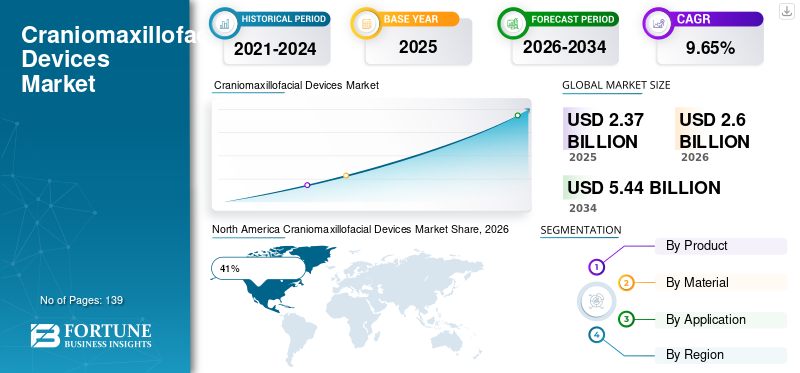
The global craniomaxillofacial devices market size was valued at USD 2.37 billion in 2025. The market is projected to grow from USD 2.60 billion in 2026 to USD 5.43 billion by 2034, exhibiting a CAGR of 9.65% during the forecast period. The market in North America dominated with a revenue share of 41% in 2025.

The craniomaxillofacial devices market is witnessing significant expansion due to increasing demand for advanced reconstructive surgeries, trauma fixation procedures, and facial deformity correction treatments. Rising incidences of cranial injuries, road accidents, sports trauma, and congenital facial abnormalities are accelerating adoption of craniomaxillofacial fixation systems globally. The craniomaxillofacial devices Market report highlights growing use of patient-specific implants, bioresorbable fixation systems, and titanium-based cranial plates across hospitals and specialty surgical centers. Increasing advancements in 3D printing technology, computer-assisted surgical planning, and minimally invasive maxillofacial procedures continue strengthening craniomaxillofacial devices Market and long-term industry expansion worldwide.
The United States craniomaxillofacial devices market is expanding steadily due to increasing facial trauma procedures, advanced neurosurgical infrastructure, and rising demand for reconstructive surgeries. Healthcare providers across the United States are increasingly utilizing customized cranial implants, temporomandibular joint reconstruction systems, and advanced fixation devices to improve surgical outcomes and patient recovery. The craniomaxillofacial devices Market analysis highlights growing adoption of bioabsorbable plates, AI-assisted surgical planning systems, and personalized implants throughout the United States healthcare sector. Rising healthcare expenditure and increasing cosmetic facial reconstruction procedures continue strengthening craniomaxillofacial devices Market outlook in the country.
Download Free sample to learn more about this report.
 Global Market Size & Forecast
 Market Share
 Key Regional Highlights
North America
North America led the market with a 41% share.
Europe
Europe accounted for 29% of the global market.
Asia-Pacific
Asia-Pacific held a 23% market share.
U.S.
The U.S. is a major market supported by advanced neurosurgical and reconstructive care infrastructure.
Japan
Japan accounted for 19% of the Asia-Pacific market, supported by growing demand for advanced craniofacial reconstruction technologies.
Read More

The craniomaxillofacial devices market trends indicate rising adoption of customized implants, patient-specific fixation systems, and 3D printed surgical devices across cranial and maxillofacial reconstruction procedures. Healthcare providers increasingly prioritize minimally invasive surgical techniques and bioresorbable fixation materials to improve patient comfort and reduce post-surgical complications. The craniomaxillofacial devices market research report highlights increasing use of digital surgical planning, virtual simulation technologies, and AI-supported surgical navigation systems in complex cranial reconstruction surgeries.
Download Free sample to learn more about this report.
Another major trend influencing the craniomaxillofacial devices industry analysis is the growing demand for titanium-based implants and advanced temporomandibular joint reconstruction devices. Hospitals and trauma centers are increasingly investing in precision surgical systems and computer-assisted fixation technologies to improve surgical accuracy and reduce operation time. The craniomaxillofacial devices market insights also reveal increasing focus on pediatric craniofacial reconstruction and regenerative biomaterials capable of enhancing bone healing and long-term implant compatibility.
Rising Prevalence of Facial Trauma and Reconstructive Surgeries
Increasing prevalence of facial trauma, sports injuries, cranial fractures, and reconstructive surgeries represents the primary driver supporting craniomaxillofacial devices Market . Rising numbers of road accidents and traumatic facial injuries are significantly increasing demand for advanced cranial fixation systems and facial reconstruction devices worldwide. The craniomaxillofacial devices Market report highlights growing utilization of titanium plates, screws, distraction systems, and customized implants throughout trauma care centers and hospitals.
Healthcare providers are increasingly adopting technologically advanced fixation devices capable of improving surgical precision and reducing patient recovery time. Expansion of cosmetic surgery procedures and increasing awareness regarding reconstructive facial treatments are also supporting market expansion. The craniomaxillofacial devices Market analysis indicates strong demand for minimally invasive surgical technologies and patient-specific implant systems across developed and emerging healthcare markets globally.
High Surgical Procedure Costs and Device Pricing
High procedural costs and expensive implant systems remain major restraints affecting the craniomaxillofacial devices market. Advanced cranial fixation systems, customized implants, and computer-assisted surgical technologies often involve substantial costs that limit adoption across cost-sensitive healthcare environments. The Craniomaxillofacial Devices industry report highlights increasing concern regarding affordability of advanced maxillofacial surgical procedures in developing economies.
Healthcare facilities in low-income regions frequently face budget constraints related to purchasing specialized surgical devices and maintaining advanced surgical infrastructure. In addition, reimbursement limitations and regulatory approval complexities further increase operational challenges for healthcare providers and manufacturers. The craniomaxillofacial devices Market outlook indicates that cost-related barriers may continue restricting widespread adoption of premium fixation systems and customized implant technologies in certain healthcare systems.
Expansion of Personalized and 3D-Printed Implant Technologies
Rapid development of personalized implants and 3D printing technologies presents major opportunities for the craniomaxillofacial devices market. Healthcare providers increasingly seek patient-specific surgical solutions capable of improving implant fit, reducing surgery duration, and enhancing postoperative outcomes. The craniomaxillofacial devices market opportunities are expanding significantly due to increasing adoption of customized titanium implants and bioresorbable fixation systems.
Manufacturers are increasingly investing in AI-assisted surgical planning, digital imaging technologies, and additive manufacturing systems to strengthen precision surgical capabilities. Emerging economies are also increasing investment in trauma care infrastructure and advanced reconstructive surgery programs, further supporting market expansion. The craniomaxillofacial devices market Forecast indicates growing future demand for personalized cranial implants, regenerative biomaterials, and digital surgical planning technologies worldwide.
Complex Regulatory Approvals and Surgical Complications
Stringent regulatory approval procedures and surgical complication risks remain major challenges influencing the craniomaxillofacial devices market. Manufacturers developing cranial implants and fixation systems must comply with extensive safety testing, biocompatibility standards, and clinical evaluation requirements before commercialization. The craniomaxillofacial devices market research report highlights increasing complexity associated with global medical device regulatory frameworks and product approval timelines.
Healthcare providers also face challenges related to implant rejection, infection risks, and long-term postoperative complications during complex craniofacial procedures. Surgical precision requirements and dependence on highly specialized surgeons further increase operational difficulties within healthcare systems. The craniomaxillofacial devices market insights indicate growing emphasis on advanced training programs, robotic-assisted surgical technologies, and improved biomaterials to reduce procedural complications and improve surgical outcomes.
Cranial flap fixation devices account for nearly 38% of the craniomaxillofacial devices market share due to increasing demand for neurosurgical reconstruction procedures and traumatic brain injury treatments. Hospitals and trauma centers increasingly utilize titanium plates, screws, and fixation clamps to stabilize cranial bone flaps following neurosurgical procedures and cranial trauma surgeries. The craniomaxillofacial devices Market analysis highlights strong adoption of lightweight titanium fixation systems and patient-specific cranial implants across advanced surgical facilities.
Healthcare providers increasingly prioritize cranial flap fixation systems capable of improving surgical precision, reducing infection risks, and supporting rapid postoperative recovery. Technological advancements in bioabsorbable fixation materials and computer-assisted surgical planning continue strengthening segment globally. The craniomaxillofacial devices Market report indicates increasing future demand for customized cranial fixation devices and minimally invasive neurosurgical technologies throughout healthcare systems worldwide.
CMF distraction devices represent approximately 34% of the craniomaxillofacial devices market Size due to rising demand for facial deformity correction procedures and pediatric craniofacial reconstruction surgeries. Healthcare providers increasingly utilize distraction osteogenesis systems to treat congenital craniofacial abnormalities, mandibular deficiencies, and facial asymmetry conditions. The craniomaxillofacial devices market research report highlights growing adoption of internal and external distraction systems within reconstructive surgery environments.
Surgeons increasingly prefer advanced distraction technologies capable of delivering precise bone elongation and improved postoperative stability. Rising pediatric craniofacial surgeries and growing awareness regarding corrective facial reconstruction continue supporting market expansion. The craniomaxillofacial devices Market remains strong due to increasing utilization of customized distraction devices and AI-assisted surgical planning systems worldwide.
Temporomandibular joint reconstruction devices account for nearly 28% of the craniomaxillofacial devices market share due to increasing prevalence of temporomandibular disorders, joint degeneration, and facial trauma injuries. Hospitals and specialty surgical centers increasingly deploy advanced temporomandibular implants and fixation systems to improve jaw functionality and patient quality of life. The craniomaxillofacial devices market industry analysis highlights rising adoption of titanium-based joint reconstruction systems and personalized mandibular implants.
Healthcare providers are increasingly investing in minimally invasive TMJ reconstruction technologies and customized prosthetic implants to reduce postoperative complications and improve long-term patient outcomes. Expansion of facial trauma surgeries and cosmetic jaw correction procedures continues strengthening segment globally. The craniomaxillofacial devices Market outlook indicates strong future demand for advanced mandibular reconstruction technologies and patient-specific implant systems.
To know how our report can help streamline your business, Speak to Analyst
Titanium-based devices account for approximately 63% of the craniomaxillofacial devices market due to their superior biocompatibility, corrosion resistance, and long-term structural stability. Healthcare providers widely utilize titanium plates, screws, and mesh implants across cranial fixation and facial reconstruction surgeries due to their durability and compatibility with bone tissue. The craniomaxillofacial devices Market report highlights strong demand for lightweight titanium fixation systems throughout trauma centers and neurosurgical hospitals.
Manufacturers increasingly focus on developing advanced titanium alloys and customized implant systems capable of improving surgical precision and reducing patient recovery time. Titanium-based implants are also highly preferred within complex reconstructive procedures due to their strength and low rejection risk. The craniomaxillofacial devices market trends indicate increasing future adoption of patient-specific titanium implants and 3D-printed fixation technologies globally.
Trauma reconstruction applications account for nearly 46% of the craniomaxillofacial devices market share due to increasing road accidents, sports injuries, and cranial trauma cases worldwide. Hospitals and emergency trauma centers increasingly deploy advanced fixation systems, cranial implants, and distraction devices to restore facial structure and cranial stability following traumatic injuries. The craniomaxillofacial devices Market analysis highlights rising demand for minimally invasive reconstruction technologies and AI-supported surgical navigation systems.
Healthcare providers increasingly prioritize customized implants and bioresorbable fixation devices to improve postoperative outcomes and reduce long-term surgical complications. Growing healthcare investment in trauma care infrastructure and reconstructive surgery programs continues supporting market expansion globally. The craniomaxillofacial devices market opportunities remain strong due to increasing surgical innovation and rising demand for advanced facial trauma management technologies.
North America Craniomaxillofacial Devices Market Share, 2026 (%)
To get more information on the regional analysis of this market, Download Free sample
North America dominates the craniomaxillofacial devices market with nearly 41% market share due to advanced healthcare infrastructure, strong neurosurgical capabilities, and increasing adoption of customized implant technologies. The United States and Canada continue investing heavily in trauma care, reconstructive surgery programs, and advanced cranial fixation systems. The craniomaxillofacial devices Market report highlights rising demand for minimally invasive facial reconstruction technologies and AI-assisted surgical planning solutions across North American healthcare facilities.
Healthcare providers throughout the region increasingly prioritize personalized cranial implants, bioabsorbable fixation systems, and advanced temporomandibular reconstruction devices to improve patient outcomes. Expansion of cosmetic surgery procedures and increasing sports injury cases continue strengthening regional market demand. The craniomaxillofacial devices market insights indicate strong future opportunities for robotic-assisted craniofacial surgery and 3D-printed implant technologies throughout North America.
Europe accounts for approximately 29% of the craniomaxillofacial devices market share due to rising adoption of advanced reconstructive surgery technologies and increasing healthcare investment in trauma management infrastructure. Countries including Germany, the United Kingdom, France, and Italy are increasingly deploying customized fixation systems and digital surgical planning technologies across craniofacial surgery departments. The craniomaxillofacial devices market research report highlights strong regional demand for titanium-based implants and bioresorbable fixation systems.
European healthcare systems increasingly prioritize precision surgical technologies, patient-specific implants, and minimally invasive reconstruction procedures to improve surgical efficiency and patient recovery outcomes. Rising elderly population and increasing facial trauma incidence continue supporting regional market expansion. The craniomaxillofacial devices Market outlook indicates increasing future demand for advanced cranial reconstruction technologies throughout Europe.
Germany represents nearly 33% of Europe’s craniomaxillofacial devices market due to advanced surgical infrastructure and strong adoption of precision craniofacial reconstruction technologies. German hospitals increasingly utilize AI-supported surgical planning systems, customized titanium implants, and advanced distraction devices for trauma reconstruction and facial deformity correction procedures. The craniomaxillofacial devices Market analysis highlights growing investment in minimally invasive reconstructive surgeries and digital surgical technologies throughout Germany.
Healthcare providers increasingly prioritize patient-specific implants and advanced fixation systems capable of improving surgical precision and reducing postoperative recovery time. Expansion of trauma surgery programs and increasing cosmetic facial procedures continue strengthening market nationwide. The craniomaxillofacial devices market trends indicate rising future adoption of 3D printed implants and robotic-assisted facial reconstruction technologies across Germany.
The United Kingdom accounts for approximately 24% of Europe’s craniomaxillofacial devices market due to increasing reconstructive surgery demand and rising healthcare investment in advanced surgical technologies. Hospitals and specialty surgical centers increasingly deploy temporomandibular reconstruction devices, cranial fixation systems, and distraction implants to improve trauma care outcomes. The craniomaxillofacial devices Market report highlights growing adoption of personalized implant technologies and minimally invasive craniofacial procedures throughout the United Kingdom.
Healthcare providers are increasingly investing in digital imaging systems, AI-supported surgical planning platforms, and advanced titanium fixation devices to improve patient recovery and surgical accuracy. Rising prevalence of sports injuries and road accident trauma cases continues supporting regional demand. The craniomaxillofacial devices market Forecast indicates strong future opportunities for customized reconstructive implants and regenerative biomaterial technologies throughout the United Kingdom.
Asia-Pacific holds nearly 23% share in the craniomaxillofacial devices market due to expanding healthcare infrastructure, rising trauma surgery procedures, and increasing adoption of advanced craniofacial reconstruction technologies. Countries including China, Japan, India, and South Korea are increasingly investing in specialized trauma care centers and maxillofacial surgical capabilities. The craniomaxillofacial devices market industry analysis highlights growing regional demand for customized implants, fixation systems, and distraction devices.
Healthcare providers throughout Asia-Pacific increasingly prioritize minimally invasive surgical procedures and personalized cranial implants to improve surgical outcomes and reduce healthcare costs. Expansion of medical tourism and increasing awareness regarding reconstructive surgeries continue strengthening regional market development. The craniomaxillofacial devices market opportunities remain strong due to rising healthcare modernization and increasing trauma care investment across Asia-Pacific economies.
Japan represents nearly 19% of the Asia-Pacific craniomaxillofacial devices market due to advanced medical technology adoption and increasing utilization of precision reconstructive surgery systems. Japanese hospitals increasingly deploy AI-assisted surgical navigation technologies, customized implants, and advanced fixation systems for cranial reconstruction and temporomandibular surgeries. The craniomaxillofacial devices market insights indicate strong demand for minimally invasive facial reconstruction procedures across Japan.
Healthcare providers increasingly focus on patient-specific implants, digital surgical planning, and regenerative biomaterials capable of improving surgical outcomes and reducing recovery time. Expansion of robotic-assisted surgical technologies and aging population healthcare requirements continue supporting market nationwide. The craniomaxillofacial devices Market report highlights increasing investment in personalized craniofacial surgical systems across Japan’s healthcare sector.
China accounts for nearly 41% of the Asia-Pacific craniomaxillofacial devices market due to rapid healthcare modernization and increasing demand for trauma reconstruction procedures. Chinese hospitals and trauma centers increasingly adopt advanced cranial fixation systems, distraction devices, and personalized implants to improve facial reconstruction outcomes. The craniomaxillofacial devices Market in China is supported by rising healthcare expenditure and expanding reconstructive surgery capabilities.
Healthcare providers increasingly prioritize digital surgical planning technologies and minimally invasive craniofacial procedures to strengthen operational efficiency and patient care quality. Growing cosmetic surgery demand and increasing facial trauma incidence continue accelerating market expansion. The craniomaxillofacial devices Market outlook indicates strong future demand for AI-supported surgical technologies and customized implant systems throughout China.
The Rest of World region accounts for nearly 7% of the craniomaxillofacial devices market share due to increasing healthcare infrastructure development and expanding trauma care services across Latin America, the Middle East, and Africa. Hospitals and reconstructive surgery centers increasingly deploy cranial fixation systems, temporomandibular implants, and distraction devices to improve trauma treatment capabilities. The craniomaxillofacial devices market research report highlights rising adoption of minimally invasive surgical technologies throughout developing healthcare systems.
Healthcare providers across emerging economies increasingly invest in trauma management programs and facial reconstruction technologies to address rising accident-related injuries and congenital facial abnormalities. Expansion of private healthcare facilities and medical tourism services continues strengthening market demand. The craniomaxillofacial devices market Forecast indicates increasing opportunities for affordable fixation systems and customized implant technologies throughout developing regions.
The craniomaxillofacial devices market is attracting strong investment due to increasing demand for advanced trauma reconstruction technologies and personalized cranial implant systems. Medical device manufacturers are increasingly investing in AI-assisted surgical planning platforms, bioresorbable fixation materials, and 3D printed implant technologies to improve surgical precision and patient outcomes. The craniomaxillofacial devices market opportunities continue expanding within customized implants and minimally invasive craniofacial reconstruction systems.
Healthcare providers are also increasing investment in robotic-assisted surgery technologies, advanced trauma care infrastructure, and digital imaging systems capable of improving complex surgical procedures. Emerging economies present strong investment opportunities due to rising healthcare modernization and increasing reconstructive surgery demand. The craniomaxillofacial devices market insights indicate growing future investment in regenerative biomaterials, AI-guided surgery systems, and personalized fixation technologies worldwide.
Innovation within the craniomaxillofacial devices market is focused on customized implants, bioresorbable fixation devices, and AI-supported surgical planning technologies. Manufacturers are increasingly developing patient-specific titanium implants, advanced distraction systems, and minimally invasive cranial fixation technologies to improve surgical outcomes and reduce postoperative complications. The craniomaxillofacial devices market trends highlight growing development of 3D printed implants and regenerative biomaterials for craniofacial reconstruction applications.
Companies are also investing in smart surgical navigation platforms, robotic-assisted fixation technologies, and digital workflow optimization systems to strengthen surgical precision and operational efficiency. Expansion of personalized healthcare and precision surgical technologies continues accelerating product innovation globally. The craniomaxillofacial devices market research report indicates increasing focus on customized reconstructive solutions and advanced biomaterial engineering throughout the medical device industry.
The craniomaxillofacial devices Market report provides comprehensive analysis of cranial fixation systems, facial reconstruction devices, temporomandibular implants, distraction technologies, and biomaterial innovations influencing global reconstructive surgery markets. The report evaluates segmentation by product, material, application, and regional outlook while examining trends related to personalized implants, minimally invasive procedures, and AI-supported surgical planning systems. The craniomaxillofacial devices Market analysis also covers trauma reconstruction demand, cosmetic surgery expansion, and technological advancements influencing market development worldwide.
Request for Customization to gain extensive market insights.
The report further examines competitive landscape developments, investment activity, product innovation trends, and healthcare infrastructure modernization supporting craniomaxillofacial devices Market globally. Detailed analysis of trauma surgery procedures, customized implant adoption, and digital surgical technologies is also included within the study. The craniomaxillofacial devices market research report highlights future opportunities associated with regenerative biomaterials, robotic-assisted surgery, and 3D printed craniofacial reconstruction technologies.
Fortune Business Insights says that the global market value stood at USD 2.37 billion in 2025 and is projected to reach USD 5.43 billion by 2034.
The market is expected to exhibit a CAGR of 9.65% during the forecast period of 2026-2034.
Cranial flap fixation devices were the leading product segment, accounting for nearly 38% of the market, supported by rising demand for neurosurgical reconstruction and traumatic brain injury treatments.
Key players include Stryker, Medtronic, Integra LifeSciences, DePuy Synthes, KLS Martin Group, and Zimmer Biomet.
Major trends include growing adoption of customized and 3D-printed implants and increasing use of AI-supported surgical planning and minimally invasive techniques. North America led the market with a 41% share in 2025.


(Offer valid till 31st Oct 2026)
Get 30-60 hrs Free Customization
Expand Regional and Country Coverage, Segments Analysis, Company Profiles, Competitive Benchmarking, and End-user Insights.













.webp)






Get In Touch With Us
US +1 833 909 2966 ( Toll Free )
Receive a tailored pricing based on your needs.
Discuss your questions with our industry experts.
Have questions? Get quick answers before you purchase.

