 Download Free Sample



Get a Quote
Receive a tailored pricing based on your needs.
- Choose license type
- Multiple user options
- Custom scope & coverage
- Fast turnaround
"Designing Growth Strategies is in our DNA"
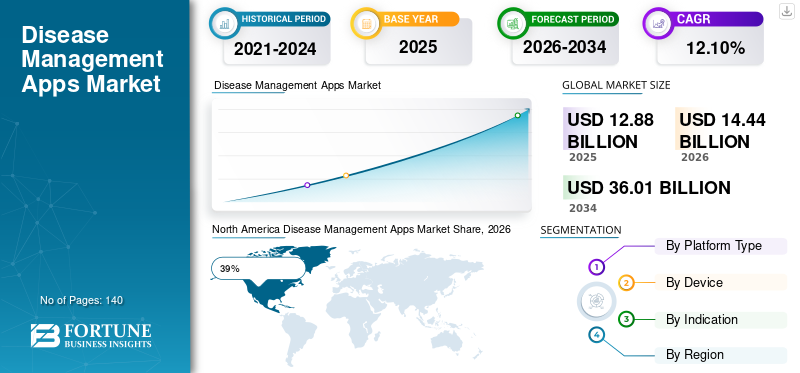
The disease management apps market size was valued at USD 12.88 Billion in 2025. The market is projected to grow from USD 14.44 Billion in 2026 to USD 36.01 Billion by 2034, exhibiting a CAGR of 12.10% during the forecast period.

The disease management apps market has become a critical segment within digital healthcare as healthcare providers, payers, employers, and patients increasingly adopt mobile-based disease monitoring solutions. These applications support chronic disease management, medication adherence, symptom tracking, lifestyle coaching, and remote patient engagement. Rising prevalence of diabetes, obesity, cardiovascular disorders, respiratory diseases, and mental health conditions continues to increase demand for digital disease management platforms. Integration with wearable devices, artificial intelligence, predictive analytics, and cloud-based healthcare systems is improving user engagement and health outcomes. The disease management apps market report indicates growing adoption among healthcare organizations seeking scalable solutions that reduce care gaps and improve patient self-management capabilities.
The United States represents the largest market for disease management applications due to widespread smartphone penetration, advanced digital healthcare infrastructure, and strong adoption of remote patient monitoring technologies. Healthcare providers increasingly utilize disease management apps to support chronic disease populations, particularly patients with diabetes, obesity, cardiovascular diseases, and hypertension. More than one-third of diabetes patients globally already use mobile health applications for self-management, reflecting strong demand patterns that are highly visible within the U.S. healthcare ecosystem. Employer-sponsored wellness initiatives, value-based care programs, and digital therapeutic adoption continue to strengthen the disease management apps market Size across the country.
Download Free sample to learn more about this report.
 Global Market Size & Forecast
 Market Share
 Key Regional Highlights
North America
North America led the market with a 39% share, supported by strong adoption of digital health solutions and disease management technologies.
Europe
Europe accounted for 28% of the market, driven by increasing adoption of digital healthcare and remote disease management solutions.
Asia-Pacific
Asia-Pacific held a 25% share, supported by expanding digital health infrastructure and growing demand for accessible healthcare applications.
U.S
The U.S. remains a key market, supported by advanced digital healthcare infrastructure and strong adoption of disease management applications.
Japan
Japan accounted for approximately 21% of the Asia-Pacific market, supported by growing adoption of digital health technologies and remote care solutions.
Read More

Artificial intelligence is transforming the disease management apps market through personalized coaching, predictive risk assessment, and automated health recommendations. Modern applications increasingly analyze patient behavior patterns, biometric data, medication adherence, and symptom progression to deliver customized interventions. AI-powered virtual assistants are improving patient engagement while reducing the burden on healthcare professionals. The disease management apps market analysis highlights growing integration of machine learning algorithms capable of supporting chronic disease monitoring on a continuous basis.
Download Free sample to learn more about this report.
Another major trend involves the integration of wearable devices and remote patient monitoring systems. Disease management platforms are increasingly connected with smartwatches, glucose monitors, blood pressure monitors, and fitness trackers. These integrations enable real-time health monitoring and data sharing between patients and healthcare providers. Demand for digital therapeutics, behavior modification tools, and preventive health applications is also expanding. Organizations seeking disease management apps market Insights are increasingly focused on platforms that combine remote monitoring, coaching, telehealth, and analytics within a single ecosystem.
Rising Prevalence of Chronic Diseases and Increasing Demand for Self-Management Solutions
The growing burden of chronic diseases remains the primary growth driver for the disease management apps market growth. Diabetes, obesity, hypertension, cardiovascular diseases, and respiratory disorders require long-term monitoring and continuous patient engagement. Traditional healthcare systems face challenges in delivering continuous support to large patient populations, creating significant demand for digital disease management tools.
Disease management applications provide medication reminders, symptom tracking, nutritional guidance, physical activity monitoring, and personalized coaching. These features improve patient adherence and encourage proactive health management. Healthcare organizations increasingly deploy digital platforms to reduce hospital admissions and improve outcomes. The widespread availability of smartphones and mobile internet access has further accelerated adoption. disease management apps market trends indicate that healthcare providers are increasingly incorporating mobile health technologies into chronic care management programs. Research also highlights that mobile health applications improve patient motivation and support better disease management behaviors among chronic disease populations.
Data Privacy Concerns and Regulatory Compliance Requirements
Despite strong adoption trends, data privacy and security concerns continue to restrain the disease management apps market outlook. Disease management applications collect highly sensitive health information, including medical history, medication usage, biometric data, and behavioral information. Healthcare organizations and consumers remain concerned about cybersecurity risks and unauthorized access to personal health records.
Compliance requirements across different countries create additional complexity for app developers. Maintaining regulatory compliance, implementing secure cloud infrastructure, and ensuring interoperability with healthcare systems require significant investment. Many users remain cautious about sharing health information through mobile applications due to concerns regarding data misuse. Furthermore, healthcare providers may hesitate to recommend applications lacking robust privacy frameworks. These factors can slow implementation among healthcare organizations, particularly in highly regulated healthcare environments where patient confidentiality remains a critical operational priority.
Expansion of Ai-Driven Personalized Healthcare Applications
Artificial intelligence presents substantial opportunities for the disease management apps market Opportunities landscape. AI technologies enable disease management platforms to provide individualized recommendations based on patient behavior, historical health data, medication adherence, and lifestyle patterns. Personalized healthcare experiences improve patient engagement and long-term adherence to treatment programs.
Healthcare providers increasingly seek intelligent disease management platforms capable of predicting health risks before clinical deterioration occurs. AI-powered analytics can identify patients requiring intervention and support more effective resource allocation. Emerging technologies such as conversational AI, digital therapeutics, predictive analytics, and automated coaching systems are creating new business opportunities for application developers. Organizations investing in intelligent disease management ecosystems are expected to benefit from expanding demand among healthcare providers, insurers, employers, and government healthcare programs.
Maintaining Long-Term Patient Engagement and Adherence
One of the most significant challenges facing the disease nanagement Apps industry Analysis is sustaining long-term user engagement. Many patients download health applications but discontinue usage after initial adoption. Chronic disease management requires consistent participation, making retention a critical performance indicator.
Users frequently experience application fatigue when required to manually enter health information, monitor multiple platforms, or navigate complex interfaces. Healthcare providers also require evidence demonstrating long-term effectiveness before integrating applications into clinical workflows. Maintaining engagement across diverse patient populations requires ongoing innovation in user experience, gamification, behavioral science, and personalization. Market participants must continuously improve usability and deliver measurable health benefits to maintain active user participation. Growing competition within the digital health ecosystem further increases pressure on developers to differentiate their offerings and demonstrate clinical value.
The iOS segment accounts for approximately 42% of the disease management apps market Share. Apple device users generally demonstrate higher engagement with health applications and wearable-integrated healthcare ecosystems. Disease management applications on iOS frequently incorporate advanced health monitoring features, integration with wearable devices, and secure health data storage capabilities.
Healthcare organizations targeting premium consumer segments often prioritize iOS-compatible disease management solutions due to strong adoption among health-conscious users. Chronic disease management programs focused on diabetes, cardiovascular conditions, obesity, and wellness management continue to drive demand. The disease management apps market Research Report indicates that iOS applications are widely utilized in remote monitoring programs where seamless integration with connected health devices is essential.
The Android segment holds approximately 58% of the disease management apps market Share, making it the dominant platform globally. Android’s broad device availability, affordability, and large installed user base support widespread adoption across developed and emerging markets.
Disease management app developers increasingly prioritize Android deployment due to the platform's extensive reach among chronic disease populations. Healthcare providers, employers, and public health organizations frequently utilize Android-compatible applications for large-scale disease management initiatives. The platform’s accessibility enables broader deployment of medication management, symptom monitoring, lifestyle coaching, and preventive health programs. Android remains particularly important in expanding access to digital healthcare services among underserved populations.
Smartphones account for approximately 76% of the disease management apps market Share. The widespread adoption of smartphones has transformed healthcare delivery by enabling continuous disease monitoring and patient engagement. Most disease management applications are optimized for smartphones because users carry them throughout the day, allowing frequent interaction and real-time health tracking.
Smartphone-based disease management applications support medication reminders, symptom logging, nutrition tracking, exercise monitoring, teleconsultations, and health education. Healthcare providers increasingly rely on smartphone applications to improve patient adherence and facilitate remote care delivery. The Disease Management Apps industry report identifies smartphones as the primary access channel for chronic disease management solutions due to convenience, accessibility, and integration capabilities with wearable technologies.
Tablets represent approximately 24% of the disease management apps market Share. While less dominant than smartphones, tablets remain important within clinical environments, senior care settings, and chronic disease management programs requiring larger displays and enhanced usability.
Healthcare professionals frequently utilize tablets during patient consultations, care coordination activities, and educational sessions. Patients managing complex chronic conditions may prefer tablet interfaces for reviewing health reports, treatment plans, and monitoring dashboards. Tablet-based disease management solutions are particularly effective among older populations requiring larger screens and simplified navigation. As digital health ecosystems continue to evolve, tablet applications remain an important complementary platform within comprehensive disease management strategies.
To know how our report can help streamline your business, Speak to Analyst
Obesity-focused applications account for approximately 39% of the disease management apps market Share. Rising obesity prevalence globally has increased demand for applications supporting weight management, nutritional guidance, physical activity tracking, and behavioral coaching.
Modern obesity management applications incorporate AI-driven recommendations, calorie tracking, personalized exercise plans, and community engagement features. Employers, healthcare providers, and insurers increasingly deploy obesity-focused digital health solutions as part of preventive healthcare programs. disease management apps market forecast assessments indicate sustained demand for obesity management applications due to increasing awareness of lifestyle-related health risks and the growing emphasis on preventive healthcare.
Diabetes applications account for approximately 35% of the disease management apps market Share. Diabetes management remains one of the most mature segments within digital health due to the condition’s continuous monitoring requirements. These applications support glucose monitoring, medication adherence, insulin tracking, dietary management, and physician communication.
Healthcare providers increasingly recommend diabetes management applications as part of comprehensive care programs. Integration with continuous glucose monitoring devices and wearable technologies enhances real-time disease management capabilities. The disease management apps market Insights landscape shows diabetes applications continuing to attract investment due to their ability to improve patient outcomes, reduce complications, and support long-term disease control.
North America Disease Management Apps Market Share, 2026 (%)
To get more information on the regional analysis of this market, Download Free sample
North America accounts for 39% of the global disease management apps market Share. The region benefits from advanced healthcare infrastructure, high smartphone adoption, strong digital health investments, and widespread acceptance of remote patient monitoring technologies. Healthcare providers increasingly incorporate disease management applications into value-based care programs and chronic disease management initiatives.
The region's market is supported by growing prevalence of chronic conditions, increasing healthcare expenditures, and expanding use of digital therapeutics. Employers, insurers, and healthcare systems continue investing in mobile health technologies to improve patient engagement and reduce healthcare utilization. Strong integration between healthcare providers and digital health platforms positions North America as a leading market for disease management solutions.
Europe holds 28% of the disease management apps market Share. Regional growth is supported by digital healthcare modernization initiatives, increasing chronic disease prevalence, and expanding telehealth adoption. European healthcare systems increasingly recognize the value of digital disease management tools in improving care accessibility and patient outcomes.
Public healthcare programs across the region continue integrating mobile health technologies into chronic disease management frameworks. The focus on preventive healthcare, aging populations, and healthcare efficiency improvements contributes to sustained market expansion. disease management apps market Opportunities remain particularly strong in countries with advanced digital health policies and high healthcare technology adoption.
Germany represents approximately 27% of the European disease management apps market. The country benefits from a highly developed healthcare infrastructure and strong governmental support for healthcare digitization. Chronic disease management remains a major healthcare priority due to rising prevalence of diabetes, cardiovascular disorders, and obesity-related conditions.
Healthcare providers increasingly utilize mobile health applications for patient monitoring, medication adherence, and lifestyle intervention programs. Digital healthcare initiatives have accelerated adoption of mobile health technologies across hospitals, clinics, and outpatient settings. Disease management applications are increasingly integrated with electronic health records and telemedicine platforms, supporting more coordinated patient care. The German market continues to attract investment from digital health innovators focused on chronic disease management solutions.
The United Kingdom accounts for approximately 23% of the European disease management apps market. Demand is supported by increasing utilization of digital healthcare services and growing emphasis on preventive healthcare strategies. Healthcare providers are increasingly deploying mobile applications to support chronic disease populations and improve patient engagement.
Disease management applications are utilized for diabetes management, weight control, cardiovascular monitoring, medication adherence, and mental health support. The country's digital transformation initiatives continue encouraging healthcare organizations to adopt technology-driven care models. Growing patient acceptance of remote monitoring and digital consultations further strengthens market prospects for disease management applications across the United Kingdom.
Asia-Pacific accounts for 25% of the disease management apps market Share. Rapid smartphone penetration, growing healthcare awareness, and increasing prevalence of chronic diseases contribute significantly to regional growth. Governments and healthcare providers are increasingly utilizing digital technologies to improve healthcare accessibility and disease management outcomes.
The region's large population base creates substantial opportunities for scalable digital health platforms. Expanding internet connectivity, healthcare digitization initiatives, and increasing investment in healthcare technology startups support market expansion. Disease management applications are becoming essential tools for managing chronic diseases across urban and rural populations.
Japan represents approximately 21% of the Asia-Pacific disease management apps market. The country's aging population creates significant demand for chronic disease management solutions. Healthcare providers increasingly adopt digital health technologies to support long-term disease monitoring and reduce healthcare system burden.
Disease management applications are commonly used for diabetes monitoring, cardiovascular disease management, medication adherence, and elderly care support. Integration with wearable technologies and remote monitoring systems is particularly advanced. Japan’s focus on healthcare innovation and preventive medicine continues driving adoption of sophisticated disease management applications across healthcare settings.
China accounts for approximately 36% of the Asia-Pacific disease management apps market. The country benefits from a large smartphone user base, expanding digital healthcare infrastructure, and increasing government support for healthcare digitization. Rising prevalence of chronic diseases has created strong demand for scalable disease management solutions.
Healthcare providers and technology companies are actively developing AI-enabled disease management applications capable of supporting large patient populations. Remote monitoring, digital therapeutics, and personalized healthcare services continue expanding across the country. The Chinese market remains one of the most dynamic opportunities within the global disease management apps market.
Rest of World accounts for 8% of the disease management apps market Share. Markets across Latin America, the Middle East, and Africa are gradually increasing adoption of digital healthcare technologies. Smartphone penetration and internet accessibility continue improving, creating favorable conditions for disease management application deployment.
Healthcare systems in these regions increasingly utilize mobile technologies to expand healthcare access and improve chronic disease outcomes. Public health programs focused on diabetes, cardiovascular disease, and obesity management are supporting demand for disease management applications. Continued investment in digital healthcare infrastructure is expected to strengthen adoption across emerging markets.
Investment activity within the disease management apps market continues expanding as healthcare organizations prioritize digital transformation and chronic disease management. Venture capital firms, healthcare technology investors, insurers, and strategic healthcare companies are increasingly funding disease management platforms focused on diabetes, obesity, cardiovascular diseases, and behavioral health.
Significant opportunities exist in artificial intelligence, predictive analytics, digital therapeutics, wearable integration, and personalized healthcare ecosystems. Healthcare providers seek platforms capable of improving clinical outcomes while reducing operational costs. Employers and insurers are also investing in disease management applications to support workforce health initiatives and chronic disease prevention programs. Emerging markets present additional opportunities due to increasing smartphone adoption and expanding digital healthcare infrastructure. Companies capable of delivering scalable, evidence-based, and interoperable solutions are expected to attract sustained investment interest across the disease management apps market.
Innovation remains a defining characteristic of the disease management apps market. New product development focuses heavily on AI-driven coaching systems, personalized health recommendations, predictive disease monitoring, and wearable integration capabilities. Developers are introducing advanced analytics tools capable of identifying health deterioration risks before clinical intervention becomes necessary.
Disease management applications increasingly incorporate conversational AI, remote monitoring dashboards, digital therapeutics, medication adherence systems, and behavioral health support tools. Real-time integration with glucose monitors, blood pressure devices, fitness trackers, and connected health ecosystems continues improving platform effectiveness. Developers are also emphasizing user engagement through gamification, personalized coaching, and automated health insights. These innovations are enhancing patient participation and supporting broader adoption across healthcare systems, employers, and insurance organizations.
The disease management apps market report provides comprehensive analysis of industry trends, market drivers, restraints, opportunities, challenges, competitive landscape, technological developments, and regional performance. The report evaluates platform categories, device categories, application segments, and major disease management use cases.
Request for Customization to gain extensive market insights.
Coverage includes analysis of chronic disease management applications focused on diabetes, obesity, cardiovascular disease, respiratory disorders, and wellness management. The report also examines healthcare digitization trends, mobile health adoption patterns, artificial intelligence integration, remote monitoring technologies, and investment activity. Detailed assessment of regional markets, competitive positioning, innovation strategies, and future opportunities provides stakeholders with actionable insights. The disease management apps market Research Report supports strategic decision-making for healthcare providers, technology companies, investors, insurers, employers, and policymakers seeking to understand evolving industry dynamics.
Fortune Business Insights says that the global market value stood at USD 12.88 billion in 2025 and is projected to reach USD 36.01 billion by 2034.
The market is expected to exhibit a CAGR of 12.10% during the forecast period of 2026-2034.
The Android segment led the platform type segment with approximately 58% market share, supported by its broad device availability, affordability, and large installed user base.
Key players include Fitbit LLC., Healthy.io Ltd, MyFitnessPal, Inc., Noom, Inc., Azumio Inc., and Medisafe.
Key trends include the growing integration of AI for personalized coaching and predictive risk assessment, along with wearable-device and remote patient monitoring integration. North America led the market with a 39% share in 2026.


(Offer valid till 31st Oct 2026)
Get 30-60 hrs Free Customization
Expand Regional and Country Coverage, Segments Analysis, Company Profiles, Competitive Benchmarking, and End-user Insights.





.webp)



Get In Touch With Us
US +1 833 909 2966 ( Toll Free )
Receive a tailored pricing based on your needs.
Discuss your questions with our industry experts.
Have questions? Get quick answers before you purchase.

