Folding Furniture Market Size, Share & Industry Analysis, By Product (Tables & Chairs, Sofas, Beds, Others), By Distribution Channel (Offline, Online), By Region, and Regional Forecast, 2026-2034
 Download Free Sample
Folding Furniture Market Overview
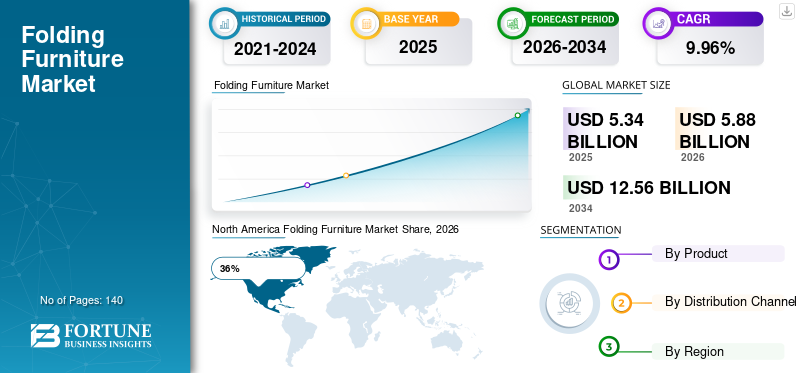
The global folding furniture market size was valued at USD 5.34 billion in 2025. The market is projected to grow from USD 5.88 billion in 2026 to USD 12.56 billion by 2034, exhibiting a CAGR of 9.96% during the forecast period.

The folding furniture market is witnessing strong expansion due to increasing urbanization, shrinking residential spaces, and rising consumer preference for multifunctional home solutions. Folding furniture products are designed to maximize space efficiency while offering portability, flexibility, and modern aesthetics for residential and commercial applications. The folding furniture market report highlights growing demand for foldable chairs, modular beds, compact tables, and convertible sofas across apartments, offices, educational institutions, and hospitality environments. Manufacturers are focusing on lightweight materials, ergonomic designs, and durable structures to improve product performance. The folding furniture market analysis also indicates rising adoption of smart furniture solutions integrated with storage and mobility features.
The USA folding furniture market is growing steadily because consumers increasingly prefer compact and flexible furniture solutions for urban apartments, remote workspaces, and multifunctional living environments. Rising home renovation activities, expanding e-commerce furniture sales, and demand for portable furniture products are strengthening market expansion across the country. The folding furniture industry report identifies growing interest in foldable office desks, space-saving dining sets, and convertible sofa beds among residential and commercial buyers. Hospitality businesses, coworking spaces, and educational institutions are also investing in folding furniture products to optimize interior layouts and improve operational flexibility across modern infrastructure projects.
Download Free sample to learn more about this report.
Folding Furniture Market Key Takeaways
 Global Market Size & Forecast
- 2025 Market Size: USD 5.34 Billion
- 2026 Market Size: USD 5.88 Billion
- 2034 Forecast Market Size: USD 12.56 Billion
- CAGR: 9.96% from 2026-2034
 Market Share
- North America dominated with a revenue share of 36% in 2025.
- Tables & Chair held the largest product segment share at approximately 39%.
- Offline distribution accounted for the largest share at approximately 67%.
 Key Regional Highlights
North America
North America led the market with a 36% regional share.
Europe
Europe accounted for 29% of the global market, supported by demand for space-efficient furniture.
Asia-Pacific
Asia-Pacific held a significant 27% share, driven by urbanization and compact living spaces.
U.S.
Demand is supported by residential, commercial, and multifunctional furniture applications.
Japan
Market growth is supported by compact housing and demand for space-saving furniture solutions.
Read More

Folding Furniture Market Latest Trends
The folding furniture market trends are increasingly shaped by smart living concepts, minimalist interior design preferences, and multifunctional furniture innovation. Consumers are actively seeking furniture solutions that combine portability, comfort, and storage optimization within compact residential spaces. Foldable desks, wall-mounted beds, modular dining tables, and convertible seating systems are gaining popularity across urban households and remote working environments. The folding furniture market research report indicates rising demand for lightweight aluminum frames, engineered wood products, and eco-friendly materials that improve durability while maintaining portability.
Download Free sample to learn more about this report.
Another major trend influencing the folding furniture market outlook is the rapid expansion of online furniture retail platforms and customization services. Consumers are increasingly purchasing folding furniture through digital channels due to wider product availability, virtual visualization tools, and doorstep delivery convenience. Manufacturers are integrating modern aesthetics, hidden storage compartments, and easy assembly mechanisms into new product lines. Growing adoption of portable furniture within hospitality, event management, educational institutions, and recreational sectors is also contributing to strong market demand. Sustainable manufacturing practices and recyclable materials are further becoming important competitive differentiators within the folding furniture industry analysis landscape.
Folding Furniture Market Dynamics
DRIVER
Rising Demand for Space-Saving and Multifunctional Furniture
Increasing urbanization and shrinking residential spaces are major drivers accelerating folding furniture market growth globally. Consumers living in apartments, compact homes, and urban housing projects increasingly prefer foldable furniture products that maximize available space without compromising functionality. The folding furniture market analysis highlights rising adoption of foldable beds, convertible sofas, compact workstations, and modular seating systems among modern households and commercial users.
Remote working culture and flexible office arrangements are also contributing significantly to market expansion. Businesses and residential consumers require adaptable furniture products capable of supporting multifunctional living and working environments. Hospitality facilities, educational institutions, and coworking spaces are investing in folding furniture to improve operational flexibility and interior space optimization. Manufacturers are responding with innovative designs featuring portability, storage integration, and lightweight construction. The growing influence of minimalist interior trends and smart living concepts further supports long-term folding furniture market opportunities across residential and commercial sectors.
RESTRAINT
Concerns Regarding Durability and Product Stability
Durability concerns remain one of the primary restraints affecting the folding furniture market. Many consumers perceive foldable furniture products as less durable compared to traditional furniture due to repeated folding mechanisms and lightweight structural designs. Product instability, hinge failures, and reduced load-bearing capacity can negatively impact consumer confidence, particularly in lower-priced product categories. The folding furniture market Forecast indicates that maintaining durability while ensuring portability remains a key challenge for manufacturers.
High-quality folding furniture products often require advanced engineering, premium materials, and reinforced mechanisms, increasing production costs and retail pricing. Cost-sensitive consumers may opt for lower-priced alternatives with shorter product life cycles, impacting brand reputation and customer satisfaction. Additionally, some commercial buyers remain hesitant to adopt folding furniture extensively due to concerns regarding maintenance requirements and long-term structural performance in high-usage environments such as hotels, schools, and event facilities.
OPPORTUNITY
Growth of Smart Homes and Modular Living Concepts
The rapid expansion of smart homes and modular living environments presents significant opportunities for the folding furniture market. Consumers increasingly prefer furniture systems that combine flexibility, technology integration, and efficient space utilization. Smart folding beds, modular storage furniture, and convertible office furniture are becoming highly attractive among urban households and premium residential projects. The folding furniture market insights indicate growing demand for furniture products supporting dynamic living arrangements and multifunctional interiors.
Manufacturers are also exploring opportunities within hospitality, recreational vehicles, coworking spaces, and educational infrastructure where portable and adaptable furniture solutions are essential. Expansion of online furniture retail and direct-to-consumer sales platforms further enables companies to reach wider customer bases globally. Increasing environmental awareness is encouraging investment in sustainable materials, recyclable components, and eco-friendly manufacturing techniques. These developments are creating new growth avenues for innovative furniture brands and modular interior solution providers across global markets.
CHALLENGE
Intense Competition and Fluctuating Raw Material Costs
The folding furniture market faces strong competitive pressure from both organized furniture manufacturers and low-cost regional suppliers. Intense market competition often leads to pricing pressure, reduced profit margins, and product commoditization. Companies must continuously invest in design innovation, ergonomic improvements, and branding strategies to differentiate products within highly competitive retail environments. The folding furniture industry analysis highlights growing challenges associated with maintaining quality standards while remaining price competitive.
Fluctuating raw material prices also create operational difficulties for furniture manufacturers. Costs associated with wood, steel, aluminum, plastic composites, and upholstery materials are highly sensitive to global supply chain disruptions and transportation expenses. Manufacturers must balance affordability, durability, and design quality while managing production costs effectively. Additionally, changing consumer preferences and rapidly evolving interior design trends require constant product development and inventory adaptation, increasing operational complexity across the folding furniture market.
Folding Furniture Market Segmentation
By Product
The Tables & Chair segment accounts for approximately 39% of the global folding furniture market share because foldable seating and table solutions are widely used across residential, commercial, educational, and event management applications. Consumers increasingly prefer compact folding dining tables, portable office desks, and collapsible chairs that offer convenience and efficient space utilization. The folding furniture market report highlights rising adoption of lightweight aluminum and engineered wood folding furniture products among urban households and hospitality businesses.
Commercial facilities including banquet halls, coworking spaces, educational institutions, and conference centers are major contributors to segment growth due to their requirement for portable and flexible seating arrangements. Manufacturers are introducing ergonomic designs, adjustable height features, and modern aesthetic finishes to improve product functionality and customer appeal. Expansion of remote working environments and compact apartment living continues to strengthen long-term demand for folding tables and chairs globally.
The Sofa segment represents nearly 24% of the global folding furniture market share because consumers increasingly seek multifunctional furniture solutions capable of supporting both seating and sleeping applications. Foldable sofa beds and modular sectional sofas are highly popular within urban apartments, studio homes, and hospitality accommodations where maximizing floor space is essential. The folding furniture market analysis indicates rising demand for convertible sofa systems integrated with storage compartments and adjustable configurations.
Manufacturers are focusing on premium upholstery materials, lightweight structural frames, and enhanced comfort mechanisms to improve consumer adoption. Hospitality providers, serviced apartments, and rental property operators are increasingly investing in foldable sofa systems to improve space efficiency and operational flexibility. Growth in short-term rental accommodations and compact residential developments further contributes to rising demand for folding sofa products across global furniture markets.
The Beds segment holds approximately 21% of the folding furniture market share because foldable beds and wall-mounted sleeping systems provide highly efficient space optimization solutions for compact residential environments. Consumers living in urban apartments and multifunctional living spaces increasingly prefer Murphy beds, foldable cots, and modular sleeping systems that can be concealed when not in use. The folding furniture market research report highlights growing demand for smart foldable beds with integrated storage and automated operation mechanisms.
Hospitality facilities, healthcare institutions, and recreational accommodation providers are also contributing to segment expansion by adopting portable bed systems for temporary and flexible sleeping arrangements. Manufacturers are introducing advanced hydraulic systems, durable metal frames, and customizable design options to improve safety and user convenience. Expansion of minimalist interior design concepts and smart home integration continues to support growth within the folding beds segment.
The Others segment accounts for approximately 16% of the global folding furniture market share and includes foldable cabinets, shelving systems, storage units, and outdoor furniture products. Consumers increasingly prefer portable storage and modular organization systems for residential and recreational applications. Foldable furniture products designed for camping, outdoor dining, and temporary workspace arrangements are also witnessing increasing adoption across multiple consumer categories.
The folding furniture market outlook for this segment remains strong because of rising interest in outdoor recreational activities, mobile living concepts, and multifunctional interior arrangements. Manufacturers are investing in weather-resistant materials, easy-fold mechanisms, and lightweight structures to improve product versatility and transportation convenience. Growth of portable living solutions and outdoor hospitality infrastructure continues to create new opportunities within this segment globally.
To know how our report can help streamline your business, Speak to Analyst
By Distribution Channel
The Offline segment accounts for approximately 67% of the global folding furniture market share because consumers often prefer physical evaluation of furniture products before purchasing. Furniture showrooms, specialty retail outlets, and large-format home furnishing stores continue to dominate furniture sales due to their ability to provide product demonstrations, customization services, and immediate purchasing support. The folding furniture market insights highlight strong demand within offline retail environments for premium foldable furniture and multifunctional interior solutions.
Commercial buyers, including hotels, educational institutions, and office operators, frequently rely on offline channels for bulk procurement and customized furniture solutions. In-store consultations and product comparison opportunities also contribute to consumer preference for traditional retail channels. Manufacturers are expanding branded retail networks and experience centers to strengthen customer engagement and improve product visibility across regional furniture markets.
The Online segment represents approximately 33% of the global folding furniture market share because digital commerce platforms are transforming furniture purchasing behavior globally. Consumers increasingly prefer online furniture shopping due to convenience, extensive product variety, competitive pricing, and home delivery services. The folding furniture market trends indicate rising use of augmented reality visualization tools and virtual room planning technologies that enhance online purchasing experiences.
E-commerce platforms are enabling manufacturers to directly reach urban consumers seeking compact and multifunctional furniture products. Online sales channels are especially popular among younger consumers, renters, and remote workers looking for affordable and stylish folding furniture solutions. Expansion of digital payment systems, quick delivery services, and easy return policies continues to strengthen online segment growth across global furniture markets.
Folding Furniture Market Regional Outlook
North America
North America Folding Furniture Market Share, 2026 (%)
To get more information on the regional analysis of this market, Download Free sample
North America holds approximately 36% of the global folding furniture market share because consumers across the region increasingly prefer flexible living arrangements, modular interiors, and multifunctional furniture products. Urban apartments, compact homes, and remote work environments are driving strong demand for foldable desks, portable seating systems, and convertible sleeping furniture. The folding furniture market report highlights rising adoption of premium folding furniture products across residential and commercial applications.
Hospitality businesses, educational institutions, and event management companies are also major consumers of portable furniture systems within North America. Manufacturers are focusing on ergonomic design innovation, lightweight materials, and sustainable production methods to strengthen product differentiation. Growth in home renovation projects and expanding online furniture retail channels continue to support long-term folding furniture market growth across the region.
Europe
Europe accounts for approximately 29% of the global folding furniture market share due to increasing urban population density and strong demand for space-efficient home furnishings. Consumers across European countries prefer modern minimalist interiors and multifunctional living arrangements that support compact urban lifestyles. The Folding Furniture Industry Report identifies strong demand for foldable dining furniture, wall-mounted beds, and modular office furniture within residential and commercial sectors.
Environmental sustainability is also a major purchasing factor influencing furniture demand across Europe. Manufacturers are investing in recyclable materials, low-emission production processes, and eco-friendly furniture designs to align with evolving consumer preferences. Expansion of coworking environments, student housing projects, and compact residential developments continues to strengthen market opportunities throughout the region.
Germany Folding Furniture Market
Germany represents approximately 28% of the European folding furniture market share because of its strong furniture manufacturing sector and high consumer demand for functional interior solutions. German consumers increasingly prefer premium foldable furniture products featuring durability, ergonomic design, and modern aesthetics. The folding furniture market analysis highlights growing adoption of modular home office furniture and convertible living systems across urban residential projects.
Manufacturers in Germany are focusing on sustainable wood sourcing, advanced engineering, and precision manufacturing technologies to improve product quality and environmental performance. Commercial sectors including hospitality, educational infrastructure, and corporate workspaces are also contributing to rising demand for portable furniture systems. Continuous innovation in modular living concepts and smart furniture integration supports strong market development across Germany.
United Kingdom Folding Furniture Market
The United Kingdom accounts for nearly 24% of the European folding furniture market share because compact urban housing and flexible living arrangements are increasingly common throughout the country. Consumers are actively investing in multifunctional furniture products designed for small apartments, remote workspaces, and hybrid living environments. The folding furniture market Forecast indicates rising demand for foldable office desks, storage-integrated furniture, and portable seating systems across residential markets.
Online furniture retail platforms play a major role in market expansion within the United Kingdom due to strong digital purchasing behavior and growing home improvement activities. Hospitality operators, educational institutions, and coworking spaces are also investing in modular furniture solutions to optimize interior layouts and improve operational flexibility. Rising interest in sustainable furniture materials and minimalist interior design trends continues to support market growth.
Asia-Pacific
Asia-Pacific holds approximately 27% of the global folding furniture market share due to rapid urbanization, rising apartment living, and increasing disposable income across major economies. Countries including China, India, Japan, and South Korea are witnessing strong demand for compact and multifunctional furniture products designed for urban residential environments. The folding furniture market Research Report highlights expanding adoption of foldable furniture across residential, hospitality, and educational sectors throughout Asia-Pacific.
Manufacturers are introducing affordable, lightweight, and customizable furniture products tailored to diverse consumer preferences across the region. Expansion of online retail platforms and growth of smart city infrastructure projects are also contributing to increasing furniture demand. Rising interest in modular living arrangements and modern interior aesthetics continues to create strong folding furniture market opportunities across Asia-Pacific economies.
Japan Folding Furniture Market
Japan accounts for approximately 21% of the Asia-Pacific folding furniture market share because compact living environments and minimalist interior concepts are deeply integrated into consumer lifestyles. Japanese households increasingly prefer foldable furniture solutions that maximize available space while maintaining aesthetic simplicity and functionality. The folding furniture market insights indicate strong demand for wall-mounted beds, compact dining systems, and modular storage furniture throughout urban residential markets.
Manufacturers are focusing on lightweight materials, automation features, and space-efficient engineering to meet evolving consumer expectations. Hospitality businesses and micro-apartment developments are also contributing to market growth by investing in multifunctional furniture systems. Continued innovation in smart furniture design and modular interior architecture supports long-term expansion of the folding furniture market in Japan.
China Folding Furniture Market
China represents approximately 46% of the Asia-Pacific folding furniture market share because rapid urbanization and expanding middle-class populations are significantly increasing demand for affordable space-saving furniture solutions. Urban residential projects, rental apartments, and compact housing developments are major contributors to folding furniture adoption across the country. The folding furniture market outlook highlights strong growth in foldable desks, modular sofas, and portable storage systems among younger consumers.
Domestic manufacturers are expanding production capacity and investing in modern furniture design technologies to address rising demand. Online retail platforms and direct-to-consumer sales channels are playing a major role in increasing product accessibility across urban and semi-urban markets. Growing home renovation activities and rising popularity of multifunctional interior design concepts continue to strengthen folding furniture market growth throughout China.
Rest of World
The Rest of World region accounts for approximately 8% of the global folding furniture market share due to increasing urban development and rising consumer awareness regarding space-efficient furniture solutions. Countries across Latin America, the Middle East, and Africa are gradually adopting modular living concepts and multifunctional furniture systems within residential and hospitality sectors. The folding furniture market analysis indicates growing investment in urban housing infrastructure and modern interior furnishing projects.
Hospitality expansion, educational infrastructure development, and rising commercial office construction are contributing to increased demand for portable furniture systems across emerging economies. Manufacturers are focusing on affordable product ranges and durable materials suitable for varying climate conditions and consumer budgets. Continued growth in urban housing projects and flexible workspace adoption is expected to support future market expansion within these regions.
List of Top Folding Furniture Companies
- Flexsteel Industries, Inc.
- Haworth, Inc.
- Meco Corporation
- Dorel Industries, Inc.
- Murphy Wall Beds Hardware, Inc.
- Ashley Furniture Industries
- La-Z-Boy, Inc.
- Leggett & Platt, Inc.
- Resource Furniture
- Sauder Woodworking Company
- Inter IKEA Systems B.V.
Top Two Companies by Market Share
- Inter IKEA Systems B.V. – 17%
- Ashley Furniture Industries – 13%
Investment Analysis and Opportunities
The folding furniture market is attracting strong investment activity due to rising demand for multifunctional home solutions and compact interior design concepts. Furniture manufacturers are investing heavily in lightweight materials, modular product engineering, and automated production systems to improve scalability and cost efficiency. Expansion of urban residential infrastructure and growing consumer preference for space-saving products continue to create strong folding furniture market opportunities across residential and commercial sectors.
Investors are increasingly focusing on companies developing smart furniture systems integrated with storage optimization, ergonomic functionality, and eco-friendly materials. E-commerce expansion and direct-to-consumer sales channels are also encouraging investment in digital furniture retail infrastructure and logistics capabilities. Hospitality, coworking, and educational sectors are creating additional demand for portable furniture products with flexible configurations. Sustainable furniture production and recyclable material adoption remain key investment priorities shaping long-term folding furniture industry analysis trends globally.
New Product Development
Innovation within the folding furniture market is increasingly centered on modular engineering, automation, and smart space optimization technologies. Manufacturers are launching advanced foldable furniture products featuring integrated charging ports, hidden storage compartments, adjustable height systems, and automated folding mechanisms. Lightweight composite materials, engineered wood products, and durable aluminum frames are helping improve portability and structural performance across multiple furniture categories.
The folding furniture market trends also indicate rising development of multifunctional furniture designed for hybrid living and remote working environments. Convertible sofa beds, wall-mounted office desks, and compact dining systems with expandable configurations are becoming highly popular among urban consumers. Companies are incorporating minimalist aesthetics, customizable finishes, and easy assembly mechanisms into new product lines to improve customer convenience and design flexibility. Continuous product innovation remains a major competitive strategy within the folding furniture market outlook.
Five Recent Developments (2023-2025)
- Ashley Furniture Industries expanded modular folding furniture collections optimized for compact urban living in 2024.
- Inter IKEA Systems B.V. introduced multifunctional foldable workspace furniture products targeting remote workers in 2025.
- Haworth, Inc. launched advanced flexible office furniture systems for hybrid workspaces during 2023.
- Resource Furniture introduced automated wall-bed systems with integrated storage solutions in 2024.
- Sauder Woodworking Company expanded lightweight foldable home office furniture manufacturing operations in 2025.
Report Coverage of Folding Furniture Market
The folding furniture market report provides detailed analysis of market dynamics, product innovation, consumer purchasing trends, and competitive developments across residential and commercial furniture sectors. The report evaluates major product categories including foldable chairs, tables, sofa systems, beds, and modular storage solutions. Comprehensive assessment of distribution channels, material innovation, ergonomic design trends, and sustainability initiatives supports strategic market evaluation.
Request for Customization to gain extensive market insights.
The folding furniture market research report further examines regional market performance, urbanization trends, online retail expansion, and evolving consumer lifestyle preferences affecting global furniture demand. Detailed company profiling, product development analysis, and investment assessment provide insights into competitive positioning and future growth opportunities. The report also evaluates smart furniture technologies, modular living concepts, and commercial adoption trends shaping the future of the folding furniture industry report landscape.
Frequently Asked Questions
Fortune Business Insights says that the global market value stood at USD 5.34 billion in 2025 and is projected to reach USD 12.56 billion by 2034.
The market is expected to exhibit a CAGR of 9.96% during the forecast period of 2026-2034.
Tables & Chairs was the leading product segment, accounting for approximately 39% of the market, driven by widespread use across residential, commercial, educational, and event applications.
Key players include Inter IKEA Systems B.V., Ashley Furniture Industries, Flexsteel Industries, Inc., Haworth, Inc., Meco Corporation, and Dorel Industries, Inc.
Major trends include growing demand for smart, multifunctional, and space-saving furniture and rising adoption of eco-friendly materials and online furniture retail. North America leads the market with a 36% share.



- 2021-2034
- 2025
- 2021-2024
- 140
-

(Offer valid till 31st Oct 2026)
Get 30-60 hrs Free Customization
Expand Regional and Country Coverage, Segments Analysis, Company Profiles, Competitive Benchmarking, and End-user Insights.



















-
US +1 833 909 2966 ( Toll Free )
-
Get In Touch With Us