Furniture and Home Furnishing Market Size, Share & Industry Analysis, By Product Type (Bedroom Furniture, Living Room & Lounge Furniture, and Others), By Material (Wood, Metal, Plastic, and Others), By Distribution Channel (E-commerce/Online and Retail Outlets/Offline), and Regional Forecast, 2026-2034
 Download Free Sample
(Offer valid till 15th Oct 2026)

KEY MARKET INSIGHTS
 Listen to Audio Version
The global furniture and home furnishing market size was valued at USD 130.79 billion in 2025. The market is projected to grow from USD 141.99 billion in 2026 to USD 224.83 billion by 2034, exhibiting a CAGR of 5.91% during the forecast period from 2026 to 2034. Asia Pacific dominated the furniture and home furnishing market with a market share of 91.6% in 2024.
Furniture refers to movable objects such as chairs, tables, and beds for eating, sitting, sleeping, and working. It also includes items for storage, such as cabinets and wardrobes. Home furnishing is a broader term that contains furniture and functional and decorative items designed to enhance comfort and aesthetic appeal in the home. The increasing construction of residential buildings and growing consumer spending on home renovation across the region drive product demand.
Key players operating in the global market include Cassina S.p.A., Nilkamal Furniture, Steelcase, Herman Miller, Inc., and Kimball International, Inc. These players establish partnerships with the merchandisers of the home seating items to promote their recent designs, fulfilling modern home living needs. For instance, in January 2023, Steelcase established a merchandising partnership with Frank Lloyd Wright Foundation to showcase and launch a signature piece collection of desks and guest-sized chairs in Wisconsin, U.S.
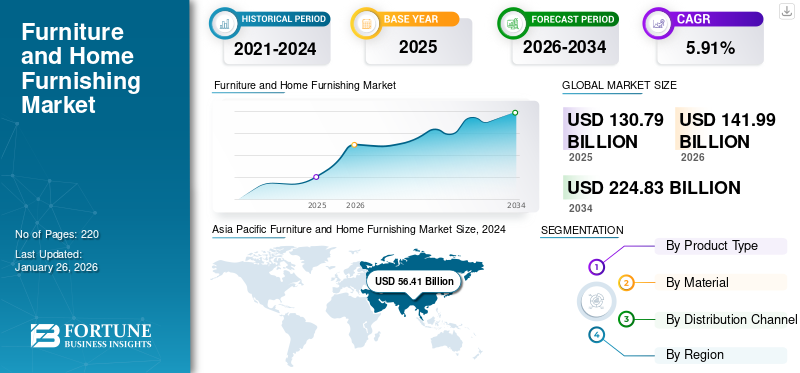
Download Free sample to learn more about this report.
Furniture and Home Furnishing Market Key Takeaways
 Global Market Size & Forecast
- 2025 Market Size: USD 130.79 billion
- 2026 Market Size: USD 141.99 billion
- 2034 Forecast Market Size: USD 224.83 billion
- CAGR: 5.91% from 2026–2034
 Market Share
- Asia Pacific dominated the furniture and home furnishing market with a 91.6% share in 2024.
- Living room & lounge furniture segment held a leading position due to rising demand for modular and attractive residential furniture.
- Wood segment dominated the market owing to its high aesthetic appeal, durability, and premium value.
 Key Regional Highlights
North America
North America is witnessing growth due to rising investments in home furniture production capacity and increasing demand for eco-friendly and innovative home furnishing products.
Europe
Europe is expected to register considerable growth, supported by urbanization, residential construction activities, and increasing adoption of smart home furniture solutions.
Asia Pacific
Asia Pacific dominates the global furniture and home furnishing market and is expected to grow at a CAGR of 6.18% during the forecast period, driven by increasing housing demand and consumer spending on sustainable furnishings.
U.S.
The U.S. furniture and home furnishing market is expanding due to rising housing demand, increased consumer spending, and manufacturers’ focus on expanding production capacities to meet household requirements.
Japan
The Japan market is supported by growing demand for modern, space-efficient, and technologically integrated furniture solutions aligned with changing residential lifestyles.
Read More

FURNITURE AND HOME FURNISHING MARKET TRENDS
Growing Trend of Buying Multi-functional Desks & Chairs for Home-Office Setup Drives Market Growth
The growing trend of remote working style and increasing modern homes’ demand for foldable office room tables & couches for their office setup favors product revenues across many countries. In addition, increasing modern homes’ preference for multi-functional furniture and home furnishing items such as beds that can be converted into couches or cabinets as per user needs favors product demand globally.
MARKET DYNAMICS
Market Drivers
Surge in Consumer Spending on Home Décor to Boost Market Growth
Consumer spending on home decor and renovation has increased due to growing disposable income, urbanization, the rising influence of social media platforms, and a growing focus on creating comfortable and aesthetically pleasing living spaces. Home décor allows consumers to showcase their taste, creativity, and personality while contributing to improved mood and mental well-being by reducing stress and promoting relaxation. Furthermore, growing awareness of international brands and design trends, especially in developing countries, along with the increasing purchasing power of individuals in emerging countries such as India, China, Brazil, and Vietnam, drives the growth of the global furniture and home furnishing market.
MARKET RESTRAINTS
Rapid Changing Raw Material Prices to Restrain Market Growth
Increasing trade wars, conflicts, sanctions, currency fluctuation, and changes in import and export prices are major factors contributing to the increase in raw material prices. The increase in taxation and the imposition of anti-dumping duties on furniture and home furnishing products by diversified governments further increase the cost of the product. According to the American Booksellers Association, in April 2025, the U.S. imposed a tariff on imports from China to 125% on all products. Thus, frequent fluctuations in raw material prices and increased taxation on imports and exports significantly restrict market revenue growth.
MARKET OPPORTUNITIES
Surge in Demand for Eco-Friendly Furniture to Favor Market Expansion
The increasing consumer demand for furniture and home furnishing made from eco-friendly materials such as bamboo, reclaimed wood, organic fabrics, recycled metals, and sustainably sourced wood is driving the growth of global furniture and home furnishing. The surge in consumer awareness toward sustainable lifestyles and zero waste has encouraged manufacturers to produce eco-friendly products for residential and commercial spaces. This eco-friendly material provides a timeless, natural, and durable look, attracting consumers looking for long-term value, boosting demand for home furnishings products.
SEGMENTATION ANALYSIS
By Product Type
Living Room & Lounge Furniture Segment Leads Due to Increase in Purchase of Residential Furniture
Based on product type, the market is divided into bedroom furniture, living room & lounge furniture, and others. The living room & lounge furniture segment dominates the global market, driven by growing consumer preference for designable and attractive modular lounge suites and the rising trend of creating cozy lounge areas for guests. Furthermore, as consumers spend more time at home for work, entertainment, and relaxation, there has been an increase in the purchase of residential furniture.
The bedroom furniture segment is expected to record the highest CAGR during the forecast period. Increasing consumer spending on smart beds, including features such as sleeping tracking, smart home integration, and automatic comfort adjustments, drives the segment’s growth.
By Material
Wood Segment Dominates Global Market Owing to Its High Aesthetic Appeal
Based on material, the market is segmented into wood, metal, plastic, and others. The wood segment dominates the global market due to its high aesthetic appeal, durability, and perceived monetary value. The surge in consumer demand for the latest designable and modern wooden furniture and home furnishing for a comfortable and leisurely lifestyle further drives the segment’s growth.
The metal segment is projected to rise with the highest CAGR during the forecast period. Demand for metal furniture is growing in residential places due to its versatility, low maintenance, high durability, and cost-effectiveness. Additionally, the easy availability of metal furniture and home furnishings on online and offline platforms boosts the segment's growth.
By Distribution Channel
Increasing Number of Specialty Stores Boosts Retail Outlets/Offline Segment Growth
Based on distribution channel, the market is divided into e-commerce/online and retail outlets/offline. The retail outlets/offline segment holds a major global furniture and home furnishing market share. Offline stores such as home furnishing stores, lifestyle stores, and branded furniture stores offer personalized advice, physical inspection of the product, immediate gratification, and flexibility in negotiation, all of which attract a large consumer base. The surge in specialty stores and brand outlets, particularly in emerging countries such as India, Vietnam, and China, boosts the segment growth.
The e-commerce/online segment is estimated to grow with the highest CAGR during the forecast period. The easy availability of home furnishing products on platforms such as Amazon, eBay, Flipkart, and Noon has boosted the segment’s growth. The increase in internet penetration, the popularity of online payment, and efficient delivery options further support the segment’s growth.
GLOBAL FURNITURE AND HOME FURNISHING MARKET REGIONAL OUTLOOK
By region, the global market is divided into Europe, South America, North America, the Middle East & Africa, and Asia Pacific.
Asia Pacific
Asia Pacific Furniture and Home Furnishing Market Size, 2024 (USD Billion)
To get more information on the regional analysis of this market, Download Free sample
Asia Pacific dominates the global market and is expected to grow at a CAGR of 6.18% during the projected period. The changing lifestyle, growing middle-class income, increase in real estate development, and rapid urbanization are the major factors driving the market growth. According to the India Brand Equity Foundation (IBEF), Indian residential property witnessed an all-time high sale of USD 42 billion in FY 2023. According to the Trade Promotion Council of India (TPCI), in 2022, India was considered the world's fourth-largest furniture consumer.
Download Free sample to learn more about this report.
North America
The growing individual need for housing facilities across the region triggers the product demand. For instance, according to The Canadian Real Estate Association (CREA), home sales increased by 3.7% between December 2023 and January 2024. In addition, according to the National Association of Realtors (NAR), 2021 house sales in the U.S. increased to 6.12 million, marking an 8.5% increase from the previous year. In addition, consumer spending on eco-friendly and sustainable home furnishing and furniture products accelerates market growth.
Manufacturers' focus on expanding home furniture production capacity to meet household customer demand. Consistent manufacturers' implementation of the capacity-building projects accelerates U.S. market growth. For instance, in October 2022, Cabinetworks Group, a U.S.-based manufacturer and distributor of kitchen cabinets, established a partnership with the State of Pennsylvania to expand its Mount Union manufacturing facility of 206,000 square feet in Huntingdon County, Pennsylvania, U.S. The company will be able to produce more than 5,000 cabinets per day and deliver innovative kitchen products to American homeowners by 2025.
Europe
The European market is expected to grow at a considerable CAGR in the coming years. The surge in urbanization and growing residential building construction in countries such as Germany, Russia, the U.K., and France drives market growth. Moreover, the easy availability of smart home furniture, which includes features such as smart lighting, built-in charging ports, and voice-controlled features, further attracted a large consumer base.
South America and Middle East & Africa
The South America and Middle East & Africa region has witnessed substantial growth in the last couple of years owing to manufacturers' surge in social media marketing on digital platforms such as YouTube, Facebook, LinkedIn, and TikTok. Furthermore, the rise in consumer spending on stylish, modern, and affordable furniture drives the global furniture market growth.
COMPETITIVE LANDSCAPE
Key Industry Players
Leading Companies Emphasize Regional Growth to Stay Competitive
The growing competition among home furnishing companies such as Cassina S.p.A., Nilkamal Furniture, Steelcase, Herman Miller, Inc., and Kimball International, Inc. has pushed them to leverage strong brand loyalty and market presence. Key industry players are improving their reach and introducing new product offerings across various countries to maintain a competitive edge in the national and international markets.
LIST OF KEY FURNITURE AND HOME FURNISHING COMPANIES PROFILED
- Cassina S.p.A. (Italy)
- Kimball International, Inc. (U.S.)
- Nilkamal Furniture (India)
- BROWN JORDAN (U.S.)
- Steelcase (U.S.)
- Herman Miller, Inc. (Knoll Inc) (U.S.)
- Vivono Designs (India)
- American Signature, Inc. (U.S.)
- DURESTA (U.K.)
- Haworth, Inc. (Italy)
KEY INDUSTRY DEVELOPMENTS
- February 2025 - IKEA Systems B.V., a Netherlands-based manufacturer, announced opening eight new U.S. stores in 2025. The launch would help the company to enhance its customer reach and operation revenue.
- May 2024 - IKEA Systems B.V., a home furnishing retailer, partnered with Rhenus, a warehouse facility company, to build its online home furnishing products’ reach across Delhi NCR, India.
- May 2024 – Remax Furniture, an India-based manufacturer of home furniture products, introduced its flagship furniture store in New Delhi, India. The newly launched store would provide home furnishing and décor products to make home interiors more appealing and aesthetic.
- October 2022 - Linly Designs, a U.S.-based residential interior designer, announced the acquisition of the residential luxury furniture brand Marge Carson. The acquisition would help the company increase its product line and operational efficiencies.
- September 2020 - Home Canvas, an India-based manufacturer, announced the launch of a work-from-home furniture line to enhance the company’s product portfolio.
REPORT COVERAGE
The market report provides a detailed market analysis. It focuses on key aspects, such as competition landscape, companies’ market share, supply chain & regulatory analysis, market dynamics, regional analysis, material, application, and distribution channel. Besides this, it offers insights into various market trends and highlights key industry developments. In addition to the above-mentioned factors, the global furniture and home furnishing industry report encompasses several other factors that have contributed to the market's growth in recent years.
Request for Customization to gain extensive market insights.
Report Scope & Segmentation
|
ATTRIBUTE |
DETAILS |
|
Study Period |
2021-2034 |
|
Base Year |
2025 |
|
Estimated Year |
2026 |
|
Forecast Period |
2026-2034 |
|
Historical Period |
2021-2024 |
|
Growth Rate |
CAGR of 5.91% from 2026 to 2034 |
|
Unit |
Value (USD Billion) |
|
Segmentation |
By Product Type
|
|
By Material
|
|
|
By Distribution Channel
|
|
|
By Region
|
Frequently Asked Questions
Fortune Business Insights says that the market was valued at USD 141.99 billion in 2026 and is projected to reach USD 224.83 billion by 2034.
In 2024, the Asia Pacific market value stood at USD 56.41 billion.
Recording a CAGR of 5.91%, the market will exhibit steady growth over the forecast period of 2026-2034.
Based on product type, the living room & lounge furniture segment is leading the market.
Surge in consumer spending on home décor is the key factor driving the market.
Cassina S.p.A., Nilkamal Furniture, Steelcase, and Kimball International, Inc. are the major players in the market.
Asia Pacific dominates the market in terms of share.
Surge in demand for eco-friendly furniture is a major factor driving the product demand.



- 2021-2034
- 2025
- 2021-2024
- 220
-
(Offer valid till 15th Oct 2026)
Get 30-60 hrs Free Customization
Expand Regional and Country Coverage, Segments Analysis, Company Profiles, Competitive Benchmarking, and End-user Insights.



















Related Reports
-
US +1 833 909 2966 ( Toll Free )
-
Get In Touch With Us