Infant Nutrition Market Size, Share & Industry Analysis, By Product Type (Infant Milk Formula, Baby Food), By Form (Solid, Liquid), By Distribution Channel, By Region, and Regional Forecast, 2026–2034
 Download Free Sample
Infant Nutrition Market Overview
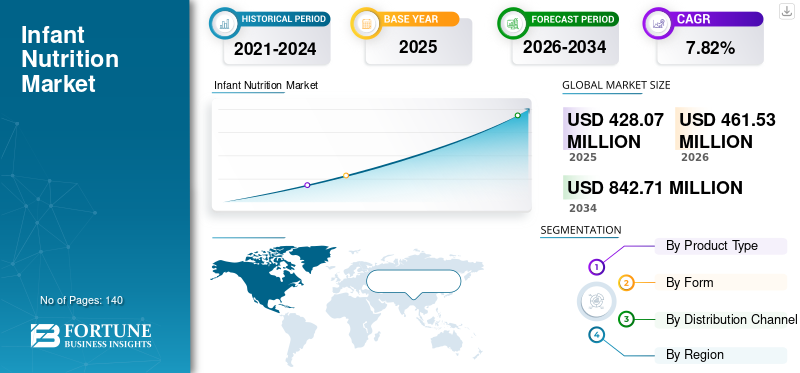
The infant nutrition market size was valued at USD 428.07 million in 2025. The market is projected to grow from USD 461.53 million in 2026 to USD 842.71 million by 2034, exhibiting a CAGR of 7.82% during the forecast period.

The infant nutrition market continues to expand as parents increasingly prioritize scientifically formulated nutrition products designed to support infant growth, immunity, digestive health, and cognitive development. Rising awareness regarding balanced nutrition during the first thousand days of life has strengthened demand for infant milk formula, organic baby food, fortified cereals, and specialized nutritional products. Manufacturers are investing in advanced ingredients such as human milk oligosaccharides (HMOs), probiotics, prebiotics, and plant-based proteins to improve product differentiation. The infant nutrition market Report highlights growing demand for premium and clean-label formulations, while regulatory compliance, product safety standards, and innovation remain central factors shaping infant nutrition market growth and Infant Nutrition Industry analysis.
The United States infant nutrition market remains one of the most technologically advanced segments within the global nutrition industry. Demand is driven by working parents seeking convenient and nutritionally complete feeding solutions, alongside increasing adoption of specialty formulas targeting allergies, lactose intolerance, and digestive concerns. Healthcare providers continue to influence purchasing decisions through nutritional recommendations and clinical guidance. Domestic manufacturers are strengthening supply chains following recent formula shortages, while investments in production facilities and quality assurance programs are improving product availability. Premium infant formula, organic baby food, and immunity-support formulations are experiencing strong adoption across urban and suburban populations.
Download Free sample to learn more about this report.
Infant Nutrition Market Key Takeaways
 Global Market Size & Forecast
- 2025 Market Size: USD 428.07 Million
- 2026 Market Size: USD 461.53 Million
- 2034 Forecast Market Size: USD 842.7 Million
- CAGR: 7.82% from 2026-2034
 Market Share
- Asia-Pacific dominated with a regional market share of 39% in 2025.
- Infant Milk Formula led by product type with approximately 67% market share.
- Offline distribution channels accounted for approximately 72% of the market.
 Key Regional Highlights
Asia-Pacific
Asia-Pacific held the largest regional share at 39% of the global market.
North America
North America accounted for 27% of the global market.
Europe
Europe represented 24% of the global market, supported by established infant nutrition demand.
U.S
The U.S. remains a significant market, supported by strong demand for infant formula and baby food products.
Japan
Japan accounted for 14% of the Asia-Pacific infant nutrition market, supported by demand for high-quality nutritional products.
Read More

Infant Nutrition Market Latest Trends
The infant nutrition market trends indicate a strong shift toward premiumization, organic ingredients, and functional nutrition. Parents increasingly prefer products free from artificial preservatives, synthetic additives, and unnecessary sugars. Clean-label baby foods and organic infant formulas have gained substantial acceptance due to growing concerns regarding ingredient transparency and product safety. Manufacturers are responding by reformulating products with traceable ingredients and enhanced nutritional profiles.
Download Free sample to learn more about this report.
Another significant trend identified in the infant nutrition market research report is the integration of advanced bioactive compounds. Human milk oligosaccharides, probiotics, lactoferrin, omega fatty acids, and gut-health-supporting nutrients are becoming common additions in premium formulations. Digital retail channels are also transforming purchasing behavior, allowing brands to engage directly with consumers through subscription models and personalized nutrition recommendations. Innovation in ready-to-feed liquid formulations and allergy-friendly products further supports infant nutrition market opportunities across developed and emerging economies.
infant nutrition market Dynamics
DRIVER
Rising Demand for Scientifically Formulated Infant Nutrition Products
One of the primary drivers supporting infant nutrition market growth is the increasing awareness among parents regarding the importance of early-life nutrition. Healthcare organizations and pediatric professionals continue emphasizing the role of proper nutrition in cognitive development, immunity enhancement, digestive health, and overall growth. As a result, parents are seeking high-quality nutritional solutions that closely replicate the nutritional composition of breast milk.
The Infant Nutrition industry report indicates growing demand for fortified formulas containing probiotics, prebiotics, nucleotides, DHA, ARA, and HMOs. Urbanization and the rise of dual-income households have further strengthened demand for convenient feeding options. Premium product categories, including organic infant formula and specialty nutrition products, continue attracting consumers willing to pay for enhanced nutritional benefits. Manufacturers are increasingly focusing on scientific research and clinical validation to strengthen consumer trust and expand their market presence.
RESTRAINT
Stringent Regulations and Product Safety Concerns
A major restraint affecting the infant nutrition market is the strict regulatory environment governing infant food products. Regulatory agencies across multiple regions impose extensive quality, labeling, manufacturing, and nutritional requirements. Compliance with these regulations often increases operational complexity and product development timelines.
Product recalls and contamination incidents can significantly impact brand reputation and consumer confidence. Since infant nutrition products directly affect vulnerable populations, manufacturers must maintain rigorous quality control procedures across sourcing, production, packaging, and distribution. The infant nutrition market analysis identifies rising compliance costs as a challenge for both multinational corporations and emerging market participants. Smaller companies often face difficulties entering the market due to extensive certification requirements and substantial investment needs for quality assurance infrastructure.
OPPORTUNITY
Expansion of Premium, Organic and Specialty Nutrition Segments
The infant nutrition market outlook remains favorable due to growing opportunities within premium and specialty nutrition categories. Parents increasingly seek products tailored to specific health concerns such as allergies, digestive sensitivity, lactose intolerance, and immune support. This trend has encouraged manufacturers to introduce personalized nutrition solutions targeting various infant development stages.
Organic infant food and clean-label nutrition products continue creating significant business opportunities. Consumers are paying closer attention to ingredient sourcing, sustainability practices, and nutritional transparency. Emerging economies also offer substantial expansion potential as disposable incomes rise and awareness regarding infant health improves. Companies investing in research-driven formulations, sustainable packaging, and digital engagement strategies are expected to strengthen their competitive position within the infant nutrition market forecast period.
CHALLENGE
Supply Chain Complexity and Raw Material Cost Fluctuations
Supply chain management remains a critical challenge within the infant nutrition market. Manufacturers rely on high-quality dairy proteins, specialty ingredients, vitamins, minerals, and packaging materials sourced from multiple global suppliers. Any disruption in ingredient availability can affect production schedules and inventory management.
Fluctuations in dairy commodity prices, transportation expenses, and international trade policies continue influencing operational costs. Maintaining consistent product quality across international markets requires extensive testing and supplier verification procedures. The infant nutrition market insights indicate that brands must also address increasing consumer expectations regarding sustainability, traceability, and environmental responsibility. Balancing affordability with advanced nutritional innovation remains a key challenge for industry participants seeking long-term market expansion.
infant nutrition market Segmentation
By Product Type
Infant Milk Formula remains the dominant segment within the infant nutrition market, accounting for approximately 67% of global market share. Demand is supported by working parents, increasing urbanization, and rising adoption of scientifically developed nutritional products. Manufacturers continue investing in advanced formulations designed to closely resemble breast milk composition through the inclusion of HMOs, probiotics, omega fatty acids, and immune-support nutrients. The infant nutrition market Report highlights strong demand for standard infant formula, follow-on formula, specialty formula, and hypoallergenic products. Healthcare professionals often recommend specialized formulas for infants experiencing allergies, digestive disorders, or nutritional deficiencies. Premiumization continues influencing purchasing behavior, particularly among consumers seeking clinically validated products supported by nutritional research. Product innovation and extensive distribution networks further reinforce the leadership position of this segment.
Baby Food represents nearly 33% of the infant nutrition market share and continues benefiting from increased parental focus on complementary feeding. The category includes cereals, purees, fruit blends, vegetable-based products, snacks, and fortified nutritional meals. Demand for organic and minimally processed baby food has accelerated significantly across developed markets. Manufacturers are introducing innovative textures, flavor combinations, and nutrient-enriched products to support different developmental stages. Clean-label positioning and transparency regarding ingredient sourcing have become important purchasing factors. The Infant Nutrition Industry analysis indicates that ready-to-eat baby food products are gaining popularity among busy households seeking convenient nutrition solutions without compromising quality. Growth in e-commerce channels is further expanding product accessibility and consumer engagement.
By Form
Solid infant nutrition products account for approximately 58% of the market segment by form. This category includes cereals, fortified grain products, dry snacks, and dehydrated baby foods. Parents increasingly adopt solid nutrition products during the complementary feeding phase to support developmental milestones and dietary diversification. The infant nutrition market research report identifies fortified cereals as a major contributor due to their nutrient density and ease of preparation. Manufacturers continue introducing products enriched with iron, calcium, vitamins, and digestive-support ingredients. Demand for organic solid nutrition products has increased as consumers seek healthier alternatives with fewer additives and preservatives.
Liquid products hold nearly 42% market share within the form segment. This category primarily consists of ready-to-feed formula, liquid nutritional supplements, and packaged baby beverages. Convenience remains the primary factor driving demand for liquid nutrition products among modern households. Ready-to-feed formulations eliminate preparation requirements while ensuring accurate nutritional delivery. Premium liquid products featuring advanced ingredients and specialized formulations are increasingly available through retail and healthcare channels. Manufacturers continue expanding packaging innovations that improve portability, storage convenience, and product safety, strengthening demand across both developed and emerging markets.
By Distribution Channel
Offline distribution channels contribute approximately 72% of total infant nutrition market share. Supermarkets, hypermarkets, pharmacies, specialty baby stores, and healthcare institutions remain important sales channels due to consumer preference for direct product evaluation and professional guidance. Pharmacies play a particularly significant role in specialty formula distribution, while large retail chains offer extensive product variety and promotional opportunities. The infant nutrition market analysis indicates that brand visibility and shelf placement continue influencing purchasing decisions. Retail partnerships remain a critical strategy for manufacturers seeking broader market penetration.
Online distribution channels account for nearly 28% of the market and are expanding rapidly due to changing shopping behaviors. E-commerce platforms provide access to extensive product selections, subscription services, and personalized recommendations. Digital retail channels allow brands to strengthen direct consumer relationships through targeted marketing and educational content. The infant nutrition market forecast suggests that online channels will continue gaining importance as consumers increasingly prioritize convenience, home delivery services, and product comparison capabilities. Enhanced digital engagement is supporting brand loyalty and customer retention strategies.
infant nutrition market Regional Outlook
North America
North America accounts for approximately 27% of the global infant nutrition market share. The region benefits from advanced healthcare infrastructure, strong consumer purchasing power, and high awareness regarding infant health and nutrition. Parents actively seek premium products supported by scientific research, particularly formulations addressing digestive health, allergies, and immune development.
The infant nutrition market in North America is characterized by extensive regulatory oversight and strong quality standards. Manufacturers continue investing in domestic production facilities, supply chain resilience, and innovative formulations. E-commerce adoption and healthcare professional recommendations significantly influence consumer purchasing behavior. Demand for organic baby food, specialty formulas, and ready-to-feed nutrition products remains particularly strong across the United States and Canada.
Europe
Europe represents approximately 24% of the global infant nutrition market share. Consumer demand focuses heavily on organic products, sustainability, ingredient transparency, and regulatory compliance. European parents demonstrate strong interest in premium nutrition products featuring clean-label formulations and scientifically validated ingredients.
Manufacturers operating in Europe continue emphasizing environmentally responsible packaging and traceable sourcing practices. Specialized nutrition products addressing allergies and digestive sensitivities maintain strong market demand. Healthcare systems and pediatric recommendations significantly influence consumer choices throughout the region. Product innovation, particularly involving HMOs and probiotic-enhanced formulas, remains a major competitive differentiator.
Germany infant nutrition market
Germany contributes approximately 22% of the European infant nutrition market. The country maintains a highly developed infant food industry supported by strong regulatory frameworks and consumer emphasis on product quality. German parents increasingly prefer organic baby food, premium formula products, and nutrition solutions free from artificial additives.
Demand for sustainable packaging and environmentally responsible manufacturing practices continues rising across Germany. Domestic and international brands compete through innovation focused on digestive health, immunity support, and developmental nutrition. Pharmacies and specialty baby stores remain influential sales channels, while online retail platforms are gaining traction among younger parents. Growing awareness regarding early childhood nutrition supports continuous product diversification and premium category expansion.
United Kingdom Infant Nutrition Market
The United Kingdom accounts for approximately 18% of the European infant nutrition market. Demand remains supported by busy lifestyles, growing preference for convenience products, and increasing awareness regarding infant dietary requirements. Parents are actively seeking formula products featuring scientifically advanced ingredients and clinically supported nutritional benefits.
The UK market has experienced heightened consumer attention toward pricing, affordability, and product transparency. Organic baby food and premium formula categories continue attracting strong demand despite competitive pricing pressures. Digital retail platforms and subscription-based purchasing models are becoming increasingly popular. Manufacturers are responding through innovation, enhanced ingredient disclosure, and expanded product portfolios designed to address specific nutritional needs.
Asia-Pacific
Asia-Pacific dominates the global infant nutrition market with approximately 39% market share. Large birth populations, rising urbanization, increasing disposable income, and expanding middle-class demographics continue driving demand across the region. Countries including China, Japan, India, and Southeast Asian markets remain major growth centers.
Consumers increasingly favor premium infant nutrition products supported by scientific research and international quality standards. Manufacturers are investing heavily in regional production facilities, marketing campaigns, and distribution networks. The Infant Nutrition industry report identifies specialty formulas, premium milk products, and fortified baby food as key growth categories. E-commerce platforms play a particularly important role in product accessibility throughout the region.
Japan Infant Nutrition Market
Japan represents approximately 14% of the Asia-Pacific infant nutrition market. The country maintains high standards for product quality, safety, and nutritional performance. Parents prioritize premium formulations supported by clinical research and advanced ingredient technologies.
Demand for specialized nutrition products addressing digestive health, immunity, and developmental support remains strong. Manufacturers continue introducing innovative formulations incorporating probiotics, nucleotides, and functional nutrients. Convenience-oriented products such as ready-to-feed formulas and packaged complementary foods are gaining popularity among working households. Aging demographics and declining birth rates encourage companies to focus on premiumization and value-added nutrition solutions.
China Infant Nutrition Market
China accounts for approximately 42% of the Asia-Pacific infant nutrition market, making it the region's largest contributor. Rising household income, growing urban populations, and strong awareness regarding infant health continue driving demand for premium nutrition products.
International and domestic brands compete aggressively through innovation, digital marketing, and product differentiation. Parents increasingly seek imported-quality products featuring advanced ingredients and enhanced nutritional claims. E-commerce platforms significantly influence purchasing behavior, allowing consumers access to extensive product selections and educational content. Premium infant formula remains a dominant category, while organic baby food and specialized nutrition products continue expanding rapidly.
Rest of World
The Rest of World region accounts for approximately 10% of the global infant nutrition market share. Markets across Latin America, the Middle East, and Africa are experiencing increasing demand due to urbanization, population growth, and improving awareness regarding infant nutrition. Rising disposable income is supporting adoption of premium nutritional products across several developing economies.
Manufacturers continue expanding distribution networks and investing in localized production capabilities to improve accessibility and affordability. Government health initiatives and educational programs promoting early childhood nutrition further support market development. Demand for fortified milk formula, cereals, and complementary nutrition products is increasing steadily. Strategic partnerships between multinational companies and regional distributors are strengthening market penetration and improving product availability across emerging economies.
List of Top Infant Nutrition Companies
- Nestlé
- Arla Foods amba
- Nutricia
- Abbott
- The Hain Celestial Group, Inc
- Inc.
- Holle baby food AG
- China Mengniu Dairy Company Limited
- Perrigo Company plc
- The Kraft Heinz Company
- DANA DAIRY GROUP
Top Two Companies by Market Share
- Nestlé – 21% market share
- Nutricia (Danone Group) – 12% market share
Investment Analysis and Opportunities
The infant nutrition market presents substantial investment opportunities driven by increasing demand for premium and specialized nutrition products. Investors are focusing on companies with strong research capabilities, advanced formulation technologies, and established regulatory expertise. Product categories featuring HMOs, probiotics, plant-based ingredients, and allergy-friendly formulations are attracting significant capital allocation.
Emerging markets offer notable expansion potential due to rising birth rates, increasing healthcare awareness, and improving purchasing power. Investments in local manufacturing facilities, digital retail infrastructure, and supply chain modernization continue accelerating. Strategic mergers, acquisitions, and partnerships are helping companies strengthen market presence and diversify product portfolios. The infant nutrition market opportunities remain particularly attractive in organic baby food, personalized nutrition solutions, and direct-to-consumer business models.
New Product Development
Innovation remains a central growth strategy within the infant nutrition market. Manufacturers are increasingly developing products designed to replicate the nutritional benefits of breast milk through advanced ingredient combinations. New formulations frequently incorporate HMOs, probiotics, prebiotics, lactoferrin, and specialized protein structures to support digestion and immunity.
Companies are also introducing clean-label and organic nutrition products with simplified ingredient lists and enhanced traceability. Ready-to-feed liquid formulas, plant-based nutrition alternatives, and personalized feeding solutions are gaining attention among consumers seeking convenience and nutritional customization. Smart packaging technologies and sustainability-focused product designs are becoming important competitive differentiators. Continuous research into infant gut health, cognitive development, and immune support is expected to drive future innovation across the Infant Nutrition Industry.
Five Recent Developments (2023-2025)
- Nestlé introduced advanced HMO-enhanced infant nutrition products targeting digestive and immune health support.
- Danone expanded premium infant formula portfolios featuring enhanced nutritional ingredients and specialty formulations.
- Multiple manufacturers increased investments in regional production facilities to strengthen supply chain resilience and product availability.
- Companies accelerated development of allergy-friendly and lactose-sensitive infant nutrition products to address specialized healthcare needs.
- Online distribution platforms expanded subscription-based infant nutrition purchasing programs, improving customer retention and direct consumer engagement.
Report Coverage of infant nutrition market
The infant nutrition market Report provides comprehensive analysis of industry structure, competitive positioning, product innovation, regulatory developments, consumer preferences, and regional demand patterns. The study evaluates major product categories including infant milk formula, baby food, specialty nutrition products, and complementary feeding solutions. Detailed segmentation analysis enables stakeholders to assess growth potential across multiple product and distribution categories.
Request for Customization to gain extensive market insights.
The infant nutrition market research report further examines strategic initiatives adopted by leading manufacturers, including mergers, partnerships, product launches, and technological advancements. Regional analysis covers North America, Europe, Asia-Pacific, and Rest of World markets while highlighting country-level opportunities. The report also reviews supply chain developments, investment activity, emerging consumer trends, sustainability initiatives, and innovation pipelines influencing future industry expansion and competitive dynamics.
Frequently Asked Questions
Fortune Business Insights says that the global market value stood at USD 428.07 million in 2025 and is projected to reach USD 842.71 million by 2034.
The market is expected to exhibit a CAGR of 7.82% during the forecast period of 2026-2034.
Infant Milk Formula was the leading product type, accounting for approximately 67% of the global market share, supported by demand from working parents, urbanization, and scientifically developed nutritional products.
Key players include Nestlé, Arla Foods amba, Nutricia, Abbott, The Hain Celestial Group, Inc., and Holle baby food AG.
Major trends include premiumization, organic and clean-label ingredients, and functional nutrition, along with growing use of bioactive compounds such as HMOs and probiotics. Asia-Pacific leads regionally with approximately 39% market share, driven by large birth populations, urbanization, and rising disposable incomes.


- 2021-2034
- 2025
- 2021-2024
- 140
-

(Offer valid till 30th Sep 2026)
Get 30-60 hrs Free Customization
Expand Regional and Country Coverage, Segments Analysis, Company Profiles, Competitive Benchmarking, and End-user Insights.















-
US +1 833 909 2966 ( Toll Free )
-
Get In Touch With Us