Interior Design Software Market Size, Share & Industry Analysis, By Application (Individual, Enterprise), By Deployment (Cloud, On-premises), By End-use (Residential, Non-residential), By Regional Forecast, 2026-2034
 Download Free Sample
Interior Design Software Market Overview
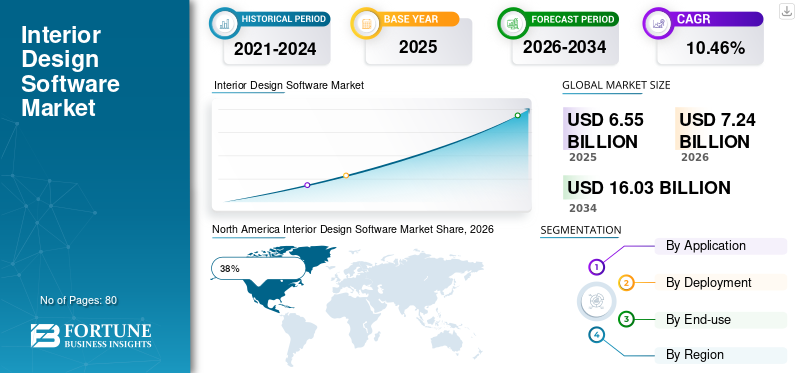
The global interior design software market size was valued at USD 6.55 billion in 2025. The market is projected to grow from USD 7.24 billion in 2026 to USD 16.03 billion by 2034, exhibiting a CAGR of 10.46% during the forecast period.

The interior design software market is expanding significantly due to increasing demand for digital visualization tools, smart space planning solutions, and advanced 3D rendering technologies across residential and commercial construction sectors. Interior designers, architects, and real estate developers are increasingly utilizing software platforms to improve project accuracy, client collaboration, and design efficiency. The interior design software market report highlights rising adoption of cloud-based design tools, virtual reality integration, and AI-powered visualization platforms across professional design workflows. Growing urbanization and rising investment in smart infrastructure continue supporting interior design software market growth. Businesses are focusing on automation, immersive visualization, and collaborative design environments to strengthen operational productivity and customer engagement.
The United States interior design software market is witnessing strong growth due to increasing residential renovation projects, expansion of commercial real estate development, and rising adoption of digital design technologies. Interior designers, architects, and property developers throughout the country are heavily utilizing software solutions for 3D modeling, virtual walkthroughs, and real-time project visualization. The interior design software market analysis indicates increasing demand for cloud-based collaborative design platforms and AI-driven space planning solutions across the United States. Growing smart home adoption and digital transformation within the architecture and construction industry continue strengthening the interior design software market outlook nationwide.
Download Free sample to learn more about this report.
Interior Design Software Market Key Takeaways
 Global Market Size & Forecast
- 2025 Market Size: USD 6.55 Billion
- 2026 Market Size: USD 7.24 Billion
- 2034 Forecast Market Size: USD 16.03 Billion
- CAGR: 10.46% from 2026-2034
 Market Share
- North America dominated with a 38% market share in 2025.
- Enterprise users led by type with approximately 57% market share.
- Cloud deployment led with nearly 64% market share.
 Key Regional Highlights
North America
North America held the largest regional share at 38%.
Europe
Europe accounted for 29% of the global market.
Asia-Pacific
Asia-Pacific represented 25% of the global market.
U.S.
The U.S. is a major market, supported by growing adoption of cloud-based design and visualization software.
Japan
Japan accounted for 28% of the Asia-Pacific market, driven by increasing demand for digital interior design solutions.
Read More

Interior Design Software Market Latest Trends
The interior design software market trends reveal increasing adoption of artificial intelligence, augmented reality, and cloud-based collaboration tools within architectural and interior design workflows. Design professionals are increasingly utilizing advanced rendering technologies and virtual visualization platforms to improve customer engagement and accelerate project approvals. The interior design software market research report highlights strong demand for real-time design customization, immersive walkthroughs, and automated furniture placement technologies across residential and commercial design projects.
Another major trend shaping the Interior Design Software Industry Report is the integration of Building Information Modeling and smart space analytics within digital design platforms. Companies are increasingly investing in software systems capable of supporting sustainable design planning, remote project collaboration, and automated material selection processes. Mobile-based interior design applications and subscription-based software services are also gaining popularity across freelancers and small design studios. The interior design software market insights indicate rising investment in AI-powered layout optimization, virtual staging technologies, and cloud-integrated project management platforms globally.
Download Free sample to learn more about this report.
Interior Design Software Market Dynamics
Driver
Increasing Demand for 3D Visualization and Digital Design Solutions
The growing demand for 3D visualization and digital project management solutions is the primary driver of the interior design software market growth. Interior designers, architects, and construction professionals are increasingly utilizing software platforms to create realistic project renderings, improve client communication, and optimize design accuracy. Digital design technologies allow professionals to reduce manual errors, accelerate project timelines, and enhance customer satisfaction through immersive visual presentations. The interior design software market report highlights strong adoption of real-time rendering systems, virtual walkthrough technologies, and automated drafting solutions globally.
Expansion of smart homes, commercial infrastructure projects, and urban real estate development is further accelerating market demand. Design firms increasingly require advanced software capable of supporting collaborative workflows and integrated project management operations. The interior design software market analysis indicates rising implementation of AI-driven design recommendations, cloud-based collaboration systems, and Building Information Modeling technologies across architecture and interior design industries. Increasing focus on operational efficiency and customer experience continues strengthening market expansion worldwide.
Restraint
High Software Costs and Technical Learning Complexity
High implementation costs and technical learning requirements remain major restraints for the interior design software market. Advanced design software platforms often require significant investment in licensing, hardware infrastructure, and employee training programs. The Interior Design Software Industry Analysis indicates that small design studios and freelance professionals may face financial limitations when adopting premium rendering and modeling solutions.
Complex user interfaces and continuous software updates can also create operational challenges for design professionals unfamiliar with advanced digital workflows. Businesses often require dedicated technical support and training resources to maximize software utilization and productivity. The interior design software market outlook highlights that compatibility issues between different software ecosystems and increasing subscription costs may restrict adoption across cost-sensitive user segments and emerging design markets.
Opportunity
Expansion of Cloud-Based and AI-Powered Design Platforms
Rapid expansion of cloud-based design ecosystems and artificial intelligence-powered visualization technologies is creating substantial opportunities for the interior design software market. Design firms are increasingly adopting cloud-integrated platforms that support remote collaboration, real-time project updates, and scalable workflow management across distributed teams. The interior design software market opportunities are expanding as businesses prioritize digital transformation and flexible project management capabilities.
Artificial intelligence and machine learning technologies are also transforming interior design workflows through automated layout optimization, furniture placement recommendations, and predictive material selection systems. Real estate developers and property marketing firms are increasingly investing in virtual staging and immersive visualization technologies to improve customer engagement and property sales performance. The interior design software market forecast indicates strong opportunities for software providers developing virtual reality-based design platforms, smart space analytics tools, and subscription-based collaborative software solutions.
Challenge
Managing Software Interoperability and Data Security
Managing interoperability across multiple design platforms and ensuring secure project data management remain major challenges for the interior design software market. Interior design firms often utilize various software tools for rendering, drafting, project management, and client collaboration, creating integration difficulties and workflow inefficiencies. The interior design software market research report highlights increasing demand for unified design ecosystems capable of supporting seamless data exchange across platforms.
Data privacy and intellectual property protection are also becoming critical concerns for design firms handling sensitive architectural layouts and commercial development projects. Cloud-based collaboration systems require strong cybersecurity frameworks and secure access controls to protect confidential client information. The interior design software market insights indicate that maintaining compatibility, improving software integration, and strengthening cybersecurity capabilities will remain essential priorities for software developers and design professionals globally.
Interior Design Software Market Segmentation
By Type
Individual users account for nearly 43% of the interior design software market share due to increasing adoption of user-friendly design applications among freelance designers, homeowners, and independent architects. Individuals increasingly utilize interior design software for home renovation planning, furniture visualization, and customized room layout creation. The interior design software market analysis highlights growing demand for affordable subscription-based platforms and mobile-friendly design applications tailored for non-professional users.
Software providers are increasingly focusing on intuitive interfaces, drag-and-drop customization features, and cloud-based project storage solutions to improve accessibility for individual users. Artificial intelligence-driven recommendations and virtual room staging capabilities are also strengthening software adoption among homeowners and independent designers. The interior design software market report indicates strong growth in browser-based visualization platforms and augmented reality-powered room planning applications across residential design markets.
Enterprise users represent approximately 57% of the interior design software market size due to widespread utilization of advanced design platforms across architecture firms, commercial developers, and construction companies. Large organizations increasingly invest in enterprise-grade interior design software to improve project collaboration, operational scalability, and design precision within complex infrastructure projects. The interior design software market research report highlights rising adoption of Building Information Modeling integration and real-time rendering systems across commercial design operations.
Enterprise users prioritize cloud collaboration, automated workflow management, and advanced visualization capabilities to improve project efficiency and customer engagement. Large design firms and real estate developers are also implementing artificial intelligence-based analytics and immersive virtual walkthrough technologies to support large-scale residential and commercial projects. The interior design software market outlook indicates continued expansion in enterprise-focused collaborative design ecosystems and cloud-integrated project management platforms globally.
To know how our report can help streamline your business, Speak to Analyst
By Deployment
Cloud deployment accounts for nearly 64% of the interior design software market share due to increasing demand for remote collaboration, scalable storage infrastructure, and subscription-based software accessibility. Design firms and independent professionals increasingly prefer cloud-based platforms because they support real-time project sharing, centralized workflow management, and cross-device accessibility. The interior design software market report highlights growing adoption of browser-based rendering systems and collaborative cloud design environments across residential and commercial design operations.
Cloud-based software solutions also support automatic updates, lower infrastructure costs, and improved project flexibility for distributed design teams. Businesses are increasingly integrating cloud-based platforms with artificial intelligence tools and Building Information Modeling systems to improve design efficiency and project coordination. The interior design software market analysis indicates rising demand for cloud-native rendering technologies and virtual collaboration ecosystems across global design industries.
On-premises deployment represents approximately 36% of the interior design software market size due to strong demand for high-performance rendering capabilities and enhanced data security within large enterprise environments. Architecture firms, commercial developers, and government infrastructure projects frequently utilize on-premises design systems to maintain direct control over project data and operational workflows. The interior design software market research report highlights continued demand for locally hosted visualization platforms and customized rendering infrastructure.
Organizations utilizing on-premises deployment often prioritize advanced computational power, cybersecurity control, and compatibility with existing enterprise IT systems. Large-scale commercial projects requiring high-resolution rendering and secure project management continue supporting on-premises software demand. The interior design software market forecast indicates ongoing investment in hybrid deployment models and enterprise-grade rendering infrastructure across professional design and architecture industries.
By End-use (Residential, Non-residential)
Residential applications account for nearly 52% of the interior design software market share due to rising home renovation activities, increasing smart home adoption, and growing consumer interest in personalized interior aesthetics. Homeowners, interior decorators, and residential architects increasingly utilize design software to create customized room layouts, visualize furniture placement, and improve renovation planning processes. The interior design software market Industry Analysis highlights increasing adoption of virtual staging and augmented reality visualization tools across residential property projects.
Software developers are increasingly introducing user-friendly customization features, AI-powered room optimization tools, and immersive walkthrough technologies to strengthen residential design experiences. Growth in online furniture retailing and home remodeling services is also contributing to rising software adoption. The interior design software market growth continues to accelerate due to increasing digitalization within residential architecture and home improvement industries globally.
Non-residential applications represent approximately 48% of the interior design software market size due to expanding commercial real estate development and increasing infrastructure modernization projects. Commercial offices, hotels, retail centers, healthcare facilities, and educational institutions increasingly rely on advanced design software for large-scale interior planning and visualization operations. The interior design software market insights highlight strong demand for collaborative design ecosystems and Building Information Modeling integration across commercial construction projects.
Commercial developers and architecture firms prioritize advanced rendering systems, workflow automation tools, and cloud-based project coordination platforms to improve operational efficiency and client communication. Increasing investment in smart buildings and sustainable commercial infrastructure is also strengthening software demand. The interior design software market opportunities continue expanding due to growing adoption of virtual reality walkthroughs and data-driven space optimization technologies across non-residential design environments.
Interior Design Software Market Regional Outlook
North America
North America Interior Design Software Market Share, 2026 (%)
To get more information on the regional analysis of this market, Download Free sample
North America dominates the interior design software market with nearly 38% market share due to strong digital infrastructure, high adoption of advanced visualization technologies, and increasing residential renovation activities. Design firms, real estate developers, and architecture companies across the United States and Canada heavily utilize cloud-based rendering platforms and AI-driven design systems to improve project efficiency and customer engagement. The interior design software market report highlights increasing deployment of virtual reality walkthroughs and collaborative design ecosystems throughout the region.
Businesses throughout North America are increasingly investing in smart space analytics, Building Information Modeling integration, and cloud-native rendering technologies to strengthen competitive positioning. Expansion of remote project collaboration and subscription-based software services continues supporting market growth. The interior design software market insights indicate strong demand for immersive visualization technologies and automated design optimization tools across residential and commercial construction sectors.
Europe
Europe accounts for approximately 29% of the interior design software market share due to increasing smart infrastructure projects and strong adoption of digital architecture technologies across regional construction industries. Countries including Germany, the United Kingdom, France, and Italy are heavily investing in advanced interior visualization platforms and cloud-based collaborative design systems. The interior design software market analysis highlights growing demand for sustainable design planning and Building Information Modeling integration throughout Europe.
Design firms and construction companies throughout Europe increasingly prioritize digital workflows, energy-efficient building planning, and immersive client presentation tools to improve project execution. Regulatory focus on sustainable construction and smart urban development is also strengthening software adoption. The interior design software market outlook indicates rising investment in AI-powered rendering systems and virtual design collaboration platforms across European architecture and design industries.
Germany Interior Design Software Market
Germany represents nearly 33% of Europe’s interior design software market due to strong industrial digitalization and increasing adoption of smart construction technologies. Architecture firms, engineering companies, and commercial developers across the country increasingly utilize advanced rendering software and collaborative design platforms to improve operational efficiency and project visualization quality. The interior design software market research report highlights rising demand for Building Information Modeling integration and cloud-based workflow management systems throughout Germany.
Design professionals in Germany prioritize precision engineering, sustainability planning, and immersive project visualization technologies across residential and commercial projects. Software providers are increasingly developing AI-powered optimization tools and energy-efficient building visualization systems tailored for the German market. The interior design software market trends reveal strong growth in virtual reality design solutions and smart infrastructure planning technologies throughout the country.
United Kingdom Interior Design Software Market
The United Kingdom accounts for approximately 24% of Europe’s interior design software market due to increasing urban redevelopment projects and strong demand for digital property visualization solutions. Interior designers, real estate developers, and architecture firms throughout the country increasingly utilize cloud-based software platforms and virtual staging technologies to improve client communication and project execution. The interior design software market Industry Analysis highlights growing adoption of augmented reality-based room visualization and collaborative project management systems throughout the United Kingdom.
Commercial developers and residential design firms are heavily investing in AI-driven rendering technologies and remote collaboration platforms to improve operational flexibility and design customization capabilities. Expansion of smart residential projects and commercial infrastructure modernization continues supporting software adoption. The interior design software market forecast indicates continued growth in immersive visualization technologies and digital workflow automation across the United Kingdom design industry.
Asia-Pacific
Asia-Pacific holds nearly 25% share in the interior design software market due to rapid urbanization, expanding construction activities, and increasing adoption of digital design technologies across emerging economies. Countries including China, Japan, India, and South Korea are witnessing strong demand for 3D rendering systems, virtual walkthrough technologies, and cloud-based project management platforms across residential and commercial infrastructure projects. The interior design software market research report highlights increasing investment in smart city development and digital construction ecosystems throughout the region.
Architecture firms and property developers throughout Asia-Pacific are increasingly utilizing artificial intelligence-powered design systems and collaborative visualization platforms to improve project scalability and customer engagement. Growth in residential construction and real estate modernization is also accelerating software demand. The interior design software market opportunities continue expanding due to increasing digital transformation across regional architecture and construction industries.
Japan Interior Design Software Market
Japan represents nearly 28% of the Asia-Pacific interior design software market due to advanced technological infrastructure and strong adoption of precision design technologies. Interior designers, construction firms, and commercial developers across the country increasingly utilize immersive visualization systems and cloud-integrated rendering platforms to improve project efficiency and design quality. The interior design software market insights indicate rising demand for virtual reality walkthroughs and automated space optimization tools throughout Japan.
Design firms in Japan prioritize compact space utilization, smart building integration, and sustainable architecture planning, strengthening adoption of advanced digital design software. Companies are increasingly implementing artificial intelligence-based layout recommendations and collaborative cloud workflows to support urban construction projects. The interior design software market analysis reveals continued expansion in immersive residential visualization technologies and smart infrastructure design platforms throughout Japan.
China Interior Design Software Market
China accounts for nearly 45% of the Asia-Pacific interior design software market due to rapid urban infrastructure expansion and increasing investment in digital construction technologies. Real estate developers, architecture firms, and interior design companies throughout the country increasingly utilize cloud-based rendering systems and AI-powered design platforms to support large-scale residential and commercial projects. The interior design software market growth in China is supported by rising smart city development and increasing digital transformation within the construction sector.
Businesses are heavily investing in immersive visualization technologies, virtual staging systems, and collaborative project management platforms to improve operational productivity and customer interaction. Government infrastructure modernization programs and growing residential construction demand continue supporting software adoption throughout the country. The interior design software market outlook indicates strong future demand for virtual reality-based interior visualization and smart design automation technologies across China.
Rest of World
The Rest of World region accounts for nearly 8% of the interior design software market share due to increasing urbanization and growing adoption of digital construction technologies across Latin America, the Middle East, and Africa. Architecture firms and real estate developers throughout these regions increasingly utilize 3D rendering systems and cloud-based collaboration tools to improve design efficiency and project presentation quality. The interior design software market report highlights rising demand for affordable digital visualization platforms and mobile-friendly design software across developing markets.
Commercial property development and residential modernization projects are supporting software adoption across emerging economies. Design professionals increasingly prioritize cloud accessibility, automated rendering, and remote project coordination technologies to improve workflow flexibility and customer engagement. The interior design software market forecast indicates growing opportunities for subscription-based design platforms and virtual visualization technologies across developing architecture and interior design industries globally.
List of Top Interior Design Software Companies
- Autodesk Inc.
- Dassault Systèmes
- Trimble Inc.
- SmartDraw, LLC
- Foyr
- Chief Architect, Inc.
- ECDESIGN Sweden AB
- RoomSketcher AS
- Planner 5D
- BeLight Software Ltd.
- Infurnia Technologies Pvt Ltd
- Enscape
- Bentley Systems, Incorporated
- Vectorworks, Inc.
Top Two Companies by Market Share
- Autodesk Inc. – 22%
- Dassault Systèmes – 17%
Investment Analysis and Opportunities
The interior design software market is attracting strong investment due to increasing digitalization within architecture and construction industries, rising smart infrastructure projects, and growing demand for immersive visualization technologies. Investors are focusing heavily on cloud-based rendering platforms, artificial intelligence-powered space planning systems, and virtual reality design solutions designed to improve operational efficiency and customer engagement. The interior design software market opportunities are particularly strong within collaborative design ecosystems and mobile-based visualization applications.
Software developers and technology companies are investing heavily in Building Information Modeling integration, automated workflow management, and real-time rendering capabilities to strengthen competitive positioning. Emerging economies present strong expansion potential due to increasing urban construction activities and digital transformation across residential and commercial sectors. The interior design software market insights reveal increasing investment in subscription-based design platforms, AI-driven customization technologies, and cloud-integrated project management systems. Businesses continue prioritizing immersive visualization and smart space optimization technologies to support evolving architecture and interior design requirements globally.
New Product Development
Innovation within the interior design software market is focused on artificial intelligence integration, immersive visualization technologies, and cloud-based collaborative workflows. Companies are launching advanced rendering systems, virtual reality walkthrough platforms, and AI-powered layout optimization tools designed to improve project visualization and design efficiency. The interior design software market trends indicate increasing development of augmented reality-based room planning applications and automated furniture placement systems.
Software providers are also introducing cloud-native collaboration ecosystems, real-time rendering engines, and smart material selection technologies tailored for residential and commercial design professionals. Building Information Modeling integration and sustainable space planning capabilities are gaining popularity across architecture and infrastructure projects. The interior design software market research report highlights growing investment in digital twin visualization systems, interactive 3D customization tools, and mobile-based design applications designed to support next-generation interior planning and construction workflows.
Five Recent Developments (2023-2025)
- Autodesk Inc. expanded AI-powered rendering and visualization capabilities in 2024.
- Dassault Systèmes introduced advanced collaborative cloud design tools in 2025.
- Trimble Inc. launched enhanced Building Information Modeling integration features in 2023.
- Enscape developed immersive virtual reality walkthrough technologies for design professionals in 2024.
- Planner 5D introduced AI-driven residential layout optimization tools in 2025.
Report Coverage of Interior Design Software Market
The interior design software market report provides comprehensive analysis of digital visualization technologies, software deployment trends, competitive landscape developments, and cloud-based collaboration strategies across global architecture and interior design industries. The report covers segmentation by type, deployment, end use, and regional outlook while evaluating demand for 3D rendering systems, Building Information Modeling integration, and immersive virtual visualization technologies across residential and commercial sectors. The interior design software market analysis also examines artificial intelligence adoption, augmented reality integration, and cloud-native workflow management influencing market growth.
Request for Customization to gain extensive market insights.
The study includes detailed assessment of collaborative design ecosystems, real-time rendering platforms, virtual walkthrough technologies, and smart space optimization systems shaping digital interior design operations. The interior design software market research report further analyzes investment activity, smart infrastructure development, digital transformation initiatives, and subscription-based software expansion across global design industries. Competitive profiling of leading software providers and evaluation of AI-driven visualization platforms, sustainable building planning technologies, and cloud-integrated project management solutions are also included within the report scope.
Frequently Asked Questions
Fortune Business Insights says that the global market value stood at USD 6.55 billion in 2025 and is projected to reach USD 16.03 billion by 2034.
The market is expected to exhibit a CAGR of 10.46% during the forecast period of 2026-2034.
Enterprise users led the type segment with approximately 57% market share, driven by the growing use of advanced software for project collaboration, scalability, and design precision.
Key players include Autodesk Inc., Dassault Systèmes, Trimble Inc., SmartDraw, LLC, Foyr, and Chief Architect, Inc.
Major trends include growing adoption of AI, augmented reality, and cloud-based collaboration tools, along with increased use of 3D visualization and immersive virtual walkthroughs. North America leads the market with approximately 38% share.



- 2021-2034
- 2025
- 2021-2024
- 80
-

(Offer valid till 15th Oct 2026)
Get 30-60 hrs Free Customization
Expand Regional and Country Coverage, Segments Analysis, Company Profiles, Competitive Benchmarking, and End-user Insights.




















-
US +1 833 909 2966 ( Toll Free )
-
Get In Touch With Us