IV Dressing Market Size, Share & Industry Analysis, By Type (Transparent, Translucent), By End-use (Hospitals, Clinics) and Regional Forecast, 2026-2034
 Download Free Sample
IV Dressing Market Overview
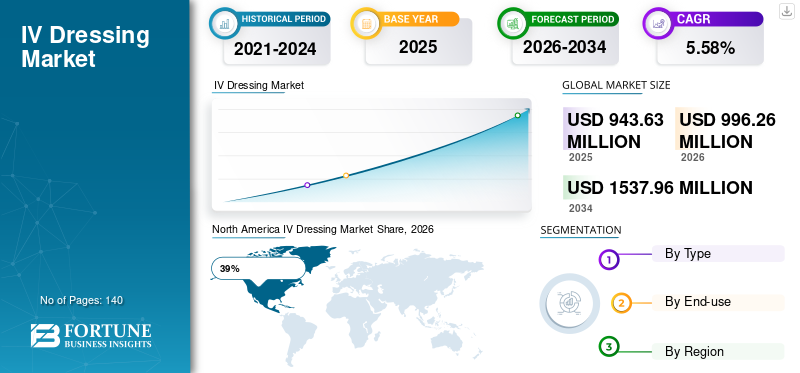
The IV dressing market size was valued at USD 943.63 Million in 2025. The market is projected to grow from USD 996.26 Million in 2026 to USD 1537.96 Million by 2034, exhibiting a CAGR of 5.58% during the forecast period.

The IV dressing market is an essential segment of the global wound care and vascular access management industry, focusing on products designed to secure intravenous catheters and protect insertion sites from contamination, moisture, and accidental displacement. IV dressings play a critical role in infection prevention protocols across healthcare facilities, helping reduce catheter-related complications while improving patient comfort and treatment outcomes. Growing emphasis on patient safety, increasing hospitalization rates, expanding intravenous therapy procedures, and rising awareness regarding healthcare-associated infections continue to support demand across healthcare settings. The IV dressing market report highlights growing adoption of advanced dressing materials, enhanced adhesion technologies, and transparent monitoring solutions. As healthcare providers prioritize infection control and procedural efficiency, the IV dressing market analysis indicates sustained demand from hospitals, outpatient facilities, and specialized care centers. IV dressing market trends also reflect increasing preference for breathable, skin-friendly, and antimicrobial dressing products designed for extended wear applications.
The United States represents one of the most established markets for IV dressing products due to its extensive healthcare infrastructure, high volume of intravenous procedures, and strong regulatory focus on infection prevention. Hospitals and healthcare systems across the country continue implementing stringent vascular access management protocols, supporting widespread adoption of advanced IV dressing solutions. The increasing prevalence of chronic diseases requiring infusion therapy, oncology treatments, dialysis procedures, and long-term catheter use has strengthened demand for reliable dressing products.
Healthcare providers in the United States increasingly prefer transparent dressings that enable continuous visualization of insertion sites while minimizing unnecessary dressing changes. The IV dressing industry report indicates strong procurement activity among large hospital networks seeking products that improve clinical outcomes and reduce infection risks. Growing investments in healthcare quality initiatives, expansion of ambulatory care centers, and rising emphasis on evidence-based infection control practices continue to support the overall IV dressing market outlook across the country.
Download Free sample to learn more about this report.
IV Dressing Market Key Takeaways
 Global Market Size & Forecast
- 2025 Market Size: USD 943.63 Million
- 2026 Market Size: USD 996.26 Million
- 2034 Forecast Market Size: USD 1,537.96 Million
- CAGR: 5.58% from 2026–2034
 Market Share
- North America dominated with a revenue share of 39% in 2025.
- Transparent IV dressings led by type, accounting for approximately 68% of the global market share.
- Hospitals dominated by end-use, accounting for approximately 74% of the global market share.
 Key Regional Highlights
North America
North America held the largest regional share at 39% of the global market.
Europe
Europe accounted for 28% of the global IV dressing market.
Asia-Pacific
Asia-Pacific represented 24% of the global market.
U.S
The U.S. is a significant market supported by demand for IV dressings across hospitals and healthcare facilities.
Japan
Japan accounted for approximately 21% of the Asia-Pacific IV dressing market.
Read More

IV Dressing Market Latest Trends
The IV dressing market is experiencing significant transformation driven by innovation in material science, infection prevention strategies, and patient-centered healthcare delivery. One of the most prominent IV dressing market trends is the growing adoption of transparent film dressings that allow healthcare professionals to monitor catheter insertion sites without removing protective barriers. This trend enhances clinical efficiency while reducing disruption to patients.
Download Free sample to learn more about this report.
Another key trend involves the integration of antimicrobial technologies into IV dressing products. Manufacturers are increasingly developing dressings containing antimicrobial agents designed to minimize bacterial colonization around catheter insertion sites. Such innovations are gaining traction among healthcare facilities seeking to strengthen infection prevention programs.
The IV dressing market research report also identifies increasing demand for breathable and moisture-balanced dressing solutions that improve skin integrity during prolonged catheter use. Healthcare providers are focusing on products that reduce skin irritation and enhance patient comfort, particularly among elderly and pediatric populations.
Digital healthcare expansion is also influencing procurement decisions. Hospitals are increasingly evaluating IV dressing products based on long-term clinical outcomes, compatibility with infection control protocols, and overall treatment efficiency. Furthermore, sustainability initiatives are encouraging manufacturers to explore environmentally responsible packaging and production practices. These developments continue to create new IV dressing market opportunities while reshaping competitive dynamics across the industry.
IV Dressing Market Dynamics
DRIVER
Rising Prevalence of Intravenous Therapies and Infection Prevention Requirements
The primary driver supporting IV dressing market growth is the increasing utilization of intravenous therapies across healthcare systems worldwide. Intravenous access is essential for administering medications, fluids, nutrition, chemotherapy, blood products, and critical care treatments. As the number of patients requiring these therapies continues to increase, healthcare facilities are placing greater emphasis on maintaining secure and sterile catheter sites.
Healthcare-associated infections remain a major concern for hospitals and regulatory bodies. Catheter-related bloodstream infections can lead to extended hospital stays, additional treatment requirements, and increased clinical burdens. Consequently, healthcare organizations are implementing strict infection prevention protocols that rely heavily on effective IV dressing products. Advanced dressings provide protection against external contaminants while supporting site visibility and secure catheter stabilization.
The aging population further contributes to demand, as older individuals frequently require infusion therapies and long-term vascular access devices. Additionally, rising surgical procedures, emergency care admissions, and chronic disease management programs continue expanding the need for dependable IV dressing solutions. These factors collectively strengthen the IV dressing market size and reinforce positive long-term market development.
RESTRAINT
Availability of Alternative Catheter Securement Technologies
A significant restraint affecting the IV dressing market involves the growing adoption of alternative catheter stabilization and securement technologies. Some healthcare providers are increasingly utilizing engineered stabilization devices, securement systems, and integrated catheter management solutions that may reduce reliance on conventional dressing products in specific applications.
Cost sensitivity within healthcare institutions also presents challenges. Budget constraints often influence procurement decisions, particularly among smaller hospitals and healthcare facilities operating under limited financial resources. In some regions, purchasing departments prioritize lower-cost dressing products, which can slow adoption of premium advanced dressings featuring enhanced antimicrobial or monitoring capabilities.
Skin sensitivity concerns among certain patient populations represent another limitation. Extended use of adhesive-based dressings may occasionally contribute to skin irritation, discomfort, or allergic reactions. Healthcare providers must carefully select products suitable for different patient needs, increasing complexity in product selection processes.
Additionally, regulatory compliance requirements and lengthy product approval pathways can delay the commercialization of innovative dressing technologies. These factors may limit market expansion speed and create barriers for new entrants seeking to introduce differentiated solutions within the IV dressing industry analysis framework.
OPPORTUNITY
Expansion of Advanced Antimicrobial and Specialty Dressing Solutions
The increasing focus on infection control creates substantial opportunities for manufacturers developing advanced IV dressing technologies. Healthcare organizations worldwide are investing in solutions capable of reducing catheter-related complications and improving patient outcomes. This trend creates favorable conditions for antimicrobial, absorbent, and specialty dressing products designed to address evolving clinical requirements.
Emerging healthcare markets present particularly attractive growth prospects. Expanding healthcare infrastructure, improving hospital capacity, and rising awareness regarding infection prevention are increasing demand for high-quality IV dressing products. As healthcare standards continue advancing, adoption of specialized dressing solutions is expected to accelerate.
Manufacturers also have opportunities to develop patient-centric products emphasizing comfort, skin protection, and extended wear performance. Pediatric, neonatal, and geriatric patient groups require specialized solutions tailored to their unique clinical needs. Innovations targeting these segments can generate significant competitive advantages.
The IV dressing market forecast also highlights opportunities associated with home healthcare and outpatient infusion services. Growing preference for care outside traditional hospital environments is increasing demand for reliable, user-friendly dressing products capable of supporting long-term catheter management while maintaining safety standards.
CHALLENGE
Maintaining Product Differentiation in a Competitive Marketplace
One of the major challenges facing the IV dressing market is the increasing level of competition among established manufacturers and emerging suppliers. Numerous companies offer similar dressing solutions, making product differentiation increasingly difficult. Healthcare purchasers frequently compare products based on clinical effectiveness, ease of use, durability, and cost efficiency, creating pressure on manufacturers to continuously innovate.
Pricing competition remains particularly intense within institutional procurement environments. Large healthcare networks often negotiate contracts based on volume purchasing arrangements, reducing profit margins for suppliers. Manufacturers must balance competitive pricing with ongoing investments in research, development, quality assurance, and regulatory compliance.
Another challenge involves ensuring consistent performance across diverse clinical environments. IV dressing products must function effectively under varying conditions including moisture exposure, patient movement, extended wear periods, and different skin types. Achieving reliable performance while maintaining patient comfort requires significant technological expertise.
Supply chain disruptions and raw material availability issues can further affect production schedules and product availability. Manufacturers must establish resilient sourcing strategies to maintain continuity and meet growing healthcare demand. Addressing these challenges effectively remains essential for sustaining IV dressing market share and strengthening long-term competitive positioning within the global healthcare sector.
IV Dressing Market Segmentation
By Type
Transparent IV dressings represent the leading product category within the IV dressing market and account for approximately 68% of the global market share. These dressings are widely used across healthcare facilities because they allow continuous visualization of the catheter insertion site without requiring removal of the dressing. Healthcare professionals can easily inspect the site for signs of infection, inflammation, leakage, or catheter displacement, which supports timely clinical intervention and improved patient safety.
The growing emphasis on infection prevention and vascular access management has significantly increased the adoption of transparent dressings. Modern transparent IV dressings are manufactured using breathable polyurethane films that provide an effective barrier against bacteria, viruses, and external contaminants while allowing moisture vapor transmission. This combination helps maintain an optimal healing environment and reduces skin maceration risks.
Hospitals and infusion centers increasingly prefer transparent dressings because they contribute to compliance with catheter maintenance guidelines. Many advanced products also incorporate reinforced borders, securement components, and antimicrobial features that improve fixation and extend wear time. The IV dressing market analysis indicates that transparent dressings continue to benefit from technological advancements focused on patient comfort, skin protection, and enhanced catheter stabilization.
Furthermore, the rising number of surgical procedures, critical care admissions, oncology treatments, and long-term infusion therapies continues to strengthen demand for transparent IV dressings. Their versatility and clinical effectiveness make them the preferred choice across adult, pediatric, and geriatric patient populations. The IV dressing market report suggests that this segment will maintain its dominant position due to its widespread acceptance among healthcare providers and ongoing innovation in dressing materials and adhesive technologies.
Translucent IV dressings account for approximately 32% of the global IV dressing market share. These products provide catheter stabilization and insertion site protection while offering partial visibility of the underlying skin. Although not as widely adopted as transparent dressings, translucent variants remain important in various healthcare applications where durability, comfort, and cost-effectiveness are key considerations.
Healthcare facilities often utilize translucent dressings in situations where frequent site monitoring is not required or where specific patient conditions favor alternative dressing materials. These dressings are designed to offer reliable adhesion, moisture control, and contamination protection while maintaining patient comfort during extended use. Many translucent products incorporate soft, skin-friendly materials that reduce irritation and support secure catheter placement.
The IV dressing industry analysis highlights growing demand for translucent dressings in long-term care facilities, rehabilitation centers, and community healthcare settings. These environments often prioritize dressing durability and patient comfort alongside infection prevention objectives. Manufacturers are responding by developing improved translucent dressing products with enhanced breathability and flexible wear characteristics.
Another factor supporting market demand is the increasing expansion of home healthcare services. Patients receiving infusion therapies outside hospital environments frequently require dressing solutions that combine ease of application with dependable catheter protection. Translucent dressings can effectively address these requirements while offering cost advantages in certain healthcare systems.
The IV dressing market outlook indicates steady growth opportunities for translucent dressings as manufacturers continue introducing innovations aimed at improving adhesive performance, skin compatibility, and overall clinical outcomes. Their role in supporting diverse vascular access management needs ensures continued relevance within the broader IV dressing market.
To know how our report can help streamline your business, Speak to Analyst
By End-use
Hospitals represent the largest end-use segment in the IV dressing market, accounting for approximately 74% of total market share. The dominance of this segment is driven by the high volume of intravenous procedures performed within acute care facilities, including medication administration, fluid therapy, blood transfusions, critical care treatments, chemotherapy, and surgical interventions.
Hospital environments require strict adherence to infection prevention and patient safety standards. Consequently, healthcare institutions invest heavily in advanced IV dressing products capable of minimizing catheter-related complications and supporting evidence-based vascular access protocols. Transparent dressings with antimicrobial features are particularly popular because they facilitate continuous site monitoring while maintaining sterile conditions.
The increasing prevalence of chronic diseases, rising hospitalization rates, and growing numbers of complex medical procedures continue to support strong demand within this segment. Intensive care units, emergency departments, oncology centers, and surgical wards represent major consumers of IV dressing products due to their extensive reliance on vascular access devices.
The IV dressing market research report identifies hospital procurement departments as key decision-makers influencing product adoption. Purchasing decisions increasingly emphasize clinical performance, dressing longevity, patient comfort, and compatibility with infection control initiatives. Hospitals are also adopting integrated vascular access management programs that prioritize advanced dressing technologies designed to reduce healthcare-associated infections.
Furthermore, large healthcare networks are investing in staff training and standardized catheter care protocols, increasing the importance of reliable dressing products. These trends continue to strengthen hospital demand and reinforce the segment’s leadership position within the global IV dressing market size.
Clinics account for approximately 26% of the global IV dressing market share and represent an increasingly important end-user category. This segment includes outpatient facilities, specialty treatment centers, infusion clinics, ambulatory care centers, physician offices, and community healthcare providers. The growing shift toward outpatient care delivery has contributed significantly to rising demand for IV dressing products within clinic environments.
Many clinics provide infusion therapies, biologic treatments, oncology services, hydration therapies, and chronic disease management programs that require reliable vascular access solutions. As patient volumes increase, clinics are seeking dressing products that offer ease of application, strong catheter securement, and effective infection prevention capabilities.
The IV dressing market trends indicate increasing adoption of advanced dressings among outpatient facilities seeking to improve clinical efficiency and patient satisfaction. Transparent dressings are particularly valued because they allow healthcare professionals to assess catheter sites quickly without disrupting treatment. This capability supports workflow optimization and enhances patient monitoring practices.
Home-based infusion programs coordinated through clinics also contribute to segment growth. Patients receiving treatment outside hospital settings require dependable dressing products that remain secure during daily activities while minimizing the need for frequent replacement. Manufacturers are responding by introducing user-friendly dressing solutions designed for both professional and caregiver application.
Additionally, expanding healthcare access in developing regions is increasing the number of outpatient treatment facilities worldwide. This trend creates new IV dressing market opportunities for suppliers seeking to expand their presence beyond traditional hospital settings. As healthcare systems continue emphasizing cost-effective care delivery, clinics are expected to remain an important contributor to overall market demand.
IV Dressing Market Regional Outlook
North America IV Dressing Market Share, 2026 (%)
To get more information on the regional analysis of this market, Download Free sample
North America
North America remains the largest regional market for IV dressing products, supported by advanced healthcare infrastructure, widespread adoption of infection prevention protocols, and high utilization of intravenous therapies. The region accounts for approximately 39% of the global IV dressing market share. Hospitals and healthcare networks across the United States and Canada maintain stringent vascular access management standards, driving consistent demand for advanced IV dressing solutions.
The region benefits from strong awareness regarding catheter-related bloodstream infection prevention, encouraging healthcare providers to invest in premium dressing products with enhanced securement and antimicrobial properties. Growing numbers of surgical procedures, oncology treatments, and critical care admissions further support product utilization. Additionally, the expansion of outpatient infusion centers and home healthcare services has increased demand for reliable dressings suitable for long-term catheter management.
Technological innovation remains a defining characteristic of the North American market. Healthcare facilities increasingly adopt dressings that improve site visibility, reduce dressing change frequency, and enhance patient comfort. Procurement decisions often emphasize clinical effectiveness and compliance with evidence-based care standards. The IV dressing market outlook for North America continues to benefit from investments in healthcare quality improvement initiatives, infection control programs, and advanced wound care technologies. Manufacturers operating in the region focus heavily on product differentiation, material innovation, and integrated vascular access management solutions to meet evolving healthcare requirements.
Europe
Europe represents a significant share of the global IV dressing market, accounting for approximately 28% of worldwide demand. The region benefits from well-established healthcare systems, strong regulatory oversight, and increasing emphasis on patient safety. Healthcare providers across European countries prioritize infection prevention measures, creating stable demand for advanced IV dressing products.
The region's aging population contributes substantially to market growth, as elderly patients often require prolonged intravenous therapies and vascular access management. Hospitals and specialty clinics continue investing in dressings that reduce infection risks and improve treatment outcomes. Transparent dressings remain particularly popular due to their ability to facilitate continuous site monitoring while maintaining barrier protection.
European healthcare organizations increasingly focus on reducing healthcare-associated infections and improving operational efficiency. This trend encourages adoption of advanced dressing technologies offering longer wear times, improved adhesion, and enhanced patient comfort. The IV dressing industry report indicates growing collaboration between healthcare providers and manufacturers to develop innovative solutions addressing changing clinical needs.
Expansion of ambulatory care services and home-based treatment programs further supports regional demand. Healthcare systems seek cost-effective products capable of maintaining clinical performance outside traditional hospital settings. These factors collectively position Europe as a key market for both established suppliers and emerging innovators within the IV dressing industry.
Germany IV Dressing Market
Germany accounts for approximately 24% of the European IV dressing market and serves as one of the region’s most influential healthcare markets. The country’s highly developed healthcare infrastructure, strong hospital network, and advanced infection control standards support substantial demand for IV dressing products. German healthcare providers place considerable emphasis on evidence-based clinical practices, making product quality and performance critical purchasing considerations.
Hospitals throughout Germany conduct a high volume of surgical procedures, intensive care treatments, and chronic disease management programs that require dependable vascular access solutions. Consequently, demand for advanced transparent dressings and antimicrobial dressing technologies remains strong. Healthcare facilities increasingly seek products that improve catheter stabilization while reducing infection-related complications.
The German market also benefits from growing adoption of outpatient treatment services and specialized infusion centers. These facilities require efficient dressing products that support patient mobility and treatment continuity. Regulatory requirements encourage healthcare providers to maintain rigorous infection prevention measures, further supporting dressing utilization.
Manufacturers targeting Germany often emphasize innovation, durability, and skin compatibility to meet clinician expectations. Research activities related to wound care and vascular access management continue influencing product development trends. The IV dressing market research report identifies Germany as a key market for premium dressing solutions and advanced catheter care technologies, making it a strategic destination for industry investment and expansion.
United Kingdom IV Dressing Market
The United Kingdom represents approximately 19% of the European IV dressing market and remains an important contributor to regional demand. The country’s healthcare system places significant emphasis on infection prevention, patient safety, and standardized clinical protocols, all of which support adoption of high-quality IV dressing products.
Hospitals and healthcare organizations across the United Kingdom continue implementing best practices for catheter care management. This focus has increased demand for transparent dressings that facilitate site assessment while maintaining sterile protection. The growing prevalence of chronic illnesses requiring intravenous therapies also contributes to market expansion.
The outpatient care sector is becoming increasingly important within the United Kingdom. Infusion centers, specialty clinics, and community healthcare providers require efficient dressing solutions capable of supporting treatment continuity outside traditional inpatient environments. Demand for dressings with strong adhesion and extended wear performance is particularly notable in these settings.
Healthcare procurement strategies increasingly prioritize products demonstrating clinical effectiveness and cost efficiency. As a result, manufacturers compete by offering innovative dressing technologies that balance performance, comfort, and infection prevention capabilities. The IV dressing market analysis highlights ongoing opportunities associated with home healthcare growth, aging demographics, and expanding vascular access procedures. Continued investments in healthcare quality improvement programs are expected to sustain demand across both hospital and outpatient segments.
Asia-Pacific
Asia-Pacific is one of the fastest-evolving regions in the IV dressing market and holds approximately 24% of the global market share. The region benefits from expanding healthcare infrastructure, increasing healthcare expenditures, growing awareness regarding infection prevention, and a rising patient population requiring intravenous therapies. Countries across the region are investing significantly in hospital modernization, critical care facilities, and advanced treatment capabilities, creating favorable conditions for IV dressing adoption.
The increasing prevalence of chronic diseases such as cancer, diabetes, cardiovascular disorders, and kidney diseases has contributed to higher utilization of intravenous treatments. As healthcare providers focus on improving patient outcomes, demand for advanced dressing products that support catheter stabilization and infection control continues to increase. Transparent IV dressings are gaining widespread acceptance because they facilitate site monitoring and reduce unnecessary dressing changes.
Government initiatives aimed at strengthening healthcare systems further support market development. In addition, medical tourism growth in several Asia-Pacific countries has increased demand for quality healthcare products and advanced clinical practices. Manufacturers are actively expanding distribution networks throughout the region to capture emerging opportunities. The IV dressing market forecast indicates continued growth driven by rising hospitalization rates, expanding outpatient services, and increasing adoption of modern vascular access management protocols across both developed and developing economies.
Japan IV Dressing Market
Japan accounts for approximately 21% of the Asia-Pacific IV dressing market and remains one of the region’s most technologically advanced healthcare markets. The country’s aging population is a major factor influencing demand, as older patients frequently require intravenous therapies, long-term catheter use, and specialized medical treatments. This demographic trend continues to support consistent utilization of IV dressing products across hospitals and healthcare facilities.
Japanese healthcare providers maintain stringent infection prevention standards and prioritize products that enhance patient safety. Advanced transparent dressings are commonly used due to their ability to provide continuous visibility of catheter insertion sites while maintaining a protective barrier against contamination. Hospitals increasingly seek products that combine durability, comfort, and effective securement performance.
The market also benefits from ongoing innovation in medical materials and wound care technologies. Manufacturers operating in Japan focus on developing skin-friendly dressings that minimize irritation and support long-term wear. Home healthcare services are expanding as healthcare systems seek efficient ways to manage growing patient needs, creating additional demand for reliable IV dressing products.
Furthermore, Japan's emphasis on healthcare quality and clinical excellence encourages adoption of advanced vascular access management solutions. The IV dressing industry analysis identifies strong opportunities for manufacturers capable of delivering innovative products that address evolving patient care requirements and support infection prevention objectives.
China IV Dressing Market
China represents approximately 37% of the Asia-Pacific IV dressing market, making it the largest national market within the region. Rapid healthcare infrastructure development, increasing hospital capacity, and growing healthcare awareness have significantly strengthened demand for IV dressing products. The country’s large patient population creates substantial requirements for intravenous therapies across hospitals, clinics, and community healthcare facilities.
The expansion of healthcare access has resulted in greater utilization of infusion treatments, surgical procedures, and chronic disease management services. Consequently, healthcare providers increasingly adopt advanced dressing products designed to improve catheter securement and reduce infection risks. Transparent IV dressings are experiencing particularly strong demand due to their clinical advantages and compatibility with modern infection control practices.
Government healthcare reforms and investments in hospital modernization continue supporting market growth. Medical institutions are increasingly focused on enhancing patient safety and improving treatment quality, encouraging adoption of advanced wound care and vascular access products. Domestic manufacturers and international suppliers actively compete within the Chinese market by introducing innovative dressing technologies tailored to local healthcare needs.
The IV dressing market research report highlights China's strategic importance due to its expanding healthcare sector and growing demand for high-quality medical consumables. Continued investment in healthcare infrastructure and increasing emphasis on clinical best practices are expected to sustain strong market momentum.
Rest of World
The Rest of World region, including Latin America, the Middle East, and Africa, accounts for approximately 9% of the global IV dressing market share. While comparatively smaller than North America, Europe, and Asia-Pacific, this region presents substantial long-term opportunities due to improving healthcare infrastructure and increasing awareness of infection prevention practices.
Many countries within these regions are investing in hospital construction, healthcare modernization, and expanded access to medical services. As healthcare facilities adopt more advanced clinical protocols, demand for reliable IV dressing products continues to rise. Hospitals are increasingly implementing infection control measures that require effective catheter site management and securement solutions.
The growing burden of chronic diseases and rising numbers of surgical procedures are additional factors supporting demand. Healthcare providers are recognizing the importance of advanced dressings in reducing catheter-related complications and improving patient outcomes. Transparent dressings are gradually gaining market acceptance as clinical awareness increases.
International manufacturers continue expanding their presence through distribution partnerships and localized product offerings. Educational initiatives focused on vascular access management are also contributing to greater product adoption. The IV dressing market insights indicate that continued healthcare investments, expanding treatment accessibility, and strengthening infection prevention programs will create favorable growth opportunities throughout Latin America, the Middle East, and Africa.
List of Top IV Dressing Companies
- 3M
- Smith+Nephew
- Cardinal Health
- McKesson Corporation
- Covalon Technologies Ltd.
- Richardson Healthcare, Inc.
- Medline Industries
- Paul Hartmann AG
- Lohmann & Rauscher (L&R)
- Mölnlycke Health Care AB
- DermaRite Industries, LLC
- BSN Medical
- DeRoyal Industries, Inc.
- Dynarex Corporation
- Komal Health Care Pvt. Ltd.
- Sentry Medical
- Shandong Dermcosy Medical Co., Ltd.
Top Two Companies by Market Share
- 3M – 18% market share
- Smith+Nephew – 14% market share
Investment Analysis and Opportunities
The IV dressing market continues to attract investments from medical device manufacturers, healthcare suppliers, and private investors due to the increasing importance of infection prevention and vascular access management. Investment activity is particularly focused on advanced dressing technologies that improve patient outcomes while reducing healthcare-associated complications. Companies are allocating resources toward product innovation, clinical validation, and manufacturing expansion to strengthen their competitive positions.
Growing demand from emerging healthcare markets presents significant opportunities for investors. Countries across Asia-Pacific, Latin America, and the Middle East are expanding healthcare infrastructure, creating favorable conditions for increased IV dressing consumption. Strategic partnerships, distribution network expansion, and localized manufacturing initiatives are becoming common investment strategies.
Another important opportunity lies in antimicrobial dressing technologies and advanced catheter securement solutions. Healthcare providers increasingly seek products capable of enhancing infection control performance and improving treatment efficiency. Investments supporting research and development activities are expected to generate long-term value through product differentiation and premium market positioning.
The expansion of home healthcare and outpatient infusion services also creates attractive opportunities. As treatment delivery shifts beyond traditional hospital environments, demand for user-friendly, durable, and clinically effective dressing products is expected to increase, encouraging further investment throughout the IV dressing industry.
New Product Development
Innovation remains a central focus within the IV dressing market as manufacturers seek to address evolving clinical requirements related to infection prevention, catheter stabilization, and patient comfort. New product development efforts increasingly emphasize advanced materials that provide stronger adhesion while minimizing skin trauma during dressing removal. Healthcare providers are demanding solutions capable of maintaining secure catheter placement without compromising patient experience, particularly for long-term vascular access applications.
Manufacturers are introducing transparent dressings with enhanced moisture management capabilities, allowing healthcare professionals to monitor insertion sites while maintaining an optimal skin environment. Several new-generation products incorporate breathable film technologies that improve vapor transmission and reduce the risk of skin maceration. These innovations support extended wear durations and contribute to improved treatment efficiency.
Antimicrobial IV dressings represent another major area of product development. Companies are integrating antimicrobial agents into dressing structures to help reduce microbial colonization around catheter insertion sites. Such products align with increasing healthcare industry focus on preventing catheter-related bloodstream infections and improving patient safety outcomes.
Research activities are also focused on smart dressing technologies capable of supporting advanced monitoring functions. Emerging concepts include dressings designed to indicate moisture accumulation, adhesive degradation, or potential infection risks. While adoption remains in early stages, these innovations have the potential to transform vascular access management practices.
Additionally, manufacturers are developing specialized dressing solutions tailored to pediatric, neonatal, and geriatric patient populations. These products emphasize gentle adhesion, enhanced flexibility, and improved comfort. The IV dressing market opportunities associated with product innovation continue expanding as healthcare providers seek solutions that deliver superior clinical performance and patient-centered care.
Five Recent Developments (2023–2025)
- 3M Expanded Advanced Catheter Securement Portfolio (2023)
- Smith+Nephew Enhanced Transparent Dressing Technologies (2023)
- Medline Industries Increased Production Capacity (2024)
- Mölnlycke Health Care Advanced Infection Prevention Solutions (2024)
- Cardinal Health Expanded Distribution Network for IV Care Products (2025)
Report Coverage of IV Dressing Market
The IV dressing market report provides comprehensive analysis of industry developments, competitive dynamics, product innovations, and emerging opportunities across the global healthcare sector. The report evaluates key market segments, including product types and end-use applications, offering detailed insights into factors influencing demand and adoption patterns. Special attention is given to infection prevention strategies, vascular access management practices, and technological advancements shaping the future of IV dressing products.
Request for Customization to gain extensive market insights.
The scope of the report includes assessment of market drivers, restraints, opportunities, and challenges affecting industry participants. It examines how healthcare infrastructure development, chronic disease prevalence, and increasing intravenous therapy procedures contribute to market expansion. The report also explores procurement trends, product preferences, and evolving regulatory requirements influencing purchasing decisions among healthcare providers.
Regional analysis forms an important component of the report, covering North America, Europe, Asia-Pacific, and Rest of World markets. Country-level evaluations highlight major growth centers and emerging opportunities across developed and developing healthcare systems. The study further reviews competitive strategies adopted by leading manufacturers, including product innovation, partnership development, geographic expansion, and manufacturing investments.
Additionally, the IV dressing market research report investigates future industry prospects, technological advancements, and investment trends expected to influence market performance. It serves as a valuable resource for manufacturers, distributors, healthcare providers, investors, and stakeholders seeking actionable IV dressing market insights, IV dressing market forecast information, and strategic business intelligence.
Frequently Asked Questions
Fortune Business Insights says that the global market value stood at USD 943.63 million in 2025 and is projected to reach USD 1,537.96 million by 2034.
The market is expected to exhibit a CAGR of 5.58% during the forecast period of 2025-2034.
Transparent IV dressings were the leading type segment, accounting for approximately 68% of the market, owing to their ability to provide visibility of catheter sites while protecting against contamination.
Key players include 3M, Smith+Nephew, Cardinal Health, McKesson Corporation, Covalon Technologies Ltd., and Richardson Healthcare, Inc.
Major trends include growing adoption of transparent film dressings and antimicrobial technologies, along with rising demand for breathable, skin-friendly products. North America leads regionally with approximately 39% market share.



- 2021-2034
- 2025
- 2021-2024
- 140
-

(Offer valid till 15th Oct 2026)
Get 30-60 hrs Free Customization
Expand Regional and Country Coverage, Segments Analysis, Company Profiles, Competitive Benchmarking, and End-user Insights.













.webp)






-
US +1 833 909 2966 ( Toll Free )
-
Get In Touch With Us