Meat Poultry Seafood Market Size, Share & Industry Analysis, By Product (Meat, Poultry), By Type (Conventional, Organic), By Form (Fresh, Frozen), By Distribution Channel and Regional Forecast, 2026-2034
 Download Free Sample

Meat Poultry Seafood Market Overview
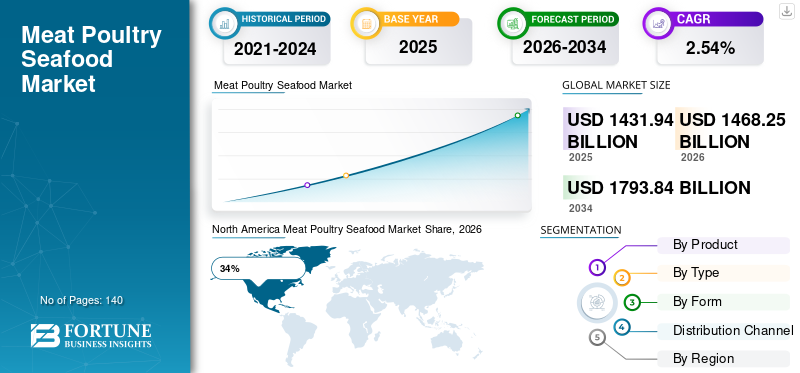
The meat poultry seafood market size was valued at USD 1431.94 Billion in 2025. The market is projected to grow from USD 1468.25 Billion in 2026 to USD 1793.84 Billion by 2034, exhibiting a CAGR of 2.54% during the forecast period.

The meat poultry seafood market represents a critical segment of the global food and protein industry, supplying fresh, frozen, processed, and value-added protein products to retail, foodservice, hospitality, and industrial buyers. Growing urbanization, changing dietary preferences, rising protein consumption, and expansion of cold-chain infrastructure continue to support market expansion. Technological advancements in processing, packaging, traceability, and food safety monitoring are reshaping industry operations. Demand for premium cuts, convenience products, ready-to-cook offerings, and sustainably sourced seafood is increasing across developed and emerging economies. The meat poultry seafood market Report indicates strong demand from institutional buyers, restaurants, supermarkets, and food processing companies worldwide.
Download Free sample to learn more about this report.
U.S. Meat Poultry Seafood Market
The United States remains one of the largest producers and consumers within the meat poultry seafood market. Advanced livestock farming systems, extensive poultry production networks, and highly integrated seafood distribution channels contribute to market strength. Consumer preference for protein-rich diets continues to drive demand across beef, pork, chicken, turkey, and seafood categories. The country benefits from advanced cold-storage facilities, large-scale processing plants, and efficient transportation networks. Growing demand for organic meat, antibiotic-free poultry, and sustainably harvested seafood is encouraging manufacturers to diversify product portfolios. Foodservice operators, supermarkets, and quick-service restaurant chains remain key purchasers within the USA Meat Poultry Seafood Industry Analysis.
Meat Poultry Seafood Market Key Takeaways
 Global Market Size & Forecast
- 2025 Market Size: USD 1,431.94 Billion
- 2026 Market Size: USD 1,468.25 Billion
- 2034 Forecast Market Size: USD 1,793.84 Billion
- CAGR: 2.54% from 2026-2034
 Market Share
- The market in North America dominated with a revenue share of 34% in 2025.
- Meat dominated by product with a market share of approximately 57%.
- Conventional products dominated by type with a market share of approximately 74%.
 Key Regional Highlights
North America
North America led the market with a 34% share, supported by strong demand for meat, poultry, and seafood products.
Asia-Pacific
Asia-Pacific accounted for 31% of the market, driven by rising protein consumption and expanding foodservice industries.
Europe
Europe held a 27% share, supported by established food distribution networks and steady consumer demand for protein products.
U.S
The U.S. remains a key market, supported by strong retail and foodservice demand for meat, poultry, and seafood.
Japan
Japan accounted for approximately 14% of the Asia-Pacific market, supported by established seafood consumption and demand for high-quality protein products.
Read More

Meat Poultry Seafood Market Latest Trends
The meat poultry seafood market trends are increasingly influenced by convenience-oriented consumption patterns. Ready-to-cook meat products, marinated poultry items, and frozen seafood meals are gaining popularity among consumers seeking quick meal solutions. Advanced packaging technologies such as vacuum sealing and modified atmosphere packaging are extending shelf life while maintaining freshness.
Download Free sample to learn more about this report.
Another significant trend is the growing focus on sustainability and traceability. Producers are investing in digital tracking systems to provide transparency regarding sourcing, animal welfare practices, and environmental impact. Demand for premium seafood products, organic poultry, and grass-fed meat continues to rise among health-conscious consumers. Automation in slaughterhouses, processing facilities, and packaging plants is improving operational efficiency while helping companies address labor shortages. The meat poultry seafood market outlook also highlights increasing adoption of e-commerce platforms for protein product sales, enabling direct-to-consumer distribution models and expanding market accessibility.
Meat Poultry Seafood Market Dynamics
Driver
Rising Global Demand for Animal Protein
The primary driver of the meat poultry seafood market growth is the increasing demand for high-quality protein sources. Population growth, urban expansion, and changing dietary habits have significantly increased meat, poultry, and seafood consumption worldwide. Developing economies are witnessing greater disposable income levels, encouraging consumers to include more protein-rich foods in their daily diets.
Foodservice establishments, hotels, institutional kitchens, and restaurant chains continue to increase procurement volumes to meet rising customer demand. Poultry remains particularly attractive because of affordability and nutritional value, while seafood benefits from growing awareness regarding omega-3 fatty acids and other health benefits. Technological improvements in farming, feed management, disease control, and processing efficiency further support production growth. The meat poultry seafood market Research Report indicates that expanding retail channels and improved cold-chain logistics are enabling suppliers to reach previously underserved regions, strengthening overall market demand.
Restraint
Volatility in Feed And Raw Material Costs
One of the major restraints affecting the meat poultry seafood market is the fluctuation in feed prices and input costs. Livestock and poultry producers depend heavily on feed ingredients such as corn, soybean meal, and other grains. Variations in agricultural production caused by weather conditions, supply disruptions, or geopolitical events can significantly impact production expenses.
Seafood producers face similar challenges due to rising fuel costs, fishing restrictions, and aquaculture feed expenses. These cost pressures often reduce profitability and create pricing uncertainties throughout the supply chain. Additionally, increasing regulatory requirements related to food safety, environmental compliance, and animal welfare add operational expenses. Small and medium-sized producers frequently struggle to absorb these additional costs. The meat poultry seafood market Analysis demonstrates that persistent input cost volatility remains a significant challenge for manufacturers, distributors, and processors seeking stable profit margins.
Opportunity
Expansion of Premium and Value-Added Products
Growing consumer interest in premium, healthy, and convenient protein products presents substantial opportunities within the meat poultry seafood market. Demand for organic meat, free-range poultry, sustainably sourced seafood, and minimally processed protein products continues to expand across multiple regions.
Value-added offerings such as seasoned meat cuts, ready-to-cook poultry meals, frozen seafood kits, and portion-controlled products are attracting busy consumers and foodservice operators. Manufacturers are increasingly investing in advanced processing technologies to develop differentiated products with longer shelf life and enhanced convenience. Export opportunities are also increasing as emerging markets expand protein consumption. The meat poultry seafood market Opportunities are further supported by innovations in packaging, digital traceability systems, and premium branding strategies that allow producers to capture higher-value market segments and improve competitive positioning.
Challenge
Food Safety and Supply Chain Complexity
Food safety management remains one of the most significant challenges facing the meat poultry seafood market. The industry operates through complex supply chains involving farming, harvesting, processing, storage, transportation, and retail distribution. Any breakdown in quality control can result in contamination risks, product recalls, and reputational damage.
Seafood products are particularly vulnerable because of perishability and temperature sensitivity. Meat and poultry processors must continuously invest in inspection systems, testing protocols, and regulatory compliance programs. Labor shortages in processing facilities also affect operational efficiency and product availability. Additionally, global supply chains are increasingly exposed to transportation disruptions, climate-related events, and trade restrictions. The Meat Poultry Seafood Industry Report highlights that maintaining product quality, regulatory compliance, and supply chain resilience remains essential for long-term competitiveness.
Meat Poultry Seafood Market Segmentation
By Product
The meat segment accounts for approximately 57% of the meat poultry seafood market Share. Beef, pork, lamb, and processed meat products continue to generate strong demand from retail consumers and foodservice operators. Growth is supported by rising protein consumption, expanding restaurant chains, and increasing demand for premium cuts. Advanced livestock breeding techniques, feed optimization, and processing innovations have improved production efficiency and product quality.
The segment also benefits from growing interest in premium and specialty meat products. Consumers increasingly seek grass-fed beef, lean pork options, and traceable sourcing information. Food manufacturers utilize meat ingredients extensively in prepared meals, snacks, and convenience foods. Strong distribution networks and cold-chain investments further enhance market penetration. Meat remains a dominant component within the meat poultry seafood market forecast due to consistent consumer demand and broad application across foodservice and retail sectors.
The poultry segment represents around 43% of the meat poultry seafood market Share. Chicken and turkey products remain highly popular because of affordability, versatility, and favorable nutritional profiles. Poultry consumption continues to increase among health-conscious consumers seeking lean protein alternatives.
Industrial-scale poultry farming, advanced genetics, automated processing systems, and efficient feed conversion rates contribute to competitive pricing and large-scale production capabilities. Demand for antibiotic-free, organic, and free-range poultry products is increasing across developed markets. Foodservice chains rely heavily on poultry products for menu offerings due to consistent supply and consumer acceptance. Continued innovation in ready-to-cook and value-added poultry products further supports segment expansion across both retail and commercial channels.
To know how our report can help streamline your business, Speak to Analyst
By Type
The conventional category holds approximately 74% of the meat poultry seafood market Size. Conventional meat, poultry, and seafood products dominate global consumption because of widespread availability, established production systems, and competitive pricing structures. Large-scale farming and fishing operations enable manufacturers to meet high-volume demand from supermarkets, restaurants, and institutional buyers.
Supply chain efficiencies and extensive processing infrastructure support consistent product availability. Conventional products remain particularly important in emerging economies where affordability significantly influences purchasing decisions. Foodservice operators also prefer conventional protein products for cost management and supply reliability. Despite growing interest in premium alternatives, conventional products continue to represent the largest portion of market demand.
The organic segment accounts for nearly 26% of the meat poultry seafood market Share. Rising health awareness and consumer preference for natural production methods are supporting growth in organic meat, poultry, and seafood products. Buyers increasingly seek products free from synthetic additives, antibiotics, and artificial growth promoters.
Organic certification standards encourage transparency and strengthen consumer trust. Retailers are expanding shelf space dedicated to organic protein products to accommodate increasing demand. Premium pricing structures allow producers to achieve attractive margins while addressing niche consumer preferences. The meat poultry seafood market Insights indicate that organic products are becoming an important differentiation strategy for leading manufacturers.
By Form
Fresh products represent approximately 63% of overall market demand. Fresh meat, poultry, and seafood remain preferred choices among consumers seeking optimal taste, texture, and nutritional quality. Retail supermarkets, butcher shops, fish markets, and foodservice establishments are major distribution channels for fresh products.
Advances in refrigerated transportation and storage infrastructure support the segment's growth. Consumers often associate fresh products with higher quality and greater culinary flexibility. Premium restaurants and hospitality operators continue to prioritize fresh protein sourcing to maintain product standards and customer satisfaction.
Frozen products account for around 37% of market demand. Frozen meat, poultry, and seafood products offer extended shelf life, reduced waste, and convenient storage. The segment has gained popularity among households, institutional buyers, and foodservice operators seeking inventory flexibility.
Technological advancements in freezing methods help preserve product quality and nutritional value. Frozen seafood products are particularly important for international trade because they facilitate long-distance transportation. Growing demand for convenience foods and ready-to-cook meals continues to support frozen product adoption across global markets.
Distribution Channel
Retail channels account for approximately 61% of meat poultry seafood market Share, while foodservice and institutional channels collectively represent the remaining market volume. Supermarkets, hypermarkets, specialty stores, and online grocery platforms serve as primary retail distribution points.
Foodservice demand remains substantial due to expanding restaurant networks, catering businesses, and hospitality operations. Institutional buyers including schools, hospitals, and corporate cafeterias also contribute significantly to market demand. Digital ordering systems and direct-to-consumer delivery models are creating additional growth opportunities within distribution networks.
Meat Poultry Seafood Market Regional Outlook
North America Meat Poultry Seafood Market Share, 2026 (%)
To get more information on the regional analysis of this market, Download Free sample
North America
North America accounts for 34% of the global meat poultry seafood market Share. The region benefits from advanced farming systems, integrated supply chains, and strong consumer demand for protein-rich foods. The United States and Canada maintain extensive livestock and poultry production capacities supported by sophisticated processing infrastructure. Demand for premium meat products, sustainable seafood, and value-added poultry offerings continues to increase. Investments in food safety technologies, automation, and cold-chain logistics further strengthen regional competitiveness. Strong retail networks and foodservice demand continue supporting regional expansion while innovation in packaging and traceability systems enhances operational efficiency.
Europe
Europe holds approximately 27% of the global meat poultry seafood market Share. The region emphasizes food safety, sustainability, and animal welfare standards. Consumer demand for premium products, organic offerings, and traceable seafood continues to grow. Major processing facilities and advanced distribution networks support efficient market operations. Retailers increasingly focus on transparency and sustainable sourcing practices. Demand for convenience-oriented products such as ready-to-cook poultry and frozen seafood meals remains strong across European markets. Innovation in packaging and quality assurance technologies contributes significantly to regional development.
Germany Meat Poultry Seafood Market
Germany represents approximately 24% of the European meat poultry seafood market. The country possesses a highly developed food processing sector supported by advanced logistics and retail infrastructure. Strong demand exists for pork, poultry, and processed meat products across both retail and foodservice channels. Consumer interest in organic and premium protein products continues to expand.
Food manufacturers actively invest in sustainable production methods and advanced packaging technologies. Supermarkets play a crucial role in product distribution, while foodservice operators contribute substantial procurement volumes. Traceability, food quality, and regulatory compliance remain central priorities for German producers. Growing demand for convenience-oriented protein products further supports market development.
United Kingdom Meat Poultry Seafood Market
The United Kingdom accounts for approximately 18% of the European meat poultry seafood market. Poultry remains the most consumed protein category, while seafood demand continues to benefit from health-conscious consumption patterns. Retail chains and online grocery platforms play critical roles in distribution.
The market demonstrates increasing demand for ethically sourced products and premium seafood offerings. Foodservice operators continue to drive procurement volumes across urban centers. Investments in cold storage, packaging innovations, and digital supply chain management contribute to operational improvements. Consumer preference for ready-to-cook and ready-to-eat protein products continues influencing purchasing patterns throughout the country.
Asia-Pacific
Asia-Pacific commands approximately 31% of the global meat poultry seafood market Share. Population growth, urbanization, and rising disposable incomes are major demand drivers. The region contains some of the world's largest meat and seafood consuming countries. Poultry and seafood products are particularly important due to affordability and cultural dietary preferences.
Expanding retail infrastructure, modernization of food processing facilities, and growth in e-commerce channels continue supporting market development. Governments across the region are investing in food security initiatives and agricultural modernization programs. Demand for frozen and convenience-oriented protein products is also increasing steadily among urban consumers.
Japan Meat Poultry Seafood Market
Japan contributes approximately 14% of the Asia-Pacific meat poultry seafood market. Seafood remains a central component of Japanese dietary habits, although poultry consumption has expanded significantly. Advanced processing technologies and stringent food safety standards characterize the market.
Consumers prioritize product quality, freshness, and traceability. Premium seafood products and high-quality meat cuts maintain strong demand. Retailers increasingly utilize advanced packaging technologies to preserve freshness and extend shelf life. Convenience-oriented products and prepared meal solutions continue gaining popularity among urban households.
China Meat Poultry Seafood Market
China represents approximately 39% of the Asia-Pacific meat poultry seafood market. The country's large population and increasing protein consumption create substantial demand across meat, poultry, and seafood categories. Poultry production continues expanding due to affordability and favorable consumer perception.
Rapid modernization of food processing facilities, cold-chain infrastructure development, and retail expansion support market growth. Demand for premium imported seafood and branded protein products continues increasing among middle-income consumers. Food safety improvements and digital traceability systems remain key industry priorities. E-commerce platforms have become increasingly important distribution channels throughout the country.
Rest of World
The Rest of World region accounts for approximately 8% of the global meat poultry seafood market Share. Growth is supported by increasing urbanization, expanding foodservice sectors, and rising protein consumption across Latin America, the Middle East, and Africa. Poultry products remain particularly popular because of affordability and ease of production.
Governments and private investors continue expanding cold-chain infrastructure and food processing capabilities. Seafood exports contribute significantly to economic activity in several countries. Demand for packaged, frozen, and value-added protein products is gradually increasing as modern retail channels expand. Continued investment in food safety and logistics infrastructure is expected to strengthen regional market participation.
List of Top Meat Poultry Seafood Companies
- Conagra Brands, Inc.
- Hormel Foods, LLC
- Tyson Foods
- Cremonini Group
- Sanderson Farms
- J.M. Sucker
- Cargill, Inc.
- Beijing Aosiyun Meat Foodstuff
- NH Foods Ltd.
- Baiada Pty. Ltd.
Top Two Companies by Market Share
- Tyson Foods – 12.8%
- Cargill, Inc. – 9.6%
Investment Analysis and Opportunities
Investment activity within the meat poultry seafood market continues to focus on automation, processing efficiency, cold-chain infrastructure, and sustainable production systems. Manufacturers are allocating significant capital toward advanced slaughtering equipment, robotic packaging technologies, and digital traceability platforms. These investments improve operational productivity while helping companies meet increasingly stringent food safety requirements.
Opportunities are emerging in premium product categories, including organic poultry, grass-fed meat, and sustainably sourced seafood. Expanding urban populations and rising demand for convenience foods are encouraging investments in ready-to-cook and frozen protein products. E-commerce distribution channels also present attractive growth opportunities, enabling direct engagement with consumers. Strategic partnerships between producers, processors, and retailers are becoming increasingly common as companies seek supply chain efficiencies and broader market access. Investment in aquaculture technologies, sustainable feed development, and environmentally responsible production methods is expected to remain a key area of industry focus.
New Product Development
Product innovation remains a major competitive strategy within the meat poultry seafood market. Manufacturers are introducing value-added products designed to meet evolving consumer preferences for convenience, nutrition, and premium quality. Ready-to-cook poultry meals, marinated meat products, and portion-controlled seafood offerings continue gaining market acceptance.
Advanced packaging solutions are improving freshness retention and extending shelf life. Smart packaging technologies incorporating freshness indicators and digital traceability features are becoming more prevalent. Companies are also developing organic and antibiotic-free protein products to address increasing consumer demand for transparency and sustainability. Frozen seafood meal kits, premium protein snacks, and retail-ready convenience products are expanding product portfolios. These innovations help manufacturers differentiate themselves while addressing changing purchasing behaviors across retail and foodservice markets.
Five Recent Developments (2023-2025)
- Tyson Foods expanded automation investments across multiple processing facilities to improve operational efficiency and labor productivity.
- Cargill increased sustainable protein sourcing initiatives and enhanced traceability programs across selected supply chains.
- NH Foods introduced new premium poultry product lines targeting convenience-focused consumers.
- Hormel Foods expanded value-added meat product offerings designed for retail and foodservice applications.
- Conagra Brands strengthened frozen protein product portfolios through innovation in ready-to-cook meal solutions.
Report Coverage
The meat poultry seafood market Report provides comprehensive analysis of production trends, consumption patterns, supply chain developments, competitive landscapes, and technological advancements. The report evaluates market dynamics including drivers, restraints, opportunities, and challenges influencing industry performance. Detailed segmentation analysis covers product categories, production methods, product forms, and distribution channels.
Request for Customization to gain extensive market insights.
Regional assessment examines demand patterns across North America, Europe, Asia-Pacific, and Rest of World markets while highlighting country-level developments in major economies. The study also reviews competitive positioning of leading manufacturers, investment activities, product innovation strategies, and supply chain modernization efforts. Special attention is given to sustainability initiatives, food safety standards, packaging advancements, and evolving consumer preferences. The report serves as a valuable resource for manufacturers, investors, distributors, retailers, and industry stakeholders seeking meat poultry seafood market Insights, Meat Poultry Seafood Industry Analysis, and meat poultry seafood market Opportunities.
Frequently Asked Questions
Fortune Business Insights says that the global market value stood at USD 1,431.94 billion in 2025 and is projected to reach USD 1,793.84 billion by 2034.
The market is expected to exhibit a CAGR of 2.54% during the forecast period of 2026-2034.
Meat was the leading product segment, accounting for approximately 57% of the market share, supported by consistent consumer demand and broad applications across retail and foodservice.
Key players include Conagra Brands, Inc.; Hormel Foods, LLC; Tyson Foods; Cremonini Group; Sanderson Farms; and Cargill, Inc.
Major trends include rising demand for ready-to-cook and convenience-oriented protein products and increasing focus on sustainability, traceability, and advanced packaging technologies. North America led the market with a 34% share.


- 2021-2034
- 2025
- 2021-2024
- 140
-

(Offer valid till 15th Nov 2026)
Get 30-60 hrs Free Customization
Expand Regional and Country Coverage, Segments Analysis, Company Profiles, Competitive Benchmarking, and End-user Insights.




















-
US +1 833 909 2966 ( Toll Free )
-
Get In Touch With Us