Microcurrent Facial Market Size, Share & Industry Analysis, By Application (Anti-aging, Skin Tightening, Skin Rejuvenation), By End-use (Medspa, At-home, HCP-owned clinic) and Regional Forecast, 2026-2034
 Download Free Sample
Microcurrent Facial Market Overview
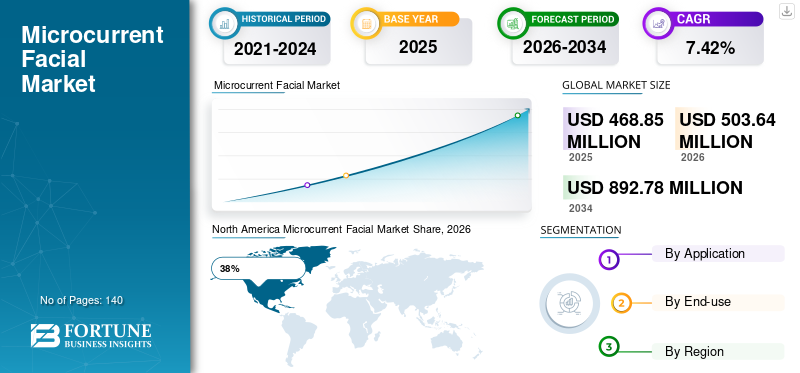
The microcurrent facial market size was valued at USD 468.85 million in 2025. The market is projected to grow from USD 503.64 million in 2026 to USD 892.78 million by 2034, exhibiting a CAGR of 7.42% during the forecast period.

The microcurrent facial market is witnessing substantial growth due to increasing consumer demand for non-invasive aesthetic treatments and advanced skin rejuvenation procedures. Microcurrent facial therapies use low-level electrical currents to stimulate facial muscles, improve skin elasticity, and enhance collagen production. Rising awareness regarding anti-aging skincare, facial contouring, and wrinkle reduction is driving adoption across medspas, aesthetic clinics, and at-home beauty device markets. The microcurrent facial market Report highlights increasing demand for painless cosmetic treatments with minimal recovery time. Technological advancements in portable beauty devices, rising skincare spending, and expanding wellness culture continue to strengthen microcurrent facial market growth globally.
The USA microcurrent facial market is expanding rapidly because of growing demand for premium skincare treatments, increasing aesthetic awareness, and rising popularity of non-surgical cosmetic procedures. Consumers across the United States are increasingly adopting microcurrent facial therapies for skin tightening, anti-aging treatment, and facial muscle toning applications. The microcurrent facial market analysis in the USA highlights strong demand for portable at-home beauty devices and personalized skincare technologies. Medspas and aesthetic clinics are expanding advanced facial treatment offerings to meet rising consumer expectations. Celebrity-driven beauty trends, social media skincare influence, and increasing consumer spending on wellness continue to support the microcurrent facial market Outlook in the United States.
Download Free sample to learn more about this report.
Microcurrent Facial Market Key Takeaways
 Global Market Size & Forecast
- 2025 Market Size: USD 468.85 Million
- 2026 Market Size: USD 503.64 Million
- 2034 Forecast Market Size: USD 892.78 Million
- CAGR: 7.42% from 2026-2034
 Market Share
- The market in North America dominated with a revenue share of 38% in 2025.
- Anti-aging dominated by application with a market share of approximately 46%
- Medspa facilities dominated by end use with a market share of approximately 49%.
 Key Regional Highlights
North America
North America led the market with a 38% share, supported by strong demand for non-invasive aesthetic treatments and advanced skincare services.
Europe
Europe accounted for 30% of the market, driven by growing adoption of aesthetic procedures and established beauty and wellness services.
Asia-Pacific
Asia-Pacific held a 24% share, supported by rising consumer spending on skincare and expanding aesthetic treatment services.
U.S
The U.S. remains a key market, supported by strong demand for non-invasive facial treatments and advanced aesthetic technologies.
Japan
Japan accounted for approximately 26% of the Asia-Pacific market, supported by advanced beauty technologies and growing demand for facial rejuvenation treatments.
Read More

Microcurrent Facial Market Latest Trends
The microcurrent facial market trends are increasingly influenced by rising consumer preference for non-invasive beauty treatments and personalized skincare technologies. Beauty clinics and medspas are incorporating advanced microcurrent facial devices into anti-aging programs to provide skin lifting, wrinkle reduction, and facial contouring benefits without surgical intervention. Consumers are increasingly seeking aesthetic treatments with minimal downtime and natural-looking results, driving strong demand for microcurrent-based therapies. Portable and app-connected beauty devices are also becoming increasingly popular among younger consumers seeking convenient at-home skincare solutions.
Download Free sample to learn more about this report.
Another major trend identified in the microcurrent facial market Research Report is the growing integration of artificial intelligence and smart skincare personalization technologies. Manufacturers are developing microcurrent devices with adjustable intensity settings, skin analysis features, and mobile application connectivity to improve treatment customization and user experience. Social media beauty influencers and skincare professionals are significantly contributing to product awareness and market penetration globally. The microcurrent facial market forecast further highlights increasing demand for combination therapies integrating LED light treatment, radiofrequency technology, and microcurrent stimulation for enhanced skin rejuvenation outcomes.
Microcurrent Facial Market Dynamics
DRIVER
Rising Demand for Non-Invasive Anti-Aging Treatments
The increasing demand for non-invasive anti-aging treatments is one of the primary factors driving microcurrent facial market growth. Consumers worldwide are increasingly prioritizing aesthetic enhancement and preventive skincare while avoiding surgical cosmetic procedures and extended recovery periods. Microcurrent facial therapies provide visible skin tightening, wrinkle reduction, and facial contouring benefits through painless electrical stimulation, making them highly attractive among aging populations and beauty-conscious consumers.
The microcurrent facial market analysis indicates growing adoption of microcurrent technologies across medspas, aesthetic clinics, and luxury wellness centers. Consumers are increasingly seeking personalized skincare treatments capable of improving facial muscle tone and collagen production naturally. Expansion of social media beauty trends and celebrity skincare endorsements are accelerating awareness regarding non-invasive facial rejuvenation procedures. Manufacturers are also introducing portable at-home beauty devices with advanced treatment customization features to expand consumer accessibility. Rising disposable income and growing investment in premium skincare routines continue to strengthen the Microcurrent Facial Industry Report globally.
RESTRAINT
High Treatment Costs and Limited Long-Term Clinical Evidence
High treatment costs and limited long-term clinical evidence remain major restraints affecting the microcurrent facial market Share. Professional microcurrent facial treatments offered in aesthetic clinics and medspas can be relatively expensive, limiting accessibility among budget-sensitive consumers. Multiple treatment sessions are often required to maintain visible skin improvement results, increasing overall consumer expenditure. This pricing challenge may reduce market penetration in emerging economies and price-sensitive consumer segments.
The microcurrent facial market Outlook also highlights skepticism among certain consumers regarding treatment effectiveness and long-term aesthetic benefits. While many users report visible improvements in facial toning and skin tightening, standardized clinical evidence supporting long-term outcomes remains limited in some regions. Regulatory requirements for aesthetic devices and safety compliance standards may also increase product development costs for manufacturers. Additionally, competition from alternative non-invasive skincare technologies such as radiofrequency and laser-based treatments creates market pressure within the microcurrent facial market Size.
OPPORTUNITY
Expansion of At-Home Beauty Devices and Wellness Culture
The expansion of at-home beauty devices and wellness-focused consumer lifestyles presents substantial microcurrent facial market Opportunities. Consumers are increasingly investing in portable skincare technologies that allow professional-grade aesthetic treatments within home environments. At-home microcurrent facial devices offer convenience, flexibility, and long-term cost savings compared to repeated clinical procedures, making them highly attractive among younger beauty consumers and wellness-focused individuals.
The microcurrent facial market Insights highlight increasing investment in smart skincare devices equipped with mobile application integration, AI-powered personalization, and customizable treatment programs. Beauty technology companies are developing compact, rechargeable, and travel-friendly devices designed for daily skincare routines. Expansion of wellness tourism, luxury skincare services, and digital beauty platforms is also supporting market growth. Rising male grooming trends and increasing consumer interest in preventive anti-aging skincare continue to create additional opportunities within the global Microcurrent Facial Industry Analysis.
CHALLENGE
Intense Competition and Rapidly Changing Beauty Trends
Intense competition and rapidly evolving beauty trends remain major challenges within the microcurrent facial market forecast. The beauty and aesthetic device industry is highly competitive, with numerous skincare technologies competing for consumer attention across anti-aging and facial rejuvenation categories. Manufacturers must continuously innovate device functionality, treatment customization, and skincare integration capabilities to maintain brand differentiation and customer loyalty.
The microcurrent facial market Research Report further highlights challenges related to consumer education and treatment consistency. Improper device usage or unrealistic consumer expectations may impact satisfaction levels and product credibility. Beauty trends influenced by social media platforms can also shift rapidly, requiring companies to continuously adapt marketing strategies and product positioning. Additionally, maintaining device safety, treatment efficacy, and regulatory compliance across international markets increases operational complexity within the Microcurrent Facial Market.
Microcurrent Facial Market Segmentation
By Application
Anti-aging: Anti-aging applications dominate the microcurrent facial market with approximately 46% market share because consumers increasingly seek non-invasive solutions for wrinkle reduction, facial lifting, and skin elasticity improvement. Microcurrent facial therapies stimulate facial muscles and improve circulation, helping reduce visible signs of aging and improving skin texture. Medspas and aesthetic clinics widely utilize these treatments within anti-aging skincare programs targeting mature consumer demographics. The microcurrent facial market Report highlights increasing demand for anti-aging therapies integrated with collagen stimulation and hydration-focused skincare treatments. Consumers are increasingly prioritizing preventive skincare routines and early anti-aging interventions to maintain youthful facial appearance. Beauty clinics are introducing customized microcurrent treatment plans tailored to specific skin conditions and aging concerns. Rising consumer spending on premium skincare and aesthetic wellness continues to strengthen the Anti-aging segment within the overall microcurrent facial market growth landscape.
Skin Tightening applications account for approximately 31% of the microcurrent facial market Share because consumers increasingly prefer non-surgical facial contouring and skin firming procedures. Microcurrent technology improves facial muscle tone and stimulates skin tissue, helping improve jawline definition and skin firmness without invasive treatment methods. These procedures are particularly popular among consumers seeking natural-looking facial enhancement outcomes. The microcurrent facial market trends indicate increasing adoption of skin tightening therapies within luxury medspas and wellness clinics. Manufacturers are introducing advanced microcurrent devices with customizable intensity levels and facial mapping technologies to improve treatment precision. Social media beauty trends and growing awareness regarding facial sculpting techniques continue to accelerate demand for skin tightening applications globally.
Skin Rejuvenation contributes approximately 23% to the microcurrent facial market Size because consumers increasingly seek treatments focused on improving skin brightness, hydration, and overall facial vitality. Microcurrent facial therapies help stimulate blood circulation and cellular activity, improving skin tone consistency and reducing facial fatigue appearance. Beauty professionals often combine these treatments with serums and LED therapies to enhance skincare effectiveness. The microcurrent facial market forecast highlights increasing demand for holistic skincare treatments promoting relaxation and wellness alongside cosmetic enhancement. Consumers are increasingly incorporating microcurrent rejuvenation sessions into regular self-care and wellness routines. Rising awareness regarding preventive skincare and healthy aging continues to support growth within the Skin Rejuvenation segment globally.
To know how our report can help streamline your business, Speak to Analyst
By End-use
Medspa facilities dominate the microcurrent facial market with approximately 49% market share because consumers increasingly seek professional aesthetic treatments performed by trained skincare specialists. Medspas provide customized microcurrent facial therapies integrated with premium skincare products and advanced facial rejuvenation technologies. Consumers prefer professional treatment environments because they offer personalized consultations and visible treatment outcomes. The microcurrent facial market analysis highlights rising investment in luxury medspa infrastructure and advanced beauty treatment equipment globally. Medspa operators are expanding anti-aging and skin contouring services to meet increasing consumer demand for non-invasive cosmetic procedures. Strong beauty tourism trends and wellness-focused consumer behavior continue to strengthen the medspa segment within the overall market landscape.
At-home applications account for approximately 34% of the microcurrent facial market Share because portable beauty devices are becoming increasingly affordable and accessible. Consumers are adopting compact microcurrent facial devices for regular skincare maintenance and convenience-driven beauty routines. Wireless charging capabilities, app-based controls, and rechargeable battery systems are improving consumer adoption of home-use devices. The microcurrent facial market Research Report highlights growing demand for personalized beauty technologies and self-care skincare routines among younger consumers. Manufacturers are developing lightweight devices with customizable treatment programs optimized for everyday use. Expansion of e-commerce and digital beauty marketing continues to accelerate growth within the at-home microcurrent facial segment globally.
HCP-owned clinics contribute approximately 17% to the microcurrent facial market because healthcare professionals increasingly incorporate non-invasive aesthetic therapies into dermatology and cosmetic treatment services. These clinics provide medically supervised facial rejuvenation procedures targeting patients seeking clinically guided anti-aging treatments and skin improvement programs. The microcurrent facial market Industry Analysis indicates rising demand for combination therapies integrating microcurrent technology with dermatological skincare treatments. Healthcare providers are emphasizing evidence-based aesthetic procedures and personalized treatment planning to improve patient satisfaction. Increasing awareness regarding medical aesthetics continues to support long-term growth within the HCP-owned clinic segment globally.
Microcurrent Facial Market Regional Outlook
North America
North America Microcurrent Facial Market Share, 2026 (%)
To get more information on the regional analysis of this market, Download Free sample
North America dominates the microcurrent facial market because of strong consumer spending on aesthetic treatments, high skincare awareness, and widespread adoption of non-invasive cosmetic technologies. Consumers across the region increasingly prioritize anti-aging skincare and wellness-focused beauty procedures. North America represents approximately 38% of the global market.
The microcurrent facial market Industry Analysis highlights increasing demand for luxury medspa services, portable beauty devices, and personalized skincare technologies throughout the region. Beauty clinics are expanding advanced facial contouring and skin rejuvenation treatment offerings to meet growing consumer expectations. Celebrity-driven beauty trends and social media skincare culture continue to support regional market growth.
Europe
Europe remains a significant contributor to the microcurrent facial market because consumers increasingly prioritize premium skincare products and advanced aesthetic treatments. Medspas and cosmetic clinics across the region are adopting microcurrent facial technologies to provide non-invasive anti-aging and facial toning procedures. Europe contributes approximately 30% of the global market.
The microcurrent facial market Report highlights rising demand for organic skincare integration and personalized aesthetic wellness programs throughout European beauty industries. Consumers are emphasizing natural-looking cosmetic enhancement and preventive skincare strategies. Expansion of luxury wellness tourism and clean beauty movements continues to strengthen the market across Europe.
Germany Microcurrent Facial Market
Germany accounts for approximately 32% of the European microcurrent facial market because consumers increasingly invest in advanced skincare treatments and medically supervised aesthetic procedures. Beauty clinics and wellness centers across Germany are adopting microcurrent technologies for anti-aging, skin tightening, and facial contouring applications.
The Germany microcurrent facial market Outlook highlights rising demand for scientifically supported skincare devices and premium wellness services. Consumers prioritize treatment safety, product quality, and dermatological expertise when selecting aesthetic procedures. Germany’s strong healthcare and cosmetic technology ecosystem continues to support growth within the Microcurrent Facial Market.
United Kingdom Microcurrent Facial Market
The United Kingdom contributes approximately 24% to the European microcurrent facial market because consumers are increasingly influenced by celebrity beauty culture and social media skincare trends. Non-invasive facial lifting and anti-aging treatments are becoming increasingly popular among urban consumers and wellness-focused demographics.
The United Kingdom microcurrent facial market forecast indicates growing adoption of at-home beauty devices and digital skincare personalization technologies. Beauty clinics and medspas are expanding premium facial treatment services targeting younger consumers seeking preventive anti-aging solutions. Strong e-commerce growth and beauty influencer marketing continue to strengthen the Microcurrent Facial Industry Report within the United Kingdom.
Asia-Pacific
Asia-Pacific is witnessing rapid expansion within the microcurrent facial market because of increasing beauty consciousness, rising disposable income, and strong skincare culture across regional markets. Consumers increasingly prioritize facial aesthetics, skin rejuvenation, and anti-aging skincare within daily wellness routines. Asia-Pacific contributes approximately 24% of the global market.
The microcurrent facial market trends indicate increasing demand for compact beauty devices, skin-brightening treatments, and luxury aesthetic services throughout Asia-Pacific. Beauty technology companies are expanding personalized skincare offerings and digital beauty engagement strategies across regional markets. Rising urbanization and wellness-focused consumer lifestyles continue to accelerate market growth.
Japan Microcurrent Facial Market
Japan represents approximately 26% of the Asia-Pacific microcurrent facial market because consumers strongly prioritize advanced skincare technologies and preventive anti-aging treatments. Beauty clinics and cosmetic brands across Japan are introducing innovative microcurrent therapies focused on skin tightening and facial contouring applications.
The Japan microcurrent facial market analysis highlights rising demand for minimalist beauty devices and high-performance skincare technologies designed for daily use. Consumers value subtle and natural-looking aesthetic improvement combined with long-term skin health benefits. Japan’s advanced beauty innovation ecosystem continues to support strong market expansion.
China Microcurrent Facial Market
China accounts for approximately 40% of the Asia-Pacific microcurrent facial market because of rapid beauty industry expansion, growing middle-class spending, and increasing influence of digital beauty platforms. Consumers are increasingly purchasing at-home beauty devices and premium skincare treatments through e-commerce and livestream commerce channels.
The China microcurrent facial market Research Report highlights rising demand for facial contouring technologies, anti-aging beauty devices, and personalized skincare programs. Domestic and international beauty brands are investing heavily in influencer marketing and localized product innovation strategies. Increasing beauty awareness and wellness-focused lifestyles continue to accelerate microcurrent facial market growth across China.
Rest of World
The Rest of World microcurrent facial market is gradually expanding as consumers across Latin America, the Middle East, and Africa increasingly adopt premium skincare treatments and non-invasive aesthetic procedures. Growing awareness regarding anti-aging skincare and wellness-focused beauty routines is supporting demand for microcurrent facial therapies across emerging economies. Rest of World contributes approximately 8% of the global market.
Beauty clinics and medspas are expanding advanced facial treatment services to attract consumers seeking personalized skincare and facial rejuvenation solutions. Rising beauty tourism activities and increasing accessibility of portable beauty devices continue to create additional microcurrent facial market Opportunities globally.
List of Top Microcurrent Facial Companies
- Skin Body Health Clinic
- Skintherapy
- American Face and Body Clinic
- Medicis Medical Spa
- SkinLab USA
- Skinglow Clinic
- Wyndham Place Clinic
- Enhance Aesthetics and Laser Clinic
- The Ottawa Skin Clinic
- Renajo Skin Clinic
Top Two Companies with Highest Market Share
- SkinLab USA – 18%
- Medicis Medical Spa – 15%
Investment Analysis and Opportunities
The microcurrent facial market Opportunities segment is attracting strong investment from beauty technology companies, aesthetic clinics, and wellness-focused skincare brands. Investors are focusing on portable beauty devices, AI-powered skincare personalization technologies, and luxury wellness services. Growing consumer demand for non-invasive anti-aging treatments is creating substantial commercial opportunities across global beauty markets.
The microcurrent facial market Insights highlight increasing investment in smart skincare ecosystems integrating mobile applications, facial analysis software, and personalized treatment recommendations. Beauty companies are developing advanced microcurrent devices with improved portability, rechargeable systems, and customizable treatment modes. Expansion of e-commerce beauty retail and wellness tourism industries continues to strengthen long-term investment potential within the Microcurrent Facial Industry Analysis.
New Product Development
The microcurrent facial market trends highlight continuous innovation in portable beauty technologies and personalized skincare devices. Manufacturers are developing lightweight microcurrent facial systems equipped with app connectivity, adjustable treatment settings, and ergonomic facial applicators. Advanced battery performance and wireless charging technologies are improving consumer convenience and product usability.
Beauty technology companies are also integrating LED therapy, radiofrequency treatment, and hydration-focused skincare systems into multifunctional aesthetic devices. The microcurrent facial market Research Report highlights increasing innovation in smart skincare personalization technologies capable of analyzing skin conditions and recommending customized treatment programs. Rising consumer demand for premium at-home beauty solutions continues to accelerate product development globally.
Five Recent Developments (2023-2025)
- SkinLab USA introduced AI-enabled microcurrent facial devices with personalized skincare analysis features in 2024.
- Medicis Medical Spa expanded luxury anti-aging facial treatment programs integrating microcurrent and LED therapy technologies in 2023.
- American Face and Body Clinic launched portable at-home microcurrent beauty systems targeting wellness-focused consumers in 2025.
- Enhance Aesthetics and Laser Clinic introduced customized facial contouring programs using advanced microcurrent stimulation technologies in 2024.
- The Ottawa Skin Clinic developed combination skin rejuvenation therapies integrating microcurrent facial treatment with hydration-focused skincare protocols in 2025.
Report Coverage of Microcurrent Facial Market
The microcurrent facial market Report provides comprehensive analysis of industry trends, technological developments, competitive landscape factors, and consumer beauty preferences influencing global market expansion. The report evaluates major treatment categories including anti-aging, skin tightening, and skin rejuvenation applications. It also examines segmentation based on end-use industries, skincare technologies, and regional beauty industry developments.
Request for Customization to gain extensive market insights.
The microcurrent facial market Research Report further covers investment activities, product innovation trends, regulatory developments, and strategic collaborations among leading aesthetic service providers and beauty technology companies. Company profiling sections analyze treatment portfolios, technological capabilities, and operational strategies of major industry participants. Regional analysis highlights beauty spending trends, wellness culture expansion, and non-invasive aesthetic treatment adoption across North America, Europe, Asia-Pacific, and Rest of World markets.
Frequently Asked Questions
Fortune Business Insights says that the global market value stood at USD 468.85 million in 2025 and is projected to reach USD 892.78 million by 2034.
The market is expected to exhibit a CAGR of 7.42% during the forecast period of 2026-2034.
Anti-aging led the application segment with approximately 46% market share, driven by demand for non-invasive wrinkle reduction, facial lifting, and improved skin elasticity.
Key players include Skin Body Health Clinic, Skintherapy, American Face and Body Clinic, Medicis Medical Spa, SkinLab USA, and Skinglow Clinic.
Major trends include growing demand for personalized, non-invasive treatments and AI-enabled smart skincare devices. North America dominated with approximately 38% market share.



- 2021-2034
- 2025
- 2021-2024
- 140
-

(Offer valid till 15th Oct 2026)
Get 30-60 hrs Free Customization
Expand Regional and Country Coverage, Segments Analysis, Company Profiles, Competitive Benchmarking, and End-user Insights.



















-
US +1 833 909 2966 ( Toll Free )
-
Get In Touch With Us