 Download Free Sample



Get a Quote
Receive a tailored pricing based on your needs.
- Choose license type
- Multiple user options
- Custom scope & coverage
- Fast turnaround
"Designing Growth Strategies is in our DNA"
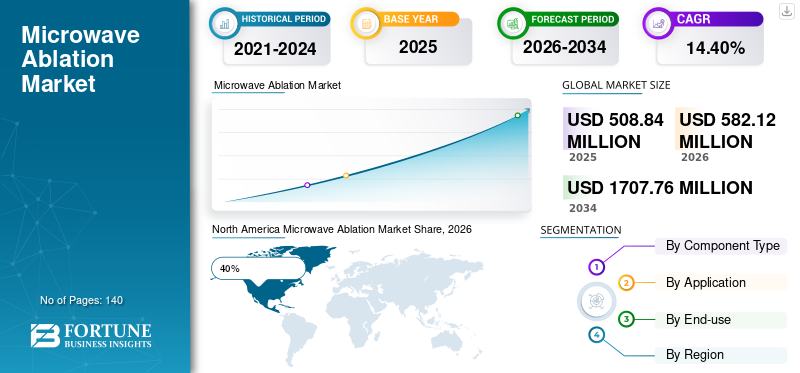
The global microwave ablation market size was valued at USD 508.84 Million in 2025. The market is projected to grow from USD 582.12 Million in 2026 to USD 1707.76 Million by 2034, exhibiting a CAGR of 14.40% during the forecast period.

The microwave ablation market is witnessing significant expansion due to the increasing adoption of minimally invasive treatment procedures across oncology, cardiology, urology, and orthopedic applications. Microwave ablation technology utilizes electromagnetic energy to destroy diseased tissues with greater precision while minimizing damage to surrounding structures. The growing burden of cancer cases worldwide, particularly liver, lung, kidney, and bone tumors, has strengthened demand for advanced ablation systems. Healthcare providers are increasingly integrating microwave ablation into treatment protocols because of shorter recovery periods and reduced hospitalization requirements. The microwave ablation market report highlights continuous technological advancements, expanding clinical applications, and increasing procedural volumes across hospitals and specialty treatment centers.
The United States accounts for approximately 41% of the global microwave ablation market share due to its advanced healthcare infrastructure and widespread adoption of minimally invasive therapies. More than 2 million new cancer cases are diagnosed annually in the country, creating strong demand for innovative tumor treatment technologies. Healthcare institutions continue investing in image-guided intervention systems that improve procedural accuracy and treatment outcomes. Microwave ablation is increasingly used for liver, lung, and kidney tumors, particularly among patients unsuitable for conventional surgery. The presence of leading medical device manufacturers, extensive clinical research programs, and favorable reimbursement support further strengthens the USA microwave ablation market outlook.
Download Free sample to learn more about this report.
 Global Market Size & Forecast
 Market Share
 Key Regional Highlights
North America
North America led the market with a 40% share in 2025, supported by advanced healthcare infrastructure and growing adoption of minimally invasive procedures.
Europe
Europe accounted for 29% of the market, driven by increasing demand for image-guided ablation therapies.
Asia-Pacific
Asia-Pacific held a 24% share, supported by rising cancer prevalence and expanding healthcare capabilities.
U.S
The U.S. market is supported by strong adoption of advanced ablation technologies and high demand for minimally invasive cancer treatments.
Japan
Japan accounted for 23% of the Asia-Pacific market, supported by advanced medical technology and growing adoption of minimally invasive therapies.
Read More

The microwave ablation market trends indicate growing preference for image-guided and robotic-assisted ablation procedures. Healthcare providers are increasingly integrating real-time navigation systems and advanced imaging technologies to improve treatment precision and reduce procedural complications. The use of microwave ablation for early-stage tumor management has expanded significantly due to favorable clinical outcomes and shorter patient recovery periods. A major trend shaping the microwave ablation market analysis is the development of next-generation generators capable of delivering controlled energy distribution and optimized thermal profiles. Manufacturers are introducing compact platforms with enhanced monitoring capabilities and intelligent software integration.
Download Free sample to learn more about this report.
Multi-antenna ablation systems are also gaining popularity because they enable treatment of larger lesions while reducing procedure duration. The increasing use of microwave ablation in outpatient settings represents another notable trend. Hospitals and specialty centers are emphasizing minimally invasive interventions that improve patient throughput and reduce treatment costs. Expanding clinical evidence supporting microwave ablation in liver, lung, kidney, and bone tumor management continues driving adoption. These advancements collectively strengthen the microwave ablation market growth trajectory and support long-term industry development.
Rising Incidence of Cancer and Increasing Demand for Minimally Invasive Treatments
The primary driver of the microwave ablation market growth is the increasing prevalence of cancer worldwide. Liver cancer, lung cancer, kidney cancer, and metastatic bone tumors continue to generate substantial demand for advanced treatment technologies. Healthcare providers are actively seeking minimally invasive procedures that offer effective tumor destruction while reducing recovery times and hospital stays. Microwave ablation provides several clinical advantages, including precise tissue targeting, reduced blood loss, and lower complication rates compared with traditional surgical approaches. Increasing awareness among physicians and patients regarding these benefits has accelerated procedural adoption. Continuous improvements in imaging guidance systems and ablation technology further contribute to market expansion and strengthen the overall microwave ablation industry analysis.
High Equipment Costs and Limited Accessibility in Developing Regions
One of the primary restraints affecting the microwave ablation market is the high cost associated with advanced ablation systems and supporting imaging infrastructure. Healthcare facilities in emerging economies often face budget limitations that restrict procurement of sophisticated medical technologies. Installation, maintenance, and operator training requirements further increase operational expenditures. Smaller hospitals may prioritize alternative treatment modalities due to financial constraints. Additionally, limited reimbursement coverage in certain regions can reduce patient access to microwave ablation procedures. Although clinical benefits are well established, affordability concerns continue to affect adoption rates in cost-sensitive healthcare environments. These factors create challenges for manufacturers seeking broader market penetration.
Expansion of Image-Guided Intervention and Outpatient Treatment Centers
A significant opportunity within the microwave ablation market opportunities landscape is the rapid expansion of image-guided intervention facilities and outpatient treatment centers. Healthcare systems worldwide are focusing on efficient treatment pathways that reduce inpatient admissions and optimize resource utilization. Microwave ablation aligns closely with these objectives because it enables minimally invasive tumor treatment with shorter recovery periods. Increasing investments in advanced imaging equipment and interventional radiology departments support wider adoption. Emerging markets are also expanding healthcare infrastructure, creating new opportunities for device manufacturers. The growing use of microwave ablation for non-oncological applications further broadens the addressable market and supports future business growth.
Requirement for Highly Skilled Operators and Procedural Complexity
A major challenge facing the microwave ablation market is the requirement for highly trained physicians capable of performing image-guided ablation procedures. Successful treatment outcomes depend on accurate probe placement, effective energy delivery, and comprehensive patient assessment. Training programs and clinical expertise remain unevenly distributed across healthcare systems. Procedural complexity can limit adoption in facilities lacking specialized interventional radiology capabilities. Furthermore, varying treatment protocols and clinical practice standards across regions create additional implementation challenges. Manufacturers must continue investing in physician education, workflow simplification, and technological innovation to address these barriers and support sustainable market development.
Generators account for approximately 67% market share within the microwave ablation market. These systems serve as the core component of microwave ablation platforms by producing and controlling electromagnetic energy used during procedures. Continuous innovation has resulted in advanced generators featuring real-time monitoring, precise energy regulation, and user-friendly interfaces. Healthcare providers increasingly prefer modern generator platforms because they improve treatment consistency and procedural efficiency. The growing adoption of multi-antenna systems has further increased demand for high-performance generators capable of supporting complex interventions.
Power distribution systems represent approximately 33% market share in the microwave ablation market. These systems ensure efficient transfer of microwave energy from the generator to the treatment antenna while maintaining procedural accuracy and safety. Reliable energy transmission is essential for achieving predictable ablation zones and optimal therapeutic outcomes. Technological advancements have improved system durability, thermal management, and compatibility with advanced generator platforms. Increasing procedural complexity and demand for larger ablation volumes continue driving innovation in power distribution technologies.
To know how our report can help streamline your business, Speak to Analyst
Oncology dominates the microwave ablation market with approximately 61% market share. The technology is widely utilized for treatment of liver, lung, kidney, and metastatic tumors due to its ability to destroy targeted tissue while preserving surrounding structures. Increasing cancer incidence and growing preference for minimally invasive therapies continue supporting segment growth. Physicians increasingly adopt microwave ablation as a primary or complementary treatment option for patients who are not suitable candidates for surgery. Continuous clinical research and expanding treatment indications further strengthen oncology’s leadership position within the market.
Cardiovascular applications account for approximately 14% market share in the microwave ablation market. The technology is increasingly explored for management of cardiac rhythm disorders and other specialized cardiovascular interventions. Advances in catheter-based systems and energy delivery technologies have improved treatment precision and safety. Healthcare providers are evaluating microwave ablation as an alternative approach in selected cardiac procedures where targeted tissue destruction is required. Ongoing clinical studies and technological improvements continue supporting market expansion within this application segment.
Urology represents approximately 15% market share within the microwave ablation market. The technology is commonly used in treatment of kidney tumors and selected urological conditions where minimally invasive intervention offers clinical advantages. Increasing awareness regarding nephron-sparing treatment approaches has strengthened demand for microwave ablation systems. Physicians value the ability to achieve effective tissue destruction while minimizing procedural trauma and recovery time. Growing prevalence of renal tumors and expanding access to image-guided therapies continue supporting segment development.
Orthopedic applications hold approximately 10% market share in the microwave ablation market. Microwave ablation is increasingly utilized for management of bone tumors, metastatic lesions, and selected pain-related conditions. The technology offers targeted treatment capabilities that can improve patient comfort and functional outcomes. Hospitals and specialty orthopedic centers are integrating microwave ablation into multidisciplinary treatment strategies for complex musculoskeletal conditions. Ongoing research into new clinical indications is expected to further strengthen adoption across orthopedic practice settings.
Hospitals account for approximately 72% market share within the microwave ablation market due to high procedural volumes, advanced imaging capabilities, and availability of specialized medical personnel. Large healthcare institutions continue investing in integrated ablation platforms to support oncology and interventional radiology services. Ambulatory Surgical Centers represent nearly 15% market share, benefiting from increasing demand for minimally invasive outpatient procedures. These facilities emphasize efficient treatment delivery and reduced hospitalization requirements. Specialty Clinics hold approximately 9% market share and focus on targeted treatment services across oncology, urology, and interventional medicine. Growing patient preference for specialized care environments supports continued expansion.
North America Microwave Ablation Market Share, 2026 (%)
To get more information on the regional analysis of this market, Download Free sample
North America accounts for approximately 40% market share in the global microwave ablation market. The region maintains leadership due to strong healthcare infrastructure, advanced interventional radiology capabilities, and widespread adoption of minimally invasive cancer treatment technologies. Hospitals and cancer treatment centers increasingly utilize microwave ablation for liver, lung, and kidney tumor management. The United States represents the largest regional contributor due to high cancer incidence and strong investment in medical technology innovation. Healthcare providers continue integrating advanced imaging systems and navigation platforms to improve procedural accuracy and patient outcomes. The growing number of outpatient treatment facilities has further expanded access to microwave ablation procedures. Canada also contributes significantly through increasing adoption of image-guided intervention techniques and expanding oncology treatment programs. Research institutions across North America continue conducting clinical studies that support broader application of microwave ablation technologies.
Europe holds approximately 29% market share in the global microwave ablation market. The region benefits from extensive healthcare coverage, advanced oncology treatment networks, and growing utilization of minimally invasive therapeutic procedures. Healthcare providers increasingly adopt microwave ablation as an alternative to conventional surgery for selected tumor treatments. Countries throughout Western Europe continue investing in modern interventional radiology facilities and advanced imaging technologies. The increasing prevalence of cancer and age-related chronic diseases contributes significantly to procedural demand. Physicians are utilizing microwave ablation for liver, lung, kidney, and bone tumor treatment due to favorable clinical outcomes and shorter recovery periods. Medical technology innovation remains a key driver across the region. Research collaborations between healthcare institutions and device manufacturers support continuous improvements in ablation systems and treatment protocols. Growing awareness regarding minimally invasive therapies further strengthens adoption rates.
Germany accounts for approximately 28% market share within the European microwave ablation market. The country benefits from advanced healthcare infrastructure, extensive oncology treatment networks, and strong medical technology adoption. Hospitals increasingly utilize microwave ablation systems for liver and lung tumor management because of their ability to provide precise tissue destruction while preserving surrounding healthy tissue. German healthcare providers continue investing in image-guided intervention platforms and advanced cancer treatment capabilities. Growing demand for minimally invasive procedures and increasing clinical research activity support continued market expansion. Germany remains one of Europe's most influential contributors to the microwave ablation industry analysis landscape.
The United Kingdom represents approximately 17% market share within the European microwave ablation market. Healthcare providers are increasingly incorporating microwave ablation into oncology treatment pathways due to favorable patient outcomes and reduced hospitalization requirements. The country continues expanding access to image-guided intervention services through investments in modern healthcare infrastructure. Rising prevalence of cancer and growing demand for minimally invasive therapies support procedural growth. Hospitals and specialty treatment centers are actively adopting advanced ablation systems to improve treatment efficiency and patient care quality. These factors continue strengthening the United Kingdom microwave ablation market outlook.
Asia-Pacific accounts for approximately 24% market share within the global microwave ablation market and represents one of the fastest-growing regional segments. Expanding healthcare infrastructure, increasing cancer prevalence, and rising healthcare expenditures continue driving adoption across major economies. Countries such as China, Japan, India, South Korea, and Australia are investing heavily in advanced medical technologies and interventional treatment capabilities. Healthcare providers increasingly recognize the benefits of microwave ablation for managing liver, lung, kidney, and bone tumors. The growing availability of specialized oncology centers and image-guided intervention facilities supports wider procedural adoption. Medical device manufacturers are expanding regional operations to improve product availability and strengthen distribution networks. Increasing physician training initiatives and growing awareness regarding minimally invasive treatment options further contribute to market expansion.
Japan accounts for approximately 23% market share within the Asia-Pacific microwave ablation market. The country benefits from highly developed healthcare infrastructure and strong adoption of innovative cancer treatment technologies. Increasing prevalence of age-related diseases and cancer cases continues supporting demand for minimally invasive therapeutic solutions. Japanese hospitals emphasize precision medicine and advanced imaging integration, making microwave ablation a valuable treatment option. Continuous investments in clinical research and healthcare modernization strengthen market growth. The adoption of sophisticated intervention technologies continues expanding throughout major healthcare institutions across Japan.
China represents approximately 32% market share within the Asia-Pacific microwave ablation market, making it the largest contributor in the region. Rapid healthcare infrastructure development and growing oncology treatment demand continue supporting strong market expansion. Hospitals increasingly invest in advanced medical equipment and image-guided intervention technologies. Rising cancer incidence and growing patient awareness regarding minimally invasive treatment options contribute significantly to procedural growth. Domestic manufacturing expansion and increasing physician training programs further enhance technology adoption. Government healthcare modernization initiatives continue creating favorable conditions for long-term market development.
The Rest of World region accounts for approximately 7% market share within the global microwave ablation market. This segment includes Latin America, the Middle East, and Africa, where healthcare systems continue undergoing modernization and expansion. Increasing investments in cancer treatment facilities and interventional radiology services support growing demand for microwave ablation technologies. Private healthcare providers are introducing advanced treatment capabilities to attract patients seeking minimally invasive procedures. Rising awareness regarding innovative tumor management approaches contributes to broader market penetration.
Medical tourism also plays an important role in selected countries, encouraging investment in advanced healthcare infrastructure. Expanding physician training initiatives and partnerships with international healthcare organizations further support technology adoption. Although market penetration remains lower than in developed regions, ongoing healthcare improvements and increasing access to specialized treatment services create substantial opportunities for future growth within the microwave ablation market opportunities landscape.
The microwave ablation market presents attractive investment opportunities due to increasing demand for minimally invasive cancer treatment technologies and expanding clinical applications. Investors continue directing capital toward companies developing advanced microwave generators, navigation systems, and image-guided intervention platforms. The growing prevalence of cancer and increasing preference for outpatient treatment procedures create favorable market conditions. Healthcare institutions worldwide are investing in interventional radiology departments and advanced oncology infrastructure. These investments generate strong demand for microwave ablation systems and supporting technologies. Emerging markets offer significant opportunities due to ongoing healthcare modernization and increasing access to specialized treatment services.
Manufacturers are actively pursuing strategic collaborations, product portfolio expansion, and geographic diversification initiatives. Investment in physician training programs and clinical research activities also supports long-term market growth. Advances in robotic-assisted intervention and artificial intelligence-assisted treatment planning create additional opportunities for technology providers. The microwave ablation market Insights indicate substantial potential for companies capable of delivering innovative, cost-effective, and clinically effective treatment solutions. Expanding treatment indications beyond oncology further enhance future investment attractiveness.
Product innovation remains a major competitive factor within the microwave ablation market. Manufacturers are introducing next-generation systems designed to improve procedural precision, energy control, and treatment efficiency. Advanced microwave generators featuring real-time monitoring and intelligent energy modulation capabilities are gaining significant attention among healthcare providers. Multi-antenna ablation systems have emerged as an important innovation, allowing treatment of larger tumors while reducing procedure times. Enhanced thermal control technologies help physicians achieve more predictable ablation zones and improved clinical outcomes. Device manufacturers are also integrating advanced software platforms that support treatment planning and procedural guidance.
Portable microwave ablation platforms are gaining popularity due to increasing demand for flexible deployment across diverse healthcare settings. Companies continue investing in antenna design improvements to optimize energy delivery and minimize collateral tissue damage. Integration with robotic-assisted intervention systems represents another significant development area. These innovations improve treatment accuracy and support increasingly complex procedures. Continuous research and development activities remain essential for strengthening competitiveness within the microwave ablation market Trends landscape.
The microwave ablation market Report provides comprehensive analysis of industry structure, technological developments, market dynamics, competitive positioning, and regional performance. The report evaluates key growth drivers, restraints, opportunities, and challenges influencing adoption across oncology, cardiovascular, urology, and orthopedic applications. Coverage includes detailed segmentation analysis by product type, application, and end-use categories. The report examines demand patterns across hospitals, ambulatory surgical centers, specialty clinics, and research institutions. Market share analysis highlights the contribution of leading product categories and application segments.
Request for Customization to gain extensive market insights.
Regional assessment covers North America, Europe, Asia-Pacific, and Rest of World markets, including country-level evaluation of major healthcare economies. The report also analyzes competitive strategies adopted by leading manufacturers, including product development initiatives, partnerships, expansion activities, and innovation programs. Investment trends, healthcare infrastructure developments, and technological advancements are assessed to provide a comprehensive understanding of industry evolution. The microwave ablation market Research Report further explores emerging opportunities associated with image-guided intervention, robotic-assisted procedures, and expanding clinical applications.
Fortune Business Insights says that the global market value stood at USD 508.84 million in 2025 and is projected to reach USD 1,707.76 million by 2034.
The market is expected to exhibit a CAGR of 14.40% during the forecast period of 2026-2034.
Oncology was the leading application segment, accounting for approximately 61% of the market, driven by increasing use in treating liver, lung, kidney, and metastatic tumors.
Key players include Medtronic, Johnson & Johnson Services, Inc., AngioDynamics, Emblation Ltd., MedWaves, Inc., and Varian Medical Systems, Inc.
Major trends include growing adoption of image-guided and robotic-assisted procedures and development of next-generation generators, multi-antenna systems, and intelligent monitoring technologies. North America led the market with approximately 40% share.


(Offer valid till 15th Nov 2026)
Get 30-60 hrs Free Customization
Expand Regional and Country Coverage, Segments Analysis, Company Profiles, Competitive Benchmarking, and End-user Insights.








.webp)





Get In Touch With Us
US +1 833 909 2966 ( Toll Free )
Receive a tailored pricing based on your needs.
Discuss your questions with our industry experts.
Have questions? Get quick answers before you purchase.

