 Download Free Sample



Get a Quote
Receive a tailored pricing based on your needs.
- Choose license type
- Multiple user options
- Custom scope & coverage
- Fast turnaround
"Designing Growth Strategies is in our DNA"
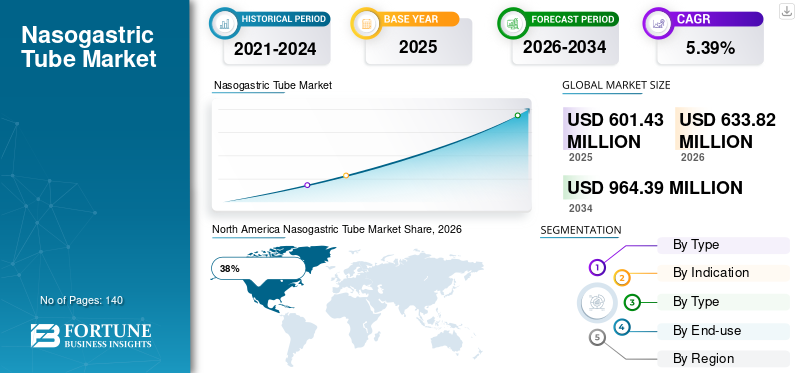
The Nasogastric Tube market size was valued at USD 601.42 Million in 2025. The market is projected to grow from USD 633.82 Million in 2026 to USD 964.38 Million by 2034, exhibiting a CAGR of 5.39% during the forecast period.

The Nasogastric Tube Market is witnessing strong demand across hospitals, critical care centers, ambulatory surgical facilities, and home healthcare environments due to the growing need for enteral feeding and gastric decompression procedures. Nasogastric tubes remain essential medical devices for patients suffering from swallowing disorders, neurological conditions, gastrointestinal complications, trauma injuries, and postoperative recovery requirements. The market is characterized by continuous product innovation, increasing adoption of biocompatible materials, and greater emphasis on patient comfort. Manufacturers are focusing on kink-resistant tubing, radiopaque markings, and improved placement technologies. The Nasogastric Tube Market Analysis also highlights rising demand from aging populations and expanding healthcare infrastructure across developed and emerging economies.
The United States remains the largest contributor to the North American Nasogastric Tube Market due to advanced healthcare systems, widespread hospital networks, and increasing prevalence of chronic diseases requiring nutritional support. Growing cases of stroke, cancer, neurological disorders, and intensive care admissions continue to create substantial demand for nasogastric tube procedures. Healthcare providers are increasingly adopting advanced feeding tube technologies that improve placement accuracy and reduce complications. Strong procurement activities from hospitals and long-term care facilities further support market expansion. The presence of leading manufacturers, established reimbursement systems, and high awareness regarding enteral nutrition solutions strengthens the overall USA Nasogastric Tube Industry Outlook.
Download Free sample to learn more about this report.
 Global Market Size & Forecast
 Market Share
 Key Regional Highlights
North America
North America led the market with a 38% share in 2025, supported by advanced healthcare infrastructure and high demand for enteral feeding solutions.
Europe
Europe accounted for 29% of the market, driven by rising geriatric care needs and established healthcare systems.
Asia-Pacific
Asia-Pacific held a 24% share, supported by improving healthcare access and increasing demand for nutritional support devices.
U.S
The U.S. market is supported by high hospital utilization, advanced critical care services, and growing demand for enteral nutrition.
Japan
Japan accounted for 27% of the Asia-Pacific market, supported by its aging population and increasing need for nutritional care solutions.
Read More

One of the most significant Nasogastric Tube Market Trends is the shift toward patient-centric enteral feeding solutions. Healthcare institutions increasingly prefer softer silicone and polyurethane-based tubes that reduce patient discomfort during prolonged use. Product developers are also integrating enhanced measurement markers and radiopaque materials to improve procedural safety and clinical efficiency.
Download Free sample to learn more about this report.
Another notable trend within the Nasogastric Tube Market Research Report is the growing adoption of home enteral nutrition programs. Rising healthcare costs and pressure on hospital capacity have encouraged healthcare systems to transition eligible patients toward home-based nutritional support. This transition has increased demand for user-friendly nasogastric tube systems designed for caregivers and outpatient environments.
Digital healthcare integration is also influencing the market. Advanced tube placement verification technologies, sensor-enabled feeding systems, and electronic patient monitoring solutions are gaining attention among healthcare providers. Additionally, manufacturers are expanding production capacities in Asia-Pacific to meet growing regional demand and strengthen global supply chain resilience. Sustainability initiatives involving recyclable packaging and environmentally conscious manufacturing practices are emerging as important competitive differentiators across the Nasogastric Tube Industry Analysis landscape.
Rising Prevalence of Dysphagia and Enteral Nutrition Requirements
The primary driver supporting the Nasogastric Tube Market Growth is the increasing incidence of dysphagia, neurological disorders, and gastrointestinal diseases worldwide. Conditions such as stroke, Parkinson’s disease, dementia, head and neck cancers, and severe trauma often impair swallowing functions, creating substantial demand for enteral feeding solutions. Nasogastric tubes provide a practical and clinically effective method for delivering nutrition, hydration, and medication directly into the stomach.
Healthcare providers increasingly recognize the importance of early nutritional intervention in improving patient outcomes and reducing hospitalization durations. Critical care units, oncology departments, rehabilitation centers, and geriatric facilities routinely utilize nasogastric tubes for short-term feeding support. The expanding elderly population further contributes to demand because aging patients experience higher rates of swallowing disorders and chronic illnesses. These factors collectively strengthen the long-term outlook reflected throughout the Nasogastric Tube Market Forecast and Nasogastric Tube Industry Report.
Risk of Complications and Procedural Challenges
Despite widespread adoption, the market faces restraints associated with tube placement complications and patient safety concerns. Improper placement can lead to aspiration, respiratory complications, nasal injuries, esophageal irritation, and infections. Such risks often require additional monitoring and verification procedures, increasing clinical workload and operational costs.
Healthcare institutions are implementing stricter guidelines and training programs to minimize adverse events, but concerns regarding placement accuracy continue to influence purchasing decisions. Some healthcare providers prefer alternative feeding methods for long-term nutritional support, including gastrostomy tubes, which may limit the duration of nasogastric tube utilization. Regulatory scrutiny surrounding product quality and safety standards also creates challenges for manufacturers entering highly regulated markets. These factors represent notable constraints within the broader Nasogastric Tube Market Analysis.
Expansion of Home Healthcare and Remote Patient Management
The growing acceptance of home healthcare presents substantial opportunities for manufacturers operating within the Nasogastric Tube Market. Healthcare systems worldwide are encouraging shorter hospital stays and increased outpatient care to optimize resource utilization. As a result, home enteral nutrition programs are becoming increasingly common among patients requiring temporary nutritional support.
Manufacturers are responding by developing lightweight, flexible, and caregiver-friendly nasogastric tube systems. Demand for portable feeding accessories, simplified placement indicators, and telehealth-compatible monitoring solutions is increasing rapidly. Emerging economies are also investing heavily in healthcare infrastructure, creating new opportunities for market penetration. Distribution partnerships, localized manufacturing facilities, and expanded reimbursement coverage are expected to support long-term growth opportunities. These developments continue to attract investment activity across the Nasogastric Tube Market Opportunities landscape.
Regulatory Compliance and Product Standardization
One of the major challenges facing the Nasogastric Tube Industry is maintaining compliance with evolving regulatory requirements across different regions. Medical device authorities increasingly demand extensive testing, quality assurance documentation, and post-market surveillance activities before approving new products.
Manufacturers must invest significantly in clinical validation, material testing, and production quality management systems. Product recalls or safety concerns can adversely impact brand reputation and procurement contracts. Additionally, varying regulatory frameworks across North America, Europe, Asia-Pacific, and emerging markets complicate international expansion strategies. Competitive pricing pressures further challenge manufacturers attempting to balance innovation investments with profitability objectives. These operational complexities remain important considerations within the Nasogastric Tube Market Research Report.
The adult segment accounts for approximately 37% of the Nasogastric Tube Market Share, making it the largest patient category. Adult patients frequently require nasogastric tubes due to stroke-related dysphagia, cancer treatment complications, gastrointestinal disorders, trauma recovery, and intensive care interventions. Hospitals remain the primary users of adult nasogastric tube products due to the large volume of inpatient procedures involving enteral feeding and gastric decompression.
Demand is particularly strong among critical care departments and oncology treatment centers. Manufacturers increasingly develop adult-focused products featuring enhanced flexibility, radiopaque lines, anti-clogging designs, and improved comfort characteristics. Healthcare providers prioritize reliable feeding access while minimizing procedural complications. Rising prevalence of chronic diseases and increased surgical volumes continue to reinforce the adult segment's dominant position within the Nasogastric Tube Market Size and Industry Analysis.
The pediatric segment represents approximately 28% of the global Nasogastric Tube Market. Pediatric nasogastric tubes are widely utilized for premature infants, congenital disorders, neurological impairments, feeding difficulties, and gastrointestinal conditions requiring temporary nutritional support. Clinical requirements differ significantly from adult applications due to anatomical considerations and heightened safety requirements.
Manufacturers focus on smaller diameters, softer materials, and enhanced insertion safety features to address pediatric patient needs. Neonatal intensive care units remain major consumers of pediatric nasogastric tubes, particularly in advanced healthcare systems. Growing awareness regarding pediatric nutrition management and improvements in neonatal care standards contribute positively to market demand. Healthcare providers increasingly adopt specialized pediatric feeding protocols, creating opportunities for product differentiation and innovation within this segment.
The geriatric segment holds nearly 35% of the Nasogastric Tube Market Share and continues to expand due to global population aging trends. Elderly individuals frequently experience dysphagia, neurological degeneration, dementia, stroke complications, and chronic illnesses requiring nutritional intervention. Nasogastric tubes offer a practical short-term feeding solution for patients unable to consume adequate nutrition orally.
Long-term care facilities, rehabilitation centers, and geriatric hospitals represent key end users within this category. Manufacturers increasingly focus on comfort-oriented materials and extended-use designs suitable for elderly patients. Healthcare systems are placing greater emphasis on nutritional management among aging populations to improve recovery outcomes and quality of life. The rising number of elderly patients worldwide positions the geriatric segment as a major contributor to future Nasogastric Tube Market Growth.
To know how our report can help streamline your business, Speak to Analyst
Indication-based applications account for a significant portion of market demand, with dysphagia representing approximately 21% of total utilization. Other major indications include gastrointestinal obstruction, cancer-related nutritional support, neurological disorders, trauma recovery, and postoperative feeding management. The increasing incidence of stroke and neurodegenerative diseases has significantly expanded the patient population requiring enteral feeding solutions.
Healthcare providers increasingly implement evidence-based nutritional interventions to reduce complications associated with malnutrition. As a result, nasogastric tubes have become standard clinical tools across numerous therapeutic pathways. Hospitals continue to adopt specialized feeding protocols that support greater utilization of enteral nutrition devices. These developments strengthen the role of indication-specific demand within the Nasogastric Tube Market Outlook and Market Research Report.
Small-bore feeding tubes represent approximately 55% of the market due to their enhanced patient comfort and suitability for nutritional delivery applications. Large-bore tubes remain important for gastric decompression and drainage procedures in acute care environments. Healthcare institutions increasingly prefer small-bore devices because they minimize irritation while maintaining effective feeding performance.
Product innovation continues to improve tube flexibility, insertion efficiency, and compatibility with advanced feeding systems. Manufacturers are introducing materials designed to resist clogging and enhance durability during prolonged use. Growing demand for patient-centered care and reduced procedural complications supports ongoing adoption of advanced tube designs. This application category remains central to overall Nasogastric Tube Industry Analysis and Market Trends.
Hospitals dominate the end-use segment with approximately 60% market share due to high procedural volumes and extensive utilization in critical care settings. Intensive care units, emergency departments, oncology centers, and surgical wards routinely rely on nasogastric tubes for feeding and decompression purposes.
Home healthcare represents the fastest-evolving end-use category as healthcare systems increasingly promote outpatient care models. Rehabilitation facilities and long-term care centers also contribute significantly to demand. Healthcare providers seek cost-effective nutritional support solutions that improve patient outcomes while reducing hospitalization burdens. Consequently, manufacturers continue expanding product portfolios designed specifically for home and community healthcare settings. This evolution creates substantial opportunities across the Nasogastric Tube Market Forecast landscape.
North America Nasogastric Tube Market Share, 2026 (%)
To get more information on the regional analysis of this market, Download Free sample
North America accounts for approximately 38% of the global Nasogastric Tube Market Share. The region benefits from advanced healthcare infrastructure, high procedural volumes, strong reimbursement frameworks, and widespread awareness regarding enteral nutrition therapy. Hospitals and specialized care facilities routinely utilize nasogastric tubes for critical care, oncology treatment, and postoperative recovery management.
The United States remains the primary contributor due to substantial healthcare expenditure and extensive adoption of advanced medical technologies. Canada also supports regional demand through investments in hospital modernization and long-term care services. Manufacturers maintain strong distribution networks throughout the region, ensuring consistent product availability. Regulatory emphasis on patient safety continues to encourage innovation focused on placement accuracy, comfort, and infection prevention.
Europe represents approximately 29% of the global Nasogastric Tube Market. The region benefits from well-established healthcare systems, aging demographics, and widespread implementation of nutritional support programs. Increasing prevalence of neurological disorders and chronic illnesses contributes significantly to demand across hospitals and rehabilitation facilities.
European healthcare providers prioritize evidence-based clinical practices and patient safety standards, encouraging adoption of technologically advanced feeding solutions. Product manufacturers actively invest in research and development activities to meet evolving regulatory requirements and improve patient outcomes. Growing emphasis on home healthcare and outpatient nutrition support programs further strengthens market expansion throughout the region.
Germany accounts for approximately 24% of the European Nasogastric Tube Market. The country possesses one of the region’s most advanced healthcare infrastructures, supported by extensive hospital networks and strong medical technology adoption. Rising incidence of stroke, cancer, and age-related swallowing disorders continues to generate demand for enteral feeding devices.
German healthcare providers emphasize quality standards, clinical efficiency, and patient safety. Procurement decisions increasingly favor advanced nasogastric tube systems featuring improved placement verification and patient comfort characteristics. The country’s strong manufacturing base and active participation in medical device innovation contribute to sustained market development. Increasing utilization within long-term care facilities further supports demand for specialized feeding solutions.
The United Kingdom represents approximately 19% of the European Nasogastric Tube Market. Growing demand is driven by an expanding elderly population, increasing chronic disease prevalence, and continued investment in nutritional care programs. Hospitals and community healthcare providers actively utilize nasogastric tubes for feeding support and gastrointestinal management.
The National Health Service emphasizes standardized clinical protocols and patient-centered care, encouraging adoption of reliable and cost-effective enteral feeding devices. Home healthcare expansion has created additional demand for user-friendly tube systems suitable for outpatient settings. Manufacturers continue strengthening partnerships with healthcare providers to improve accessibility and support training initiatives related to safe tube placement procedures.
Asia-Pacific accounts for approximately 24% of the global Nasogastric Tube Market Share and remains one of the most dynamic regions. Expanding healthcare infrastructure, rising healthcare expenditure, and increasing awareness regarding enteral nutrition contribute to sustained demand growth. Large patient populations and improving access to medical services create significant opportunities for manufacturers.
Countries across the region are investing heavily in hospital expansion, critical care capabilities, and elderly care services. Local manufacturing activities are also increasing, supporting competitive pricing and improved product availability. Growing prevalence of gastrointestinal disorders and neurological conditions further enhances demand for nasogastric tube procedures throughout Asia-Pacific.
Japan accounts for approximately 27% of the Asia-Pacific Nasogastric Tube Market. The country’s aging population represents a major driver for enteral feeding solutions, particularly among patients experiencing dysphagia and neurological disorders. Hospitals, rehabilitation centers, and long-term care facilities routinely utilize nasogastric tubes as part of comprehensive nutritional support programs.
Japanese healthcare providers prioritize precision, quality, and patient comfort when selecting medical devices. Consequently, demand remains strong for advanced tube materials and safety-enhancing technologies. Manufacturers operating in Japan focus on product innovation, infection control features, and improved usability. The country’s mature healthcare system and strong clinical standards continue to support market stability.
China holds approximately 36% of the Asia-Pacific Nasogastric Tube Market. Rapid healthcare infrastructure development, increasing hospital capacity, and growing awareness of nutritional intervention are major growth drivers. Rising incidences of chronic diseases and expanding elderly populations contribute significantly to demand across urban and regional healthcare facilities.
Domestic manufacturing capabilities have strengthened substantially, enabling wider product accessibility and competitive pricing. Healthcare reforms and investments in medical services continue to improve patient access to enteral feeding solutions. International manufacturers are also expanding their presence through strategic partnerships and localized production initiatives, supporting continued market development across China.
The Rest of World region accounts for approximately 9% of the global Nasogastric Tube Market Share. Demand is increasing across Latin America, the Middle East, and Africa due to improving healthcare infrastructure and greater awareness regarding nutritional support therapies. Governments and healthcare organizations are investing in hospital modernization and critical care services, creating favorable conditions for market expansion.
Healthcare providers increasingly recognize the importance of enteral nutrition in improving patient recovery outcomes. Procurement activities are rising among public hospitals, private healthcare providers, and humanitarian healthcare programs. Although market penetration remains lower than in developed regions, growing healthcare access and expanding medical device distribution networks continue to support long-term opportunities within these emerging markets.
Investment activity within the Nasogastric Tube Market is increasingly focused on manufacturing expansion, product innovation, and healthcare infrastructure development. Companies are investing in advanced production technologies to improve quality consistency, reduce manufacturing costs, and meet rising global demand. Strategic acquisitions and distribution partnerships are becoming common approaches for strengthening market presence across emerging regions.
Significant opportunities exist in home healthcare, remote patient monitoring, and advanced feeding technologies. Investors are particularly interested in products that enhance patient safety and simplify clinical workflows. Asia-Pacific remains a key destination for manufacturing investments due to expanding healthcare access and growing patient populations. Research initiatives involving sensor-based placement verification and smart feeding systems continue attracting funding from both private and institutional investors seeking long-term growth opportunities.
Innovation remains a critical competitive factor within the Nasogastric Tube Market. Manufacturers are introducing next-generation products featuring improved flexibility, anti-clogging capabilities, radiopaque visibility, and enhanced patient comfort. Silicone and polyurethane materials are increasingly replacing traditional alternatives due to superior biocompatibility and durability characteristics.
Emerging product developments include smart nasogastric tube technologies capable of assisting placement verification and monitoring feeding performance. Advanced connector systems designed to minimize misconnection risks are also gaining popularity among healthcare providers. Manufacturers continue to prioritize infection prevention, ease of insertion, and compatibility with modern feeding equipment. Product development efforts increasingly align with patient-centered care objectives and evolving regulatory standards.
The Nasogastric Tube Market Report provides comprehensive analysis of industry trends, competitive positioning, patient demographics, product innovation, and regional performance. The study evaluates major market participants, procurement patterns, regulatory developments, and technological advancements influencing market dynamics. Detailed segmentation covers patient types, indications, product categories, and end-use settings.
Request for Customization to gain extensive market insights.
The report also examines emerging opportunities associated with home healthcare, aging populations, and advanced enteral nutrition technologies. Regional assessments include North America, Europe, Asia-Pacific, and Rest of World markets, highlighting country-level developments and investment activity. Competitive benchmarking, strategic initiatives, and product development trends are analyzed to support business planning and market entry strategies. The scope further includes supply chain developments, healthcare infrastructure expansion, and evolving clinical requirements shaping future demand patterns.
Fortune Business Insights says that the global market value stood at USD 601.42 million in 2025 and is projected to reach USD 964.38 million by 2034.
The market is expected to exhibit a CAGR of 5.39% during the forecast period of 2026-2034.
Small-bore feeding tubes was the leading type segment, accounting for approximately 55% of the market, driven by greater patient comfort and suitability for nutritional delivery.
Key players include BD, QMD, Angiplast Pvt. Ltd., Securmed, Vygon, and Medtronic.
Major trends include the shift toward patient-centric enteral feeding solutions and growing adoption of home enteral nutrition programs and digital placement-monitoring technologies. North America led the market with approximately 38% share.


(Offer valid till 15th Nov 2026)
Get 30-60 hrs Free Customization
Expand Regional and Country Coverage, Segments Analysis, Company Profiles, Competitive Benchmarking, and End-user Insights.








.webp)





Get In Touch With Us
US +1 833 909 2966 ( Toll Free )
Receive a tailored pricing based on your needs.
Discuss your questions with our industry experts.
Have questions? Get quick answers before you purchase.

