Patient Support Technology Market Size, Share & Industry Analysis, By Type (Standalone, Integrated) and Regional Forecast, 2026-2034
 Download Free Sample
Patient Support Technology Market Overview
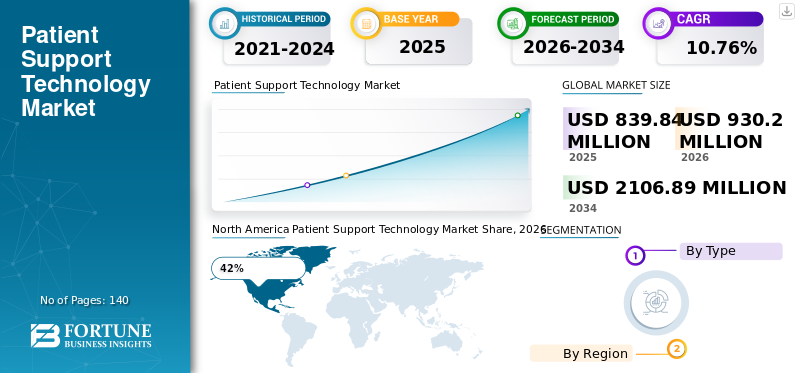
The global patient support technology market size was valued at USD 839.84 million in 2025. The market is projected to grow from USD 930.2 million in 2026 to USD 2106.89 million by 2034, exhibiting a CAGR of 10.76% during the forecast period.

The patient support technology market is expanding rapidly as healthcare providers, pharmaceutical companies, specialty clinics, and care management organizations increasingly adopt digital platforms to improve patient engagement, medication adherence, therapy management, and treatment outcomes. Patient support technology solutions integrate artificial intelligence, remote monitoring, mobile applications, analytics, automation tools, and communication platforms to create connected healthcare experiences. Growing demand for personalized care pathways, rising chronic disease prevalence, and increasing utilization of digital health ecosystems continue to strengthen market penetration. The patient support technology market Report indicates that organizations are prioritizing technology-enabled patient assistance programs that streamline onboarding, reimbursement support, education services, and long-term treatment monitoring.
The United States accounts for approximately 39% of the global patient support technology market share due to advanced healthcare digitization, widespread electronic health record integration, and strong adoption of patient engagement solutions. Healthcare providers across the country increasingly utilize virtual care technologies, remote patient monitoring platforms, and AI-powered communication tools to improve treatment compliance. Pharmaceutical manufacturers continue investing in digital patient support programs that simplify therapy access and reimbursement navigation. Demand for mobile health applications and connected care systems has increased across hospitals, specialty pharmacies, and outpatient networks. The Patient Support Technology Industry Analysis shows that regulatory support for digital healthcare innovation and value-based care initiatives continues to accelerate market expansion across the United States.
Download Free sample to learn more about this report.
Patient Support Technology Market Key Takeaways
 Global Market Size & Forecast
- 2025 Market Size: USD 839.84 Billion
- 2026 Market Size: USD 930.20 Million
- 2034 Forecast Market Size: USD 2,106.89 Billion
- CAGR: 10.76% from 2026-2034
 Market Share
- The market in North America dominated with a revenue share of 42% in 2025.
- Integrated solutions dominated by type with a market share of approximately 61%.
- Standalone solutions accounted for a market share of approximately 39%.
 Key Regional Highlights
North America
North America led the market with a 42% share, supported by advanced healthcare infrastructure and growing adoption of patient support technologies.
Europe
Europe accounted for 28% of the market, driven by increasing demand for digital healthcare and patient engagement solutions.
Asia-Pacific
Asia-Pacific held a 22% share, supported by expanding healthcare infrastructure and growing adoption of digital patient support platforms.
U.S
The U.S. remains a key market, supported by advanced healthcare systems and increasing adoption of integrated patient support solutions.
Japan
Japan accounted for approximately 26% of the Asia-Pacific market, supported by advanced healthcare infrastructure and growing adoption of digital healthcare technologies.
Read More

Patient Support Technology Market Latest Trends
The patient support technology market trends reveal a strong shift toward AI-driven patient engagement platforms, predictive analytics, and personalized healthcare communication systems. Healthcare organizations increasingly deploy intelligent virtual assistants capable of responding to patient inquiries, appointment reminders, medication guidance, and symptom monitoring. These technologies help reduce administrative workloads while improving patient satisfaction and retention.
Download Free sample to learn more about this report.
Another major trend influencing the patient support technology market outlook is the growing integration of remote monitoring tools with patient support ecosystems. Connected devices now enable real-time collection of health information, allowing healthcare teams to identify treatment adherence issues earlier. Pharmaceutical companies are adopting omnichannel patient engagement strategies that combine mobile applications, text messaging, telehealth consultations, and educational resources within unified platforms.
Patient Support Technology Market Dynamics
DRIVER
Rising Demand for Patient-Centric Healthcare Delivery Systems
The primary growth driver in the patient support technology market is the increasing demand for patient-centric healthcare delivery. Healthcare providers are under pressure to improve treatment adherence, reduce hospital readmissions, and enhance long-term health outcomes. Patient support technologies help organizations maintain continuous engagement with patients beyond clinical visits. Digital communication platforms, automated reminders, educational content, and virtual assistance tools improve treatment compliance and support chronic disease management. Pharmaceutical companies increasingly implement technology-based support programs to assist patients throughout complex therapy journeys. The growing prevalence of diabetes, cardiovascular diseases, oncology conditions, and autoimmune disorders has created significant demand for scalable patient engagement systems. The patient support technology market growth is further supported by expanding telehealth adoption, value-based care initiatives.
RESTRAINT
Data Privacy Concerns and Regulatory Compliance Complexities
Data privacy and compliance challenges remain significant restraints within the patient support technology market. Patient support platforms manage large volumes of sensitive healthcare information, creating concerns regarding cybersecurity, unauthorized access, and regulatory compliance. Healthcare organizations must comply with strict patient data protection requirements while maintaining seamless digital experiences. The integration of multiple healthcare systems often introduces interoperability and security risks that require additional investment. Smaller healthcare providers may struggle with implementation costs associated with advanced security infrastructure. Concerns regarding cloud storage, third-party vendor access, and cross-border data transfers also affect purchasing decisions. The Patient Support Technology Industry Report indicates that lengthy compliance assessments.
OPPORTUNITY
Expansion of Artificial Intelligence and Predictive Analytics Solutions
Artificial intelligence presents substantial opportunities for the patient support technology market. AI-powered patient engagement platforms can analyze behavioral patterns, identify adherence risks, and recommend personalized interventions. Healthcare organizations increasingly utilize predictive analytics to improve patient retention and optimize care pathways. Pharmaceutical companies benefit from AI-enabled support programs that deliver customized educational content and targeted communication strategies. Advanced algorithms assist healthcare providers in identifying patients who require additional intervention before treatment discontinuation occurs. Virtual assistants, intelligent chatbots, and automated care coordination tools are becoming integral components of modern patient support ecosystems. The patient support technology market opportunities continue expanding as healthcare organizations seek cost-effective methods to improve outcomes while managing growing patient populations.
CHALLENGE
Integration Complexity Across Fragmented Healthcare Ecosystems
One of the major challenges affecting the patient support technology market is the complexity of integrating new technologies across fragmented healthcare systems. Hospitals, specialty pharmacies, pharmaceutical manufacturers, insurance providers, and care coordinators often operate on separate platforms with varying data standards. Achieving seamless information exchange remains difficult and resource intensive. Organizations frequently encounter implementation delays due to compatibility issues with legacy systems. Training healthcare personnel and ensuring consistent platform utilization also present operational challenges. In addition, varying digital literacy levels among patients can impact engagement rates and technology effectiveness. The patient support technology market analysis shows that organizations must invest heavily in interoperability frameworks, workforce training, and change management initiatives to achieve successful deployment.
Patient Support Technology Market Segmentation
By Type
Standalone solutions account for approximately 39% market share within the patient support technology market. These platforms focus on specific functions such as medication adherence, appointment management, patient communication, or reimbursement assistance. Many healthcare providers prefer standalone technologies because they require lower upfront investment and faster deployment timelines. Specialty clinics and smaller healthcare organizations frequently adopt standalone platforms to address targeted patient engagement requirements. Mobile health applications, virtual patient education systems, and automated reminder solutions are commonly deployed within this segment.
To know how our report can help streamline your business, Speak to Analyst
Integrated solutions hold approximately 61% market share and represent the dominant segment in the patient support technology market. These platforms combine patient onboarding, care coordination, analytics, reimbursement support, communication tools, and adherence monitoring within unified ecosystems. Large healthcare providers and pharmaceutical companies increasingly favor integrated solutions because they enable centralized patient management and comprehensive data visibility. Advanced interoperability capabilities support seamless connections with electronic health records, payer systems, and specialty pharmacy networks. Integrated platforms improve operational efficiency while delivering personalized patient experiences across multiple treatment stages.
Patient Support Technology Market Regional Outlook
North America
North America Patient Support Technology Market Share, 2025 (%)
To get more information on the regional analysis of this market, Download Free sample
North America commands approximately 42% of the global patient support technology market share. The region benefits from advanced healthcare infrastructure, strong technology adoption, and substantial investment in patient-centered care initiatives. Healthcare organizations increasingly deploy digital support platforms to improve patient outcomes, reduce readmissions, and enhance treatment adherence. Pharmaceutical manufacturers actively invest in technology-enabled patient assistance programs that simplify access to specialty therapies. Remote monitoring systems, AI-powered communication tools, and predictive analytics platforms are becoming standard components of patient engagement strategies. The United States remains the dominant market within North America, supported by extensive electronic health record adoption and mature healthcare technology ecosystems. Canada also contributes significantly through expanding virtual care programs and digital health investments. Healthcare providers across the region are prioritizing integrated platforms that connect patients, physicians, pharmacies, and payers within unified care environments.
Europe
Europe accounts for approximately 28% market share in the patient support technology market. Regional growth is driven by healthcare modernization initiatives, expanding digital health policies, and increasing demand for coordinated patient care. Healthcare systems throughout Europe are implementing technologies that improve treatment adherence, remote monitoring, and patient communication. Pharmaceutical organizations increasingly collaborate with technology providers to develop comprehensive support programs that address patient education and therapy management requirements. Countries across the region continue investing in healthcare digitization infrastructure to improve operational efficiency and patient outcomes. Integrated care models are encouraging adoption of interoperable platforms capable of connecting hospitals, pharmacies, and healthcare professionals. Patient engagement technologies are increasingly viewed as essential tools for managing aging populations and rising chronic disease burdens.
Germany patient support technology market
Germany represents approximately 29% of the European patient support technology market share. The country's advanced healthcare infrastructure and strong commitment to digital health transformation support continued market expansion. Healthcare organizations increasingly deploy patient engagement platforms to improve therapy adherence and streamline communication between providers and patients. Electronic patient record initiatives have strengthened interoperability across healthcare systems. Pharmaceutical companies actively invest in digital support technologies that assist patients throughout complex treatment journeys. The patient support technology market outlook for Germany remains positive as healthcare stakeholders continue prioritizing technology-driven care coordination, personalized engagement strategies, and remote patient support capabilities.
United Kingdom patient support technology market
The United Kingdom accounts for approximately 21% of the European patient support technology market share. Growing adoption of virtual healthcare services and digital patient engagement platforms continues driving demand. Healthcare providers increasingly utilize AI-powered communication systems and remote monitoring technologies to improve access to care. National healthcare modernization initiatives encourage deployment of innovative patient support solutions across hospitals and community care settings. Pharmaceutical organizations are investing in digital adherence programs and educational platforms to strengthen treatment outcomes. The patient support technology market research report identifies the United Kingdom as a key innovation hub for patient-centric digital healthcare solutions and integrated care technologies.
Asia-Pacific
Asia-Pacific holds approximately 22% market share in the global patient support technology market and represents one of the fastest-expanding regions. Rapid healthcare digitization, increasing smartphone penetration, and growing awareness of patient-centered care contribute significantly to market growth. Healthcare providers throughout the region are adopting mobile health applications, telehealth services, and digital patient engagement tools to improve accessibility and treatment outcomes. Governments across Asia-Pacific are investing heavily in healthcare technology infrastructure to address rising chronic disease prevalence and expanding healthcare demands. Pharmaceutical manufacturers increasingly deploy patient support programs that leverage digital communication channels and personalized care solutions. The region's large population base creates significant opportunities for scalable patient engagement technologies. The patient support technology market growth within Asia-Pacific is further supported by increasing adoption of cloud-based healthcare platforms and remote monitoring systems.
Japan patient support technology market
Japan accounts for approximately 26% of the Asia-Pacific patient support technology market share. The country's aging population and advanced healthcare infrastructure create strong demand for patient engagement technologies. Healthcare providers increasingly implement remote monitoring systems and digital communication platforms to manage chronic conditions and improve treatment adherence. Government support for healthcare innovation continues accelerating adoption of connected care solutions. Pharmaceutical organizations utilize technology-enabled support programs to improve therapy management and patient education. The patient support technology market insights indicate sustained demand for AI-assisted patient support systems capable of addressing complex healthcare needs across Japan's aging population.
China patient support technology market
China represents approximately 24% of the Asia-Pacific patient support technology market share. Rapid healthcare digitization and increasing investment in digital health infrastructure continue driving market growth. Healthcare providers are adopting mobile health platforms, virtual care technologies, and patient engagement systems to improve accessibility and efficiency. Pharmaceutical companies increasingly utilize digital support programs to strengthen patient communication and adherence. Government initiatives promoting healthcare modernization support widespread implementation of technology-driven care solutions. The patient support technology market forecast highlights China as a major growth engine due to its large patient population, expanding healthcare investments, and accelerating digital transformation efforts.
Rest of World
The Rest of World region accounts for approximately 8% market share within the patient support technology market. Countries across Latin America, the Middle East, and Africa are increasingly adopting digital healthcare technologies to improve patient access and treatment outcomes. Healthcare providers are implementing mobile communication platforms, telehealth systems, and patient engagement solutions to address infrastructure limitations and workforce shortages. Government initiatives promoting healthcare modernization continue supporting adoption of digital patient support technologies. Pharmaceutical organizations are expanding patient assistance programs across emerging markets to improve therapy accessibility and adherence. Rising smartphone penetration and internet connectivity create favorable conditions for technology deployment. The Patient Support Technology Industry Report indicates increasing demand for cost-effective patient engagement platforms capable of supporting diverse healthcare environments.
List of Top Patient Support Technology Companies
- Deloitte
- Accenture
- McKesson Corporation
- Cardinal Health, Inc.
- Engage (Inizio)
- DataRiver S.r.l.
- AssistRx
- Medisafe
Top Two Companies with Highest Market Share
- McKesson Corporation – approximately 14% market share
- Cardinal Health, Inc. – approximately 11% market share
Investment Analysis and Opportunities
Investment activity within the patient support technology market continues accelerating as healthcare organizations prioritize digital transformation initiatives. Venture capital firms, healthcare technology investors, and strategic corporate investors increasingly focus on patient engagement platforms, AI-powered support solutions, and remote monitoring technologies. Pharmaceutical companies are allocating significant resources toward digital patient support ecosystems designed to improve treatment adherence and therapy outcomes. Investment opportunities are particularly strong within predictive analytics, personalized care management, and integrated patient communication platforms. Healthcare providers increasingly seek technologies capable of reducing administrative burdens while improving patient satisfaction metrics. Growing demand for cloud-based solutions creates opportunities for software developers and healthcare technology vendors.
The patient support technology market opportunities also extend to emerging economies where healthcare digitization efforts continue expanding. Investors are targeting companies that provide scalable platforms capable of supporting large patient populations across multiple care settings. Artificial intelligence, machine learning, and automation technologies remain major investment priorities due to their ability to improve operational efficiency and patient engagement. Strategic partnerships between pharmaceutical manufacturers, healthcare providers, and technology companies are expected to generate additional growth opportunities throughout the market. Increasing demand for value-based care solutions further strengthens the investment landscape for patient support technology providers.
New Product Development
New product development in the patient support technology market is increasingly centered on artificial intelligence, predictive analytics, and personalized engagement capabilities. Technology providers are launching advanced patient support platforms that combine remote monitoring, automated communication, and real-time analytics within integrated environments. These innovations enable healthcare organizations to identify treatment adherence risks earlier and deliver targeted interventions. AI-powered virtual assistants represent a major area of innovation. Modern platforms can provide medication reminders, symptom guidance, appointment scheduling support, and patient education through conversational interfaces. Healthcare providers increasingly adopt these tools to improve patient accessibility and operational efficiency.
Mobile-first patient engagement solutions are also gaining traction. Developers are introducing applications that integrate wearable devices, telehealth services, and personalized treatment guidance. Advanced analytics capabilities allow healthcare organizations to measure patient engagement patterns and optimize support strategies. The patient support technology market trends indicate growing emphasis on interoperability and seamless integration with electronic health records. New solutions increasingly support real-time data exchange across healthcare ecosystems. Pharmaceutical companies are collaborating with technology vendors to create comprehensive digital support programs that improve therapy initiation, reimbursement navigation, and long-term adherence management.
Five Recent Developments (2023-2025)
- Accenture collaborated with a major pharmaceutical company in 2025 to launch an AI-enabled medical content and patient engagement platform supporting personalized healthcare communication.
- AssistRx expanded its patient support technology capabilities in 2025 by enhancing digital workflow automation and specialty therapy management solutions.
- Multiple healthcare organizations across North America increased deployment of AI-powered virtual patient support systems during 2024 to improve engagement and reduce administrative workloads.
- Healthcare providers throughout Europe accelerated implementation of integrated patient support platforms during 2024 to strengthen remote care coordination and treatment adherence programs.
- Pharmaceutical manufacturers expanded digital patient assistance initiatives during 2023 and 2025 through investments in omnichannel engagement technologies, predictive analytics, and personalized support services.
Report Coverage Of Patient Support Technology Market
The patient support technology market Report provides comprehensive analysis of industry trends, competitive dynamics, technological advancements, investment patterns, and regional performance. The report evaluates market developments across patient engagement platforms, care coordination systems, adherence management technologies, reimbursement support solutions, and digital communication tools. Detailed assessment of market drivers, restraints, opportunities, and challenges offers valuable insights for stakeholders operating throughout the healthcare ecosystem.
Request for Customization to gain extensive market insights.
Coverage includes segmentation analysis by type, application, and region, highlighting adoption patterns and market share distribution across major geographic markets. The report examines competitive positioning of leading companies and evaluates strategic initiatives influencing industry expansion. Particular emphasis is placed on artificial intelligence, cloud computing, predictive analytics, remote monitoring, and interoperability advancements shaping the future of patient support technologies.
Frequently Asked Questions
Fortune Business Insights says that the global market value stood at USD 839.84 million in 2025 and is projected to reach USD 2,106.89 million by 2034.
The market is expected to exhibit a CAGR of 10.76% during the forecast period of 2026-2034.
Integrated solutions led the type segment with approximately 61% market share, as they combine patient onboarding, care coordination, analytics, reimbursement support, communication, and adherence monitoring.
Key players include Deloitte, Accenture, McKesson Corporation, Cardinal Health, Inc., Engage (Inizio), and DataRiver S.r.l.
Major trends include AI-driven patient engagement and predictive analytics, along with greater integration of remote monitoring and omnichannel support. North America held approximately 42% of the global market.



- 2021-2034
- 2025
- 2021-2024
- 140
-

(Offer valid till 15th Oct 2026)
Get 30-60 hrs Free Customization
Expand Regional and Country Coverage, Segments Analysis, Company Profiles, Competitive Benchmarking, and End-user Insights.













.webp)






-
US +1 833 909 2966 ( Toll Free )
-
Get In Touch With Us